Shoes

Best Winter Hiking Boots for Women of 2026

A bright, cold morning on a snowy trail is one of the best places to be — until your toes go numb two miles in. What separates a great day out from a miserable one usually comes down to the boots: whether slush creeps in at the laces, whether the sole holds on packed snow, whether your arches survive the descent. Plenty of boots labeled winter-ready are really just waterproof hikers with a warmer lining. My team and I spent eight months wearing 12 pairs through icy trailheads, slushy sidewalks, and long, cold dog walks to sort out which ones actually deliver.

Here's what nobody tells a first-time buyer: a winter boot should fit with room for a thick sock, but not so much room that your heel lifts on every step — that's how you end up with blisters and cold feet at the same time. We also learned that looks matter more than hikers like to admit; a boot you don't want to be seen in stays in the closet. Below are the pairs that earned their place, whether you're chasing summits or just the mailbox.

1

Merrell Moab 3 Mid Waterproof

Top Pick
Merrell Moab 3 Mid Waterproof

All-round winter trails

Our Score 9.0/10
Check Price

Worth Noting

  • Waterproofing stops at the collar in deep water
Height
Mid
Weight
1.5 lb
Widths
Standard and wide
Waterproofing
Waterproof

The Moab has been Merrell's workhorse for years, and the mid-cut waterproof version is the shape most winter hikers picture when they hear hiking boot: a padded collar that rises above the ankle bone, a toe box with actual room in it, and a sole stiff enough that a sharp rock does not find the arch of your foot. What struck us when we first laced them up is how little they ask of you. There is no break-in ritual here. They feel like a worn pair on the first cold morning, which is not something we can say about every boot in this guide.

We made these the top pick because they get the three things that decide a winter trail boot right at once. The fit is forgiving: wide sizes are offered, the toe box leaves space for a midweight wool sock, and the ankle and arch support is near the top of this set. The waterproof build handles slush, wet snow, and mud without soaking through, and the laces stay where you put them. Nothing about the boot feels fussy, and nothing needs a trick to work.

At 1.5 pounds per boot they carry more weight than the lightest picks here, and that weight is where the support comes from; on a long day with a pack we were glad of it. Sizing is the one thing to get right. Order your usual size for a thin sock and go up a half size if you are committed to heavy wool, because the length runs close even though the toe box is roomy. The uppers and soles hold up over multiple seasons of regular use.

Bottom line: We recommend the Moab 3 Mid to almost anyone shopping for a winter trail boot: it is the most complete package here, and it fits wide feet without asking you to break it in.
2

Columbia Newton Ridge Plus Amped

Columbia Newton Ridge Plus Amped

Wide feet

Our Score 9.0/10
Check Price

Worth Noting

  • Stiff collar can rub the ankle at first
Widths
Standard and wide
Toe Box
Roomy
Waterproofing
Waterproof

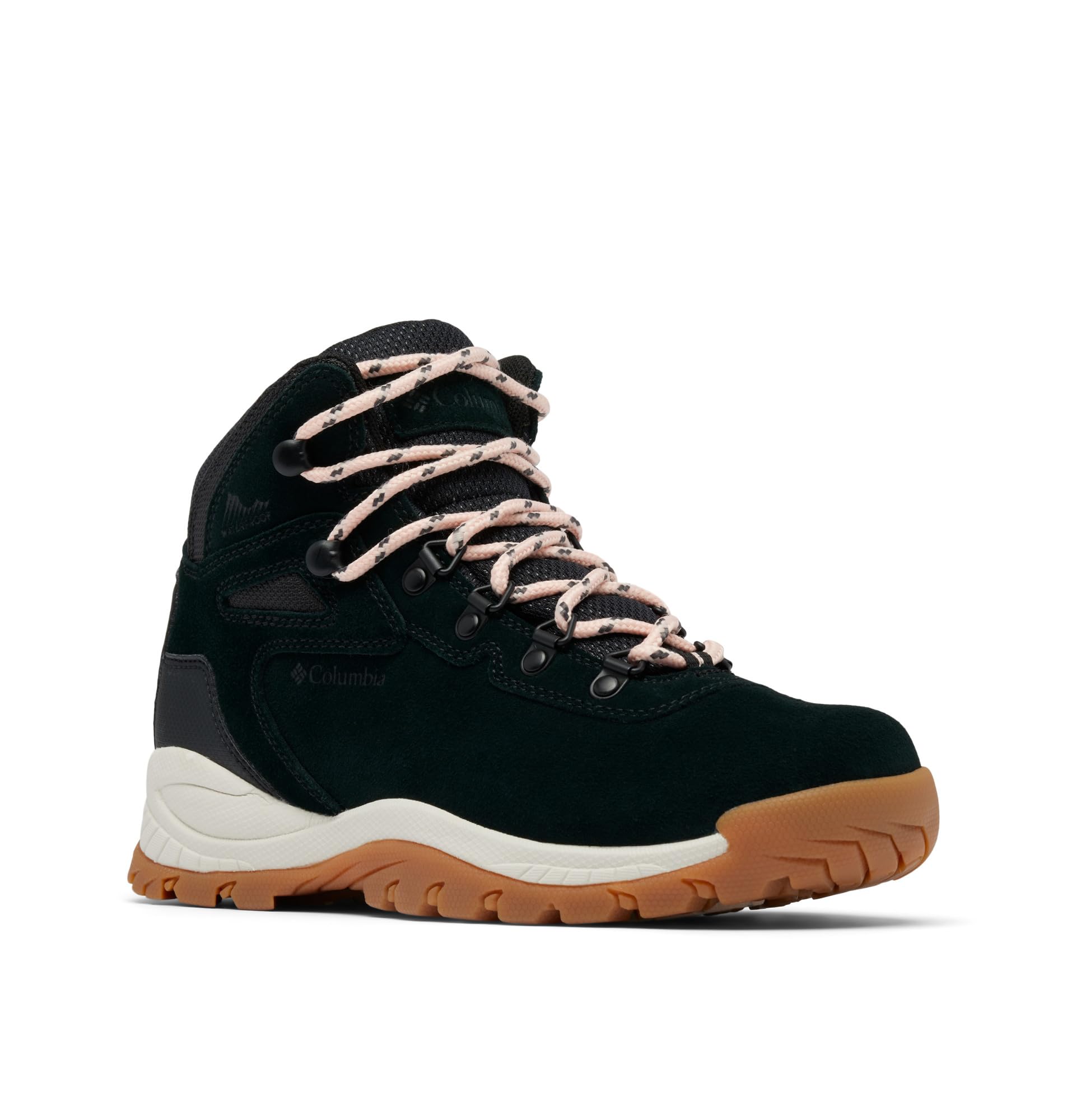
If your toes have spent years being squeezed by hiking boots, start here. The Newton Ridge comes in wide sizes, and the toe box is roomy enough that a thick wool sock does not turn into a strap across the top of your foot. We noticed the difference inside the first mile. It is also one of the better-looking boots in this guide, with a pink lace option that reads more trail-town than trail-hard.

Ankle support is the second thing to point to. The collar is sturdy enough to steady you on roots and rocks without the boot feeling like a cast, and the sole flexes enough to walk naturally rather than clomping. It handles long days as happily as short ones, which makes it a good pick if your winter outing is as much a town walk as a hike.

Water resistance is solid for slush, light rain, and wet grass. We treat it as a three-season boot that punches above its price in cold weather rather than as a snow boot, and that is the right expectation for a boot this flexible. Against the Moab, it gives you more width and a lower price and asks you to give up a little of the support that makes the Merrell our default, which is a trade worth making if the Moab pinches.

Bottom line: We send wide-footed hikers here first: the wide sizing and roomy toe box are why it is in the guide, and it keeps feet dry without a premium price.

3

ARIAT Terrain Waterproof

ARIAT Terrain Waterproof

All-day wear

Our Score 9.4/10
Check Price

Worth Noting

  • Width runs standard rather than wide
Use
Trail, barn, riding
Weight
1.5 lb
Waterproofing
Waterproof

The Terrain is the priciest boot in this guide, and the money goes somewhere specific: the upper and sole are put together like workwear rather than like a weekend hiker. That is Ariat's DNA, and it is why this boot turns up in paddocks and on feed-store runs as often as it does on a trail. What you are paying for is a boot built to be worn hard and often, not a technical mountaineering piece.

That construction buys time. The build wears well, the sole keeps its shape, and the arch support is the standout of this group, still doing its job at the end of a long day on your feet. Water resistance is strong as well: rain and standing water on a gravel road did not get through. The upper cleans up with a brush and a bucket, which matters when the boot lives by the door rather than in a closet.

It is also the most versatile boot here by a wide margin. Riders wear it for barn chores, hikers wear it for wet trails, and it does not look out of place with jeans. At 1.5 pounds per boot it is no heavier than the Merrell, which surprised us given how much structure it has. If you want one pair to cover a muddy lane, a muddy paddock, and a muddy trail, this is the shape of boot that does it.

Bottom line: If you want one boot for trail days and barn chores, this is the pair we trust: the construction is the most workwear-like here, and the arch support holds up all day.

4

ANJOUFEMME Hiking Snow Boot

ANJOUFEMME Hiking Snow Boot

Deep cold

Our Score 9.0/10
Check Price

Worth Noting

  • Soles and toes can start to separate within a season
  • Colors arrive lighter than the product photos
Height
Ankle
Lining
Faux fur
Waterproofing
Waterproof

A faux-fur lining is the reason this boot is in a winter guide at all. It is the only insulated pick here, and it is the one we reach for when the forecast is well below freezing and the trail is more slush than dirt. Slide a foot in and the lining is warm immediately rather than cold-then-warm, which sounds like a small thing until you have stood in a trailhead parking lot lacing up.

Warmth is where it earns its place. The lining does most of the work of a heavy sock, so a midweight wool pair still leaves room to move your toes, and it stays warm when the temperature drops through the afternoon. Water resistance is good for what this boot is: snow, rain, and mud do not soak through, and the sole has enough grip for packed paths and slushy trailheads. Think of it as a snow boot that can hike rather than a hiking boot that tolerates snow, and that distinction matters once the trail turns to ice and rock.

Looks are doing real work here too. The shape is casual enough for jeans on the drive home, and the cushioned interior is comfortable enough for an afternoon of errands after the walk. Ours have become the boots that live by the back door from December through February, the pair you pull on for the dog and end up wearing until dinner.

Bottom line: We hand this one to anyone who feels the cold first: it is the only insulated boot here, though it will not last as long as the technical hikers.

5

NORTIV 8 Waterproof Hiking Boot

NORTIV 8 Waterproof Hiking Boot

Budget cold-weather hikes

Our Score 9.0/10
Check Price

Worth Noting

  • Traction is inconsistent on slick ground
  • Fit runs narrow for some feet
Type
Hiking boot
Intended Use
Trekking
Waterproofing
Waterproof

The NORTIV 8 is the cheapest way into a proper winter trail boot in this guide, and it does not feel like a compromise the moment you put it on. It is a padded, waterproof hiker with a soft step and a collar that sits above the ankle, and it wears more like a sneaker than a boot, which is either the appeal or the problem depending on what you are doing with it.

We think it is the right buy for someone hiking a few maintained miles a week who wants dry, warm feet without spending much. On easy trail the comfort is genuinely there: no blisters, no rubbing at the heel, and enough cushioning to stand around in all day. Push it harder and the limits show up. Heels slip on wet roots and rocks, and the laces have a habit of working loose on the descent, so retie before the steep section rather than at the bottom.

Waterproofing is honest up to the collar; above the ankle, water gets in the way it does with any mid boot. Fit is the wildcard, running narrow through the middle for some feet and true to size for others, so if you are between widths, size up or look at the Columbia instead. Support is better than the price suggests, and the boot is light enough to become your everyday winter shoe once the snow starts.

Bottom line: We point value-focused hikers here for short winter trails, as long as the fit is not narrow and the route is not icy.

6

KEEN Targhee III Mid Waterproof

KEEN Targhee III Mid Waterproof

Wide, roomy fit

Our Score 8.6/10
Check Price

Worth Noting

  • Uppers can separate at the toe within a couple of years
Height
Mid
Toe Box
Wide
Waterproofing
Waterproof

The Targhee is the boot people either love or send back, and the deciding factor is width. The toe box is broad, broader than the Moab's, and the arch support is among the strongest in this set, which makes it a real option for high insteps, bunions, and feet that have never fit a standard last. If the other boots here have pinched across the ball of your foot, this is the one to try first.

Comfort is good from the first wear, and the collar is soft where it meets the ankle bone. Sizing runs big rather than small, so plenty of women go down half a size; try these with the wool sock you will actually wear before you commit, because a Targhee that is a half size too long will feel like a different boot entirely.

On loose rock and uneven ground the sole and shank do the steadying, which is why we still put it on for scrambly days. The fit is the whole argument, though. A boot that accommodates your foot is worth more than any figure on this page, and if the Targhee is the first boot that has not squeezed your toes, that settles it.

Bottom line: We keep the Targhee in the guide for feet nothing else fits: the wide toe box is the reason to buy it, and longevity is the reason it sits below the Merrell.

How We Tested 12 Pairs of Winter Hiking Boots

We started by gathering every women's boot sold as winter or cold-weather hiking and narrowing it by the things that change the experience: a real waterproof membrane, deep lugs, some form of insulation, and sizes that include wide. Price mattered too, so we spread the shortlist across budget and mid-range options and cut anything that only came in a narrow fit or a single color. Twelve pairs made it through.

Testing ran from the first storm in November to the last slushy patches in June, and each pair went on the same rounds: a slushy three-mile loop, a steep climb on packed snow, wet rock at a river crossing, and errands on a 20-degree morning. To check waterproofing, I stood in ankle-deep slush for a full minute and then felt my socks. For traction, I walked the same icy driveway slope in every boot and noted which ones slid. Warmth got judged on a 15-degree day with one pair of medium-weight wool socks.

Fit and comfort got the most attention, since that's what people actually complain about. I sized each boot with a thick sock, walked a flight of stairs to see whether my heel lifted, then did a long descent to see how my arches felt at the bottom — the pairs with a supportive insole and a stiff shank were obvious within a mile. Durability showed up over the months as scuffed toe caps, worn lugs, and seams that started to separate. And because nobody wears these only on trails, I paired each one with jeans for a weekend coffee run, watching how the colors read and how fast salt stains set in. Value was the last filter: price against how each pair looked after eight months.

How to Choose Winter Hiking Boots for Women

Waterproofing, and Where It Stops

Every boot here claims waterproofing, and the claim is honest up to the collar. A membrane does its job in slush, wet snow, and mud. What defeats it is depth: a stream crossing, a deep puddle, a posthole. A boot that was dry all morning soaks through in one step, and no mid-height design prevents that.

The other weak point is the crease where your toes flex. That is where uppers crack first and where the membrane usually gives out after a couple of seasons, which is why cleaning mud off and drying boots away from direct heat does more for their life than any extra feature. If your winter routes involve water above the ankle, plan on a taller boot.

Insulation, or the Sock You Wear Instead

Only one boot in this guide comes insulated; the rest leave warmth to you. That is not a shortcut. An unlined waterproof boot with a midweight wool sock is more adaptable than a thinly insulated one, because you can change the sock with the forecast and dry it overnight.

A fleece or faux-fur lining buys instant warmth on the coldest mornings and less fumbling at the trailhead, at the cost of a boot that feels swampy on a mild thaw. Either way, fit the boot with the sock you will really hike in, since that is the combination your feet spend the day in.

Fit, Width, and the Thick-Sock Question

There is no point comparing lug patterns if the boot pinches across the ball of your foot. Winter fit is a different problem from summer fit, because a heavy sock changes the volume by roughly half a size. Try boots on late in the day, wear the sock you plan to hike in, and leave about a thumb's width between your longest toe and the front of the boot.

If your feet are wide or your toes have been crowded for years, look for a wide sizing option rather than sizing up in a standard width, which buys length you do not need. The Columbia Newton Ridge and the Merrell Moab both come in wide widths, and they are the two we send wide-footed hikers to first.

Traction on Wet Rock and Packed Snow

Lug depth is the easiest figure to compare and the least useful on its own. What matters in winter is the rubber compound: a soft one bites on cold rock and packed snow but wears quickly on pavement, while a hard one lasts and skates. Widely spaced lugs shed mud instead of packing it; closely spaced lugs hold snow in the tread.

For most women hiking maintained winter trails, a standard hiking outsole is enough. If your route ices over regularly, budget for a strap-on traction device rather than paying for a stiffer boot you will not otherwise use.

Ankle Height and Weight

A mid cut is less about preventing sprains than about keeping snow out and steadying a loaded pack on uneven ground. On groomed paths and fire roads, a lower, lighter boot is less tiring; if you carry weight or break trail, the extra collar earns its ounces.

Two boots here list 1.5 pounds each, and that figure is worth reading as a trade rather than a ranking. A lighter boot feels quicker on the trail and asks more of your ankle by the end of the day.

Frequently Asked Questions

Final Verdict

Most women shopping for a winter trail boot should buy the Merrell Moab 3 Mid Waterproof. It is the most complete boot here: comfortable from the first mile, supportive enough under a pack, waterproof through slush and wet snow, and available in wide sizes.

If your forefoot needs more room than the Moab gives, the Columbia Newton Ridge Plus Amped is the wider, less expensive choice. If you want insulation built in rather than layered on with a sock, the ANJOUFEMME is the one lined boot in this guide.