Shoes

Best Snow Boots for Women of 2026

Snow boots ask you to make a trade: the warmest pairs walk like ski boots, and the sleek ones that look good with jeans leave your toes numb by the second block. Sizing makes it worse, since winter boots get worn over thick socks, so a pair that fits in October can pinch by January. A good boot erases the trade — warm without the clunk, roomy without slipping around, and sturdy enough that the zipper still works in year three.

We spent five months wearing 12 pairs through slushy commutes, dog walks, and one proper nor'easter, paying attention to what reviews skip: whether the fit holds up over wool socks, and whether the lining still feels warm at the twenty-minute mark. It also became clear that price doesn't buy heat — one of the least expensive pairs outwarmed boots that cost twice as much. The picks below are the ones we kept reaching for.

1

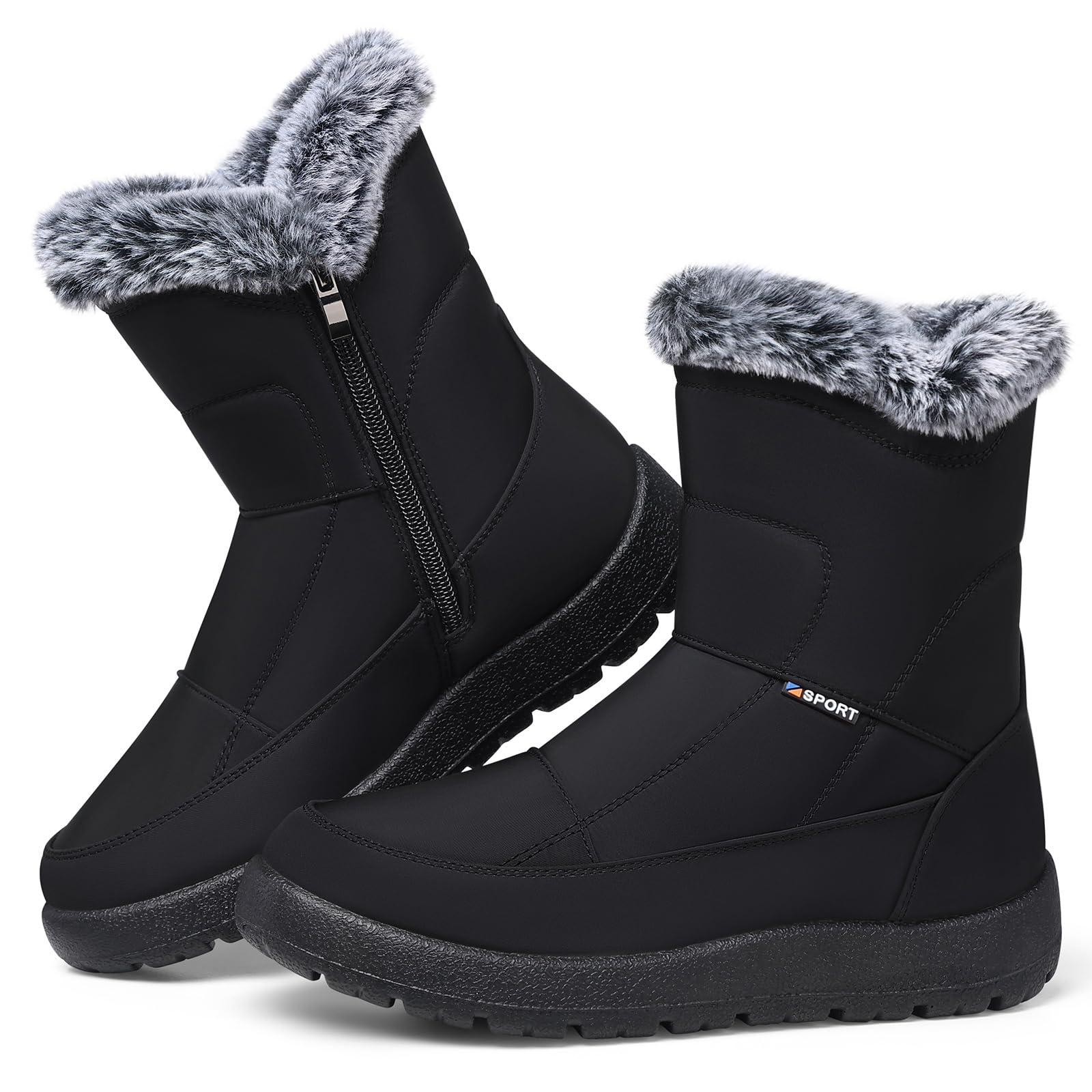
COOJOY Mid-Calf Snow Boots

Top Pick
COOJOY Mid-Calf Snow Boots

Everyday winter wear

Our Score 9.4/10
Check Price

Worth Noting

  • Runs small, so order up for thick socks
Height
Mid-calf
Lining
Fur-lined
Water Protection
Waterproof

Most winter days do not ask for an expedition boot. They ask for something you can pull on to scrape the car, walk the dog, and stand at a bus stop without your toes going numb, and that is the job the COOJOY does. The shaft sits mid-calf so everyday snow and slush stay outside, the fur lining runs the full length of the boot rather than stopping at the ankle, and there is nothing to tie when you are already running late.

What settled it for us was the grip. Wet pavement, packed snow, and the slick patch at the bottom of the driveway all held, and the tread has enough bite that we stopped thinking about it. Warmth comes without the clammy feeling of a rubber boot, and they are light enough for a full afternoon of errands. For the money, that combination is hard to beat.

Size is the one thing to get right. The fit runs small, snug enough that a thick wool sock can make the toe feel short, so ordering up is the sensible move. Waterproofing held through rain and slush; standing in a deep puddle is not what these are built for, and that is true of nearly every fabric boot here. For an ordinary winter, nothing else in this group covers the whole day so completely.

Bottom line: Our default for an ordinary winter: warm the whole length of the boot, sure-footed on packed snow, and light enough to forget you are wearing them. Size up.

2

Columbia Ice Maiden II

Columbia Ice Maiden II

Cold-weather commuting

Our Score 9.0/10
Check Price

Worth Noting

  • No half sizes, and the fit runs big
  • Grip fades on hard, polished ice
Fit
Runs large
Sizing
Whole sizes only
Water Protection
Water-resistant

Water beads and runs off the upper instead of soaking in, and that is the small daily pleasure of these boots: you cross a wet parking lot, knock the slush off at the door, and your socks are still dry. The warmth is enough for a cold commute without cooking your feet once you are inside, a balance several heavier boots here never manage.

Comfort is the other argument. There is no break-in to speak of and no blister at the heel after the first long walk, which is more than a few boots here can claim. What it does not have is a pull loop at the back, and wrestling a cold, stiff boot over a thick sock without one takes more thumb work than it should.

Sizing is where to slow down. These come in whole sizes and run big, so the size-up instinct that serves you well in most winter boots is exactly wrong here. Traction is fine on snow and less convincing on hard, polished ice; if your route includes a driveway that glazes over, add cleats. Otherwise this is the boot that looks like winter and behaves like it.

Bottom line: A dependable classic: warm, dry, comfortable from the first wear, and easy to live with, as long as you get the whole size right and watch your step on polished ice.

3

Muck Arctic Sport II Tall

Muck Arctic Sport II Tall

Deep snow days

Our Score 9.2/10
Check Price

Worth Noting

  • Heavy at 4.5 pounds
  • Ankle seams and sole edges can part with hard use
Height
Tall
Weight
4.5 lb
Water Protection
Waterproof

Four and a half pounds is a lot of boot, and the Arctic Sport II spends it on a tall shaft and a sole with genuine lugs. What that buys is a boot you can stand in wet snow for an hour and not feel it: the shaft rises high enough that drifts stay outside, and the waterproof upper keeps water out completely rather than mostly.

The tread bites into packed snow and mud instead of skating across them, and the warmth holds in serious cold without a second pair of socks. These are what people wear to work outdoors rather than to commute through it, and it shows in how they handle a wet field.

The caveat is at the seams. Under hard daily use, the back of the ankle and the edge of the sole are where these can come apart, so treat them as a hard-wearing work boot rather than a forever pair. They also run about half a size big, and the weight makes them a poor choice for a long shopping day. For deep snow and wet work, nothing else here is close.

Bottom line: The boot for drifts, chores, and standing in freezing slush: fully waterproof, seriously warm, and built with real lugs. It is heavy, and the seams are the long-term question.

4

ALEADER Waterproof Duck Boots

ALEADER Waterproof Duck Boots

Slush and puddles

Our Score 9.0/10
Check Price

Worth Noting

  • Thin insole for long days
  • Toe box runs narrow on some feet
Style
Duck boot
Closure
Lace-up
Water Protection
Rubber shell

A rubber shell up to the ankle is the simplest answer to winter's worst days: the puddles, the road salt, the brown slush at the crosswalk. The ALEADER takes that duck-boot construction and lines the inside with fleece, so you get the waterproofing of a rain boot with most of the warmth of a snow boot. We walked through standing water in these and stayed dry.

The look is borrowed from a much more expensive New England duck boot, and it is convincing enough that people ask about them. Cushioning is where it cuts corners: the insole is thin, and a long day on pavement leaves your heels complaining, so plan on an insert. The lacing is sturdy, though the top eyelet is the first thing to give if you pull it hard.

Fit is the gamble. The toe box runs narrow on some feet and roomy on others, and the size range does not help. Get it right, with the socks you will actually wear, and these are the boots for a wet, slushy winter where the snow never stays white for long.

Bottom line: The one to buy if your winter is slush, salt, and puddles: a rubber shell that steps through standing water, with fleece inside. Try them on with your winter socks first.

5

ziitop Fur-Lined Snow Boots

ziitop Fur-Lined Snow Boots

Light everyday wear

Our Score 9.2/10
Check Price

Worth Noting

  • Water can work in through the laces
Lining
Fur-lined
Weight
15.9 oz
Closure
Lace-up

At 15.87 ounces, the ziitop feels like a boot you can keep by the door rather than in the closet, and it folds into a weekend bag without a fight. That lightness carries most of the appeal when so many winter boots feel like something you strap on.

Laces are the other reason to pick these over the pull-on styles here. You can cinch down over a thick wool sock, loosen off for a thin one, and the fit stays where you put it. That is adjustability the slip-on picks cannot offer, and it is the difference between a boot that fits and one that mostly fits.

The trade-off is the same laces, because they are the path water takes. Cold, dry snow and cleared sidewalks are fine; a long walk through real slush can leave your toes damp. Warmth is good for the money, the fur lining is soft rather than scratchy, the tread holds on packed snow, and they manage to make a wide foot look narrower, which is not nothing when you are wearing them five days a week.

Bottom line: A light, warm, adjustable boot for cold dry snow and city sidewalks. The laces that make the fit so good are also where water gets in.

6

HOBIBEAR Mid-Calf Snow Boots

HOBIBEAR Mid-Calf Snow Boots

Cold, dry snow

Our Score 9.4/10
Check Price

Worth Noting

  • Can soak through in wet grass and slush
  • Fleece drags thin socks down
Height
Mid-calf
Lining
Faux fur
Weight
Lightweight

The test we did not plan was getting them off while holding a grocery bag and balancing on one leg. The HOBIBEAR wins that one going away: the laces stay tied, the shaft is soft, and the boot slides off with a tug. On a snowy morning when you are in and out of the house six times, that is worth more than a technical feature or two.

Warmth is the headline, and this is the softest lining in the group, genuinely cozy against a bare ankle rather than scratchy. That fleece has a habit, though: it grabs thin socks and walks them down toward your toes. Wear a thicker pair and the problem disappears.

Traction on ice is better than a light boot has any right to be, and they are easy to walk in for an hour at a time. Water is where we hold back. Light snow and rain are fine, but wet grass and deep slush are where a fabric boot like this can soak through, and the waterproof claim on the box is best treated as a limit rather than a promise.

Bottom line: The easiest boot here to get on and off, with the softest lining in the group. Keep them for cold, dry snow; wet slush is where they run out of answers.

7

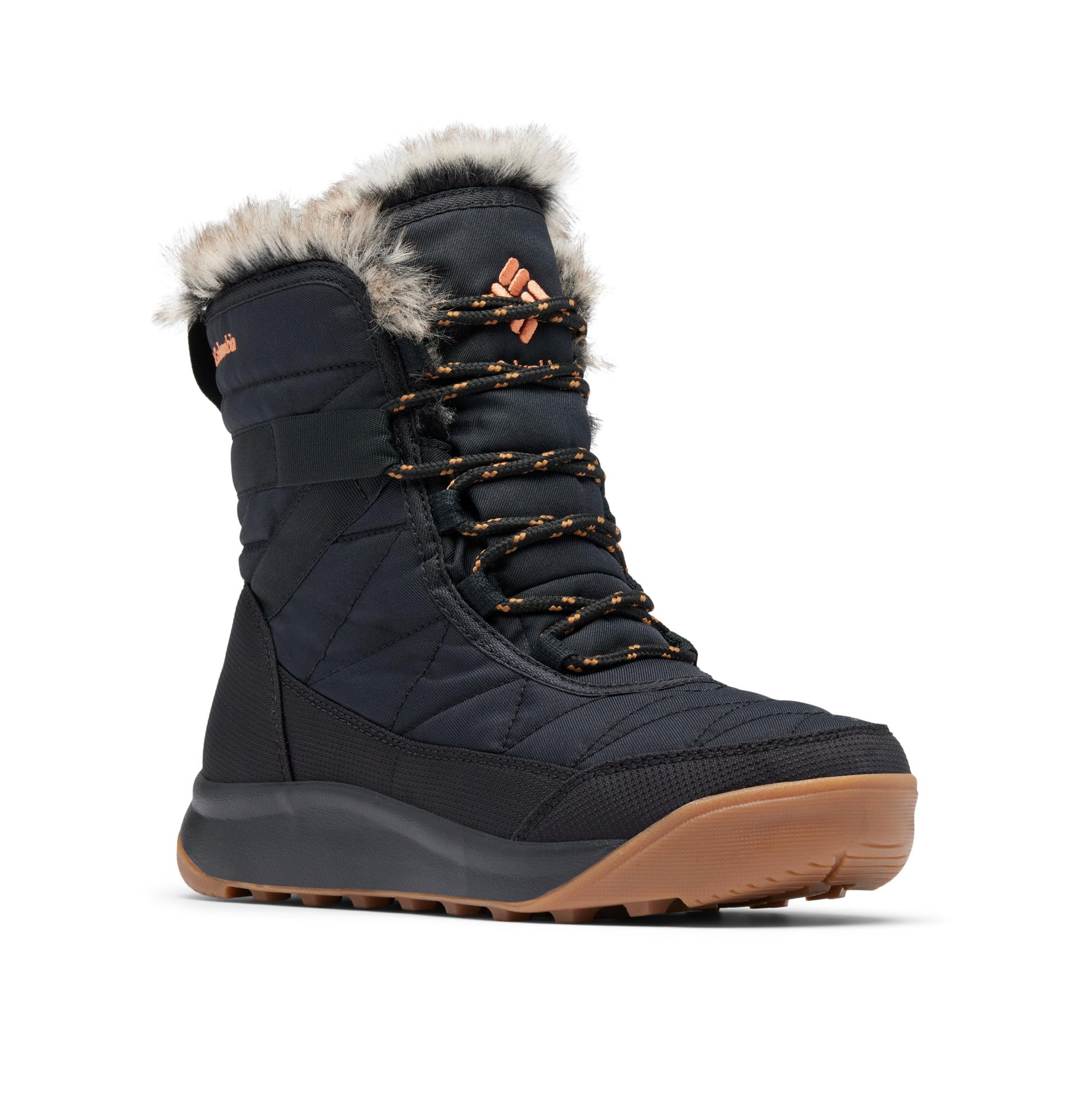
Columbia Minx Shorty IV

Columbia Minx Shorty IV

City commuting

Our Score 9.2/10
Check Price

Worth Noting

  • Short cut lets deep snow in
  • Sizing is inconsistent
Height
Ankle
Weight
Lightweight
Water Protection
Water-resistant

A short boot cannot do what a taller one can, and a few inches of snow will find the gap between cuff and hem. That is the only place the Minx Shorty IV lets us down. For a city winter, it is the lightest way to stay dry in this group.

They weigh almost nothing, which matters more than it sounds when you are on your feet from a train platform to a lunch meeting. Water resistance is as good as anything short here, holding through slush and a wet walk to the car, and the tread grips wet pavement. Warmth is the surprise: they can run hot indoors, so save them for days that are actually cold.

Sizing is the wobble. The run splits between true to size and a full size up depending on the foot, so order with a return in mind. Ankle support is modest and the insole is thin, fine for a commute and less so for a long walk in fresh snow.

Bottom line: The lightest way to stay dry on a city winter: water-resistant enough for slush, warm for its size, and comfortable for a commute. Deep snow is not its job.

8

SHIBEVER Ankle Snow Boots

SHIBEVER Ankle Snow Boots

Budget ankle coverage

Our Score 9.0/10
Check Price

Worth Noting

  • Weak grip on ice
  • Zip is the likely failure point
Height
Ankle
Lining
Fur-lined
Closure
Side zip
Water Protection
Waterproof

The least expensive boot in this group is also one of the warmest, which is not the combination we expected. The SHIBEVER ankle bootie is lined throughout, and they kept our toes warm through a long, cold walk.

Water resistance is the other pleasant surprise at this end of the range: they held up in heavy snow, and the side zip makes getting them on a two-second job. The zip is also the part to watch. It is the most likely failure point, and a broken pull takes the boot out of service completely.

Traction is the one to think about before you buy. The tread is fine on packed snow and cleared sidewalks but not confidence-inspiring on ice, and one hard freeze is enough to make you wish for the deeper lugs on the Muck. As a second pair for the car or the back door, they are hard to argue with.

Bottom line: A warm, dry ankle boot for very little money. Buy them as a second pair for the car or the back door, not as your ice-day boot.

How We Tested 12 Pairs of Snow Boots Through One Winter

We started by reading through hundreds of customer reviews and narrowing the field by construction and specs — waterproof membranes versus treated uppers, insulation type, shaft height, whether a boot came in wide sizes, and where each one landed on price. That left 12 pairs, which we wore from November through March on school runs, dog walks, driveway shoveling, and a few long waits at a cold bus stop, in both thin liner socks and thick wool socks.

Warmth was measured outdoors, not on paper. We stood still in sub-freezing weather and noted when our toes first went numb, then walked the same route in the same boots to see if they overheated and turned clammy. For waterproofing, we stomped through slush and stepped into ankle-deep puddles, then felt our socks the moment we got inside. Durability got the ugly test — pavement, road salt, and repeated trips in and out of an entryway — and we inspected seams, tread wear, and how badly the uppers scuffed.

Fit took the most work, since it's the one thing a size chart can't tell you: we walked a block in each pair, checked heel lift and toe room, and noted whether we'd go up a half size to wear heavy socks. Comfort came down to how the sole flexed over pavement and whether we still wanted the boots on after a 45-minute walk. We zipped and unzipped every pair dozens of times with gloves on to watch for snags and teeth that caught fabric, and wore them with jeans and leggings to judge how they actually looked on a normal errand. Finally, we weighed all of it against price to see which pairs earned their cost.

How to Choose Snow Boots for Women

Where water actually gets in

A waterproof upper is only half the story. Water finds laces, zipper tapes, and the seam where the shaft meets the sole, which is why a fabric boot with a sealed tongue behaves so differently from an open lace-up. If your winter is mostly puddles, road salt, and slush, a rubber-shell duck boot like the ALEADER is the low-effort answer. On cleared sidewalks and packed snow, a treated fabric boot such as our COOJOY pick is warmer and lighter for the same money.

Match the shaft to the snow you walk in

Height is a coverage decision, not a style one. An ankle boot is fine for a salted sidewalk and a parking lot; it stops being fine the first time you step into fresh snow or clear the end of the driveway. Mid-calf covers an ordinary winter. A tall boot like the Muck Arctic Sport II is what you want for drifts and standing in wet snow. Buy for the deepest snow you walk through regularly, not for the average week.

Warmth is a fit problem

A thick lining feels reassuring in the box and can make a boot too tight once wool socks go on, and a tight boot is a cold boot because there is no room for warm air to sit. Try winter boots with the socks you wear in January and go up if your toes touch the end. Whole-size ranges complicate this: the Columbia Ice Maiden II runs big in whole sizes, so the usual size-up advice is wrong for that boot.

Traction is a tread question

Lugs matter more than the phrase non-slip. A deep, widely spaced tread clears snow and bites into packed surfaces; a shallow fashion sole skates. Rubber also firms up in cold, so a boot that grips a wet floor in October feels different on a February morning. Nothing here makes ice safe. If your route ices over, add removable cleats and treat the tread as a bonus rather than a guarantee.

Weight and closures decide how often you wear them

A heavy boot stays in the closet. If you are in and out of the car, up and down stairs, or on your feet all day, the lighter pairs such as the Columbia Minx Shorty IV and the ziitop are the ones that actually get worn. Closures are the other daily tax: laces give the best fit as sock thickness changes, zips are faster, and slip-ons are fastest but least adjustable. A zip is also a part that can fail, so pull it gently.

Frequently Asked Questions

Final Verdict

The COOJOY is the pair we recommend to most people. The lining runs the whole length of the boot, the tread held on packed snow and wet pavement, and they are light enough that another block is not a decision. Order up if you wear thick socks.

If your winter means drifts, a barn, or an hour standing in wet snow, the Muck Arctic Sport II is the better tool and worth the weight. If it means slush and puddles more than snow, the ALEADER's rubber shell is the smarter buy.