Shoes

Best Winter Boots for Women of 2026

The first snowfall of the season is charming for about a half hour, and then you hit a slush-filled puddle at the crosswalk and spend the rest of the day in damp socks. I've done it in ballet flats, in fashion boots that turned out to be purely decorative, and in a too-big hand-me-down pair that had me clomping like a pony. A good winter boot fixes three things at once: dry feet, warm toes, and traction you can trust on ice — ideally without making you look like you're headed up a mountain.

Over the past winter, my team and I wore 12 different pairs through commutes, errands, dog walks, and one memorably icy driveway, and the differences came down to fit, warmth, and how the soles behaved once the temperature dropped. Here's something first-time buyers don't always know: most boot soles stiffen in the cold, so a tread that grips nicely in a carpeted store aisle can skate on a January sidewalk. Sizing throws people too — the socks you actually wear change the fit by half a size. Below are the pairs that held up, sorted by who they suit best.

1

Columbia Ice Maiden II

Top Pick
Columbia Ice Maiden II

All-around winter wear

Our Score 9.0/10
Check Price

Worth Noting

  • Fit runs generous for narrow feet
Fit
Runs roomy
Type
Snow boots
Water Resistance
Waterproof

Two things sold us on the Ice Maiden II: our socks stayed dry through a morning of slushy sidewalks, and our feet were still warm at the end of the day without feeling steamed. That combination is rarer than it sounds. Plenty of winter boots win one and lose the other, with a rubber shell that traps sweat or a soft lining that gives up at the first puddle.

The fit is the quiet reason this is our top pick. It is cut for a real foot rather than a display-rack one, with room across the forefoot and enough volume for a wool sock, and a long day of walking does not leave you hunting for a bench. Sizing runs on the generous side, which is good news if you layer socks. They also read as a normal winter boot rather than a moon boot, which is more than some insulated pairs manage.

What you give up is slimness and ice grip. These are substantial boots you will notice on stairs and under a wide-leg jean, and the tread is happiest in snow and packed slush; on a rink-smooth driveway, a pair of pull-on cleats makes the difference for the handful of mornings it matters. For the rest of the winter, this is the pair that handles whatever the forecast does.

Bottom line: If you want one pair that handles snow, slush, and a long walk without a second thought, this is the winter boot we recommend first.

2

HOBIBEAR Winter Snow Boots

HOBIBEAR Winter Snow Boots

Icy commutes

Our Score 9.4/10
Check Price

Worth Noting

  • Damp can soak through in long wet grass
Lining
Faux fur
Weight
Lightweight
Shaft Height
Mid-calf
Water Resistance
Waterproof

Grip is why we keep handing people this pair. On a sloping, half-frozen sidewalk the tread bit and held, which is the sort of thing you notice more than any figure on the box. Add a weight that barely registers and a shaft you can pull on without untying, and you have a boot that is easy to live with on the mornings you are running late.

Warmth comes from a thick faux-fur lining, and there is enough room in the toe box for a proper wool sock without your toes pressing the end. The lace-up front is genuinely functional rather than decorative: snug the ankle for a long walk, loosen it for a quick trip, and kick them off at the door without a fight. Sizing ran true for us, which is a small mercy in a category that rarely manages it.

Set against the Columbia, this is the lighter and less structured boot, and on a day of standing around in serious cold you will feel the difference. For commuting, errands, and snowy dog walks it is plenty, and it is the pair you will not mind getting salt on.

Bottom line: For icy sidewalks on a budget, this is the pair we hand people: light, grippy, and warm enough for a real commute.

3

BEARPAW Emma Short

BEARPAW Emma Short

Dry cold days

Our Score 9.2/10
Check Price

Worth Noting

  • Soles can separate with hard daily wear
Style
Short mini boot
Upper
Suede
Weight
Lightweight

Picture the morning with frost on the windshield and no slush on the sidewalk: that is the Emma Short's weather. Suede outside, a plush lining against the foot, and the kind of soft, slipper-like feel that makes you forget you are wearing shoes at all. It is the least technical pick here, and on a dry, cold day that is exactly the point.

Warmth is where it earns its place. The lining is thick enough to hold heat against a bare ankle and it does not need a heavy sock to work. It also looks the part with leggings and jeans in a way a chunky snow boot simply does not, and the color range makes a second pair tempting. For the money, this is one of the better value picks in the group.

The catch is that these run small and stop at dry weather. Go up a full size if you wear thick socks and a half size if you do not, and accept that the suede is dry-weather suede: a salty sidewalk will mark it and a deep drift will soak it. Wear them for the cold, not for the melt.

Bottom line: The warmest, softest boot here for dry cold weather, and the one to buy if you want slipper comfort with your winter coat.

4

DREAM PAIRS Knee-High Winter Boots

DREAM PAIRS Knee-High Winter Boots

Deep snow

Our Score 9.0/10
Check Price

Worth Noting

  • Soles can separate with daily wear
Fit
Runs large
Lining
Faux fur
Shaft Height
Knee-high

Height is the argument. A knee-high shaft keeps snow out when a drift would top a mini boot, and the coverage warms the whole lower leg rather than just the foot. On a long walk through fresh snow, that is a different experience from a mid-calf pair, and it is the reason this boot is here.

We were struck by how warm these run. The faux-fur lining carries the full length of the shaft, and the cut leaves room for thick socks and a wider calf without digging in. The tread has real bite on packed snow, and the boot is lighter than its size suggests. Sizing runs big for some, so if you are between sizes, take the smaller one.

Slush is where they stop. The upper is not waterproof, so a wet commute will eventually find your socks, and a city that salts and melts all winter is the wrong home for them. Dry snow and still cold, though, and the coverage is hard to beat at this price.

Bottom line: When the snow is deep and dry, this knee-high boot earns its place: the warmest tall option here, and the one that keeps drifts out.

5

ziitop Winter Snow Boots

ziitop Winter Snow Boots

Tight budgets

Our Score 9.2/10
Check Price

Worth Noting

  • Water can seep in at the laces
Lining
Fur-lined
Weight
15.9 oz
Closure
Lace-up
Water Resistance
Waterproof

This is the pair we point to when someone wants winter boots and does not want to spend much. It is the least expensive boot here, and nothing about it feels like a corner cut you will notice on your feet: warm, light, and grippy on packed snow, with a lace-up front that lets you tune the fit over thick socks.

At a little under a pound a boot, they barely register in a bag, which makes them a sensible pair to leave in the car or under the desk. The lining is warm without being bulky, so they work with ordinary socks for a store run and wool socks for a longer walk. Traction held up through slush and a frozen parking lot, and the chunky tread feels sure-footed rather than clumsy.

They are a simple boot, and the detailing shows it: the upper is thinner than the Columbia's and the padding underfoot is basic. What you do get is a genuinely adjustable lace-up front, which some pricier boots in this group skip entirely.

Bottom line: The budget pick we actually recommend: warm, light, and sure-footed for the money.

6

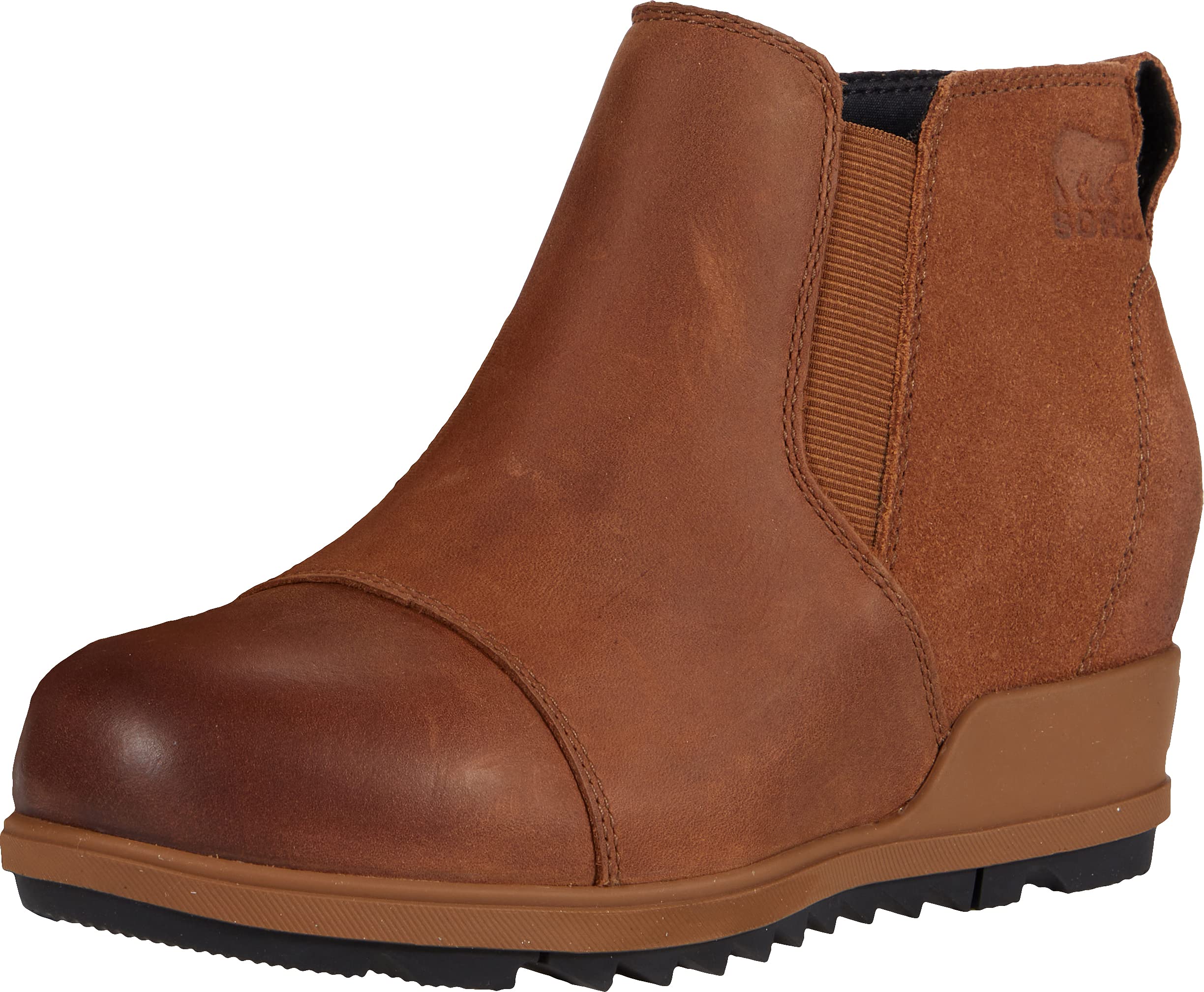
Sorel Evie Pull-On

Sorel Evie Pull-On

Wet city days

Our Score 9.2/10
Check Price

Worth Noting

  • Runs narrow through the width
  • Scuffs show quickly on the leather
Fit
Runs narrow
Style
Pull-on wedge
Water Resistance
Waterproof

Not every winter day needs a snow boot. For the wet, thirty-five-degree morning when the sidewalk is a river and the office is eighty degrees inside, this pull-on bootie does the job: a waterproof upper, a wedge that lifts you out of puddles, and a shape that reads as a shoe rather than outdoor gear.

It is the dressiest option here by a distance. There are no laces to tie, it works with trousers and skirts alike, and the wedge is stable enough for a long walk to the train. Waterproofing held up in ice, snow, and a couple of accidental puddles without anything reaching the sock.

Where it stops is the deep cold. This is a wet-weather boot more than a cold-weather one, since the design is about waterproofing and shape rather than insulation, so on a bitter day you will want wool socks or a proper snow boot. If your winters are more rain than blizzard, though, this is the one you will wear most.

Bottom line: Best for wet city winters and anyone who wants a boot that passes as a shoe, and the dressiest pair on this list.

How We Tested Winter Boots Through Sleet, Slush, and Stairs

We started by gathering every pair that came up again and again in customer reviews and on best-seller lists, then filtered by what actually matters here: a real waterproof barrier rather than a spray-on finish, lugs deep enough to bite into packed snow, a warmth rating we could sanity-check, and sizing that runs consistently from pair to pair. Twelve made the cut and went home with testers.

Fit got tested first, because it colors everything else. Each tester tried their pair with thin liner socks and again with thick wool socks, walked a flight of stairs, and noted where the boot pinched, slipped at the heel, or felt short in the toe box. For warmth, we stood still outdoors for 20 minutes at a stretch — the bus-stop test — since boots that feel toasty while you're striding can go cold fast when you're waiting.

Then came the weather. Testers wore their pairs through wet snow, slush, and the salty gray soup at the edge of the road, stepping deliberately into puddles to see whether seams, zippers, or stitching let water through. At the end of the season we inspected the damage: tread worn flat at the heel, scuffed toes, matted lining, and whether the waterproofing still held after months of salt. Appearance was a judgment call — we wore each pair with jeans, leggings, and a skirt and noted which ones we'd genuinely choose to put on.

Value came last, and it was rarely about the sticker price alone; the pairs that scored well were the ones still dry and structurally sound in March. We'll keep wearing a few of them for another season and update this list if anything gives out.

How to Choose Winter Boots for Women

Match the boot to your winter

The most common mistake is buying for the coldest day you can imagine. If your winters stay dry and cold, a lined suede mini like the BEARPAW Emma Short is warmer and better looking than a technical snow boot, and you will never miss the waterproofing. If your sidewalks turn to slush by nine in the morning, waterproofing matters more than height or appearance. If you are stepping through drifts to the car, shaft height does a job no lining can do.

Name your worst regular condition, not your worst imagined one. Most women end up with a boot that is too heavy and too tall for the winter they actually have.

Waterproofing fails at the openings

A waterproof upper is only half the story. Water gets in where the boot opens: a tongue that is not gusseted behind the laces, a zip with no flap covering it, the seam where the shaft meets the foot. When you compare boots, look at how the closure is built rather than trusting one word on the box.

Lace-up boots with a deep gusset handle wet snow best; zip boots are quicker to put on but depend entirely on that flap. In this group the Columbia is the pair we trust in a puddle, and the laced budget boots are the ones we do not.

Fit for the socks you actually wear

Winter boots should fit like the boot you will wear in January, not like a sandal in July. Put on the socks you plan to use, usually a midweight wool, and check that your toes do not touch the front and your heel does not lift as you walk.

Sizing across this group is inconsistent: the BEARPAW runs small, the knee-high DREAM PAIRS runs large, and the Columbia runs generous. If you are between sizes, choose based on the thicker sock. Width matters as much as length, since a roomy toe box keeps circulation going, and circulation is what actually keeps toes warm.

Tread, height, and weight

Tread earns its keep on packed snow and slush and does least on polished ice, where almost nothing short of added cleats will save you. If your driveway ices over every January, budget for a pair of pull-on spikes and stop expecting rubber to do it.

Shaft height is a coverage decision: mini boots walk more naturally and pair with more outfits, mid-calf handles a few inches of snow, and knee-high keeps a drift out. Weight is the sleeper. A heavy boot tires you out over a long walk, so if you cover real distance, favor the lighter picks here.

What wears out first

The sole bond and the stitching go before anything else, especially on cheaper pairs. Look at how the sole is attached and whether the seams are stitched or glued, then check them again at the end of the season rather than waiting for a flap.

Upkeep differs by material. Suede needs a brush and a protector to survive road salt and should be dried away from a radiator; a waterproof synthetic upper mostly needs rinsing and air drying.

Frequently Asked Questions

Final Verdict

The Columbia Ice Maiden II is the pair we recommend to most people: dry feet in slush, warm on a long walk, and comfortable enough to forget about, which is more than any other boot here manages at once. Choose the HOBIBEAR if grip on icy pavement and a lighter boot matter more than polish, or the BEARPAW Emma Short if your winters are dry and you want warmth that feels like a slipper.

If you regularly walk through drifts, go knee-high and keep those boots for dry snow. Buy for the winter you have.