Shoes

Best Hiking Boots for Women of 2026

The summit view isn't what makes or breaks a hike — it's the last two miles down, when your heel starts sliding forward and your toes jam into the front of the boot with every step. A good pair quietly prevents all of that: the heel stays locked, the arch holds up past mile six, and the sole grips wet rock instead of skating across it. Get that part right and the rest of the day takes care of itself.

Fit is the one thing no review can settle on your behalf, so I'll say this instead: try boots on with the sock you'll actually hike in, and judge them on a descent, not on a carpet. Over the past eight months my team and I logged miles in 12 pairs — spring mud, wet creek crossings, loose scree, and a few embarrassingly long dog walks — and the ones that pulled ahead were the ones that stayed comfortable, kept water out, and still looked like something you'd wear to breakfast afterward.

1

Merrell Moab 3 Mid Waterproof

Top Pick
Merrell Moab 3 Mid Waterproof

All-around trail use

Our Score 9.0/10
Check Price

Worth Noting

  • Water protection weakens in sustained rain
Height
Mid
Widths
Regular and wide
Toe Box
Roomy
Waterproofing
Waterproof

What settled the top spot for us was how little the Moab 3 Mid asks of you. It goes on, laces up, and walks like a broken-in boot on the first mile, which in this category is rarer than it should be. Under that easy feel there's real structure: a collar that holds the ankle without cutting into it, an arch that doesn't flatten under a loaded pack, and a sole stiff enough that sharp gravel doesn't telegraph up into your foot. We noticed the support most on descents, where softer boots let your toes jam forward.

Fit is the most argued-over subject in women's boots, and this is the most forgiving fit in the group. There's room across the toe box for a thick wool sock, wide sizes exist, and the heel stays put once you've laced up — no slipping and re-tying halfway along a ridge. The one adjustment worth making is size: if you're between sizes, or your hikes tend to end with a long downhill, take the half size up. A snug fit that feels fine on flat ground gets ugly at mile eight.

In wet grass, puddles, and steady rain, the upper shed water and our socks stayed dry. What impressed us over time was the sole — the lugs are still crisp and the midsole still springs back, which is usually the first part of a boot to go. If you want one pair to cover rocky trails, wet mornings, and feet that are hard to fit, this is the one that handles all three with nothing you have to work around.

Bottom line: The most forgiving all-rounder in this group: it fits a wide range of feet, supports the ankle on rough ground, and needs no break-in. Start here unless you need a specific fit or a lower price.
2

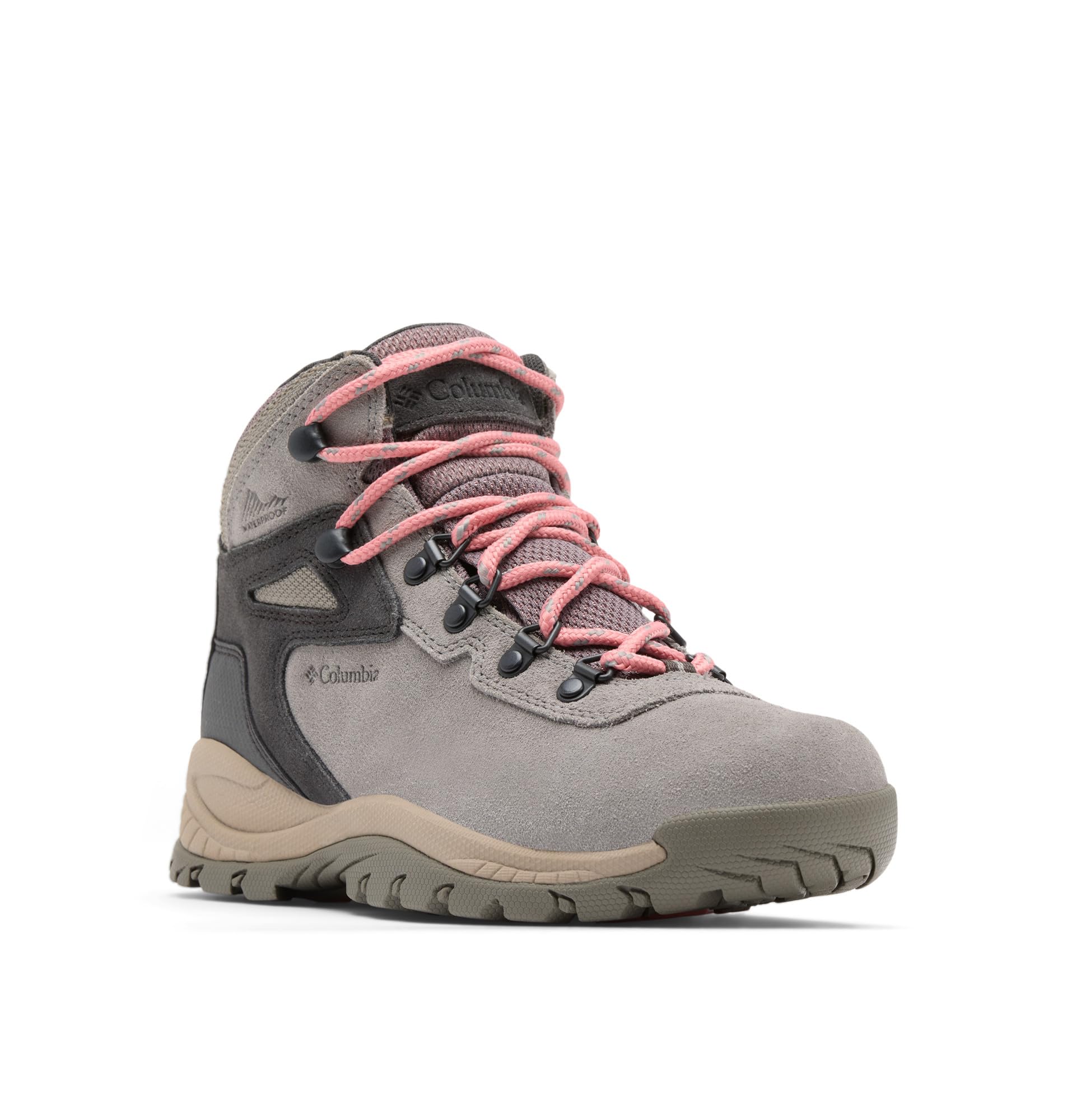
Columbia Newton Ridge Plus Amped

Columbia Newton Ridge Plus Amped

Value and travel

Our Score 9.0/10
Check Price

Worth Noting

  • Collar can rub before it softens
  • Less support than the top pick under a load
Weight
Lightweight
Widths
Regular and wide
Waterproofing
Waterproof

You give up very little dropping down the price ladder to the Newton Ridge Plus, and on light-walking trips you give up nothing at all. The upper is properly waterproof rather than merely treated, so wet grass, rain showers, and muddy paths stay out of your socks. The outsole holds on rock and riverbank, and the whole boot is light enough that a full day on cobblestones doesn't leave your calves complaining.

We liked these most as a travel boot. They're the pair we packed when a trip mixed town time with trail time — light, tidy with jeans, and the best-looking boots in this group by a distance, which is not a small thing if yours will be seen in public. The trade is underfoot: the collar is sturdy, but the platform is softer than the Merrell's, so a heavy pack on rocky ground gives you less of a locked-in feeling.

The fit is the other draw. Wide sizes exist, the toe box is generous, and the cut suits a bunion or a high instep without forcing you up a full size. Two things surprised us: how quickly they went from box to all-day wear, and how much use they got once the hiking was over. For a first pair — or a second pair for trips where a boot has to pass as a shoe — this is where our money goes.

Bottom line: A lot of boot for well under the top pick's price: wide sizes, a roomy toe box, and a light feel on the foot. Our pick when a trip mixes town and trail.

3

NORTIV 8 Waterproof Trekking

NORTIV 8 Waterproof Trekking

Tight budgets

Our Score 9.0/10
Check Price

Worth Noting

  • Grip wavers on wet rock and roots
  • Sizing varies between pairs
Height
Mid
Closure
Lace-up
Waterproofing
Waterproof

Cheap hiking boots usually announce themselves — thin insoles, a floppy heel, laces that fray by the third walk. This one does none of that, which is why it kept surprising us. It goes on soft, needs no break-in, and the padding around the ankle is generous enough that a long day on your feet doesn't leave you thinking about them. At the bottom of this group's price range, that's the whole argument.

Sizing is where the savings show. The fit divides sharply, with some pairs coming up narrow across the ball and others roomy enough to demand a thick sock, so order from a seller with easy returns and try them with the socks you'll actually hike in. Walk a mile indoors before you commit to a trailhead — better to find the squeeze on carpet than halfway up a climb.

Water stays out of puddles, wet grass, and shallow stream crossings as long as it stays below the collar, and the ankle is sturdier than the price suggests. Grip is the weaker half: the lugs bite on dirt and dry rock, but wet roots and angled slickrock are where you'll want to place each foot deliberately. Double-knot the laces before a descent; they work loose.

Bottom line: The budget pick that doesn't feel like a punishment: soft from the first wear, dry in puddles, and supportive enough for real trails. Buy it when the price is the deciding factor.

4

Ariat Terrain

Ariat Terrain

Trail to town

Our Score 9.0/10
Check Price

Worth Noting

  • No waterproofing for sustained rain
Upper
Leather
Height
Ankle
Weight
Lightweight

Ariat's Terrain is the boot here that behaves like a boot all day, not just between trailheads. The leather takes a scuff and then wipes down, the grommets hold firm when you pull the laces tight, and the shape stays put through a day of standing, walking, and getting in and out of a truck.

That versatility is what earns it a place. Most hiking boots announce themselves as hiking boots; this one passes at dinner and at the feed store. It's also strikingly light for leather, and the arch support is real rather than nominal — the kind of underfoot shape that keeps a long day out of your lower back.

What it isn't is a wet-weather boot. No waterproof membrane is listed for this model, so treat the leather as enough for a shower and a dewy field and not much more: a soaked trail will get through, and leather takes a day to dry out. In exchange it breathes on hot days, which the waterproof picks here struggle to do.

Bottom line: A leather boot that hikes and then keeps going — to the barn, the store, the office. The pick if you want one pair that doesn't look like technical gear.

5

KEEN Targhee III Mid Waterproof

KEEN Targhee III Mid Waterproof

Wide forefeet

Our Score 8.6/10
Check Price

Worth Noting

  • Durability is the weakest of these picks
  • Too wide for narrow feet
  • Waterproofing can fail as the upper wears
Height
Mid height
Toe Box
Extra roomy
Waterproofing
Waterproof

There's a particular relief in putting on a boot that doesn't press anywhere, and the Targhee III delivers it. The toe box is the widest of the picks here — wide enough for a thick sock, a bunion, or a forefoot that's been squeezed by every tapered boot in the shop. Underneath, the arch support steadies you on loose rock and uneven ground rather than just filling space.

Longevity is where this one gives ground. The toe flex point is the spot to watch, because it's where this upper can separate, and once that seam lets go the waterproofing goes with it. That's not a reason to walk away if this is the first boot that has ever fit you — it's a reason to check the toe seam at the end of each season and to store them dry rather than damp in a garage.

Fit is the reason to buy, and it's worth being honest about the other end of it: these are wide, so a narrow foot will swim in them. For a high instep, a wide forefoot, or a foot that's been rubbed raw by everything else, this is the pair to try first — with the socks you'll hike in and a return label ready.

Bottom line: If a bunion or a wide forefoot has kept you out of hiking boots, start here — the toe box is the roomiest in this group and the support is genuine.

6

NORTIV 8 Lightweight Ankle

NORTIV 8 Lightweight Ankle

Easy summer trails

Our Score 9.0/10
Check Price

Worth Noting

  • Water resistance fails in wet grass and dew
  • Less ankle coverage than a mid boot
Fit
Roomy for thick socks
Height
Ankle
Weight
Lightweight

At ankle height and barely there on the foot, this is the boot for someone who isn't sure they're a hiker yet. It goes on like a sneaker, needs no break-in, and the fit is roomy enough that a thick winter sock doesn't crowd your toes. For a summer of easy trails, a festival field, or a job that keeps you outside, that combination is hard to argue with.

Wet grass is where it falls short. Heavy dew or a soaked meadow can leave your socks damp, so despite the hiking label this is a dry-weather boot — right for a groomed trail in July, wrong for a spring trip in the Pacific Northwest.

The shorter cut matters as well. There's cushioning and support around the arch, but the collar sits below the ankle bone, so the sideways protection a mid boot gives you on rocks and roots simply isn't there. None of that undoes the value: for a first pair, a knock-around boot, or a summer of flat trails, it does the job at the lowest cost here.

Bottom line: The lightest, least expensive way into a hiking boot, and comfortable enough for easy trails. Not the pair for wet mornings or rough ground.

How We Tested a Dozen Pairs of Women's Hiking Boots

We started with a shortlist of nearly 40 pairs pulled from brand catalogs, outdoor retailer shelves, and the boots our hiking friends actually wear, then cut it down by weight, price, available sizes, and whether each one came in half sizes and a wide. That left 12 pairs, which we wore for eight months starting in a muddy March.

Every pair got the same first day: a three-mile loop with a steep descent, which is where heel slip and toe jam announce themselves immediately. From there, testers wore them on longer weekend hikes, up a rocky summit, and on weekday dog walks to see whether the arch support still felt like support at the end of a long day or had flattened into foam. We noted every hot spot, every blister, and whether comfort at mile eight matched comfort at mile one.

For water resistance, we stood in a shallow creek for two minutes, walked through wet grass at dawn, and watched how fast each boot soaked through. Traction got graded on wet rock slabs, loose scree, and mud. Durability came down to what the boots looked like eight months later — worn lugs, frayed stitching, scuffed toe caps, and whether the waterproofing had quietly given up. We weighed value last: a less expensive pair that lasted the season beat a pricier one that needed replacing in June.

How to Choose Women's Hiking Boots

Fit: Width and Volume First

Women's hiking boots are built on different lasts, and the differences run wider than the size number suggests. Start with the toe box — a thumb's width beyond your longest toe and no pressure across the ball of the foot — then check the heel, which should stay put without you craning the laces tight. If you know you need width, the Merrell and Columbia come in wide sizes, and the KEEN runs wide even in its standard fit.

Try boots on with the socks you'll hike in, late in the day when feet are at their largest. The pair that fits at 6 p.m. after a walk is the pair that fits at mile six.

Mid Boot or Low Cut?

The cut decides how much ankle you get and how much boot you carry up the hill. A mid boot like the Moab 3 or the Targhee III puts padding and structure around the ankle, which pays off on rocky, side-sloping ground and with a pack on your back. An ankle-height boot is lighter and cooler, and perfectly fine on smooth, well-graded trails.

The trap is assuming height equals stability. A higher collar does not steady a weak ankle by itself — the lacing and the platform under your foot do most of that work, so don't trade a good fit for extra leather.

How Much Waterproofing You Actually Need

A membrane keeps rain, dew, and puddles out. Whether you need one depends on where you walk: wet grass, coastal fog, and muddy spring trails justify it, while a dry-climate hiker gets more comfort and faster drying from unlined leather like the Ariat.

Two things shoppers get wrong. Waterproofing only works below the collar, so a deep crossing soaks you regardless of the price tag. And membranes degrade as the upper flexes, so a boot that kept you dry last season may not this one — re-proofing treatments help, but they don't rebuild a torn seam.

Traction: Where the Rubber Meets Rock

Lug depth and rubber compound matter more than a tread pattern looks. Deep, open lugs clear mud; a softer compound holds wet rock. Across this group, grip is the first thing to go cheap — the budget boots handle dry dirt and gravel fine and get vague on wet roots and angled slickrock.

Match the sole to the ground you actually walk. Stream crossings and slickrock justify spending more; maintained paths and fire roads won't reward it.

What You Pay For, and When to Spend

Price buys three things here: more reliable waterproofing, a stiffer platform underfoot, and uppers that survive more seasons. At the bottom of this group you get comfort and light weight, but a fit that varies between pairs and grip that wavers when it's wet. In the middle you get proper waterproofing and a roomier fit. At the top you're paying for support under a load and soles that keep their shape.

Our order of spending: fit and waterproofing first. Pay for extra structure only if you carry weight or walk rough, uneven ground.

Frequently Asked Questions

Final Verdict

If we were buying one pair tomorrow, it would be the Merrell Moab 3 Mid. It fits the widest range of feet in this group, supports the ankle on rough ground, needs no break-in, and held its shape through the wet, rocky miles we gave it.

Two situations change the answer. If price is the hard limit, the NORTIV 8 Trekking gets you most of the way there for a fraction of the money. If your forefoot is the reason boots have failed you before, try the KEEN Targhee III first — and go in expecting to keep an eye on the toe seam.