Shoes

Best Walking Shoes for Women with Wide Feet of 2026

A wide size on a shoebox doesn't tell you much. Plenty of shoes labeled wide are just a standard last with extra volume dumped in, so they slip at the heel while the toes are still pinched. What helps is a shoe that's genuinely wider through the ball and toe box, with a heel that holds you in place and a sole that doesn't fold under your arch after a mile. That's the difference between an easy walk and one you cut short. We've spent six months in 12 wide-width pairs, and the spread between them is bigger than you'd guess.

Here's what I'd tell a first-time wide-shoe shopper: try pairs on late in the day, when your feet are at their biggest, and check that the shoe creases where your toes bend, not across your arch. A roomy toe box won't save a sloppy heel, and looks count — a couple of pairs felt fine and looked like bricks, so they're not here. What follows are the ones my testers kept reaching for.

1

Skechers GO Walk Lite Coral

Top Pick
Skechers GO Walk Lite Coral

Everyday wide fit

Our Score 9.4/10
Check Price

Worth Noting

  • Thin sole is little protection on rough pavement
Closure
Slip-on
Shoe Type
Walking

Wide feet usually mean ordering up half a size and then living with a shoe that is long everywhere and still tight across the ball. The GO Walk Lite Coral goes the other way. The stretch knit upper gives exactly where a broad forefoot pushes, and the toe box is roomy enough that sizing up isn't part of the deal, so width comes from the material rather than from extra length. That is why it is the first shoe we recommend here: it solves the pressure problem instead of the length problem.

It is also the lightest-feeling shoe in this group, which matters more than it sounds once you have been on your feet for a full day. There is no structured upper to break in, so the first walk and the tenth feel much the same, and the slip-on collar means you step in rather than work your heel past a stiff counter. It runs close to true to size, which is rarer in this category than it should be.

The trade-off is underfoot. The footbed is soft rather than structured and the arch is gentle, so if you need real support, plan on your own insole. The liner lifts out, which turns that into a five-minute fix rather than a reason to pass, and it frees a little depth if the shoe feels roomy over the top of the foot.

One more thing we appreciated: the neutral tan hides road dust and water marks far better than a white walking shoe does. A small mercy, but you notice it by the second week.

Bottom line: For wide feet that want room without going up a size, this is our pick: roomy across the ball, feather-light, and soft from the first walk.
2

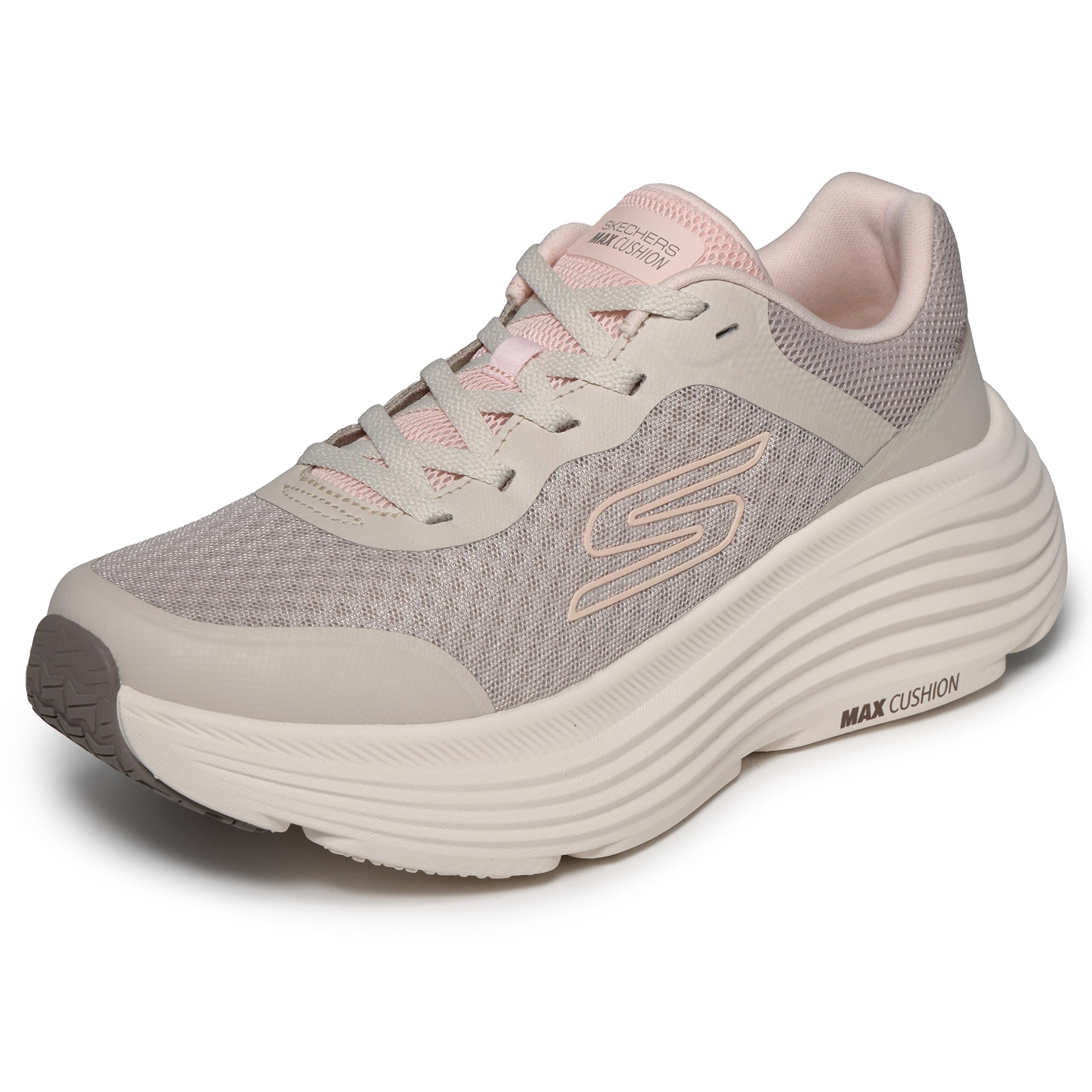
Skechers Max Cushioning Endeavour

Skechers Max Cushioning Endeavour

Long pavement walks

Our Score 9.0/10
Check Price

Worth Noting

  • Outsole wear shows up with heavy daily mileage
Weight
1.5 lb
Shoe Type
Road running
Dimensions
12 x 8 x 4.5 in

Where the GO Walk Lite is barely there underfoot, the Max Cushioning Endeavour is the opposite: a thick, soft slab of a sole built to eat distance. It is listed at 1.5 pounds, which is light for the amount of foam under your foot, and the extra room through the toe area carries over to a wide forefoot without letting the heel swim.

For long daily walks, an hour or more on pavement, this is the best cushioned ride in this group. The padding runs the whole length rather than pooling at the heel, the collar holds the back of the foot, and the toe box stays wide. The difference shows up late in a walk, when pavement starts to feel like pavement. If your heel complains on hard sidewalks, this is the pick with the most between you and the ground.

It is sold as a road-running shoe, and that is the honest way to think about it: tall, soft, slightly rockered, and perfectly happy at walking pace. You do feel the height, so if you want ground feel over protection, our top pick is the better match. For miles on sidewalks or a shift spent standing, that height is the whole point.

Bottom line: We keep this one for long days on pavement: the thick, soft sole is the most forgiving ride in this group, and the toe box still has room for a wide forefoot.

3

New Balance 608 V5

New Balance 608 V5

Firm support

Our Score 8.8/10
Check Price

Worth Noting

  • Outsole and upper wear has shown up inside a year
Closure
Lace-up
Shoe Type
Cross-training

The 608 V5 is the least forgiving shoe here out of the box: firm leather, a sole that doesn't flex much even in the hand, and a heel that takes a few walks to stop pressing. It is not a shoe you slip on and forget about.

Give it a few walks and the leather softens across the ball, and what is left underneath is the most structured, most supportive ride in this group. For a wide foot with a high instep that combination is hard to beat: a genuinely roomy toe box, a firm arch that doesn't flatten out under weight, and laces that set the volume across the top of the foot instead of cinching the toes. This is the pick for someone who wants a shoe to hold the foot rather than cushion it.

It is also the plainest-looking shoe here, a leather cross-trainer that reads fine with trousers and never announces itself as a walking shoe. If you are on hard floors all day and want something that doesn't squirm under you, this is the one we point to. Break-in is the price of that structure, and it is the reason this is a runner-up rather than our first recommendation for someone who wants comfort on day one.

Bottom line: We steer anyone who wants a shoe to hold the foot rather than cushion it toward this one: firm arch, genuinely wide toe box, and laces that adjust the fit.

4

NORTIV 8 Walking Sneaker

NORTIV 8 Walking Sneaker

Roomy toe box

Our Score 8.6/10
Check Price

Worth Noting

Closure
Lace-up
Shoe Type
Walking

The NORTIV 8 is the least expensive lace-up here, and it spends a good chunk of that advantage on toe room. The forefoot is cut wide, roomier across the toes than shoes that cost more in this group, and it runs close to true, so most wide feet won't need to go up a size. It also looks like a more expensive sneaker than it is, with enough colorways that you aren't stuck with gray.

Underfoot it is soft and a little bouncy, with a cushioned heel that takes the sting out of pavement. The laces are the only way in, and you will want to loosen them properly rather than shove a foot in, a small daily price for a shoe that stays put once it is on. The upper is soft enough that there is nothing to break in.

For a wide forefoot on a tighter budget, this is the most toe room in the group for the money, and that is the whole case for it. Where it gives ground to the pricier picks is structure: the cushioning stays soft and the foot moves a little inside, so it suits an hour on pavement better than five.

Bottom line: If a wide forefoot is the whole problem and the budget is tight, we point you here: the roomiest toe box for the money, if not the most structured.

5

ALLSWIFIT Slip-On Walker

ALLSWIFIT Slip-On Walker

Hands-free wear

Our Score 8.6/10
Check Price

Worth Noting

  • Whole sizes only, so the fit is a compromise
Closure
Slip-on
Shoe Type
Walking

The ALLSWIFIT is the easiest shoe to get into in this group. You step down and the heel slides in, with no hands, no bending, and no levering a shoehorn behind your heel. For anyone whose feet are the reason they dread leaving the house, that alone earns it a place here.

The rest holds up better than most slip-ons. The insole has more arch than the Skechers knits, the heel counter is sturdy enough to stop the foot sliding, and the upper is soft without collapsing into a sock. The cushioning is soft enough for all-day wear without feeling like you are standing on a mattress. The fit runs roomy, so it is worth ordering your usual size rather than going up.

One design detail we noticed: two deep recesses in the outsole collect grit, and a minute with a stick before you come inside saves your floors. It is a small annoyance in exchange for a shoe that goes on without a thought, and the trade is worth it if laces are the part of the day you would rather skip.

Bottom line: We hand this to anyone who can't bend to tie a lace: it steps on hands-free, and the arch and heel hold up better than most slip-ons here.

6

Abboos Slip-On Sneaker

Abboos Slip-On Sneaker

Tight budgets

Our Score 8.6/10
Check Price

Worth Noting

  • Thin cushioning for long walks
  • Grip is the weak spot on wet ground
Closure
Slip-on
Shoe Type
Road running

The Abboos is the cheapest shoe in this group by a wide margin, and the toe box is why it made the cut. It is cut wide across the forefoot, and the mesh gives over the ball, so a broad foot gets room that usually costs more. The rest of the shoe is where the savings show.

The laces are decorative: they don't cinch anything, so the fit is whatever the slip-on collar gives you. It is very light, the colors are genuinely fun, and there is nothing to break in. It also looks like a running shoe rather than a medical shoe, which is not nothing at this end of the market. Sizing is the least predictable thing about it, so order your usual and keep the return window in mind.

Where it earns its place is the shape: a wide, forgiving forefoot at the lowest price in the group. If your last few pairs have all been too tight across the toes, this is the cheapest way to find out whether shape is the answer, and it does that one job properly.

Bottom line: If the budget is the hard limit, we point you here: it is the least expensive way to get a genuinely wide toe box, and the shape is the reason to buy.

How We Tested 12 Pairs of Wide Walking Shoes

We started with roughly 40 styles that come in true wide and extra-wide widths rather than a roomier cut of a medium, then cut anything that topped out at a D width or couldn't take a removable insole. Shoes that were so heavy or stiff they felt like a chore to pull on got dropped too. That left 12 pairs, which we wore for six months.

Fit came first. We measured the toe box at its widest point, then walked in each pair at the end of the day when feet are at their largest, watching whether the heel stayed put on stairs and whether the widest part of the shoe lined up with the widest part of the foot. Each pair got an eight-hour day of errands, dog walks, hard grocery-store floors, and a long stretch on pavement, and we noted where seams rubbed, whether we had to size up, and whether the stock insole could be swapped for an orthotic.

Then we bent each shoe in half by hand to see where it flexed — at the toes, or awkwardly across the arch — and re-checked after 30 miles. We crossed wet tile and walked down a smooth ramp to see how the outsole gripped. At the six-month mark we looked at tread wear, seam separation, and whether the midsole had flattened, and asked the blunt question: does it look like something you'd wear out to lunch, and did it hold up well enough to be worth what it cost? Each pair stayed by the door until it earned or lost its spot.

How to Choose Walking Shoes for Wide Feet

Get the width right before you size up

Sizing up adds length, not width. It also pushes the flex point forward of the ball of your foot, which is why a too-long shoe can feel like it's fighting you on every step and slipping at the heel. A true wide width, or a shape that is genuinely wide through the forefoot, is the better fix. If a shoe comes only in standard width, look for a stretch knit upper, since width then comes from the material rather than the last — the GO Walk Lite Coral is the clearest example of that here.

Look at the toe box shape, not just the label

A wide width that tapers to a point at the toe still pinches. What you want is a rounded forefoot with a little depth over the toes: the difference between the New Balance 608 V5, which holds its shape around a broad forefoot, and a sleeker shoe that is wide only at the ball and narrow again up front. Leather overlays hold their shape and knits stretch, and if you have a high instep as well as wide feet, laces matter more than the width label because they let the shoe open over the top of the foot.

Match cushioning to the distance you actually walk

The right amount of cushioning depends on how long you are out. A light, low shoe is lovely for errands and all-day standing, but on an hour of pavement you feel every seam in the sidewalk. A tall, soft shoe eats the miles and can feel vague if you like ground feel. We keep both kinds in this list for that reason: the Max Cushioning Endeavour for distance, the lighter knits for everything else.

Treat the insole as a replaceable part

Arch support is the least consistent thing about walking shoes; two models from the same line can feel completely different under the arch. The usual fix is your own insole, so check before you buy whether the liner lifts out. A removable footbed takes an orthotic; a glued-down one leaves you with whatever is in there. Pulling a thick liner also frees up a little depth, which helps in a wide shoe that feels roomy over the top of the foot.

Decide how much closure you want

Slip-ons are a real convenience, especially if bending to tie a lace is difficult, and a stretch collar is forgiving over a high instep. What a slip-on cannot do is cinch. If your feet swell through the day, or one foot is wider than the other, laces give you adjustment that a step-in shoe never will. Pick the closure for your hands first, then make the width work with the right size.

Frequently Asked Questions

Final Verdict

If your feet are wide and your walking is mostly errands and pavement, start with the Skechers GO Walk Lite Coral. It gives room where a broad forefoot needs it, weighs almost nothing, and needs no break-in, and the removable liner lets you add support if the soft footbed isn't enough.

Walking longer distances or standing on hard floors? The Max Cushioning Endeavour puts far more between you and the ground. If you would rather have a shoe that holds your foot than cushions it, that is the New Balance 608 V5, as long as you budget the break-in.