Shoes

Best Walking Shoes for Women with Arch Support of 2026

Cushioning is easy to find. Cushioning that still holds your arch at hour six — standing in the checkout line with a full cart — is the harder sell. I've bought walking shoes that felt like marshmallows in the store and like flat slabs by lunchtime. A good pair doesn't just pad your step; it keeps its shape under you all day, and the best ones manage it without looking like something from a medical supply catalog.

My team and I spent the past six months walking in 12 pairs — through commutes, dog walks, and long days on our feet — and the ones we kept reaching for were supportive without looking the part. Arch support, I've learned, isn't how firm a shoe feels on the carpet; it's where the shoe's shape meets your foot, and a pair can feel solid in the aisle and still let you roll inward by mile two. Below are the ones that held their shape, sorted by the feet and the days they suit best.

1

Skechers Go Walk 5

Top Pick
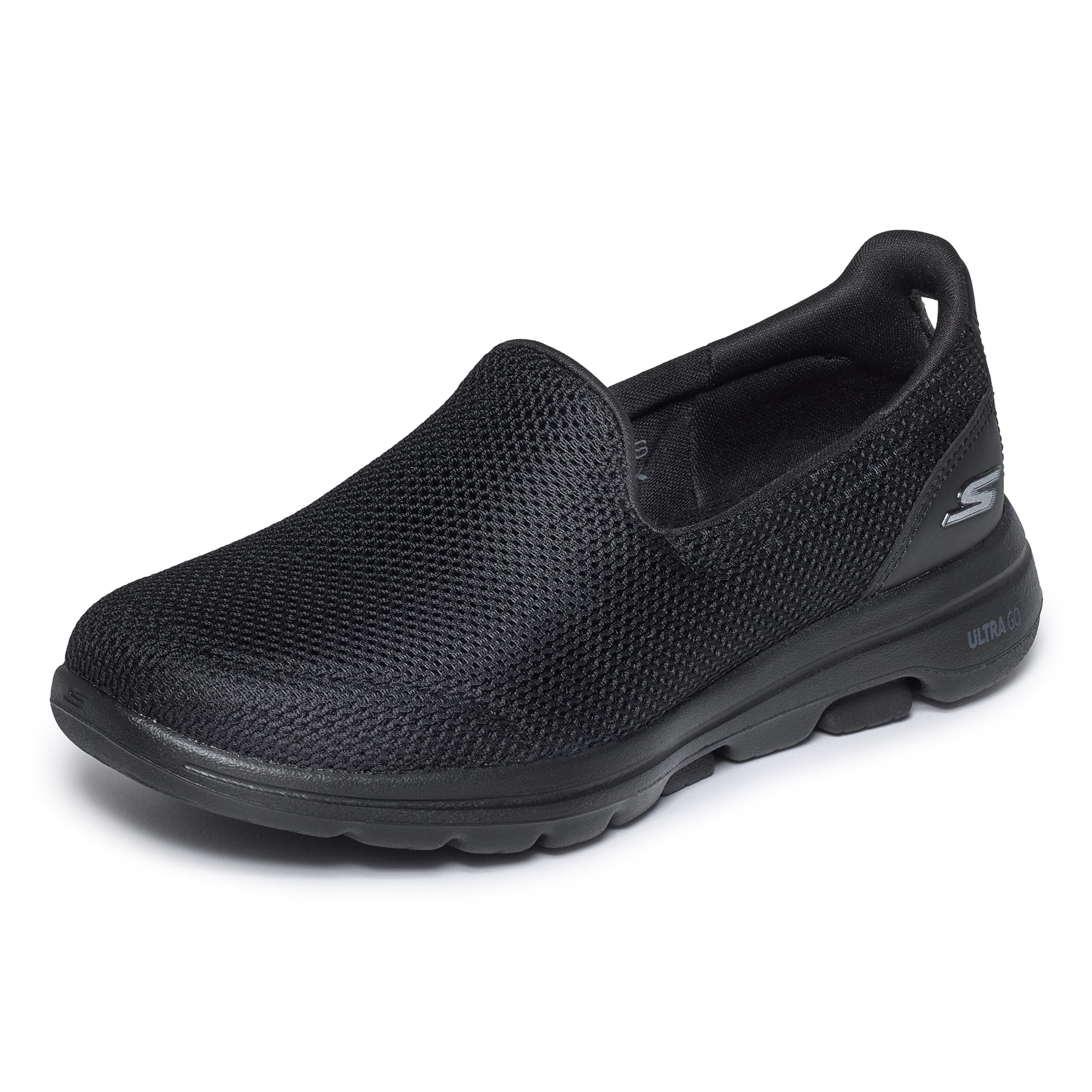
Skechers Go Walk 5

Everyday walking

Our Score 9.0/10
Check Price

Worth Noting

Style
Slip-on walking sneaker
Weight
Lightweight
Closure
No laces
Arch Support
Cushioned

The Go Walk 5 is the pair we recommend first because it gets the everyday basics right: a soft, cushioned ride, a no-lace upper, and arch support you can feel without the shoe feeling like a medical device. In our testing, it was the easiest of the group to pull on and the one we were least aware of by the end of a busy day. That matters more than a long list of features when you are walking to the store, standing in line, or heading out for a lunchtime loop.

The arch support is the reason it earns the top spot. It sits under the midfoot with enough presence to feel supportive, but the shoe still flexes at the ball and does not fight your foot. The cushioning is balanced rather than pillowy, so you get a comfortable landing without the vague, sinking feeling that comes with a very soft midsole. We think that balance is the right default for women who want support for daily walks, not a shoe that feels like a temporary orthotic.

Fit is the one thing to sort out before ordering. This shoe can run large for some feet and narrow for others, and the heel can feel different depending on your socks. We checked heel slip and toe room first, and that is the right move: order your usual size, walk around indoors, and size down if the shoe feels loose across the instep. The no-lace upper is forgiving, but it is not a substitute for the right length.

The upper looks tidy enough for errands and casual weekends, and the quality is strong for the price. It is the one we recommend to a friend who wants a straightforward walking shoe with real arch support and no fuss.

Bottom line: We recommend the Go Walk 5 for most women who want everyday arch support: it is comfortable, easy to slip on, and supportive without feeling clinical.
2

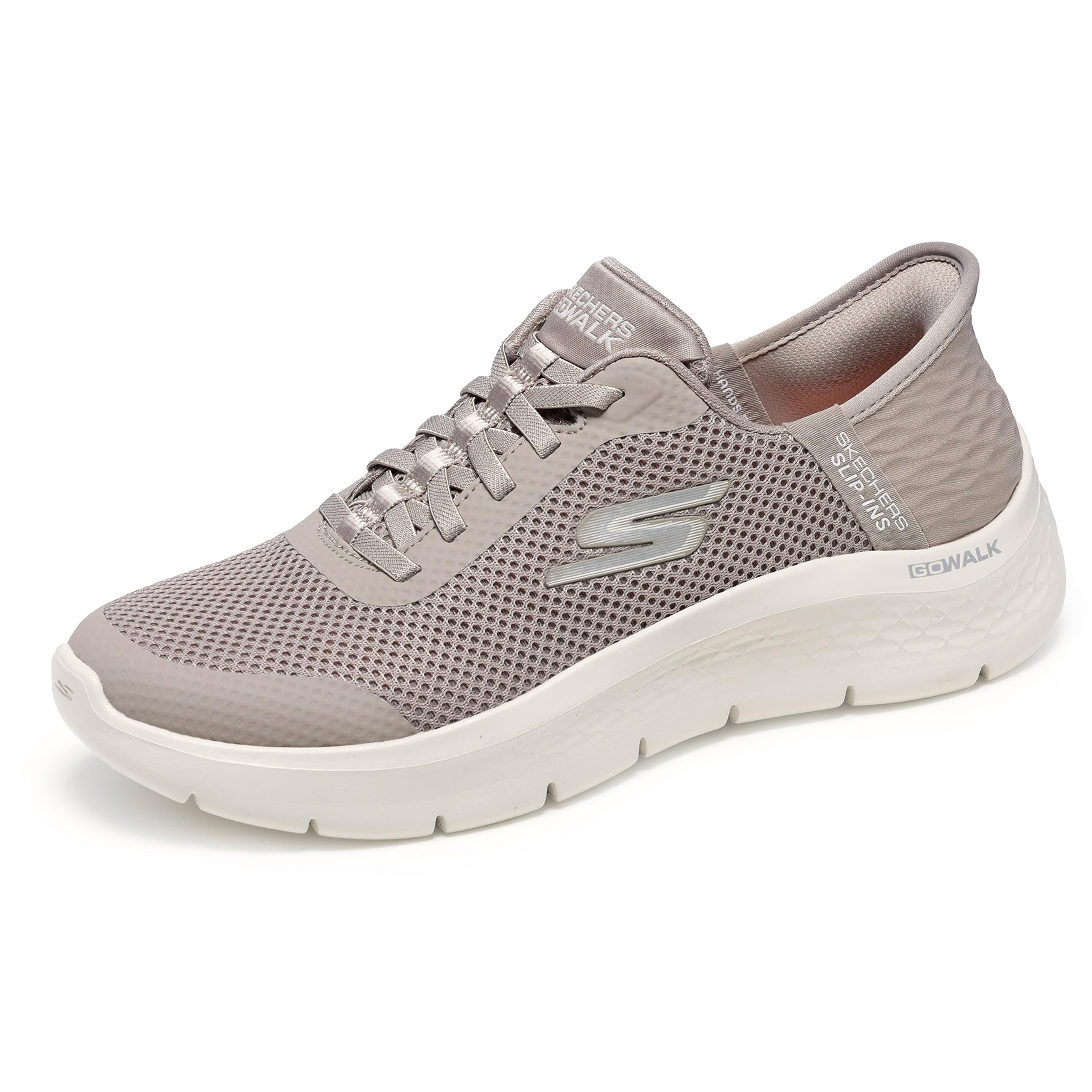
Skechers Go Walk Flex Grand Entry

Skechers Go Walk Flex Grand Entry

Easy slip-on

Our Score 8.8/10
Check Price

Worth Noting

Fit
Narrow
Style
Slip-on walking sneaker
Closure
No laces
Arch Support
Supportive

The Flex is built for the woman who wants to walk out the door without reaching for laces: the upper opens wide, the foot slides in, and the heel settles without a fight. We noticed the difference most on days when we were carrying bags or wearing a jacket with no free hand. It is the kind of convenience that sounds minor until you use it every day.

The arch support is more pronounced than the Go Walk 5's, and it is the reason we keep this pair in the runner-up slot. The footbed feels supportive under the midfoot, and the shoe stays light enough that it does not drag on longer errands. The shoe also looks more like an everyday sneaker than a recovery slipper, which helps if you wear it to work or out to lunch.

Width is the catch. The Flex runs narrow, and the fit can feel small for women who usually wear a wide. If you have a wide forefoot or a high instep, the Go Walk 5 is the safer cut; if your foot is narrower, the Flex gives you a more secure hold. We recommend trying it with the socks you walk in and checking the little toe before you commit.

Bottom line: We like the Flex for anyone who wants to step into a supportive walking shoe without bending, but its narrow fit makes it a better match for slender feet than wide ones.

3

NORTIV 8 Walking Shoes

NORTIV 8 Walking Shoes

Cushioned comfort

Our Score 8.6/10
Check Price

Worth Noting

  • Soft ride can feel vague on uneven ground
Style
Walking sneaker
Closure
Lace-up
Toe Box
Roomy
Cushioning
Soft

If the Go Walk 5 feels too businesslike, the NORTIV 8 is the pair we reach for when comfort means a softer landing. The shoe has a roomy toe box and a cushioned midsole that takes the sting out of long stretches on pavement. We noticed the cushioning most in the heel, where it feels plush without swallowing the foot.

Arch support is present and it is more than an afterthought: the footbed has a gentle rise under the midfoot, and the shoe does not collapse when you push off. It is not as structured as the Flex, but it is comfortable for walkers who want softness and a little support rather than a firm orthotic feel. We think that makes it the better choice for standing-heavy days and relaxed walks.

The fit is roomier than the Skechers picks, which is good news for a wide toe box but less good if you have a narrow heel. If you need a locked-in feel for long walks, the Go Walk 5 is the better choice; if you want room to spread your toes, the NORTIV 8 wins. We also like that the color range makes it look like an everyday sneaker rather than a medical shoe.

The upper and cushioning are the reasons it earns a runner-up spot, not the outsole. It is a comfortable shoe for pavement and errands, and the price sits between the Go Walk 5 and the Flex. We do not choose it for technical trails or rainy-day grip, but for the everyday walking this guide covers, it is a soft, supportive option.

Bottom line: The NORTIV 8 is our pick for maximum cushioning: it feels soft and roomy underfoot and gives walkers a plush, cloud-like ride for everyday errands.

4

Ryka Dash 3

Ryka Dash 3

Light daily walks

Our Score 8.6/10
Check Price

Worth Noting

  • Sides, stitching, and outsole can wear early
Style
Walking sneaker
Weight
Lightweight
Toe Box
Roomy
Arch Support
Supportive

Lightweight walking shoes can feel flimsy, but the Dash 3 is the pair in this group we reach for when we want less shoe on our foot, not less support. It has a roomy toe box and a low, flexible feel that makes short walks feel easy. We noticed the weight most on warm days and quick errands, where a heavier shoe can feel like overkill.

Arch support is a strong point: the footbed has a supportive rise and the heel hugs without pinching. The cushioning is the compromise. It is adequate for shorter walks, but if you want a plush landing under the ball of your foot, the NORTIV 8 is the better pick. We kept the Dash 3 for errands and casual walks rather than full days on concrete.

The roomy toe box is a genuine plus for wide feet, and the shoe works well with thicker socks. The upper is not as structured as the Go Walk 5, so if you need a secure, locked-in feel for longer walks, choose the Skechers. For a light, breathable shoe that disappears on your foot, the Dash 3 has a clear role.

The Dash 3 is a good second pair for short walks, errands, and travel, not the one we reach for when we know we will be on our feet for hours. At its price, it is a reasonable way to add a roomier, lighter option without changing your whole walking routine.

Bottom line: We like the Dash 3 as a lightweight choice for short daily walks and roomy-toe-box comfort, with a flexible feel that suits errands and casual wear.

Six Months, 12 Pairs, and a Lot of Sidewalk Miles

We built the shortlist from the ground up: women's walking shoes with a footbed that genuinely rises under the arch, insoles you can pull out and swap for your own orthotics, and toe boxes offered in more than one width. Anything available in whole sizes only got cut, since half sizes are where most of us actually live.

Twelve pairs made it through, and we wore them for six months. Each went into a rotation that mirrored a normal week: a 20-minute dog walk before work, an eight-hour day on our feet or a commute with a long walk at each end, a Saturday of errands, and one airport push with a carry-on in tow.

For fit and size we didn't just try them on. We measured each insole against a ruler, noted where the arch peak landed relative to the ball of the foot, then wore each pair from the first hour to the eighth, paying attention to where pressure showed up after lunch. Toe box got checked by spreading our toes inside the shoe and walking a block, then looking for pinky rub and redness when we took them off. Ease of use came down to whether we could step into them hands-free at the front door, and appearance to whether we'd wear them to a casual lunch without changing.

Cushioning we judged by thumb pressure at the heel and by how the midsole felt at hour six versus hour one — a few pairs felt plush at 9 a.m. and thin by 4. Quality and durability came from a tread check at three months and again at six, hunting for smooth patches under the ball of the foot and midsoles that had stopped springing back.

How to Choose Walking Shoes with Arch Support

Start With the Arch, Not the Marketing

Arch support is not one feature you can check off; it is how the footbed, midsole, and heel work together under your foot. A shoe can have a pronounced arch and still feel wrong if it is too narrow or too stiff. We look for a gentle rise under the midfoot, a heel that holds without pinching, and enough flex at the ball to let the foot roll. If you have a high arch, a softer contoured footbed is usually easier; if your foot is flatter, a more structured shoe can feel more secure.

Try shoes with the socks you walk in and stand for a minute before deciding. The Go Walk 5 is the balance point in this group: noticeable support, but not a hard shelf under the foot.

Get the Width and Toe Box Right

Fit is where most walking-shoe purchases go wrong, and the picks here show why: some run large, some run narrow, and a roomy toe box can be a blessing or a slipper. You want about a thumb's width between your longest toe and the front of the shoe, and no pressure across the widest part of your foot.

If you have a wide forefoot, look for a shoe with a specifically roomy toe box; the NORTIV 8 is the roomiest of our picks. If your heel slips, try a half size down before adding an insert.

Choose Cushioning for Your Walking Day

Cushioning is a preference, but it also changes how stable a shoe feels. A plush midsole takes pressure off the heel and ball of the foot on pavement, which is why the NORTIV 8 appeals for long errands and standing-heavy days. A firmer, more flexible shoe like the Go Walk 5 gives you more feedback from the ground and can feel more secure if you walk on uneven sidewalks.

If you split your time between walking and standing, choose the softer shoe; if you want a shoe that disappears on your foot, choose the lighter one.

Decide How Much Convenience You Want

Slip-on walking shoes are genuinely useful if bending over is uncomfortable or you are in and out of the house all day. The trade-off is adjustability: a no-lace upper can feel loose at the heel if it does not match your instep. The Go Walk Flex Grand Entry is the easiest of our picks to step into, but it runs narrow; the Go Walk 5 is similarly simple to pull on and a little more forgiving in fit.

If you need a dialed-in fit for long walks, laces still give you more control.

Check Durability Before You Commit

A walking shoe should last through more than a few errands. Look at the outsole at the heel and the stitching at the toe, the two places that tend to go first. A lightweight shoe can trade some outsole life for comfort, which is why we treat the lightest picks as short-walk shoes rather than high-mileage workhorses.

Rotate your shoes if you walk daily, and replace them when the tread is smooth or the midsole feels flat. A fresh pair is cheaper than working around a worn-out sole.

Frequently Asked Questions

Final Verdict

For most women, the Skechers Go Walk 5 is the walking shoe we recommend first. It gives you noticeable arch support, a soft but not mushy ride, and the kind of slip-on ease that makes a daily walk feel less like a production.

If you want a roomier toe box and a plusher landing, the NORTIV 8 is the better fit; if easy entry is the priority and your foot is narrow, the Skechers Go Walk Flex Grand Entry is worth the step up.