Shoes

Best Walking Shoes for Plus-Size Women of 2026

A walk around the block shouldn't leave you thinking about your feet for the rest of the day. But for plus size women, the wrong shoe can turn a simple errand into a countdown to foot pain—cushion that flattens, arches that give out, and uppers that pinch at the widest part of the foot. I've laced up plenty of pairs that looked supportive on the shelf and felt like cardboard by the second mile, which is why I care less about flashy claims and more about how a shoe behaves after an hour on your feet.

Over the past eight months, my team and I have tested 12 walking shoes built for plus size women, wearing them on daily dog walks, through airport terminals, and during long shifts of errands and standing. We paid attention to the things that actually matter: whether the arch support holds up, how the fit feels at the toe box and heel, if the size ran true, whether the materials lasted after weeks of wear, and if the shoe stays stiff enough for stability without feeling clunky. The best pairs also looked good enough to wear beyond the gym—and at a price that felt fair for the quality. The picks below are the ones we kept reaching for long after testing ended.

1

Easy Spirit Romy

Top Pick
Easy Spirit Romy

All-day walking

Our Score 9.0/10
Check Price

Worth Noting

  • Runs generous even for a wide fitting
Style
Walking sneaker
Closure
Lace-up
Available Since
2019

The toe box decides whether a walking shoe works for a fuller foot, and the Romy gets it right: a wide, deep forefoot that lets your toes lie flat instead of stacking, in a shoe that still holds the heel in place. Easy Spirit sells it in wide and extra-wide fittings, and the shape through the front is generous without turning the whole shoe into a slipper.

That combination is why it sits at the top of this guide. Of everything here, it's the pair with the best balance of toe room and heel hold. The midsole is soft enough to take the edge off pavement but doesn't collapse under you, and the arch is shaped to cradle the foot rather than sit flat beneath it — the difference you notice two miles in, not on the first step. It also feels planted on tile and concrete, flexing where your foot flexes instead of staying boardy.

Easy Spirit has been selling this shoe since 2019, and the details show the years: a padded collar that doesn't rub, a white-and-navy colorway that reads everyday sneaker rather than gym shoe, and a fit that stays consistent from one pair to the next. It's a walking shoe first — there's enough structure for a session in the gym, but it isn't a cross trainer.

One thing to get right is sizing. The fit runs generous, wide fitting included, so if you're hovering between widths, take the narrower one rather than jumping a size. If your feet swell through the day, going up half a size in your usual width is the safer move, and the laces take a double knot.

Bottom line: Our default for most walkers: a roomy toe box in wide and extra-wide fittings, cushioning that doesn't go mushy, and enough stability for hours on hard floors.

2

NORTIV 8 Walking Shoe

NORTIV 8 Walking Shoe

Plush cushioning

Our Score 8.6/10
Check Price

Worth Noting

  • Fiddly to pull on over the laces
Style
Cushioned walking sneaker
Shelf Category
Athletic walking
Available Since
2024

Soft, springy, and generous underfoot, the NORTIV 8 is the pair we point to when cushioning is the whole reason you're shopping. You feel the give on the first block, and it takes the sting out of concrete and tile in a way the firmer shoes here simply don't.

The cushioning doesn't cost you room. The toe box is spacious, the heel is supported without being clamped, and the shoe runs true to size, which isn't a given in a walking shoe at this price. The upper breathes well enough for warm-weather walks and treadmill sessions, and the color range is genuinely appealing rather than an afterthought.

What you trade for all that foam is plantedness. A soft midsole lets the foot move more than a firm one does, and if you overpronate or feel wobbly on uneven pavement, the New Balance 608 is the better answer — we'd steer anyone with a rolling ankle that way. The laces are also fiddly to pull on, especially in a wide fitting, so loosen them properly rather than wrestling the shoe on.

For errands, a daily neighborhood loop, or a shift spent on your feet, that's a trade worth making. The shoe is light enough to forget you're wearing it, and it arrives broken-in rather than needing a week of short walks first.

Bottom line: The plushest ride here, with a roomy toe box and a true-to-size fit — the pick when softening hard pavement matters more than a planted feel.

3

New Balance 608 V5

New Balance 608 V5

Firm support

Our Score 8.8/10
Check Price

Worth Noting

  • Sole can peel at the toe with heavy use
Style
Cross trainer
Upper
Leather
Package Weight
2.4 lb

The first step in the 608 is firm, noticeably firmer than anything else in this guide. New Balance builds it like a cross trainer: a leather upper, a dense sole, and a heel counter that holds the back of the foot steady instead of letting it slide.

Firm is the point. For a walker who wants to feel held, this is the most structured shoe here — the wide toe box gives room across the front while the midfoot stays snug, and the platform doesn't squirm. If a soft mesh upper has ever let your foot drift sideways, or you've felt a shoe start to roll under you, this is the correction.

It needs breaking in. The leather starts stiff and the sole doesn't flex much, so plan on an hour at home on the first day and build up over a week rather than setting off on a long walk. High insteps do better with the lacing left loose across the top for the first few wears.

Once it softens, it behaves like a trainer: it wipes clean, takes a polish, and copes with a gym session as well as a walk, and the shorter sole profile keeps a larger foot from looking enormous. That structure is also why it holds its shape long after a mesh shoe would have sagged.

Bottom line: If you want your foot held steady rather than cushioned, this is the shoe — firm, structured, and roomy up front, provided you give it a week to soften.

4

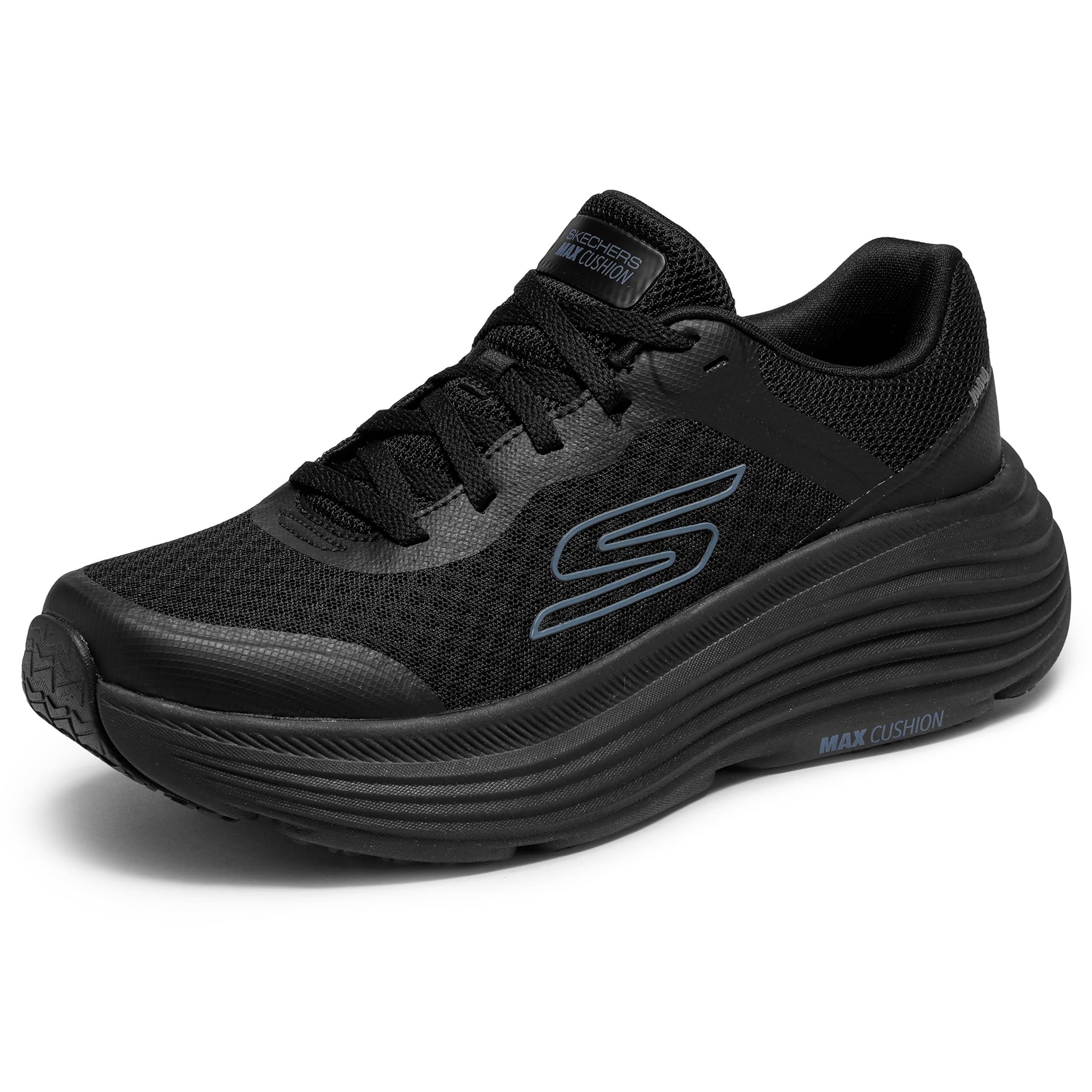
Skechers Max Cushioning Endeavour

Skechers Max Cushioning Endeavour

Wide feet

Our Score 9.0/10
Check Price

Worth Noting

  • Outsole wears through before the upper does
Style
Max-cushion walking sneaker
Listed Weight
1.5 lb
Listed Dimensions
12 x 8 x 4.5 in

The Endeavour looks heavier than it is. The sole is thick and the upper is soft, yet the listing puts the pair at 1.5 pounds and the dimensions at 12 by 8 by 4.5 inches — light for this much foam, and light enough that the cushioning doesn't become a burden by the end of a walk.

The fit is the other half of the story. It's cut wide, with more room across the toes than most shoes in this set, and an extra-wide fitting is part of the range. Finding generous cushioning and genuine width in the same shoe is rarer than it should be.

We point to it over our top pick when softness is the priority and you need extra width to go with it. The ride is bouncy rather than sinking — you feel the sole spring back — and the knit upper breathes on warm days while still slipping on easily for a laced shoe. It's a walking shoe rather than an all-day standing shoe, though; for a full shift on concrete, the firmer 608 will hold you up longer.

Bottom line: The pick for a wide foot that wants maximum cushioning — thick, springy foam with real toe room, at a weight that won't wear you down.

5

Skechers Go Walk 5

Skechers Go Walk 5

Easy on and off

Our Score 9.0/10
Check Price

Worth Noting

  • Runs large, so sizing down is usually necessary
  • Left and right can fit differently
Style
Slip-on walking sneaker
Closure
No laces
Available Since
2026

No laces, no bending over, no tying: the Go Walk 5 is the shoe to look at if getting a pair on is half the reason you've stopped walking to the mailbox. The upper gives as you push your foot in, and it comes off just as easily at the door.

The comfort is the real story. It's the most slipper-like shoe in this group — light, breathable, and easy to wear for a whole day without thinking about your feet. The arch support is better than a slip-on has any right to be, enough that a long walk stays comfortable, provided you aren't looking for a firm platform to push off.

Where it lands for us is the easiest shoe here to live with and the least predictable to fit. This model runs large and wide, so a half size down is usually right, and pairs can differ enough that one shoe feels bigger than the other. Order somewhere with easy returns, and take the unusual sizing seriously rather than trusting your usual number.

If a slip-on is a practical necessity — swelling, arthritis, limited reach — the trade is worth it. If you just like the idea of no laces for long daily walks, the Romy or the 608 will serve you better and the laces are a small price.

Bottom line: The easiest shoe here to put on and live in — soft, light, and supportive enough for errands — as long as you size down and don't need a firm base.

6

INZCOU Slip-On Sneaker

INZCOU Slip-On Sneaker

Tight budgets

Our Score 8.6/10
Check Price

Worth Noting

  • Outsole can separate with daily wear
  • Forefoot runs narrow for some wide feet
Style
Slip-on sneaker
Closure
No laces
Available Since
2021

It's the least expensive pair in this guide, and it earns its place on that alone: a light, soft slip-on for errands, short walks, and days spent in and out of the car. We wouldn't make it anyone's only walking shoe, but as a second pair kept by the door it does a lot for very little.

For those short trips it's genuinely pleasant. The upper is stretchy and forgiving, it goes on without laces, and the colors are fun rather than an afterthought. Feet that swell through the day get a lot of give from that stretch, and the shoe weighs almost nothing in a bag.

What it isn't is a support shoe. The arch is thin and shallow, the sole flexes easily, and a long pavement walk leaves a heavier walker feeling every step. If you want a shoe you can put real distance on, the Romy or the NORTIV 8 is where the money should go.

Bottom line: Worth it as a light second pair for errands and short walks — comfortable, easy to slip on, and the least expensive shoe here, with support to match.

How We Tested Walking Shoes for Plus Size Women

We started by researching the category—reading customer reviews, scanning size charts, and filtering for shoes that came in extended widths and sizes, since a true plus-size fit often starts with the last and toe box rather than just a bigger number. We narrowed the field to 12 pairs that ranged from budget-friendly to mid-range, then wore each one for at least two weeks before rotating to the next. Testing ran for eight months, with every shoe going through the same routine: daily dog walks on pavement, a full day of errands and standing, and a weekend trip that included airport terminals and hotel hallways.

Comfort was the first filter—did we forget we were wearing them by mile two, or were we counting steps until we could sit down? We checked arch support by pressing a thumb into the footbed and then walking on a hard floor to see if the arch held its shape, and we noted whether the shoe kept our feet from rolling inward or outward. Stiffness got its own test: we twisted each shoe from heel to toe and then wore it for an hour to see if that rigidity translated to stability or just blisters. Fit and size were tracked at the toe box (enough room to wiggle), the heel (no slipping), and the instep (no pressure points).

After two weeks, we inspected each pair for wear—scuffed toes, compressed cushioning, frayed laces—and compared that to the price to judge value. Appearance mattered too: we asked whether we'd wear them with jeans or leggings, not just to the gym. The shoes that made the final list were the ones that still felt supportive after eight months and looked decent enough to keep by the front door.

How to Choose Walking Shoes for Plus-Size Women

Width first, then the size

Sizing up to find room is the most common mistake. You end up long in the toe and loose at the heel, which is the one place a walker doesn't want movement. Look for a model sold in wide and extra-wide fittings instead — the Easy Spirit Romy and the Skechers Max Cushioning Endeavour both come in them — and judge the toe box on depth as well as width, because a shallow shoe presses on top of the toes even when it's roomy side to side.

Shop late in the day, when feet are at their largest, and leave roughly a thumb's width between your longest toe and the front of the shoe. If you're between widths, take the narrower one and adjust the lacing rather than going up a size.

Cushioning and stability pull against each other

Soft foam absorbs impact; firm foam stops the foot from moving around. No shoe maxes out both, so the question is which one your walks punish you for lacking. If your knees and feet ache after pavement, a plush shoe like the NORTIV 8 softens the day. If you feel unsteady, or your ankle rolls, a firmer platform like the New Balance 608 does more for you than extra foam will.

Weight matters in that trade too: under a heavier frame a soft midsole compresses further and gives up more of its stability, so the plusher shoes reward lighter walkers more than heavier ones.

What arch support can and can't do

A shaped footbed spreads pressure and gives the arch something to rest on. It doesn't correct pronation and it isn't a substitute for an orthotic. If you already wear inserts, plan on removing the stock insole and going up half a size to fit them, and check the shoe has enough depth at the heel to hold the insert in place.

Persistent arch or heel pain is worth having assessed before you buy anything, then fitting the shoe around the answer. Of the cushioned picks here, the Romy has the most shaped arch; the 608 offers the most structure.

Weight and getting them on

A pound and a half doesn't sound like much until you lift your foot a few thousand times. Lighter shoes reduce fatigue over a long day, and the Skechers Max Cushioning Endeavour carries its foam at a listed 1.5 pounds.

Entry matters just as much if your hands, back, or balance make laces hard work. A slip-on like the Skechers Go Walk 5 solves that, at the cost of some of the lock-in a laced shoe gives you. With a laced pair, a long-handled shoehorn gets you most of the way without bending.

How long a walking shoe actually lasts

The upper usually outlives the midsole. Foam compresses and stops rebounding long before the mesh or leather looks worn, which is why a shoe can feel dead while still looking perfectly fine. Check the outer heel every few months for a sloped, uneven wear pattern.

Once the outsole is smooth or the side of the sole is visibly worn away, replace rather than patch — grip and stability go with it. Rotating two pairs spreads the load and keeps the foam fresher, and a cheaper second pair like the INZCOU is a sensible way to do that.

Frequently Asked Questions

Final Verdict

Our recommendation is the Easy Spirit Romy. It gives you the best balance here of a genuinely roomy toe box in wide and extra-wide fittings, cushioning that doesn't collapse, and a shaped arch that holds up over a long walk — and it needs no break-in before you take it out the door.

If softness matters more to you than a planted ride, switch to the NORTIV 8. If you want your foot held firm and can give it a week to soften, the New Balance 608 is the more structured choice.