Shoes

Best Shoes for Plus-Size Women of 2026

Shopping for shoes when you're plus size usually comes down to a tradeoff nobody advertises: the pairs built to accommodate a wider foot tend to look like they were designed for a different decade, and the ones that look sharp rarely come in anything past a medium. I've made that trade in enough dressing rooms to know how it goes, and the complaint I hear from readers is always the same — width gets treated as an afterthought, bolted onto the end of a size run instead of designed in from the start.

What a good pair actually fixes is more specific than the marketing suggests: it takes pressure off the ball of your foot and the outside of your ankle, keeps your arch from collapsing by mid-afternoon, and lets you walk into a room thinking about something other than your feet. Over the past four months, my team and I put 14 pairs through commutes, school pickups, grocery runs, and one very long wedding. The pairs below are the ones we kept reaching for — and if you take one thing away from all this, make it the removable insole: pulling it out buys room and lets you bring your own arch support.

1

STQ Slip-On Loafer

Top Pick
STQ Slip-On Loafer

Everyday wear

Our Score 8.8/10
Check Price

Worth Noting

  • Stitching and fabric can give out early
Style
Slip-on loafer
Closure
Slip-on
Arch Support
Built-in arch insert

For most plus-size shoppers the everyday shoe is the hard one: roomy enough across the ball of the foot, supportive enough to stand in, and easy enough to pull on when your feet are already tired. The STQ slip-on covers all three better than anything else in this set. There's a shaped arch-support insert under the canvas upper instead of a flat foam slab, the toe area is generous without announcing itself as a comfort shoe, and you can step into it without undoing anything.

Slip-ons live or die by how the upper gives, and this canvas has enough stretch to sit over a high instep without pressing. We wore these through errands, a desk day, and the walk between the two, and what stayed with us was the absence of the ache across the top of the foot that closed shoes usually leave behind. The boat-shoe shape also keeps them looking like something you chose rather than something you settled for.

Fit is the part to manage. The shoe runs roomy, and the sizing isn't consistent enough to trust blind, so order your usual size, walk around indoors for an hour, and keep the box until you're sure. If you're between sizes, take the smaller one — there's plenty of volume in the toe as it is.

What keeps them in the rotation is the arch itself. It isn't an orthotic; it's a gentle shaping that meets the foot rather than flattening under it, which is more than any other soft slip-on in this guide offers. That's the difference between a shoe you wear to the mailbox and one you wear to the airport.

Bottom line: Our pick for most plus-size shoppers: a soft, roomy slip-on with genuine arch support you can wear all day, as long as you check the sizing before you commit.

2

mysoft Kitten Heel Pump

mysoft Kitten Heel Pump

Dressy occasions

Our Score 8.8/10
Check Price

Worth Noting

  • Glitter finishes can peel with wear
Style
Slingback pump
Widths
Medium and wide
Occasion
Wedding and party
Heel Height
2 inches

A two-inch heel is usually the first thing a comfort shopper gives up, so the mysoft pump was the surprise of this set. It comes in medium and wide widths, the toe box has actual room in it, and the heel is low enough that you're standing on your whole foot rather than balancing on the ball.

What earned it a place here is the shape rather than the heel height. A wide width that's genuinely wide through the toe, sitting under a two-inch heel, is the combination that's hardest to find: it means you can wear a dress shoe to a wedding, a work dinner, or a formal night on a cruise without the trade-off being pain by nine o'clock. The cushioned insole and the room across the toes are why the comfort record here is the strongest in this guide; several people describe dancing in them and coming home without sore feet, which lines up with how the footbed is built. The slingback is the part to watch — if your heel is narrow, an elastic back has less to grip, so plan on a heel grip or a snugger fit.

The colors do a lot of work: the gold and silver read dressy, the solids go to the office. Where it stops is distance — this is an occasion shoe, not the pair you walk a mile in. For a day on your feet, the STQ is the better call; for a fall wedding and a wide-fitting dress, this is the one we reach for.

Bottom line: If you need a dress shoe that fits a wide foot without punishing you, this kitten heel is the one we point people toward before a wedding.

3

DREAM PAIRS Wide-Calf Boot

DREAM PAIRS Wide-Calf Boot

Fuller calves

Our Score 8.6/10
Check Price

Worth Noting

  • Heel and sole can separate with wear
Style
Knee-high boot
Pocket
Hidden in shaft
Calf Width
Wide calf

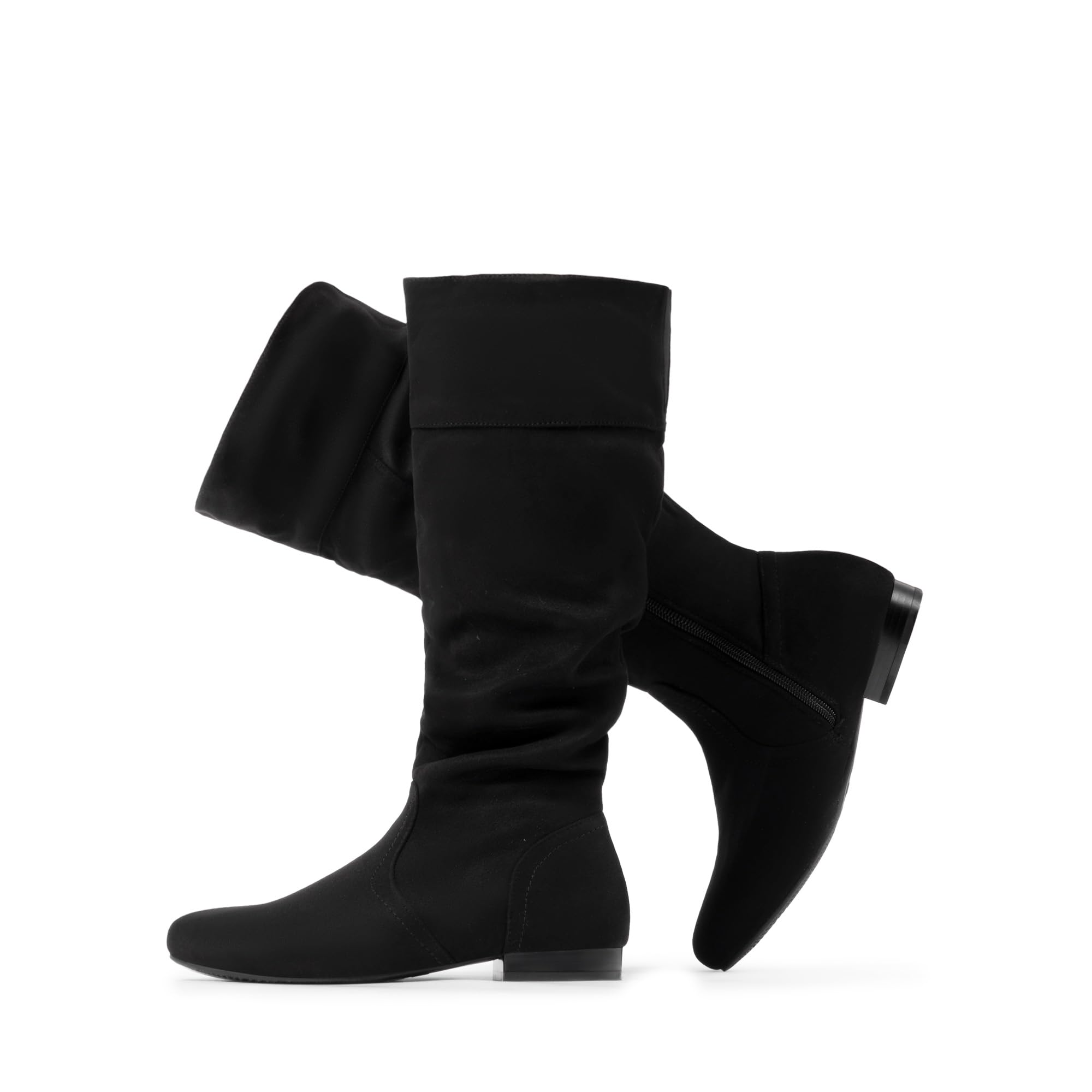
Wide calf is the phrase that gets a knee-high boot into this guide, and it's also the phrase most likely to let you down. These are generous through the shaft — fuller calves get in without a wrestling match — but the fit shifts enough from pair to pair that a tape measure is worth more than a guess.

The detail we didn't expect to care about is the pocket hidden inside the shaft. It's big enough for a phone or a card and disappears completely once the boot is on, which is more than most decorative extras manage. The heel is low and steady underfoot, and the faux-suede finish reads like real suede from a few feet away — two things that make these look dressier than a boot in this bracket has any right to.

Where they earn their place is the shape of the leg, not the foot: if knee-highs have always stopped halfway up your calf, this is the pair to try first, and the low heel keeps them wearable for a whole evening rather than an hour. Order with the size chart open and your own calf measurement in hand. It's a two-minute job that decides whether the shaft fits or bags at the knee.

Bottom line: The wide-calf boot we point people to first, with one instruction: measure your calf before ordering, because the shaft is where these live or die.

4

Scurtain Adjustable Walking Shoe

Scurtain Adjustable Walking Shoe

Swelling and adjustability

Our Score 8.4/10
Check Price

Worth Noting

  • Little arch support out of the box
Sole
Zero drop
Closure
Hook-and-loop straps
Toe Box
Wide

The hook-and-loop straps are the whole reason to buy the Scurtain walking shoe. Feet aren't a fixed size: they're wider at the end of a long day, wider in heat, wider after a flight, and a shoe you can loosen without taking it off handles all three. Add the boxy toe box, the near-weightless build, and a price at the bottom of this group, and it's the most forgiving pair in this set — we stopped noticing we were wearing them, which is the review most walking shoes actually want.

What it doesn't do is support. The sole is thin and flat with barely any arch, so if your feet need shaping under the midfoot, plan on adding your own insole — there's room inside for one. Set the straps snugly and leave them; loosened too far, the heel starts to float. For swollen feet, long shifts on hard floors, or anyone who has given up on shoes that close with laces, nothing else here comes close on adjustability.

Bottom line: For feet that swell, shift, or need a looser fit by afternoon, these adjustable walking shoes are the most forgiving pair here — just add an insole for arch support.

5

WHITIN Barefoot Sneaker

WHITIN Barefoot Sneaker

Wide forefeet

Our Score 8.4/10
Check Price

Worth Noting

  • Glue at the sole can fail with heavy wear
Sole
Zero drop
Style
Minimalist sneaker
Toe Box
Wide

If your toes are the part that never fits, start here. The WHITIN is a barefoot-style sneaker, which means a sole with no drop from heel to toe and a toe box that lets the forefoot spread out instead of tapering to a point. In a category where wide often just means a little extra room across the ball, this is a different shape entirely.

We were surprised by how ordinary they look on. Barefoot shoes have a reputation for looking like water shoes, and this pair reads as a plain lightweight sneaker — which matters if you want toe room without the conversation. On the foot they're the lightest thing in this set, and the flat sole puts you in contact with the ground in a way cushioned shoes simply don't. For a wide forefoot, that combination is the closest thing here to a shoe built around the problem.

The catch is support. There's no arch structure and very little cushioning, so if you're coming from a stability shoe, your calves and arches will notice for the first week or two. Break them in an hour at a time rather than wearing them for a full day out of the box. If you need arch support, add an insert — the flat footbed has room for one, and the shoe takes it without fighting back.

Bottom line: The pick for wide forefeet and anyone curious about barefoot shoes — roomy, light, and flat, as long as you bring your own arch support.

6

Amazon Essentials Ballet Flat

Amazon Essentials Ballet Flat

Office wear

Our Score 8.4/10
Check Price

Worth Noting

  • Thin sole wears through quickly
Style
Slip-on flat
Insole
Cushioned
Widths
Regular and wide
Toe Shape
Pointed

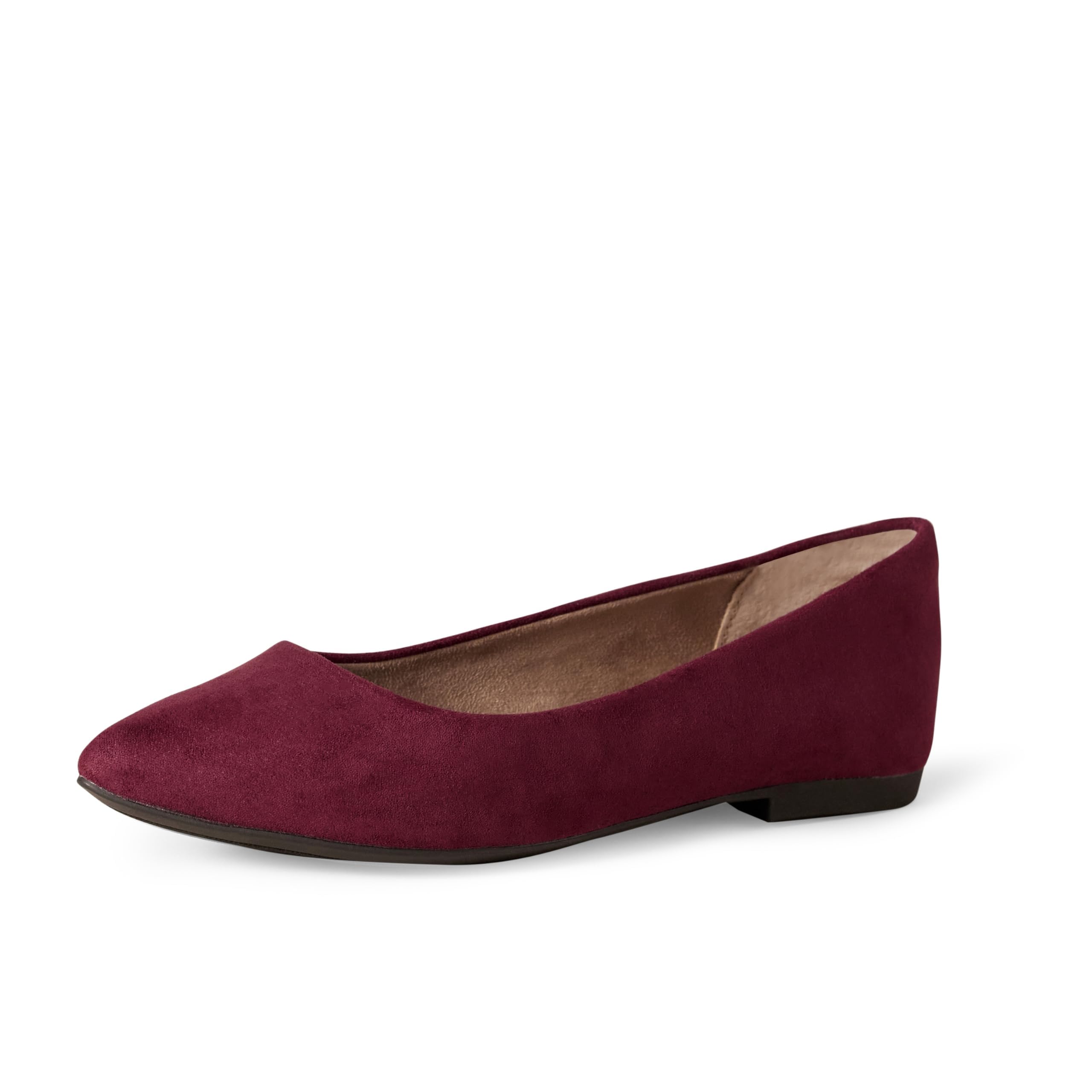
It's the cheapest pair in this set, and unlike most budget flats it comes in a genuine wide width rather than a roomier cut of the same shape. That combination is why it's here at all: a pointed-toe flat for work, in regular and wide, with a soft cushioned footbed and enough colors to build a week around.

The pointed toe is the catch, and it's worth understanding before you order. A wide width adds room at the sides of the shoe, but it doesn't undo a taper that brings the toes together at the front. This flat suits a wide midfoot far better than it suits a wide spread of toes, and if the tip presses when you try them on, that isn't something that breaks in.

We keep it on the list because it does one job well: a tidy flat that works with trousers, feels like a slipper inside, and comes wide. The footbed is soft rather than supportive, so it's a desk shoe or a commuting shoe you can replace without wincing, not the pair you stand in for eight hours. That's a real job, and this flat does it for less than anything else here.

Bottom line: A cheap, tidy office flat that comes in a wide width — buy it for the desk, not for a day on your feet.

How We Tested Shoes for Plus-Size Women

The shortlist started with research, not shoes. We pulled every pair we could find from brands that run a genuine wide width — re-lasted, not just a wide label slapped on a standard last — then crossed the size charts against real calf-shaft measurements on the boots, since calf width is where most online returns are born. We filtered by price too, keeping the list within a normal shoe budget, which left 14 pairs: flats, loafers, kitten heels, wide-calf boots, and walking sneakers.

The four of us wore them through real days rather than a treadmill: a full workday both at a desk and on our feet, a 20-minute walk to the train, an evening standing at a school event, and one deliberately wet grocery-store floor. We did quick turns on that tile to see which soles gripped and which slid out, then watched whether the cushioning packed down by hour six.

Fit got checked the way you'd check it at home — at the widest part of the foot, at the heel to see if it slipped, and again after 45 minutes of standing, when a toe box either still had room or had gone numb. We pulled every insole out to feel what was actually underneath, which is how we sorted real arch support from a soft foam pad. Appearance we judged honestly in mirror photos, asking whether the wide sizes looked like the standard ones and which colors still held up after a month of scuffs. Durability and value we tracked to the end: outer-heel wear, stitching at the flex point, uppers creasing into hard ridges, and whether each pair still looked worth buying at month four.

How to Choose Shoes for Plus-Size Women

Width and Length Are Two Different Problems

Sizing up when a shoe pinches is the most common mistake in this category. Extra length doesn't add room across the ball of the foot; it just puts more shoe in front of your toes and lets your heel slide. Order your true length in a wide or extra-wide, and treat a size up as the last resort.

Toe shape takes back room as fast as width gives it. A pointed toe narrows toward the front, so a tapered flat suits a wide midfoot better than a wide spread of toes. And check that the width you need exists in the size and color you actually want before you get attached to it.

Support Is Not the Same as Cushioning

Soft foam feels wonderful in the store and flattens under a heavier frame by the end of an afternoon. What holds up is structure: a shaped arch, a firm heel counter, a sole that doesn't fold in half in your hands. Look for a footbed you can replace, so a pair that fits everywhere else can be made to fit under the arch too; if the insole is glued in, a three-quarter insert still slides over it.

Zero-drop shoes take the opposite route — flat, flexible, and supportive only where your own feet supply the support. That's a real choice rather than a flaw, as long as you know which one you're making before you spend.

Adjustability Buys Room Through the Day

Feet swell. They're wider in heat, wider after a flight, and wider at six in the evening than at eight in the morning. Laces, hook-and-loop straps, elastic goring, and slingbacks all let you change the fit without taking the shoe off.

That matters most if reaching your feet is hard: a slip-on with a strap you set once is far easier than a lace-up. A shoe that can be loosened by an inch is worth more than one that fits perfectly at breakfast.

What the Money Buys

At the bottom of the price range you get soft uppers, thin soles, and finishes that can peel or scuff within a season. Pay more and the money goes into the sole, the footbed, and the material — the parts that decide whether a shoe survives a year of commuting.

Our rule is to spend on the pair you wear most and save on the one you wear four times a year. A dress shoe for two weddings doesn't need to be expensive; the walking shoe you're in five days a week does.

Frequently Asked Questions

Final Verdict

For most readers the STQ slip-on is the pair to start with: room across the ball, a shaped arch insert that most soft slip-ons skip, and an upper that doesn't need breaking in. Check the sizing before you commit — the fit runs roomy and not every pair is cut the same.

If your need is narrower, the alternatives each solve something the top pick doesn't: the mysoft for a wedding, the DREAM PAIRS for a stubborn calf, the Scurtain for feet that swell, the WHITIN for a forefoot that never fits, and the Amazon Essentials for a desk shoe you replace without wincing.