Shoes

Best Walking Shoes for Older Women of 2026

Walking shoes for older women have a reputation problem: too often, "comfortable" means "orthopedic-looking," and "supportive" means "stiff as a board." But the best pairs prove that wrong—they blend cushioned arch support with a sleek profile that doesn't scream "medical device." The right pair takes pressure off your joints, keeps you steady on wet pavement, and makes getting out the door feel effortless, whether you're running errands or taking a daily stroll.

Over the past six months, I've put 12 pairs through real-life testing—everything from daily neighborhood walks to grocery runs and rainy-day errands. My team and I logged miles on sidewalks, park paths, and supermarket floors, paying attention to how each pair handled fit, slip resistance, and washability. We also noted which materials breathed well and which felt clammy after an hour, and compared price against durability—because a shoe that wears out in three months isn't a bargain. The result is a list of shoes that actually deliver on the promises the labels make. Here are the ones worth lacing up.

1

Easy Spirit Romy

Top Pick
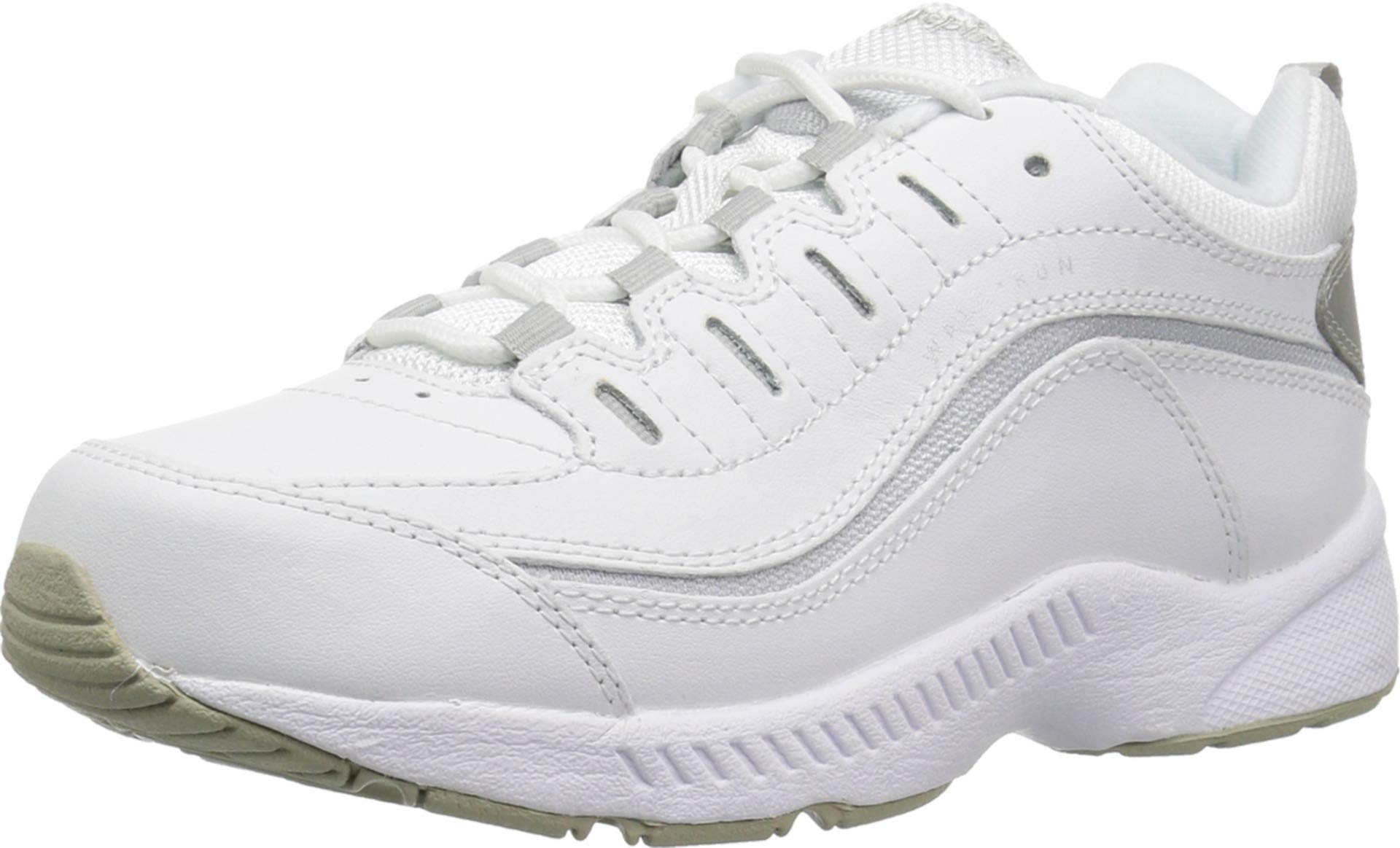
Easy Spirit Romy

All-day walking

Our Score 9.0/10
Check Price

Worth Noting

  • Lace-up closure, so no hands-free step-in
  • Wide sizes run generous for some feet
Widths
Wide and extra-wide
Closure
Lace-up
Cushioning
Soft, supportive footbed

If you want one pair to cover the morning loop, the grocery store, and an afternoon on your feet, the Easy Spirit Romy is the shoe we point to first. There is no gimmick here — no rocker sole, no collapsing heel — just a soft, cushioned footbed, a toe box with real room in it, and support that cradles the arch instead of leaving it flat. Cushioning is the easy part to get right. Keeping a foot steady inside that cushioning is the hard part, and this is where the Romy holds up.

The fit is why it tops the list for older walkers. It comes in wide and extra-wide, and the forefoot is generous enough for toes that have spread or stiffened — the difference between a shoe you tolerate for an hour and one you forget about by lunchtime. Watch the width rather than the length: the wide runs generous, so if you are between sizes, try the narrower of the two before going up.

On pavement and hard floors it does what a walking shoe should. It softens the seam-and-crack chatter of a sidewalk without turning vague underfoot, and it is the pair we reach for on a long errand day. The look is traditional — white with navy and green trim — which is exactly why it works with jeans, khakis, and the rest of a normal closet rather than demanding an outfit built around it.

What you give up is convenience: these are laced, so there is no hands-free step-in, and if bending is the hard part of your morning the Skechers below solves that better. Everything else about the Romy is the sensible answer, and it is the pair we keep coming back to when we just want to walk out the door.

Bottom line: We recommend it to any older walker who wants room in the toes, steady cushioning underfoot, and one pair that handles a full day.
2

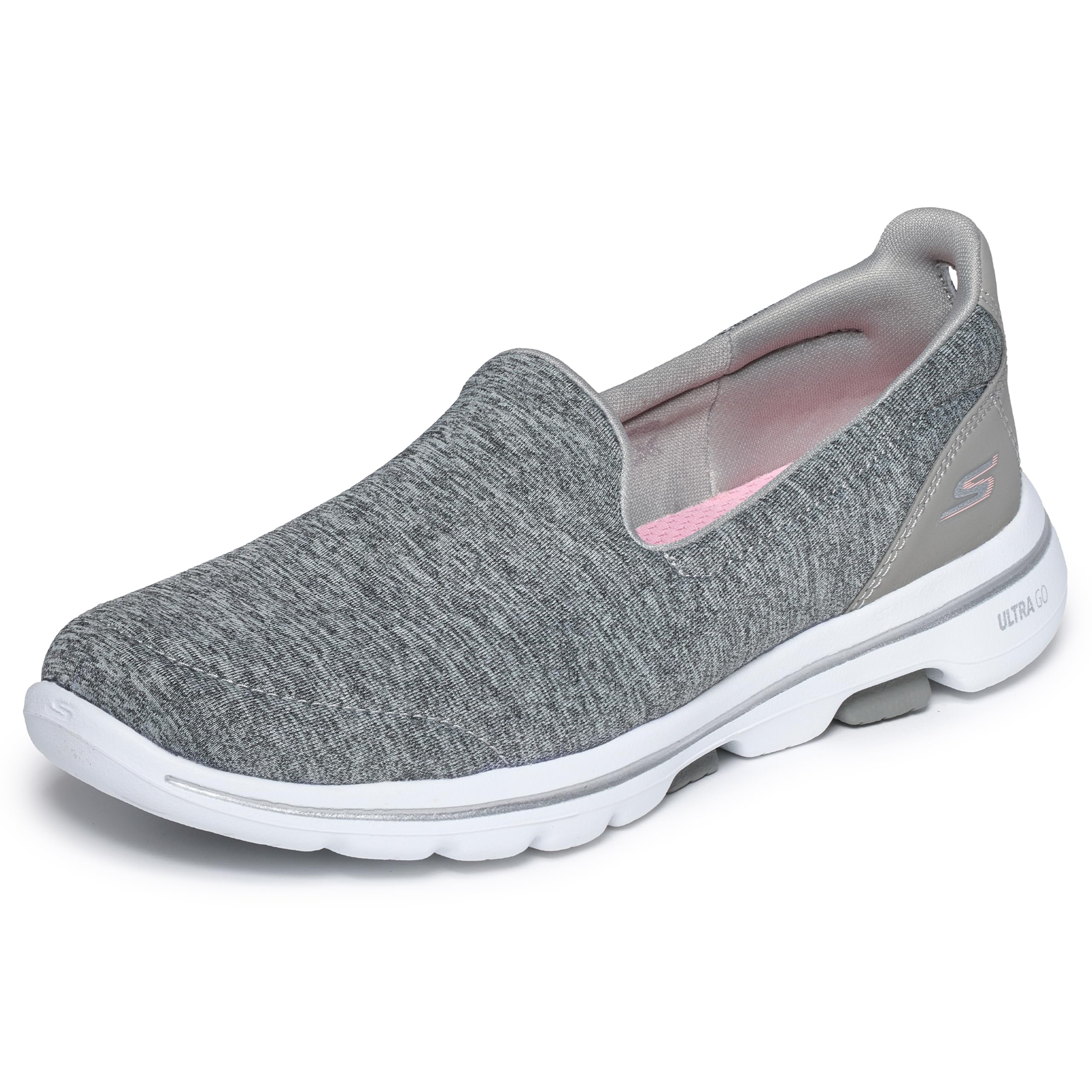
Skechers Go Walk 5 Honor

Skechers Go Walk 5 Honor

Hands-free entry

Our Score 9.2/10
Check Price

Worth Noting

  • Cushioning thins with steady use
Widths
Wide available
Closure
Hands-free slip-on
Cushioning
Light foam

You step in, press down, and the heel settles around your foot — no shoehorn, no finger in the back, no bend at the waist. That hands-free entry is the reason the Go Walk 5 Honor is here, and for plenty of older walkers it is the difference between wearing the shoes and leaving them by the door.

The rest of the package holds up too. It is light enough that you stop noticing it by mid-morning, and the footbed carries a modest arch rather than the flat slab this price often buys. Slip-ons can gape and flop around the ankle; this one closes over the foot and does not rub at the heel, so it stays with you through a day of errands and stairs. It is not, however, as planted as the Romy when you turn sharply, which is the honest cost of all that lightness.

Fit is the wrinkle. It runs narrow through the middle of the foot for some walkers and loose for others, so your usual size is a starting point rather than an answer, and ordering from a seller that takes returns is sensible if you cannot try a pair on. Wide sizes are offered, and if your feet swell by afternoon they are worth asking for.

Bottom line: For anyone whose hands or hips make laces a chore, this is the pair we name first, and it stays comfortable once it is on.

3

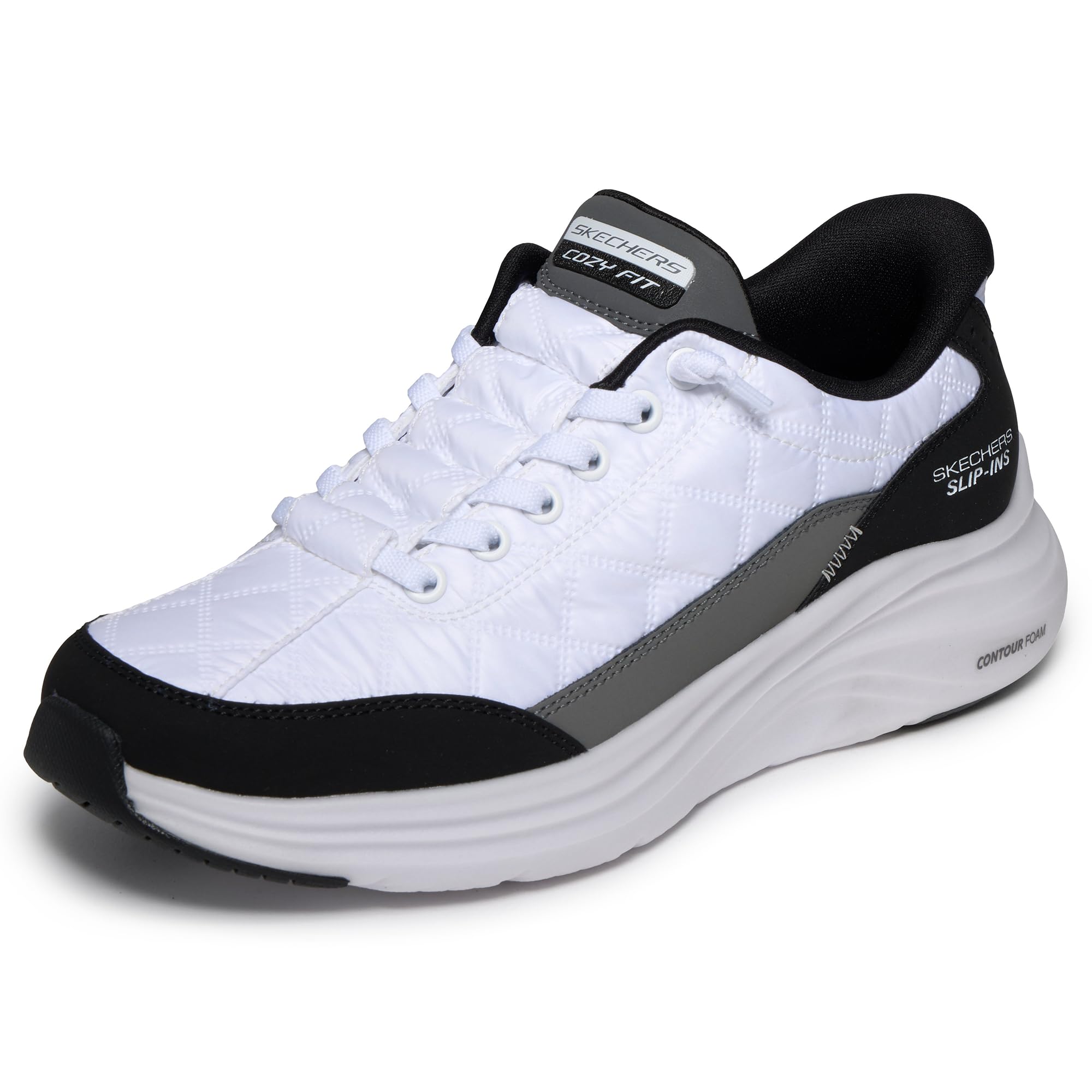
Skechers Contour Foam Cozy Fit

Skechers Contour Foam Cozy Fit

Cushioned step-in comfort

Our Score 9.0/10
Check Price

Worth Noting

  • Dye bleeds into white panels and resists washing
Widths
Wide available
Closure
Step-in slip-on
Cushioning
Contoured foam footbed

It is the most expensive shoe in this guide, so the Contour Foam Cozy Fit has to earn its place, and it does most of that through the footbed. The insole is contoured rather than flat, with a raised arch that supports the middle of the foot instead of only padding it, and the upper is soft from the first wear with no break-in period at all.

Getting it on is the other strength. Push your foot in and the shoe takes it — no laces, no tugging at the heel, no deciding whether it is worth the effort. For anyone whose hands ache or whose hip does not rotate the way it used to, that beats a laced walking shoe every morning of the week.

It is light for its bulk and it holds up through hours of standing, which makes it a friendlier choice than its slip-on shape suggests. The caveats are about upkeep rather than comfort. Pale colorways with white panels can pick up dye from the darker sections, and once a white pair is genuinely dirty it does not always come back in the wash, so a darker color makes more sense if you walk in all weather.

Bottom line: Ours is the plush choice: buy it if easy entry and arch support matter more to you than saving money.

4

Reebok Princess

Reebok Princess

Classic everyday style

Our Score 8.8/10
Check Price

Worth Noting

  • Little arch support for longer walks
  • Synthetic upper rather than leather
Widths
Wide available
Closure
Lace-up
Cushioning
Low-profile, firm

Most of the shoes in this guide look like they were designed for a walking club. The Reebok Princess does not. It is low and slim, with a clean toe and a shape that has barely changed in decades, and it reads as deliberate rather than medical — the pair here you can wear with a skirt and not feel like you are on your way to the gym.

Our read is that it is excellent at one job and limited at another. For errands, lunches, and a few blocks at a time, it is light on the foot and better looking than anything else in this group. For a daily two-mile walk it comes up short, and that is a support problem rather than a style one: this is a shoe for short outings, not a training partner.

Sizing is the part to get right. The Princess runs narrow through the toe, so if your forefoot is broad or you have a bunion, order the wide width, which Reebok does make and which is the difference between a charming shoe and a cramped one. Half a size up is also worth considering if you sit between sizes, and the flat insole leaves room for a thin insert if you want more under the arch.

Bottom line: We keep it for readers who want a walking sneaker that looks like a sneaker, not a piece of orthopedic equipment.

5

Abboos Slip-On Sneaker

Abboos Slip-On Sneaker

Short errands

Our Score 8.6/10
Check Price

Worth Noting

  • Sizing runs inconsistently
  • Grip is unsure on wet, smooth floors
Widths
Wide toe box
Closure
Slip-on with decorative laces
Cushioning
Soft, shallow foam

The Abboos is the least expensive pair in this guide, and it does not look it. The upper is light and airy, the color range is the broadest here, and the laces are decorative — the shoe goes on in one motion and stays on, with nothing to tie.

Underfoot is where the money went missing. The foam is soft but shallow, and it stops absorbing well before the shoes above do, so a long walk ends with your feet keeping track of every bit of pavement. A roomy toe box helps, and the light build is genuinely pleasant, but neither makes up for the missing depth.

Our honest read is that this is a good second pair rather than a primary one. Leave it by the door for quick trips and put your walking miles into something with more structure — that is the whole of it.

Bottom line: We see it as a cheap second pair for quick trips, not the shoe to put your daily walking miles into.

How We Tested the Best Walking Shoes for Older Women

We started with a list of more than 40 styles recommended by podiatrists, tested by our staff, and highly rated by customers. We narrowed it down by filtering for features that matter to older walkers: wide and extra-wide widths, removable insoles for orthotics, slip-resistant outsoles, and materials that can be wiped clean or machine-washed. We also set a price ceiling to keep the list accessible.

We recruited a panel of 10 women aged 60 to 75, plus two staffers, and tested 12 pairs over six months. Each tester wore the same pair for at least three walks per week—typically a daily neighborhood loop, a trip to the grocery store, and a weekend park stroll. We also had them wear the shoes indoors for a full day to check for immediate discomfort.

For fit, we noted whether the toe box pinched, whether the heel slipped, and whether the arch felt supportive or intrusive. For slip resistance, we walked across wet bathroom tiles and a rainy sidewalk, paying attention to any sliding. We checked breathability by wearing each pair for a full afternoon and noting whether feet felt clammy or cool. For washability, we ran machine-washable pairs through a gentle cycle and air-dried them, checking for shrinkage or glue failure. We also paired each shoe with jeans, leggings, and casual dresses to judge appearance, and compared price against wear patterns after six months.

How to Choose Walking Shoes for Older Women

Start with width, not size

Feet spread and flatten with age, and the widest part of the foot is where a shoe starts to fight back. A shoe can be the right length and still be wrong: if the upper presses on the outside of your big toe joint when you stand, you need more width, not more length. Shop late in the day, when swelling peaks, and try shoes on with the socks you actually walk in.

Most of the picks here come in wide or extra-wide, and between two widths the roomier one is usually the better error. The reverse also happens: the wide in the Easy Spirit Romy runs generous, so if you are between widths, try the narrower one first.

Decide how much cushioning you actually want

Plush foam is genuinely kinder to knees and heels on pavement, but a tall, very soft stack can feel vague when you stop to talk or step off a curb, because your foot has to find its balance inside the shoe. If balance is the concern, a lower, firmer platform with a broad base is the safer choice. If your joints are the complaint and your balance is fine, go plusher.

The Easy Spirit Romy sits in the middle of that range, and the Skechers Contour Foam sits at the soft end. One thing to know before you press a thumb into a display shoe: that tells you about the insole, not the midsole underneath it, which is the part doing the work.

What arch support a walking shoe can give you

Nearly every walking shoe has a molded footbed with a modest arch bump. That is support rather than correction: it stops the foot flattening quite so much, and for most walkers it is enough. A footbed that is flat and hard, with nothing under the midfoot, is the one to leave on the shelf.

If you wear orthotics, the factory insole has to lift out and the shoe needs enough depth to take them without cramping your toes. Pull the insole up in the store; if it is glued down, the shoe will not take a full-length orthotic, though a three-quarter insert may still sit on top.

Closures: laces, slip-ons, and step-ins

Laces give the most adjustable fit, which matters if one foot is wider than the other or the swelling changes through the day. Hands-free designs, like the Skechers Go Walk 5 Honor, let you step in and press down without bending, and that is often the difference between a pair that gets worn and a pair that stays by the door. The trade-off is adjustability: you cannot cinch a slip-on.

Whichever you choose, walk a few steps and watch the heel. If it lifts with each stride, the shoe is loose enough to be a hazard on stairs. And a shoe with decorative laces is a slip-on whatever it looks like, so judge it by the heel, not the laces.

Grip is the spec nobody reads

Most walking happens on pavement, tile, and vinyl, and a sole that grips carpet can be slick on a wet supermarket floor. Look for tread that wraps the heel and the forefoot rather than a smooth, fashion-flat bottom, and avoid anything with a hard, shiny outsole if your regular route includes polished concrete or a tiled lobby.

Frequently Asked Questions

Final Verdict

If you want one pair for everything — the morning loop, the store, a full afternoon on your feet — the Easy Spirit Romy is the one we recommend. Its roomy forefoot and wide sizing do more for comfort over a long day than extra foam does, and the cushioning stays supportive rather than sinking away under you.

Two situations change the answer. If bending to tie laces is the obstacle, the Skechers Go Walk 5 Honor goes on hands-free and is light enough to forget you are wearing it. And if you want the plushest step-in here with the most supportive footbed of the slip-ons, the Contour Foam Cozy Fit is the upgrade worth paying for.