Shoes

Best Treadmill Running Shoes for Women of 2026

A treadmill belt gives nothing back. There's no downhill to coast on and no change of surface, so the same impact repeats thousands of times a mile — which is why a shoe that feels springy on the sidewalk can leave your shins aching by mile three. I spent a whole winter doing every run indoors and learned to care about different things: cushioning that actually sits under the forefoot, a heel that stays put, and arch support that doesn't quit twenty minutes in. The right pair makes indoor miles feel shorter and far less punishing.

Fit is where treadmill shoes quietly fail, and it's the first thing I'd sort out: feet swell on a belt, so a shoe that's snug at the start can pinch by the end. We've now run in 14 pairs over six months, and the ones that rose to the top are the ones nobody wanted to take off after a long run. Looks and price matter, sure, but comfort and support are what keep you coming back to the belt. The picks below earned all of it, and there's a fit in here for most feet.

1

ASICS Gel-Contend 9

Top Pick
ASICS Gel-Contend 9

Everyday treadmill miles

Our Score 9.0/10
Check Price

Worth Noting

  • Runs small; plan on a half size up
Type
Road running
Model
Gel-Contend 9
Listed Weight
1.44 lb

Of all the pairs we ran in, this is the one that ended up parked beside the treadmill. Nothing about it calls attention to itself: the midsole takes the landing without turning to marshmallow, the forefoot rolls through cleanly, and your toes have room to spread on push-off. For most women running a few times a week at home or in a gym, that's the whole brief.

The fit is the part we keep coming back to. The toe box is wide enough for a broad forefoot without looking like a medical shoe, the upper doesn't press across the instep, and the heel holds without needing a lacing trick. We wore them for the rest of the day more than once — through errands and a long stretch on our feet — and they never became the shoe you want off.

What you trade for the money is longevity at the edges. The tread under the heel thins well before the upper shows any strain, so heavy indoor mileage will retire these sooner than a premium pair. We're happy to take that deal at this price, and it's why these make a sensible second pair to keep by the belt while your nicer shoes rest.

Bottom line: Our default for most women running indoors: cushioned enough for daily miles, roomy through the toes, and priced so wearing out a pair isn't a crisis.

2

Brooks Adrenaline GTS 24

Brooks Adrenaline GTS 24

Stability and support

Our Score 8.8/10
Check Price

Worth Noting

  • Runs small; sizing is inconsistent
Type
Road running
Model
Adrenaline GTS 24
Listed Weight
1.5 lb

This is the shoe for the runner whose feet roll inward, whose arches collapse halfway through a session, or whose knees file a complaint the next morning. It's the most supportive pair in this group and it isn't close: the midsole holds the foot from underneath rather than propping it from the side, and the arch support is the firmest and most consistent of anything we ran in.

What we like is how little it interferes. The cushioning is firm and even rather than soft, so the shoe never feels like it's rolling underfoot on a belt that doesn't change, and the support stays put without a hard edge digging into your arch after 40 minutes. If your feet are the reason you started reading, this is where the money goes.

It's the priciest shoe here, and the premium buys structure rather than softness. Neutral runners with quiet arches can save the difference and never notice; runners whose feet hurt by the end of a session will feel exactly where it went. It's also the heavier-feeling option of the two Brooks shoes on this list, which is the trade you make for that steadiness.

Bottom line: The one we recommend when support is the reason you're shopping: the steadiest, most structured ride here for flat feet, overpronation, and long sessions.

3

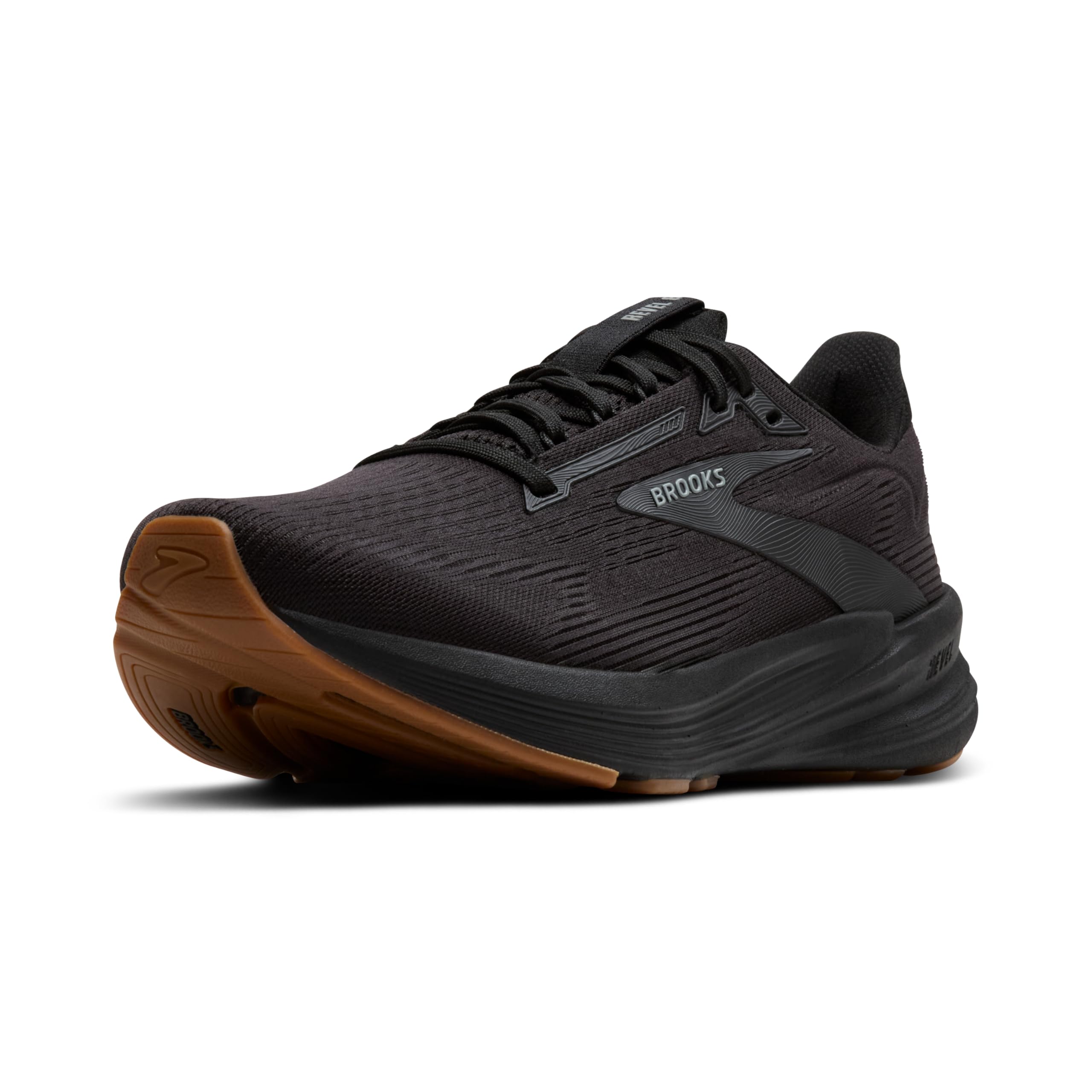
Brooks Revel 8

Brooks Revel 8

Fast, light sessions

Our Score 8.6/10
Check Price

Worth Noting

  • Cushioning is firm for a neutral trainer
Type
Road running
Model
Revel 8
Package Weight
1.5 lb

Where the Adrenaline braces the foot, the Revel 8 lets it work. It's the more flexible, less structured shoe of the two, and on a belt that's an advantage for anything short and quick — we found ourselves reaching for it on interval days and tempo sessions, when the extra structure of a stability shoe feels like more shoe than the workout needs. It's also the pair here that transitions most easily to the rest of your day, slim enough for jeans and plain enough not to shout.

Fit runs true, and the toe box is roomy without looking wide from above. Two small things to know. The laces are cut short, and we swapped ours out before the second run — a two-minute fix rather than a reason to skip the shoe. And the white-and-gum colorway collects belt dust, so a cloth kept nearby keeps them looking new instead of grubby by week three.

Bottom line: Our pick for neutral runners who want a light, flexible shoe for faster indoor sessions — just don't expect pillow-soft landings.

4

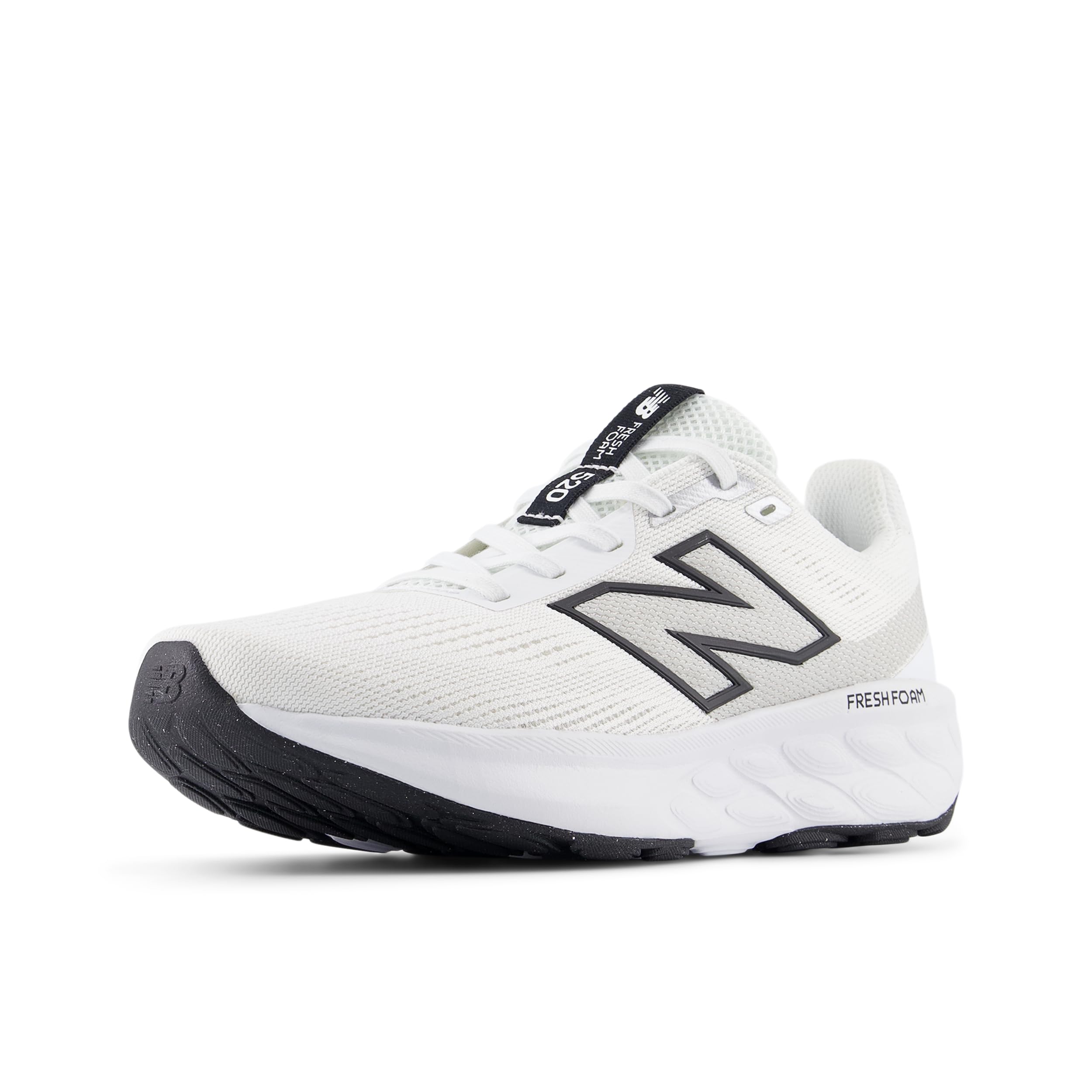
New Balance Fresh Foam 520 v9

New Balance Fresh Foam 520 v9

High arches

Our Score 8.8/10
Check Price

Worth Noting

  • Narrow toe box that pinches wider feet
  • Tread wears faster than the upper
Type
Road running
Model
Fresh Foam 520 v9
Midsole Foam
Fresh Foam

Soft landings are what this pair is for. The Fresh Foam midsole gives more under the ball of the foot than anything else in this group, and the arch is supported rather than simply padded, which is the combination that tends to suit higher arches. On a belt that never lets up, that softness is the difference between finishing a session fresh and finishing it sore.

It takes a few minutes to trust. The sole is thick enough that your first steps feel like standing on a platform, and the shoe asks you to roll through it rather than feel the ground under your forefoot. Most of us stopped noticing inside a mile. It's also the pair here that looks most like an everyday sneaker, which matters if your treadmill lives in the corner of a living room.

Our call: this is the comfort pick of the group, and the one we point to for longer, slower indoor sessions rather than anything short and fast. It costs about what the Gel-Contend does and gives you a softer ride in exchange. The all-black version is the one to get if you care how they look in six months — there's no pale midsole to scuff, so belt dust doesn't show.

Bottom line: The softest, most forgiving ride here — our pick for high arches and long, slow indoor sessions rather than speed work.

5

Under Armour Charged Assert 9

Under Armour Charged Assert 9

Budget first pair

Our Score 9.0/10
Check Price

Worth Noting

  • Runs small for some feet
  • Seams and lining can wear through
Type
Road running
Model
Charged Assert 9
Package Weight
1.48 lb

This is the least expensive shoe in the group, and it's the one we point a first-time treadmill runner toward. The ride is firm — you feel the belt rather than float above it — which suits 20- to 30-minute sessions and walk-run intervals better than an hour of steady running. The forefoot is genuinely wide, wide enough that a broad foot doesn't need to go up a size, and the arch lands higher than the price suggests.

Where it earns its place is versatility. A firm sole is happier under a weight rack than a tall, soft midsole, so if your routine is a treadmill warm-up followed by strength work, this is the pair that does both without feeling wrong at either. It isn't the shoe to buy if you want the cushioning to disappear underfoot; it's the shoe to buy if you want one inexpensive pair that handles a mixed session and leaves money for the rest of your setup.

Bottom line: The budget pick we're comfortable recommending for short sessions and gym days — firm underfoot, wide through the forefoot, and cheap enough to keep as a second pair.

6

Saucony Guide 13

Saucony Guide 13

Everyday all-rounder

Our Score 9.0/10
Check Price

Worth Noting

  • Heel lining can wear through with daily wear
Type
Road running
Outsole
Rubber
Cushioning
Moderate

Sizing is the first thing to sort out. This Saucony runs small — our usual size pressed on the toes — and going up half a size turned it into a shoe we were happy to keep on. Sized right, the forefoot is generous and the heel doesn't slip.

After that it's a quiet, unremarkable shoe in the way a good daily trainer should be. The cushioning is moderate: enough to take the edge off a belt, not enough to feel soft underfoot, which is what we want when the surface never changes. The arch support is the part we noticed most, holding the midfoot steady through a longer session, and it's the pair here that's happiest being worn for the rest of the day.

Our verdict: a dependable all-rounder that doesn't beat the top pick on anything in particular and doesn't do much wrong either — and if you want one pair for treadmill miles and errands, that's exactly the brief. The grey pair with gold accents looks better in person than in the photos, a small thing that made us like them more than we expected.

Bottom line: A dependable do-everything trainer for women who want one pair for treadmill miles and the rest of the day — buy it a half size up.

7

PUMA Riaze Prowl

PUMA Riaze Prowl

Hot, short sessions

Our Score 8.8/10
Check Price

Worth Noting

  • Runs small; plan on a half size up
  • Minimal arch support for flatter feet
Type
Road running
Model
Riaze Prowl
Upper
Mesh

The upper is the reason to consider this one: an open mesh that actually moves air. In a spare room with the door shut and no fan, that's not a small thing — our feet stayed noticeably cooler in these than in the other pairs here.

Cushioning is the surprise. It's soft without being vague — you sink a little, but you still feel the belt, which is what you want when the surface never varies. At about the same money as the top pick, it's a fair alternative if breathability sits at the top of your list.

Wear is where it gives ground, and it shows up in a specific place: the toe bumper, where the mesh meets the sole. Ours started to lift there before anything else went. On a treadmill you're less likely to catch a toe on a curb or a root, so it may hold longer indoors than out — but keep your nails trimmed, because pressure at the front of the shoe is what starts that separation.

So: a warm-room, shorter-session shoe. If your treadmill is in a garage or a room that heats up and your sessions run 20 to 40 minutes, this is a pleasant, breathable choice. The black-based colorways hide scuffs better than the pale ones, and the pink logo adds a bit of color if that's your taste.

Bottom line: Our pick for a hot room and short sessions: the most breathable upper here, with a soft ride that still lets you feel the belt.

How We Chose and Tested Women's Treadmill Running Shoes

We started with research rather than a shopping cart: reading spec sheets and hundreds of customer reviews to separate neutral trainers from stability shoes, compare stack heights and heel-to-toe drops, and flag the pairs that women with wide feet, high arches, or cranky plantar fascia kept bringing up. That narrowed things to 14 pairs, which we ordered in our usual sizes — plus a half size up wherever the reviews warned a shoe ran small.

Every pair got the same first day: the same socks, a ten-minute walk on the belt before any running, and a short jog to check whether the heel slipped or the toe box crowded. From there, testers ran three or four times a week on home treadmills and gym machines, splitting time between steady 30-to-40-minute runs and short, hard intervals, and wore each pair for the walk to the gym and on errands afterward.

Every six weeks we flipped each shoe over and looked at how much outsole rubber had worn at the heel and along the outer forefoot, then pressed a thumb into the midsole under the arch and did single-leg stands to see whether the foam still held its shape. We kept notes on which pairs developed hot spots after 40 minutes, which ones still felt like good value at the three-month mark, and which ones looked presentable enough to wear straight out of the gym.

How to Choose Treadmill Running Shoes for Women

Cushioning: how much, and how soft

A treadmill deck has almost no give, so every landing travels back up through the shoe. Match cushioning to the length of your sessions: 20- to 30-minute runs and walk-run intervals are comfortable in a firmer shoe, while 45 minutes or more is where a softer midsole earns its place.

The trap is assuming softer is always better. A tall, very soft platform on a surface that never varies can leave you feeling like you're rolling off the shoe. Our firmest pick, the Charged Assert 9, is the right call for short sessions and the wrong one for an hour.

Support: neutral or stability

Arch support is where these shoes separate most. If your feet roll inward, your arches collapse late in a run, or your knees ache the next day, a structured shoe like the Brooks Adrenaline GTS 24 is worth the step up in price — it's the steadiest pair here. Quiet arches don't need it, and you're paying for structure you won't use.

A quick test before you buy: look at the inner edge of the outsole on your current pair. If it's worn smooth there, try a stability shoe; if the wear is even across the tread, a neutral one is fine.

Fit and the half-size question

Nearly every shoe in this group runs small for somebody, and two of them run small for most people. Measure your foot late in the day when it's at its widest, leave about a thumb's width beyond your longest toe, and check that your heel holds without slipping and the upper doesn't press across the top of your foot.

If you're between sizes, go up. Treadmill running is repetitive enough that a tight toe box turns into a blister or a sore nail by the second mile — a problem you never get on an easy outdoor run where you can adjust your stride.

Breathability, weight, and what a belt does to an outsole

Indoor rooms get hot and airless, and a mesh upper makes more difference than most listings admit — it's the main reason the PUMA Riaze Prowl stays in our rotation for warm rooms. Weight matters over an hour, not over ten minutes, so don't pay a premium for a few ounces if your sessions are short.

Outdoors, outsole grip is what you pay for. On a belt, wear is. Smooth rubber is fine; what kills a treadmill shoe is thin tread at the heel and a toe bumper that lifts, so check those two places when a pair starts to feel flat.

Frequently Asked Questions

Final Verdict

Buy the ASICS Gel-Contend 9. For most women running indoors a few times a week, it's the pair we recommend without qualification: cushioned enough for daily miles, roomy through the toes, and priced so that replacing a worn pair doesn't hurt.

If your feet roll inward or your arches ache after a session, spend the extra on the Brooks Adrenaline GTS 24 — it's the most supportive shoe here, and the difference is felt in the last mile, not the first. And if you're buying a first pair for short sessions and gym days, the Charged Assert 9 covers it for the least money.