Shoes

Best Trail Running Shoes for Women of 2026

The moment that sold me on real trail shoes was a rainy descent over wet roots: one heel strike, a full slide, and a bruised ego. Road shoes are built for pavement; the trail asks for lugs that bite, a rock plate underfoot, and a toe box that doesn't crush your toes when you clip a rock. A good women's trail runner delivers all three without the stiffness of a hiking boot.

Over the past eight months, my team and I have run in a dozen pairs, from plush max-cushion cruisers to firm, aggressively lugged shoes, on mud, gravel, and long rocky climbs. Trail shoes run small more often than road shoes, so we checked the sizing charts carefully. What separated the keepers was rarely the spec sheet — it was whether the heel stayed locked on a steep descent, whether my arches still felt fine at mile ten, and whether the shoe still looked like a shoe after a muddy spring. The picks below are the pairs we kept reaching for.

1

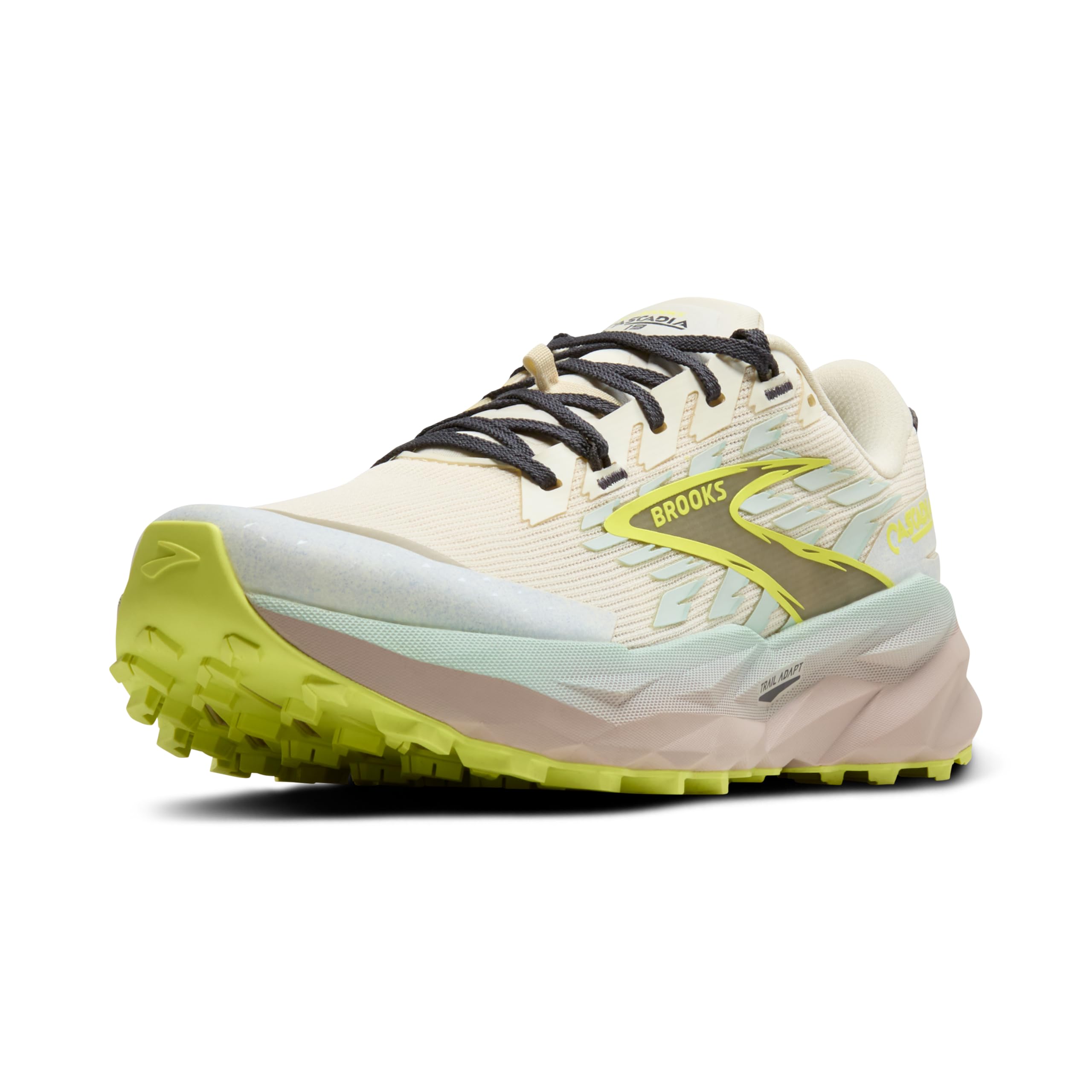
Brooks Cascadia 19

Top Pick
Brooks Cascadia 19

All-around trail running

Our Score 8.8/10
Check Price

Worth Noting

  • Can wear through at the toe tip and flex point
Listed Since
February 2025
Model Number
120446-277
Packaged Weight
1.5 lb

The Cascadia 19 is the shoe we hand someone who wants one pair and no fuss. We ordered our usual size, laced up, and ran — no half size up, no break-in, no tape on the heels. That sounds like a low bar until you have spent a season returning trail shoes that fit differently in every colorway. The toe box has real room without the heel lifting, and that combination is what makes the shoe feel planted when the ground tips sideways.

Underfoot it is on the firm side for a trail shoe, and we came to prefer that on rocky ground: you feel the trail without every stone jabbing up through the sole. Traction is the other reason it is our overall pick. The tread bites on rock, packed dirt and loose gravel, and it does not get nervous when the surface changes every few steps. Mixed-surface runs were where this one felt most at home, and the arch support held up on the longer days.

The upper is the part to watch. This is a shoe that can wear through at the toe tip and the flex point within a couple of months of hard, abrasive use, so if you are running serious mileage over rock, treat it as a consumable rather than a one-time purchase. It also comes in a wide, and the extra volume shows up in the toe box rather than the midfoot — exactly what you want when the trail points downhill.

Bottom line: The Cascadia 19 is the trail shoe we recommend first: it fits true to size, grips rock and loose dirt, and supports without a break-in — the easy choice for one pair that covers mixed terrain.
2

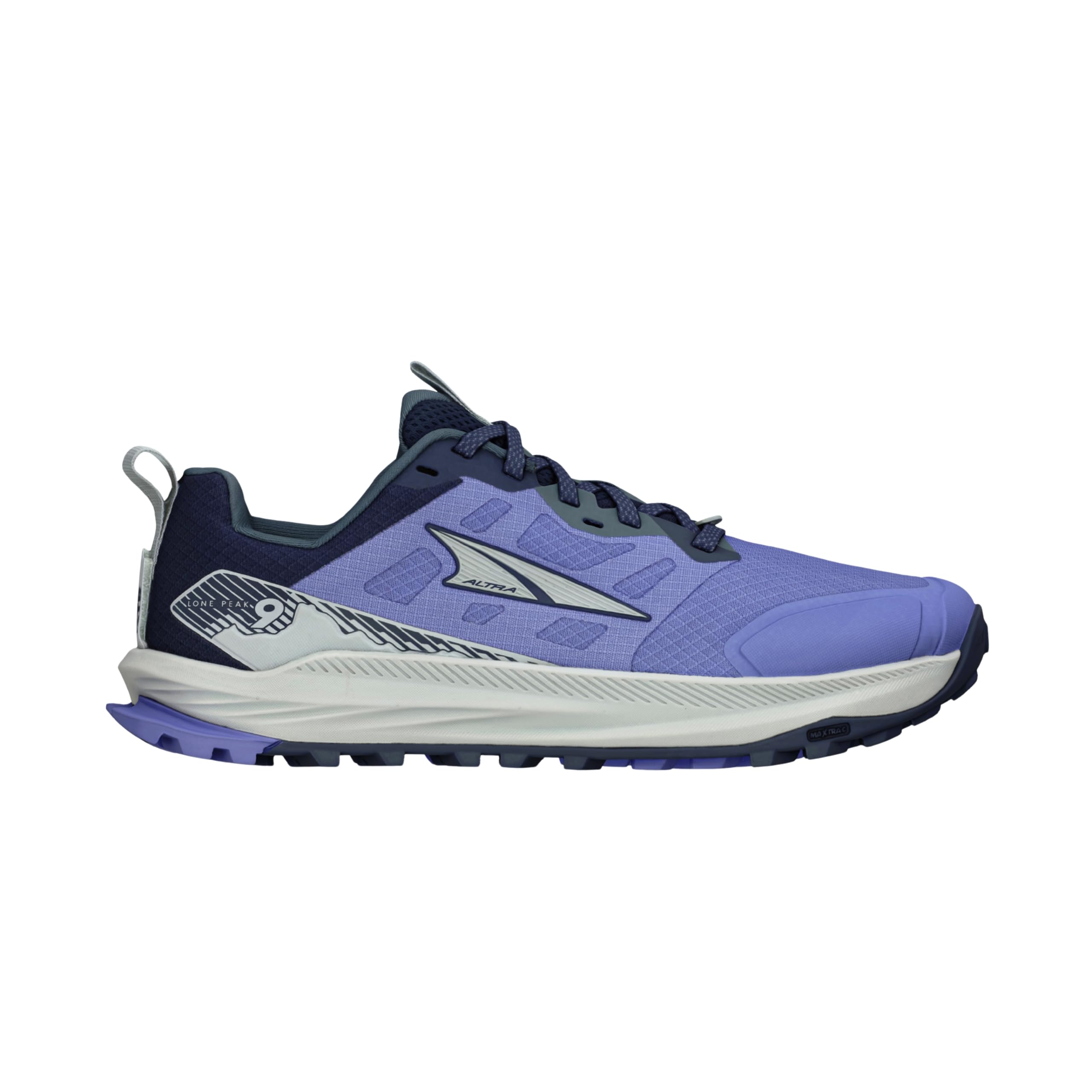
Altra Lone Peak 9

Altra Lone Peak 9

Wide, roomy fit

Our Score 9.0/10
Check Price

Worth Noting

  • Slips on slick, wet rock
  • Lining and sole can come apart within months
Listed Since
May 2024
Model Number
AL0A85PR/AL0A85PS220

The first thing you notice in the Lone Peak 9 is where your toes end up. The front of the shoe is wide and flat, so the toes spread instead of stacking, while the heel is held narrow so the foot does not slide forward when you point downhill. If you have been buying a half size up in ordinary trail shoes to stop your toes rubbing, this is the shoe that makes the workaround unnecessary — it runs true to size, with the room where your foot actually needs it.

It is built on a level, zero-drop platform, and that is the other thing to know before you buy. With no height difference between heel and toe, your calves and Achilles take more of the load, so if you have only run in conventional shoes, build up to long descents over a few weeks rather than jumping straight in. Do that and the payoff is a stable, natural feel on uneven ground that we liked more the longer we wore it.

Two caveats. Slick, wet rock is where this outsole loses its nerve, and a wet-season race is one where we reach for something with softer rubber. The upper is also not the toughest here, so it is a shoe to rotate rather than grind through every day. At the top of this group's price range you are paying for the shape — and if that shape is what your feet have been missing, it is money well spent.

Bottom line: The Lone Peak 9 is the shoe we point wide-footed runners to: a roomy, spreading toe box with a secure heel, on a level platform that rewards a gradual transition.

3

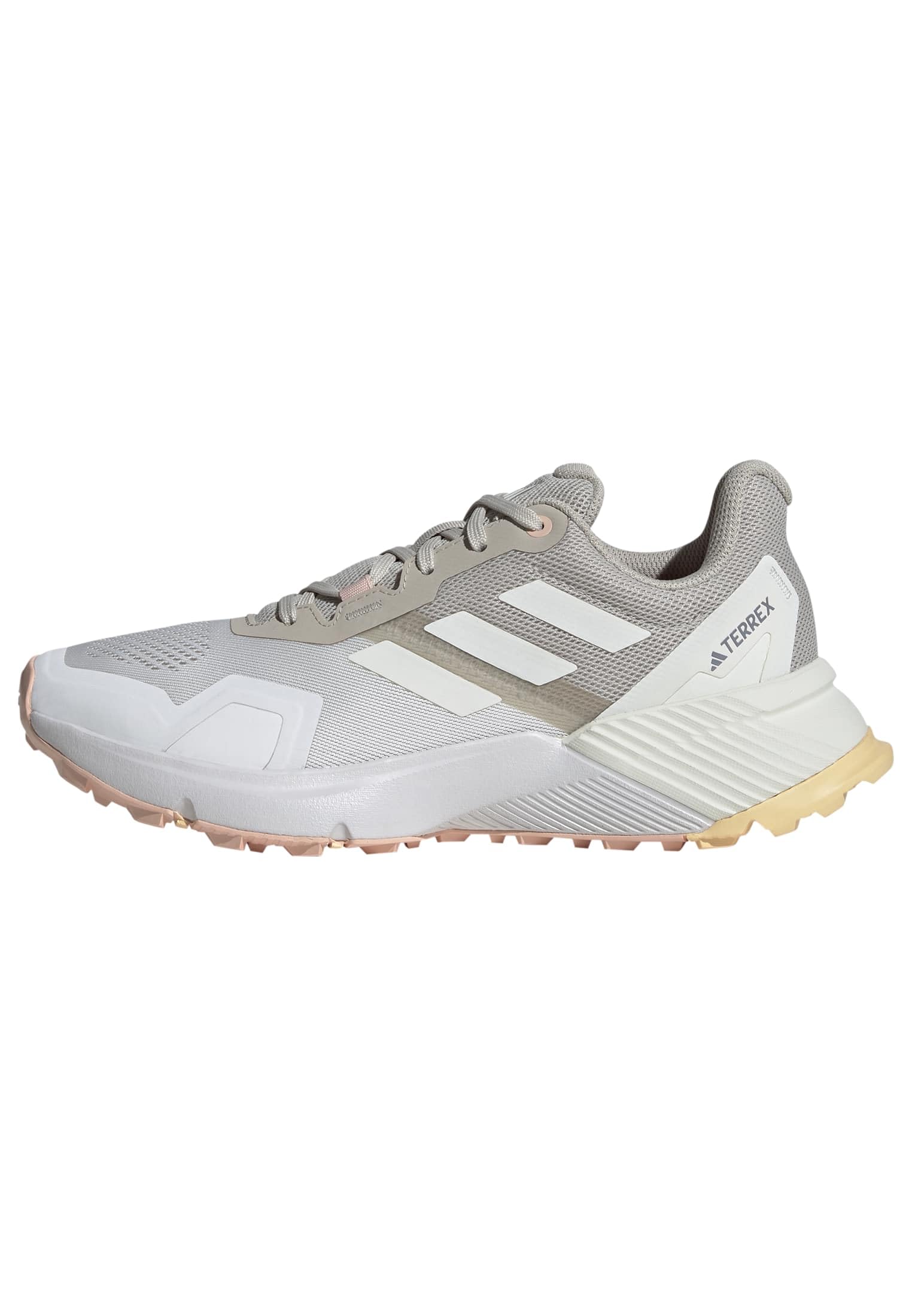
adidas Terrex Soulstride Rain.rdy

adidas Terrex Soulstride Rain.rdy

Rainy, wet trails

Our Score 8.8/10
Check Price

Worth Noting

  • Fit runs large in length and narrow in the middle
  • Side fabric tears with months of daily wear
Listed Since
April 2021
Model Number
34DC094-OFW
Packaged Weight
2.43 lb

Most trail shoes are fair-weather tools: open mesh that lets water straight through and a tread that packs up with mud. The Soulstride is aimed at the other morning — soaked grass, slick roots, and you are going anyway. The rain-ready upper shrugs off light weather, and the more useful trait is how quickly these dry. They are water-repellent rather than waterproof, so a real soaking gets through, but a wet run does not leave you squelching the next day.

The tread is the surprise. It is more aggressive than we expected at this price, and it holds on wet roots, loose gravel and packed dirt without the skating feeling cheaper trail shoes give you. Comfort is close behind — soft, close-fitting, no break-in — and the support under the arch is enough that a long day on your feet does not punish you. Fit is the one thing to settle before you commit: these can run large in length and snug through the middle at the same time, so try a half size down if you are between sizes.

Durability is where we hesitate. The fabric at the sides is the area that tears, and it can happen within a couple of months of daily wear — which is exactly the wear this shoe invites, because it is comfortable enough to become your everything pair. For weekend trail runs that is not a problem you will meet. For work-and-run duty on rough ground, keep an eye on the flex point.

Bottom line: The Soulstride Rain.rdy is our wet-weather pick: a water-repellent upper that dries fast, an aggressive tread, and enough support for long days — provided the fit suits you.

4

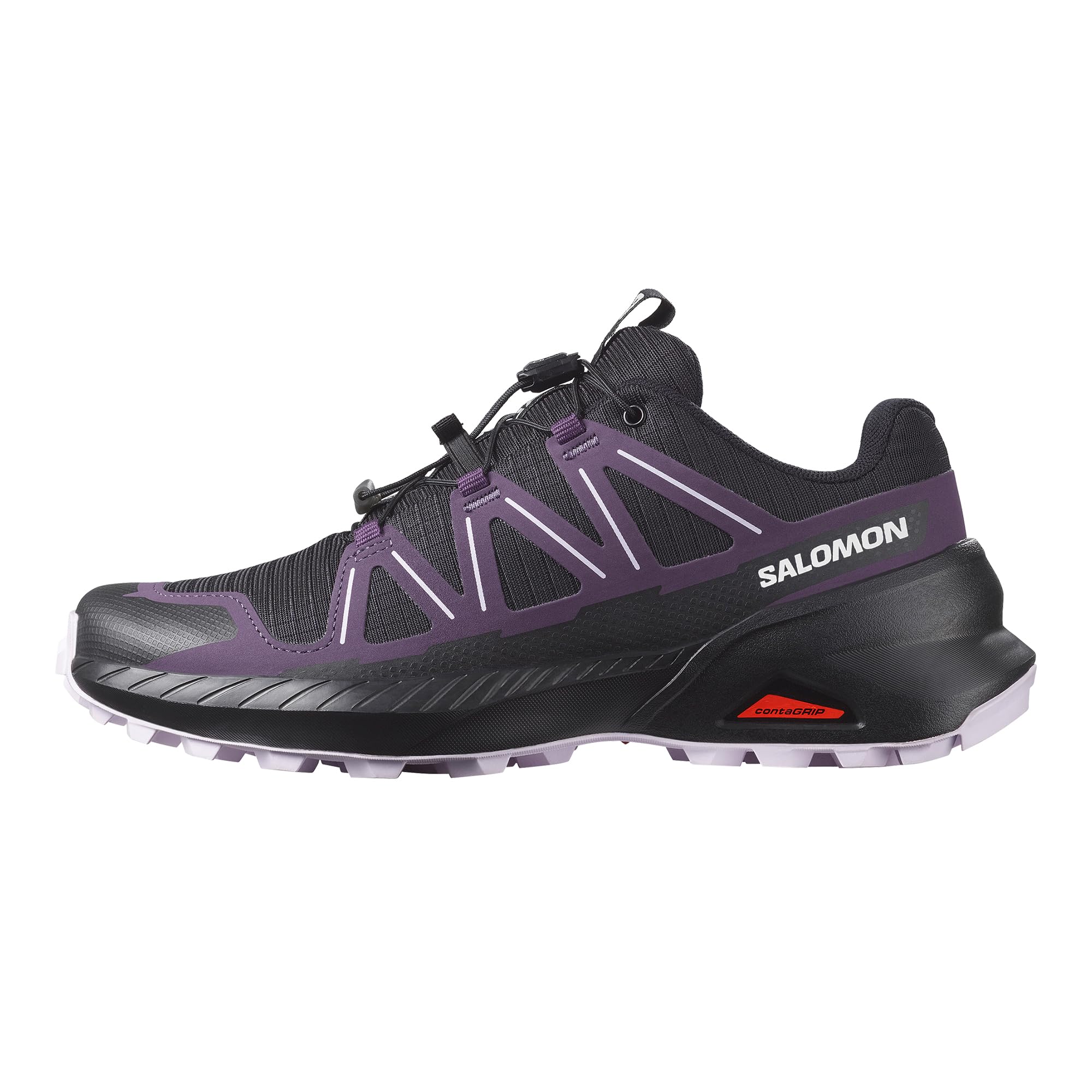
Salomon Speedcross Peak

Salomon Speedcross Peak

Soft, muddy ground

Our Score 8.6/10
Check Price

Worth Noting

  • Runs a full size large
  • Narrow through the midfoot
Listed Since
August 2023
Model Number
LI5894$

There are no laces to tie on the Speedcross Peak. A single cord pulls the whole upper tight in one motion, and you can work it one-handed without stopping — the fastest closure of any shoe here. On a cold, wet morning that small convenience stops being small.

Grip is the reason it earns a place. The tread is built for soft, messy ground — mud, snow, loose dirt, wet rock — and it is the shoe we reach for on a winter trail or a muddy spring loop. It holds on snow and ice where a smoother sole slides out. All that rubber has a cost: on pavement and hardpack it feels slow and clumpy, so if your trail runs start with a couple of miles of road, this is not the one.

The fit is the catch. These run large — a full size in many cases — so ordering your usual size leaves you swimming, and sizing down is the right move rather than a preference. They are also narrow through the middle, which means a broad forefoot can feel pinched even in the correct length. Neither issue shows up on the soft ground where the shoe does its best work, but try them on before a race rather than after the start line.

Bottom line: The Speedcross Peak is the shoe for soft, wet, messy ground: deep lugs that bite and a one-pull closure, as long as you size down and your foot is not wide.

5

Saucony Excursion TR13

Saucony Excursion TR13

Light trails, walking

Our Score 8.6/10
Check Price

Worth Noting

  • Upper tears at the ankle and sides
  • Runs short and narrow
  • Thin cushioning underfoot
Listed Since
June 2019
Packaged Weight
1.79 lb

The Excursion TR13 is the cheapest shoe here, and it is the one that lives closest to the pavement. That is less a criticism than a description: the tread grips wet roads and packed dirt convincingly, the cushioning is thin, and most of the wear this shoe sees is probably a sidewalk, a park path or a standing shift.

As a comfort shoe it earns its keep. Soft from the first wear, no break-in, easy to keep on all day — the kind you forget you are wearing. Sizing is the wrinkle: the toe box is generous, but the shoe as a whole runs short and narrow, and plenty of feet need a half size up. If you have wide feet and hate returning things, order with that in mind.

The upper is where it falls down, and this is the least durable shoe in the group by a clear margin. The fabric around the ankle and at the sides is thin, and it can tear within weeks of hard use — uppers fraying and sides splitting while the shoe still looks new. On gravel paths and park loops, the comfort and the price win. On overgrown singletrack and rock, they do not.

Bottom line: The Excursion TR13 is our budget pick for walkers and light-trail runners: comfortable from the first wear, sure-footed on wet pavement, and inexpensive enough to replace without flinching.

6

New Balance Dynasoft Nitrel v6

New Balance Dynasoft Nitrel v6

Everyday trail wear

Our Score 8.8/10
Check Price

Worth Noting

  • Firm, thin insole over sharp stones
  • Runs small and narrow through the forefoot
  • Toe seam can rub
Listed Since
August 2023
Model Number
WTNTRGP6
Packaged Weight
2.1 lb

The Nitrel v6 is the shoe here that looks most like a sneaker and least like equipment, and for plenty of women that is the whole point — it goes from trail to grocery store without announcing itself. The violet colorway is the pick of the range; it reads as color rather than as a warning sign.

On the trail it is a light-duty shoe and honest about it. Grip is fine on gravel paths, packed dirt and wet grass, and the mesh upper breathes in heat. Underfoot is where it comes up short: the insole is firm rather than cushy, the sole is thin enough that sharp stones come through, and the seam around the toe can rub. For a few easy miles from the door, none of that matters much. For a long day on rough ground, it does.

Sizing runs small and narrow, so a half size up is the safer order — and the extra length does not add width, which is worth knowing before you try to solve a tight forefoot with a bigger size. What we did appreciate is the arch support, which is real rather than decorative, and enough for an afternoon of walking. It makes a good second pair, or a first trail shoe for someone who is not sure yet how much trail they will actually run.

Bottom line: The Nitrel v6 is the crossover pick: a trail shoe that looks like a sneaker, grips gravel and wet grass, and offers real arch support — best for short, easy miles.

7

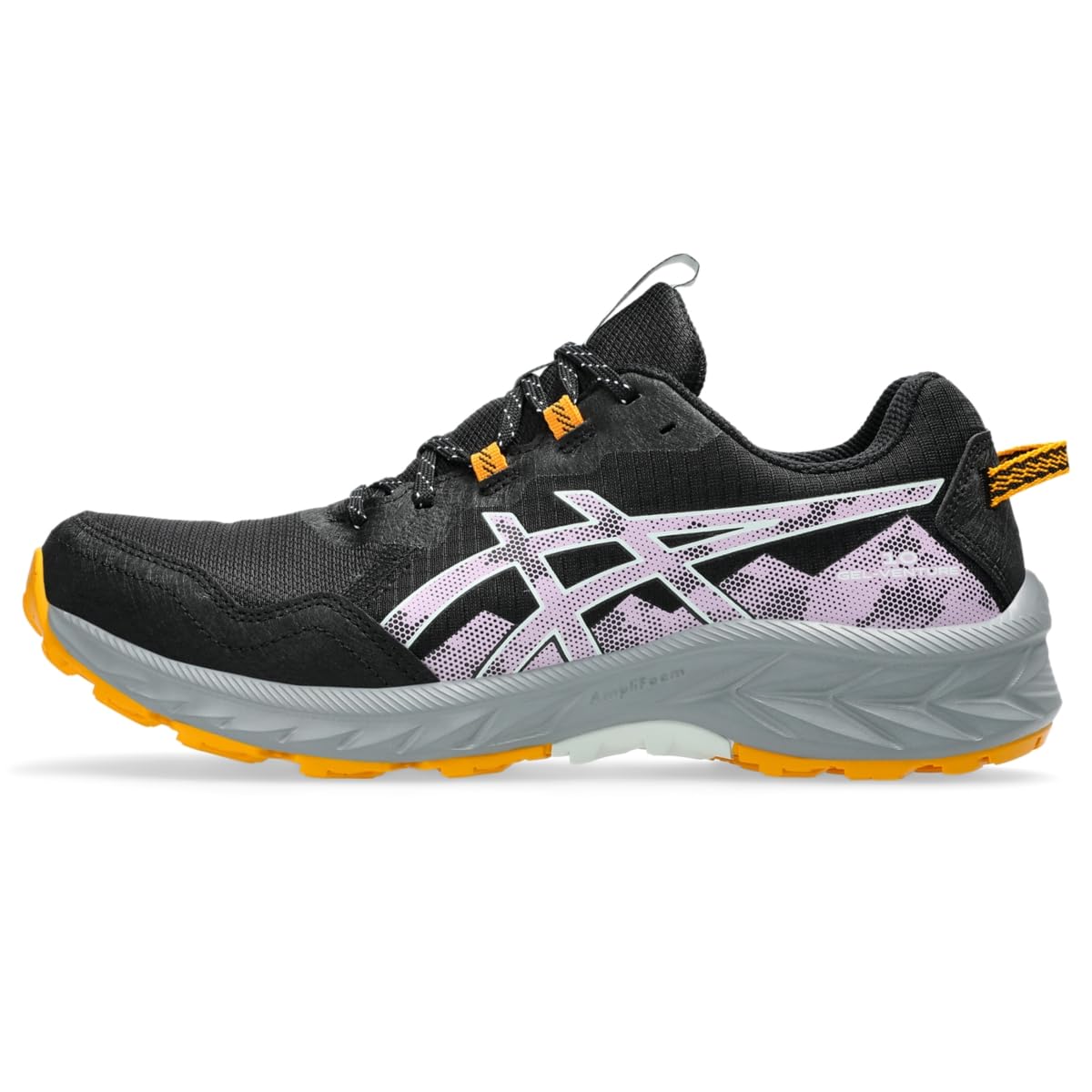
ASICS Gel-Venture 10

ASICS Gel-Venture 10

Easy trails, pavement

Our Score 8.6/10
Check Price

Worth Noting

  • Firm sole with little cushioning under the toes
  • Runs short
Listed Since
June 2024
Model Number
1012B760.002
Packaged Weight
1.44 lb

The Gel-Venture 10 splits people more sharply than anything else here, and the split is instructive: it is loved as a shoe for standing and walking, and it is a coin flip as a runner. The support explains the first part — a structured arch that does not collapse over a long shift on concrete.

The sole is stiff through the midfoot and thin under the toes, so you get support without much cushioning, and rocky ground comes straight up through the forefoot. It also runs short; a half size up solves it for most feet. What you get in return is a good-looking, inexpensive shoe with more colorways than the rest of this group put together, including a black-on-black that disappears under a uniform.

There is a real use case for that combination. If your week is ten-hour shifts and your weekend is a rail trail, this is a lot of shoe for the money, and the tread handles gravel and packed dirt without drama. The upper has held its shape in the wear we have seen, though the top edge around the ankle is the spot to check as it ages.

As a trail shoe, though, it stops at the easy stuff. Gravel, packed dirt and a dry rail trail are its limit; on wet roots and loose rock we wanted lugs and a softer forefoot and got neither. That is the whole decision with this one — it is a supportive everyday shoe that can take a dirt path, not a trail runner that can survive a shift.

Bottom line: The Gel-Venture 10 is a supportive, low-cost shoe for standing and walking that handles a dirt path — buy it for your feet, not for technical trail running.

How We Tested These Trail Runners on Mud, Rock, and Gravel

We started with a list of nearly 40 women's trail shoes and cut anything without a lugged outsole, a rock plate, or a women's-specific last. We also filtered by price, since this is a category where spending more often buys lighter foam rather than a meaningfully better shoe, and we ordered each pair in the size the brand's chart recommended, going up a half size whenever reviews suggested a model ran short. Twelve pairs made the final cut.

Testing ran eight months, from late summer into early spring, and every pair saw the same routes: a steep, root-covered climb, a loose gravel rail trail, a rocky ridge descent, and the paved warm-up mile before each one. We noted whether the heel stayed locked on descents, whether our arches still felt supported after two hours, and whether we could feel sharp rocks through the midsole or the cushioning had flattened out by the turnaround.

On the trail, we paid attention to how hard each sole felt underfoot and how much it flexed at the ball of the foot, because a stiff shoe climbs well but beats up your feet on long downhills. We ran the muddiest sections twice to see how quickly the lugs cleared and how much grip we got on wet roots and slick rock. Back home, we photographed every pair new and again at 50 miles to check wear at the outsole edges and upper seams, and noted whether the colorways hid dirt or showed every scratch. Value got the last word: we weighed price against how the shoe felt out of the box versus at mile 100. Several pairs are still in rotation, and we'll update this list as they wear through.

How to Choose Trail Running Shoes for Women

Start With the Shape of the Shoe

The biggest fork in this group is fit. Some trail shoes are built around a wide, flat toe box that lets the toes spread, and the Lone Peak 9 is the clearest example here. Others are cut closer and expect a sock-like fit, which is closer to how the Soulstride and the Speedcross feel. Neither approach is better; the wrong one for your foot is simply miserable over distance.

Try shoes on late in the day, when feet are at their largest. And if you have spent years sizing up to buy toe room, try a wide-fitting shoe in your real size first — you may not need the extra length at all, and a shoe that is too long lets the heel lift on descents.

Match the Tread to the Ground You Run

Deep, soft lugs are for soft ground: mud, snow, loose dirt. They bite when it matters and feel clumsy and wear quickly on pavement and hardpack. Shallower, harder rubber is for rock, gravel and road-to-trail routes; it rolls better and lasts longer.

Be honest about where most of your weekly miles happen. A shoe built for mud is the wrong shoe for a greenway with one dirt mile. The Speedcross is the clearest example here of a shoe that is superb in the wet and sluggish everywhere else, and it pays for that in road miles.

Decide How Much Cushioning You Want Underfoot

Cushioning is where these shoes differ most and where opinions divide hardest. A firm, supportive sole — the Gel-Venture and the Cascadia both lean firm — is efficient and stable on uneven ground but transmits rocks. A softer sole is kinder on long days and vaguer on descents.

If you also stand all day for work, weight arch support above softness; support is what keeps a long shift from becoming aching feet. If your runs are short and sharp on technical ground, firm is usually the faster choice.

Look at the Upper Before You Fall for the Tread

Uppers are where trail shoes fail first. Thin fabric around the ankle collar and at the flex point is the first thing to fray on abrasive rock and brush, and it is the most common wear point across this group — check the Excursion TR13 and the Soulstride closely if you run through scrub.

Water handling is the other half of the decision. A water-repellent upper keeps out cold rain and wet grass, but once water comes in over the collar it stays in. If your runs involve stream crossings, favor drainage and quick drying over a waterproof membrane.

What More Money Actually Buys

Spending more here buys a specific fit or a specific outsole, not general quality. The cheapest shoes in this group are comfortable, competent walkers with trail styling; the premium picks buy a distinctive last, as with the Lone Peak's wide front, or an outsole built for soft ground, as with the Speedcross.

If you run two or three times a week on mixed terrain, a mid-priced all-rounder is the sensible spend. If you race, or your feet have never fit a standard shoe, paying for the right shape is the best money in this category.

Frequently Asked Questions

Final Verdict

Buy the Brooks Cascadia 19 if you want one pair that fits true to size, grips rock and loose dirt, and needs no breaking in. It is the least dramatic shoe here and the easiest to live with.

Two situations change that answer. If every trail shoe you have tried has squeezed your toes, the Altra Lone Peak 9 is the fix — just keep it off slick, wet rock. And if your trails are wet more often than dry, the adidas Terrex Soulstride Rain.rdy is the one that dries fastest and holds on wet roots.