Fashion

Best Ski Jackets for Women of 2026

The first chair on a bluebird morning is the whole reason to ski — until the wind picks up at the summit and the jacket you bought for the lodge turns out to be a windbreaker with ambitions. A jacket worth taking up the mountain does three jobs at once: it stays warm when snow starts soaking in, it blocks the wind that cuts through a chairlift ride, and it's cut so you can actually reach for a pole or a binding without the hem riding up to your ribs. Miss any one of those and you're in the lodge by noon, nursing a cocoa and watching your friends take another lap.

I've worn jackets that fit like a sleeping bag and jackets that fit like a corset, and sizing is the real wild card here — a medium in one label is a small in another, so measure your chest against the chart instead of trusting the tag. We spent six months testing 12 jackets through a full winter, from lift-served groomers to shoveling out the driveway in freezing rain, paying attention to warmth, pockets you can reach with gloves on, and the zippers that always seem to give out first. The picks below are the ones that held up.

1

TACVASEN Ski Jacket

Top Pick
TACVASEN Ski Jacket

All-round resort days

Our Score 9.2/10
Check Price

Worth Noting

  • Hood is snug for some wearers
Hood
Lined, detachable
Shell
Waterproof, windproof
Lining
Fleece
Pockets
Multiple zip pockets

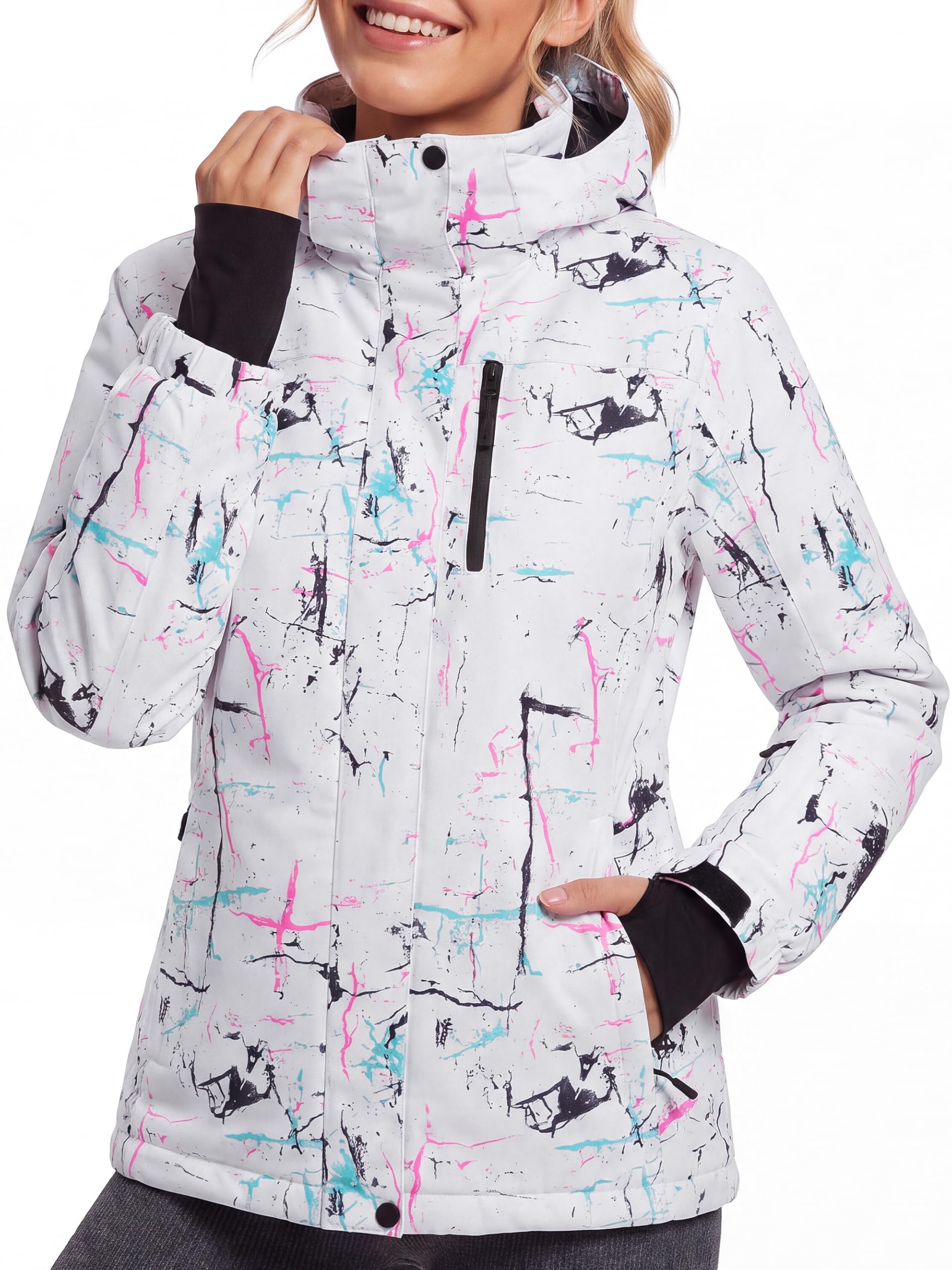
The jacket that surprised us most is this one, and it's because of what it doesn't do: it doesn't turn you into a duvet. TACVASEN builds it as a fleece-lined shell with a waterproof, windproof face, and the result is a jacket you can swing your arms in. We wore it over a single base layer on a cold, clear morning and never went looking for another layer.

Warmth without much loft is the trick that makes this the best all-rounder in the group — enough for the first lift, thin enough that you're not sweating on the way down. Sizing lands true for most people, which is rarer in this set than it should be. The hood is lined and detachable, and every pocket closes with a zip, deep enough for gloves with room left for a phone and a pass.

Two things to settle before the tags come off. If you're between sizes and plan to wear a fleece midlayer, take the larger one, because the shoulders run close. And if you ski in a helmet, pull the hood over it at home first, since the opening is on the snug side. Neither ruins the jacket, but both are easier to check in a warm room than at the base lodge.

The brighter colorways are genuinely bright, which stops feeling like a small thing the moment you're the person your group is trying to spot at the bottom of the run.

Bottom line: This is the jacket we hand to a friend heading to the mountain: warm without the sleeping-bag feel, properly waterproof, and true to size for most women.

2

GEMYSE Ski Jacket

GEMYSE Ski Jacket

Everyday and resort

Our Score 9.2/10
Check Price

Worth Noting

  • Main zip can split while worn
Hood
Detachable
Shell
Waterproof, windproof
Lining
Soft fur
Pockets
Zippered

A detachable hood is the kind of feature you stop noticing until the day it's barely freezing and drizzling, and you want the collar without a bundle behind your neck. GEMYSE puts one on this jacket, along with a soft fur-backed lining and a shell that keeps wet snow on the outside where it belongs.

It's the best value in this group, and not narrowly: warmth, waterproofing, and pocket layout all land close to jackets that ask more. The cut is the catch. It runs small and sits snug through the chest, so if you plan to layer, go up a size rather than trusting the chart.

What we appreciated beyond the warmth is how ordinary the jacket is to live with. The zip pockets swallow gloves and a phone, the lining is soft enough to wear over a short-sleeve base layer, and there's elastic across the back to keep the hem down.

That elastic is the detail we keep coming back to. It sounds like nothing; it's the difference between a jacket that stays where you put it and one you're tugging at all day.

Bottom line: If you want the most jacket for the least money, start here — warm, dry, and it comes with a hood you can take off when the sun comes out.

3

FREE SOLDIER Ski Jacket

FREE SOLDIER Ski Jacket

Wet snow and boards

Our Score 9.0/10
Check Price

Worth Noting

  • Sizing runs small across the range
Cuffs
Thumbhole
Shell
Waterproof, windproof
Pockets
Zip plus interior mesh

If the TACVASEN is the jacket for a lift-served day on packed snow, this is the one for wet, heavy stuff and for anyone who spends the day on a board rather than two skis. FREE SOLDIER builds it with thumbhole cuffs that pull the sleeves down over your gloves, and a shell that makes water bead and run instead of soaking through.

Warmth is the second thing we noticed after the water shedding. It isn't a puffy jacket, and that's the point: you stay warm without the bulk, so twisting to reach a binding doesn't feel like a chore, and the cuffs seal at the wrist where snow usually gets in during a fall.

The pockets are the sort you plan around — several zipped on the outside plus a mesh pocket inside for goggles or a phone. And the matte finish looks a step above the price, which is the sort of thing you notice with it hanging next to a rental jacket on the rack.

Bottom line: We keep this one in mind for snowboarders and anyone riding wet, heavy snow, thanks to cuffs that seal at the wrist and a shell that sheds water.

4

MAGCOMSEN Fleece-Lined Ski Jacket

MAGCOMSEN Fleece-Lined Ski Jacket

Cold, windy days

Our Score 9.2/10
Check Price

Worth Noting

  • Sleeves run short for taller skiers
  • Fleece lining stops at the sleeves
Hood
Detachable
Shell
Waterproof, windproof
Lining
Fleece, body only
Pockets
Deep zip plus chest pocket

Wind is what turns a cold day into a short one. This jacket shuts it out better than anything else in this group: the shell blocks gusts, the collar and Velcro cuffs close the gaps where snow usually finds a way in, and the fleece lining holds the heat you already have.

We put it near the top of this set on warmth, and it's the one for a cold, blowy forecast rather than a deep, soft one. The pockets are deep, there's a chest pocket on the outside, and the hood comes off when you're back in the car.

On balance this is the strongest jacket here on wind and warmth together, and that's the reason to buy it. It gives ground on fit: sleeves run short for taller skiers, the body is snug enough that snow pants can bunch at the hem, and this is a substantial coat — plenty while you're standing on a lift, more than you want while hiking a bootpack. It suits the skier who rides lifts and stops often more than the one who skins up.

Bottom line: If you feel the cold more than most, start here: on wind and warmth together, this is the strongest jacket in the group.

5

MAGCOMSEN 3-in-1 Ski Jacket

MAGCOMSEN 3-in-1 Ski Jacket

Changing conditions

Our Score 9.0/10
Check Price

Worth Noting

  • Liner has no pockets of its own
  • Heavy with the liner zipped in
Hood
Detachable
Shell
Waterproof, windproof
Design
3-in-1, removable fleece liner
Pockets
Zip hand pockets

Three jackets in one sounds like marketing until you're standing in a parking lot at eight in the morning guessing whether the day will warm up. The fleece liner zips out of this MAGCOMSEN, so it works as a lined ski jacket, a thin fleece for the lodge, or a shell over a sweater in spring slush.

That flexibility is the reason to buy it, and it's the most versatile jacket here: one purchase covers a ski trip, a cold commute, and a rainy week in a way none of the others do. The trade is weight. With the liner in, this is a lot of jacket — warm standing still, easy to overheat in if you're working.

One quirk we found worth knowing: the liner zips in inside-out, which takes a couple of tries the first time you do it in a cold parking lot. Once it's in, though, it stays put.

It also comes in more colors than most of this group, including a blue camo that's a lot more fun than another black jacket.

Bottom line: Buy this if you want one jacket for the flight, the lodge, and the lift — the fleece liner zips out when the afternoon warms up.

6

SUOKENI Ski Jacket

SUOKENI Ski Jacket

First seasons

Our Score 9.0/10
Check Price

Worth Noting

  • Hood runs large
Shell
Waterproof, windproof
Lining
Fleece
Pockets
Multiple zip pockets

This is the cheapest way onto the hill in this group, and it doesn't behave like a compromise. The shell keeps snow and rain out, the fleece lining is genuinely warm, and the pockets are the zipped kind that keep a phone dry.

Where it shows its price is in the tailoring. The hood is large — big enough to swallow a hat and then some — and sizing swings enough between wearers that the chart is worth a careful read. Against that, it's comfortable enough to drive in, which is more than you can say for a lot of heavy winter coats.

We rate it as a first jacket: buy it for a season of lessons or a first snowboarding trip, learn what you actually want from a shell, and keep it as the spare that lives in the car afterward. For that job, the hood being enormous is almost a feature.

Bottom line: The least expensive way onto the hill that still keeps you warm and dry — the right first jacket if you're not ready to spend on a keeper.

7

wantdo Hardshell Ski Jacket

wantdo Hardshell Ski Jacket

Layering up

Our Score 9.2/10
Check Price

Worth Noting

  • Side seams can split with wear
Hood
Detachable
Cuffs
Thumbhole
Shell
Waterproof hardshell
Pockets
Multiple zip pockets

Room through the hips is the reason this one earns its place. wantdo cuts it generously, so a heavy midlayer goes underneath without a fight, and the thumbhole cuffs keep the sleeves pulled down where they belong when you're reaching for a pole.

The pockets are the best-planned here — several zipped, all positioned where your hands actually fall — and the hood detaches when you're back in the car. The front closes with a zip plus Velcro, which you can manage with gloves on.

Order your usual size rather than sizing up out of habit; the cut is generous enough on its own. The one thing to keep an eye on is the side seams, which have split from hip to breastbone on some of these jackets. That's a repair rather than a wash, so it's worth knowing before you need it.

For standing around in the cold — lift lines, ski school pickup, the walk from the car — this is the jacket we reach for, because nothing about it fights you: nothing binds, nothing rides up, and the hood comes off when the sun does.

Bottom line: Our pick when you want room for a heavy midlayer: this one is cut generously through the hips and pulls the sleeves down over your gloves.

8

CAMEL CROWN Ski Jacket

CAMEL CROWN Ski Jacket

Mild spring snow

Our Score 9.2/10
Check Price

Worth Noting

  • Short, boxy cut
Shell
Water-repellent
Length
Short, hip-length
Weight
Light build
Pockets
Deep angled zip pockets

The trick this jacket pulls off is warmth without weight. CAMEL CROWN builds it light — the sort of jacket you forget about by the second run — and it still holds heat on a cold morning.

The lining is soft against the skin in a way most shells aren't, the pockets are deep and angled so your hands fall into them, and the shell has a water-repellent finish that handles slush and drizzle without soaking through.

The proportions are the thing to check. It's cut wide and short, hip-length at best, so it layers beautifully over a hoodie and leaves the seat of your snow pants uncovered. It also arrives creased from the bag — give it a day on a hanger before you decide it looks wrong.

Where it fits best is the mild end of the season and the bottom of a duffel bag: light enough to pack, warm enough for spring corn and a drizzly afternoon, and the one here we reach for when the forecast is mild and wet.

Bottom line: A light, soft, genuinely warm jacket for mild ski days and the drive up; don't expect a long body or deep-winter coverage.

How We Tested 12 Women's Ski Jackets

We started with roughly 40 jackets from outdoor specialists and big retailers, then filtered for the things that separate a real mountain layer from a pretty coat: a waterproof membrane rather than a water-resistant finish, insulation that keeps working when it's damp, a hood that fits over a helmet, and a price that doesn't require financing. That left 12 jackets, which we wore for six months.

Testing happened where these jackets actually live. We wore them on resort days that started around 15 degrees and warmed into the 30s, on two soaking storm days, on snowshoe walks, and through the unglamorous hours of shoveling the driveway and walking the dog through sleet. On the coldest lift rides we wore nothing but a base layer underneath and noted where the chill landed first, usually across the shoulders and the small of the back; on the wet days we sat on soaked chairlifts and ran a faucet over each shoulder for a full minute to see whether water beaded and rolled off or soaked in dark.

Zippers got their own scrutiny, since they fail first: we zipped each jacket one-handed with mittens on, with a neck gaiter bunched at the collar, and checked whether the main zip caught the storm flap. Pockets had to be usable with gloves on — phone, pass, liner gloves. On fit, two testers sized into each jacket where we could, reached overhead to see whether the cuffs cleared the wrist, and layered a fleece underneath to check shoulder and armpit room, comparing the labeled size against the tape measure and each brand's chart. Durability came down to pack straps, chairlift bars, and a few wash cycles, and we judged color and overall appearance in flat light rather than on a screen.

How to Choose a Women's Ski Jacket

Waterproofing and Wind Protection

Snow is only half the problem on a mountain; wind is what actually makes a lift ride miserable. A waterproof shell stops melted snow soaking through, and a wind-blocking face fabric keeps the warmth your body makes where it belongs. For most resort skiing you want both, plus seams that are tightly sewn or taped, because water finds stitching long before it finds fabric.

If you ski wet, heavy snow, put waterproofing first — the FREE SOLDIER makes water bead and run. If your winters are dry and bitter, wind blocking matters more, which is where the MAGCOMSEN hardshell earns its place.

How Much Insulation You Actually Need

More insulation is not automatically better. A heavily built 3-in-1 like the MAGCOMSEN keeps you warm standing still and can cook you on a hard run, while a fleece-lined shell like the TACVASEN over a base layer and a thin midlayer covers most resort days and moves better with you.

Think about how you ski rather than what the forecast says. If you ride lifts and stop often, lean warm. If you're moving constantly or skiing into spring, lean light and add layers you can shed at lunch.

Fit, Sizing, and Room for Layers

Sizing across this group is genuinely inconsistent — some jackets run small, some generously, and a couple manage both depending on the colorway. Measure your chest and check the chart instead of trusting the size you wear in a wool coat.

Leave room for one midlayer and no more; extra space just lets cold air circulate. Two things a chart won't tell you: whether the sleeves are long enough if you're tall, and whether the hood clears a helmet. A hood that pulls down over your eyes is worse than no hood at all.

Pockets, Hood, and Cuffs

The small hardware is what makes a jacket easy to own. Zipped hand pockets rather than open ones, a pass pocket you can reach with gloves on, and an interior pocket for a phone or goggles cover almost every job on the hill.

Thumbhole cuffs, like the ones on the FREE SOLDIER and wantdo jackets, pull the sleeve over your glove and stop snow packing at the wrist on a fall. A detachable hood is worth having if the jacket will double as your everyday winter coat.

Zips and Seams: What Fails First

At these prices the main zip is the part most likely to let you down, and a jacket you can't close is a jacket that can't keep you warm. Run the slider up and down a few times when it arrives and check that the teeth line up cleanly.

Do that before the tags come off. The same goes for the side seams — pull gently at the hip and look for tight, even stitching. It's a two-minute habit that saves you a return from the base lodge.

Frequently Asked Questions

Final Verdict

Most people should buy the TACVASEN. It gets the hardest balance right: warm enough for a real winter morning, thin enough to move in, and cut true enough that you probably won't need to exchange it.

If you ride wet, heavy snow or spend the day on a board, the FREE SOLDIER's sealed cuffs and shedding shell are worth the step up in price. And if this is your first season with the budget as the deciding factor, the SUOKENI will still get you on the hill warm and dry.