Fashion

Best Jackets for Women of 2026

Warmth is the easy part. The jacket that earns its hook by the door keeps you warm without turning you into a sleeping bag, zips on the first try with half-frozen hands, and still looks like something you chose on purpose. Fit carries a lot of that weight — a hem that lands in the right place on your hips, enough room for a sweater underneath — but so do the hardware and the length, which is where otherwise-nice jackets quietly fall apart.

I've owned jackets that were warm and miserable to wear, and borrowed ones that looked great and let the wind straight through. Over the past eight months, my team and I have worn 14 of them — dog walks in the rain, the school run, weekend hikes, a couple of genuinely brutal cold snaps — and the gap between good and forgettable comes down to details you only notice on the third wear. One thing I'd tell a first-time buyer: check the zipper and the length before you fall for the color, because a pretty jacket with a sticky zip ends up back in the closet. The picks below are the ones that kept getting pulled off the hook.

1

Columbia Benton Springs Fleece

Top Pick
Columbia Benton Springs Fleece

Everyday fall wear

Our Score 9.2/10
Check Price

Worth Noting

  • Not windproof or water-resistant
Type
Fleece
Closure
Full zip
Department
Women's

Fleece is the least glamorous thing in this guide and the one we reach for most. The Benton Springs is brushed thick on both sides, warmer than its weight suggests, and it sits at the bottom of the price range here — which is why it takes the top spot ahead of the technical shells that follow.

Where it beats other fleeces is the shape. It's cut in at the waist rather than dropping straight, so it reads as a jacket and not a zip-front sweatshirt, and it layers under a rain shell without bunching at the shoulders. The sleeves run long, which the elastic cuffs solve, and the body runs generous on most frames — but the fit isn't consistent enough to order blind, so try it on before you cut the tags.

The small things are done well: pockets deep enough for a phone and keys, a zip with enough substance that it doesn't ripple, and contrast trim at the pocket and zip pull on some colorways that makes a basic fleece look chosen rather than default. Colors are the one gamble, since a few read darker on screen than in daylight and the black is a softer black than a true one.

Nothing about it is technical, and that's the point: it's the layer for a cool morning, a cold office, a car that never quite warms up. Ours has been in a tote, over a dress, and under a shell on a wet afternoon, and it has never been the thing we regretted packing.

Bottom line: Warm for its weight, flattering over a sweater, and the least expensive way to look put together on a cool morning — this is the fall jacket we recommend first.

2

Outdoor Ventures Softshell Rain Coat

Outdoor Ventures Softshell Rain Coat

Wet, windy days

Our Score 9.0/10
Check Price

Worth Noting

  • A shell, not a parka
Hood
Attached
Type
Softshell rain coat
Lining
Fleece
Water Protection
Waterproof

The forecast that defeats most jackets isn't a downpour — it's a steady, wind-driven drizzle at 45 degrees, where a shell leaves you cold and a coat leaves you soaked. That's the day the Outdoor Ventures earns its keep: the outer fabric sheds water and the fleece lining means you don't need a midlayer underneath it.

We like it best for the boring reasons. The hood is big enough to stay up over hair and a collar, the two-way zip opens from the bottom when you sit down or drive, and there are enough zippered pockets that a phone, keys and gloves each get their own. A drawstring at the waist pulls in the shape so it doesn't hang like a sack, which is rare on a coat that actually keeps rain out.

Sizing is true with room for a sweater, the hem covers the top of your jeans, and the sleeves are the right length for once. Wear it over a T-shirt in spring and over a fleece in November; the fleece lining makes it a three-season coat rather than a summer shower jacket.

Bottom line: For wet, windy days in the 40s and 50s, this is the jacket we hand people: a waterproof shell with a fleece lining, a real hood, and pockets that zip.

3

Orolay Thickened Down Jacket

Orolay Thickened Down Jacket

Cold winter days

Our Score 9.0/10
Check Price

Worth Noting

  • Zippers can stick, especially the side ones
  • Hood is fixed, not detachable
Style
Thickened parka
Insulation
Down
Package Size And Weight
15.79 x 12.17 x 6.1 inches; 2.73 pounds

Orolay's quilted parka is the coat people stop you about, and the fuss holds up: the fill is generous, the hood is fleece-lined, and it's warm enough that a sweater underneath becomes optional rather than essential. It's the coat we reach for when the forecast is genuinely grim rather than merely gray.

Storage is the other half of the appeal. Pockets run down the front and inside, most of them zipped, and side zips open the hem so you can sit, drive or climb stairs without the coat fighting you. The hand pockets sit high, at the waist, which keeps them clear of a crossbody bag but takes a day or two to get used to.

Sizing is where it needs care. It runs small, particularly through the sleeves, so order up rather than trusting your usual number — the coat is cut to be worn over a sweater, and the extra room is what makes that comfortable instead of tight.

Bottom line: The warmest coat in this guide, and the one that draws the most compliments — a proper winter parka with pockets for everything.

4

Amazon Essentials Packable Puffer

Amazon Essentials Packable Puffer

Travel and layering

Our Score 9.0/10
Check Price

Worth Noting

Type
Packable puffer
Sleeve
Long sleeve
Water Protection
Water-resistant

It arrives compressed into a small attached bag and goes back into it without a fight, which is the entire argument for owning it. Shaken out, it's a thin long-sleeved puffer with a high collar, two inside pockets and enough shape that it doesn't look like a stuff sack with arms.

Warmth is honest for what it is. Over a sweater it takes a cold morning and a windy platform, and the water-resistant shell keeps drizzle from soaking through to your shoulders. Pack it for a trip or leave it in the car for the evening the temperature drops faster than you expected.

What we appreciate most is how little space it asks for: it disappears into a tote, a glovebox, a carry-on, and it's warm enough that you stop checking the forecast before you leave. Order up if you plan to layer, especially through the waist and hips, where the cut runs closest.

Bottom line: The jacket that lives in your bag: it stuffs into its own pouch, shrugs off drizzle, and adds real warmth over a sweater.

5

Wrangler Authentics Denim Jacket

Wrangler Authentics Denim Jacket

Casual outfits

Our Score 9.2/10
Check Price

Worth Noting

  • Light stretch denim adds little warmth
Type
Denim jacket
Fabric
Stretch denim
Department
Women's

Stiff denim is why a lot of jackets stay in the closet: you can't reach across a table, the shoulders ride up, and the whole thing feels like armor. This Wrangler is the answer to that. The fabric has enough stretch that you forget you're wearing denim, and the sleeves push up and stay up instead of sliding back down.

The cut is close through the body and lands at the waist, which is what lets it work over a dress as easily as jeans, and the arm length is generous rather than stingy — a mercy if you're tall or long-limbed.

We recommend it over a heavier trucker jacket for exactly that reason: you'll wear it more. It goes over a slip dress in September, a tee in October and under a coat in November, and it never adds bulk at the shoulders.

Two things to know before you order. It runs small through the shoulders for some builds, so size up if you want a hoodie underneath, and the color range holds up better than most — the black reads as a true black rather than a faded charcoal.

Bottom line: The denim jacket for people who gave up on denim jackets — the stretch lets your arms move, the fit is close without pinching, and it works over a dress.

6

Carhartt Washed Duck Sierra Jacket

Carhartt Washed Duck Sierra Jacket

Harsh winter work

Our Score 9.6/10
Check Price

Worth Noting

  • Heavy, stiff canvas that takes time to break in
Shell
Washed duck canvas
Style
Sierra jacket
Department
Women's

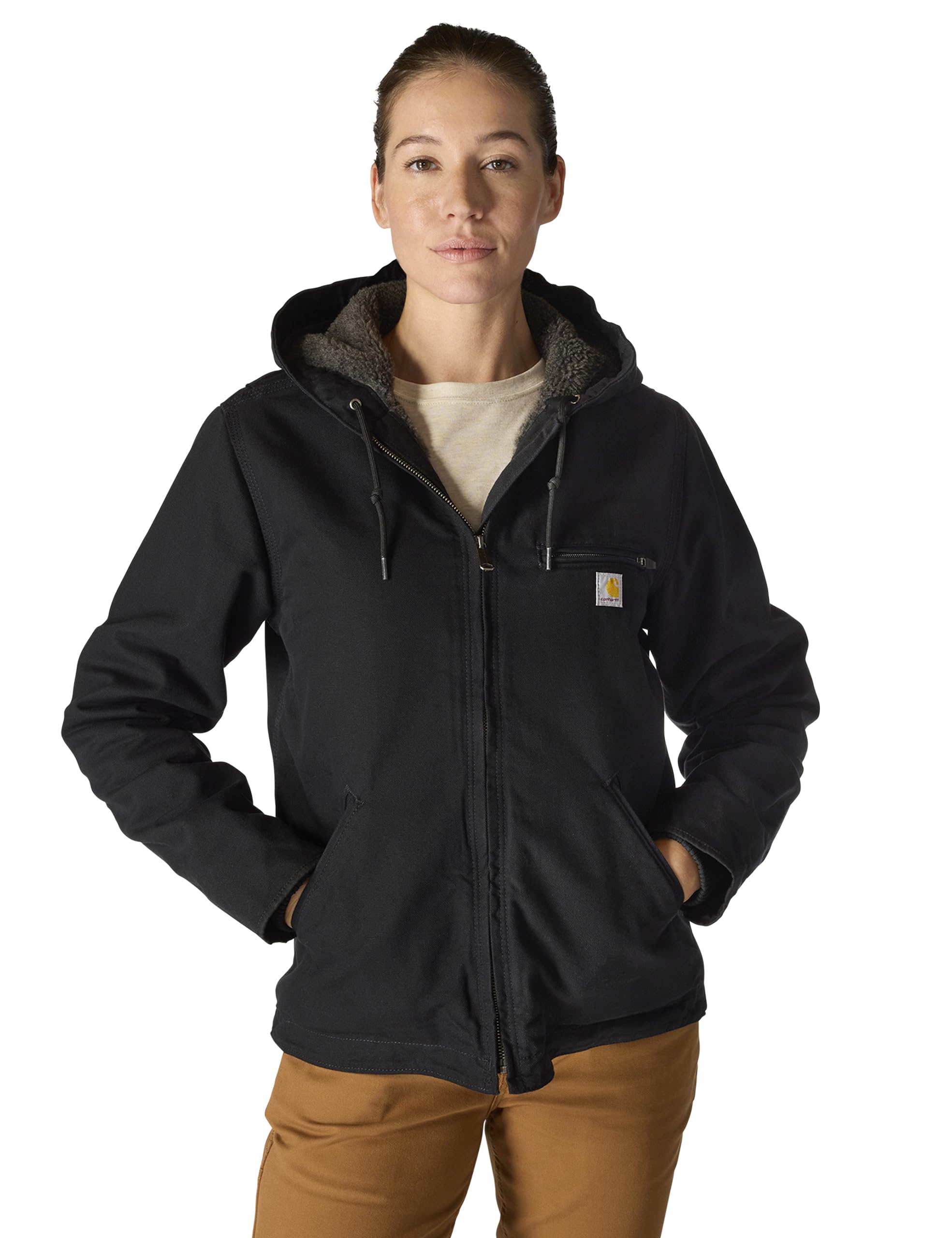
A hood that stays up, a collar that closes at the chin, a hem that covers your back: the Sierra is built like a coat, and those three details are why it works when the temperature drops and the wind picks up. Nothing on it is decorative.

Underneath, the duck canvas is thick enough to stop wind and shed light rain, and there's room for a hoodie or a heavy sweater without the shoulders going tight. Pockets are deep inside and out, which matters more than it sounds when you're wearing gloves and want somewhere to put a key.

Sizing runs large — we could have gone down a size — and the body is roomier than the bomber. If you're between sizes and don't plan to layer much, size down; if you want a heavy sweater under it in January, keep your usual.

What you're buying is a coat you keep for years rather than a season. The canvas softens with wear, the shape doesn't date, and it handles a farm, a dog and a commute that involves standing outside. Overkill for a coat you only wear door to door.

Bottom line: Built for people who are outside in February: washed duck canvas, room for a hoodie underneath, and coverage that blocks wind.

7

Carhartt Crawford Bomber Jacket

Carhartt Crawford Bomber Jacket

Mild-weather layering

Our Score 9.4/10
Check Price

Worth Noting

  • Black colorway shows lint
  • Sleeves run short on tall frames
Type
Bomber jacket
Department
Women's

There's a stretch of fall when a coat is too much and a shirt is too little, and a bomber is the answer to it. Carhartt's Crawford is the best version of that idea here: light, soft enough to wear against a T-shirt, and cut like a jacket rather than a work shirt.

The tailoring is the surprise. It's shaped for a women's frame, sits at the hip and looks deliberate zipped up or hanging open, which is more than most bombers manage. The zip is substantial enough that it doesn't catch halfway, and the pockets take a phone and a pair of hands comfortably.

It runs a touch big, which is useful if you want a hoodie underneath, and it layers over everything from a tank to a heavy sweater. In real cold you'll want the Sierra instead — this one is for the shoulder seasons, and it's the jacket we throw on for a 60-degree evening without thinking about it.

Bottom line: A sharp, lightweight bomber for the weeks when a coat is too much and a shirt is too little.

8

Columbia Heavenly Long Jacket

Columbia Heavenly Long Jacket

Long winter coverage

Our Score 9.2/10
Check Price

Worth Noting

  • Zipper is fiddly to start
Hood
Attached
Length
Long
Insulation
Down

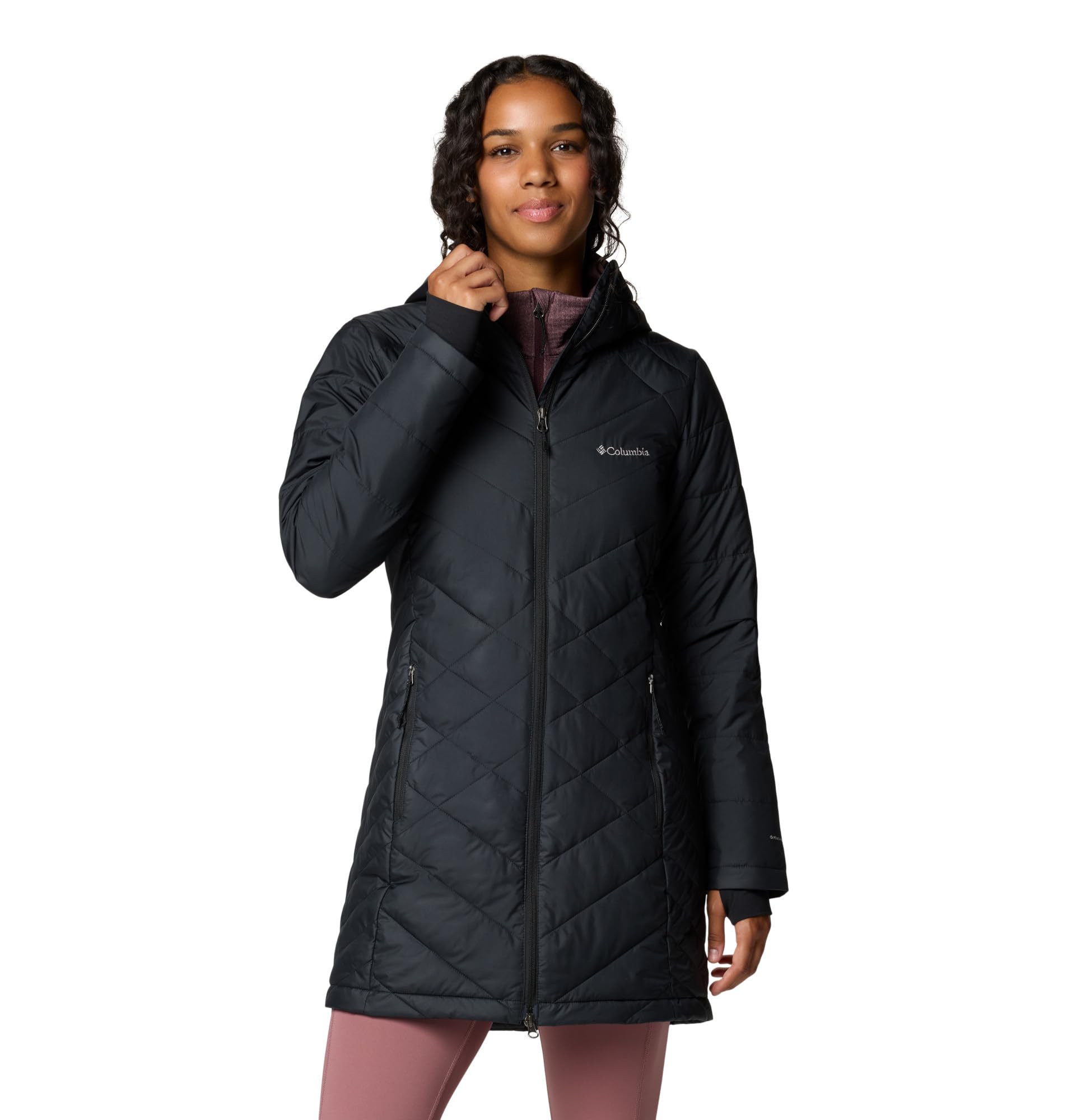
Length is the whole point: it covers your backside and reaches mid-thigh, so you're not negotiating a thin skirt or jeans against a cold bench or a cold car seat. The Heavenly does that without the weight of a wool coat, which is why it ends up being the one worn to dinner rather than the one saved for errands.

It's genuinely light for how warm it is, and the satin lining slides over a chunky sweater instead of grabbing at it. There's soft fleece inside the hood, a zip pocket on the inside chest for a key or a card, and a double zip that opens from the bottom so you can sit down without bunching the whole coat.

Fit runs small through the shoulders for some builds, so if you're broad-backed or plan to layer, take the next size up. Otherwise it's true, and the length lands where it should on average height.

It's the dressiest coat in this guide, and the one that goes from a school gate to a restaurant without looking like outdoor gear — which is not a small thing in February, when everything else you own is some shade of practical.

Bottom line: A long, light winter coat that covers your backside and slides over a sweater — the dressiest option here for a city winter.

How We Tested Women's Jackets

We started with a long list of about 60 styles from brands we've worn for years and narrowed it by what actually decides a purchase: whether the size range goes beyond a straight medium, how the fill or lining is described, and whether the listed measurements for length and sleeve matched what buyers reported. Anything with a muddled size chart got cut. That left 14 jackets, which we wore for eight months, from a warm October through a wet, windy February.

Testers ranged from XS to 3X and from 5'2" to 5'11", so sizing and length got checked on a lot of different bodies. Each jacket went on the school run, on dog walks in drizzle, on commutes, on weekend hikes, and out to dinner, and we noted which ones we reached for without thinking.

Warmth we measured by wearing each jacket over a t-shirt on a cold morning, then again over a chunky sweater, and paying attention to where the chill got in — shoulders, cuffs, or a hem that rode up. For fit, we sized up and down where we could and noted whether the shoulders bound when reaching for a steering wheel or the sleeves quit above the wrist. We zipped and unzipped each one twenty times with gloves on, watching for catching at the collar and whether the pull stayed put. Every jacket got washed per its care label, then inspected for pilling, clumped fill, and pulled seams. Finally, we photographed each in daylight to see how the color read against the listing and asked ourselves the honest question: would we wear this somewhere nice?

How to Choose a Women's Jacket

Warmth: pick your season first

Decide the coldest morning you'll realistically wear the jacket outside, then buy for that. A fleece is right for cool, dry days in the 40s and 50s; a fleece-lined shell or a packable puffer handles wet or windy 40s; a down parka or a duck-canvas work jacket is what you want once it drops toward freezing. Buying two versions of the same wrong jacket costs more than buying the right one and layering a sweater under it. If your winters swing hard, a mid-weight layer plus a shell beats one compromise coat.

Water resistance isn't one thing

Water-resistant in a listing means a light drizzle, an hour at most. Waterproof means a membrane or coating built to keep steady rain out. The Outdoor Ventures softshell is the waterproof end of that scale and the Amazon Essentials puffer is the water-resistant end, while nothing about a fleece resists water at all — plan to wear one under a shell rather than on its own in October rain.

The honest test is a twenty-minute walk. If you'd take it in the rain rather than around the block, buy waterproof and accept the stiffer fabric and higher price that come with it.

Sizing: fit notes beat the chart

Sizing is the least reliable thing about jackets in general. Denim tends to run small and close, workwear runs large and roomy, and down parkas run small through the sleeves. Know your chest measurement and decide whether you'll layer before you choose a size: between sizes and wearing a sweater underneath, go up; between sizes and wanting a close fit over a tee, go down.

Then try it on before you cut the tags. The label inside a jacket is the least dependable information on it.

Zips, hoods and pockets: the details you use daily

Most of the daily annoyance in a jacket comes from three places. A zip that starts cleanly, and ideally a two-way slider you can open from the bottom, makes a long coat usable in a car or on a bus. A hood with room for hair and a collar is the difference between wearing it and holding it with one hand. Pockets matter most when they're deep and zipped, particularly on a rain shell, where an open pocket is a phone in a puddle.

Zip it up and down twice, put the hood up, and reach into every pocket before you commit.

How much jacket you want to carry

Weight is the specification nobody checks and everybody notices. Duck canvas blocks wind and lasts, and you feel it on your shoulders after an hour; a packable puffer weighs almost nothing and folds into a bag, and it will not keep you warm at 20 degrees. If the jacket lives in a car or a tote, prioritize packability. If it's the coat you pull on for a two-mile walk in January, prioritize the weight that blocks wind.

Frequently Asked Questions

Final Verdict

The Benton Springs is the jacket we point most people to first. It's warm for a cool morning, cut well enough to wear to dinner, and inexpensive enough that you'll actually wear it instead of saving it — which is the entire job of a fall jacket.

If your weather is wet and windy rather than merely cold, the Outdoor Ventures shell covers more of it for a similar price. If it's genuinely freezing, skip both and go to the Orolay or the Carhartt Sierra — sizing up in the first and down in the second.