Shoes

Best Running Shoes for Women with Shin Splints of 2026

Shin splints have a way of turning a simple run into a step-by-step negotiation: heel here, toe there, please don't complain. The right shoe won't erase training mistakes, but it can take the edge off repeated impact by pairing cushioned landings with a fit that keeps your foot from sliding around. That combination is what I looked for while putting 12 pairs through eight months of running, walking, and general errand-running. What this category actually fixes is the daily sting of hard pavement, not the underlying cause.

Plenty of shoes feel plush in the store and turn vague and mushy by mile three. I've learned to pay as much attention to arch support, a secure heel, a roomy-enough toe box, and build quality as to stack height, because comfort that disappears is not comfort. Value matters too: a shoe that costs more but wears out in six weeks is no bargain. Durability gets checked at the outsole and where the upper creases. The picks ahead were judged on all of that, not just the first-step squish.

1

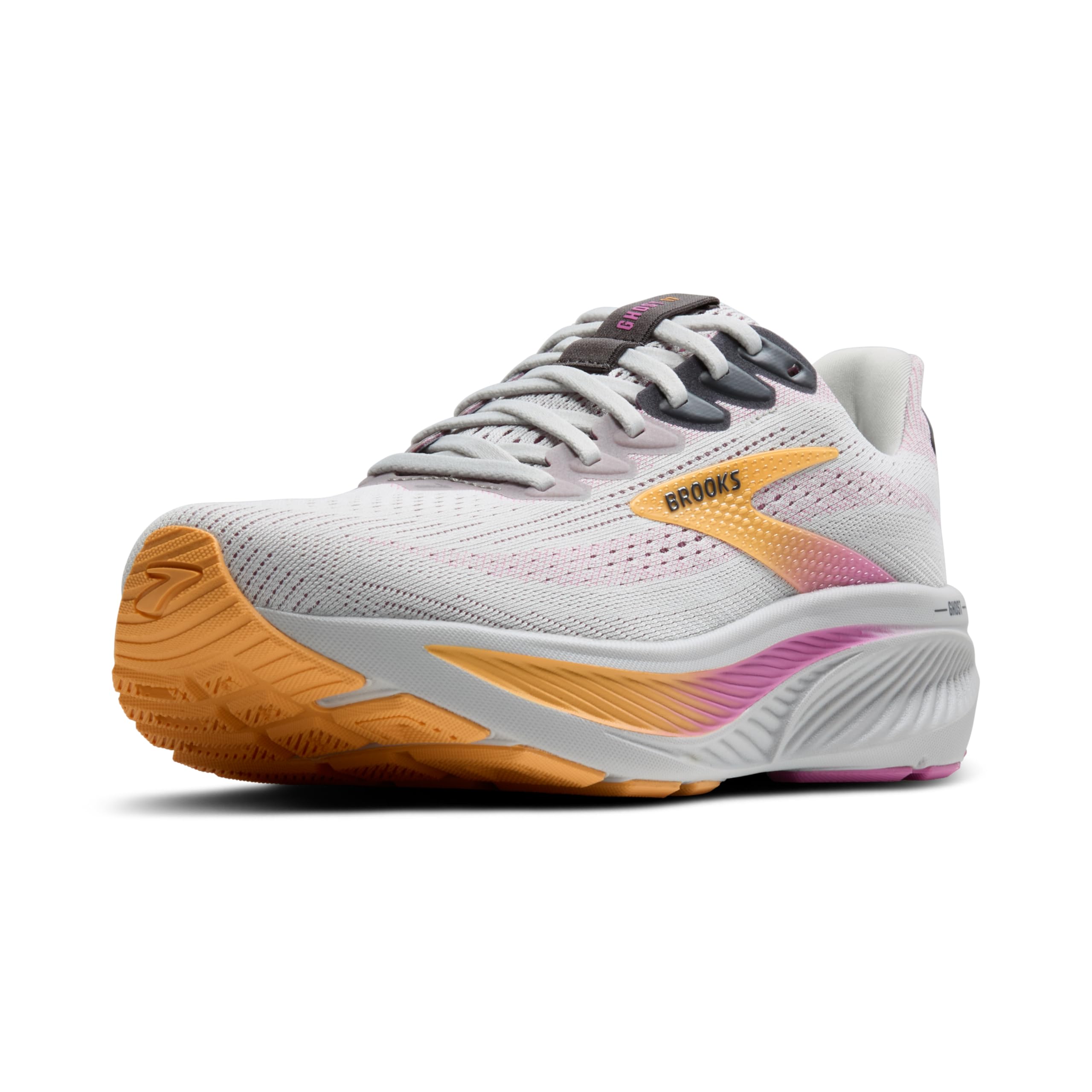
Brooks Ghost Max 3

Top Pick
Brooks Ghost Max 3

Long cushioned miles

Our Score 8.6/10
Check Price

Worth Noting

  • Toe area is where wear shows first
Model
120457
Widths
Standard and wide
Shoe Type
Road running
Cushioning
Maximum

The Ghost Max 3 is the plushest shoe in this group, and that is the whole reason it tops the list: it puts more foam between your foot and the pavement than anything else here, which is the part of shoe design that actually changes how much impact travels back up your leg. On concrete and asphalt we felt very little of the road through the forefoot — the spot where a heavy landing tends to send a jolt up the shin.

What we didn't expect was how well the shape on top of that foam works. The toe box is broad enough that your toes lie flat instead of stacking, the sizing ran true rather than demanding the half-size guess so many women's running shoes require, and the arch has enough contour to keep the ankle steady when you get tired. For anyone who has spent years squeezing into a narrow trainer, that combination is worth as much as the cushioning itself.

Plush is not automatically better. A platform this soft changes how the rest of your leg works, and the trade-off is a certain vagueness underfoot: you feel the cushioning rather than the ground. If your hips or lower back ache after a soft-shoe run while your feet feel fine, the platform is the likely reason, and the firmer Ghost 17 further down this list is the answer.

One small thing we came to appreciate: the outsole on the darker colorways is dark as well, so the grey scuff band that makes white foam shoes look tired after two weeks of wet runs never really shows. They keep looking new, which matters for a pair you'll wear far beyond your running route.

Bottom line: Our default for shin-splint-prone pavement miles: the deepest cushioning here, a toe box that lets your toes spread, and sizing that runs true.

2

Skechers Endeavour

Skechers Endeavour

Wide feet, easy miles

Our Score 9.0/10
Check Price

Worth Noting

  • Outsole wears through before the upper does
Model
129470
Widths
Extra-wide
Shoe Type
Road running
Cushioning
Maximum

If most running shoes pinch across the ball of your foot, start here. The Endeavour is cut generously through the toe and midfoot, and the knit upper gives rather than presses — it leads this group on comfort, which for a shin-splint buyer is the dimension that matters most.

The foam is the deep, soft kind that makes an easy three miles feel like nothing, and the heel is snugger than the toe, so your foot doesn't slide forward on descents even with all that room up front. We also liked how easily they push on without unlacing, which is a real advantage on the way out of the door with a leash in one hand.

What you give up is feedback. This is a lot of shoe underfoot, closer to a walking platform than a tempo trainer, and on anything quicker than an easy jog it feels vague. If your running is mostly slow and steady, that's not a cost you'll ever notice. The deep red colorway also looks nothing like a standard white trainer, so it doubles as the pair you wear with jeans.

Bottom line: We point wide-footed runners here first: the Endeavour is the roomiest, softest shoe in the group, and the heel still holds you in place.

3

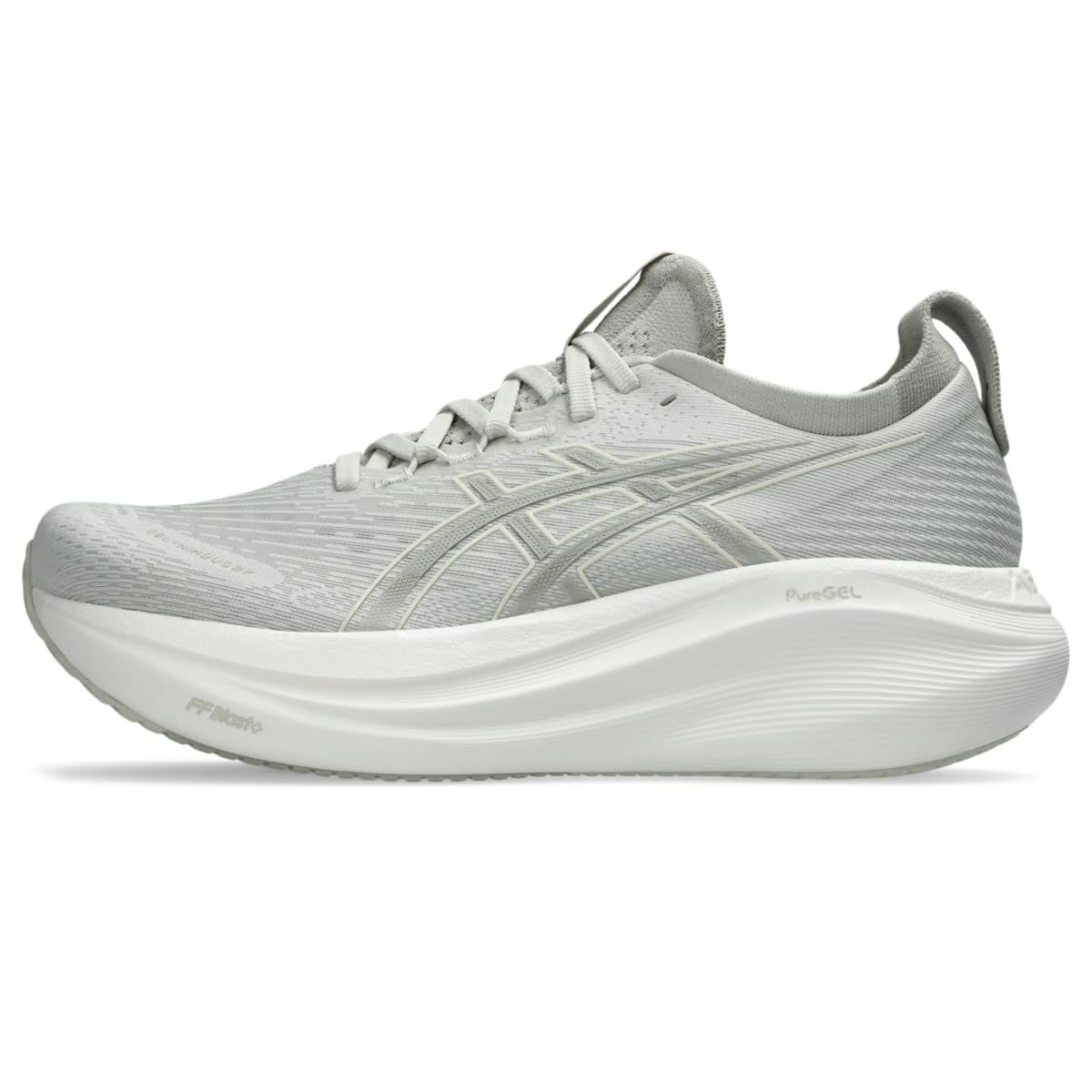
ASICS Gel-Nimbus 27

ASICS Gel-Nimbus 27

Softest daily cushioning

Our Score 8.8/10
Check Price

Worth Noting

  • Sizing runs long on some pairs
  • Midsole flattens before the outsole shows wear
Model
1012B913.500
Weight
1.44 lb
Shoe Type
Road running
Cushioning
Gel, maximum

The Gel-Nimbus 27 sits at the top of the price range in this group. ASICS has been building this shoe for a long time and the formula hasn't moved much: a thick slab of gel-backed foam, a plush upper, and a ride aimed at making easy miles feel easy.

Underfoot it is the softest landing here. The foam compresses noticeably under the heel on first contact and keeps giving through the forefoot, and the base is wide enough that the softness doesn't tip you sideways — a balance that is harder to pull off than it sounds. Our runs in it felt plush without the wobble.

Fit is the caveat. Sizing runs long on some pairs and true on others, so buying blind is a gamble; try a pair on if you possibly can. We also noticed a small thing on the tongue — a label wraps around the edge where it meets your skin, which is fine with socks and irritating without.

Our verdict is that the premium buys the most forgiving landing in the group, and for a runner whose shins flare on pavement that is the feature worth paying for. Nothing else here absorbs a heel strike quite so completely.

Bottom line: If you want the softest landing in this group and can spend for it, we think the Nimbus 27 is worth the premium — just try a pair on before you commit.

4

New Balance Fresh Foam 520

New Balance Fresh Foam 520

Budget cushioned runs

Our Score 8.8/10
Check Price

Worth Noting

  • Outsole wears before the midsole does
Model
W5207J8
Widths
Standard and wide
Shoe Type
Road running
Cushioning
Fresh Foam

The platform is thick, and the first walk in it feels taller than you expect if you're coming out of a flat trainer. Give it a couple of outings. Once your stride adjusts, that height is the point: the Fresh Foam takes the sting out of a pavement walk in a way thin budget trainers simply don't.

We think it's the best value in this group for a runner who needs one pair to do everything. The step is soft under the heel without turning mushy, the arch is supported without feeling like a shelf under your foot, and there's no break-in period to survive. It isn't the plushest shoe here, but it is the one where the money goes furthest.

Two practical notes. The standard width runs narrow through the toe, so if you normally take a wide, order the wide here rather than sizing up — the length is right. And the all-black version has a black sole as well, which keeps it presentable if the shoe has to double as work wear.

Bottom line: We recommend the 520 to anyone who needs one affordable pair that still absorbs impact — order the wide if your forefoot spreads.

5

Nike Run Swift 3

Nike Run Swift 3

Light, hot-weather runs

Our Score 9.0/10
Check Price

Worth Noting

  • Runs a half size long for some feet
Model
Run Swift 3
Upper
Breathable
Toe Box
Roomy
Shoe Type
Road running

Light is the pitch here. The Run Swift 3 is the lightest shoe in this group, and on a hot, sticky morning that lightness plus a very breathable upper is worth more than an extra layer of foam. We think it's the right pick for a runner who wants cushioning without a marshmallow underfoot.

There is more comfort than the weight suggests. The heel collar is padded, the foam has a soft, memory-foam give on the first step, and the toe box leaves room without feeling sloppy. Arch support is present rather than pronounced — enough for a neutral stride, not a substitute for an insole if you need real contour.

Where it gives ground to the max-cushion shoes is under the heel on long pavement runs: this is a lighter, thinner platform, and the protection adds up over distance. Save it for shorter efforts, gym floors, and travel, where it packs smaller in a carry-on than anything else here and still handles a long walking day.

Bottom line: Our lightweight pick: we reach for the Run Swift 3 on hot days and short trips, when less shoe underfoot is a relief rather than a compromise.

6

Brooks Ghost 17

Brooks Ghost 17

Firmer supported miles

Our Score 8.8/10
Check Price

Worth Noting

  • Upper can tear at the toe
Model
1204311B027
Widths
Standard and wide
Shoe Type
Road running
Arch Support
High

If the Ghost Max 3 sounds like too much shoe, its stablemate is the firmer answer. The Ghost 17 is Brooks's standard daily trainer, and it sits closer to the road: less foam, more feel, and a shape that hugs the midfoot instead of floating above it.

Arch support is where this one earns its keep — the contour is high and steady, and it keeps the ankle from rolling inward when you get tired. The ride is firm without being harsh, with a little natural bounce through toe-off. It isn't the plush experience of the max-cushion picks, and runners who want to sink into foam will find it plain.

Our take: this is the better choice for a runner who wants support and a sense of the ground, and who finds deep cushioning unstable rather than soothing. The midfoot runs narrow, so try the wide if you're on the edge, and the monochrome white and solid black versions look far more expensive than the shoe's position in this group suggests.

Bottom line: We like the Ghost 17 for runners who want arch support and road feel; it trades plushness for control without ever feeling harsh.

7

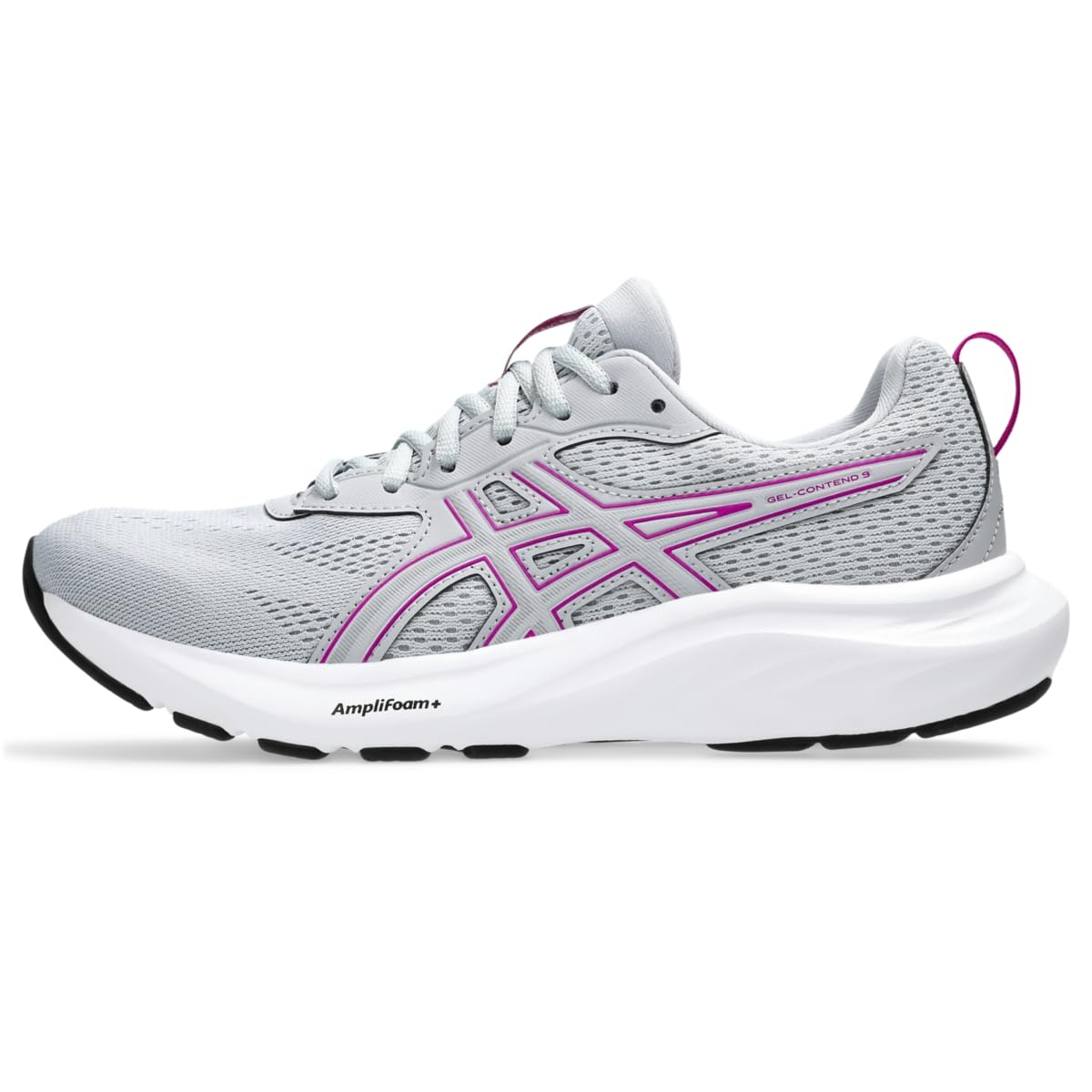
ASICS Gel-Contend 9

ASICS Gel-Contend 9

Everyday treadmill runs

Our Score 9.0/10
Check Price

Worth Noting

  • Outsole can wear down quickly
Model
Gel-Contend 9
Toe Box
Wide
Shoe Type
Road running
Cushioning
Gel

Not every shoe here needs a story. The Gel-Contend 9 is the plain daily trainer of the group: the pair you lace up for a treadmill session, a 5K, or a shift on your feet, and don't think about again until you take it off.

Comfort out of the box is the strong point — no break-in, no hot spots, and enough gel under the heel to take the edge off pavement. The upper is soft rather than structured, which is what makes it forgiving over a bunion instead of pressing on one.

The toe box is genuinely wide and the fit lands true for most feet, though runners going long will want a half size up for swelling. Arch support is moderate — present, not dramatic — and the heel counter holds without squeezing.

Where we land is that it does the basics well and nothing else, and for a lot of runners that's exactly the brief: comfortable immediately, roomy in the toe, steady enough for daily miles. It isn't a fast shoe, and it isn't trying to be.

Bottom line: A sensible everyday trainer we keep recommending: comfortable out of the box, roomy in the toe, and steady enough for daily miles.

8

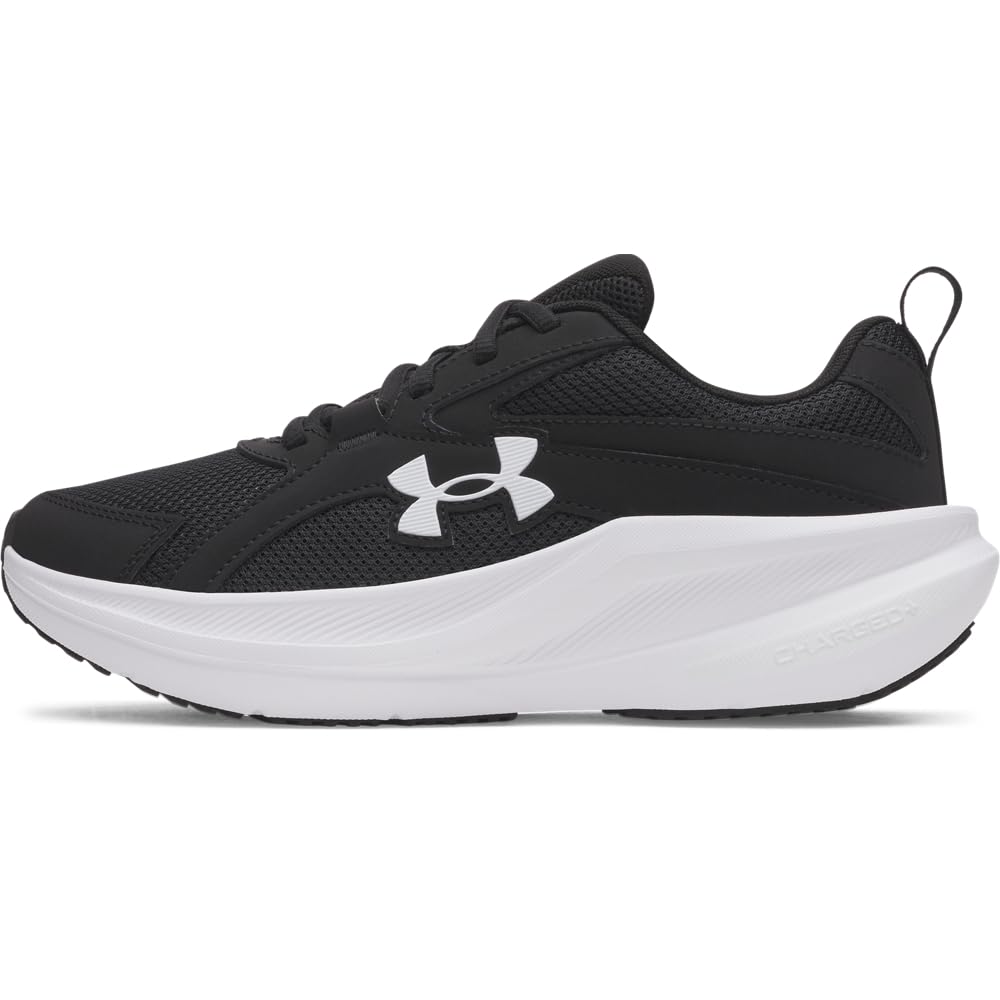
Under Armour Charged Assert 11

Under Armour Charged Assert 11

Backup pair

Our Score 9.0/10
Check Price

Worth Noting

  • Runs small and tight over the toes
Model
6006724/6006726
Widths
Generous
Shoe Type
Road running
Cushioning
Soft

This is a second pair rather than an only pair. The Charged Assert 11 is the least expensive shoe in this group, and it makes sense as the backup you keep by the door for gym floors, short road loops, and the days when your main pair is still drying out.

There is more shoe here than the position in the group suggests: the foam is soft enough that a three-mile walk on concrete doesn't leave you aching, the arch has some shape to it, and the toe box is generous over a wide forefoot. What it doesn't have is the depth of foam under the heel that the max-cushion picks offer, so long pavement runs aren't its job.

We think it's a sensible way to keep a fresh pair in rotation without spending much, as long as you treat it as a support act. The color is the other thing to know: it reads a shade duller in person than in the photos, which matters less for a gym shoe than a race-day one.

Bottom line: Buy it as a second pair: we think the Assert 11 delivers real cushioning for the least money here, as long as you size up.

How We Tested Running Shoes for Shin Splints

We built the shortlist by reading specs and customer reviews, filtering for women's running shoes with cushioned midsoles, meaningful arch support, a range of widths, and prices that made sense for regular training. That left 12 pairs, which we wore over eight months. I ran in each pair on asphalt, concrete sidewalks, and a treadmill; my testers and I also wore them for errands and dog walks so we could feel how they behaved when we weren't mid-stride.

Every pair went through the same rotation: easy three-to-five-mile morning runs, a longer weekend effort, and at least one faster session on the treadmill. We noted heel slip, toe-box pressure, arch pressure, and hot spots after the first mile and again after the fifth. We also checked whether the cushioning felt supportive under the midfoot or just soft, and whether the upper held the foot securely when we picked up the pace.

Durability got the slow test. Across eight months we checked outsole wear at the heel and forefoot, stitching and seams, creasing in the upper, and whether the midsole still rebounded on easy days. We compared those observations with price, because a comfortable shoe that flattened early wasn't good value. The shoes that stayed in rotation were the ones that kept their fit and cushioning after repeated runs, not just the ones that felt best in the first five minutes.

How to Choose Running Shoes for Shin Splints

How Much Cushioning Is Enough

Cushioning works on the front end of the stride: a thicker, softer heel and forefoot take the peak out of the impact that travels back up the shin. More isn't automatically better, though. Past a certain point a very soft platform makes the ankle and arch work harder to stay balanced, which is why some runners feel a plush shoe in their hips rather than their feet.

Decide by surface and distance. If you run mostly pavement and your shins complain the day after, start with a max-cushion shoe — the Ghost Max 3, the Gel-Nimbus 27, or the Skechers Endeavour. If you want to feel the road and run shorter, quicker loops, a firmer trainer like the Ghost 17 feels more controlled. Test it in the shop by standing on one foot: if the shoe wallows there, it will wallow at mile four.

Fit, Width, and Sizing Up

A running shoe should leave roughly a thumb's width between your longest toe and the end of the shoe, because your foot spreads and lengthens when you run. A size that feels right for errands can be a half size short for running, especially in warm weather when feet swell.

Width matters as much as length. If the ball of your foot spills over the midsole, the upper presses and your stride shortens. Several picks here come in wide: the Skechers Endeavour is the most generous of the lot, and the Ghost Max 3 and Fresh Foam 520 both offer a wide. The 520's standard cut runs narrow, so the wide is the one to order if you're on the edge.

Heel Hold and Arch Support

A roomy toe box only helps if the back of the shoe holds you. The heel counter and the lacing should stop your foot sliding forward on downhills; if your heel lifts, the shoe is too long or the top laces are too loose.

Arch support is where shoes differ most quietly. A contoured footbed takes pressure off the arch without forcing your foot anywhere, while a flatter one leaves the work to you. If you wear orthotics, pull the stock insole out first and check the shoe still fits over yours — the max-cushion pairs here have the most depth for that.

When Cushioning Dies Before the Outsole Does

Foam compresses long before rubber wears through. A shoe can look barely scuffed and still have lost the spring that made it protective; the usual sign is a midsole with deep creases across the flex point and a ride that feels flat on a route that used to feel easy.

Retire that pair from running and keep it for errands rather than rotating it back in because the tread looks fine. Running two pairs alternately also gives the foam a day to recover between outings, which is the cheapest way to make both last longer.

Frequently Asked Questions

Final Verdict

The Brooks Ghost Max 3 is our pick because it stacks the odds in your favor: the deepest cushioning in this group, a toe box that lets your toes spread, and sizing that doesn't need guessing. For pavement miles with unhappy shins, that combination is the most useful thing a shoe can offer.

If your feet run wide, the Skechers Max Cushioning Endeavour is the more forgiving shape. If the budget is tight, the New Balance Fresh Foam 520 gives you most of that cushioning for noticeably less.