Shoes

Best Running Shoes for Beginner Women of 2026

The first run almost always feels fine. It's the third or fourth one, when the shins start complaining and the toes go numb, that sends most new runners back to the couch — and the shoes are often the reason. No pair of sneakers is going to turn you into a runner, but the right ones make the next run feel optional rather than impossible, which is the entire game in those first few weeks.

I spent six months rotating 14 pairs of beginner-friendly running shoes through easy miles with six coworkers, half of them training for their first 5K and half already a few years in. Cushioning and comfort separated the field fast, but so did quieter things: whether a shoe ran true to size, how heavy it felt by mile three, and whether the outsole still looked new after 40 miles. A couple of pairs looked good enough to wear with jeans, which counts for more than runners admit when you're still deciding whether that's what you are. The ones below earned their spot.

1

Brooks Ghost Max 3

Top Pick
Brooks Ghost Max 3

Cushioned everyday miles

Our Score 8.6/10
Check Price

Worth Noting

  • Outsole and toe bumper can wear early
Model
120457
Surface
Road
Package Weight
1.5 lb

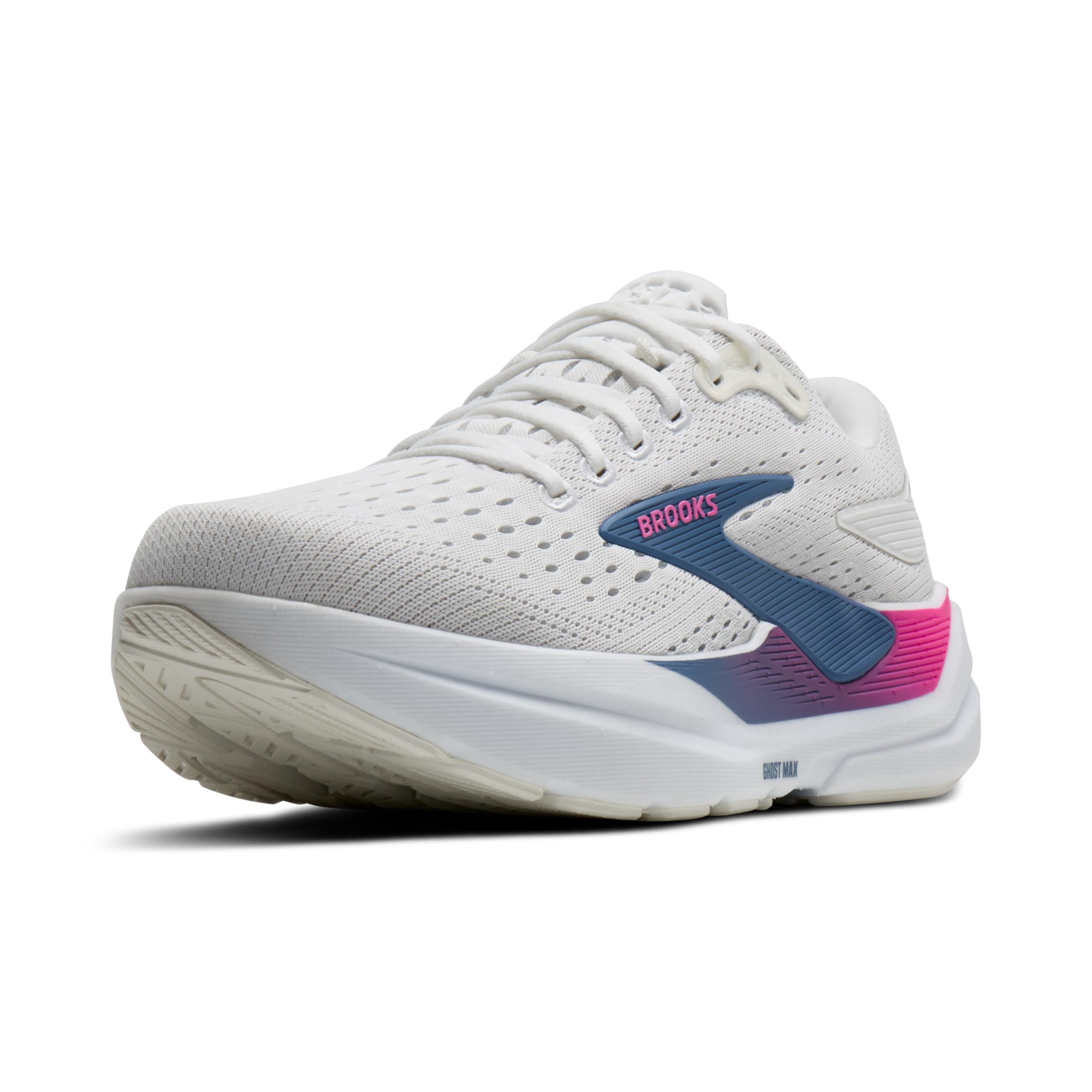
Cushioning is where a first pair earns its keep, and the Ghost Max 3 has more of it than anything else we ran in for this guide. The midsole is thick and soft without going mushy, so a new runner's footfall lands quietly instead of jolting up through the shin. It was the shoe we reached for on tired-leg days, and it's the one we recommend first.

Room is the other half of the story. The toe box lets toes splay instead of bunching, and this model comes in wide widths, which is rarer than it should be in women's running. It also swallows a custom orthotic without the heel lifting, and the arch support is substantial enough that runners with plantar fasciitis single it out.

What you trade for all that foam is road feel. The platform is soft and tall enough to mute the texture underfoot, so if you like a firm, connected ride, the Saucony Guide 13 further down this list is the closer match. And this is the premium shoe in a group with several budget options, which makes it a bigger commitment than a first pair strictly needs to be.

Neither point changes our recommendation for the runner it was built for: someone starting from scratch, building a base a few miles at a time, who wants to finish every run feeling like there's another mile in the tank. A beginner is better off in this than in something they have to toughen their feet to wear.

Bottom line: For a first pair that makes early miles easier on your legs, this is the shoe we point beginners to: plush, roomy, and supportive, if you're willing to pay more than the rest of this group.

2

Nike Run Swift 3

Nike Run Swift 3

Warm-weather easy runs

Our Score 9.0/10
Check Price

Worth Noting

  • Thin upper gives little warmth on cold runs
Model
Run Swift 3
Surface
Road
Department
Women's

Some shoes announce themselves. This one mostly disappears: the mesh upper is the airiest in our group, and the shoe is light enough that lifting the pace for a block doesn't feel like dragging anything along. On a warm afternoon, that counts for more than any spec.

It's also the most consistent performer here on the basics. The fit runs true with room at the toe, the arch support sits where it should without pressing anywhere, and the cushioning has a little bounce rather than a squish. If you're ordering without trying anything on first, this is the pair we point to, because predictable sizing is worth a lot when the box arrives and the run is tomorrow.

It's a firmer shoe than the plush picks, and that's a preference rather than a fault: you feel your footing, which some new runners find reassuring and others find harsh. For run/walk intervals and three-to-five mile efforts, which is most of what a beginner does, it's the balance we like best.

Bottom line: Our pick when you want to feel the road underfoot: light, airy, and consistently true to size, with a firmer ride than the plush shoes here.

3

Skechers Max Cushioning Endeavour

Skechers Max Cushioning Endeavour

Wide feet, long days

Our Score 9.0/10
Check Price

Worth Noting

  • Outsole wears through with heavy daily use
Model
129470
Weight
1.5 lb
Surface
Road

Width is the reason to buy this one. The Endeavour is generous through the toe box, not merely roomy by running-shoe standards, and the upper is soft enough to drape over the foot rather than press on it. For anyone who has spent years sizing up to avoid pinching, that alone is worth tracking this pair down.

Underfoot it's a marshmallow: thick, soft, and flexible, rolling through a step instead of resisting it. It's happiest at a walk or an easy jog; the softness that makes it kind on a twelve-hour shift makes it vague when you try to go faster. As a first shoe for run/walk intervals and long days on your feet, that's a fair trade.

The upper is the part to think about. It's soft and unstructured, holding the foot gently rather than locking it down, which is comfortable for easy miles and less secure if you want a snug feel. Think of it as a cushioned everyday shoe that can handle a jog, not a trainer for someone chasing pace.

Bottom line: Start here if most shoes pinch your toes: it's the roomiest, softest pick in our group and doubles as an all-day walking shoe.

4

Saucony Guide 13

Saucony Guide 13

Firmer, guided rides

Our Score 9.0/10
Check Price

Worth Noting

  • Firm midsole feels thin under the ball of the foot
Weight
1.5 lb
Surface
Road
Pronation
Neutral
Cushioning
More than minimal

Sizing is the practical warning here: this shoe runs small, consistently enough that a half size up is the safe move. Get that right and the fit is snug at the heel with a firm shelf under the arch, so the foot feels held rather than floating.

It's the most grounded shoe we recommend, and that's the appeal. Where the Ghost Max 3 and the Endeavour sink you into foam, this gives you a platform to push off, which suits runners who find deep cushioning vague or wobbly. We kept it in rotation for treadmill sessions and pavement alike, and it's the pair we suggest when someone wants the shoe to do a little of the work.

If you've had heel or arch trouble that flares up in soft shoes, start here. If you're shopping for a pillow, you're looking at the wrong shoe, and if your easy runs stretch past an hour, try the Brooks first.

Bottom line: The one to choose for a firm, guided ride with real arch support, provided you order a half size up.

5

adidas Run Falcon 5

adidas Run Falcon 5

Budget first pair

Our Score 9.2/10
Check Price

Worth Noting

  • Modest cushioning for runs over about an hour
Model
34DC094-OFW
Surface
Road
Department
Women's

A first pair doesn't have to cost much, and this one makes the case. It's one of the cheapest shoes we recommend, and it still handles a gym session, a treadmill jog, and a walk to the store without feeling like a compromise.

The upper is light and breathable with a low, sporty profile that doesn't look out of place with jeans, and the sole flexes with your foot instead of fighting it. It's an easy shoe to pull on when motivation is thin, which is worth more to a beginner than a fancy midsole.

One fit note before you order: it's cut narrow through the middle. If your forefoot spreads when you stand, look at the Skechers Endeavour instead, since the two come in around the same money and the Skechers gives you far more room.

Bottom line: A low-risk first pair that handles gym days and short easy runs for very little money, as long as you don't need much cushioning.

6

New Balance Fresh Foam 520 V9

New Balance Fresh Foam 520 V9

Higher arches

Our Score 8.8/10
Check Price

Worth Noting

  • Tread wears quickly for some runners
  • Toe box runs narrow for wider feet
Model
W5207J8
Midsole
Fresh Foam
Surface
Road

High arches are a specific problem: shoes that flatten the middle of the foot make every step feel like a bruise. The 520 handles that better than anything else at this end of the group, with arch support shaped generously enough that a high instep doesn't feel pressed down.

The ride is soft without going vague, and it's a genuinely good walking shoe, which matters if your first month is more walk than run. It's light and plain enough to wear with anything, and the all-black version doesn't advertise itself as athletic.

Put together, this is the most balanced of the budget shoes here: forgiving for new legs, supportive for high arches, and unobtrusive enough to wear all day. It doesn't do anything dramatically better than the shoes above it; it just does the basics well for less.

Bottom line: Our budget pick for high arches: soft underfoot, supportive without pressing, and comfortable enough to wear all day.

7

Under Armour Charged Assert 11

Under Armour Charged Assert 11

Low-cost trial pair

Our Score 9.0/10
Check Price

Worth Noting

  • Runs small and tight across the toes
Model
6006724/6006726
Package Weight
2.4 lb
Package Dimensions
12 x 6 x 5 in

There's a version of this decision that costs almost nothing: if you want to find out whether running is for you without spending much, the Charged Assert 11 gives you more cushioning than anything else at the bottom of this group's price range.

The insert is soft and the sole takes the sting out of pavement, which is what new runners notice first on a hard sidewalk. It's light, it matches its photos, and it comes in colors that don't scream gym shoe.

It isn't a refined shoe. The upper is basic, the ride is soft rather than lively, and nothing about it will turn you into a better runner. What it does is soften the road while you work out whether you like this at all, and for plenty of people that's the whole job of a first pair.

Our advice is to treat it as a trial pair: run in it for a month or two, then upgrade once you know you'll stick with it. It's a sensible way to spend the least and learn the most.

Bottom line: An inexpensive way to find out whether running is for you: soft underfoot, light on the foot, and worth ordering a size up.

8

adidas Cloudfoam Pure

adidas Cloudfoam Pure

Gym and errands

Our Score 9.0/10
Check Price

Worth Noting

  • Outsole wears quickly with daily wear
Model
EG3821
Weight
6.4 oz
Dimensions
8 x 4 x 7 in

Nearly everyone shopping for a first pair will run into this one, and the appeal is obvious: it's inexpensive, it looks good, and it's soft the moment you slide a foot in. Cloudfoam is a marshmallow of a midsole, and at 6.4 ounces the shoe all but disappears on your foot.

We understand the pull. It slips on like a slipper, it can go in the wash, and it comes in enough colors to match anything. As a walking, errand, and gym shoe, it's hard to fault for the money.

Running is where the picture changes. There's very little structure under the arch, the sole is thin enough that you feel every crack in the sidewalk, and the soft upper lets the foot slide. It's a shoe for being on your feet, not for spending time in the air.

So we don't recommend it as your running shoe. Buy it as the second pair by the door and put your running budget into something with real structure, since even our budget picks give you more underfoot than this does.

Bottom line: We like it for errands and gym days, not for training, because there's too little structure underfoot to build a running habit on.

How We Tested the Best Beginner Running Shoes

We started by rounding up every women's running shoe from the major brands that was billed as cushioned, neutral, or stability-oriented, then cut anything with a reputation for running narrow or demanding a long break-in. Reviews mentioning first-week blisters disqualified a surprising number of otherwise popular pairs. That left 14 models, which six testers wore over six months — three of them brand-new to running, three with a few years of casual miles behind them.

Every pair went through the same opening month: three easy 20-to-30 minute runs on sidewalk and park path, one treadmill session, and a full day of errands on foot. We weighed each shoe on a kitchen scale and then compared that number against how heavy it felt late in a run, because the two don't always agree. On rainy days we paid attention to whether the tread held on wet pavement or skated.

Fit got checked twice, once in thin socks in the morning and once in thicker socks at the end of the day when feet are at their largest, with testers flagging hot spots, heel slip, and whether the toe box left room to splay. Support was judged by whether a shoe let the foot move naturally or fought a neutral stride. After 40 miles we photographed each outsole and matched the wear pattern to the tester's gait, and we asked one blunt question: would you wear these on a Saturday that doesn't involve running? Price came last — we looked at whether the extra dollars bought anything a tester could actually feel.

How to Choose Beginner Running Shoes

How Much Cushioning a Beginner Actually Needs

More than a racing shoe gives you, and less than the thickest thing in the store. New legs take repeated impact they aren't used to, so a forgiving midsole buys comfort in the first weeks and often decides whether a run ends in a grin or a limp.

Think about what you want to feel. If a soft landing matters more than road feel, start with a max-cushion shoe such as the Ghost Max 3 or the Skechers Endeavour. If you want to feel your footing, the firmer Saucony Guide 13 will suit you better. The trap: a thick-soled walking shoe is not a running shoe, however soft it feels when you try it on in the store.

Fit: Toe Room, Widths, and Your Size in Each Brand

A running shoe should leave roughly a thumb's width between your longest toe and the front of the shoe. That's more room than a casual sneaker gets, and it's why some runners go up a half size, as with the Saucony Guide 13 here, which runs small enough that sizing up is the safe move.

Sizing up won't fix a shoe that's too narrow, though. Women's running shoes are often built on a narrow last, so if your forefoot spreads when you stand, look for a model sold in wide widths, like the Brooks Ghost Max 3, rather than adding length and living with the squeeze.

Support, Pronation, and Orthotics

Most beginners do fine in a neutral shoe, and you don't need to diagnose your gait before your first run. If you've been told you overpronate, or your ankles roll inward when you're tired, a shoe with more structure under the arch, like the Saucony Guide 13, is worth the trade in softness.

If you wear custom orthotics, check that the insole comes out and that the heel still holds the foot without lifting; the Ghost Max 3 manages both, which is unusual in a cushioned shoe.

What to Spend on a First Pair

You don't need the priciest shoe in the store to start running. More money generally buys softer or lighter foam, longer wear, and more width and color options, while the budget shoes here will carry a beginner through a first season of run/walk intervals perfectly well.

Spend on fit rather than features. A mid-priced shoe that matches your foot beats a premium one that presses on your toes, and most beginners are better off saving the difference for a second pair once they know what they like.

Frequently Asked Questions

Final Verdict

For most beginners, the Brooks Ghost Max 3 is the pair we point to: it does the most for legs that aren't used to pavement, with plush cushioning, a toe box that doesn't crowd your toes, wide widths, and arch support that holds up over a first season. It costs more than the rest of this group, and we still think it's the right first purchase for the average new runner.

If that's more shoe than you want to commit to, the Nike Run Swift 3 is lighter, firmer, and the most predictable fit for ordering online, while the Skechers Max Cushioning Endeavour is the one to try if your feet need room. Match the shoe to your foot first, and the logo second.