Shoes

Best Marathon Running Shoes for Women of 2026

Marathon shoes are the rare purchase you can't fully audition. Everything feels fine at mile three, and the real verdict lands somewhere past 20, when there's nothing left to do but keep going. What separates a pair that carries you through those last six miles from one that quietly ruins them comes down to unglamorous things: whether the cushioning still feels like cushioning two hours in, whether the arch support is shaped anything like your foot, and whether the fit stays locked once your feet swell.

My team and I spent eight months putting 12 pairs of women's marathon shoes through long runs, tempo days, and plenty of recovery walks, and the gaps showed up fast. One thing nobody tells a first-time marathoner: your race shoe and your training shoe don't have to be the same, and sizing drifts enough between brands that your usual number won't always hold. The picks below are the ones that earned their spot on tired legs — comfortable out of the box, durable enough to survive a full training block, and honest about what they cost.

1

ASICS Gel-Nimbus 27

Top Pick
ASICS Gel-Nimbus 27

Marathon training

Our Score 8.8/10
Check Price

Worth Noting

  • Runs wide for narrow feet
  • Heel lining and upper wear first
Type
Women's road running
First Listed
May 2024
Model Number
1012B913.500
Listed Weight
1.44 lb

Most marathoners need one shoe that does everything reasonably well — long runs, easy days, and the race itself if they aren't bothering with a separate racer. The Gel-Nimbus 27 is the closest thing to that here. The cushioning is deep without going wobbly, and the wide base is what keeps a soft shoe from feeling tippy when your form falls apart late in a long run. The listed weight is 1.44 pounds, mid-pack in this group, which is about right for the amount of foam underfoot.

Comfort is where it separates from the pack. Soft, springy landings, a heel that doesn't bottom out, and generous support under the arch are the three things we look for in a marathon trainer, and this shoe delivers all three. One detail we didn't expect: there's a label sewn at the tongue that sits against the skin. It's small, but if you're sensitive to seams at the instep, deal with it before a long run rather than at mile 18.

The fit runs roomy, with real volume through the midfoot and toe. That's welcome if your feet spread out over 20 miles and less welcome on a narrow foot, where a half size down is the better call. Otherwise sizing is true, and the shoe needs no break-in — it feels the same on day one as it does three weeks in.

The honest caveat is wear. The heel lining and the upper go before the foam does, so plan on replacing a pair each training cycle rather than stretching one across two. Even at that rate it's the best cushioning for the money in this set, which is exactly why it's the shoe we hand people first.

Bottom line: We recommend the Gel-Nimbus 27 to any woman who wants one shoe to cover training and race day: the cushioning is the most balanced here, and the fit forgives swelling feet.

2

Brooks Adrenaline GTS 24

Brooks Adrenaline GTS 24

Stability and support

Our Score 8.8/10
Check Price

Worth Noting

  • Runs small
  • Firmer underfoot than the plush shoes
Type
Women's road running
First Listed
July 2024
Model Number
120427-044
Listed Weight
1.5 lb

Brooks builds this one for runners whose feet roll inward, and you feel the difference as soon as you stand up in it. The midsole under the arch is firmer and more built up than the neutral shoes here, so the Adrenaline feels planted rather than plush. That guidance matters most late in a long run, when tired legs start collapsing inward and a soft shoe quietly stops helping.

We think the firmer ride is the right call for this buyer, but it's the thing to be honest about. Coming from the Bondi or the Nimbus, the first few miles feel like work. What you get back is a shoe that stays readable underfoot — you can feel where your foot is landing, which is precisely what you want at mile 22 when you're trying to hold form.

Sizing is the catch. It runs small, so half a size up is the safe starting point and a full size up isn't unusual. Try it late in the day with your running socks, because the upper doesn't stretch much: the fit you buy is the fit you keep. Wide sizes are available, and they're worth taking if your standard-width shoes leave marks on your little toe.

There isn't much else to complain about. It needs no break-in, it costs less than most of the cushioned shoes here, and it's the best-looking shoe in the group — the colorways are subtle enough that you can wear them with jeans and nobody will know you paid running-shoe money for them.

Bottom line: If your stride needs guidance or you wear orthotics, this is the shoe we point to — firm, planted, and less expensive than the plush picks, as long as you size up.

3

Hoka Bondi 9

Hoka Bondi 9

Max cushioning

Our Score 9.0/10
Check Price

Worth Noting

  • Heaviest shoe in this group
  • Outsole can separate at the flex point
Type
Women's road running
First Listed
June 2025
Package Weight
1.87 lb

The Bondi is the most shoe here — tall, soft, and visibly so. It adds height the way a platform does, which surprises people who haven't worn a max-cushion shoe before and delights the ones who have. What that stack buys is protection: pavement stops feeling like pavement, and the landing is the softest in this group by a clear margin.

That makes it a specific tool rather than an all-rounder. For long slow miles, for a first marathon where finishing comfortably is the goal, or for anyone whose knees and back complain after a long day on their feet, it's the kindest shoe on this page. It's also the one to leave at home if you're chasing a time: at 1.87 pounds of listed package weight it's the heaviest in this set, and you feel it on every climb.

We keep it for recovery days rather than daily training, and we think that's where it earns its price. The foam is so soft that it doesn't give much back — you sink and roll through rather than bounce off — so a faster marathoner will find it dull underfoot. Paired with a lighter shoe for workouts, it's a genuinely good strategy rather than a luxury.

The caveat is the sole. It's the part that goes first, with the outsole separating at the flex point and the foam compressing sooner than the price suggests. That's the trade for this much cushioning, and it's worth knowing before you commit to it as your only pair.

Bottom line: Buy the Bondi 9 if protection matters more than pace: it's the softest, most forgiving shoe here, and we like it best as the second pair in a two-shoe rotation.

4

ASICS Novablast 5

ASICS Novablast 5

Tempo runs

Our Score 9.0/10
Check Price

Worth Noting

  • Runs large
  • Light upper shows dirt and wear
Type
Women's road running
Model Number
1011B974.250
Listed Weight
1.44 lb

Where the max-cushion shoes here absorb the road, the Novablast gives some of it back. The foam has a springy, trampoline quality you feel most at marathon pace and in tempo work, and it's the shoe in this group we reach for when a run has a target time attached to it. It's also the most breathable of the lot — the mesh actually moves air — which counts for a lot in a summer build.

It's a neutral shoe and it behaves like one, so if you overpronate this isn't your pick; go to the Adrenaline instead. Fit runs large, which makes a half size down the safer start for most women, and the toe box is roomy enough that wide-footed runners are comfortable in the standard width without ordering a wide.

The light build has a cost. The upper is thin, and pale colorways show every mark, including road spray and dust. Treat this as a shoe to rotate rather than your daily driver, because it won't be the pair that still looks new at the end of a training block.

It's also the most fun shoe to run in here, which isn't a specification but is a real reason to own one. Speed sessions are easier to start when the shoe wants to go, and that's worth something on a wet Tuesday in week eleven.

Bottom line: We reach for the Novablast 5 on tempo days: it's the liveliest, most breathable shoe here, and it rewards anyone whose marathon plan includes real pace work.

5

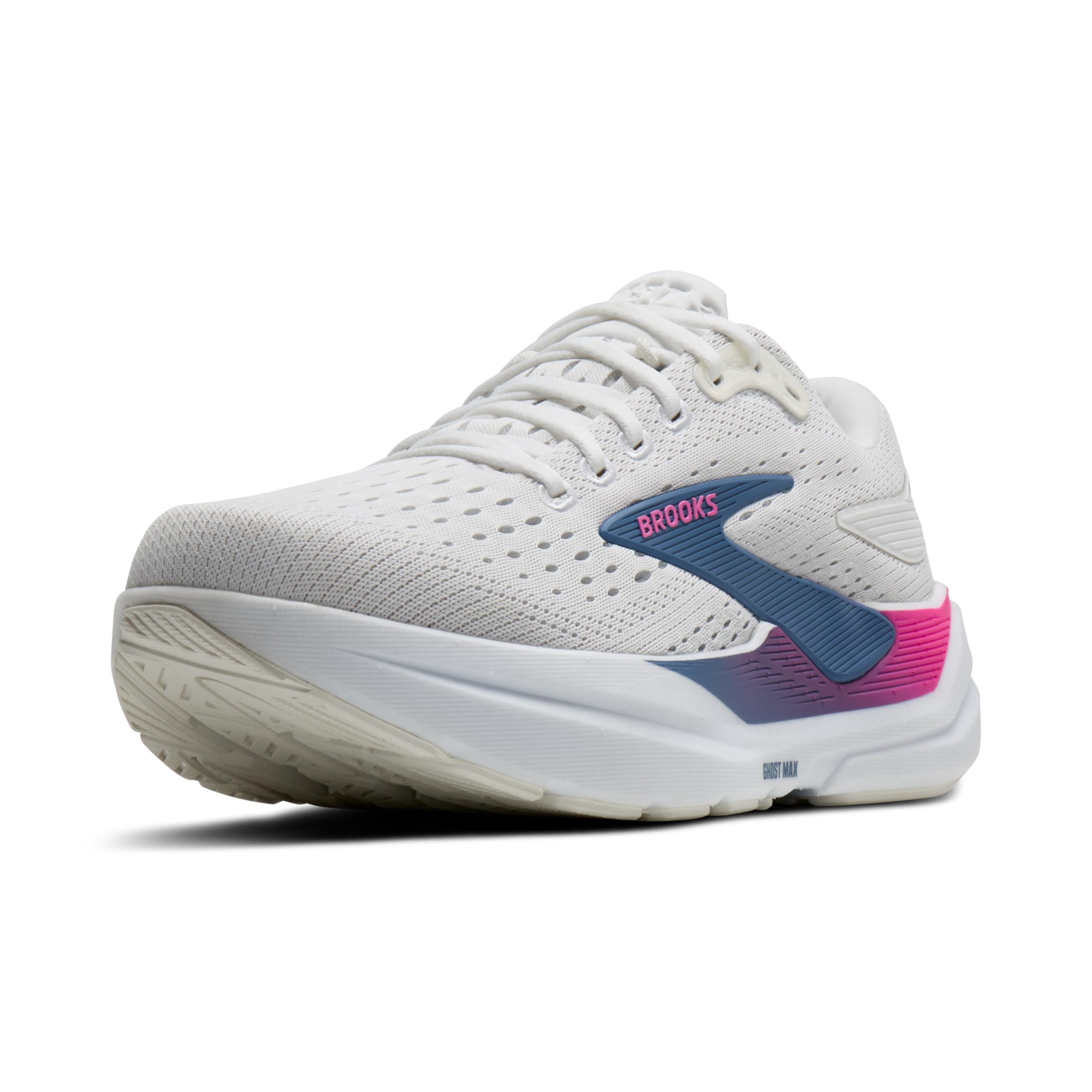
Brooks Ghost Max 3

Brooks Ghost Max 3

Wide feet

Our Score 8.6/10
Check Price

Worth Noting

  • Toe box scuffs and wears early
  • Tall stack takes a week to trust
Type
Women's road running
First Listed
November 2024
Model Number
120457
Package Weight
1.5 lb

The roomiest toe box in this group belongs to Brooks' high-cushion shoe. If standard-width trainers leave your little toe pressed against the side, or if you slide custom orthotics in before every run, this is the pair that ends the argument — there's genuine width up front without the shoe feeling like a box.

We prefer it to the Bondi for anything at marathon pace. The platform sits lower, the ride is more predictable, and it comes in below the other deep-cushion picks on price. It gives up a little of the Bondi's pillow softness and gains a lot of control, which is the better trade for most runners who aren't buying a dedicated recovery shoe.

The stack is still tall enough that the first few runs feel like walking on a raised platform. Give it a week before you judge it: the cushioning starts to feel supportive rather than squishy once your stride adapts. If you're coming from a flatter trainer, that adjustment is the main thing to plan for.

Durability is mixed and the toe area is the vulnerable spot, so keep this one off gravel and out of mud. The colorways help more than you'd think — the darker soles hide road grime far better than white ones, which is a small thing that keeps a good shoe looking like one.

Bottom line: For wide feet, high-volume feet, or orthotics, we'd point you to the Ghost Max 3 — it has the roomiest toe box here and more control than the plushest shoes.

6

New Balance Fresh Foam 520 v9

New Balance Fresh Foam 520 v9

Budget base miles

Our Score 8.8/10
Check Price

Worth Noting

  • Narrow toe box
  • Tread wears quickly
Type
Women's road running
First Listed
February 2026
Model Number
W5207J8

The 520 is the value shoe here, and it behaves like one: light, soft underfoot, and simple. Nothing about it feels cheap when you put it on — the cushioning is comfortable from the first run and there's no break-in to speak of — but it doesn't have the structure of the shoes further up this list, and you notice that when you're tired.

Fit decides this one. The toe box runs narrow, and going up a half size can leave you swimming in the heel instead of solving the problem. If you already know you need room up front, order the wide width in your usual size; that's the version most women should be buying.

Where we land is that this is a base-building shoe rather than a marathon-day shoe. The real trade is durability: the outsole tread wears quickly on pavement, and the shoe is at its best early, before the tread flattens and the cushioning packs down. If you're building mileage on a budget and replacing shoes every season anyway, that's a fair deal — just don't ask it to carry a peak week.

Two small things we appreciated: the all-black colorway has no white midsole to scuff, which makes it the practical winter shoe here, and it's light enough to double as a gym shoe on strength days. That flexibility is what a budget pair should offer.

Bottom line: We recommend the 520 v9 as a base-building shoe on a tight budget, not as your race-day pair — order the wide width and expect to replace it mid-block.

7

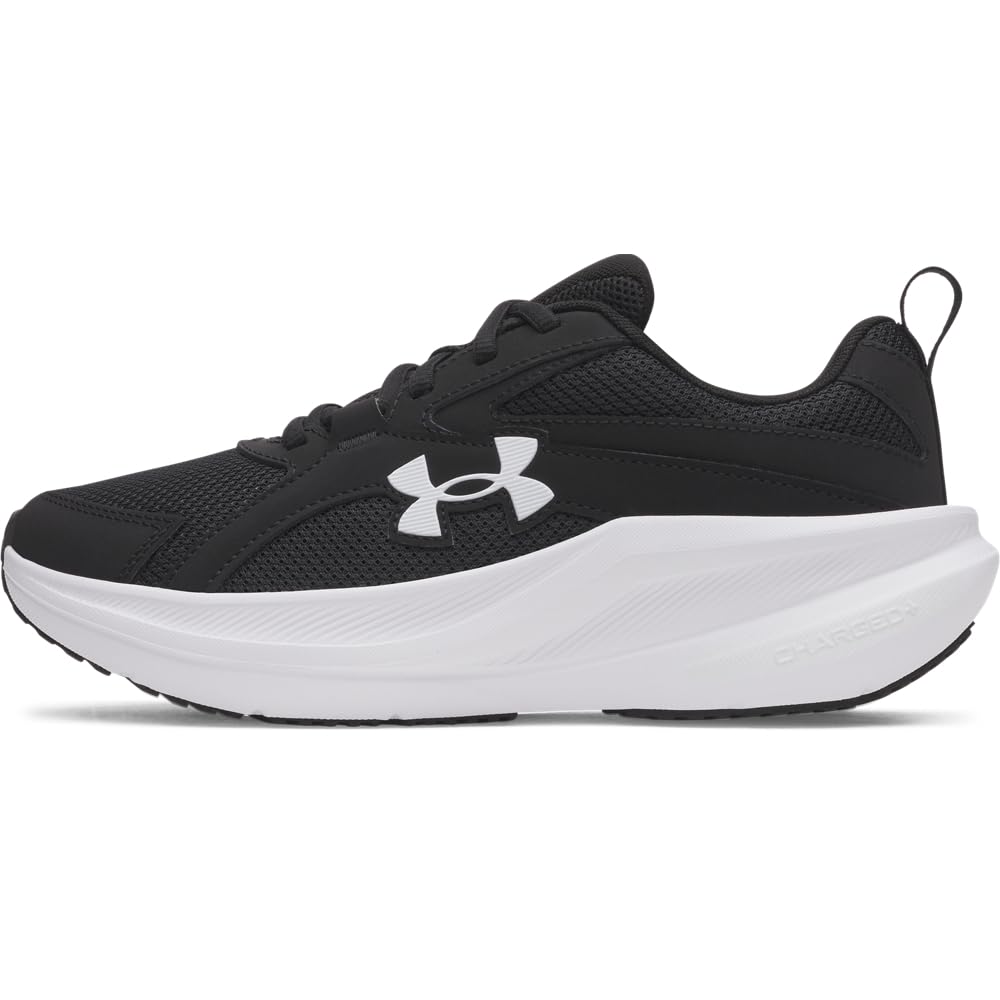
Under Armour Charged Assert 11

Under Armour Charged Assert 11

Short easy runs

Our Score 9.0/10
Check Price

Worth Noting

  • Runs small
  • Cushioning compresses quickly
Type
Women's road running
First Listed
January 2025
Model Number
6006724/6006726

The Charged Assert is the cheapest road shoe here, and it's built to that brief: light, soft-cushioned, and simple. There's nothing flimsy about it out of the box, but there's less of everything than the shoes above it on this list — less foam under the forefoot, less structure through the midfoot, less shoe between you and the road.

As an everyday trainer for short runs, gym sessions, and long days on your feet, it does the job comfortably. The insole is soft, the upper breathes, and it looks better than you'd expect at this price — the colors match the product photos, which isn't always true in this bracket.

Two things to expect. It runs small, so go up a half size, and the midsole cushioning compresses well before the outsole wears through, which leaves the shoe feeling flatter than it did in week one. A squeak can also develop in the midsole; annoying rather than dangerous, but it's the kind of thing you notice in a quiet gym.

Here's our read: for a first season of running, or as a second pair for easy days while you save for something more substantial, it's a sensible buy. We think 26.2 miles finds out exactly where the corners were cut, and that's a test this shoe doesn't need to pass to be worth owning.

Bottom line: We see the Charged Assert 11 as a first-season trainer and gym shoe, not a marathon shoe — buy it for easy days while you save, and size up.

How We Tested Women's Marathon Shoes

We started with a long list of women's running shoes and filtered it by what a marathon actually demands: enough stack height to survive 26.2 miles, a rocker or plate that doesn't fight your stride, and a size run that includes wide. Spec sheets and customer reviews got us to 12 pairs. We bought each one ourselves and, because sizing drifts between brands, compared it against our everyday shoe size — noting which ran short, which ran long, and which needed a half size up.

Testing ran eight months, straight through a spring training block. Every pair saw the same rotation: easy road miles, a weekly treadmill tempo, one 20-mile long run, and the unglamorous stuff — grocery runs, dog walks, two hours standing on a sideline. We logged hot spots and heel slip in the first 10 miles, pressed a thumb into the midsole before and after a month to see how fast the foam packed out, and inspected the outsole at 100 and 250 miles for wear at the heel and forefoot.

Comfort and arch support got judged on feel rather than spec: whether the arch pressed or just supported through mile 15, and whether we wanted the shoes off the second we stopped. Walking was its own test, since most of us keep wearing running shoes long after the run ends. Durability settled more than one close call — a pair that felt great at 50 miles and flat by 200 didn't make the list, and neither did one that cost more than it delivered.

How to Choose Marathon Running Shoes for Women

Neutral or stability: start with your stride

Most women don't need a stability shoe, and stability shoes are usually firmer than the plush trainers they get compared to. Your own wear pattern is the quickest tell: if the outer edge of the outsole is scrubbed and the inner edge is intact, you're landing neutrally and a cushioned shoe like the Gel-Nimbus 27 is the right starting point. If the inner heel wears through fast, or your knees drift inward when you're tired, a guided shoe like the Adrenaline GTS 24 does more for you than another half inch of foam.

One trap: "support" is not the same as "cushioning". A stability shoe can be the firmest thing in a brand's range, so if you need both, look for a support model with a genuinely deep midsole rather than assuming the tallest stack is the safest choice.

How much cushioning you actually want

More foam isn't automatically better — it changes the whole ride. A max-cushion shoe like the Bondi 9 or the Ghost Max 3 protects your joints but adds height and weight, and you feel both the moment you try to hold pace. A mid-weight trainer like the Gel-Nimbus 27 is where most marathoners land, while a springier, lighter shoe like the Novablast 5 suits anyone whose goal time matters more than maximum protection.

Choose on your goal and your history. If this is a first marathon and you expect to be out there a long time, err toward protection. If you've raced before and want to hold form over the last 10K, err toward the lighter shoe — and if you can, rotate the two rather than asking one pair to do everything.

Fit and sizing for 26.2 miles

Feet swell over a long run, often by half a size, so a shoe that fits perfectly at nine in the morning can be tight at mile 20. Try shoes on late in the day in the socks you race in, and leave a thumb's width between your longest toe and the front of the shoe. Between sizes, take the larger one and lock the heel with a runner's knot rather than sizing down and hoping the upper gives.

Width up front matters more than overall width. The Ghost Max 3 has the roomiest toe box in this group; the 520 v9 runs narrow and most women need the wide width in it. Uppers stretch very little, so buy the fit you need on day one.

Durability and what a training block really costs

A marathon block is four to five months of steady mileage, and most trainers are finished well before the block is. That's the argument for rotating two pairs: the foam has time to recover between runs, and you aren't shoe shopping in the last three weeks before race day, when nothing fits right and everything is sold out in your size.

Expect the outsole and the heel lining to go before the midsole looks tired. Once a shoe stops rebounding or the tread is smooth under the ball of your foot, it's done as a running shoe — demote it to walking rather than racing it.

Frequently Asked Questions

Final Verdict

The Gel-Nimbus 27 is the shoe we recommend to most women training for a marathon. It has the most useful cushioning in this group without the weight or the vague, sinking feeling of the max-cushion options, it needs no break-in, and it forgives feet that swell over 20 miles.

If your stride needs guidance or you wear orthotics, the Adrenaline GTS 24 is the better buy — just go up a half size. If comfort is the only thing you care about and pace isn't, the Bondi 9 is the softest shoe on this page.