Shoes

Best Dress Shoes for Bunions for Women of 2026

A bunion doesn't just change the shape of your foot — it changes the way you shop. The pretty pair that pinches at the joint, the wide-width shoe that's roomy everywhere except the one spot that hurts, the low heel that still presses: most of us have a drawer full of hopeful purchases we never wore again. What you need is a dress shoe with real room over the joint, an upper that gives instead of digs, and a look that passes at the office and at a wedding.

Over the past eight months, my team and I have worn a dozen pairs — pumps, flats, Mary Janes, slingbacks — through full workdays, long receptions, and the walk to and from the train. What separated the winners wasn't a spec but how the shoe behaved by hour six. One tip worth knowing before you scroll: leather softens around a bunion over a few weeks, while patent and stiff synthetics stay exactly where they started, so shop for the foot you'll have next month. The picks below are the ones we kept reaching for.

1

mysoft Kitten Heel Slingback

Top Pick
mysoft Kitten Heel Slingback

Bunion-friendly dress wear

Our Score 8.8/10
Check Price

Worth Noting

  • Thin cushioning under the ball of the foot
Style
Slingback pump
Heel Height
2 inch kitten heel
Width Options
Medium and wide

Most bunion-friendly dress shoes make you pick a side: a wide, soft shape that reads as a house shoe, or a sharp pump that looks wonderful and starts pinching the joint by the second hour. The mysoft kitten pump refuses the trade. It comes in medium and wide widths, the forefoot is cut generously across the ball, and the heel stops at two inches, so you aren't tipping your weight forward onto the bunion with every step.

That combination is why it's our top pick. Width alone doesn't rescue a shoe from a bunion if the toe comes to a point or the upper is stiff; here the shape stays rounded through the forefoot and the slingback leaves the heel open instead of clamping the whole foot. We also appreciate that it looks like a wedding-guest shoe rather than a concession — the low heel and open back dress up a plain dress or a pair of wide-leg trousers without announcing themselves as comfort footwear.

One thing to check before you order: not every colorway has an adjustable buckle on the sling, and a strap that can't be tensioned will slap at the heel or let your foot slide forward into the toe. The buckled versions are the safer buy if your heel runs narrow. Finishes matter too — the matte and suede colorways keep their looks, while the glitter options are the first to scuff and lift.

Bottom line: Our top pick because it's the one pair here that combines a wide width, a roomy toe box, and a two-inch heel without looking like a comfort shoe.
2

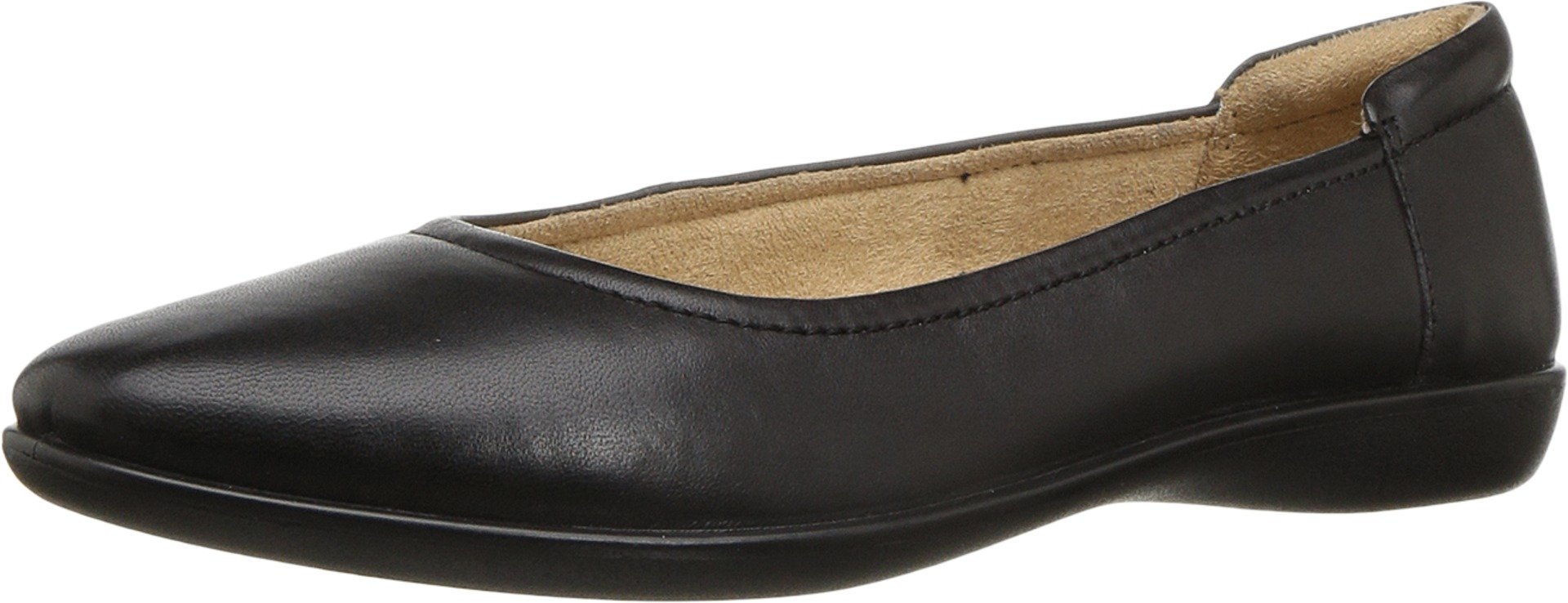
Naturalizer Flexy Ballet Flat

Naturalizer Flexy Ballet Flat

Everyday cushioned flat

Our Score 8.6/10
Check Price

Worth Noting

  • Sizing runs long
Style
Ballet flat
Upper
Soft leather
Width Options
Medium and wide

If the mysoft is the pair you book for a wedding, the Flexy is the one for the Tuesday after. It's a ballet flat, so there's no heel tipping you forward, and Naturalizer gives it a soft, cushioned footbed with real arch support — rare enough in a flat that it's worth leading with. For a bunion that aches after an hour in anything structured, that combination does a lot of quiet work.

Fit is the part to get right. These come in medium and wide, and the medium is snug enough across the forefoot that a bunion will feel it, so take the wide even if you normally buy a medium. Length runs generous — if you're between sizes, go down rather than up, and let the width do the work.

The leather is soft from the first wear, with no break-in period to plan around, and the footbed stays comfortable through a full day rather than flattening by lunchtime. We like them best as the plain, goes-with-everything pair: they read with trousers, jeans, and dresses, and the shape is clean enough for an office where a ballet flat is as casual as it gets.

Bottom line: The flat to buy when a bunion needs cushioning more than room: soft leather, real arch support, and a wide width that suits a full forefoot.

3

DREAM PAIRS Mary Jane Heel

DREAM PAIRS Mary Jane Heel

Dressy events

Our Score 8.8/10
Check Price

Worth Noting

  • Instep strap is the first part to wear out
Style
Mary Jane heel
Closure
Instep strap
Arch Support
Built into the footbed

Two and a half inches is roughly where a heel starts shifting your weight onto the ball of the foot, and that's the honest catch with this Mary Jane: it's dressier than the kitten heels here, and a sore bunion will notice the difference by the end of a long evening. Kept to a few hours, though, it's the best-value dressy pair in this roundup.

The strap is what makes the shape work. It crosses the instep rather than the joint, so it holds the shoe on without adding pressure where a bunion sits — a real advantage if your heel is narrow enough that slip-on pumps usually slide. The footbed has arch support built into it rather than a flat pad, and the sole grips, which matters on a polished floor at a reception.

We like this pair for the events where a flat reads too casual and a stiletto is out of the question. It looks the part with a dress or wide trousers, and the price keeps it in budget territory, which is unusual in a shoe that bothers with arch support. Sizing is the thing to settle: the toe box suits a fuller forefoot better than a slim one, so if your feet are narrow, size down.

Bottom line: The dressy pair to buy when you want height without a stiletto: arch support, a grippy sole, and a strap that stays off the bunion.

4

Clarks Emily Rae Pump

Clarks Emily Rae Pump

Polished office wear

Our Score 8.8/10
Check Price

Worth Noting

  • Narrow through the forefoot
  • Most expensive pair here
Style
Low-heel pump
Closure
Hook-and-loop strap
Model Number
26164675

The Emily Rae is the most expensive pair on this list, and it's the one that looks least like a comfort shoe: a low pump with a clean vamp and a hook-and-loop strap where you normally find a buckle or a plain topline.

That strap turned out to be the detail we kept coming back to. It lets you set the tension across the instep instead of pushing your foot through a fixed opening, which is the adjustment that matters when the top of the foot is the sensitive part. The heel is low enough for a full day at a desk, and the cushioned footbed holds up through it.

For a bunion, though, this is a shoe for a sensitive foot rather than a wide one. The forefoot is cut narrow, so if your bunion needs volume across the ball, start with the mysoft or the Flexy instead. If your fit is average and your problem is seams and pressure rather than width, it's the most polished option here, and it reads more expensive than it is.

Bottom line: Buy this one if your bunion is sensitive rather than wide — a polished low pump with an adjustable strap and a cushioned footbed for full days at a desk.

5

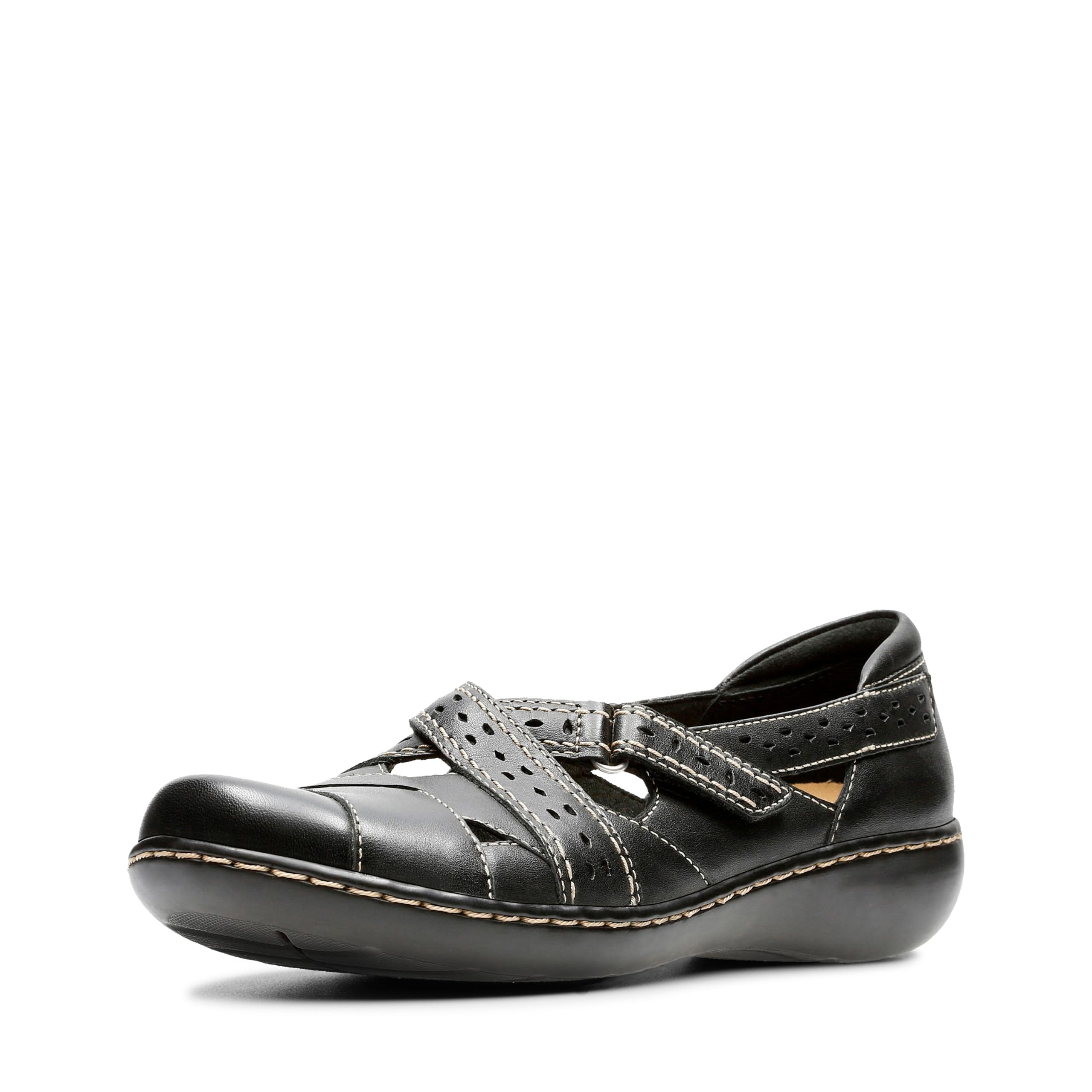
Clarks Ashland Spin Q Loafer

Clarks Ashland Spin Q Loafer

Tailored workwear

Our Score 8.6/10
Check Price

Worth Noting

  • Modest arch support
  • Sole and seams show wear early
Model
Ashland Spin Q
Style
Slip-on loafer
Upper
Leather

A loafer puts leather across the top of your foot, right over the joint, which makes the Ashland Spin Q a conditional pick rather than an obvious one. When it works — a mild bunion, a foot that isn't wide across the ball — it's the most versatile shoe in this roundup, and the leather looks the part with trousers, jeans, and a skirt.

Fit is where it gets decided, and it comes down to how much room you have under the vamp. This loafer suits a wide foot but pinches a high instep, so if the top of your foot is thick alongside the bunion, size up or move to one of the slingbacks instead.

What we like is the sole and the footbed: real cushioning under a leather upper that softens with wear, in a low profile that reads tailored rather than orthopedic. Worn with a suit, it's the pair that disappears into the outfit instead of announcing itself, and that's a quality worth having in a work shoe.

Bottom line: Worth it if your bunion is mild and you live in trousers; the leather and cushioned footbed make it the most tailored shoe here.

6

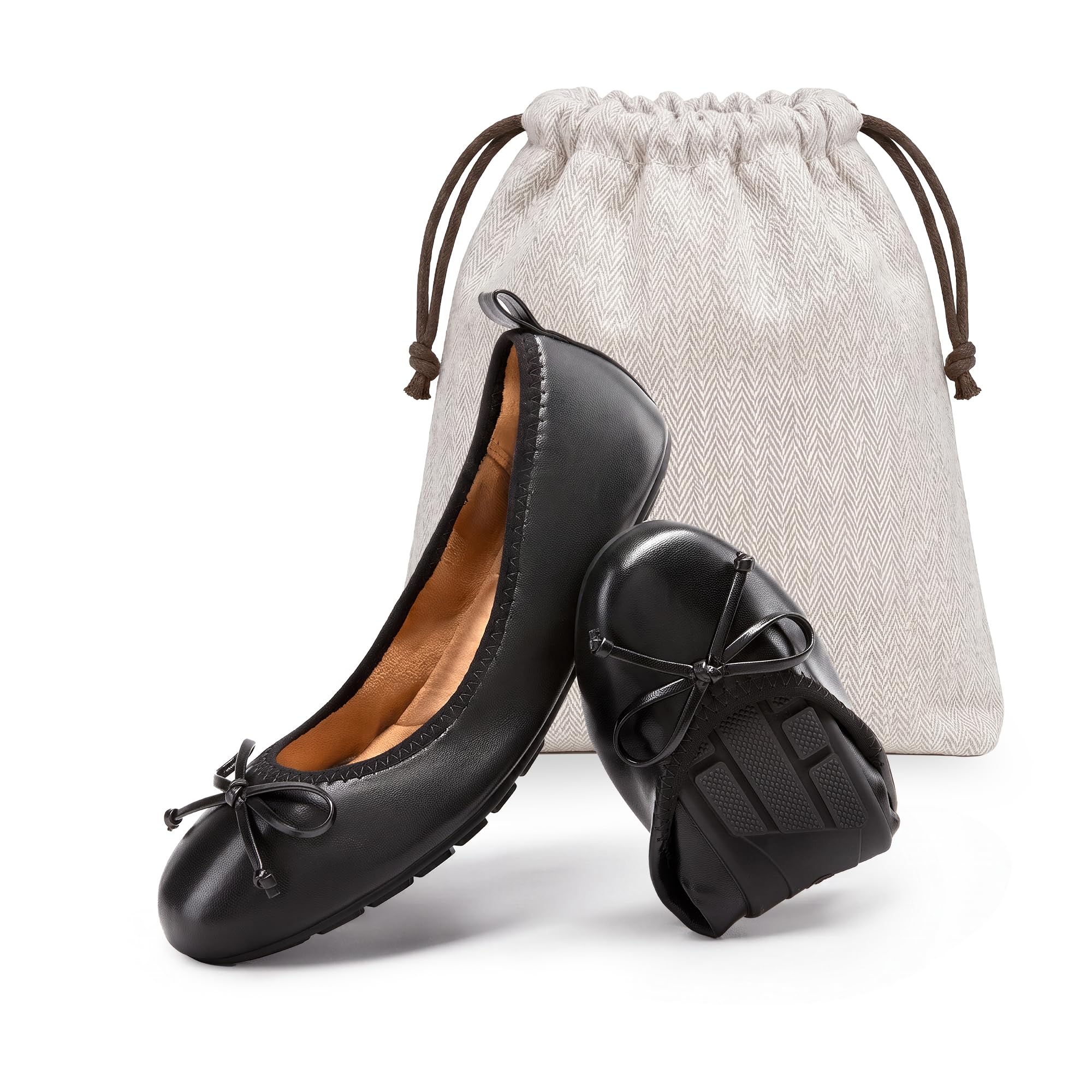
DREAM PAIRS Foldable Ballet Flat

DREAM PAIRS Foldable Ballet Flat

Travel and backup

Our Score 9.0/10
Check Price

Worth Noting

  • Thin footbed with little cushioning
  • Inside sole wears through with regular use
Style
Foldable ballet flat
Toe Shape
Round
Packability
Folds into a bag

Every bunion wardrobe needs one pair that lives in a bag, and this is the one we nominate. Folded, they're small enough to disappear into a medium handbag, and the round, unstructured toe puts almost no pressure on the joint. They aren't a shoe you build an outfit around, but as the pair in your desk drawer for the day the real shoes start hurting, they earn their place.

The trade-off is that there's very little shoe here: the sole flexes in your hand, which is exactly what lets it fold. Treat it as a two-hour shoe — the change you make at the end of a wedding, not the pair you walk a city in. If you need support under a bunion for a whole day, the Flexy is the flat to wear instead.

What holds up is the outside. The upper takes regular wear better than the inside does, and the tread is genuinely grippy for something this thin, which is worth knowing if you're changing shoes on a marble floor. The finish selection is the fun part; the silver and patterned options dress up more than the price suggests.

Bottom line: The pair to keep in your bag for the end of a long night — soft, roomy, and inexpensive enough to leave at your desk.

How We Tested a Dozen Pairs of Dress Shoes for Bunions

We built the shortlist by reading through customer reviews and return complaints, then filtering for the things that actually matter with a bunion: a toe box that doesn't taper to a point, a wide or extra-wide option, an upper with some give, and a heel low enough that weight stays off the ball of the foot. Anything with a seam running straight across the joint got cut. We kept the prices spread out too, so the list wasn't all investment-level pairs. That left a dozen shoes, which my team and I wore over eight months.

Every pair got the same first test: two hours around the house on a fresh foot, then a bare-foot check for red marks and a photo of exactly where the upper pressed. From there they went into real life — nine-hour desk days, a crowded commute, two weddings, a long standing reception, and plenty of walking. We noted how each shoe felt at hour one versus hour eight, whether the heel slipped, and whether the fit changed once the leather warmed up.

Fit got measured, not guessed: we marked the widest point of each toe box and checked where the toe cap and stitching landed relative to the bunion. For softness, we paid more attention to the first week of break-in than the first five minutes. Durability came down to scuffing at the toe, creasing across the vamp, and sole wear after a couple of months. We tested slip resistance on a tiled lobby floor and a damp sidewalk, judged color in daylight as well as under office lighting, and asked whether each pair worked with trousers and with a dress. The shoes that earned a spot were the ones we could put on again the next morning without thinking about our feet.

How to Choose Bunion-Friendly Dress Shoes

Start With the Shape of the Toe Box

Width gets all the attention, but shape decides more. A wide width adds volume around the ball of the foot; a pointed toe still squeezes the joint no matter how generous the width. Look for a round or almond toe with some height above the toes, so the upper sits off the bunion rather than pressing down on it.

Measure across the widest part of your foot at the end of the day, when feet are at their fullest, and compare that number with the width a shoe lists. The mysoft kitten pump is the clearest example here of a wide option built on a genuinely round forefoot.

Choose an Upper That Gives

Soft leather, suede, and knit yield to the shape of your foot; patent, bonded leather, and stiff synthetics don't. A soft upper stretches a little over the joint after a few wears, which buys real room, while a firm one keeps pressing in the same spot from morning to night.

Run a finger along the inside of the shoe where the bunion sits. A seam or a decorative edge crossing that exact point will rub even in an otherwise roomy shoe, and it won't soften with time. The trade-off is that soft uppers scuff sooner, which is worth accepting for a joint that isn't being squeezed.

Keep the Heel Low and the Ball Cushioned

Heel height shifts weight onto the forefoot, and that load is what a bunion feels by the end of the day. A flat or a one-to-two-inch heel keeps it manageable; past about two inches you're buying an evening shoe, however padded the footbed feels in the store.

Cushioning under the ball matters as much as the number. The DREAM PAIRS Mary Jane molds support into the footbed, which takes some sting out of its taller heel, and a slim gel pad adds another layer if you'll be standing through a reception.

Pick a Style That Leaves the Joint Alone

Where the upper ends is as important as how wide it is. Slingbacks and Mary Janes leave the joint uncovered and hold the foot with a strap across the instep; loafers and closed pumps put material directly over the bunion, which is why the Clarks Ashland Spin Q is a conditional pick. Ballet flats sit in between, with a topline that runs across the widest part of the foot — fine for a low bunion, less so for a prominent one.

Work out where that top edge will land on your own foot before you order. If it crosses the bunion, a different shape will do more for you than a bigger size.

Frequently Asked Questions

Final Verdict

The mysoft kitten pump is where to start: it's the only pick here that pairs a wide width with a genuinely roomy forefoot and a heel low enough to keep weight off the joint. If you want no heel at all, the Naturalizer Flexy is the flat to buy, and the DREAM PAIRS Mary Jane is the one for a wedding where you want a little height.

Get the toe box shape right first. Past that, the rest of the shoe matters far less than where its edges land on your foot.