Shoes

Best Shoes for Women with Bunions of 2026

A bunion does more than change the shape of your foot — it rewrites the way you shop. The pair you used to grab in your usual size now presses on the joint by mid-morning, and the wide toe box that actually fits tends to look like a medical device. What you want is a shoe that threads that needle: real room up front, an upper that doesn't rub the bony bump, and enough structure underneath that comfort doesn't cost you arch support.

I've had a bunion since my twenties, and over the past eight months my team and I have worn 12 different pairs to see which ones actually solve that. Here's what nobody tells a first-time buyer: the number on the box matters far less than where the shoe is widest, and a shoe that's wide all over is not the same as one that's wide right where the bunion sits. The picks below are the ones that kept their shape, their cushioning, and their looks through months of real wear — and they're grouped by what each does best, not by how they photograph.

1

ASICS Gel-Contend 9

Top Pick
ASICS Gel-Contend 9

Everyday wear

Our Score 9.0/10
Check Price

Worth Noting

  • Outsole thins before the upper wears out
Model
Gel-Contend 9
Shoe Type
Road running
Listed Weight
1.44 lb

Room in the toe box is the easy part to shop for; the hard part is a shoe that stops pressing on the joint while you walk. The Gel-Contend 9 does both. Our toes had somewhere to go in the forefoot, and because the upper is a breathable mesh panel over a standard lace-up, we could back the bottom two eyelets off and take the pressure off the bunion without the whole shoe going slack. That two-part fit is why this is the pair we hand to someone who wants one shoe for everything.

Underfoot it is a soft, neutral ride with enough structure that a long walk doesn't turn into a shuffle. The arch is supported without feeling like a shelf, and the collar sits low enough that it stays clear of the ankle bone. It also just looks like a running shoe, which matters more than it should when you are buying something for a sore foot.

Sizing takes a little judgement. The fit runs close to true, but this shoe is at its best with some length in front of the toes, so if you are between sizes, go up rather than squeezing into your usual number. A thin sock helps in the first week; a thick one pushes your foot back into the width you were trying to escape.

What we watch on any mesh runner is the outsole, and that is where the Contend shows its price. The rubber under the ball of the foot thins first, so heavy pavement miles will finish these before the upper gives out; for errands, school runs, and weekend walks, that day is a long way off. Against the Skechers Endeavour below, you trade some pillowiness for a fit you can actually tune.

Bottom line: If you want one pair for errands, walks, and long days, start here: the forefoot is genuinely roomy, and the laces let you ease pressure right where the bunion sits.
2

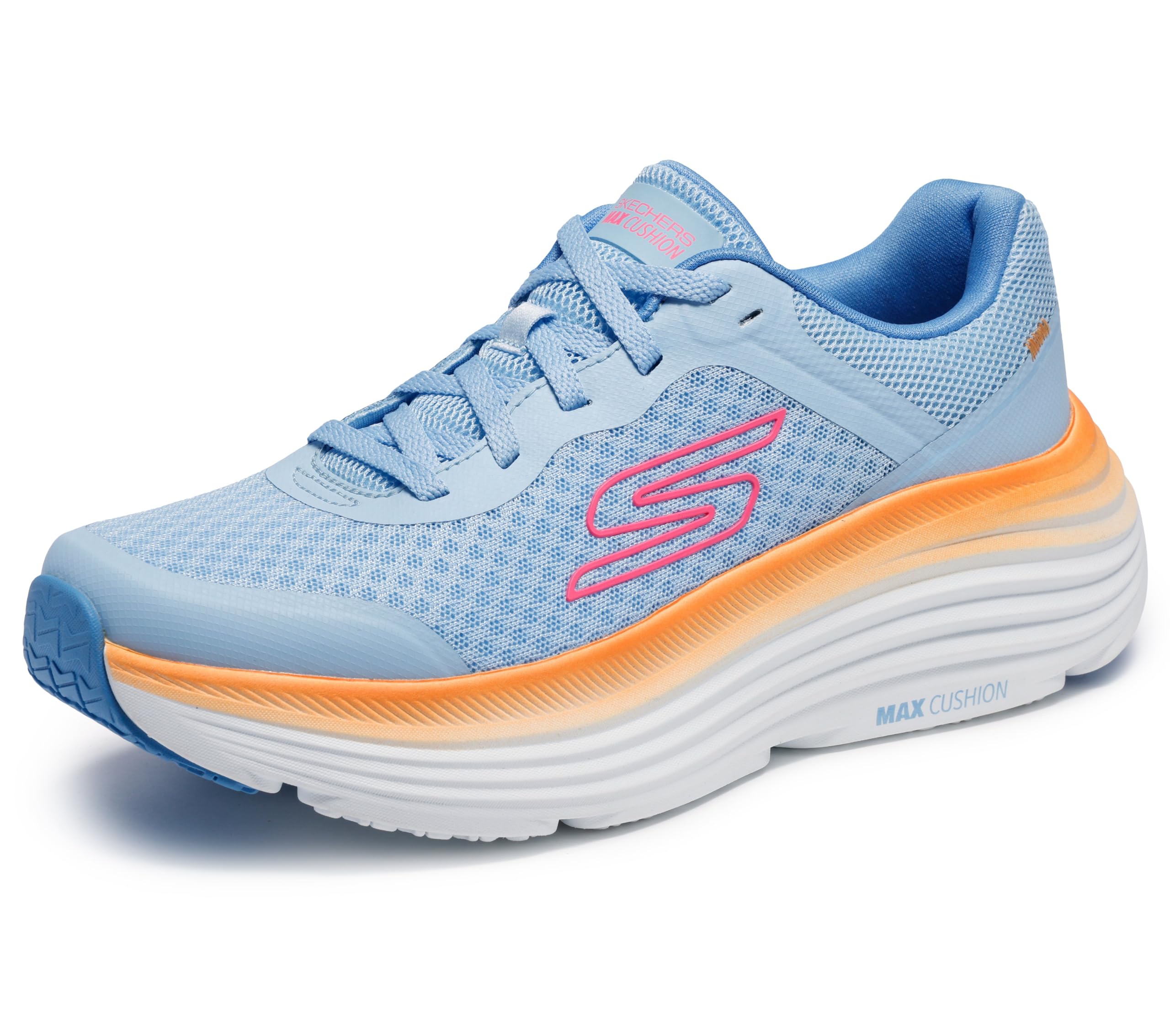
Skechers Max Cushioning Endeavour

Skechers Max Cushioning Endeavour

Wide feet

Our Score 9.0/10
Check Price

Worth Noting

  • Outsole wears through early
Model
129470
Shoe Type
Road running
Listed Weight
1.5 lb

The hour that decides whether a shoe stays by the door is the last one, after the grocery run, the dog, and the second trip upstairs. That is where the Endeavour earns its keep. The midsole is thick and soft enough that the ball of your foot stops taking the whole day personally, and the front is cut wider than a standard sneaker, so the bunion is not pressed against a seam.

This is the one we point to when someone tells us her feet are broad as well as bunioned. The knit upper gives over the joint instead of fighting it, and the heel is held snugly enough that the extra room up front does not turn into sliding. Soft and wide usually means shapeless; this one still looks like a shoe you would wear on purpose.

Where it gives ground is the outsole. The rubber under the forefoot is the first thing to go, and it goes while the upper still looks fine, so buy this one for comfort rather than for years. Split your walking between a treadmill, the shops, and the school gate and you will get a good stretch out of a pair; give it rough pavement every day and it will retire early.

Between this and the ASICS, the decision is about how you like to fit a shoe: laces you can tune, or a wider build straight out of the box. For a foot that is wide all over rather than just at the joint, the Skechers need less fiddling.

Bottom line: The softest landing of anything here, in a shoe that runs wider than most through the front, and our pick if your feet are broad as well as bunioned.

3

Clarks Ashland Lane Q

Clarks Ashland Lane Q

Dressier days

Our Score 9.0/10
Check Price

Worth Noting

  • Shallow over a high instep
Model
26067317
Shoe Type
Loafer
Listed Weight
11 oz

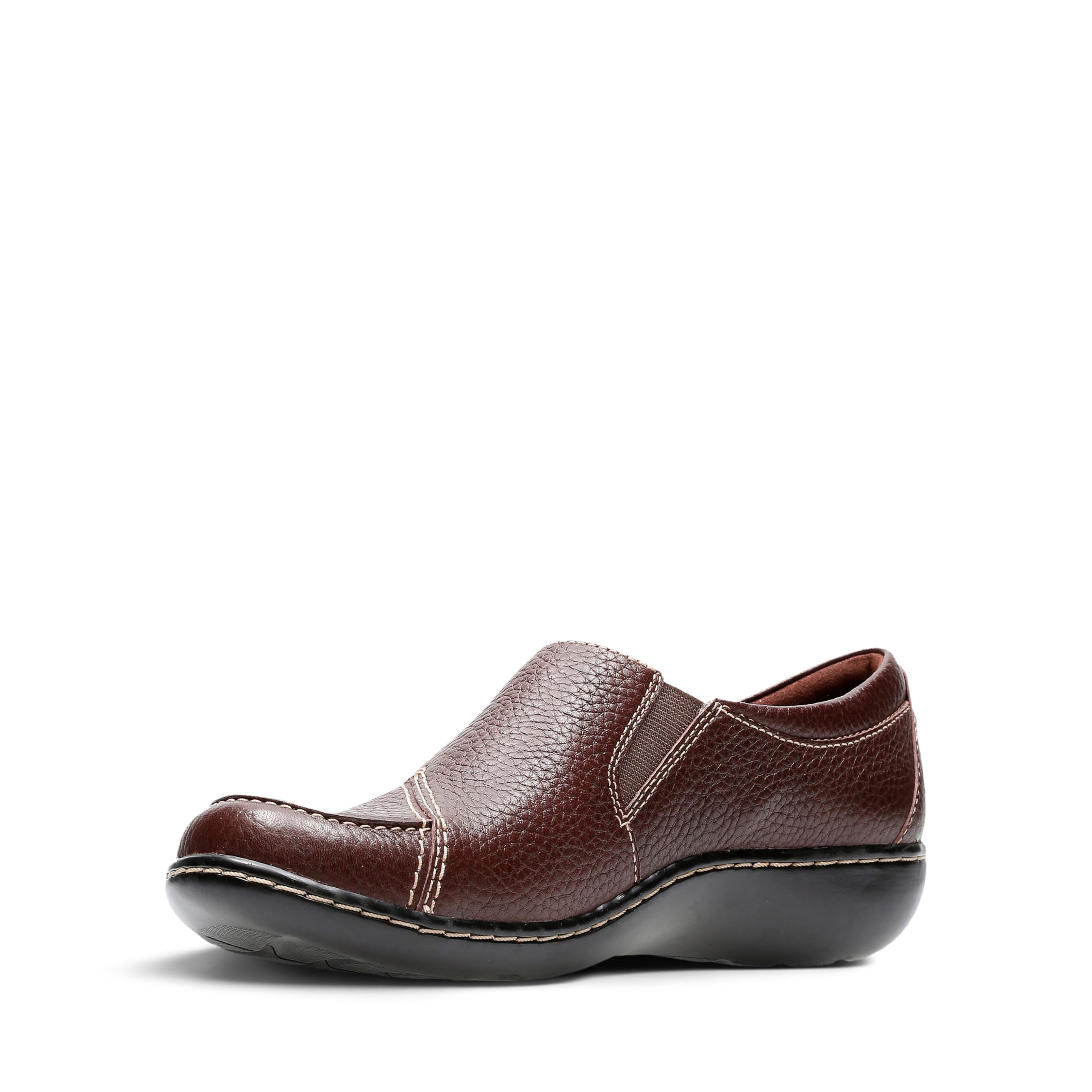
Dressing for an office or a lunch when your feet have bunions runs into the same wall: the loafers and flats that look right are built on the narrowest lasts. The Ashland Lane Q is the exception we keep coming back to. It reads as a proper slip-on and it has room where the others do not.

The forefoot is the reason. The footbed is wide enough that toes spread instead of stacking, and the upper is cut generously across the ball of the foot, so the bunion rests against soft material rather than a hard edge. The arch is supported, the heel is low and stable, and they are light enough that you forget you put them on.

What you give up is adjustability. There are no laces to loosen and no strap to tighten, so the fit is whatever the size you ordered turns out to be. If your feet swell by afternoon, a slip-on has no answer for that, and these are no exception. Try them on late in the day if you can.

Treat them as the shoe for occasions rather than for miles and they hold their shape. Wear the same pair for a daily two-mile walk on pavement and the thin sole will be the first thing to complain. For the days when a sneaker is wrong, that is a trade we will take.

Bottom line: A loafer that does not pinch the joint, and the pair to wear when sneakers are too casual and everything else in your closet is too narrow.

4

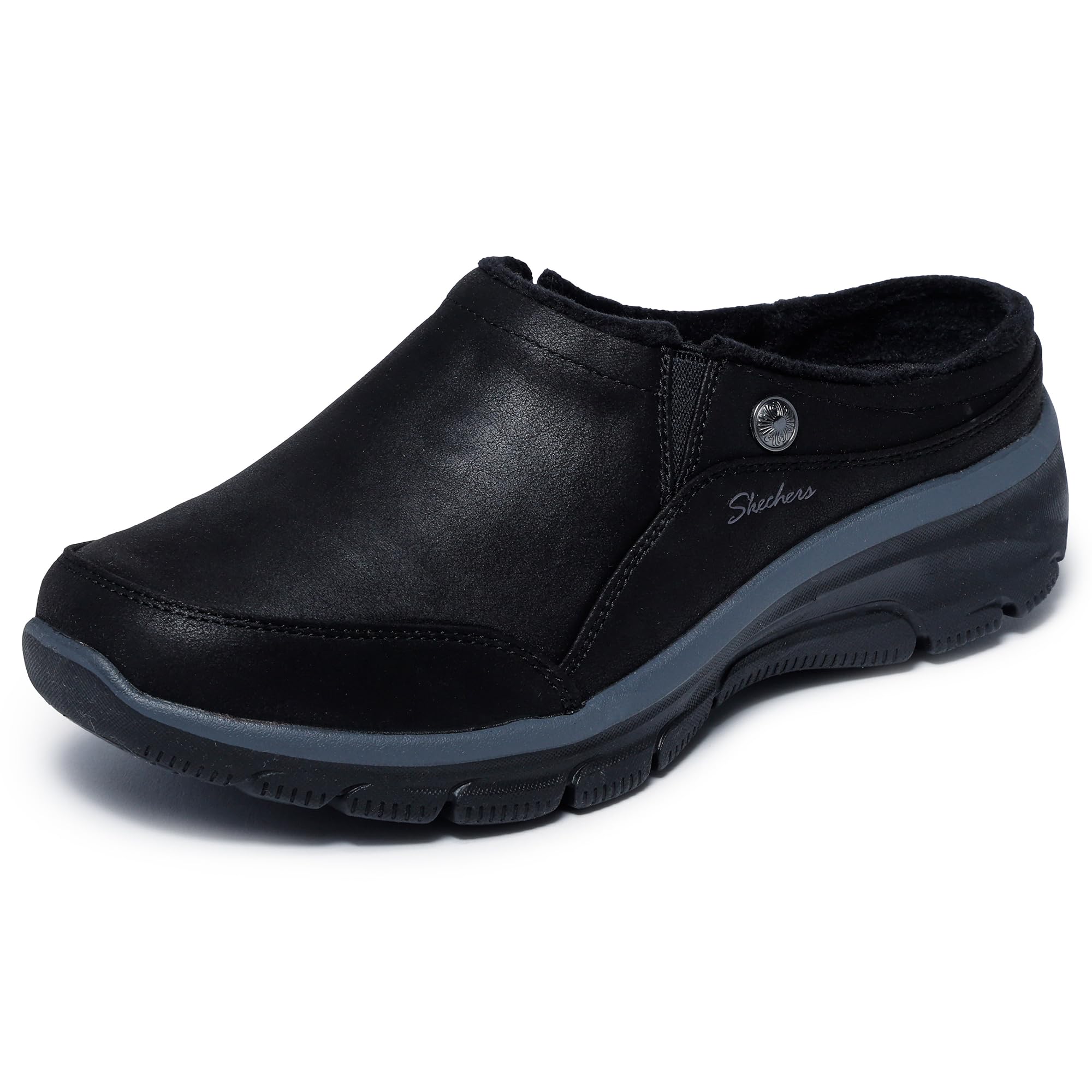
Skechers Easy Going Latte 2

Skechers Easy Going Latte 2

Slip-on ease

Our Score 9.0/10
Check Price

Worth Noting

  • Backless, so not for long or uneven walks
  • Heel must sit fully inside the sole lip
Model
167870-TAN
Shoe Type
Mule
Listed Weight
1.5 lb

A bunion flare changes the arithmetic of getting dressed. Socks hurt, laces hurt, and the moment of forcing a heel into a counter is the worst thirty seconds of the day. The Easy Going Latte 2 exists for that morning. You step down into it, the footbed takes your weight, and there is nothing across the top of the joint to argue with.

We keep a pair by the door for exactly that reason. The toe box is the widest part of the shoe and it stays wide, with nothing tapering to a point in front of your toes, and the footbed has enough arch under it that a trip to the shops does not feel like walking on a board. The upper has a little structure to it, so the mule hugs the foot rather than flapping.

The trade is obvious and worth saying out loud: it is backless, so it is a shoe for errands, the office, and short walks, not for a long hike or anything on uneven ground. Fit has to be exact, too. If your heel hangs over the back edge, the lip of the sole will crush and the shoe will look tired fast, so order your true size rather than sizing up for width.

Where it beats the sneakers on this list is the ninety seconds around the front door. It also passes as something you would wear to lunch, which is more than we can say for most shoes that go on this easily.

Bottom line: For the mornings when pushing your heel into a shoe is the worst part of getting dressed, this backless mule is the kindest thing in the closet.

5

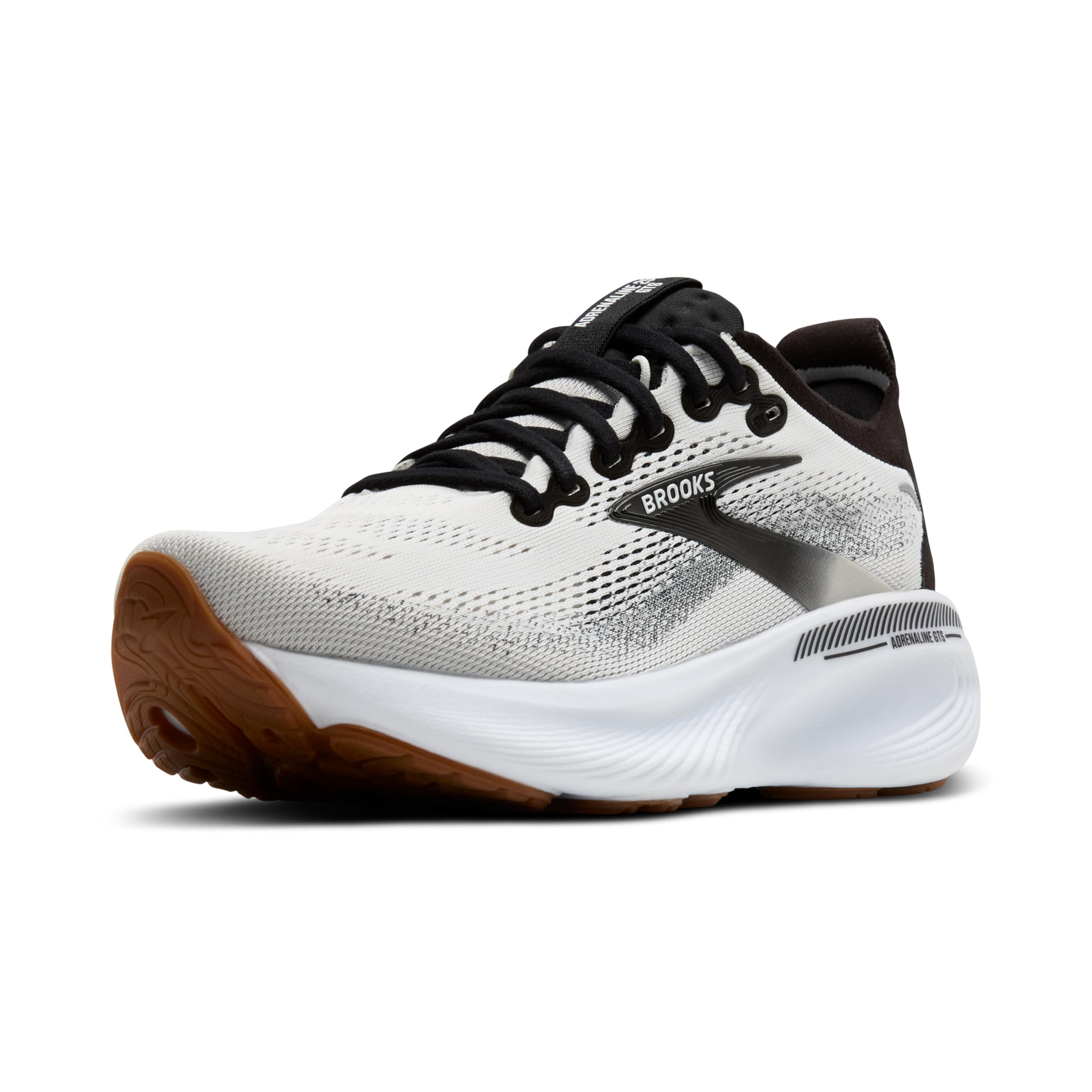
Brooks Adrenaline GTS 25

Brooks Adrenaline GTS 25

Maximum support

Our Score 8.8/10
Check Price

Worth Noting

  • Costs noticeably more than every other pick
Model
120443
Shoe Type
Road running
Listed Weight
1.5 lb

It costs more than anything else on this list, and it is the pair we suggest first when a bunion is not the only problem. The Adrenaline is built around structure: a firm heel, a stable platform, and an arch that holds up through a full day rather than collapsing by mid-afternoon. For feet that ache in a soft shoe, that support is the whole point.

The toe box is the pleasant surprise. Stability shoes often taper toward the front and squeeze exactly where you do not want pressure; this one stays roomy, with enough depth that toes sit rather than curl. The upper is soft against the joint, and the lacing gives you room to ease off over the bunion. Cushioning is generous without the squish that makes some plush shoes feel wobbly on stairs.

Whether the premium is worth it depends on how much of your day happens upright. If you are replacing a cheaper pair twice a year, the gap is real money; if one supportive shoe is what gets you through a twelve-hour shift, it works out cheaper than the alternative.

One practical note: this shoe is at its best laced deliberately, snug through the midfoot and looser over the toes. It rewards a few minutes of fiddling the first time you put it on. Skip that and the firm ride reads as too much shoe; get it right and the firmness reads as support instead.

Bottom line: The most supportive shoe here, and the one we suggest when a bunion comes with plantar fasciitis, arthritis, or a job spent standing still.

6

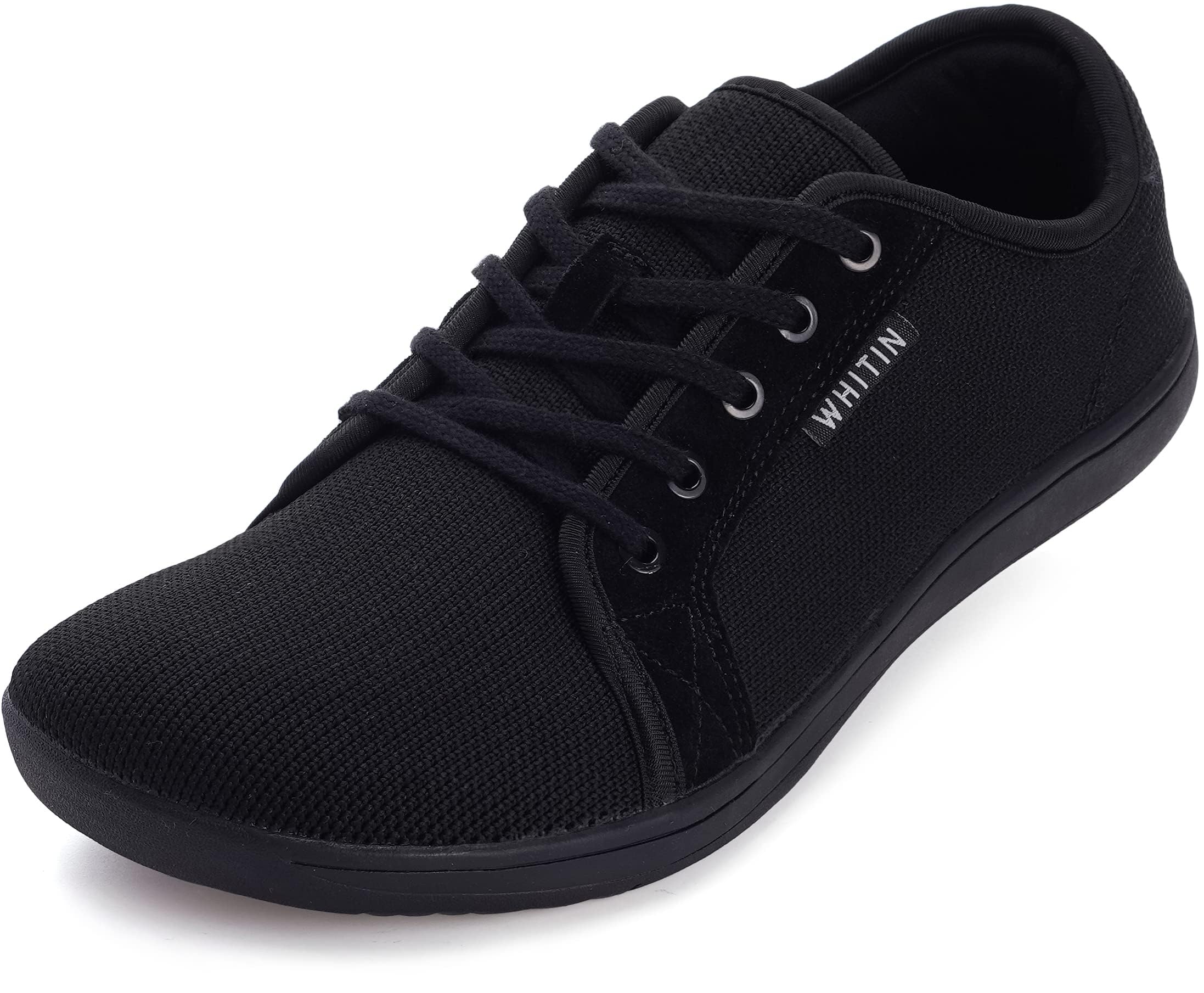
WHITIN Barefoot W81

WHITIN Barefoot W81

Roomiest toe box

Our Score 8.4/10
Check Price

Worth Noting

  • Very little arch support as sold
  • Thin sole underfoot on hard pavement
Toe Box
Wide
Shoe Type
Barefoot sneaker
Listed Weight
5.29 oz

Put the W81 next to an ordinary sneaker and the difference is in the outline: the front stays broad and rounded where other shoes start curving back in. That is the whole argument. If your pain comes from the side of a shoe pressing on the joint, a shoe shaped like a foot removes the pressure rather than cushioning it.

It is flat and low to the ground, so you feel the surface under you, which is an adjustment if you have been in cushioned shoes. The upper is thin, breathable mesh, the whole thing is light enough to forget, and the sole flexes with your foot instead of resisting it. On a gym floor or a quick grocery run that is pleasant.

There is very little arch support built in, and that is the trade. Our advice is to budget for an insole at the same time: the footbed is flat enough that a supportive insert drops in without cramping the toes, and it turns a very flat shoe into one you can walk in. Buy it as a toe-box solution and add the support yourself.

From above, the front of the shoe is very wide, and it reads as a barefoot shoe rather than a fashion sneaker, which is the shape doing its job rather than an accident. Set against everything else here, though, it is the least expensive way to find out whether a genuinely foot-shaped shoe is the answer for your feet before spending serious money on the idea.

Bottom line: If the goal is the widest possible space in front of your toes and nothing else, this is the pair, a foot-shaped shoe at a price that makes the experiment easy.

7

Aomigoct Wedge Sandal

Aomigoct Wedge Sandal

Summer occasions

Our Score 8.6/10
Check Price

Worth Noting

  • Wedge height shifts weight forward
  • Smooth footbed lets toes slide
Shoe Type
Wedge sandal
Heel Height
1.96 inches
Listed Weight
1.22 lb

For the warm-weather occasions when a sneaker is out of the question, this is the sandal we reach for. The strap runs behind the toe joint rather than across it, and the wide band covers a bunion instead of pointing at it. That is a narrow job description, and we are recommending it for exactly that job.

The footbed is why it works as well as it does. There is real arch support molded into it, the surface is soft with a little texture under the heel, and the whole sandal is light for a wedge. Order up: the sizing runs small, and the extra length keeps your heel off the very back edge.

The wedge is the part to weigh. At just under two inches it puts more weight on the forefoot than a flat does, and the smooth footbed lets toes slide forward as you walk, so the pressure builds over hours. Wear them for the ceremony, the photos, and the walk to the car, not for the four hours of standing afterward.

Bottom line: A sandal that covers a bunion and carries its own arch, though the near-two-inch wedge makes it a shoe for occasions rather than for a day on your feet.

How We Tested Shoes With a Bunion in Mind

Every pair here started as a spec sheet, not a hunch. I pulled width offerings, removable insoles, seam and overlay placement, and upper materials, then ruled out anything with a narrow toe or a stitched band sitting directly over the first metatarsal head. That left 12 pairs across a range of budgets, which four testers — two with mild bunions, one with a pronounced one, and one with flat feet and a bunion — wore for eight months.

We wore them where feet actually go: full workdays at a desk and on our feet, grocery runs, dog walks, a standing-room commute, and one long airport day with a connection. Each pair got the same first check — a thumb pressed into the upper over the joint after an hour of wear, to see where it creased and whether it had stretched into the bump or away from it. We traced each insole against a foot outline to confirm the widest point lined up with the bunion rather than sitting back near the heel, and asked testers to note the hour their foot started to ache, which turned out to be the most honest read on cushioning we had.

Arch support got its own pass: testers with a history of plantar fasciitis wore each pair through a long errand day and reported how their arches felt by evening, and we checked whether the insole lifted out cleanly enough to swap in a custom orthotic. Appearance was simpler — we wore each pair with jeans, with trousers, and to dinner, then noted which ones drew a second look for the wrong reason. At two, four, six, and eight months we photographed outsoles, linings, and toe boxes to see where the wear landed, and weighed how each pair held up against what it cost.

How to Choose Shoes for Bunions

Where a Shoe Is Widest Matters More Than Its Width Label

A wide width adds volume around the whole foot, which is not the same as adding space at the ball. What you want is a shoe that is widest right where the bunion sits and stays broad toward the toes instead of tapering back in. That is why the WHITIN's shape does something a wide-fit flat cannot.

Turn the shoe over and look at the sole. If the outline narrows into a teardrop in front, it will press on the joint whatever the label says.

Soft Uppers Need a Little Structure Behind Them

Mesh, knit, and soft suede give over a bunion rather than digging into it, so start there. The trap is going too soft: an upper with nothing behind it lets the foot spread and slide forward, putting the load straight back on the joint. Lacing is the best compromise, because you can leave the lower eyelets loose over the bump and keep the rest snug. Slip-ons and mules give up that tuning in exchange for getting the shoe on without a fight.

Keep the Heel Low

Every inch of heel height shifts weight toward the forefoot, which is exactly where a bunion lives. A flat or nearly flat shoe spreads load across the whole foot; a wedge does not, however soft the footbed is. It is why we treat the Aomigoct sandal as an occasion shoe even though its arch support is genuinely good. If you want lift, look for a platform under the heel rather than an angled wedge, and you get the height without the slope.

Support, Cushioning, and What You Add Yourself

Cushioning makes a shoe feel good; support stops the foot rolling inward and loading the joint. You want both, and an hour on your feet tells them apart better than a squeeze in the shop. The detail that matters most is whether the footbed lifts out: a removable insole lets you drop in an orthotic or a firmer arch, which is what turns the flat WHITIN into a walkable shoe. A glued-in footbed means the shoe is what it is.

Sizing and the First Week

Don't buy your usual number and hope. Length matters more here than in other shoes, because a toe touching the front pushes the joint sideways on every step, so going up half a size is often the fix. Fit to the worse foot if the two differ, and wear a new pair around the house for twenty minutes before committing to a full day in them. Keep the box until you have done a real walk.

Frequently Asked Questions

Final Verdict

Buy the ASICS Gel-Contend 9 first. It solves both halves of the problem at once, with a forefoot that has genuine room and laces you can ease off right over the joint, and it does it at a mid-range price that makes a second pair realistic rather than indulgent.

If your feet are broad all over as well as bunioned, the Skechers Endeavour's softer, wider build suits better. If a bunion comes with plantar fasciitis, arthritis, or long shifts, spend the extra on the Brooks. Everything else here answers a narrower question, and answers it well.