Shoes

Best Walking Shoes for Women with Plantar Fasciitis of 2026

Plantar fasciitis announces itself at the worst possible moment: the first step out of bed, or the shuffle to the bathroom at 2 a.m. It's a stabbing, pulled ache under the heel, and the wrong shoe makes it worse within a block. What actually helps is cushioning under the heel, an arch that holds instead of flattening under your weight, and a sole stiff enough through the middle to stop the foot flexing where it hurts. Looks, price, and how quickly you can get them on are bonuses layered on top of that.

Over the past six months, my team and I have worn 12 pairs through exactly that kind of day, and the differences show up fast. Here's what I'd tell a first-time buyer: the insole gets all the attention, but the midsole does the work, and cushioning packs down long before the upper looks worn — a pair that felt great in March can feel thin by August. What's below are the pairs that kept my heel quiet on the third mile, not just the first, and the ones I quietly stopped reaching for didn't make the list.

1

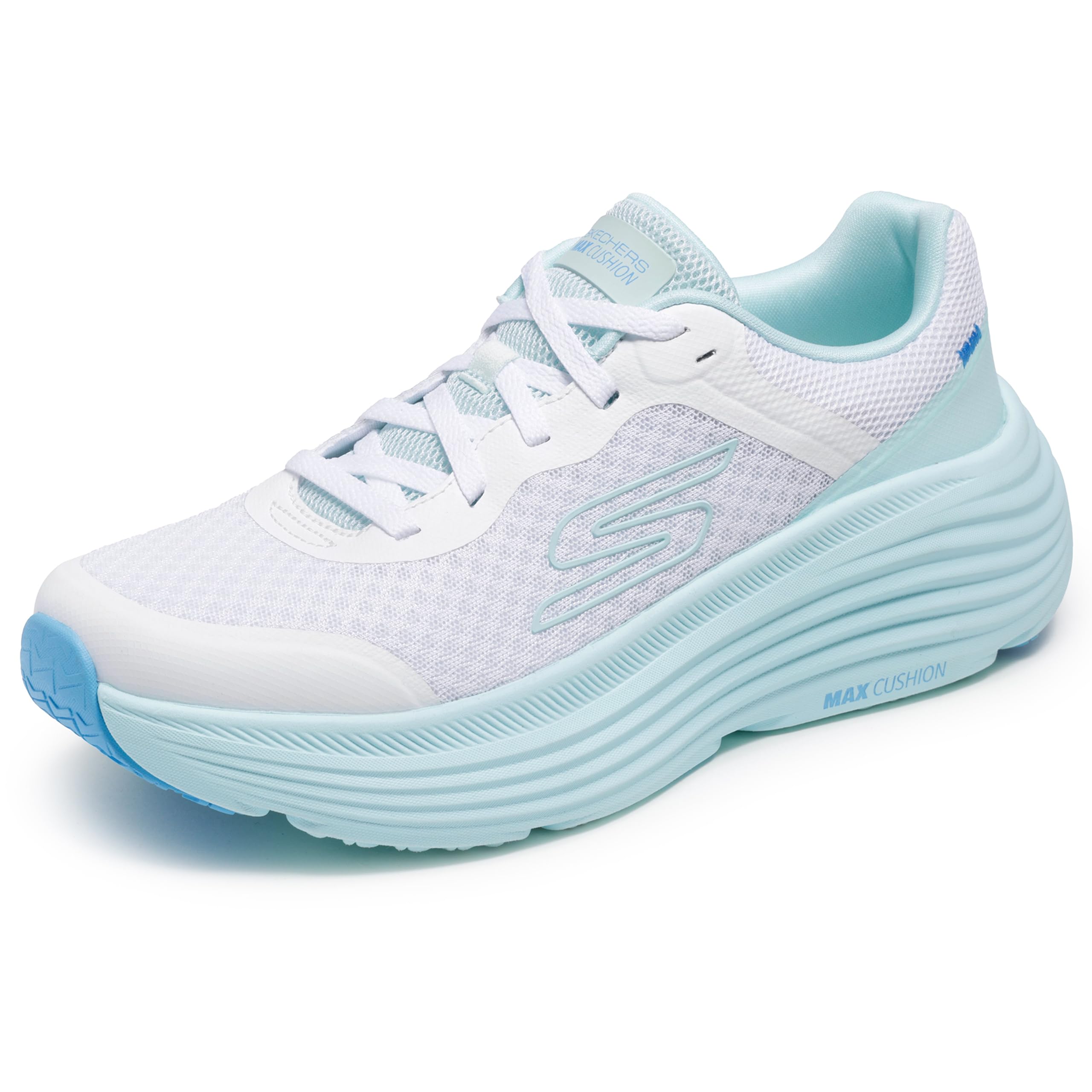
Skechers Max Cushioning Endeavour

Top Pick
Skechers Max Cushioning Endeavour

Daily walking

Our Score 9.0/10
Check Price

Worth Noting

  • Roomy fit can swamp narrow feet
Fit
Extra-wide
Weight
1.5 lb
Cushioning
Max Cushioning

A substantial slab of foam sits under the heel of the Max Cushioning Endeavour, and we noticed it most on hard pavement, where the usual sting at heel strike is muted. The listed 1.5-pound weight keeps it from feeling like a brick, and the toe box is roomy enough for a thicker sock or a forefoot that wants space. That combination is why it is our top pick.

Skechers' max-cushioning platform is soft, but not so squishy that we felt like we were sinking. The upper is pliable from the first wear, which matters if you are babying a painful arch and do not want a break-in period. We also like the flexibility through the forefoot; the shoe rolls with your step instead of forcing a stiff rocker. It feels more natural than the firm New Balance and more planted than the cloud-soft Nortiv 8.

Durability is the part we watch. The outsole can wear through with daily pavement miles, so this is a pair to rotate rather than grind through every single day. The cushioning is comfortable rather than orthotic-firm, so if you need a pronounced shelf under the arch, try the 608 V5. The deep red option is a welcome change from the usual gray walking shoe.

Bottom line: For women who want one plush, roomy shoe for daily pavement miles, this is the pair we recommend first.

2

NORTIV 8 Walking Shoe

NORTIV 8 Walking Shoe

Budget cushioning

Our Score 8.6/10
Check Price

Worth Noting

  • Soft platform can feel vague underfoot
  • Roomy fit may be too wide for narrow feet
Toe Box
Roomy
Cushioning
Soft, bouncy
Arch Support
Cushioned

Cloud-soft cushioning at a budget price is the reason the Nortiv 8 earns a place here. The cushioning has a bouncy, cloud-like feel under the heel and forefoot, and the arch is padded rather than hard. For a woman who wants a break from firm shoes and mostly walks on pavement, that is a pleasant place to start.

The trade-off is consistency. It runs true to size for many, with a roomy toe box, but comfort is not unanimous: some feet feel great and others blister. We treat it as a shoe to try on a short walk first, not one to take straight to a long day.

What we like most is how little you give up. Arch support is there, the upper is soft out of the box, and the shoe looks more expensive than it is. If you need a firm platform for long standing shifts, spend more; if you want pillowy cushioning for errands and moderate walks, this is the value pick. The range of colors is broader than the price suggests.

Bottom line: Our budget-friendly route to cloud-like cushioning, with a padded arch and a roomy toe box.

3

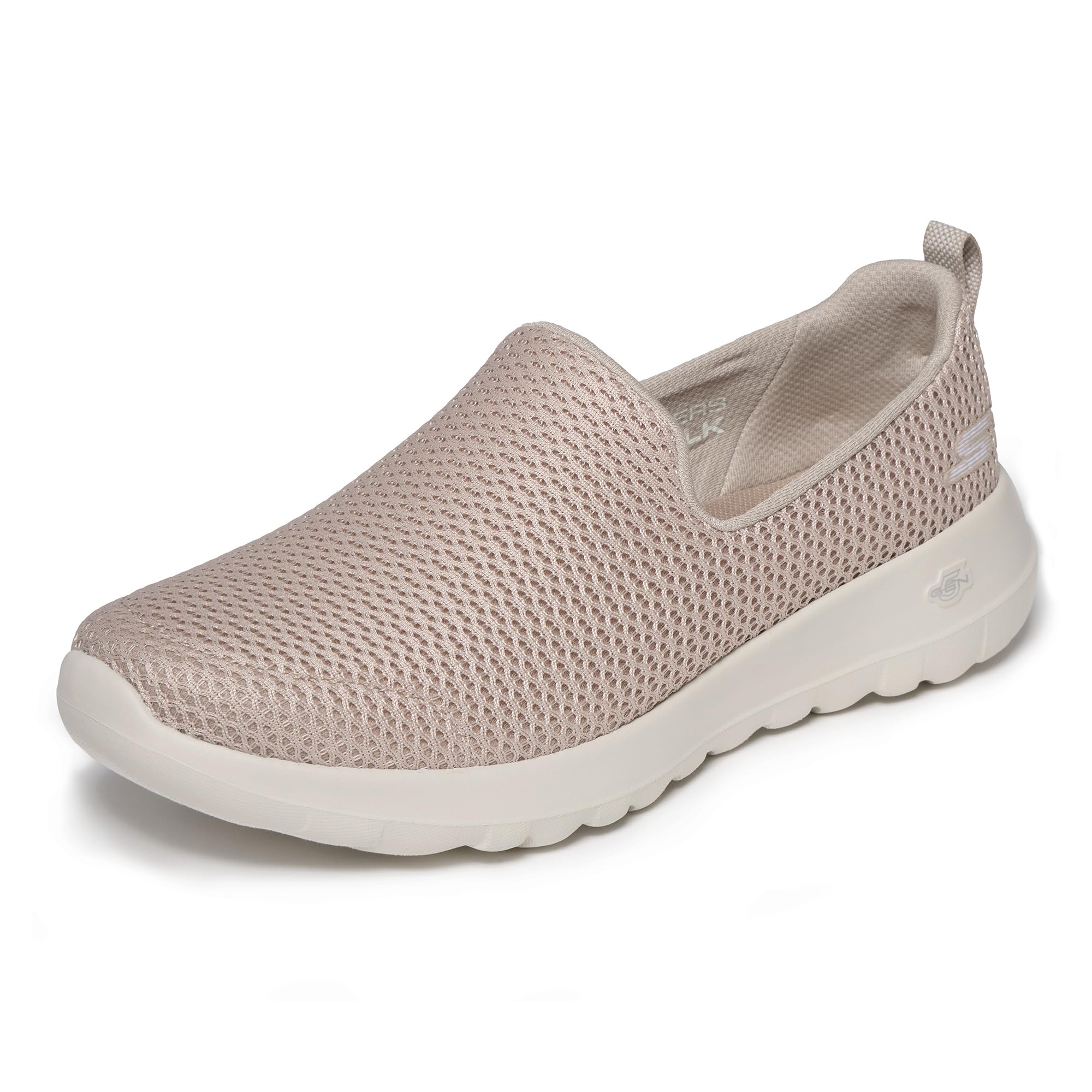
Skechers Go Walk Joy

Skechers Go Walk Joy

Easy slip-on

Our Score 9.0/10
Check Price

Worth Noting

  • Runs large; size down if between sizes
  • No laces for a custom midfoot fit
Closure
Slip-on
Toe Box
Generous
Cushioning
Pillow-soft

No laces, no bending, no fuss: the Go Walk Joy is the pair we reach for when we want to be out the door in a second. The heel collar is soft, and the footbed has that pillow-soft feel Skechers is known for. On errands, travel days, and long stretches of standing, that ease is the whole point.

Cushioning is the strength: it feels plush underfoot without a hard break-in, and the toe box is generous enough that toes do not feel pinched. We also appreciate how easy the upper is to wipe clean, which matters for a light-colored walking shoe.

Arch support is the bigger compromise for plantar fasciitis. The footbed is pillowy rather than firm, and we do not rely on it for a pronounced arch need. That makes it a better second shoe than a sole solution: great for quick errands and travel, less so for a long daily walk if your arch collapses. The budget price leaves room for a second pair, which is the practical way to live with the softer arch.

Bottom line: The slip-on we choose for errands and travel, with pillow-soft cushioning and a softer arch than serious walkers need.

4

New Balance 608 V5

New Balance 608 V5

Structured support

Our Score 8.8/10
Check Price

Worth Noting

  • Wide fit may overwhelm narrow feet
Sole
Firm
Upper
Leather
Toe Box
Wide
Arch Support
Supportive

A firm handshake is what the 608 V5 offers. Where the Skechers and Nortiv 8 squish, the New Balance holds the heel and arch in a more definite cradle, something we appreciated on longer pavement walks when softness started to feel like wobble. It is sold as a cross trainer, but the wide fit and supportive base make it a practical walking shoe for women who want structure.

Arch support is its strongest card. The foot sits deep in the shoe, the toe box is wide, and the leather upper gives the midfoot a secure wrap. We like that combination for a wider forefoot or a foot that needs a closer hold than a slip-on can give. The laces also let you tune the fit over the instep, which matters if you are between widths.

The price of that structure is stiffness. The leather takes longer to soften, and the sole does not flex like the mesh shoes here, so the first few walks can feel boardy. Give them short outings first, and do not judge them by a single long day. Comfort is mixed even after break-in: some feet feel supported, others find the firm platform unforgiving. The old-school shape is not fashion-forward, but it looks tidy with jeans and does not announce itself as a medical shoe.

Bottom line: For a firmer, wider ride with more arch and heel structure than the plush picks, this is our structured choice.

How We Tested Walking Shoes for Plantar Fasciitis

Before anything went on a foot, we gathered roughly 40 styles that advertised genuine arch support, a cushioned heel, and a removable insole, then cut the list by available widths, price, and whether reviewers with heel pain reported relief after a few weeks rather than a few hours. Twelve pairs made it through, and each was worn on the same six-month rotation: the morning first steps out of bed, dog walks, grocery runs, a long standing stretch at the kitchen counter, and one deliberately brutal travel day of airport concourse walking.

In the first week with each pair, I pressed a thumb into the heel and midfoot to feel where the cushioning actually sat, twisted the shoe end to end, and bent the toe to judge stiffness — too floppy through the arch and the foot does all the work, too rigid at the toe and you roll forward strangely. I squeezed the heel counter to see whether it held the back of the foot or collapsed. Then came the part that matters more: wearing them for a full eight hours and noticing whether the arch was still there at 4 p.m.

Fit got checked properly, with thin socks and thick ones, in each brand's recommended size and a half size up, since a shoe that pinches across the toes changes how the whole foot loads. Durability came down to a monthly look at the insoles and outsole tread, plus whether the heel still felt like cushioning by month five. We noted which pairs still looked presentable enough for errands, which went on without unlacing, and which ones earned their price in wear rather than just in the first-week feel.

How to Choose Walking Shoes for Plantar Fasciitis

Cushioning and Arch Support Work Together

A thick foam midsole can take pressure off a sore heel, but cushioning alone does not stop the arch from rolling inward. We look for a shoe that feels soft at heel strike and still has a defined shelf under the arch. The Skechers Max Cushioning Endeavour leans plush, while the New Balance 608 V5 feels firmer and more structured. Neither approach is wrong: choose the softer ride if you want comfort on pavement, and the firmer one if your foot feels unstable in pillowy shoes.

Fit, Width, and Toe Box

Plantar fasciitis does not make your feet wider, but the wrong width can make every step feel worse. A roomy toe box lets the forefoot spread, and a secure midfoot keeps the shoe from sliding. Width options matter more than the size on the box, and some styles run large: the Go Walk Joy is generous, while the 608 V5 is built with a wide fit in mind. Try your usual size first, then adjust a half size if your heel lifts or your toes press the front.

Stability and Break-In

A shoe that twists easily can feel comfortable in the store and tiring by the end of a walk. We check whether the heel counter holds the back of the foot and whether the sole flexes at the toes without collapsing through the middle. Leather and firmer uppers need a gradual break-in; mesh and knit styles usually feel ready sooner. Start with short walks, then add distance. If a seam rubs or the arch presses in the wrong place, return the pair before the return window closes.

Durability and Replacement

Cushioning is a wear item. When the outsole tread smooths, the midsole feels flat, or a sole starts to separate, the shoe has stopped doing the job that made it comfortable. Daily walkers should rotate two pairs when possible and check the heel and forefoot for wear. A shoe that fits well but looks worn can still be a risk for a sore foot. We treat replacement as maintenance, not a sign that you chose badly.

Frequently Asked Questions

Final Verdict

Our default is the Skechers Max Cushioning Endeavour. It gives the best balance here of plush cushioning, low weight, and a roomy toe box, which is the balance we want for daily pavement walks. If your arch needs a firmer shelf and a closer hold, choose the New Balance 608 V5. If ease matters more than structure, the Go Walk Joy slips on in a second and still cushions a full day of errands.