Shoes

Best Shoes for Women with Plantar Fasciitis of 2026

The first step out of bed tells you everything: that sharp pull through the arch is why shoe shopping suddenly stops being fun. A shoe that works for plantar fasciitis has to do two things at once — hold the arch steady and cushion the heel — without feeling like a brick strapped to your foot. I spent years cycling through stiff, sensible pairs that fixed my heel and flattened my style. Over the past six months, my team and I have worn 12 pairs through the full rotation, and the differences were not the ones I expected.

Fit mattered more than the support claims on the box. A shoe that runs narrow will fight your orthotic no matter what the midsole promises, so we checked removable insoles, toe room, and whether a pair felt broken in on the first mile or needed a week of negotiation. Appearance counted for more than I expected — testers quietly stopped reaching for the ones that looked clinical. The picks ahead are the pairs that came back for a second walk, and a third.

1

Skechers Arch Fit Arcade Arcata

Top Pick
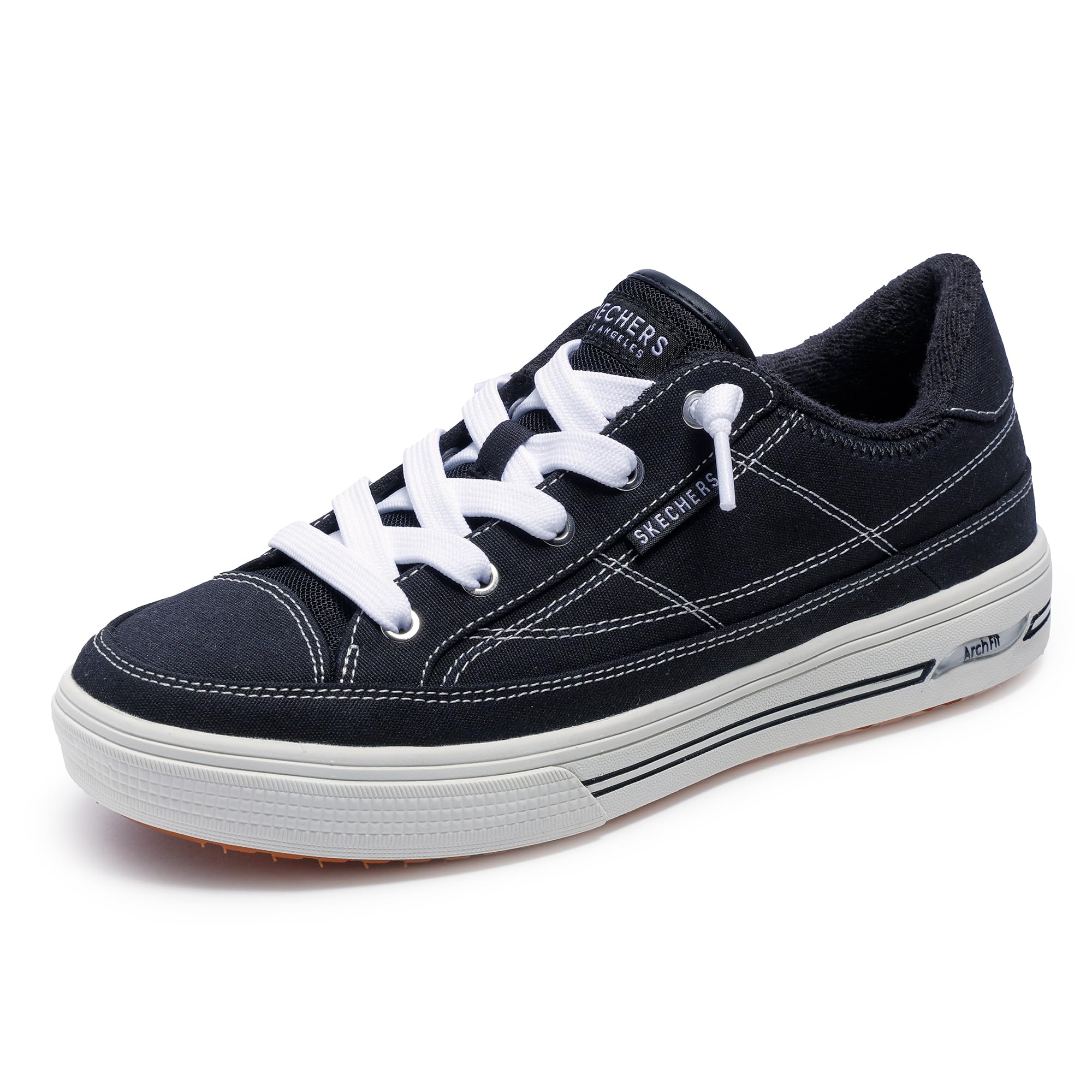
Skechers Arch Fit Arcade Arcata

All-day arch support

Our Score 8.8/10
Check Price

Worth Noting

  • Outsole rubber and collar elastic can fail
Entry
Slip-in with laces
Shoe Type
Fashion sneaker
Support Design
Arch Fit

Arch support is the whole reason anyone searches for plantar fasciitis shoes, and it is where this pair separates itself from the rest of our set. Skechers builds the Arcata on its Arch Fit platform, and the support sits under the midfoot where a sore fascia needs it rather than pressing up into the arch the way a hard insert can. We wore them through errands, school pickups and one long day on our feet, and what we noticed is that we stopped thinking about our arches by mid-morning. That is the test that matters.

Cushioning is where Skechers made a choice. There is enough foam under the heel for a shopping trip or a shift, but the platform stays firm rather than squashing down, which is what you want if your first steps out of bed are the worst part of the day. It is light, too, and it does not feel like a medical shoe. If you want a marshmallow, this is not it — the Endeavour below is — but softness and support are not the same thing.

Ordering is the part to get right. The slip-in collar is the weak spot: with a slightly roomy fit the heel can lift as you walk, so start with your usual size, take a few paces, and use the laces to lock the heel down if it moves.

Give them a day around the house before a long walk. The sole is firm out of the box and softens with wear, and a five-mile first outing is a bad introduction to any shoe.

Bottom line: If your heel is why you are shopping, start here: this pair has the most convincing arch support in the group, and it still looks like an ordinary sneaker.
2

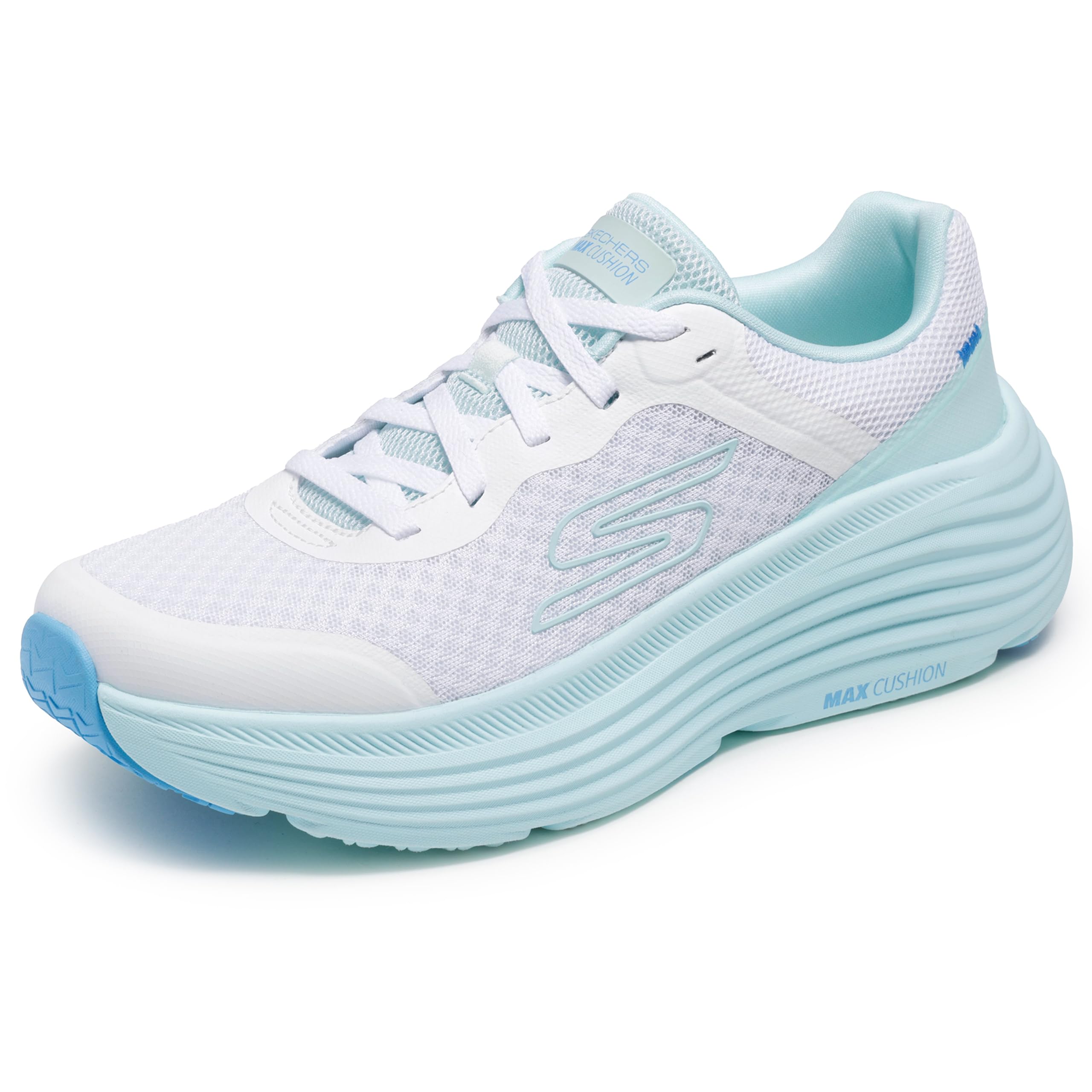
Skechers Max Cushioning Endeavour

Skechers Max Cushioning Endeavour

Long shifts, cushioning

Our Score 9.0/10
Check Price

Worth Noting

  • Sole foam wears through with heavy use
Shoe Type
Fashion sneaker
Cushioning
Max Cushioning platform
Listed Dimensions And Weight
12 x 8 x 4.5 inches; 1.5 pounds

There is a specific kind of day this shoe is built for: eight hours on a hard floor, then the walk home. The Endeavour is the plushest thing in this group by a clear margin — a thick, soft platform that gives under the first step and bounces back — and it is the pair we hand to anyone whose heel complains after a long shift rather than first thing in the morning.

Softness costs something. A platform this deep mutes the ground, so if your balance is not what it was, or your sidewalks are uneven, the firmer Arcata above is the safer choice. What the foam buys is endurance: this is the shoe that still feels like a shoe at the end of a long day, and the wide toe box lets your toes spread instead of bunching.

It is the priciest pair here, and the width is the other reason it is on the list. Feet that feel pinched in everything else tend to fit this one, and the upper is soft enough not to press on a bunion; narrow feet will swim in it.

Bottom line: The plushest shoe here, and the one we point to for long shifts on hard floors and wide feet — as long as you do not expect the sole to last for years.

3

New Balance 608 V5

New Balance 608 V5

Firm, wide support

Our Score 8.8/10
Check Price

Worth Noting

  • Sole separation and toe wear with hard use
Shoe Type
Cross trainer
Model Number
WX608UB5-225
Listed Dimensions And Weight
12.3 x 9.5 x 5 inches; 2.4 pounds

The 608 does not want to bend. Hold it at the heel and toe and it resists, and the upper is stiff out of the box in a way most modern sneakers are not. That is the first thing anyone notices, and it is the reason this shoe is on the list.

Because a rigid platform is a feature, not a flaw, for some feet. Plantar fasciitis often does better with a firm base than a soft one, and the 608 offers a thick sole, a wide stable base and a heel that does not squirm. It is our pick for wide feet as well: the toe box is genuinely roomy, and the upper holds its shape instead of stretching out into a slipper.

Whether you like it depends on what your foot wants. Our take: if you have tried cushioned shoes and felt like you were sinking into them, this is the correction. If you have been living in soft sneakers and love them, the first few wears will feel like walking in clogs.

What you get for the stiffness and the weight is a base that does not move under a sore arch, and that is the whole point of buying it. If you want a shoe that disappears on your foot, this is not the one; if you want one that holds your foot still, it is.

Bottom line: For wide feet that want a firm, unyielding base rather than foam, this leather cross-trainer is the most supportive shoe we tested — give it time to soften.

4

New Balance Fresh Foam 520 V9

New Balance Fresh Foam 520 V9

Light everyday walking

Our Score 8.8/10
Check Price

Worth Noting

  • Tread wears quickly on pavement
Midsole
Fresh Foam
Shoe Type
Road running shoe
Model Number
W5207J8

A running shoe is often a better walking shoe than a walking shoe is, because it is built to absorb impact over distance rather than simply cover a foot. The 520 V9 is the clearest example here: soft enough to take the sting out of pavement, stable enough that you are not wobbling, and light enough to forget you have them on.

Fresh Foam is the reason it works. The midsole absorbs the heel strike without the bottomless, sinking feel of the Endeavour, so you get cushioning and a bit of ground feedback at once. For a plantar fasciitis buyer who wants relief without a thick platform underfoot, that middle ground is what we liked most.

Fit is the catch. The toe box runs narrow, and the sizing comes up small for some feet, so check the width before you commit to a long walk in them. Try them on with the socks you will wear daily rather than judging them barefoot.

What is left is the price and the look. It is one of the cheaper sneakers here, it walks like a running shoe, and it passes as a normal sneaker rather than a piece of medical equipment — worth something if you are wearing them to an office.

Bottom line: Soft, light and stable enough for everyday walking, this is the pair for impact relief without a thick platform — provided the toe box suits your foot.

5

STQ Slip-On Loafer

STQ Slip-On Loafer

Errands and house wear

Our Score 8.8/10
Check Price

Worth Noting

  • Stitching can come undone early
Style
Boat loafer
Shoe Type
Casual slip-on
Arch Feature
Built-in arch support

Not every day needs a sneaker. If the shoe by your door is the one for the school run, the grocery store and the backyard, this canvas loafer does that job with more underfoot than a flat. It is a slip-on in a boat-shoe shape, and the footbed has a built-in arch instead of a flat pad, which is more than most casual slip-ons bother with.

What we appreciate is the fusslessness: no laces, nothing to bend down for, and a canvas upper that does not need breaking in. It is the pair you can step into with a bag in each hand.

It is not a walking shoe, though. There is little structure through the midsole to stop it twisting, and a long day on your feet feels very different from the Arcata by late afternoon. For plantar fasciitis, that makes this an around-the-house and errands pick — the pair that lives by the door, not the pair you pack for a city break.

Sizing is the gamble. The canvas gives, and the fit runs inconsistent enough that some go down a half size and others up, so try them with the socks you will actually wear.

Bottom line: An easy, inexpensive slip-on with a shaped footbed for errands and around the house — not the pair to wear if you are on your feet for hours.

6

Scurtain Wide Diabetic Shoe

Scurtain Wide Diabetic Shoe

Very wide, swollen feet

Our Score 8.4/10
Check Price

Worth Noting

  • ⚠️ Grip is inconsistent on wet floors
Drop
Zero drop
Width
Wide width
Closure
Adjustable hook-and-loop

Adjustability is the whole idea here: a soft, wide upper with a hook-and-loop strap that opens the shoe up rather than making you force a foot into it. For a swollen foot, a bunion, or a foot wider than anything on the sneaker wall, that is a real answer, and it is the least expensive shoe in this group.

Support is the trade. The footbed is soft and nearly flat, with very little shaping under the arch, which is the opposite of what plantar fasciitis usually asks for. The fix is straightforward: pull the insole out and put your own orthotic in. There is room for one, which is more than we can say for the narrow picks here.

Underfoot it is soft, flexible and close to the ground — comfortable around the house and for short errands, less so for a long day out. It is very light, and the strap makes it the easiest shoe here to get on and off, which matters if bending down is part of the problem.

Bottom line: For feet too wide or too swollen for a standard sneaker, this adjustable shoe opens right up — just plan on adding your own arch support.

How We Chose and Tested 12 Pairs of Shoes for Plantar Fasciitis

We started with a few dozen shoes advertised as supportive and read the fine print: which had removable insoles, which came in wide widths, which had a shank stiff enough to resist twisting, and which would cost less than a custom orthotic. That narrowed to 12 pairs, worn for six months by testers with diagnosed plantar fasciitis, heel spurs, and general arch pain, plus two who simply stand all day.

Every pair started with the same test — the walk to the end of the block on the first morning, before the arch had warmed up, since that is the moment this condition punishes hardest. We logged the first hour and the first full day: whether the arch felt held or prodded, whether the heel slipped, where a seam rubbed. Then we pulled the factory insoles out and swapped in our own orthotics to see whether the shoe still closed cleanly over the instep.

Support got checked by hand as well as by foot. We pressed a thumb into the arch to see how fast it sprang back, twisted each shoe end to end, and folded the toe to find where it bent. Slip-on styles were judged by whether we could get them on standing up, holding a leash, without a shoehorn. For grip, testers walked wet porch steps after a rain, polished grocery store floors, and a kitchen mid-mop.

Once a month we looked at wear — tread flattened on the outer heel, foam packed down, uppers creasing over the toes — and asked each tester whether they would still choose the shoe for a long day. Value came out of that math: cost spread over the months of comfortable wear, not the number on the tag.

How to Choose Shoes for Plantar Fasciitis

Start With the Arch, Then the Cushioning

Plantar fasciitis pain comes from the band of tissue running under the foot, and it complains most when the arch goes unsupported and the heel takes a hard landing. That is why a shaped footbed on a firm-ish base usually beats a pillow-soft shoe, which lets the foot roll and the arch drop with each step.

Press your thumb into the footbed where your arch sits. If it is flat foam with no rise, plan on adding an insole, or look for a shoe built around support the way the Arch Fit Arcata is. Cushioning matters, but it works second.

Get the Width Right, and Leave Room for an Insole

Most people shopping for heel pain end up in an orthotic at some point, so buy a shoe that can take one: a removable insole and a toe box deep enough that your toes do not press the top. Width is the first thing to check, and it varies wildly between models here — the New Balance 608 is roomy enough for a broad foot, while the 520 V9 runs narrow.

Try new shoes with the socks and inserts you will actually wear. A pair that fits barefoot can be tight with both.

Decide How Firm You Want the Sole

Hold a shoe at the heel and the toe and try to twist it. A sole that folds easily will let your arch collapse with every step, which is the opposite of what an inflamed fascia needs; a sole that resists does some of the work your foot would otherwise do. Firm is not the same as rigid everywhere — you still want it to bend where your toes do.

The 608 V5 sits at the firm end of our picks, the Max Cushioning Endeavour at the soft end, and the Arcata in between.

Check the Heel Hold Before You Walk Far

Slip-on designs are a gift when bending down hurts, but a collar that lets your heel lift will rub and make the shoe feel unstable — the last thing a sore foot wants on a long walk. Step in, walk a few paces and watch the heel.

If it rises, size down, use the laces, or choose a strap. The Arcata has laces to fall back on; the Scurtain's hook-and-loop strap lets you tighten the whole upper instead.

Frequently Asked Questions

Final Verdict

If we were buying one pair to get through a plantar fasciitis flare, it would be the Arch Fit Arcata. The support is shaped and it stays put, which is the thing that changes how a long day on your feet feels, and it costs less than our cushioning pick.

Choose the Max Cushioning Endeavour instead if your days are long shifts on concrete and softness matters more to you than stability. Choose the 608 V5 if your feet are wide and your arch wants a firm wall rather than foam.