Skincare

Best Skincare for Mature Skin of 2026

Skin past 50 asks for a lot at once: moisture that's still there at 4 p.m., actives that soften lines without stinging, a cleanser that doesn't leave your face tight and papery, and pores that look a little less obvious. The catch is that the ingredients doing the heavy lifting — retinoids, glycolic and salicylic acids — are the ones most likely to set off redness and flaking on thinner, drier skin. Plenty of formulas solve one problem and quietly cause another; the good ones handle the whole list without making your face pay.

I've spent the past three months using 14 cleansers, toners, serums, and creams through a dry winter, morning makeup, and nightly retinoid duty, and three teammates did the same on their own faces. The price tag turned out to tell us almost nothing — a couple of the least expensive bottles beat the fancy ones on texture, absorption, and how my skin looked by week six. These are the ones still sitting on the shelf after the novelty wore off.

1

CeraVe Night Cream

Top Pick
CeraVe Night Cream

Overnight barrier repair

Our Score 9.2/10
Check Price

Worth Noting

  • Can sting skin that's already irritated
Size
1.7 oz
Fragrance
Fragrance-free
Key Actives
Peptides, niacinamide, hyaluronic acid
Barrier Ingredients
Three essential ceramides

The first thing we noticed was how little we needed. A pea-sized dab warmed between the fingers covered a whole face and neck, which is why a small jar keeps going longer than its size suggests. Out of the jar it's dense, closer to a balm than a lotion, and it takes a few seconds of pressing to go from a white film to clear skin.

That density is exactly why it's our top pick. Mature skin loses the lipids that hold water in, and this cream answers with three ceramides, hyaluronic acid, and glycerin, plus peptides and niacinamide for the look of fine lines and uneven tone — the combination most anti-aging creams are built around, in a fragrance-free formula that won't fight with your sunscreen. We noticed it most in the second week, when cheeks that had been rough at 7 a.m. felt smooth before we'd applied anything.

The richness is the trade-off. Under makeup in the morning, or in humid summer weather, it can feel like too much, so we keep it for the evening and reach for something lighter during the day. It can also sting skin that's already irritated, so patch test if you're mid-flare rather than mid-routine.

What we didn't expect was how well it behaves in a routine: layered over the glycolic toner and the hyaluronic serum on alternate nights, it never pilled or balled up, which is more than we can say for richer creams we've tried. If your skin runs oily or you can't wear anything heavy, the La Roche-Posay is the better fit; for dryness and crepiness, this is the one.

Bottom line: The best barrier cream in this group: fragrance-free, built on peptides, niacinamide, and ceramides, and the one we tell most people to start with.
2

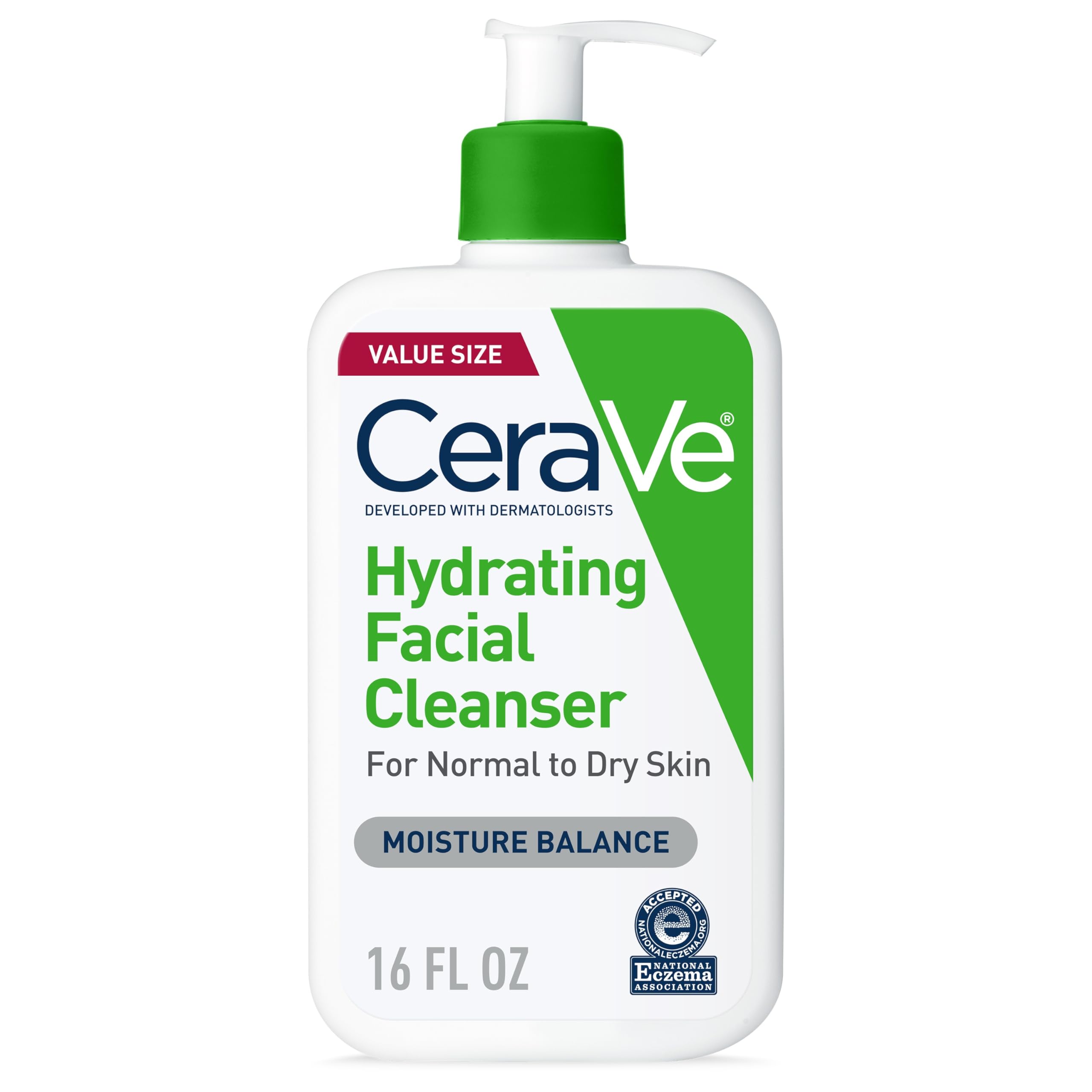
CeraVe Hydrating Cleanser

CeraVe Hydrating Cleanser

Dry, sensitive skin

Our Score 9.4/10
Check Price

Worth Noting

  • Won't remove long-wear makeup on its own
Size
16 oz
Formula
Non-foaming cream
Fragrance
Fragrance-free
Key Ingredients
Ceramides, hyaluronic acid, glycerin

There's no lather. If you're used to a foaming wash, the first week with this one feels like rinsing off hand lotion — the cream sits on the skin, then rinses away without the squeak. That's the design rather than a fault: the formula is built to clean without stripping, which is what dry, thinning skin wants in the morning and at night.

Ceramides, hyaluronic acid, and glycerin do the hydrating work, there's no fragrance, and it's non-comedogenic — the one cleanser here we'd hand to someone with eczema or an active flare. The pump is a small thing we came to appreciate: one wet-handed press gives enough for the face and neck, with no fumbling at a flip cap while your eyes are half shut.

Where it lands for us is the daily workhorse: it's the best cleanser in this group for dry, easily irritated skin, and the tight feeling that usually follows a wash simply doesn't arrive. It is not, however, a makeup remover — mascara and long-wear foundation survive it — so keep a micellar water or a balm for the nights you've worn a full face and let this one do the second pass.

Bottom line: The cleanser we'd hand to anyone whose face feels tight after washing — a fragrance-free cream wash that leaves the barrier intact.

3

La Roche-Posay Toleriane Double Repair

La Roche-Posay Toleriane Double Repair

Reactive, sensitive skin

Our Score 9.2/10
Check Price

Worth Noting

  • Priciest moisturizer in this group
Fragrance
Fragrance-free
Key Ingredients
Ceramide-3, niacinamide, prebiotics
Claimed Moisture
48 hours

If your skin stings at everything — the new serum, the hotel soap, the sunscreen — this is the moisturizer we'd start with. It's built around ceramide-3, niacinamide, and prebiotic ingredients that support the skin's own barrier, and it's fragrance-free, which removes the most common trigger before the box is even open.

The texture is where it parts company with our top pick. Where the CeraVe cream is dense, this one is a soft lotion that spreads quickly and disappears, so it's the one you'll reach for on a hot day or under makeup. The label claims barrier repair in an hour and 48 hours of moisture; what we can tell you is that a tight, dry patch on the cheek felt comfortable by the end of the day rather than by the end of the week.

Two things to weigh before you buy. It's the priciest moisturizer here and it does less for fine lines than our top pick, since there are no peptides in the formula — the niacinamide is supporting cast. And it can pill if you rub it in too long or layer it over a sticky serum, so press it on and give it a minute before sunscreen.

Bottom line: For skin that stings at everything: a fragrance-free ceramide cream that calms a reactive face and sits light enough for daytime.

4

Paula's Choice 2% BHA Exfoliant

Paula's Choice 2% BHA Exfoliant

Pores and rough texture

Our Score 9.0/10
Check Price

Worth Noting

  • Most expensive product in this group
Size
4 oz
Active
2% salicylic acid (BHA)
Format
Leave-on liquid
Fragrance
Fragrance-free

Two exfoliants made this list and they do different jobs. The Ordinary's glycolic works on the surface: brightness, tone, the look of the top layer. This one is salicylic acid, which is oil-soluble and gets into the pore. If the complaint is the rough, blocked texture around the nose and chin, or pores that look larger than they used to, this is the one to buy.

It's the strongest pore-focused product here and the one we'd pay a premium for — a watery leave-on liquid you swipe on at night, no grit, no scrubbing, no micro-tears. What we noticed was smoother texture across the nose and the apples of the cheeks, the places where a scrub had never done much beyond leaving the skin pink.

It's an acid and it behaves like one. Skin can sting on the first few nights, and dry patches can feel tighter until your moisturizer catches up. Start two nights a week, with a cream over the top, and build from there. It's also the most expensive product in this group, which is the honest reason to try the glycolic first if you're not sure which concern is really yours.

Bottom line: The exfoliant for pores and rough patches — a leave-on 2% BHA that does what a scrub can't, provided your skin tolerates acids.

5

The Ordinary Glycolic Acid 7% Toner

The Ordinary Glycolic Acid 7% Toner

Dull, uneven tone

Our Score 9.4/10
Check Price

Worth Noting

  • Can sting sensitive or compromised skin
Active
7% glycolic acid
Format
Daily toner, evening use
Key Extras
Tasmanian pepperberry, aloe, ginseng

At the bottom of the price range sits the bottle we've repurchased most often. It's a big, plain bottle of 7% glycolic acid cut with aloe, ginseng, and Tasmanian pepperberry, and it costs about as little as an exfoliating step can — which matters, because an acid is the step people abandon first when it feels expensive.

Our judgement is that it's the best value in this group for dullness and uneven tone. Glycolic has the longest record of the exfoliating acids for surface texture and brightness, and 7% is a workable daily strength for skin already used to acids. It's also genuinely multi-purpose: the same liquid goes on rough heels, the bumps of keratosis pilaris on the arms, and a dry scalp, which is why we don't mind the size.

Where it needs care is frequency. We'd start with two nights a week and build up; the eye area is off-limits, and daily sunscreen is part of the deal rather than an optional extra. On a compromised barrier it stings, so don't introduce it in the same week as a new retinol or after a peel.

Bottom line: The least expensive way into a real exfoliating step: 7% glycolic that brightens dull skin and smooths texture, if you start slowly.

6

Good Molecules Hyaluronic Acid Serum

Good Molecules Hyaluronic Acid Serum

Plumping hydration

Our Score 9.4/10
Check Price

Worth Noting

  • Watery enough to drip before it sinks in
Size
1 fl oz
Active
Hyaluronic acid
Formula
Water-based, fragrance-free

It's water. Genuinely — the serum is thin enough to run to your wrist if you take a second too long, which is why the directions say damp skin and we agree. Pat three or four drops over a freshly misted face and it's gone in seconds, with no film, no stickiness, and nothing for a cream to pill over.

What it does for mature skin is plump. Hyaluronic acid holds water at the surface, so the fine lines around the eyes and mouth look softer within minutes — a temporary effect, but the one most people actually notice in photos. It's fragrance-free, vegan, and cruelty-free, and it slides under sunscreen without a trace.

For the money, this is the best hydrating layer in this group and the one we'd add before spending more on a serum with a longer ingredient list. Two honest limits: it needs a cream on top or skin can feel tight once it dries, and it will do nothing for tone or pores. It's a hydration step, not a treatment, and it's very good at being exactly that.

Bottom line: Water-thin hyaluronic acid that plumps fine lines for very little money and disappears under sunscreen — the best hydrating layer here.

7

COSRX 6X Peptide Toner Serum

COSRX 6X Peptide Toner Serum

Peptide firmness

Our Score 9.2/10
Check Price

Worth Noting

  • Can cause redness and itching on sensitive skin
Size
5.07 oz
Format
Toner-like serum
Key Actives
6 peptides including copper peptides

Five ounces of peptide serum in a pump bottle is a different proposition from a small dropper of the same thing. This is the one product here we use without rationing: two pumps for the face, two more for the neck and décolleté, and the bottle keeps going.

The formula is six peptides, copper peptides among them, in a base thin enough to be called a toner — which is how it's meant to be used. First step after cleansing, before anything heavier. It sinks in immediately, leaves no residue, and didn't interfere with anything we put over it: we layered it under both the CeraVe cream and the La Roche-Posay without a hint of pilling.

Peptides are the slow, unglamorous part of a mature-skin routine. They support the look of firmness over consistent use rather than delivering an overnight change, and in a first-step product like this that's fine — it's the layer we keep using because it costs nothing in time or texture, not because we saw a dramatic before-and-after.

Our take is that it's the best peptide option here for skin that can't wear rich creams, and the neck-and-chest use alone justifies the bottle. It won't replace a moisturizer, so plan on a cream over the top, and patch test for the first week if your face reacts easily — redness and itching are the complaints that come up.

Bottom line: A light peptide layer for skin that won't tolerate rich creams — the pump bottle makes it easy to use on the neck and chest too.

8

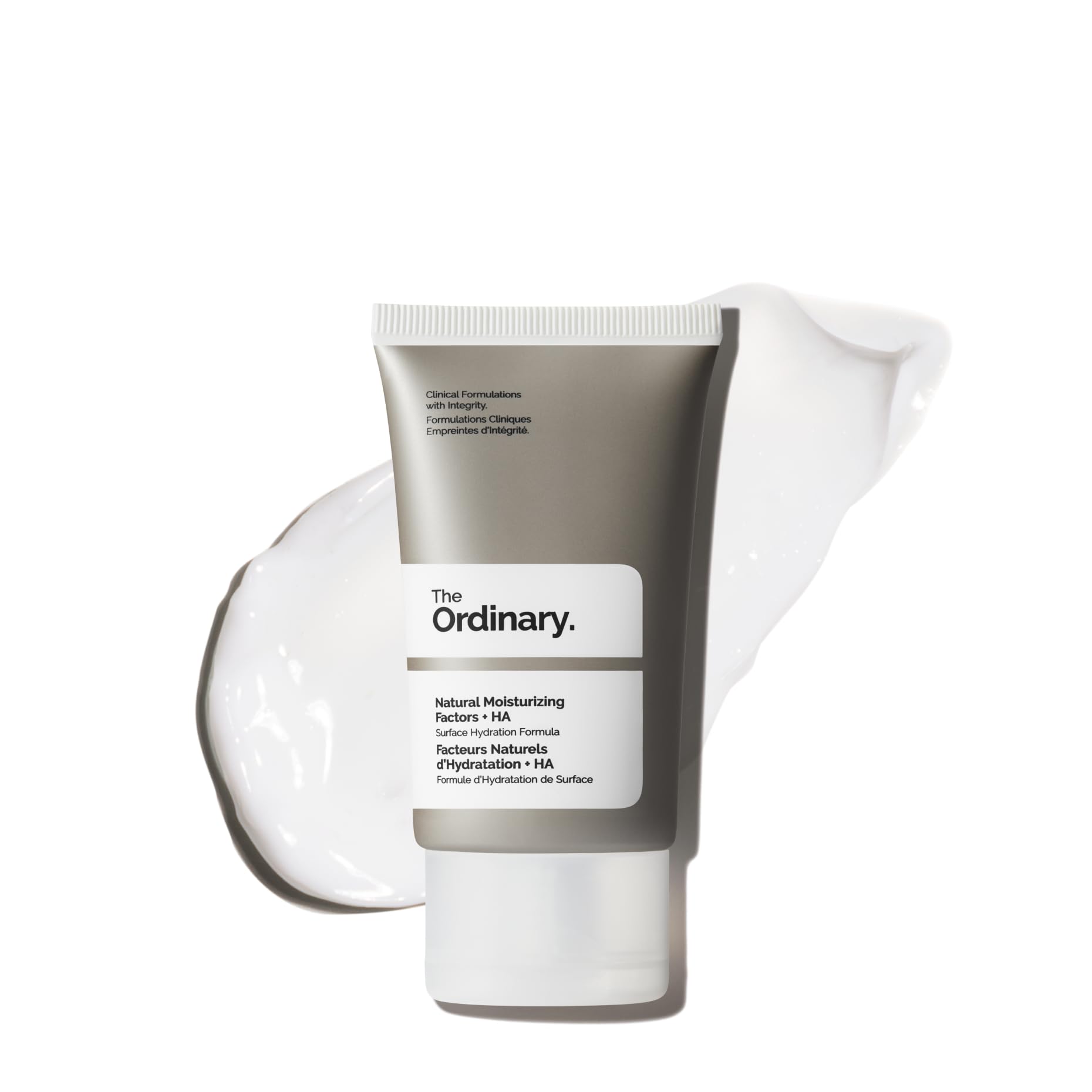
The Ordinary NMF + HA

The Ordinary NMF + HA

Light daytime moisture

Our Score 9.2/10
Check Price

Worth Noting

  • Can cause breakouts on reactive skin
Finish
Lightweight, non-greasy
Accepted By
National Eczema Association
Key Ingredients
Amino acids, fatty acids, ceramides, urea

Put a dab of this next to the CeraVe night cream and the difference is immediate: one is a balm, the other is closer to a lotion. The Ordinary's NMF + HA spreads thin, sinks in almost at once, and leaves nothing behind — no shine, no film, no pillow marks.

The ingredient list is the interesting part. Instead of one hero active, it stacks the things skin makes for itself — amino acids, fatty acids, ceramides, urea, hyaluronic acid — which is why it carries National Eczema Association acceptance and makes sense for a compromised barrier. There's no fragrance, and it's non-greasy enough to wear under makeup.

Where it lands short is depth. On a face that's flaky by mid-afternoon in January, it isn't enough on its own: you layer more, it disappears, and you're still reaching for the jar. That's less a fault than a placement. This is a daytime cream, or a cream for mature skin that has turned oily and can no longer take the rich stuff.

For us it earns its spot as the lightest barrier option here and the least expensive moisturizer in the group, which makes it a low-risk first ceramide product if you've never used one. It's also the one that survives a hot, humid morning under sunscreen without sliding. If your skin is dry and thin rather than oily, go richer.

Bottom line: A fragrance-free barrier cream that stacks what skin makes on its own — the one we reach for in the morning or when rich cream feels like too much.

How We Tested Skincare for Mature Skin

We built the shortlist by reading ingredient lists instead of front labels, looking for ceramides, peptides, niacinamide, glycerin, and hyaluronic acid, plus a low-strength acid where the formula called for one. Anything listing fragrance or denatured alcohol near the top got cut early, and so did anything whose cost per ounce only made sense if you used it twice a week. That left 14 formulas: cleansers, toners, serums, and both day and night creams.

Four testers between 47 and 68 used them for 12 weeks, including one on prescription tretinoin, one with rosacea, and one whose skin is oily but dehydrated. Every formula got a 24-hour patch test on the inner forearm first, then two weeks on half the face before it entered full rotation. In the morning, we timed how long each layer stayed tacky before foundation went on and noted whether it pilled or slid; at night, we used the cleansers on long-wear foundation and waterproof mascara, then checked the cotton pad for leftover pigment and how tight the skin felt afterward.

Moisture was judged by pressing a tissue to the cheek five minutes after application and by how skin felt at 4 p.m., not right after. We photographed the same cheek and nose in the same bathroom light at weeks zero, four, and eight to compare pore visibility and roughness, kept a running log of stinging, flushing, and flaking, and set cost per ounce against how far down the bottle actually got by week 12. Anything that caused redness or a breakout on two testers was benched, however good it looked on paper.

How to Choose Skincare for Mature Skin

Start With the Barrier, Then Add Treatments

Mature skin holds less water and produces fewer of the lipids that keep the surface sealed, which is why a cream and a gentle cleanser change more than a new serum does. Look for ceramides, peptides, glycerin, hyaluronic acid, and niacinamide, and treat fragrance-free as the default rather than a compromise: the less scent in the formula, the less there is to react to.

Our top pick and the cream cleanser here both follow that formula, and between them they handle the two steps you'll do twice a day. Get those right before you spend on a treatment, because an active layered over a stripped, dehydrated face is how a good routine starts to sting.

Match One Active to Your Main Complaint

Two exfoliating acids cover most of what mature skin complains about, and they aren't interchangeable. Glycolic acid, an AHA, works on the surface: dullness, uneven tone, the rough patch that makeup catches on. Salicylic acid, a BHA, is oil-soluble and gets inside the pore, so it suits blackheads and enlarged pores better.

Pick the one that matches your actual complaint, use it two or three nights a week to start, and don't stack it with a retinoid on the same night — alternate instead. One acid used consistently beats two used randomly.

Choose the Texture You'll Actually Wear

A cream that's too rich gets used twice and then sits in the cabinet. If you wear makeup or sunscreen every morning, you want something that sinks in fast and doesn't pill; a lightweight ceramide cream does that job well. Save the dense, balm-like cream for the evening, when nothing goes on top of it and the extra occlusion has eight hours to work.

Two creams, one light and one rich, make a more useful routine than one compromise in the middle.

Treat Fragrance as a Filter

Mature skin is thinner and often more reactive than it was at 30, and fragrance is the most common avoidable sting in a formula. That doesn't mean a scented cream will irritate your face, but it does mean a fragrance-free formula is the safer first choice when you're introducing acids or peptides at the same time.

Patch test behind the jaw or on the neck for three nights before committing to the full face, and introduce one new product at a time so you know what caused a reaction if one shows up.

Layer Thin to Thick, and Seal It

Order matters less than people think, with one exception: hyaluronic acid needs water to work with and something on top to hold it there. Pat a hydrating serum onto damp skin, then follow with a cream within a minute while the surface is still wet.

Acids go on clean, dry skin before the serum on the nights you use them; anything with a rich, balm-like texture goes last. In the morning the final step is sunscreen, not more cream.

Frequently Asked Questions

Final Verdict

The CeraVe Night Cream is the one we'd buy first: fragrance-free, built on peptides, niacinamide, and ceramides, and rich enough to make a visible difference to dry, thin skin overnight. Add the cream cleanser and you've handled the two steps that matter most, morning and night.

If your skin reacts to everything, swap in the La Roche-Posay Toleriane Double Repair. If dullness and uneven tone bother you more than dryness, the glycolic toner is the better place to spend. Everything else on this list refines those three decisions rather than replacing them.