Shoes

Best Shoes for Wide Feet of 2026

If you've ever ordered your usual size in a wide and found extra room everywhere except where your foot needed it, you know the frustration. Width isn't one number. Some brands add volume at the ball of the foot, others stretch the toe box, and a few just tell you to size up and hope. What a good wide shoe actually does is put the room across the forefoot, hold the heel steady, and look like something you'd wear on purpose — comfort you don't have to apologize for.

I have a wide forefoot and a high instep, so I've been the test case for years. Over the past six months, my team and I have worn 13 pairs through commutes, errands, and long days on our feet. The lesson that surprised me most: the letter on the box matters less than the shape of the toe box and whether the upper gives at all. The picks below are the ones we kept reaching for.

1

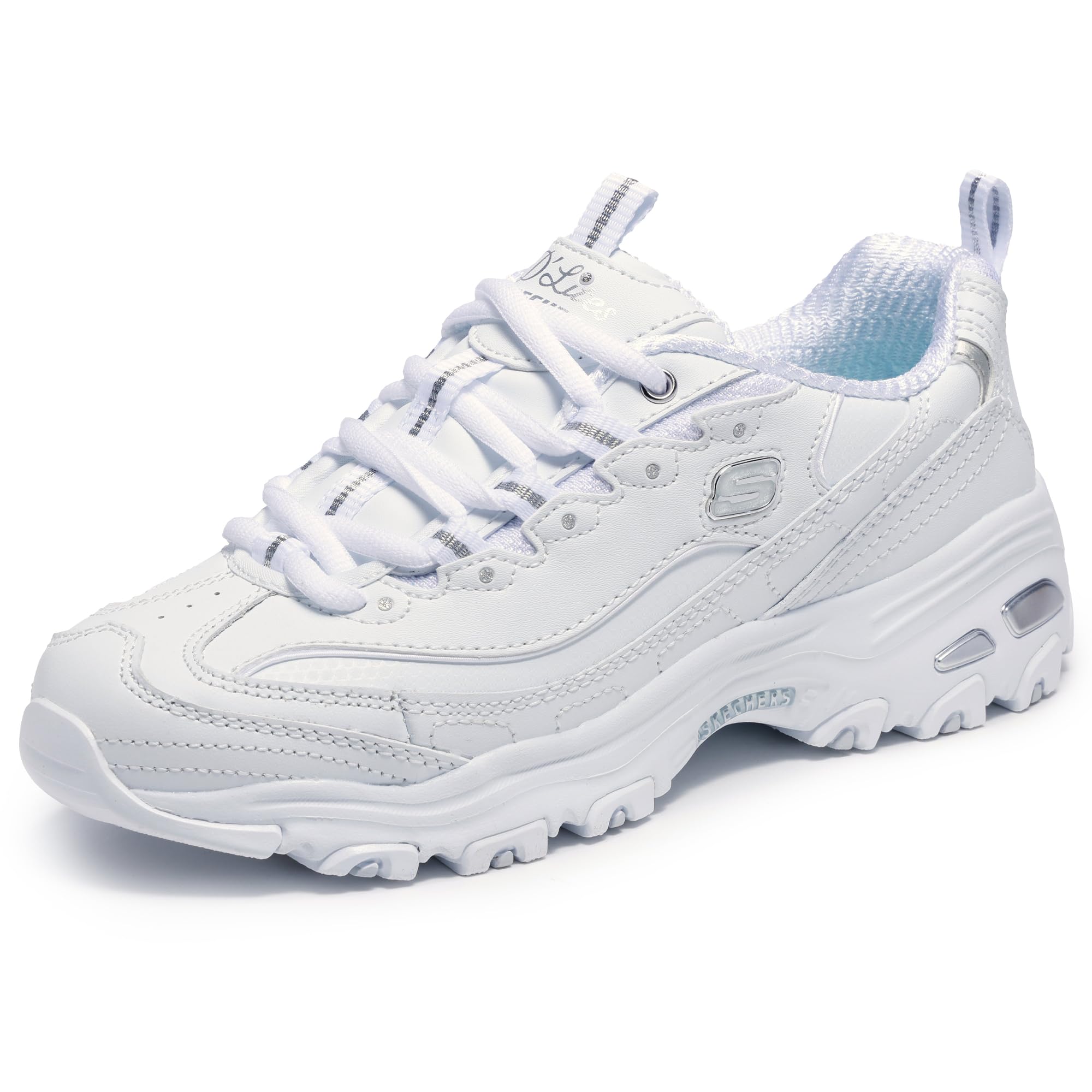
Skechers D'Lites Fresh Start

Top Pick
Skechers D'Lites Fresh Start

Cushioned everyday wear

Our Score 9.2/10
Check Price

Worth Noting

  • Heel lining and sole edge wear under hard use
Style
Chunky fashion sneaker
Sizing
Women's
Closure
Lace-up
Cushioning
Memory foam footbed

Chunky sneakers have been around long enough that the shape no longer reads as a novelty, which is convenient, because the same deep, squared-off toe box that makes this pair look current is what makes it work on a wide foot. There is room across the ball of the foot instead of a taper that pinches the little toe, and the thick sole puts a little distance between you and hard pavement.

Fit is the part to slow down for. Our test pair ran short, with toes reaching the end of a size that should have had room to spare, so take a half size up if you sit between sizes or plan to wear thick socks. Do that and the width is properly wide: extra room across the middle of the foot, not just extra length at the front.

Cushioning is where these earn their place by the door. The memory foam footbed is soft under the heel and doesn't flatten out by mid-afternoon, and there is more structure under the arch than we expected from a fashion sneaker, which is the difference between a cute shoe and one you can stand in all day. The sole is thick but light, and it doesn't drag at the end of a long walk.

One practical note: the upper doesn't breathe much, so your feet will know it on a hot afternoon. That is a fair trade for the shape and the support, and it makes these a better three-season shoe than a midsummer one. Everything else has held up, and they have become the pair we grab without thinking.

Bottom line: The rare pair that is properly wide across the ball, cushioned all day and good-looking enough to wear anywhere, provided you take the half size up.

2

New Balance 608 V5

New Balance 608 V5

Support and structure

Our Score 8.8/10
Check Price

Worth Noting

  • Sole edges peel with heavy daily wear
Style
Cross trainer
Upper
Leather
Sizing
Women's
Closure
Lace-up

Soft is not the same as supportive, and this is the shoe that makes the difference obvious the first time you stand up in it. It is a leather cross trainer with a firm sole and a broad, stable base, and it holds a wide foot in place rather than letting it slide around inside all that room. If your arches complain by late afternoon, that structure is the whole reason to buy.

The toe box is among the roomiest here and it doesn't taper, which is the part wide feet actually need: the foot sits flat instead of spilling over the edge of the sole. Sizing runs true to your normal number, and there is enough volume that thick socks don't crowd your toes.

The first week is the price of that structure. The leather starts stiff, the sole doesn't flex much, and an early long day left us aware of the shoe rather than forgetting it. Short wears for a week soften the leather into something closer to a firm handshake, and after that it becomes a shoe you stop noticing.

What it does better than anything else in this guide is take the wobble out of a wide foot, which you notice most on stairs, on uneven pavement, and at the end of a day when your knees have an opinion.

Bottom line: When a wide foot needs holding rather than cushioning, this firm, stable cross trainer is the pair to buy, provided you will give the leather a week to soften.

3

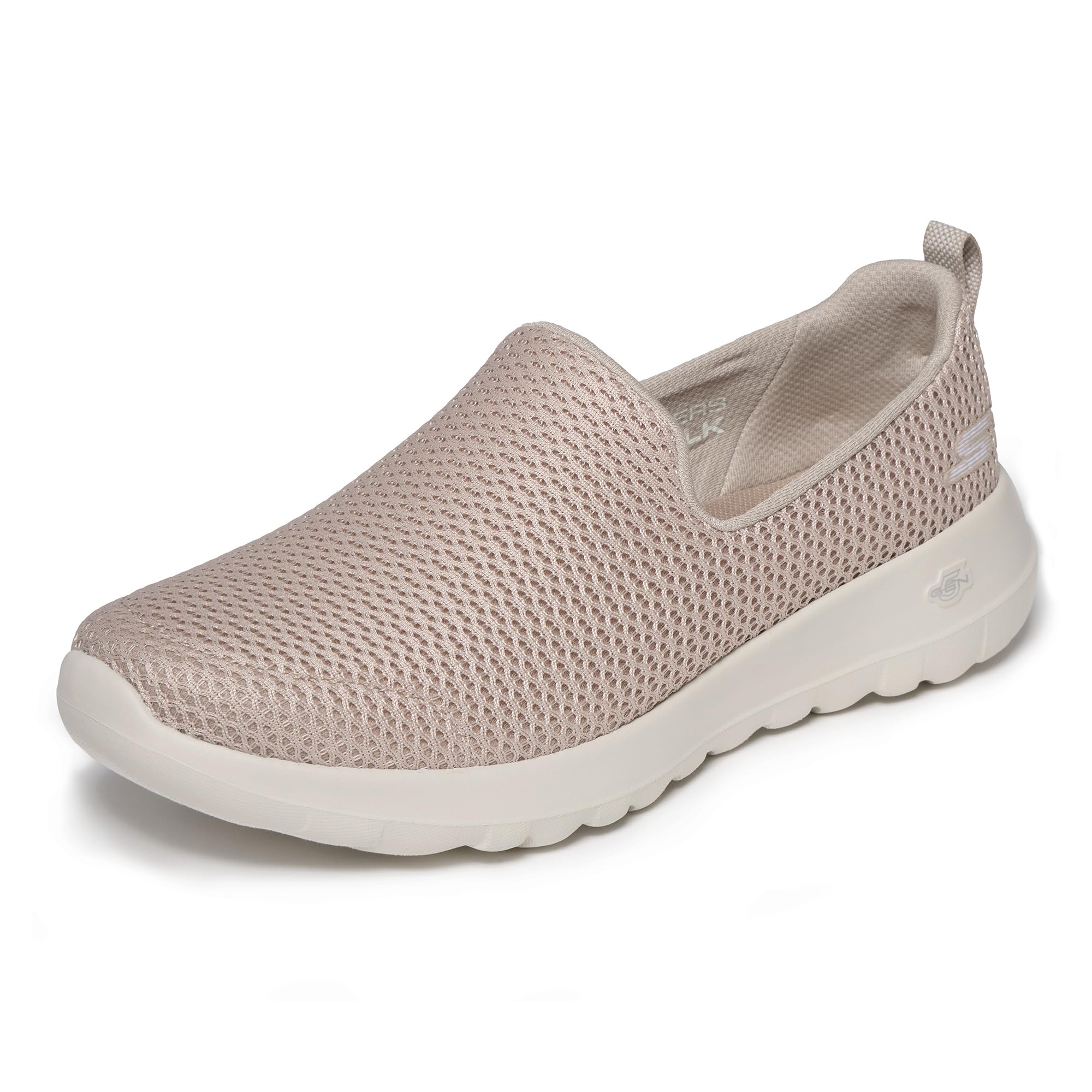
Skechers Go Walk Joy

Skechers Go Walk Joy

Easy slip-on comfort

Our Score 9.0/10
Check Price

Worth Noting

  • Little arch support underfoot
Style
Walking sneaker
Sizing
Women's
Closure
Slip-on

There is no lace to tie, no tongue to straighten and nothing to bend down for: you step in and you are out the door. For the shoe that lives by the back door, handling errands, the school run and the dog before work, that ease is most of the appeal.

Underfoot it is genuinely soft, closer to a padded slipper than a structured sneaker, and light enough that a long day of walking doesn't leave your legs tired. We wore ours through a weekend of sightseeing and never thought about our feet once, which is most of the review, really.

Sizing takes a beat of thought. The wide fitting is generous, enough that if you are between sizes you should take the smaller one rather than the larger, and the toe box is roomy without looking like a boat. In the standard width, take your usual number.

Ours live by the door and get worn more than any other pair in this guide, which tells you something about what wins on an ordinary Tuesday. They are the shoes you reach for without thinking, and the price makes that easy to justify.

Bottom line: The easiest shoe here to live with: step in, walk all day and spend the least, as long as your arches don't need real support.

4

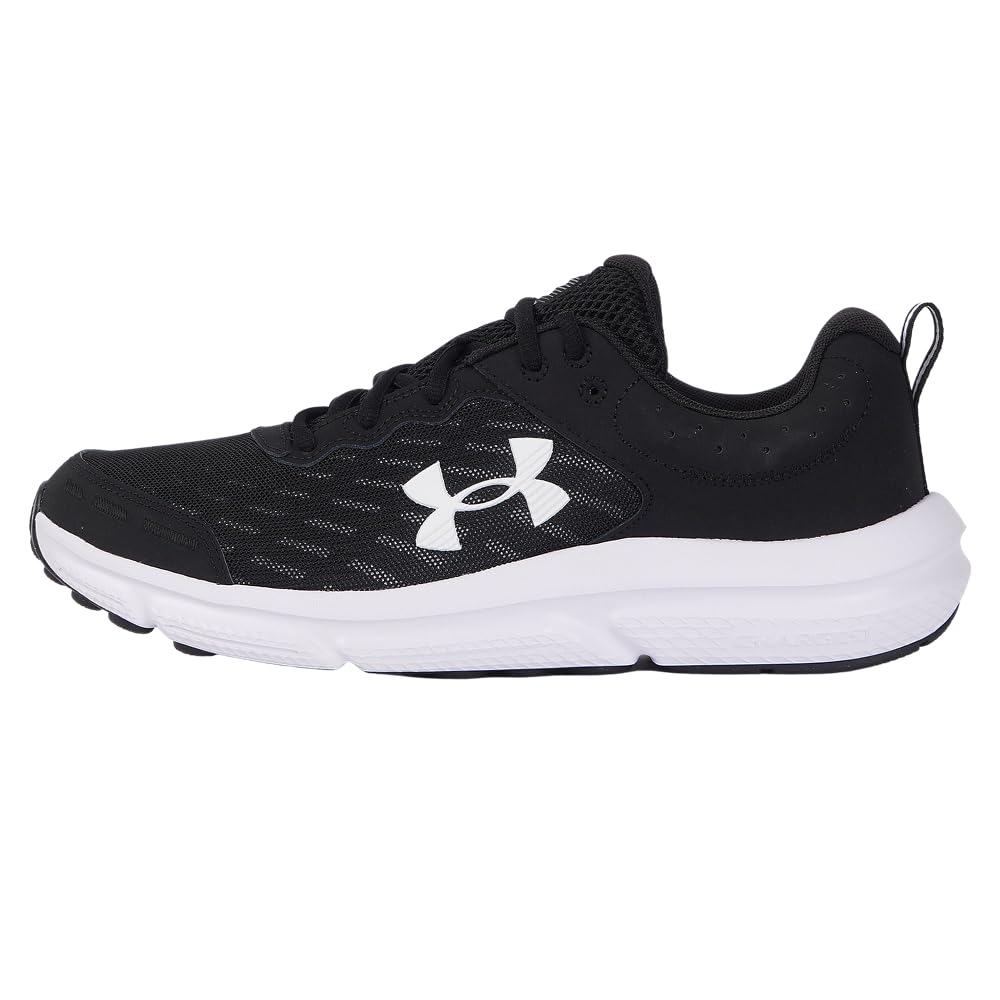
Under Armour Charged Assert 10

Under Armour Charged Assert 10

Extra-wide fitting

Our Score 9.0/10
Check Price

Worth Noting

  • Outsole can separate with daily wear
Style
Road running shoe
Sizing
Men's
Widths
Wide to 4E
Closure
Lace-up

Four E is a width most sneaker lines never bother with, and it is the reason this shoe is here. If a wide fitting has still left your little toe pressed against the side, the extra-wide version of the Charged Assert is the roomiest thing in this guide.

It is a road running shoe, so the ride is light and flexible rather than plush, the kind of shoe that disappears on your foot. We used ours for walking and gym-floor sessions rather than long runs, and the cushioning held up fine, with none of the ankle rubbing that running shapes can cause when you wear them casually. The upper is thin but not flimsy, and it breathes better than most of the leather pairs here.

Sizing is the wrinkle. These run short in length, so take a half size up from your measured size. The toe box is roomy but not endless, and a short pair will put your toes at the front no matter how wide the fitting is.

One thing to plan for: it is sold in men's sizes only, so you will need to convert before you order rather than assuming your usual number carries over. Do that and you get the widest option here, and one of the lightest.

Bottom line: The roomiest fitting in this guide, up to 4E, light enough to wear all day and sold in men's sizes, the answer when wide has never been wide enough.

5

adidas X_PLR Path

adidas X_PLR Path

Slightly wide feet

Our Score 9.2/10
Check Price

Worth Noting

  • Thin cushioning underfoot
  • Wears out faster than the rest of the group
Style
Everyday sneaker
Sizing
Men's
Closure
Lace-up

Not every wide foot needs a wide-width shoe, and this is the pick for the half-measure case: feet that feel pinched across the ball in a standard sneaker but have never needed a proper 2E fitting. The X_PLR Path is slim, light and clean-looking, the kind of shoe that goes with everything and doesn't announce itself as a compromise.

Weight is the main pleasure of it. The upper is soft and thin, there is no break-in, and the shape sits low around the ankle rather than rubbing it, which we appreciated on longer walks. For a commute, a weekend away or a pair kept clean for casual days, it does the job without asking anything of you.

Where it stops is room. The fit is generous for a standard-width sneaker and nothing more, so if you normally wear a 2E or 4E, this is not the shoe for you however good it looks. That is the honest boundary: a slim everyday pair for slightly wide feet, not a wide shoe.

Bottom line: A light, clean everyday sneaker for feet that are only slightly wide; if you need a true wide fitting or real cushioning, look elsewhere.

How We Tested Wide Shoes for Six Months

We started with more than 60 styles and cut anything that treated width as an afterthought — a single wide colorway here, a size-up suggestion there. From the survivors we checked published width charts, confirmed which ones came in true wide and extra-wide, and noted whether the footbed lifted out, since anyone wearing orthotics needs that padding gone. We also read through sizing complaints to catch the pairs that run short. Thirteen made the cut, spanning budget to mid-range.

Each pair got at least two weeks of real life: commutes, grocery runs, the dog walk after dinner, and a few eight-hour days on our feet. We measured every removable insole at its widest point and compared that to the listed width, then wore each shoe with thin socks and thick socks to see where the pressure landed. Arch support got a real test — we swapped in off-the-shelf orthotics and checked whether the shoe still felt stable or rolled inward. We also timed getting in and out one-handed, since nobody wants to sit down and wrestle a shoe while holding a leash.

Breathability showed up in July, when the difference between a knit upper and a stiff synthetic became obvious by mid-afternoon. At the end of six months we looked at what had worn: frayed seams, a collapsed heel counter, outsole tread rubbed smooth at the outer edge. We noted which shoes softened across the toe box with wear and which stayed rigid and kept pressing on the toes. And we asked whether, after all that, the price still felt fair.

How to Choose Shoes for Wide Feet

Width Is a Fitting, Not a Feature

Nearly every listing claims a roomy toe box now, and most of them mean the upper is soft rather than the shoe is wide. The fitting is the thing that matters. Widths run narrow, standard, wide and extra-wide, and the letters mean different things in men's and women's charts: a women's wide is usually a D, while a men's D is standard and the wide fittings start at 2E, with 4E at the top.

Sizing up is not a substitute. It slides the flex point of the shoe forward, so your arch lands in the wrong place and your heel lifts with every step. The first question we ask about any pair is whether it is actually built in a wide fitting at all. If it isn't, we treat it as a slim shoe and say so.

Look at the Toe Box Where Your Foot Is Widest

A wide foot is widest at the ball, just behind the toes, so that is where a shoe has to give. Tapered, pointed toe boxes squeeze the little toe whatever the width label says, and a soft knit upper that stretches to accommodate still presses on the joint all day.

Before you commit, press a thumb across the widest part of the shoe. If the upper doesn't flex there, it will not loosen up later, and no amount of breaking in will fix it. Lace-ups let you fine-tune the volume over the instep, which is why a slip-on has to fit properly from the first step.

Cushioning and Support Are Two Different Purchases

Soft foam feels wonderful in the store and does very little for a foot that needs holding up. If your arches ache, you stand all day, or your foot rolls inward, look for a firmer midsole with a defined arch and a base that doesn't bend in the middle. The New Balance 608 and the D'Lites both give you that.

If you want a shoe for errands and easy walks, a softer, lighter pair like the Go Walk Joy is the more pleasant thing to own, and there is no reason to pay for structure you don't need. Match the shoe to the length of your day rather than to the most extreme day you've ever had.

Expect Sizing to Be Inconsistent, and Plan Around It

Almost every shoe here runs either short or roomy, and that is the model, not you. Measure once, in the evening when your feet are at their largest, and then read the notes on the specific shoe rather than trusting the size on the box: the D'Lites runs short enough to need a half size up, while the wide Go Walk Joy is generous enough that going down is the better call.

When returns are free, order both sizes and try them with the socks you actually wear. A pair that is comfortable barefoot at 9 a.m. can be a different shoe by the end of a workday.

Plan for How Long They Last

Everyday sneakers give out at the sole and the heel lining long before the upper looks tired. A bonded sole can start to lift at the toe, leather can crease and crack across the flex point, and the lining wears through where your heel rubs.

Rotating two pairs slows all of it, since foam needs a day to recover between wears. A quick test: press a thumb into the midsole. If it no longer springs back, the cushioning is finished even if the shoe still looks presentable.

Frequently Asked Questions

Final Verdict

Start with the Skechers D'Lites Fresh Start. It offers the best balance here of a genuinely wide fit, all-day cushioning and a look you would choose anyway, which is a rarer combination than it should be in this category.

Two situations change the answer. If your arches need holding rather than cushioning, the New Balance 608 V5 is firmer and steadier underfoot. If wide fittings have never been wide enough, go straight to the Under Armour Charged Assert 10 in its 4E fitting and treat the rest of this list as your fallback.