Shoes

Best Workout Shoes for Women of 2026

Every woman I know has a shoe-size story: the pair that felt perfect in the store and shredded her heel by mile two, or the ones she bought a half size up that now slide around during lunges. Workout shoes are the one purchase where the number on the box is basically a rumor, and a cloud-soft shoe can still leave your arches aching after a week of real training. What you're actually buying is a fit that holds from warm-up to cooldown, cushioning that doesn't flatten out by month three, and support your knees won't complain about the next morning.

I've been rotating through 14 pairs over the last six months — treadmill intervals, long sidewalk walks, strength classes, and one ill-advised trail run — and the differences showed up fast. The expensive ones weren't automatically the comfortable ones, and a couple of budget picks held their shape better than pairs that cost twice as much. Below are the ones I'd genuinely buy again, grouped by what you need them for.

1

ASICS Gel-Contend 9

Top Pick
ASICS Gel-Contend 9

All-around workouts

Our Score 9.0/10
Check Price

Worth Noting

  • Outsole wears quickly for high-mileage runners
Model
Gel-Contend 9
Category
Road running
Listed Size And Weight
12.44 x 6.3 x 4.75 inches; 1.44 pounds

This is the pair we hand to the friend who wants one shoe for everything and doesn't want to think about it. The Gel-Contend 9 is comfortable straight out of the box, supportive without feeling like a wedge under the arch, and sized the way the label says — the toe box is roomy rather than tapered. In a category where almost every strong shoe has a fit complaint attached, that predictability is the feature.

We wore it through a week of mixed sessions, and what surprised us is the range. It's built as a road running shoe, but the same things that make it pleasant on pavement — a stable heel, padding that compresses without bottoming out — carry over to the gym and to long days on your feet. It's a neutral shoe, though, so if you overpronate or already know you need stability, skip ahead to the Adrenaline.

Where it lands for us: this is the shoe we recommend when someone wants to spend once and cover walking, gym days, and a few weekly runs. It isn't the plushest shoe here — that's the Ghost 17 — and it isn't the widest or the most supportive. But there's no obvious place where it falls down at the things most women actually do in a workout shoe, and that's rare at this price.

Bottom line: We tell most women to start here: a comfortable, supportive road shoe that fits true to size and handles walking, gym days, and easy runs without a specialty pair for each.

2

Brooks Adrenaline GTS 24

Brooks Adrenaline GTS 24

Stability and support

Our Score 8.8/10
Check Price

Worth Noting

  • Runs small; order a half size up
Model
120427-044
Category
Road running
Listed Size And Weight
12 x 8 x 4.5 inches; 1.5 pounds

Flat feet, a low arch, or a stride that rolls inward narrow the field fast. The Adrenaline GTS 24 is the stability shoe in this group, with a broad, planted base and support that runs through the heel and midfoot rather than propping up one spot under the arch. If a previous pair left your ankles and knees aching, this is where we point first.

We think the support here is the most convincing in this set. It's a planted ride rather than a spongy one — cushioned enough to take the edge off pavement, structured enough that your foot doesn't wander — and that balance is easier to live with than a max-cushion shoe if your week is mostly walking, treadmill sessions, and errands on foot. Nurses and teachers keep telling the same story about it, and we understand why.

The price is the honest sticking point. It's one of the two most expensive shoes here, and the support only earns that outlay if your stride actually rolls inward. On a neutral foot, it's money spent on structure you won't feel, and the Ghost 17 below is the neutral shoe to look at instead.

Bottom line: The pick for flat feet, low arches, or a stride that rolls inward — the most convincing support in this set, provided you accept the premium price and size up.

3

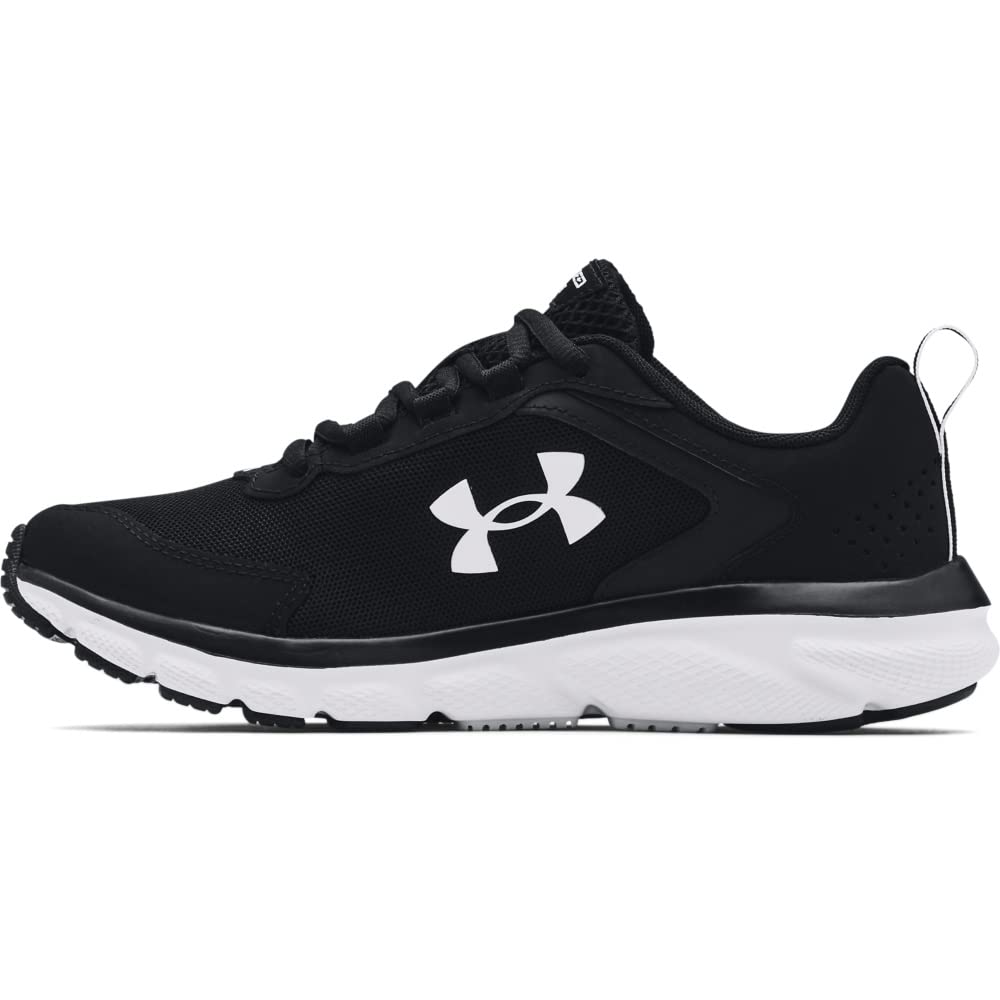
Under Armour Charged Assert 9

Under Armour Charged Assert 9

Budget training

Our Score 9.0/10
Check Price

Worth Noting

  • Not built for high-mileage running
  • Seams can give out under heavy daily wear
Model
3023866
Category
Road running
Package Dimensions And Weight
12.83 x 8.46 x 5.04 inches; 1.48 pounds

At the bottom of the price range sits the shoe we buy two of. The Charged Assert 9 is light, breathable, and roomy through the toe box, and it costs less than anything else here — which makes it the easy answer for a first pair, a spare for the gym bag, or a shoe you don't mind scuffing up.

We steer it toward walking, treadmill work, aerobics, and long shifts rather than serious mileage. For those, it's supportive enough, with an arch that wider and flatter feet tend to get along with, and enough breathability that a hot session doesn't turn into a sauna. It's a basic neutral running shoe and it doesn't pretend otherwise — no stability structure, no elaborate foam.

The catch is sizing. Your usual size works for plenty of women; a half size up works for plenty of others, and the two camps are loud enough that we can't promise either. If you're ordering online, get both and send one back — at this price the shoe is still worth the hassle.

Bottom line: The best value in this guide: light, breathable, and roomy, and the pair we buy as a spare for walking and gym days — just be ready to order two sizes.

4

New Balance 608 V5

New Balance 608 V5

Wide feet

Our Score 8.8/10
Check Price

Worth Noting

Model
WX608UB5-225
Category
Fitness and cross-training
Package Dimensions And Weight
12.3 x 9.5 x 5 inches; 2.4 pounds

The 608 is the odd one out here, and deliberately so: a leather cross-trainer with a firm sole, built more like a work shoe than a running shoe. If you want something that squishes underfoot, keep looking. If you want a shoe that holds its shape on the gym floor and doesn't object to a ten-hour shift, this is the one.

The wide fit is the real draw. It's our pick for genuinely wide feet and a broad toe box, and the support runs through the arch and heel in a way that suits flat feet and high insteps alike. Pulling it on the first time, it feels like a work boot — the leather is unforgiving for the first week and the sole barely flexes, which is exactly what keeps you steady under a barbell or on a ladder.

We like it best for lifting, classes, and standing, and we're honest that running is not its job. Take it out for three miles and the stiffness works against you; wear it for a shift and the same quality reads as support. There's no version of this shoe that's pleasant to run in, and that's fine — it isn't trying to be.

Bottom line: Our pick for genuinely wide feet and for anyone who wants a stable leather shoe for lifting and long shifts — not a running shoe, and it never pretends to be.

5

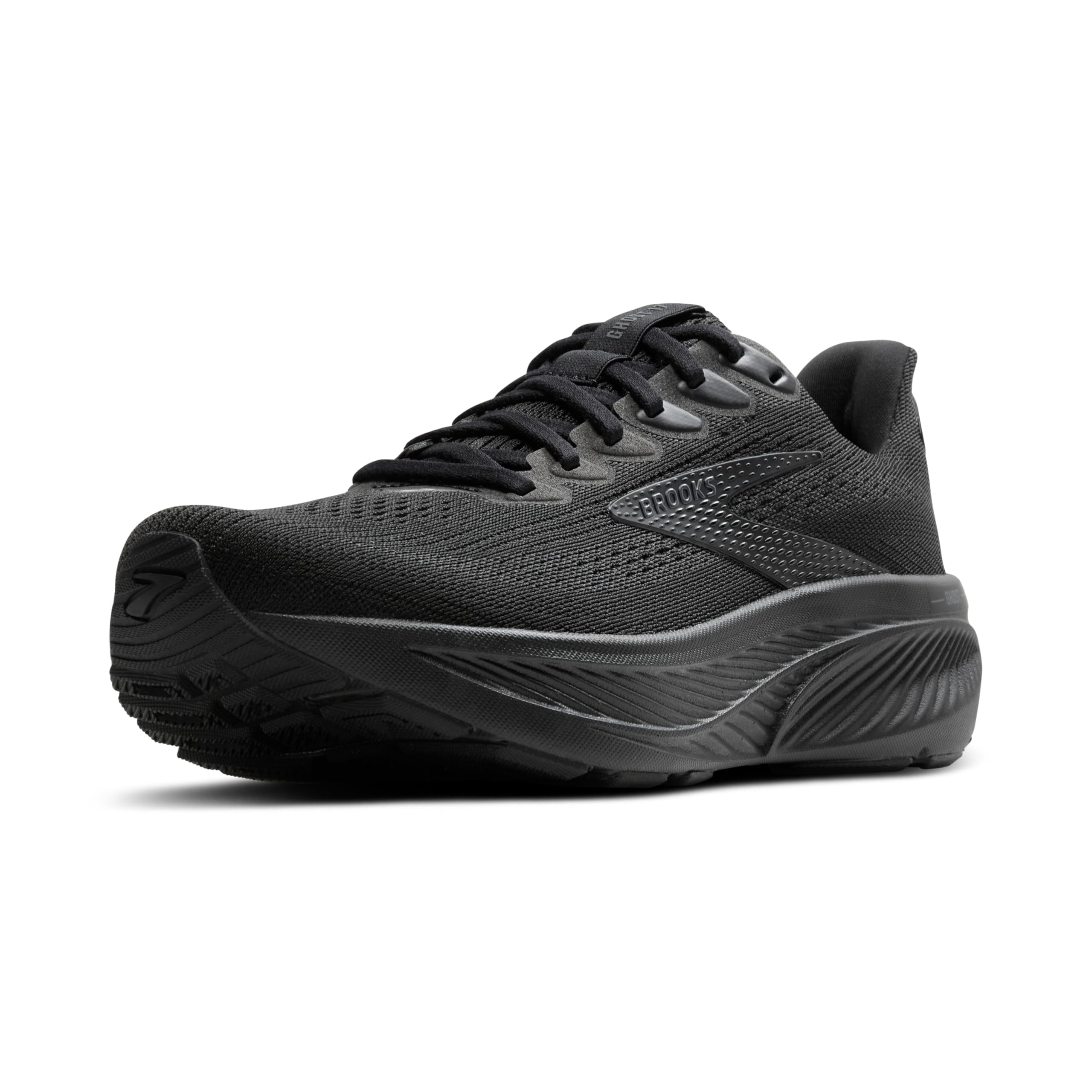
Brooks Ghost 17

Brooks Ghost 17

Long neutral runs

Our Score 8.8/10
Check Price

Worth Noting

  • Most expensive shoe in this guide
  • Upper can tear at the toe within months
Model
1204311B027
Category
Road running
Package Dimensions And Weight
14 x 9 x 5 inches; 3 pounds

The Ghost 17 is what you buy when the Adrenaline's support is more than your stride needs. It's a neutral daily trainer — softer underfoot, tuned for the runner who lands roughly straight and wants cushioning to carry her through longer sessions rather than a shoe that keeps correcting her.

We think it's the better of the two Brooks for a neutral runner, and the better of the two for distance. The arch support is the standout: high enough under the midfoot that you notice it holding you, with an ankle that stays steady on uneven pavement. Our hesitation is the cushioning — it's firm-soft rather than pillowy, which most runners like and some find underwhelming.

Fit is the thing to sort out before you order. Narrow feet do well here, and the toe box tapers enough that wider feet usually need the wide width rather than a bigger size. Plenty of women also go up half a size, so treat your first pair as a fit test and keep the box.

Bottom line: The neutral, softer choice for women logging longer distances, with the strongest arch support of the two Brooks picks — provided you can wear a narrower fit and pay the top price here.

6

PUMA Tazon 6

PUMA Tazon 6

Gym workouts

Our Score 8.8/10
Check Price

Worth Noting

  • Runs small and narrow; size up
Model
Tazon 6
Category
Fitness and cross-training
Department
Women's

Gym shoes have a different job from running shoes, and the Tazon 6 is honest about it: firm, stable, and shaped to keep you planted through lifts and lateral work rather than to roll you forward. It also happens to be one of the better-looking shoes in this group — the Tazon has been around long enough that it reads as a classic rather than a trend.

The support is the part we appreciate most. Flat-footed lifters get along with the arch, and the base stays flat underfoot during squats and side-to-side work, which is more than we can say for the running shoes here. Once you're in it, the midfoot feels secure and locked down.

We call it a gym shoe first and a running shoe a distant second. It's stiff, and it stays stiff; fine for the treadmill and for classes, less fine for a long run. At this price it's a reasonable way to put a dedicated pair in your gym bag without putting miles on your running shoes.

Bottom line: A gym-first cross-trainer we like for lifting and classes, with looks that carry you past the weight room — just order up, because it runs small.

7

NORTIV 8 Walking Shoe

NORTIV 8 Walking Shoe

Walking workouts

Our Score 8.6/10
Check Price

Worth Noting

  • Durability is uneven under daily hard use
Brand
NORTIV 8
Category
Walking
Department
Women's

The NORTIV 8 has a curved, rockered sole that tips you forward as you walk, and that one design choice explains most of the reaction to it: people either find it effortless or find it strange. Walking in it, you feel the sole hand you into the next step rather than letting you settle back on your heel.

For treadmill walks, errands on foot, and long days at work, the shape does what it's supposed to — the stride keeps moving and the heel-to-toe roll takes some work off your calves. It's cushioned without being mushy, and it's one of the better-looking shoes in this set for anyone who doesn't want to look like she's heading out for a run.

Sizing is the usual gamble with this kind of shoe. Some women get their normal size and are happy, others find it runs small, and wide feet aren't especially well served despite the roomy toe. If you're between sizes, go up rather than hoping it stretches.

We keep this one for walking and standing and reach for something else for anything faster. Within that job it's a strong value — comfortable enough for all-day wear, with a color range that doesn't look like a gym shoe — and it costs far less than the premium walkers it gets compared to.

Bottom line: The walking-focused pick: a rockered sole that keeps your stride rolling for treadmill walks and long shifts, at a price well below the premium walking shoes it invites comparison with.

8

Joomra Barefoot Sneaker

Joomra Barefoot Sneaker

Minimalist running

Our Score 8.6/10
Check Price

Worth Noting

  • Sizing is inconsistent between pairs
Category
Trail running
Department
Women's
Package Dimensions And Weight
7.87 x 5.91 x 3.94 inches; 10.58 ounces

Zero drop, minimal cushioning, and a toe box wide enough to splay your toes: the Joomra is a barefoot-style shoe, and it's the most different thing on this list. Slipping it on, the first thing you notice is how much room your toes have and how little there is between your foot and the floor. If you've never worn a minimal shoe, it will feel wrong for the first week.

For trail runs, hikes, and everyday walking, that design has real fans. The wide toe box is the standout, the traction on dirt and gravel is better than the price suggests, and the cord-and-Velcro closure is easy to work one-handed — a small thing that matters when you're getting out of a car with a dog on a leash.

Two honest caveats, and both are about your foot rather than the shoe. Arch support is minimal by design, which is the entire point of a barefoot shoe but a real problem if you rely on it. And the transition matters: build up wear time over a few weeks before you take them on a long trail run.

We recommend it to women who already like minimal shoes, or who want a wide, flat shoe for walking and light trail work — and we tell everyone else to try a pair slowly or not at all. For the right foot it's a lot of shoe for the lowest price in this guide.

Bottom line: A genuine minimalist shoe for women who want a wide, flat, zero-drop fit for trail walks and light running — worth buying only if you're willing to transition into it slowly.

How We Chose and Tested These Workout Shoes

We started with the shoes that keep surfacing in reviews from runners, walkers, and gym regulars, then narrowed by the things that actually change how a pair performs: support type, heel-to-toe drop, the size and width range available, and whether the price matched the materials. That left 14 pairs, which my team and I wore over six months through treadmill intervals, three-mile sidewalk walks, strength sessions, and the occasional sprint to catch a train.

Fit got checked twice — once straight out of the box, and again at the end of a 40-minute session when feet have swelled, since that's when heel slip and pinched toes announce themselves. We recorded each tester's usual size against what actually fit best, because more than a few pairs ran a half size off in one direction or the other. For cushioning, we covered the same stretch of concrete and then the same stretch of gym floor in every shoe and described what changed underfoot. Stiffness was judged by twisting and flexing each pair by hand, then by doing lunges and side shuffles in them.

Arch support got tested rather than read off a spec sheet: testers with flat feet, high arches, and neutral feet wore each pair with the factory insole, then again with their own orthotics inside. Durability came down to mileage — we tracked how far each pair had gone and checked outsoles for worn tread and midsoles for foam that stayed compressed after a run. And because nobody buys shoes they hate looking at, we factored in whether we'd wear each pair outside the gym.

How to Choose Workout Shoes for Women

Match the Shoe to the Workout

A running shoe is shaped to roll you forward; a cross-trainer is built to keep you planted. That's why a soft neutral runner feels vague under a barbell and a stiff trainer feels dead on a three-mile loop. If your week mixes lifting and running, decide which one gets more hours and buy for that, then add a second pair when the budget allows.

Our own split follows the same logic. The ASICS Gel-Contend 9 covers pavement and treadmill sessions, while the PUMA Tazon 6 is the one we keep for the weight room. Two modest pairs usually beat one expensive compromise.

Decide Whether You Need Stability

Most women do fine in a neutral shoe. Stability designs add structure that resists inward roll, and they suit flat feet, low arches, and ankles that have turned before. They feel firmer and cost more, and on a neutral stride that structure buys you nothing. We treat it as a need, not an upgrade.

A quick check that costs nothing: look at the inner edge of an old pair's outsole. If the inner edge is worn noticeably flatter than the outer one, a stability shoe is worth trying. The Brooks Adrenaline GTS 24 is the stability option in this guide.

Get the Fit Right the First Time

Workout shoes don't reliably follow your sneaker size, and these brands disagree with each other: the PUMA Tazon 6 and the Brooks Adrenaline GTS 24 tend to run small, while the ASICS Gel-Contend 9 runs true. Try shoes on at the end of the day when your feet are at their largest, and leave a thumb's width in front of your longest toe.

Wide feet need a wide width or a genuinely broad toe box, not simply a bigger size — buying up adds length where you needed room. If a listing warns that a model runs small, take the half size rather than hoping.

Balance Cushioning Against Durability

More foam isn't automatically better. Softer shoes feel forgiving on long days but vague during lateral work; firmer ones feel stable but harsh on pavement. Neither is wrong — it depends on whether you're lifting, running, or standing.

Durability is the other half of the value question. Uppers tear at the toe and outsoles wear smooth, sometimes within a few months. Retire a shoe when the midsole feels flat or you can see through the tread; worn foam is a common reason a shoe that used to feel good stops feeling good.

Frequently Asked Questions

Final Verdict

The ASICS Gel-Contend 9 is the pair we point most women to, and the reason is unglamorous: it fits the way it says it will, it's comfortable from the first wear, and it handles running, gym days, and long walks without demanding a specialty shoe for each. At a mid-range price, nothing else here covers as much ground.

Change one requirement and the answer changes. If you need stability under a flat arch or an inward-rolling stride, the Brooks Adrenaline GTS 24 is the steadiest shoe in this guide. If the budget decides, the Under Armour Charged Assert 9 covers walking and gym sessions for the least money here — order two sizes and send one back.