Skincare

Best Face Oils for Wrinkles of 2026

The trouble with face oils is that the good ones and the bad ones look identical on the shelf: a little amber bottle, a dropper, a promise about fine lines. What separates them is whether the oil is rich enough to plump and soften overnight without leaving you with a shiny forehead, a greasy pillowcase, and a breakout by Thursday. A good one earns its place as the last step of your routine, sealing in whatever moisturizer you put underneath so skin looks less creased and tired when you wake up.

I've been the person who slicked on whatever was in the bathroom cabinet and regretted it by lunchtime, so I'm fussy about texture. My team and I have spent five months with 14 facial oils, patting them on at night, tapping them over dry patches, and testing a few under makeup in the morning. The bottles worth keeping all sank in within a few minutes, and the gap between a drugstore pick and a fancy one was smaller than I expected. We paid attention to added fragrance, ingredient lists, and how each one behaved on oily, dry, and reactive skin. The picks below are the ones we'd buy again.

1

Cliganic Organic Rosehip Seed Oil

Top Pick
Cliganic Organic Rosehip Seed Oil

Sensitive, mature skin

Our Score 9.2/10
Check Price

Worth Noting

  • Earthy scent that some noses dislike
  • One ounce is small for body use
Size
1 fl oz
Formula
100% cold-pressed rosehip seed oil
Verification
Certified organic, EWG verified, third-party tested

One ingredient is the entire pitch, and it is enough. Cliganic's rosehip is cold-pressed, unrefined, and hexane-free, and the bottle carries organic certification, EWG verification, non-GMO status, and third-party purity testing — more paperwork than most budget facial oils bother with. We keep it in rotation because it does the two things a wrinkle-focused oil has to do: it softens dry, tight skin overnight, and it sinks in without a film you can feel.

Texture is where cheap rosehip oils lose people, and this one does not. It is light enough to press over a serum and rich enough that thirsty skin still notices it, and the finish is soft rather than slick. The other thing we noticed is the glow: this is the bottle we reach for when skin looks dull rather than just dry. Nothing in it is an active, though, so the change you get is moisture and tone, not resurfacing. That is the honest scope.

Two things are worth knowing before you commit. Rosehip smells like rosehip — earthy, faintly nutty, closer to hay than to flowers — and a bottle that smells fishy or like old crayons has oxidized and belongs back with the seller. And one ounce is a face-sized amount; start using it on your neck and hands as well and it disappears quickly.

Our routine with it: two or three drops pressed into slightly damp skin as the last step at night, and a single drop mixed into moisturizer in the morning. It is the bottle we hand someone who wants one good oil and no decisions.

Bottom line: Our pick for most people: a single-ingredient, third-party-tested rosehip oil that softens fine lines and sinks in without grease.
2

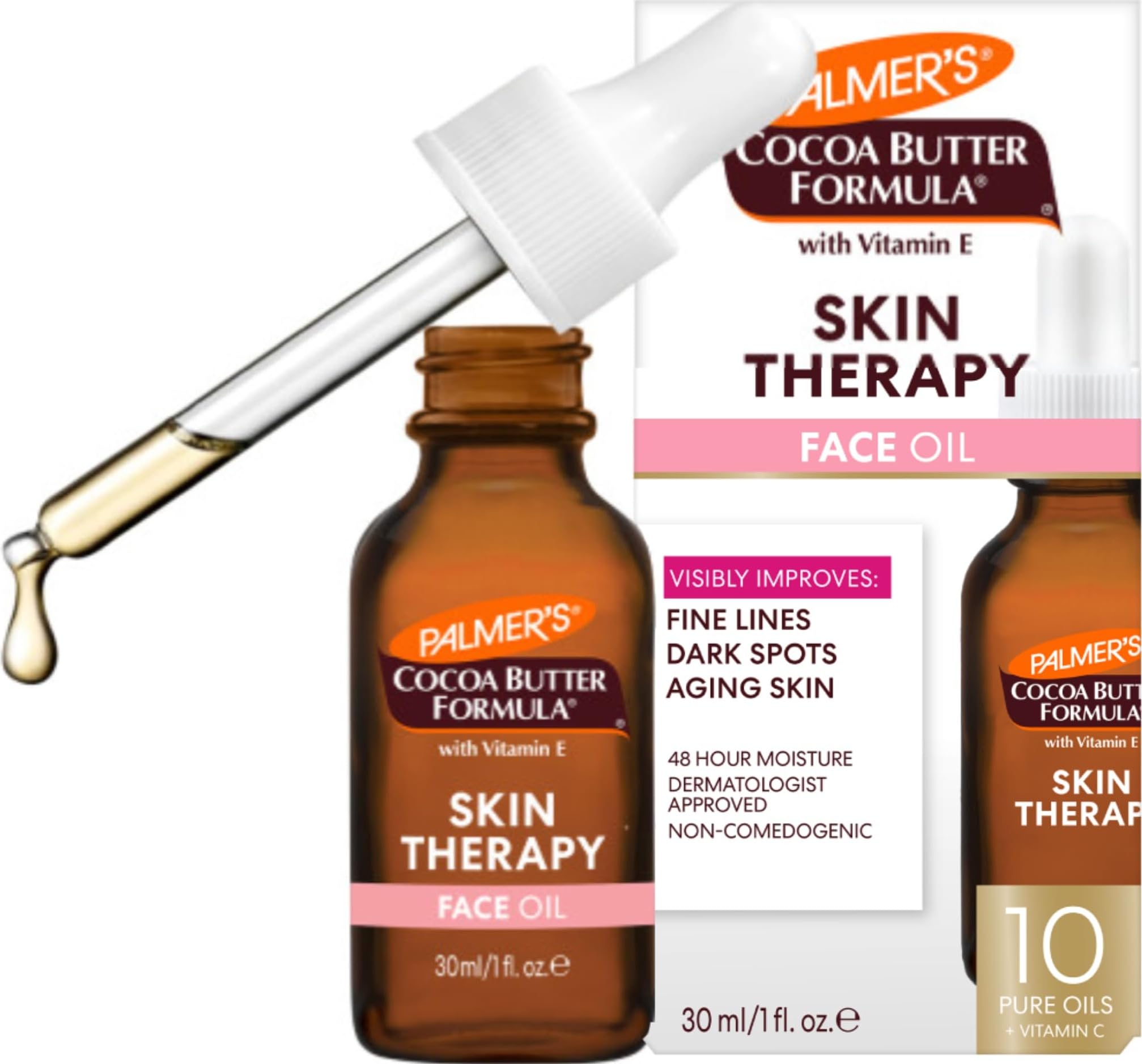
Palmer's Skin Therapy Face Oil

Palmer's Skin Therapy Face Oil

Fine lines, dark spots

Our Score 9.2/10
Check Price

Worth Noting

  • Fragranced formula
  • Retinol brings sun sensitivity
Size
1 fl oz
Scent
Fragranced
Formula
Ten-oil blend with cocoa butter
Key Actives
Retinol and vitamin C

Palmer's puts two ingredients in one bottle that most brands sell as separate serums: retinol for the look of fine lines and vitamin C for dark spots and uneven tone, both carried in a ten-oil blend with cocoa butter. That is the reason this is the bottle we point to when someone wants an oil that does more than moisturize.

It behaves better than a cocoa-butter formula has any right to. It goes on like a dry oil, absorbs quickly, and leaves a glow that reads as sleep rather than shine — the finish was the first thing we noticed. Those ten oils plus the vitamin C make it a good overnight step for dull, weathered skin, and two or three drops cover the whole face.

What we do not gloss over is the skin-compatibility side. A rich cocoa-butter base carrying retinol is a lot for some faces, and breakouts, redness, and irritation are the pattern to watch for if you are acne-prone or reactive. Patch test along your jaw for a few nights before going full-face, and do not stack it with another retinoid.

For dry, resilient skin that wants one step aimed at lines and dark spots, it is a lot of formula for the money, and the glow is the part that keeps it in the bathroom. For skin that breaks out easily or reacts to scent, start with our top pick instead.

Bottom line: The only oil here with retinol and vitamin C, it goes after lines and dark spots together — best for resilient, dry skin.

3

Kate Blanc Rosehip Seed Oil

Kate Blanc Rosehip Seed Oil

Gua sha routines

Our Score 9.2/10
Check Price

Worth Noting

  • Scent divides people
Size
1 fl oz
Formula
100% pure cold-pressed rosehip oil
Also For
Gua sha, hair, nails

If there is a gua sha stone on your shelf that you stopped using, the oil was probably the problem — a stone drags without something to glide on. Kate Blanc's rosehip is the bottle we keep next to ours. It is pure cold-pressed rosehip, one ingredient, and it has just enough body to let a stone travel up a jawline without tugging.

It is a good face oil first and a massage oil second. Two or three drops warmed between the palms, pressed over the whole face, then worked through with the stone; the leftover sinks in and you wake up soft rather than sticky. The brand leans into that use, suggesting the bottle for hair and nails as well, and the payoff is the one we look for in a rosehip: more radiance, a smoother surface, and fine lines that look softer while skin is plump.

The catch is the smell. Rosehip is earthy and nutty, and this bottle's scent draws both compliments and complaints — more so than the Cliganic version. If you are sensitive to smell in your skincare, that is the one thing to check before committing to a full ounce. Otherwise it is the same money and the same single ingredient as our top pick, which makes the tiebreaker the routine: for a plain nightly oil, either works; for five minutes of gua sha, this one.

Bottom line: Rosehip with enough slip for gua sha and enough moisture to leave skin softer and brighter by morning.

4

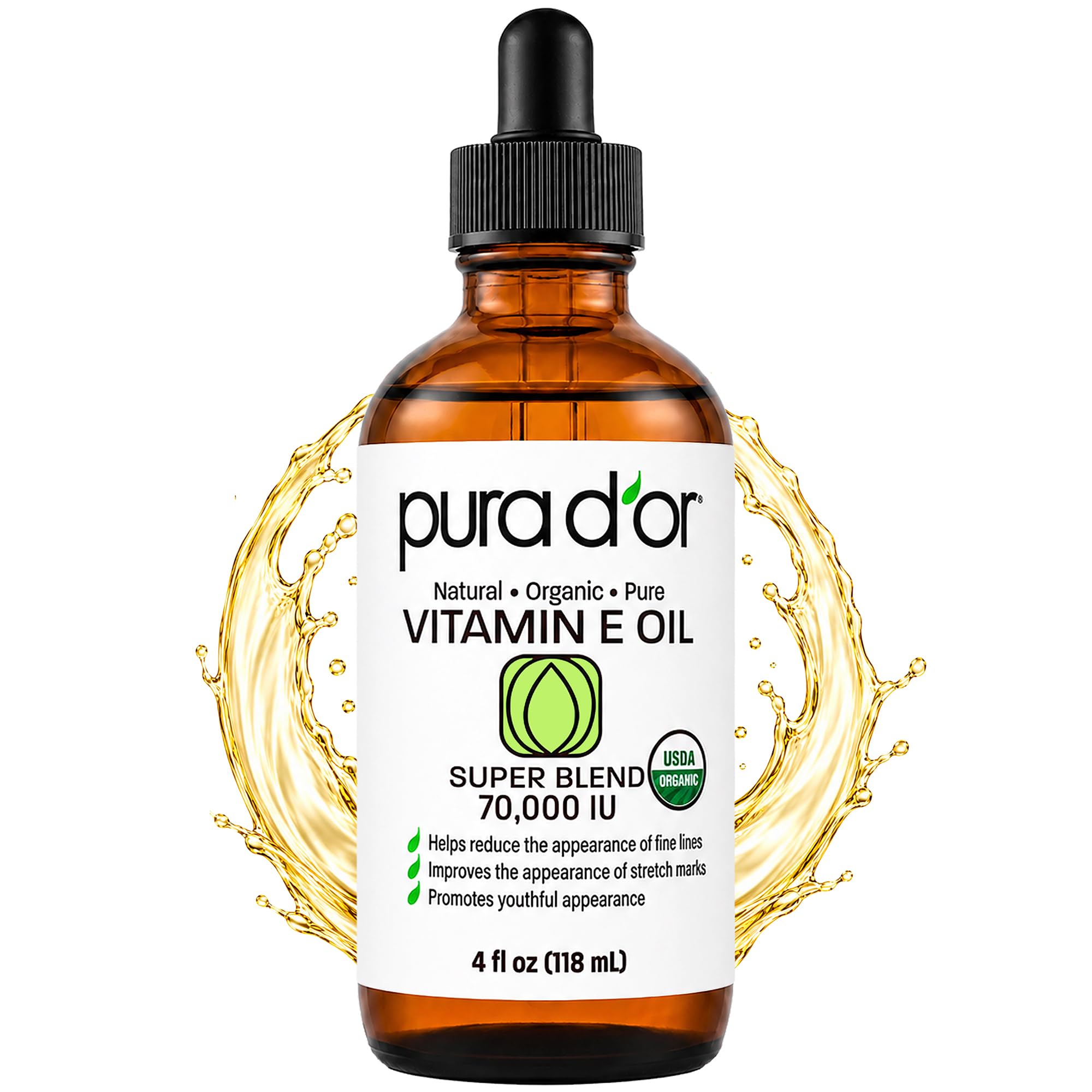
PURA D'OR Vitamin E Oil 70,000 IU

PURA D'OR Vitamin E Oil 70,000 IU

Face and body

Our Score 9.4/10
Check Price

Worth Noting

  • A blend, not pure vitamin E
Size
4 oz
Formula
Vitamin E in a seven-oil blend
Vitamin E
70,000 IU
Certification
USDA certified organic oils

The front of the bottle promises vitamin E; the back tells the more useful story. Most of what you pour out is a blend of seven plant oils — argan, jojoba, rosehip, apricot, sweet almond, avocado, sunflower — with 70,000 IU of vitamin E mixed in, and that is exactly why we like it. Neat vitamin E is thick and tacky; cut with lighter oils, it spreads, absorbs, and still leaves skin soft.

Four ounces is the other argument. This is the bottle we leave in the bathroom for hands, elbows, feet, and the ends of our hair as much as for the face, and it is light enough that using it on your face does not feel like a compromise. It can go into a warm bath too, which is the kind of thing you try once and then keep doing. Nothing about it needs a separate body product to justify the shelf space.

Read carefully if what you wanted was pure vitamin E: this is not that, and the blend is part of why it is affordable by the ounce. The oils are USDA certified organic, and whatever scent there is comes from them rather than added fragrance, which keeps it on the gentler side for most skin.

Bottom line: A light vitamin E blend that earns its place on elbows, hands, and hair as much as on the face.

5

The Ordinary Squalane

The Ordinary Squalane

Oily, reactive skin

Our Score 9.4/10
Check Price

Worth Noting

  • No anti-aging actives of its own
Size
1 fl oz
Formula
100% plant-derived squalane
Also For
Hair
Comedogenic
Non-comedogenic

If every facial oil you have tried has left you blotting your forehead or nursing a breakout, this is the one to try next. The Ordinary's squalane is derived from sugar cane rather than pressed from a plant, and it behaves more like a lightweight moisturizer than a treatment — no scent, no weight, no residue.

A few drops pressed over a serum, or mixed into moisturizer, and skin stops feeling tight without looking shiny. It is the oil we suggest for combination skin that cannot decide, for anyone layering a retinoid who needs a buffer, and for a drop worked into the ends of hair. The ingredient list is one line with nothing added for scent, which matters if your skin reacts to fragrance and botanicals.

The limit is honest and worth stating plainly: squalane is a moisturizer, not an anti-wrinkle ingredient. It plumps fine lines by hydrating them, and it makes a retinol or rosehip layer easier to live with, but it will not do much for tone or dark spots on its own. We keep it as the buffer step underneath everything else, and as the answer for skin that flares at the first sign of richness.

Bottom line: Fragrance-free, non-comedogenic squalane for skin that breaks out from richer oils but still wants hydration.

6

RejuveNaturals Vitamin E Oil

RejuveNaturals Vitamin E Oil

Scars, dry patches

Our Score 9.2/10
Check Price

Worth Noting

  • Premium price for a two-ounce bottle
Size
2 fl oz
Scent
Fragrance-free
Formula
100% d-alpha tocopherol
Vitamin E
85,800 IU

A scar on a knee, a surgery line, a patch of scaly skin beside the nose: this is the bottle for the places a light facial oil slides right off. It is 100% d-alpha tocopherol derived from organic olives, with no carrier oil to thin it, and it is thick enough that you pat it on rather than sweep it across a cheek.

That thickness is the point on damaged or very dry skin. It seals, it stays where you put it, and it is fragrance-free, so it does not sting or perfume an area that is already angry. The 85,800 IU concentration means two drops do the work of a much larger pour, and we have found it most useful as a targeted step rather than an all-over one.

On a whole face the texture turns into a chore — it takes longer to spread and it sits on the surface before it sinks in. If you are treating something specific, that is a fair trade, and the bottle lasts months. If what you wanted was a nightly glow oil to sweep over everything, the rosehips do that job far more gracefully.

Bottom line: A thick, pure, unscented vitamin E for scars, surgery marks, and patches too dry for a lighter oil.

7

The Ordinary Rose Hip Seed Oil

The Ordinary Rose Hip Seed Oil

Nightly hydration

Our Score 9.4/10
Check Price

Worth Noting

  • Smell varies from earthy to fishy
Use
A few drops once daily, ideally at bedtime
Size
1 fl oz
Formula
100% organic cold-pressed rose hip seed oil
Skin Types
All skin types

Set this bottle next to our top pick and the differences are small: one ingredient, one ounce, about the same money. What separates them is the finish and the smell.

The Ordinary's rose hip seed oil is 100% organic and cold-pressed, and it feels slightly richer than the Cliganic version — enough that dry skin will prefer it in winter and oily skin might want it only at night. The label is unusually specific about how to use it: a few drops once a day, ideally at bedtime, patch test first, keep it off broken skin. We appreciate directions that assume you have never used an oil before, because most bottles offer nothing at all.

The smell is the sticking point. Rosehip is earthy by nature; this bottle draws descriptions that run from mild to actively fishy, and a genuinely rancid bottle is a different problem from an unfamiliar one. If yours smells sharp or sour, exchange it rather than toughing it out. Get a good one and it is a dependable night oil with more cushion than the rest of the pure rosehips here.

Bottom line: A rich, unrefined rosehip for nightly use, with the most variable smell of the pure oils here.

How We Tested Facial Oils for Fine Lines and Wrinkles

We started with a list of more than 40 oils and cut it down by reading label after label: single-ingredient cold-pressed oils versus blends, fatty acid content, whether the bottle listed a harvest or batch date, and whether fragrance appeared in the ingredient deck or was left out entirely. Anything that couldn't be used on its own, without mixing, was dropped. That left 14 bottles, which we stored together in the same dark cupboard so heat and light wouldn't skew one against another.

Testing ran for five months across three testers: one oily and acne-prone, one dry and reactive, one in her forties watching crow's feet and forehead lines. Each oil got a five-night patch test on the inner forearm before it went anywhere near a face. Once it did, we applied it after cleansing on damp skin at night and, for the lighter ones, under sunscreen in the morning. We noted whether a drop ran off the dropper like water or beaded up thickly, whether it smelled like the nut or seed it came from or like added perfume, and how much shine was left when we pressed a blotting sheet to a cheek ten minutes after application. A few drops per use was the rule, and we counted how many weeks a bottle actually lasted.

Every four weeks we took photos in the same bathroom light and compared them side by side, which is where the softening around the eyes showed up first, or didn't. Oils that turned rancid before the bottle was half gone, or that needed six drops to cover a face, lost points on quality and value. We're still using our favorites and will update this list if anything changes.

How to Choose a Face Oil for Wrinkles

A Pure Oil or a Formula With Actives

A single-ingredient oil — rosehip, squalane, vitamin E — moisturizes, supports the skin barrier, and leaves skin looking plumper. That is a real result, and for plenty of people it is enough. A formula with retinol or vitamin C goes further on tone and lines, but it brings irritation risk, a patch test, and, with retinol, a nightly-only rule plus daily sunscreen.

If you already use a prescription retinoid, or your skin reacts easily, stay with a pure oil and let your serum do the active work. If you want one step to do more, a retinol oil is a low-cost way to add an active — introduce it slowly and patch test first.

Match the Texture to Your Skin

Dry and mature skin can take the richer end: vitamin E, cocoa-butter blends, a generous pour of rosehip. Oily and acne-prone skin does better with squalane, which is non-comedogenic and behaves like a light moisturizer, or with a thin rosehip used sparingly at night.

The trap is the word non-greasy. A finish that feels dry on the fingers says nothing about whether an oil will clog pores. If breakouts are your problem, look for non-comedogenic on the label and start with two drops on the lower half of your face for a week before going further.

Read the Ingredient List

The front of a bottle is marketing; the ingredient list is the product. A vitamin E oil can be vitamin E blended into seven carrier oils — that is what our PURA D'OR pick is — and a rosehip oil can be a single ingredient or a blend with fillers. Neither is dishonest, but they are different purchases.

Check for added fragrance too. A scented oil is not automatically a problem, but on a face you are trying to calm, added fragrance is the ingredient most likely to set skin off. Palmer's is the one fragranced pick here; the others rely on whatever the oil itself smells like, which is a different and usually milder thing.

Bottle Size, Packaging, and Shelf Life

Cold-pressed plant oils are delicate, and rosehip in particular oxidizes. An oxidized oil smells like old crayons or fish, and it does your skin no favors. Dark glass, a dropper or pump that limits air, and a bottle you finish in a few months all matter more than an extra ounce of volume.

Buy the size that matches where you will use it: one ounce for face only, four ounces if you want the same bottle on hands, hair, and legs. Store it in a cupboard rather than a sunny bathroom shelf, and if a bottle ever smells sharp or sour, replace it.

Frequently Asked Questions

Final Verdict

If you want one bottle and no fuss, buy Cliganic's rosehip oil. It is a single ingredient, it is third-party tested, it softens fine lines and leaves a low glow without grease, and it is priced so you will use it every night rather than save it for occasions.

Change the requirement and the answer changes. If you want an active that goes after lines and dark spots, take Palmer's, provided your skin tolerates fragrance and rich oils. If you are acne-prone, start with The Ordinary's squalane. If you are treating scars or stubborn dry patches, the thick, unscented RejuveNaturals vitamin E is the better tool.