Shoes

Best Hiking Shoes for Women of 2026

A hiking shoe is asked to do two jobs that pull in opposite directions: shield your foot from rocks, roots, and cold creek crossings, and feel easy enough that you forget you're wearing it by mile two. Most pairs pick a side. There is plenty of trail armor out there that will rub your heel raw on the first climb, and plenty of pillowy shoes that let every pebble through to your arch. Getting the balance right is what turns a hike from an endurance test into something you actually enjoy.

Here's something that took me too many blisters to learn: you're really shopping for the descent, where toes jam, heels slip, and a thin midsole starts to ache. Buy for the climb and you'll be miserable coming down. My team and I have spent the past six months hiking in 12 pairs, from rocky day trails to rain-soaked switchbacks, and the ones that made the cut earned it on fit, comfort, and durability — not on a long feature list. What follows is what survived, and which kind of hiking each pair is built for.

1

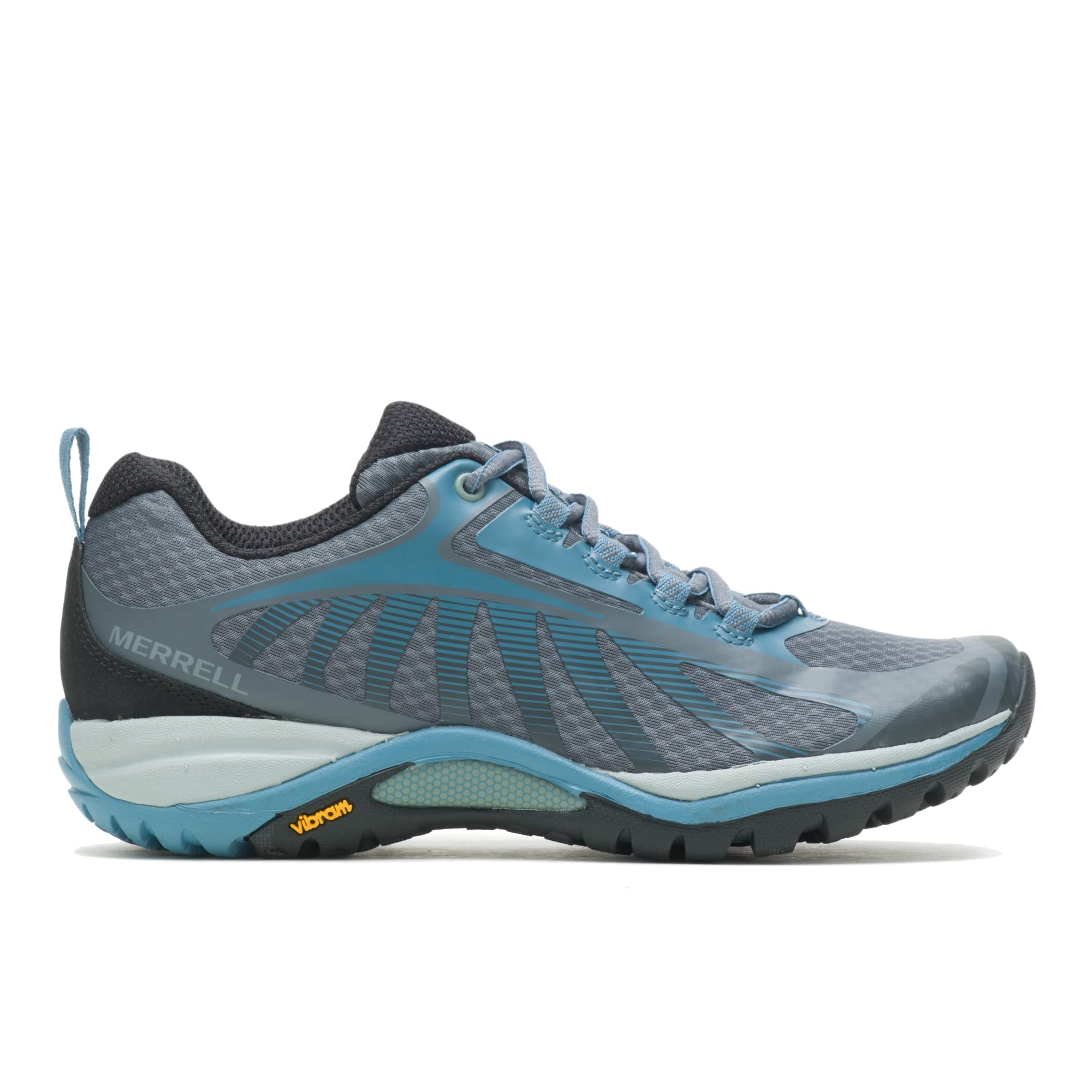
Merrell Moab 3

Top Pick
Merrell Moab 3

Rocky trail hiking

Our Score 9.0/10
Check Price

Worth Noting

Model
Moab 3
Style
Hiking shoe
Department
Women's
Package Dimensions
13.35 x 9.02 x 5.08 inches; 2.6 pounds

Grip, support, and out-of-box comfort are the three things we want from a trail shoe, and the Moab 3 is the pair here that gets the balance closest to right. We wore it on gravel, packed dirt, and rock, and the ride felt planted without feeling rigid. The toe box leaves enough room for toes to spread on descents, and the arch support is the kind we notice most when we stop noticing it. That combination is why it is our top pick, not just the obvious choice in the group.

Traction is a big part of the story. The outsole bites on loose gravel and holds its line on sloped rock, and we felt secure on wet roots where a smoother shoe makes us shorten our stride. The upper also feels solidly built, with a reinforced feel around the toe and heel that matches the shoe's workhorse reputation. It is not the lightest shoe here, and it costs more than the budget picks, but neither is a dealbreaker for day hikes with a light pack.

Where the Moab wins is versatility. It is supportive enough for rocky trails, comfortable enough for a long walk in the woods, and simple enough to wear for errands after the hike. If you want one pair to cover most of your trail time, start here. If you need a featherweight shoe or a wide-specific fit, look at the Siren Edge 3 or the Voyageur instead.

Bottom line: The Moab 3 is our top pick for women who want one dependable pair for rocky day hikes, with supportive cushioning and grip that feels secure.

2

KEEN Voyageur

KEEN Voyageur

Wide feet

Our Score 9.0/10
Check Price

Worth Noting

  • Premium price for a low-cut shoe
Model
Voyageur
Style
Hiking shoe
Department
Women's

If a shoe pinches across the toes, nothing else about it matters. The Voyageur is the pick here for wider feet, with a toe box that lets the forefoot spread and a stable platform under the arch. We noticed the room immediately, and we appreciated it most on descents, when a snugger shoe presses on the toes. The trade-off is a fit that can feel generous for narrower feet, so try a half size down if you are between sizes.

The support is the part that keeps it in the lineup. The arch feels planted, the sole is stiff enough to protect against sharp rocks, and the tread grips well on steep, pebbly trails. It feels like a sturdy shoe rather than a flexible sneaker, which is what we want when the path turns rough. We also like that the footbed can be swapped for an orthotic, though the shoe is already supportive enough for many hikers.

The Voyageur earns its place with fit and support rather than novelty. For wide-footed hikers who want a shoe that feels secure without clamping the toes, it is the one we point to first. Narrow-footed hikers should start with the Moab 3 instead; the Voyageur's generosity becomes extra room they do not need.

Bottom line: The Voyageur is the wide-foot pick in this group, with a roomy toe box and stable support that make rocky trails feel less punishing.

3

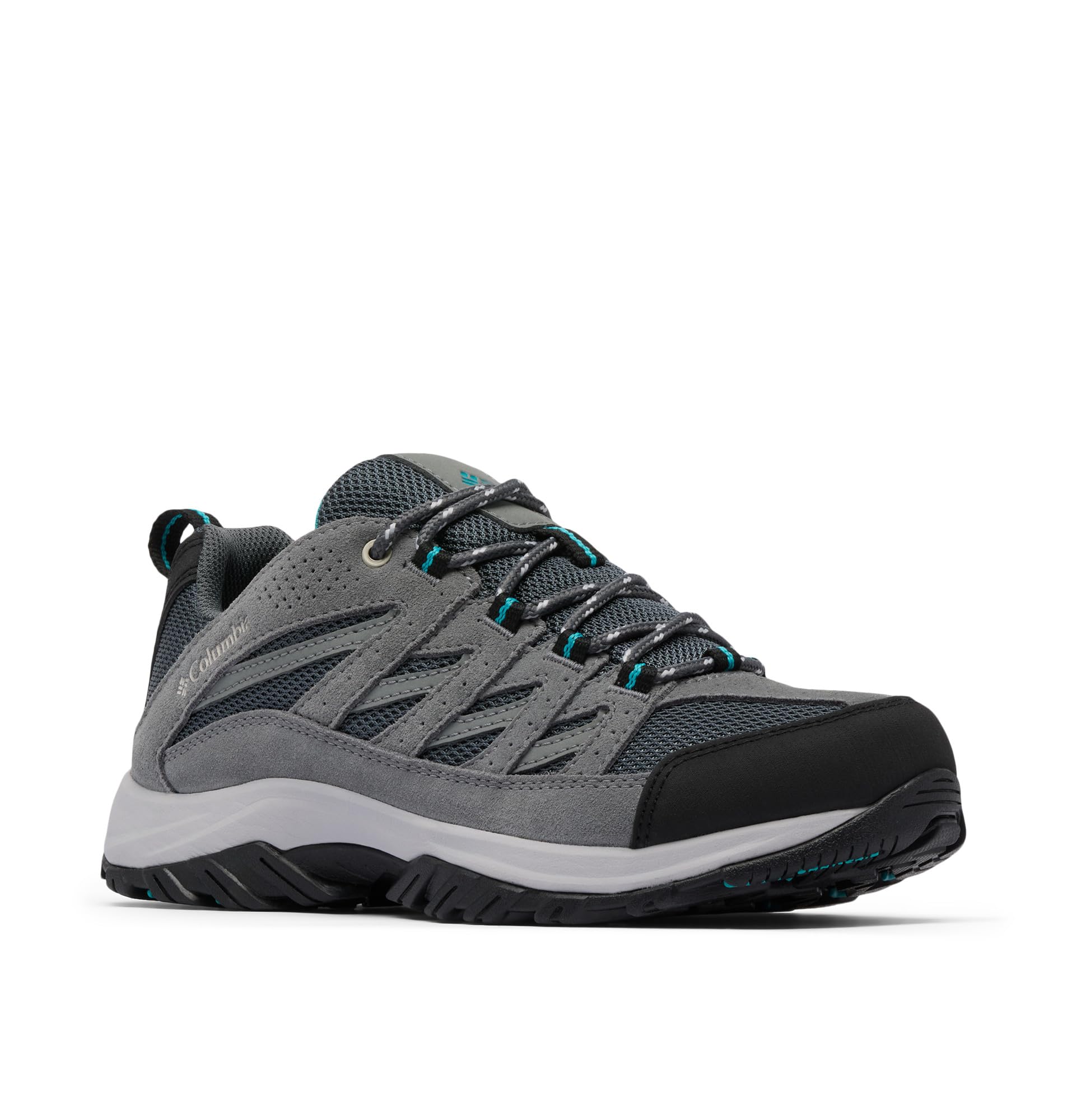
Columbia Crestwood

Columbia Crestwood

Budget day hikes

Our Score 9.0/10
Check Price

Worth Noting

  • Durability may fall short under hard use
Model
Crestwood
Style
Hiking shoe
Department
Women's

Trail hiking does not have to start with a premium shoe. The Crestwood is the budget pick we recommend when you want a comfortable trail shoe for dry, well-trodden paths. We found the toe box roomy and the step soft enough to wear for a long walk without a break-in period. It feels like a hiking shoe without the stiffness some low-cut models bring.

On packed dirt and gravel, the outsole grips well, and the shoe feels stable enough for easy to moderate terrain. The ride is on the firm side, but not harsh, and the upper holds the foot without pressure across the instep. We also appreciated the roomy fit for thicker socks, though narrow feet may need a tighter lacing. For a first pair or a second pair for casual trails, it covers the basics without asking much.

Wet grass is where the Crestwood shows its budget roots: the mesh upper can let water through, so it is a fair-weather shoe for many buyers. For dry trails and close-to-home walks, that is an easy trade to accept. If you hike through wet brush often, the Moab is the more reassuring pick. We treat the Crestwood as a first hiking shoe or a backup pair, not the one we grab for a long, rough day.

Bottom line: The Crestwood is a sensible budget pick for dry, well-trodden trails, with a roomy fit and enough grip for easy day hikes.

4

Merrell Siren Edge 3

Merrell Siren Edge 3

Lightweight day hikes

Our Score 8.8/10
Check Price

Worth Noting

  • Insole feels firm and thin
Model
Siren Edge 3
Style
Hiking shoe
Department
Women's
Package Dimensions
12.24 x 8.5 x 4.21 inches; 1.74 pounds

The Siren Edge 3 is what we reach for when the Moab feels like more shoe than the day requires. It is the lighter option here, with a package weight of 1.74 pounds against the Moab's 2.6 pounds, and that difference shows up in hand and on the foot. The lower weight makes it easier to keep a fast pace on rolling trails, though it gives up some of the Moab's planted feel.

Traction is still strong. The outsole grips pebbly paths and steep dirt, and the shoe feels stable enough for rocky sections without the bulk of a boot. The fit is true to size for us, with a roomy toe box and a secure heel. We also like the arch support, which feels more substantial than the shoe's light weight suggests. On rocky descents, the toe box kept our toes from jamming, which is a real advantage in a light shoe.

For fast day hikes, travel, and rolling trails, it is the lighter shoe we recommend. It pairs best with a light pack and a route where you are not asking the shoe to do the work of a boot. If you want one pair for everything, the Moab is still the safer default.

Bottom line: The Siren Edge 3 is the lighter pick for fast day hikes, with reliable grip and support that belie its low weight.

5

NORTIV 8 Quick Lace

NORTIV 8 Quick Lace

Tight budgets

Our Score 8.4/10
Check Price

Worth Noting

  • Sizing can run inconsistent
  • Durability may fall short
Style
Hiking shoe
Design
Lightweight
Closure
Quick lace
Department
Women's

A tight budget should not force you onto pavement, and the NORTIV 8 is the pair here that keeps a trail shoe within reach. The quick-lace system is the first thing you notice: it pulls tight in one motion and tucks away, so there are no trailing loops to catch on brush. We found it convenient on short hikes, though the lacing can loosen over a long day and needs a mid-hike tug.

Traction is the surprise. The outsole grips slippery rock and loose dirt better than its price suggests, and the shoe feels balanced on uneven ground. The upper is light and breathable, and the footbed is cushy enough for a few hours on easy trails. It is not a plush shoe for long descents, but it does not feel disposable on the trail either. It is the kind of shoe that lives by the door for impromptu walks.

The NORTIV 8 makes the most sense as a starter pair, a travel shoe, or a backup for muddy days. It covers easy trails and weekend walks without asking much, and it is a smart way to get onto dirt without committing to a premium shoe. If you want to try trail hiking without spending much, this is the pair we point to.

Bottom line: The NORTIV 8 is the budget trail shoe we recommend for easy hikes and weekend walks, with quick lacing and better grip than its price suggests.

6

CC-Los Waterproof Hiking Shoe

CC-Los Waterproof Hiking Shoe

Casual trail walks

Our Score 8.4/10
Check Price

Worth Noting

  • Water protection can fade in sustained wet
Style
Hiking shoe
Design
Lightweight
Department
Women's
Waterproofing
Waterproof

Waterproofing is the headline on the CC-Los, but the reason it earns a place here is the combination of price and grip. It is one of the least expensive trail shoes in this group, and it feels more substantial than that position suggests. The upper has a clean, understated look that does not shout hiking shoe, and the shoe is easy to wipe down after a muddy walk.

On rocky, slippery sections, the outsole holds well, and the shoe feels stable on uneven ground. The footbed is comfortable for a few hours, and the toe box has enough room for a thicker sock. We did find the midfoot snug, so wide feet should look at the Voyageur or order with care.

The CC-Los makes the most sense as a travel shoe, a commuter, or a low-cost second pair for easy trails. It is comfortable enough for a few hours and grippy enough for rocky paths. We treat it as a value pick rather than a long-term workhorse, and that is the right frame for it. If you want a budget shoe for damp paths and casual hikes, it is worth a look.

Bottom line: The CC-Los is a low-cost option for damp, easy trails, with good grip and a comfortable fit for short hikes and travel.

How We Tested Women's Hiking Shoes

We built the shortlist by reading specs and customer reviews for dozens of women's hiking shoes, then cut anything that only came in whole sizes, anything with lugs too shallow to bite into loose dirt, and anything where the same complaint kept surfacing — a heel that slipped, a toe box that pinched across the top. Twelve pairs survived that filter, and we wore them for six months.

Testing happened where these shoes actually live: local day trails, a muddy spring weekend, a couple of rocky scrambles, and a lot of long dog walks on pavement in between. We sized each pair against two sock thicknesses, then walked a steep quarter-mile descent to see whether toes jammed into the front or heels lifted out of the heel cup. For water resistance, we stood in a shallow creek for two minutes with a paper towel stuffed in the toe and checked how much got through. Traction got judged on wet granite slabs and loose gravel, at a walk and at a run.

For arch support and cushioning, we pulled the insoles out and looked at the shape underneath, then pressed a thumb into the midsole to feel how quickly it bottomed out under a loaded pack. Comfort came down to mileage: we logged where hot spots appeared, whether a pair needed any break-in at all, and how our feet felt the morning after a long day. Durability got checked at the end — lug wear, creasing across the forefoot, seams, and whether the shoe still felt like the one we'd laced up in month one.

We're still hiking in the top performers and will update this list as the miles add up.

How to Choose Women's Hiking Shoes

Fit Comes Before Everything Else

A hiking shoe can have the best outsole in the world and still be wrong if your heel lifts or your toes hit the front on a descent. Look for a secure heel, a toe box that lets the forefoot spread, and enough room for the socks you actually wear. Wide feet need a wide width or a roomy toe box; narrow feet need lacing that can cinch without buckling the upper. Try shoes late in the day with hiking socks, and size for the longer foot. The KEEN Voyageur is our widest-feeling pick; the Moab 3 is roomy without feeling sloppy.

Traction Is the Trail Feature You Feel First

Lug depth and rubber compound matter more than the number of features on the box. A deeper, more aggressive tread bites into loose dirt and rock, while a smoother outsole rolls better on rail-trails and paved paths. If your routes include wet roots or sloped rock, prioritize grip over weight. We prefer carrying a few extra ounces to tiptoeing down a slick descent. The Moab 3 and CC-Los both feel secure on rocky ground, though the Moab has the more planted ride.

Decide How Much Support You Need

Low-cut hiking shoes do not wrap the ankle the way boots do, so the support has to come from the platform underfoot. A firm midsole, a stable heel, and arch support matter on rocky terrain; a soft, flexible shoe is fine for smooth paths but can let sharp stones through. If you carry a heavy pack or have ankle instability, a boot is the safer choice. For day hikes with a light pack, the lighter Siren Edge 3 is enough, while the Moab 3 gives more underfoot reassurance.

Waterproofing Is a Trade-Off, Not a Free Upgrade

A waterproof membrane keeps out puddles and wet grass, but it also traps heat and can make a shoe feel clammy on a warm climb. Water-resistant uppers shed light rain and dry faster, but they are not the same as waterproof. Choose a membrane for wet climates and shoulder-season hikes; choose breathable mesh for hot, dry trails. The CC-Los is the budget waterproof option here, but treat any waterproof claim as a ceiling, not a guarantee.

Spend on Fit and Grip, Not Just the Logo

Durability lives in the details: a reinforced toe cap, protected seams, and an outsole that still has edges after a season of rock. Budget shoes can be a smart entry point, but they often trade away some of that toughness. If you hike often, put more of the budget into fit and traction; if you hike occasionally, a lower-cost pair can be the better value. The Crestwood and NORTIV 8 make sense for occasional trails; the Moab and Voyageur are the ones we expect to hold up to more use.

Frequently Asked Questions

Final Verdict

The Merrell Moab 3 is the pair we recommend first for women who want one dependable shoe for rocky day hikes. It balances a supportive, stable ride with grip and out-of-box comfort, and it is the easiest of these picks to trust on mixed terrain. If a roomier toe box matters more, the KEEN Voyageur is the better fit. If you want less shoe underfoot, the Merrell Siren Edge 3 is the lighter alternative.