Fashion

Best Hiking Jackets for Women of 2026

A hiking jacket is asked to do two opposite things at once. It has to hold off rain and wind on an exposed ridge, and it still has to pack down small enough to disappear into your bag when the sun finally comes out — and plenty of jackets nail one of those jobs and fall apart on the other. Which half of that tradeoff you can live without depends entirely on where you actually walk.

I've spent eight months hiking in a dozen of these, from a drizzle-soaked loop that never let up to a gusty summit where the extra warmth earned its keep, then wearing each one into town to see whether it looked like gear or like something I'd reach for anyway. Sizing is the wildcard here — a medium in one label is a small in another, and a jacket cut boxy flaps in the wind while a trim one refuses to go over a fleece. A hood that doesn't turn when you glance over your shoulder is worse than no hood at all. The picks below got the balance right.

1

33,000ft Packable Rain Jacket

Top Pick
33,000ft Packable Rain Jacket

All-around hiking

Our Score 9.2/10
Check Price

Worth Noting

  • Uninsulated shell needs a midlayer in cold weather
Hood
Adjustable
Waterproof
Yes
Packability
Packs into included bag
Ventilation
Underarm zippers

The first thing we check on a hiking shell is whether it can disappear into a daypack and still feel like a real jacket when the weather turns. This 33,000ft rain jacket does both: it packs into its own bag, and the underarm vents give us a way to dump heat on a climb without taking it off. That combination is why it earns the default spot for wet, changeable hikes.

The waterproof shell and adjustable hood are the core of it. We like the hood opening because it cinches around the face instead of leaving a gap at the collar, and the zippered hand pockets plus an internal zip pocket keep a phone and keys from sliding around. The Velcro cuffs close neatly over a light glove, and the longer hem covers the seat when you bend forward under a pack.

What we appreciate most is that it does not feel like a plastic sack. The underarm zips and lightweight fabric make it comfortable on a steady climb, and the cut leaves room for a fleece without turning boxy. The sizing is roomy enough that we suggest checking your usual size before adding a bulky midlayer; if you want a slim fit, the extra room may feel loose.

For three-season hiking, this is the shell we recommend first. It handles rain, blocks wind, and packs small enough to bring even when the forecast looks fine. The included bag is worth keeping clipped inside your pack so the jacket does not migrate to the bottom.

Bottom line: We recommend this as the default hiking shell for wet, changeable weather: it vents, packs small, and keeps rain out.

2

33,000ft Softshell Jacket

33,000ft Softshell Jacket

Cool-weather hikes

Our Score 9.2/10
Check Price

Worth Noting

  • Too warm for summer climbs
Cuffs
Extended cuffs
Lining
Fleece
Pockets
Internal pockets
Waterproof
Yes

Cold, windy hikes are where this 33,000ft softshell makes sense. The fleece lining takes the edge off a gust, and the extended cuffs close the gap between sleeve and glove better than a plain elastic cuff. We reach for it when the forecast is more about wind and chill than steady rain.

The waterproof shell is the part that surprised us: water beads on the surface, and the hood has useful coverage without feeling floppy. We also like the internal pockets for a phone or a snack, and the fit is true enough to wear a sweater underneath without feeling packed in. For fall and early winter, it is a more comfortable piece than a thin shell over a separate fleece.

This is not the jacket we grab for a just-in-case layer. The fleece lining and softshell face make it bulkier in a pack than a thin rain jacket. For cold mornings, windy ridges, and hikes that start before the sun warms things up, that trade is worth it. The softshell fabric also has a bit more structure, so it stays tidy over a baselayer and does not cling when you move. It is a good match for a woman who feels the cold and wants one jacket to cover a cool-weather day.

Bottom line: We pick this when cold wind is the bigger problem than rain; its fleece lining adds warmth without a separate midlayer.

3

Diamond Candy Rain Jacket

Diamond Candy Rain Jacket

Budget rain hikes

Our Score 9.0/10
Check Price

Worth Noting

  • Runs small through the hips
Hood
Removable
Cuffs
Adjustable
Pockets
Large zippered pockets
Waterproof
Yes

A cheap rain shell has one job: keep you dry enough to keep walking. This Diamond Candy jacket has the features we look for at the budget end, including a removable hood, adjustable cuffs, and large zippered pockets that swallow a phone and a snack. It is a dedicated hiking shell rather than a fashion raincoat, and that matters when you are moving under a pack.

We like the removable hood for days when the sky is threatening but the trail is sheltered; it lets you cut bulk at the collar without leaving the jacket at home. The shell is light enough to roll into a pack, and the pockets are easy to reach with a hipbelt on. The fabric feels more substantial than a windbreaker, which helps on a cool ridge.

For a first hiking shell or a spare that lives in the car, it is a sensible budget choice. The fit runs small, especially through the hips, so size up if you want to layer a fleece or you are between sizes. The water resistance is best for light to moderate rain rather than an all-day soaking, and the removable hood is a useful bonus at this level.

Bottom line: For a first hiking shell on a tight budget, we like its removable hood and deep pockets, provided you size up.

4

Outdoor Ventures Softshell

Outdoor Ventures Softshell

Trail to town

Our Score 9.0/10
Check Price

Worth Noting

  • Too warm for summer climbs
Lining
Fleece
Closure
Two-way zipper
Pockets
Multiple zippered pockets
Waterproof
Yes

This is the softshell we wear when the hike ends at a café or the school pickup line. The fleece lining and clean, slightly shaped cut make it look less like technical gear than a rain shell, but the waterproof face and roomy hood still handle a cold drizzle. That trail-to-town balance is why it has a place here.

The two-way zipper is a small detail we appreciate on a jacket that falls past the hip; it lets you sit, drive, or climb a stile without the hem bunching. The inner drawstring at the waist gives it some shape, and the zippered pockets are deep enough for gloves. We also like the snap placket over the zip, which keeps the wind from finding the teeth.

In cold, wet weather, the fleece lining is the reason to choose it over a packable shell. It adds warmth without a separate midlayer, and the hood covers the head without feeling floppy. The coat is comfortable on a cool hike and tidy enough for errands afterward, which is a combination we do not find often in this group.

For spring and fall hikes, it is a comfortable, good-looking piece. It is not the lightest option to carry, so we treat it as the jacket we wear rather than the one we stuff in a pack. The cut works over a sweater, and the pockets and hood are the details that make it feel finished.

Bottom line: We recommend this for cool-weather hikes that end in town, where its fleece lining and two-way zip feel as good as they look.

5

Amazon Essentials Puffer

Amazon Essentials Puffer

Packable insulation

Our Score 9.0/10
Check Price

Worth Noting

  • Water-resistant only; not a rain shell
  • Runs small through waist and shoulders
Style
Puffer
Pockets
Two inside pockets
Packability
Packs into attached bag
Water Resistance
Water-resistant

This is not a rain jacket, and that is the point. The Amazon Essentials puffer is the layer we add under a shell when the forecast is dry and cold, or when a summer hike starts at a chilly trailhead. It is lightweight, it stuffs into its own small bag, and it costs little enough to keep in the car.

The puffer has a simple, sporty shape and two inside pockets that are handy for a phone or a hat. We like that it packs into the attached bag without turning into a crinkled mess, and that it layers under a rain shell without fighting the sleeves. The attached bag is easy to find in a pack, which matters when the morning turns colder than expected.

The plus-size range is a real advantage here, and the colors are more fun than the price suggests. The jacket is warm for its weight, with enough loft to take the chill off a cool morning without making you feel like a marshmallow. It is the kind of layer that earns a permanent spot in a daypack from fall through spring.

As a warm layer for cold, clear hikes, it earns its spot. The packable bag makes it easy to bring even when the morning is colder than expected, and the inside pockets keep small items close. For three-season layering, it is the piece we pack when we want warmth without bulk.

Bottom line: We use this as a warm layer under a shell for dry, cold hikes; it packs into its own bag and adds little bulk.

6

MOERDENG Softshell

MOERDENG Softshell

Mild-weather hikes

Our Score 9.2/10
Check Price

Worth Noting

  • Hood runs small for hats or ponytails
  • Not warm on its own
Hood
Detachable
Lining
Nylon mesh
Pockets
Deep inside pocket
Waterproof
Yes

The detachable hood is the detail that makes this MOERDENG jacket easy to live with. On a mild, drizzly hike, you can leave it on for the exposed sections and zip it off when the trail ducks under trees. The nylon mesh lining also keeps the shell from clinging to a sweaty baselayer, which is more than we expect from a budget softshell.

We like it best for mild-weather hikes where you need wind and rain protection but not insulation. The fabric is light, the cut is roomy enough for a sweater, and the deep inside pocket is a useful place for a phone or a map. The zipper guard at the neck is a small comfort detail that keeps the pull from digging in.

For spring and fall days when you are moving, it is a useful layer. It stuffs into a pack without taking over, and the roomy cut leaves space for a fleece when the morning starts cold. We also appreciate that the detachable hood makes it easier to wear with a cap or under another shell. It is not a technical alpine piece, but for everyday trails and travel it is easy to recommend.

Bottom line: We like this for mild, drizzly hikes where a detachable hood and roomy cut matter more than insulation.

7

baleaf Packable Rain Jacket

baleaf Packable Rain Jacket

High-visibility hikes

Our Score 9.0/10
Check Price

Worth Noting

Hood
Tuck-away
Visibility
High-visibility colors
Waterproof
Yes
Packability
Packable

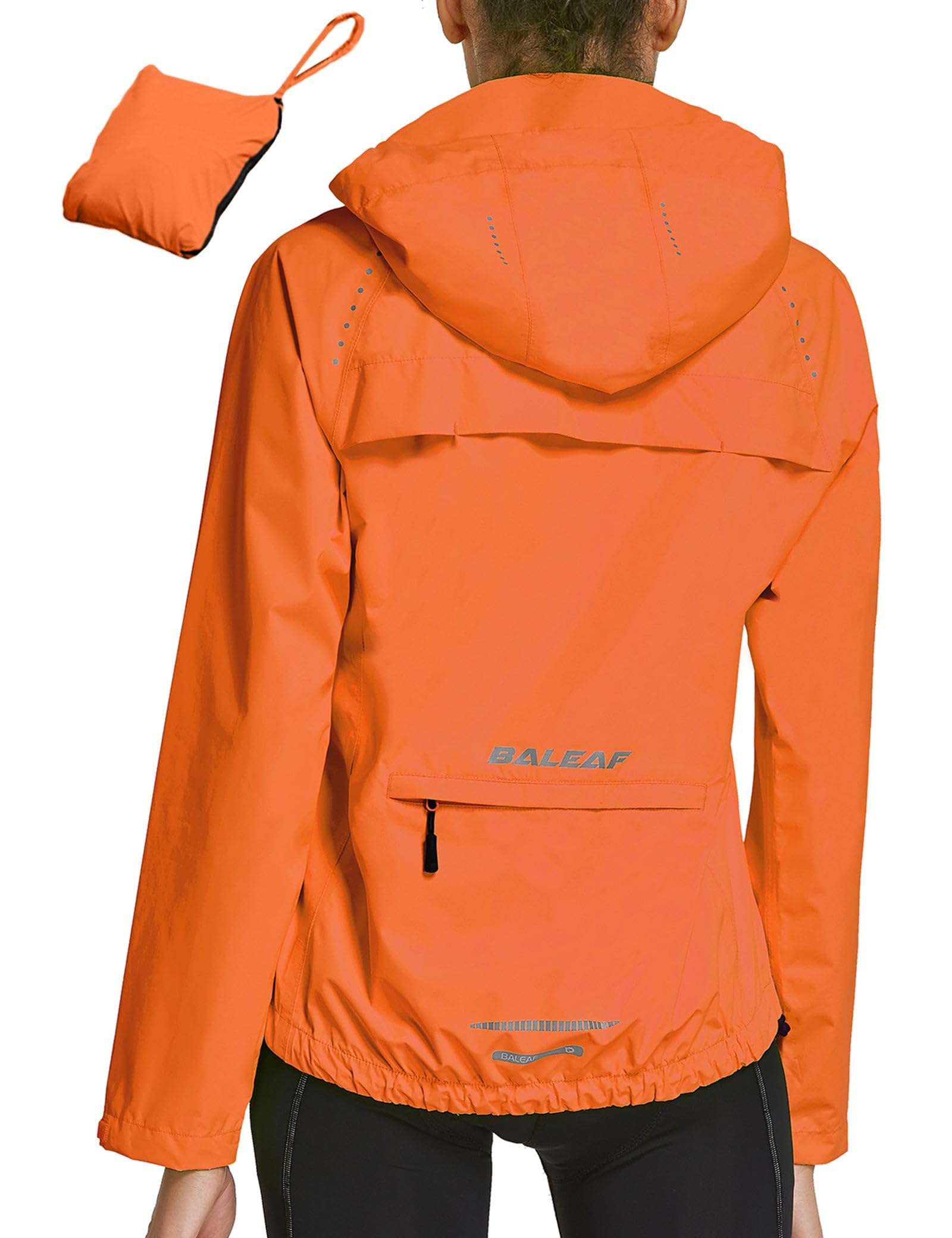
If your hike shares a road with traffic or you move fast in low light, visibility is a safety feature. This baleaf jacket comes in bright, high-visibility colors that are easy to spot through trees and along a shoulder. We reach for it on commutes and early-morning walks when being seen matters as much as staying dry.

The packable shell has a hood that tucks away into the collar, which keeps it from flapping when you do not need it. The zippered pockets are secure enough for keys and a phone, and the lightweight fabric rolls into a pack without much fuss. We also like the slightly stiff hood brim because it keeps rain out of your eyes.

For road-adjacent trails, cycling commutes, and gloomy-weather walks, it is a useful piece. It is not the most breathable shell here, and it can feel clammy when you push hard on a climb, so we save it for moderate effort or wet, cool days. The visibility and packability are what earn it a spot.

Bottom line: We reach for this on road-adjacent or low-light hikes, where the bright color and packable hood earn their place.

8

Outdoor Ventures Puffer

Outdoor Ventures Puffer

Cold-weather travel

Our Score 8.8/10
Check Price

Worth Noting

  • Not a rain jacket; needs a shell in wet weather
Hood
Attached
Pockets
Zippered
Packability
Packs into pocket or pouch
Package Weight
14.4 oz

A hooded puffer that folds into a pocket is the piece we add when the forecast is cold but clear. This Outdoor Ventures jacket has a roomy hood, zippered pockets, and enough loft to take the chill off a morning without the bulk of a winter coat. It is the warm layer we keep in the car or at the bottom of a daypack.

The packability is the useful part: it compresses into a small pouch, and the hood means you do not need a separate hat for a cold summit snack. The zippered hand pockets are deep enough for gloves, and the inside pocket keeps a phone close and secure. We also like the muted colors, which look less technical than the shiny puffer style.

The fit runs roomy, especially through the body, so it layers easily over a fleece. If you are between sizes and want a closer fit, check the sleeve length before sizing down; the hood is generously sized without swallowing your head.

For cold-weather travel and dry, chilly hikes, it is a practical warm layer. The hood and packable pouch make it more useful than a plain liner, and the roomy cut leaves space for a sweater. It is the piece we reach for when we want warmth that does not take over the pack.

Bottom line: We pack this hooded puffer for cold, clear trips when we want warmth that folds into a pocket.

How We Tested a Dozen Women's Hiking Jackets

We started with every jacket claiming waterproof or water-resistant construction, then cut the list down by what the seams and zippers actually looked like, fabric weight and packability, the size range each brand offers (plus sizes included), and price. That left 12 jackets. We ordered each in our usual size first, and the label turned out to be the least reliable spec of all — some ran a full size small, others were generous through the shoulders and tight at the hip.

Testing ran for eight months, on real hikes. We wore them on a cold, foggy ridge where wind mattered more than rain, on a warm drizzle that soaked through anything without sealed seams, and over two-hour climbs with a daypack to see whether shoulder straps pushed moisture through the fabric. Each one also went over a thin merino base and, on colder days, a fleece, to check whether the sleeves rode up when we reached overhead.

We stuffed every jacket into its own pocket and into a daypack, timing how long that took and how quickly each dried hanging overnight. Turning our heads tested the hoods. Carrying keys and a phone in the pockets showed which zips snagged. And we wore each one into town afterward, because appearance counts — a jacket you resent putting on isn't much use. Every one has been washed twice so far.

How to Choose a Women's Hiking Jacket

Match the shell to your rain

A waterproof shell is the right choice for sustained rain, exposed ridges, and trips where the forecast is genuinely uncertain. A water-resistant jacket handles mist, snow, and a short shower, but it is not a substitute when rain is the plan. The difference matters most at the seams and hood, where water finds its way in.

If you hike mostly in dry cold, a water-resistant puffer is lighter and warmer than a shell. If you hike in wet, changeable weather, start with a waterproof shell and add insulation underneath. That two-layer approach is more flexible than one heavily insulated jacket.

Prioritize ventilation on the uphill

A waterproof jacket that traps heat is a jacket you take off on the climb, which defeats the point. Underarm zippers, mesh linings, and lighter fabrics let you dump heat without exposing yourself to wind and rain. We look for pit zips first on any shell meant for steady uphill effort.

A fleece-lined softshell is the warmer, less packable answer for cold, windy days. It is comfortable when you are moving slowly or standing around, but it can be too much on a fast summer climb. Match the breathability to your pace, not just the temperature.

Fit for layering and arm movement

A hiking jacket needs room for a baselayer and a light fleece, but not so much room that it flaps or rides up under a pack. Check the chest and hip measurements rather than assuming your usual size, because several jackets here run small or roomy. Raise your arms and reach forward; the hem should stay put and the cuffs should cover your wrists.

If you are between sizes, size for the layers you plan to wear. A trim fit is fine for summer shells, while a winter layer needs more space through the shoulders. Sleeve length matters too: short sleeves let rain run down your arm and into a glove.

Packability and warmth trade off

A thin rain shell can live in a daypack without a second thought. A fleece-lined softshell or a puffer takes more space, but it also adds warmth that a shell cannot. The right choice depends on whether you are carrying the jacket for an emergency or wearing it for most of the day.

For three-season hiking, we like a packable shell plus a light puffer for cold starts. For wet, cold weather, a fleece-lined softshell is simpler because it combines wind protection and warmth in one piece. Do not expect one jacket to be both the smallest thing in your pack and the warmest.

Hoods and pockets are the details you use

A hood should cinch around the face and move with your head, not hang loose behind it. Look for a front drawcord, a high collar, and a brim that keeps rain off your eyes. A removable hood is useful in town, but a fixed hood usually seals better in wind.

Zippered hand pockets should sit clear of a hipbelt, and an internal pocket is a good place for a phone or a map. A two-way zipper is worth having on a longer jacket because it lets you sit and climb without the hem bunching. These are small features that decide whether a jacket is pleasant to wear all day.

Frequently Asked Questions

Final Verdict

After comparing these jackets, we keep coming back to the 33,000ft packable rain jacket as the best default for women hiking in wet, changeable weather. The underarm vents, adjustable hood, and included stuff bag solve the practical problems that make a shell worth carrying.

If your hikes are cold and windy more often than rainy, the 33,000ft softshell is the better pick because its fleece lining adds warmth without a separate layer. For dry cold, the Amazon Essentials puffer is the warm layer we add underneath.