Fashion

Best Travel Jackets for Women of 2026

A good travel jacket has to do two opposite things at once: vanish into your bag, then stand between you and weather you didn't plan for. The packable ones that fold into their own pocket are often so thin that a stiff breeze cuts right through, and the genuinely warm ones eat a third of a carry-on before you've packed a single sock. The right jacket lives in the middle — light enough to wear onto a plane and stuff under the seat, substantial enough that a gray afternoon doesn't send you shopping in a strange city.

I've had jackets that fit beautifully in a dressing room and failed on the trip itself: sleeves that ride up the moment you hoist a bag into the overhead bin, shoulders that soak through before you reach the terminal door. Over the past six months my team and I wore 12 travel jackets through real trips, commutes, and drizzly weekends, and the differences came down to fabric thickness, sleeve length, and how honest the sizing runs — a medium in one is a large in another, so plan for a layer underneath. The picks below are sorted by which of those compromises you'd rather make.

1

33,000ft Women's Softshell Jacket

Top Pick
33,000ft Women's Softshell Jacket

Variable-weather trips

Our Score 9.2/10
Check Price

Worth Noting

  • Too warm for hot, humid days
Hood
Attached
Shell
Waterproof softshell
Lining
Fleece
Pockets
Zippered plus interior

A fleece-lined softshell is the closest thing to a single-jacket answer for a trip where you can't trust the forecast. This one pairs a waterproof outer with a brushed lining and a hood that holds its shape in wind, so a cold, drizzly morning and a breezy afternoon are the same jacket. We kept coming back to it because it removes a decision — no standing in the hotel doorway checking the sky.

Two details did more for us than the headline features. The fabric has some give, so reaching overhead for a bag or a train handrail doesn't haul the whole jacket up with it, and the cuffs are cut long enough to stop wind running up your sleeve. Neither shows up in a product photo; both are why this one gets worn on travel days rather than folded away.

The storage is generous for a shell — zippered pockets outside, plus interior pouches that swallow a passport and a phone — and there's room for a sweater underneath without the jacket going boxy. It's the warmest of the rain-ready jackets here, which is most of why it's our top pick.

The trade-off is space. This is a softshell, not something that vanishes into a pouch; it takes up real room in a carry-on, so plan to wear it on travel days. A packable shell is the better choice for a week of warm-weather thunderstorms — but for a shoulder-season trip where anything could blow in, nothing else here covers more.

Bottom line: Our pick when the forecast is genuinely uncertain: warm, wind-blocking, and rain-ready in one jacket that still looks put-together at dinner.

2

Outdoor Ventures Packable Rain Jacket

Outdoor Ventures Packable Rain Jacket

City rain trips

Our Score 9.2/10
Check Price

Worth Noting

  • Runs small, with short sleeves for taller wearers
  • No warmth of its own
Hood
Adjustable
Type
Packable rain shell
Lining
Mesh
Pockets
Multiple zippered

Pockets are what make this shell useful on a trip rather than merely waterproof. There are zippered ones on the outside and another inside for a wallet or passport, so a rainy walk doesn't mean swinging a daypack off your shoulder every time you want your phone.

This is the jacket we take when rain is likely and warmth isn't the problem. It rolls down small enough to live in a tote, the hood adjusts to pull around your face instead of sitting on the back of your head, and a mesh lining stops it clinging to bare arms the way an unlined shell does.

Where it earns its keep is a mild, wet trip — a walking city, a week of ferries, a theme park where you're outside for hours at a stretch. That's when a jacket that packs to nothing and keeps you dry is worth more than anything heavier in the bag.

Bottom line: The packable shell we reach for on city trips — real pockets, an adjustable hood, and enough rain protection to stop you checking the sky.

3

Outdoor Ventures Packable Puffer

Outdoor Ventures Packable Puffer

Cold-weather travel

Our Score 8.8/10
Check Price

Worth Noting

  • Sizing is inconsistent
Hood
Roomy, attached
Pockets
Zippered, plus interior
Insulation
Light synthetic fill
Packability
Folds into own pouch

If the top pick is the jacket for a trip with an unknown forecast, this is the one for a trip where you already know it's going to be cold. It's a puffer: light synthetic fill, a hood, and a shell that shrugs off a shower. For a cold-weather itinerary where you'd otherwise pack a coat, it's the better use of space, and that's why it's our pick for cold trips.

The packing is what sold us. It rolls into its own pouch small enough to sit at the bottom of a carry-on, and it comes out without the flattened, creased look a puffer gets after hours in a bag. Zippered hand pockets, an inside pocket, and a hood roomy enough to cover your hair rather than perch on top of it round out a jacket that's better finished than we expected.

It's a warm layer rather than a rain jacket — drizzle is fine, a sustained downpour isn't what it's for, and on the coldest days you'll want a shell over the top. As the thing that keeps you warm on a cold trip without eating your suitcase, nothing else here comes close.

Bottom line: The warm layer for a cold trip: it packs into its own pouch, shakes out uncreased, and beats a heavy coat for suitcase space.

4

LOMON Hooded Trench Raincoat

LOMON Hooded Trench Raincoat

Long rain coverage

Our Score 9.0/10
Check Price

Worth Noting

  • Sizing is inconsistent across the range
  • Lighter fabric than a traditional trench
Hood
Generous, attached
Length
Thigh length
Lining
Contrast-striped
Water Resistance
Waterproof

Length is what separates this from every other rain jacket here. It covers your backside and the top of your thighs, which is the difference between arriving at dinner dry and arriving in wet jeans — the part of a rainy travel day nobody plans for.

The details are more considered than we expected: a hood with enough room to keep rain off your face, a lining with a contrast stripe that stops it reading as a poncho, and a drawstring at the waist so it doesn't hang like a sack.

It's the jacket we take when rain is the forecast rather than the risk — a week of wet days in a city where you're walking between museums, cafés, and a train station. The length is what earns it a place in the bag, but the cut is why you won't mind wearing it to lunch.

Bottom line: For a wet week of walking between museums and cafés, this is the one — thigh-length coverage in a coat that still looks like a coat.

5

Amazon Essentials Packable Puffer

Amazon Essentials Packable Puffer

Cold on a budget

Our Score 9.0/10
Check Price

Worth Noting

  • Runs small through the waist and shoulders
Sizing
Standard and plus
Pockets
Two interior
Packability
Stuffs into attached bag
Water Resistance
Water-resistant

The little bag this jacket stuffs into is the whole pitch. It compresses to something you can drop in a backpack and forget about until the evening temperature drops, which on a trip between a warm city and a cold one is the difference between packing a coat and not packing one.

As a jacket it's simple — a light synthetic fill and a water-resistant shell that handles drizzle — and it's warmer than its weight suggests. Two inside pockets take a phone and a passport, which is a nice surprise on something this light, and the whole thing layers under a rain shell when the weather turns.

It won't replace your raincoat, and on a genuinely cold day you'll want a sweater underneath. For cool evenings, air-conditioned airports, and the flight home, it's the layer you'll be glad you bothered with.

Bottom line: Warmth you can always fit in a bag: a stuff-sack puffer that handles drizzle and layers under a shell when the evening turns.

6

Kikibell Striped Lined Raincoat

Kikibell Striped Lined Raincoat

Budget rain days

Our Score 9.0/10
Check Price

Worth Noting

  • Sizing is inconsistent
Lining
Striped
Weight
15.9 oz
Pockets
Two deep front
Water Resistance
Waterproof

The striped lining is the detail that makes this jacket feel like more than it is. It's a proper raincoat — hood, waterproof shell, snap placket — but the contrast interior and the color range mean it doesn't look like gear you'd only wear in bad weather.

In use it's a solid light-rain jacket. It keeps your clothes dry in steady drizzle, the front pockets are deep enough for a phone, and the fabric is soft rather than noisy, which matters more than people admit when you're wearing something for hours.

Where it struggles is heat. The fabric doesn't breathe much once it's zipped, so on a sticky afternoon you'll end up wearing it open, which rather defeats the point — save it for cool, damp spring days and it's a pleasure. It's also heavier in the bag than the packable shells here, though still light enough to wear all day.

Bottom line: A rain jacket that looks good enough to wear when it isn't raining, and keeps you dry when it is — watch the sizing.

7

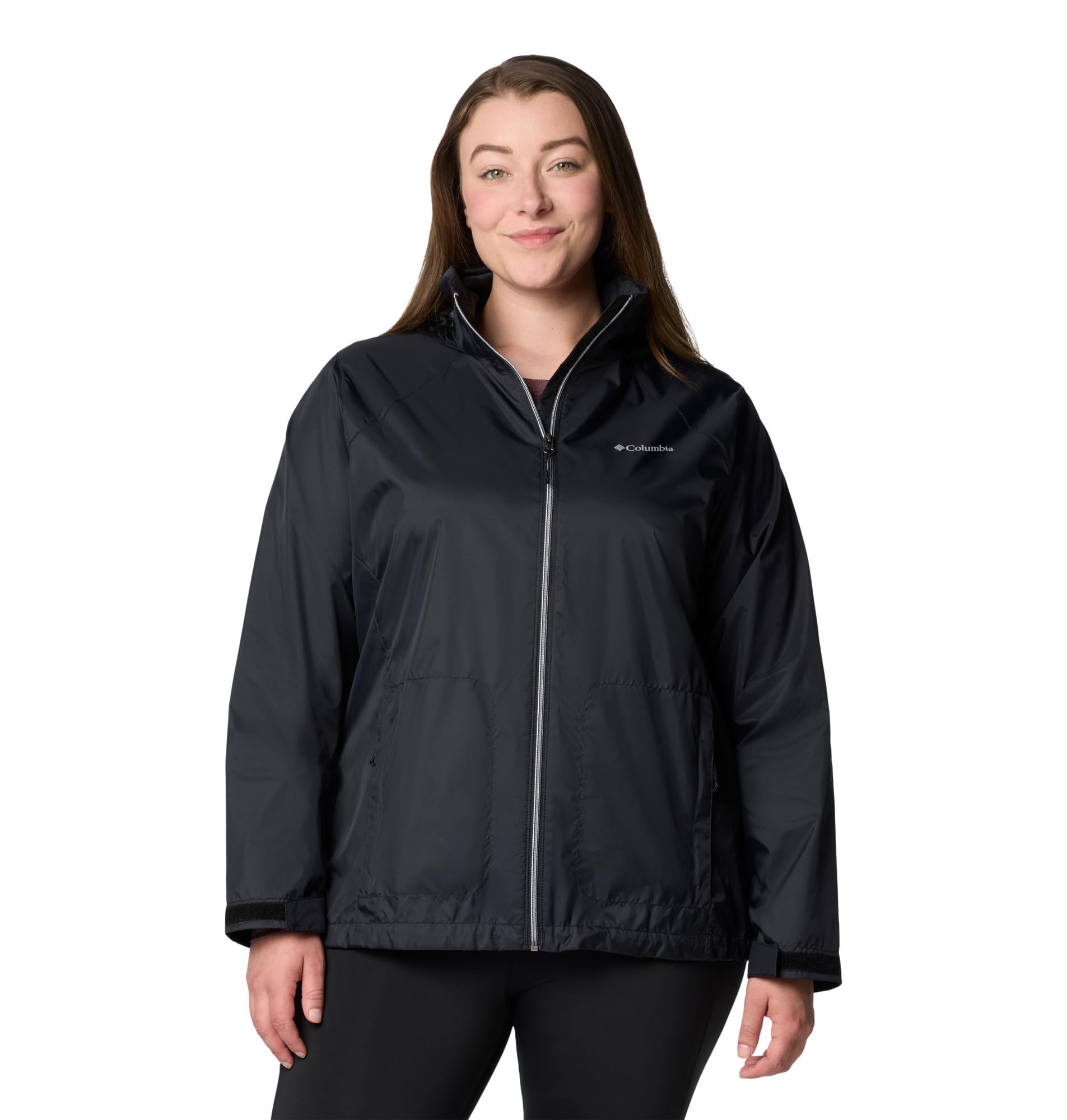
Columbia Switchback IV Jacket

Columbia Switchback IV Jacket

Emergency rain layer

Our Score 8.8/10
Check Price

Worth Noting

  • Runs small with very long sleeves
  • Unlined shell adds no warmth of its own
Hood
Stows in collar
Lining
Unlined
Pockets
Four, two interior
Water Resistance
Water-resistant

This is about as minimal as a rain jacket gets: an unlined shell thin enough to fold into a jacket pocket, with a hood that tucks away into the collar when the sky clears. That's the whole idea, and for rain cover that weighs nothing in a bag, it works.

Best to think of it as the emergency layer rather than the jacket you plan an outfit around. It keeps rain off and cuts wind, and it's at its best worn open over a T-shirt in a summer shower or over a fleece in a cold snap. Zipped to the chin on a humid day it can feel clammy — the familiar trade-off with a shell this thin.

The details are genuinely useful: two roomy outside pockets and two inside, a hood that stows instead of flapping, and a cut that's a little more shaped than a standard unisex shell.

If you want a jacket that lives in your bag and never gets in the way — the just-in-case layer for a trip that's mostly dry — this is the one we reach for. It will be there when the sky opens, and you'll have forgotten you packed it until then.

Bottom line: The jacket to keep in a bag for the day the forecast changes: barely there in weight, dry in a shower, easy over anything.

How We Tested the Best Women's Travel Jackets

We started with a few dozen jackets found through retailer listings, travel-gear forums, and staff recommendations, then narrowed by the things that actually matter on a trip: whether the jacket packs into its own pocket, whether the hood stays up in wind, the size range (including plus), fabric composition, and price. That left 12 jackets, which we wore for six months across flights, train rides, and wet-weather weekends.

Each jacket went into a carry-on, got stuffed into its own pocket or stuff sack, and then had to fit alongside a week's clothes in a personal item. We wore them on planes and in the rain, over a thin tee on cool mornings and over a chunky sweater when the temperature dropped, and we watched how the fabric handled being rolled, sat on, and re-stuffed twice a day.

For water resistance, we sprayed each shoulder and cuff for a full minute and checked whether water beaded or soaked in, then checked again after ten minutes. Warmth was judged on early walks with just a t-shirt underneath. We weighed every jacket on a kitchen scale and measured sleeve length from shoulder seam to cuff, then had a shorter and a taller tester each reach overhead to see how much wrist was left exposed. Every jacket was washed twice per its care label, and we noted frayed seams, sticking zippers, and whether the color still matched what we saw on screen. Quality held up in the details: the jackets that survived six months of abuse had taped seams and zippers that never snagged.

How to Choose a Women's Travel Jacket

Start with the weather, not the jacket

Three kinds of jacket cover most trips. An unlined rain shell keeps you dry and weighs almost nothing, but it adds no warmth. A fleece-lined softshell does both — rain off, wind out, some insulation — at the cost of space in your bag. A packable puffer is your warm layer, and while a light one shrugs off drizzle, it isn't what you want in sustained rain.

The trap is buying for the trip you hope to take. Somewhere wet and mild, a warm jacket is dead weight; somewhere cold and dry, a shell on its own won't be enough. Pack the layer that matches the forecast, then add the light one as backup.

What packable actually means

Packable rarely means what a shopper pictures. On most listings it means the jacket folds into its own pocket or a small stuff sack — a bundle roughly the size of a melon, not a flat square that slides into a laptop sleeve. That's still a real advantage: a jacket that lives in your day bag is one you'll actually carry.

Ask where the packed jacket has to go. If it needs to fit a personal item alongside a book and a water bottle, a shell is the only one of these that will. If it just has to survive a checked bag without eating half the space, an insulated jacket that packs to melon size is fine.

Water resistance is not one thing

Waterproof on a listing can mean a taped-seam shell built for hours of rain, or a coated fabric that handles a ten-minute shower. The page rarely tells you which, so read the construction instead: a storm flap over the zip, a hood with a drawcord that pulls it around your face, and cuffs that close are what keep water out in practice.

Match the claim to the trip. For a city break where rain means ducking between shops, water-resistant is plenty. For a walking holiday in a wet climate, pay for the sealed front and the adjustable hood — the LOMON and the 33,000ft softshell both give you those.

Get the fit right before you get the color

Sizing is the most common snag in this category, and it runs both ways: some jackets come up small through the shoulders, others are roomy enough that you'll want a size down. Measure your bust and compare it to the chart rather than assuming your usual size holds.

Think about what goes underneath. You want room for a sweater or a fleece without the jacket turning into a tent, which usually means one size up from what you'd wear over a T-shirt alone. Check sleeve length too: a shell that stops an inch short of your wrist lets water run straight up your arm.

Frequently Asked Questions

Final Verdict

For most trips we point to the 33,000ft softshell. It handles cold, wind, and rain without a second layer, which is exactly what a travel jacket is being asked to do, and it's the one pick here that never left us wishing we'd brought something else.

The exception is a warm-weather itinerary or a bag with no room to spare — that's when the Outdoor Ventures packable shell earns its place, and when the LOMON's longer cut is worth carrying the extra fabric. Buy for the weather you're flying into.