Fashion

Best Winter Jackets for Women of 2026

The trouble with a winter coat is that the warmest ones make you look like a sleeping bag with arms, and the ones that look genuinely good leave you shivering at the bus stop by 8 a.m. What you actually want is narrower: something that handles a 20-degree morning, layers cleanly over a chunky sweater without turning your shoulders into a triangle, and doesn't have you dreading the hallway mirror. Add sizing that runs two ways from the chart and a zipper that gives up in February, and the search gets harder than it should be.

I've donated more coats than I'd like to admit because the fit was off or the zipper grabbed the lining every single time. Over eight months, my team and I wore 12 jackets through school drop-offs, dog walks, a ski weekend, and one memorably slushy commute, and the differences came down to details you only notice after an hour outside. One thing first-time buyers miss: warmth has less to do with how puffy a coat looks than with how well it seals at the hood, cuffs, and hem. Cold air finds the gaps. The picks below are the ones we kept reaching for without thinking about it.

1

Orolay Thickened Down Jacket

Top Pick
Orolay Thickened Down Jacket

Cold city winters

Our Score 9.0/10
Check Price

Worth Noting

  • Runs small through shoulders and sleeves
  • Zippers can catch at the collar
Hood
Attached
Pockets
Multiple zip pockets
Insulation
Thickened down

The Orolay has become the coat people stop you about on the street, but the reason it earns our top spot is simpler: it balances warmth, coverage, and a shape that doesn't swallow you. We tested it on cold, dry commutes and found the thickened down insulation takes the sting out of a raw morning without the stiffness of a heavy parka. The attached hood is a real asset when the wind picks up, and the multiple zip pockets hold a phone, gloves, and transit card without turning the front into a jumble.

What surprised us is how easily it moves between a school run and a dinner out. The side zips help when you sit down or drive, and the quilted lines keep the silhouette from looking like a sleeping bag. The hood is soft and covers the head well, though it is fixed rather than detachable.

This is the coat we point to first for a cold, dry city winter. It is not a technical shell and it is not trying to be; on a wet, slushy day, the Outdoor Ventures softshell is the better tool. If you want one warm, good-looking coat that works with jeans and a dress, start here.

Bottom line: For most women who want one warm, good-looking coat for a cold, dry city winter, the Orolay is the clear starting point.
2

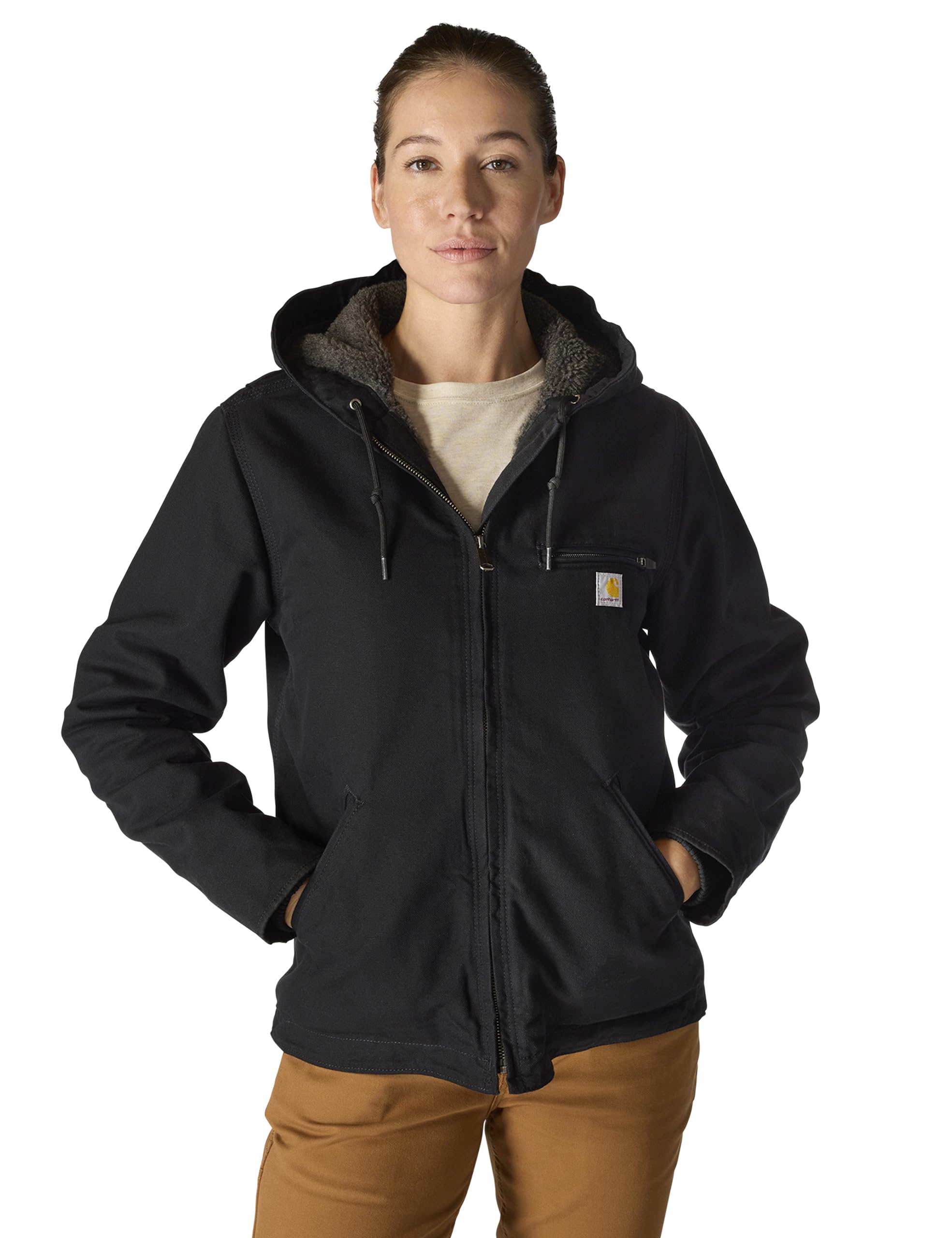
Carhartt Washed Duck Sierra Jacket

Carhartt Washed Duck Sierra Jacket

Outdoor chores

Our Score 9.6/10
Check Price

Worth Noting

  • Heavy for milder winter days
  • Runs large; check the size chart
Hood
Drawstring
Shell
Washed duck
Style
Workwear jacket
Pockets
Inside and outside

The Carhartt is the jacket we reach for when the forecast is less crisp and more sideways sleet. The washed duck shell feels like a piece of equipment, and that is the point: it blocks wind, shrugs off a shower, and has enough structure to keep its shape through a winter of outdoor chores. It is not the softest thing in the closet, but it is the one we trust with a wheelbarrow and a dog leash.

Warmth comes without puffer volume, and that is why it earns a runner-up spot. The jacket leaves room for a hoodie or a thick sweater, and the inside and outside pockets are deep enough for a phone, keys, and a pair of gloves. The drawstring hood is stiff at first, then settles in; we found it stays put in wind better than the floppy hoods on lighter coats.

This is a workwear cut, so it feels more utilitarian than dressy. The upside is durability and a shape that handles real movement. For a cold-weather commute that involves more than walking to the car, it is the most rugged pick here.

Bottom line: Buy it if your winter involves real outdoor work and you want a jacket that feels built to take it.

3

BINACL Long Parka

BINACL Long Parka

Long-coat coverage

Our Score 9.4/10
Check Price

Worth Noting

  • Outside pockets are shallow
  • Sizing is inconsistent; check measurements
Hood
Detachable faux-fur
Length
Long
Closure
Zip and snap
Pockets
Multiple outside pockets

A long parka at a midrange price is usually where corners show, but the BINACL gets the coverage right. It drops to about mid-thigh, which is the difference between a coat that keeps the wind off your back and one that leaves you clutching the hem on a cold platform. The warmth is serious for the price, and the detachable faux-fur hood gives it a finished look without forcing you into a strictly sporty jacket.

We like the roomy cut for layering: there is space for a long-sleeve top and a hooded sweatshirt without the coat pulling across the shoulders. The zip and snap front feels secure, and the hood is soft and stays up in wind. The faux-fur trim comes off when you want a cleaner line, and the long body covers the hips without feeling like a sleeping bag.

What sells it is the length-to-price ratio: you get a proper long coat, a roomy layer-friendly body, and a hood that feels considered rather than an afterthought. If your winter is wet rather than dry, a softshell makes more sense; for cold, dry commutes, this is the value pick we point to first.

Bottom line: This is the long parka we point to when you want serious coverage without paying premium prices.

4

wantdo Hardshell Ski Jacket

wantdo Hardshell Ski Jacket

Ski days

Our Score 9.2/10
Check Price

Worth Noting

  • Sizing runs inconsistently; check the chart
Hood
Detachable
Sleeves
Thumb holes
Windproofing
Windproof
Waterproofing
Waterproof

Ski jackets often look the part without doing the part; the wantdo has the details we actually use on a cold hill: thumb holes that keep the sleeves down, a roomy hood, and pockets that swallow gloves. The hardshell blocks wind and sheds snow, and the insulation is enough for lift rides without making you feel like a bunker.

We came back to it for resort days because it is warm, practical, and not fussy. The fit is roomy through the body, which is what you want for a base layer and a midlayer, and the detachable hood is a useful option when you wear a helmet. Pockets are well placed and zippered, and the thumb holes are the kind of small feature that makes a difference when you are adjusting bindings in the cold.

The one place it stops short is rough backcountry use. The jacket handles resort skiing and snow play, but the seams are built for chairlifts and snowballs, not a heavy pack strap sawing at your shoulder all day. Treat it as a dedicated snow jacket, and it makes a lot of sense.

Bottom line: A practical ski jacket for resort days, with the warmth and pockets to keep you out longer.

5

Outdoor Ventures Softshell Raincoat

Outdoor Ventures Softshell Raincoat

Wet mild winters

Our Score 9.0/10
Check Price

Worth Noting

Hood
Hooded
Lining
Fleece
Closure
Two-way zip
Waterproofing
Waterproof

Rain jackets can feel like a plastic bag with sleeves; this softshell is the exception we keep by the door. The fleece lining takes the chill off a wet morning, the outer fabric sheds rain, and the cut is neat enough for a school pickup or a city walk. It is the jacket we reach for when the forecast is gray and drizzly rather than deep-freeze cold.

The hood is roomy and adjustable enough to stay put, and the two-way zip is a small but welcome detail when you sit down or ride a bike. Pockets are plentiful and zippered, which matters when you are juggling keys and a phone in the rain. The fleece lining is soft against the skin, and the inside drawstring cinches the waist so it doesn't hang like a poncho.

This is not a down coat, and we don't pretend it is one. In true winter cold, you need a warmer layer underneath or a different jacket altogether; the softshell earns its place in the wet, mild winter that much of the country actually gets. If your winters are more slush than snow, it is a more useful everyday coat than a bulky parka.

Bottom line: The softshell we recommend when winter means rain and wind more than deep freeze.

6

SUOKENI Ski Jacket

SUOKENI Ski Jacket

Budget snow trips

Our Score 9.0/10
Check Price

Worth Noting

  • Sizing runs inconsistently; check the chart
  • Zipper can be finicky
Hood
Attached
Lining
Fleece
Pockets
Multiple zip pockets
Waterproofing
Waterproof

If you need a snow jacket for a first ski trip or a snowy weekend and don't want to spend much, the SUOKENI is the one that surprised us. It is warm, waterproof, and lined with fleece, and it has the kind of deep zip pockets that keep a phone and a lift pass dry. For the money, it gets the basics right.

The hood is big enough to cover a helmet, which is great on the slope but overwhelming on a dry walk without one. The body is roomy enough for a sweater, and the fleece lining feels soft rather than scratchy. We like the higher collar and the adjustable cuffs; they seal out drafts without making the jacket feel stiff.

This is a snow-sports jacket, not a polished city coat. It earns its place for occasional snow days, a first ski trip, or a winter hike where you want warmth and waterproofing without a premium layout. If you already own a serious shell, this is the spare; if you don't, it is a smart budget choice.

Bottom line: A budget snow jacket that gets the warm, dry basics right for occasional winter play.

7

Columbia Benton Springs Fleece

Columbia Benton Springs Fleece

Mild winter layering

Our Score 9.2/10
Check Price

Worth Noting

  • Not a standalone deep-winter coat
  • Sizing and color can vary from the listing
Type
Fleece jacket
Weight
Lightweight
Closure
Full zip
Pockets
Front hand pockets

This is not the coat for a January cold snap in Minneapolis; it is the fleece you live in from September through November and again in March. The Benton Springs is soft, light, and surprisingly warm for its weight, with a full zip that makes it easy to layer over a T-shirt or under a shell.

The fit is flattering without being tight, and the sleeves have elastic at the wrist to keep drafts out. Pockets are generous enough for hands and a phone, and the fleece has a soft hand that works over a tee or under a parka.

Treat it as a layer first and a jacket second. It is best for mild winter days, travel, and indoor-to-outdoor errands, and it slides under a shell when the weather turns.

That is the role it fills in our closet, and it fills it well. If you want one coat for a real winter, look at the Orolay or the BINACL; if you want a soft, light fleece that earns its keep three seasons a year, start here.

Bottom line: The fleece we reach for on mild winter days, as a layer or a light jacket on its own.

8

MAGCOMSEN 3-in-1 Ski Jacket

MAGCOMSEN 3-in-1 Ski Jacket

Travel and layering

Our Score 9.0/10
Check Price

Worth Noting

  • Runs small through shoulders
  • Inner fleece has no pockets
Hood
Detachable
Style
3-in-1
Lining
Removable fleece
Waterproofing
Waterproof

A 3-in-1 jacket is a smart idea for travel because it turns one purchase into a shell, a fleece, and a warm combo; the MAGCOMSEN executes that idea with a few fit wrinkles. The outer shell is waterproof and windproof, the removable fleece liner adds warmth, and the hood comes off when you want a cleaner look.

The layering system is the draw. Wear the shell alone in rain, the fleece alone on a cool day, or zip them together for a cold morning. Pockets on the outer jacket are roomy and zippered, and the hood is adjustable enough to stay put. The inner fleece is soft and simple, and the whole thing packs into a suitcase without much bulk.

For a trip where the weather might swing from damp and mild to genuinely cold, that flexibility is worth more than a single specialized coat. It is not the most polished jacket here, and the liner is basic, but it covers more conditions than anything else in this group.

For travel and variable weather, the versatility is worth the fuss. It is the jacket that lets you pack one coat instead of three, and that is the reason it stays in the rotation.

Bottom line: A versatile 3-in-1 for travel and changing weather, provided you order the right size.

How We Tested the Best Winter Jackets for Women

We started with a shortlist of roughly 60 jackets and cut it down by fill type, shell fabric, whether the hood was actually adjustable, how wide the size range ran, and how the listed measurements compared to what reviewers reported. That left 12 coats, which we wore over eight months across a real winter and the shoulder seasons on either side.

Every jacket ran the same circuit: a 6:45 a.m. dog walk in the low 20s, a wet commute, a full day standing around on a ski hill, and a long weekend where it got stuffed into a duffel and sat in a trunk. We layered the same thick cable-knit sweater under each one and noted where it pulled across the back or bunched at the elbows, and we checked sleeve length by reaching for a steering wheel and a top shelf. Fit got judged by a range of body types on the team, not one.

Zippers took the harshest treatment: at least 50 zips per jacket, some of them done with gloves on in the dark, with a note every time the pull snagged the lining or the teeth separated at the bottom. We carried a loaded backpack over each coat for a week to see whether the shoulders pilled or the seams strained, and we washed them per the care label and compared color and loft before and after. Then we hung each one on a hook and looked at it from across the room, because a coat that fits well but reads like a sack doesn't get worn. The ones that survived all of it are the ones we still grab on the way out.

How to Choose a Winter Jacket for Women

Match the insulation to your winter

Down and thickened synthetic puffers trap warmth best for dry cold, which is why the Orolay and BINACL make sense for city winters. A ski shell or hardshell like the wantdo adds weather protection and room for layers, while a fleece like the Columbia Benton Springs is a mild-winter layer rather than a standalone deep-cold coat. If your winter is wet and above freezing, a softshell such as the Outdoor Ventures will get more use than a heavy parka.

The label matters less than the combination: insulation for cold, a shell for wind and wet, and enough room to wear a sweater without compressing the loft. A jacket that is too tight is colder than a slightly roomy one.

Fit the shoulders and sleeves first

Shoulders and sleeves decide whether a winter jacket is comfortable, not the size on the tag. You want enough room to raise your arms and drive without the hem riding up, but not so much that cold air circulates. Sizing is inconsistent across this category, so use the bust and hip measurements rather than assuming your usual letter size. The Orolay runs close through the shoulders, the Carhartt runs large, and the MAGCOMSEN runs small; check each chart before ordering.

Look at the hood, cuffs, and hem

A hood that stays up in wind and leaves your peripheral vision clear is worth more than a fashionable faux-fur trim. Adjustable drawcords, a high collar, and elastic or adjustable cuffs seal the gaps where cold air enters. A two-way zip is a small luxury when you sit down or drive, and a hem that covers the hips makes a real difference on a windy platform. If a hood is oversized and fixed, it can overwhelm a smaller frame or block your view.

Decide how much weight and length you will carry

Long parkas cover more of you, but they also add bulk and can feel restrictive in a car. Hip-length jackets are easier to move in and layer under a shell, while a mid-thigh cut is the practical middle for commuting. Think about your day: if you are walking to transit, length earns its keep; if you are driving and dashing into buildings, a shorter, lighter jacket may be the one you actually wear. The Carhartt is the heaviest pick here; the Columbia is the lightest.

Pay for the weather protection you will use

Waterproof shells matter for ski days and wet commutes; a water-resistant city coat is usually enough for cold, dry snow. Ski-specific features such as thumb holes, a helmet-compatible hood, and pass pockets are useful on the mountain and fussy in town. Pockets deserve a check too: zippered outside pockets keep gloves and a phone secure, while shallow pockets let items slide out when you sit. Buy for the weather you meet most weeks, not the trip you take once a year.

Frequently Asked Questions

Final Verdict

For most women, the Orolay Thickened Down Jacket is the one to buy first: it is warm enough for a real winter, shaped enough to wear beyond the school run, and practical with its zip pockets and hood. If your winter is wet and mild, choose the Outdoor Ventures softshell; if you need a coat that takes outdoor work, the Carhartt is the tougher tool. The BINACL is the long-parka value pick when coverage matters most.