Skincare

Best Face Massagers of 2026

A face massager makes a small promise: five minutes in the morning, and the puffiness around your eyes and jaw looks a little less like last night. The catch is that plenty of them drag instead of glide, squeak against your cheek, or feel like a cold pebble with no handle. What a good one fixes is simple — it moves fluid, eases jaw tension, and makes a tired face feel awake before you've had coffee. I've had 14 of them on my bathroom counter and in my freezer for four months, with my team testing alongside me.

Material matters more than shape, which surprised me. Stainless steel stays cold through a whole pass, so it's the better choice if puffiness is your main complaint; jade and stone warm to skin and feel lovely but don't hold temperature. Size is the other quiet dealbreaker — a roller head too small for a jawline turns two minutes into ten, and a sharp-cornered stone is one you'll use twice. The picks below are the ones we kept reaching for without thinking.

1

Yeamon Stainless Steel Gua Sha & Roller Set

Top Pick
Yeamon Stainless Steel Gua Sha & Roller Set

Full-face routine

Our Score 9.4/10
Check Price

Worth Noting

  • Heavy head can tire your hand during long routines
Weight
8.82 oz
Cooling
Cool to the touch without refrigeration
Material
Stainless steel
Tools Included
Dual-head roller and gua sha

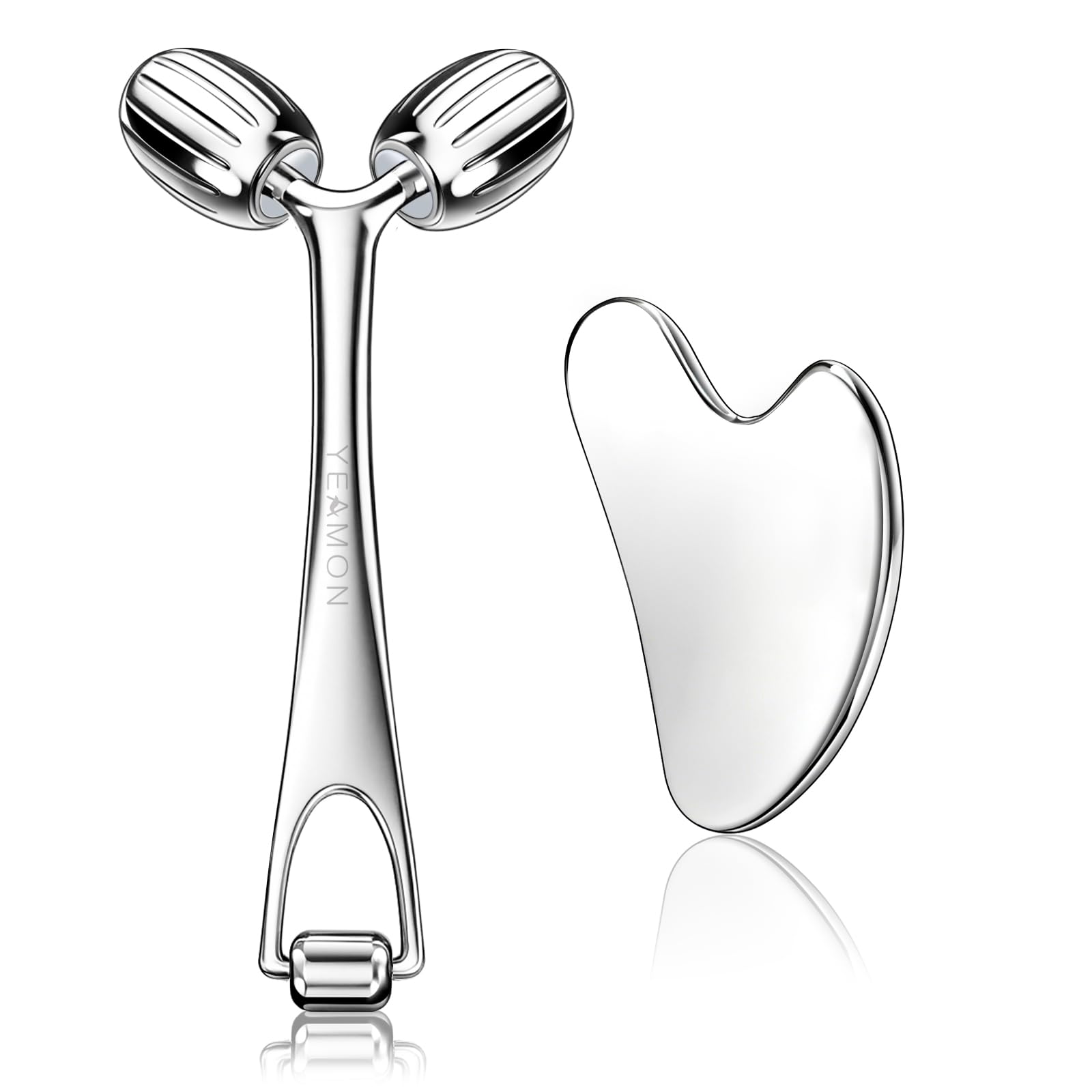
Stainless steel is the reason the Yeamon set earned the top spot. The dual-head roller and flat gua sha stay cool to the touch without a trip to the freezer, so we can roll first thing in the morning and still get that wake-up chill. The roller is heavy—8.82 ounces—and that weight does the work for you: the wide head covers cheeks and jaw in a few passes, while the narrow end reaches under the eyes. The gua sha has a smooth, rounded edge that glides over serum without dragging.

We tested it with a light facial oil and liked the control the handle gives; it doesn't skitter or pinch, and the rolling action stays quiet. The non-porous steel also wipes clean in seconds, which is the practical advantage over jade or rose quartz. The trade-off is the feel: metal is bracing, not spa-soft, and on a cold morning it can be intense at first. If you prefer a warmer, gentler touch, a stone tool is the better match.

For most people, though, this is the manual face massager we recommend first. It covers the two jobs people actually want—depuffing and jawline massage—without the fragility of stone. What you get is a tool you can drop without assuming it's finished. We also appreciate the storage pouches, which keep the roller from rattling around a bathroom drawer. The set costs more than a single stone gua sha, but it earns that difference by replacing two fragile tools with one durable pair.

Bottom line: For a durable, cooling manual routine that covers de-puffing and jawline massage, this is the set we recommend first.

2

Fronnor Ice Roller

Fronnor Ice Roller

Morning puffiness

Our Score 9.4/10
Check Price

Worth Noting

  • Needs freezer space and re-chilling
Type
Ice roller
Weight
6.39 oz
Use Areas
Face, eyes, neck, chest
Dimensions
7.48 x 2.97 x 1.58 inches

The first thing we reach for on a puffy morning is this broad, freezer-ready roller. It has a 7.48-inch handle and a 6.39-ounce body that feels substantial in the hand, and the barrel rolls smoothly across cheeks, under the eyes, and down the neck. The cooling head does the work without pressing hard; a few passes are enough to make skin feel awake. It's also the most affordable ice roller in this group, which matters if you want to try cold massage without committing to a device.

For a simple, budget-friendly de-puffer, it earns its place. The handle feels sturdy, the roller glides without tugging, and it rinses clean. What we don't love is the size: the head is broad enough for cheeks and jaw but less precise around the eye sockets and sides of the nose. That's the trade-off for covering a whole face quickly. If you want a targeted under-eye tool, the mini Kitsch roller is easier to place. We recommend the Fronnor as the ice roller to buy first, especially for morning puffiness across the whole face.

Bottom line: When the whole face is puffy, this is the ice roller we reach for; it's too broad for precise under-eye work.

3

KET WUBZ Contour Face Brush

KET WUBZ Contour Face Brush

Lymphatic drainage

Our Score 9.2/10
Check Price

Worth Noting

  • Bristles need regular washing
Type
Contour face brush
Weight
1.76 oz
Bristles
Soft, curved bristles
Dimensions
3.07 x 2.64 x 1.06 inches

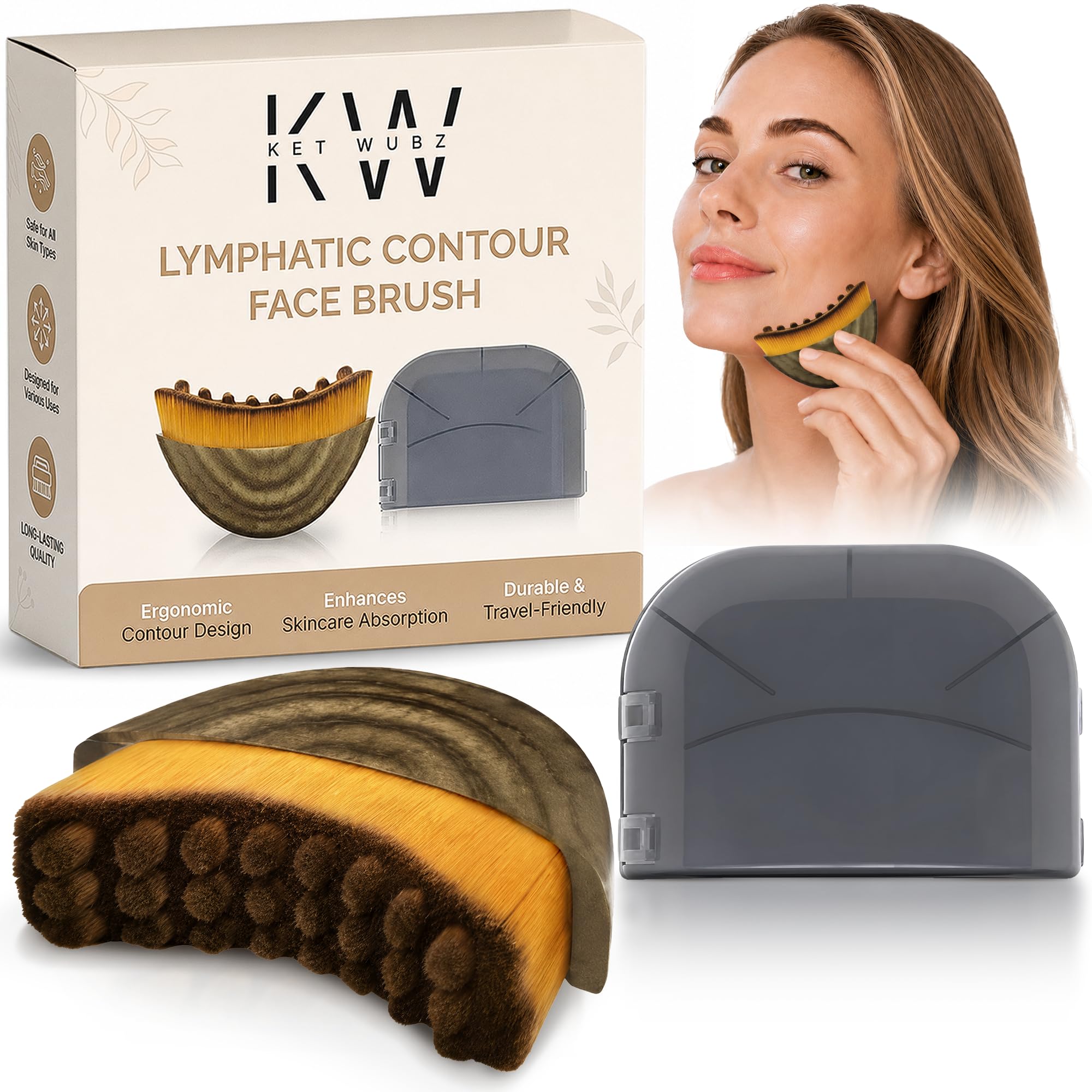
A brush does something a stone can't: it makes lymphatic strokes feel as automatic as brushing your teeth. The KET WUBZ has a curved head of soft, dense bristles that follows the cheekbone and jaw without scratching, and the compact 1.76-ounce body is easy to hold at the angle the strokes need. We used it on clean, dry skin and with a facial oil; both worked, though the oil version glides more easily. The included case is a small but real bonus—bristles are the one part of a face tool that can get mashed in a drawer.

What surprised us is how much the shape matters. The curve fits under the jaw and along the side of the neck, so you can work downward toward the collarbone in one continuous stroke. That's the motion that makes a lymphatic tool useful, and the brush makes it easier to repeat than a flat gua sha. It is not a deep-pressure sculpting tool, though. If you want the firm, deliberate drag of stone or steel, this will feel too soft. The handle also has a faux-wood finish that looks nicer in photos than it feels in the hand.

For daily maintenance, especially if you wake up puffy or carry tension in your jaw, this is the gentlest pick in the group. We kept it by the sink and used it for a minute or two before serum, and that's the right way to think about it: a small habit, not a treatment. It won't replace a gua sha for targeted pressure, but it's the one we reach for when we want to be consistent without thinking hard about technique.

Bottom line: The gentlest daily lymphatic tool here, and our pick for soft, easy strokes rather than firm sculpting.

4

medicube Booster Pro X2

medicube Booster Pro X2

Powered firmness

Our Score 9.0/10
Check Price

Worth Noting

  • High upfront cost
  • Microcurrent can cause headaches at higher settings
Modes
7 modes, 6 intensity levels
Weight
1.19 lb
Battery
Lithium-ion, included
Dimensions
9.25 x 3.54 x 2.76 inches

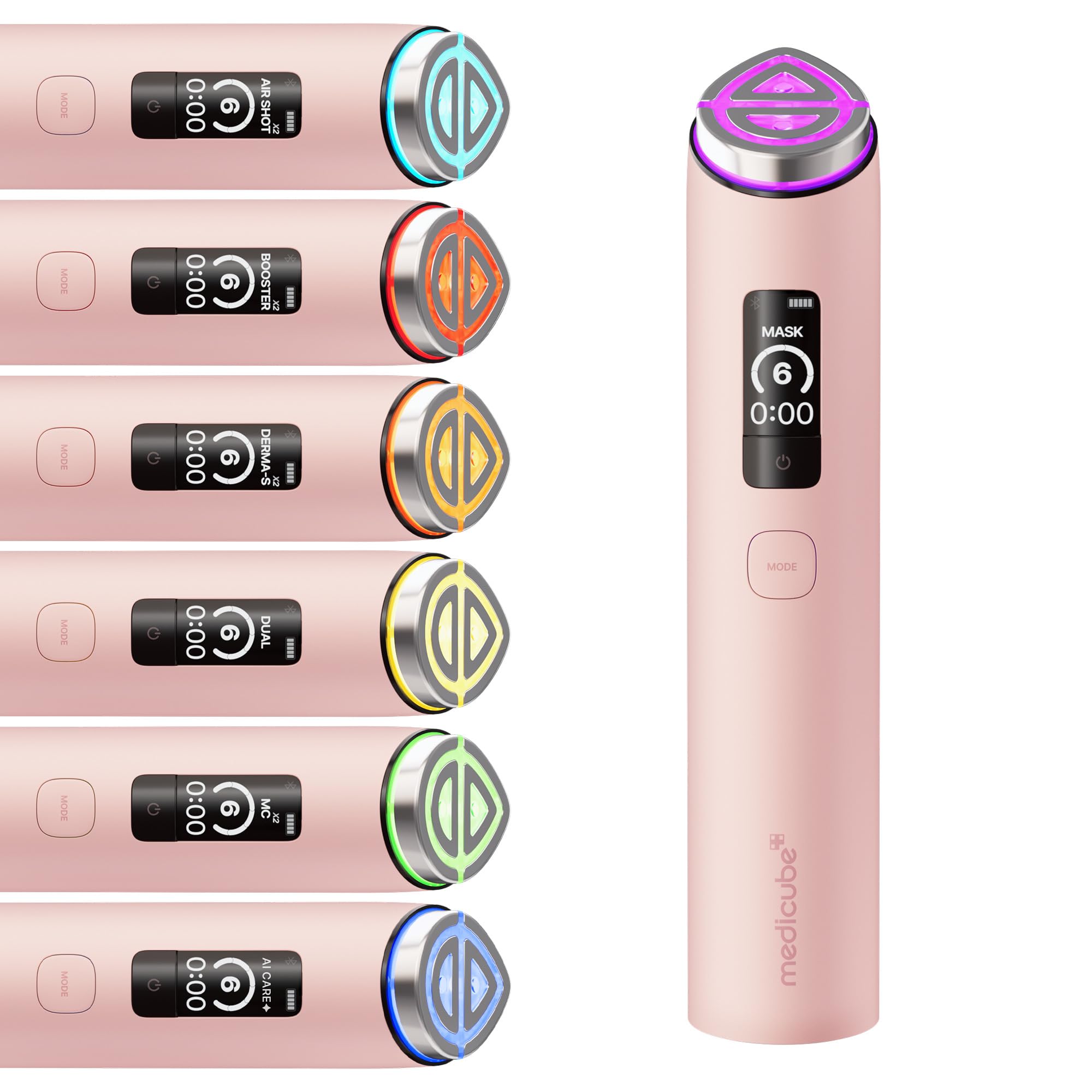
This is the device that asks you to learn a routine before it gives you the glow. The Booster Pro X2 packs seven modes and six intensity levels into a palm-sized wand: booster for glow, microcurrent for radiance, derma shot for firmness, air shot for pores, plus dual and AI modes. The app is genuinely useful for figuring out where to start, and the device times each mode so you're not counting in your head. We liked the dual-mode option most—it combines two treatments in one pass, which makes a ten-minute routine feel less like a chore.

The results are the kind you have to earn. We saw the familiar immediate glow after a session, the tighter, more awake look that powered devices can give, but this is not a one-and-done tool. It needs regular use, and the intensity can feel sharp on higher settings; start low and move up. For someone who already keeps a skincare routine and wants to add firmness and absorption, it's the strongest powered option here.

What we appreciate is how complete it feels. The build is solid, the pink finish is prettier in person than in photos, and the app turns a vague beauty gadget into something with a schedule. The trade-off is the commitment: you need to be honest about whether you'll keep up with it. If you want a manual tool for occasional de-puffing, this is overkill.

Bottom line: Our pick for a powered routine: seven modes and app guidance make consistency easier, if you're ready to commit.

5

Rena Chris Jade Gua Sha

Rena Chris Jade Gua Sha

First gua sha

Our Score 9.2/10
Check Price

Worth Noting

  • Stone can crack if dropped
  • Jade grade is hard to verify
Type
Jade gua sha
Weight
1.69 oz
Material
Natural jade stone
Dimensions
3.59 x 2.4 x 0.67 inches

The cheapest way to try gua sha is still a small piece of stone, and this is the one we recommend for a first purchase. It has a comfortable 3.59-inch shape with a smooth edge that glides over oil or serum, and the 1.69-ounce weight is light enough to control around the jaw and under the eyes. We used the long edge for the neck and the curved notch for the jawline; both felt natural. It also comes in a box that makes it an easy gift.

The shape is the reason to choose it. The curve fits the jaw without digging in, and the smooth edge doesn't drag the way a rough stone can. It is a small tool, so it takes more passes on the cheeks and forehead than a larger gua sha, and the light weight means you have to supply more of the pressure yourself. We like it as a travel tool or a starter piece, not as the last gua sha you'll buy.

At this price, it's a low-risk way to see whether gua sha fits your routine. Keep it in its box, use it with a slippery serum or oil, and treat it as a small ritual rather than a piece of equipment. If you want something you can knock around without wincing, the stainless steel Kitsch or the Yeamon set is the smarter long-term choice. But if you want the traditional feel of stone and don't want to spend much, this is the one.

Bottom line: A low-cost way to try gua sha, and our budget pick, provided you accept that the stone can chip and the jade grade is uncertain.

6

Kitsch Stainless Steel Gua Sha

Kitsch Stainless Steel Gua Sha

Hygienic gua sha

Our Score 9.2/10
Check Price

Worth Noting

  • Shows fingerprints and needs a wipe
Type
Stainless steel gua sha
Weight
3.14 oz
Material
100% stainless steel
Dimensions
3.3 x 2.4 x 0.13 inches

The advantage of a stainless steel gua sha shows up at the sink. This Kitsch tool is non-porous, so it rinses clean in seconds and doesn't hold onto serum or oil the way a stone can. It's also weighted—3.14 ounces—which gives you more control than a light jade piece, and the polished edge glides without tugging. We kept ours in the fridge and used it cold on the jaw; the metal holds that chill nicely without needing ice. The shape is a little more angular than a traditional gua sha, so it takes a pass or two to find the best edge for under the cheekbone.

The steel is the reason to choose it, and also the reason to think twice. It feels firm and cool, not soft or spa-like, and the metal can be startling on a cold morning. None of that bothers us for a tool that lives in the bathroom and gets washed often. The size is substantial enough for the jaw and neck but still easy to hold.

What seals it is the durability. You can drop it without assuming it's ruined, and you can sanitize it properly. That makes it a better choice for travel, shared bathrooms, or anyone who has already broken a stone tool. If you want the ritual of warm stone and a sculpted, curved shape, this isn't it. If you want a clean, cool, practical gua sha that will outlast the trend, it's an easy recommendation.

Bottom line: The gua sha we recommend for easy cleaning and stone-free durability, with a firmer, colder feel than jade.

7

Kitsch Mini Ice Roller

Kitsch Mini Ice Roller

Travel touch-ups

Our Score 9.0/10
Check Price

Worth Noting

  • Rolling action can squeak
  • Cold fades quickly
Type
Mini ice roller set
Weight
2 oz
Dimensions
3.25 x 3.25 x 5.75 inches
Tools Included
Steel and silicone rollers

A face roller that fits in a makeup bag is the reason this Kitsch set exists. The two mini rollers—one stainless steel, one soft silicone—are about palm-sized, and the set comes with a velvet pouch, so it's the one we reach for on a trip. The steel roller is the more useful of the two: it gets cold in the fridge, glides over the face, and reaches under the eyes without the bulk of a full-size ice roller. The silicone roller is gentler and better for a quick facial massage without the shock of cold.

The small size cuts both ways. It's easy to pack, but the roller head is narrow, so covering the cheeks and jaw takes more passes than with the Fronnor. We found the steel version best for a quick under-eye pass and the silicone one better along the jaw, where its softer surface is less jarring. Neither roller is a replacement for a full-size tool if you want to cover a lot of ground.

Where the set earns its place is in a small bathroom or a weekend bag. The pouch keeps both rollers clean, the steel one is ready after a short chill, and the silicone one is comfortable enough to use without looking in a mirror. We also like that the handles are short enough to control around the brow bone without poking the eye.

For travel or a small drawer, this is our compact pick. It won't replace a full-size ice roller for a puffy morning, and it isn't the tool to buy if you want one roller to do everything. But as a touch-up set that goes where you go, it's useful and easy to live with.

Bottom line: Our compact travel pick for quick touch-ups, as long as you don't expect full-face coverage or lasting cold.

How We Tested 14 Face Massagers Over Four Months

We started by pulling every style we could find — jade and stainless steel gua sha stones, ice rollers, a lymphatic brush, a couple of powered devices — then filtered out anything with visibly unfinished edges, unclear cleaning instructions, or a run of reviews mentioning cracks and snapped handles. That left 14 tools, which we used for four months.

Each one went home with a tester who used it the way you actually would: in the morning on a clean, serum-slicked face, and again at night on the couch, working along the jaw while half-watching something. Ice rollers lived in the freezer and came out for timed runs — we checked how cold they still felt at one, three, and five minutes. Stones and steel got used on bare skin and over facial oil, because drag shows up the second there's no slip.

We listened for squeak — the chirp a stone makes when it skips instead of glides — and noted which tools needed a firmer hand to stay in contact. Grip got tested with wet, slippery fingers, and every tool was dropped onto tile from counter height, washed as directed, and run through repeated freezer cycles to see whether it chipped or clouded. We also held each roller head against a jawline, since an undersized head means more passes and more time.

In the end, the tools that scored highest weren't the most featured. They were the ones we reached for on an ordinary Tuesday — soft-edged enough to go near the eye, comfortable past the second minute, and still cold or still gliding when it counted. The mirror check ten minutes later did the rest.

How to Choose a Face Massager

Start With the Job, Not the Tool

We think the job comes first. A manual roller is best for a quick, gentle pass over serum; a gua sha gives you an edge for jawline and brow work; an ice roller is for cold, wide-area de-puffing; a contour brush is for featherlight lymphatic strokes; and a powered device adds microcurrent, LED, or vibration for firmness and absorption. Decide which of those you will actually reach for. If you want one tool for a full routine, a roller-plus-gua-sha set like the Yeamon covers more ground than a single stone. If your main issue is morning puffiness, an ice roller is simpler and faster.

Stone, Steel, or Plastic?

Material changes feel, cleaning, and how long the tool survives. Stone—jade or rose quartz—feels traditional and warms to the skin, but it can chip or crack if dropped; the Rena Chris gua sha is a low-cost way to try that feel without much risk. We lean toward stainless steel if you have already broken a stone tool or want to sanitize easily: it is cooler at first touch, non-porous, and much harder to break. The Kitsch gua sha and Yeamon set are the easy choices there. Plastic handles are light and affordable, but check the roller mechanism for wobble or squeak before you commit.

Cold Tools Need a Plan

Ice rollers are only as useful as their temperature. We prioritize a head that fits the freezer and re-chills quickly, and we expect to put it back after a few minutes; no ice roller stays cold through a long routine. A broad head like the Fronnor's is efficient on cheeks and jaw, while a mini like the Kitsch is better for under-eye touch-ups and travel. Don't press hard to compensate for lost cold—pressure isn't the point. Keep the roller clean and dry before it goes back in the freezer.

Powered Devices Reward Consistency

Powered massagers add modes, intensity levels, and sometimes app guidance, but they reward consistency. The medicube Booster Pro X2 is the most fully featured device here, with seven modes and dual-mode sessions; it makes sense if you already keep a regular skincare routine and want to add firmness and absorption. We recommend starting at the lowest intensity and giving yourself a short trial before building up. If you know you won't keep a schedule, a manual tool is the better use of your money—and less likely to sit in a drawer.

Size, Grip, and the Drawer Test

The best face massager is the one that fits your hand and your storage. A full-size roller is efficient at home but bulky in a travel bag; a mini set is easier to pack but takes more passes. We look for a handle that feels balanced and a head that reaches the areas you care about. Check the weight before buying—8.82 ounces is comfortable for some hands and tiring for others—and think about where it will live. If it needs a freezer, make sure it fits. If it has bristles or a rolling mechanism, check that it can be cleaned and dried without trapping moisture.

Frequently Asked Questions

Final Verdict

The Yeamon set is our default because it does the two jobs most people want—cooling de-puffing and jawline massage—with stainless steel that won't chip like stone. If your main complaint is morning puffiness and you want the simplest tool, the Fronnor ice roller is the easier buy. And if you're ready to commit to a powered routine, the medicube Booster Pro X2 is the splurge that earns its place. Start with the job you'll actually do, not the tool with the longest feature list.