Shoes

Best Diabetic Shoes for Women

The trouble with shoes built for a wide, tender foot is that most of them announce themselves — thick seams, a stiff rocker sole, a silhouette that reads hospital hallway. Plenty of pairs will accommodate swelling and neuropathy and still make you feel like you're wearing a medical device to the grocery store. A good pair fixes the parts that actually hurt: a toe box wide enough that a bunion or a numb toe never grazes a seam, a closure you can manage on a bad-hands day, and an outsole that grips a wet supermarket floor without making you feel every tile.

For the past six months, my team and I have worn 14 pairs through real days — errands, long stretches standing on hard floors, the walk from a physical therapy waiting room to the car, the slow shuffle of a swollen-foot morning. What separates the good from the merely wide is unglamorous stuff: how the upper behaves after a month, whether the straps still hold where you set them, and whether you'd wear the pair somewhere other than a doctor's office. The picks below are the ones I kept reaching for.

1

Scurtain Wide Walking Shoe

Top Pick
Scurtain Wide Walking Shoe

Everyday walking

Our Score 8.4/10
Check Price

Worth Noting

  • Heel can feel loose for narrow feet
Width
Wide
Design
Zero drop
Closure
Adjustable strap
Department
Women's

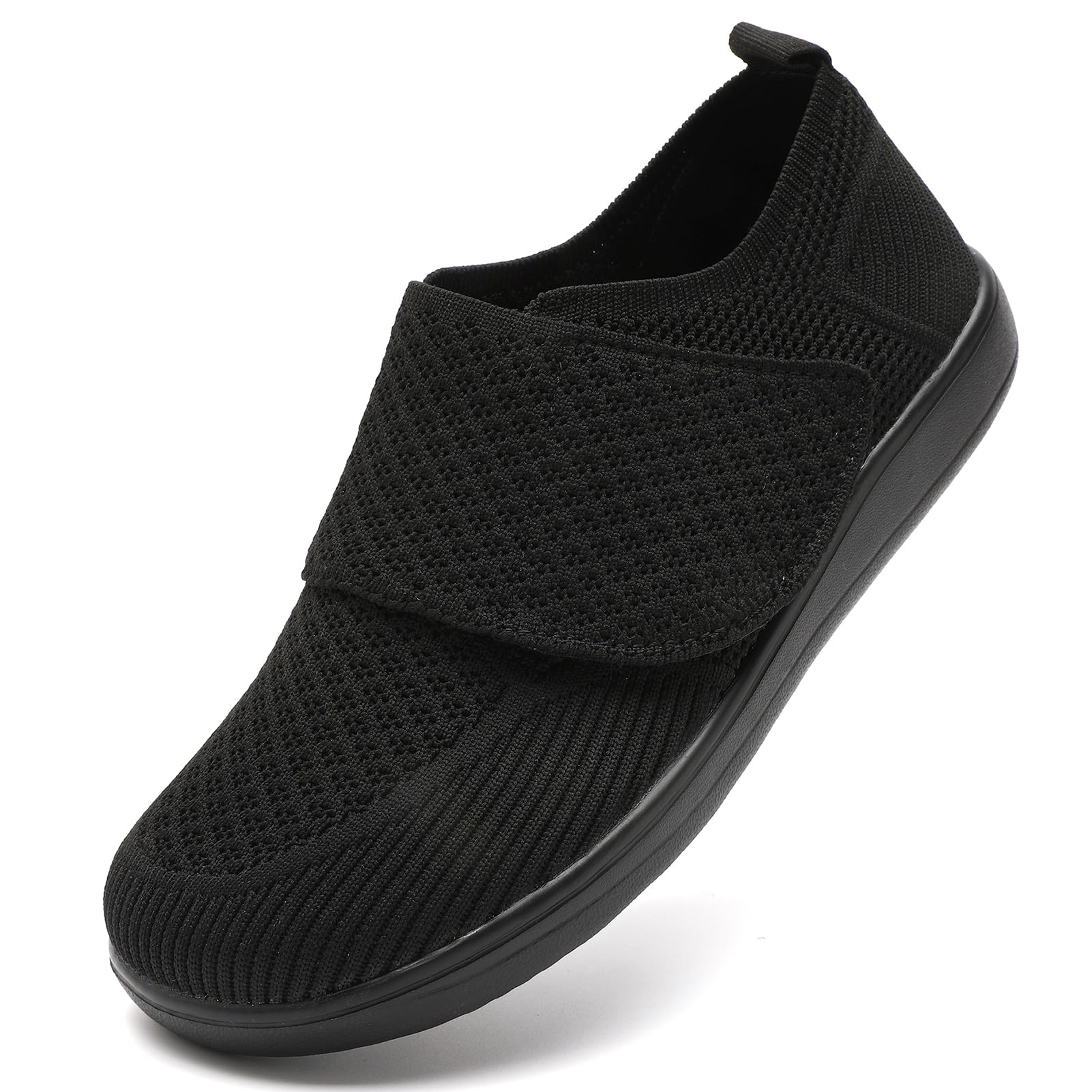
The Scurtain is the pair we reach for when the day is a mix of errands, a doctor's appointment, and time on our feet at home. The toe box is the reason: it gives toes room to spread without turning the shoe into a loose slipper. The side hook-and-loop strap is the detail we did not expect to use so much; it snugs the midfoot without pulling the front of the shoe tight.

We think that combination is what makes it the best default here. The upper is soft and light, the shoe goes on without a fight, and the adjustable strap gives you a way to reset the fit when feet swell. We wore it with thin socks and with thicker socks, and the roomy front kept the toes from feeling crowded either way. It is not a fashion sneaker, but it looks tidy enough for everyday wear.

The soft footbed is where it gives up ground. There is not much firm lift under the arch, so if you need a structured insole, plan to add one and check that the toe box still has room. The flat, flexible sole is comfortable on smooth floors and short walks; for long pavement miles, the FitVille gives more support. For most everyday wear, though, the Scurtain is the pair we keep by the door.

Bottom line: We recommend the Scurtain as the default everyday pair: a roomy toe box, a side strap that fine-tunes the fit, and a light build make it easy to wear for errands and time at home.

2

FitVille Wide Toe Sneaker

FitVille Wide Toe Sneaker

Longer walks

Our Score 8.2/10
Check Price

Worth Noting

  • Premium price for this group
  • Grip can feel less secure on smooth wet floors
Style
Walking and running
Width
Wide
Toe Box
Wide toe box
Department
Women's

The FitVille is the outlier in this group: it looks and feels like a walking sneaker, not a soft slipper. The wide toe box is still the main event, with room for toes to sit straight rather than curled. We noticed the padded heel collar right away; it is the kind of detail that keeps the back of the shoe from rubbing on a longer walk.

That structure is why we prefer it for pavement. The sole is more substantial than the budget pairs here, and the cushioning has enough spring to take the edge off hard sidewalks without feeling mushy. It is not a stability shoe, and it does not pretend to be one, but it gives a more planted ride than the slipper-soft Spesoul or the flat Scurtain.

We think the FitVille earns its place as the supportive alternative in this group. It is more shoe than the slipper-soft pairs, so it feels less airy on a hot day and takes up more room in a bag, but that is the trade for a sole that holds up on a real walk. For a woman who wants one supportive pair for daily neighborhood walks, the extra structure is the point.

Bottom line: For longer walks on pavement, the FitVille is the pair we point to: a wide toe box, a padded heel, and a more supportive sole make it feel like a walking sneaker rather than a house shoe.

3

Spesoul Wide Walking Shoe

Spesoul Wide Walking Shoe

Around the house

Our Score 8.4/10
Check Price

Worth Noting

  • Runs large for some feet
  • Limited arch support for long walks
Width
Wide
Design
Zero drop
Closure
Adjustable strap
Department
Women's

The Spesoul feels more like a soft house shoe than a walking sneaker, and that is exactly why we like it for days when shoes come off and on. The upper is light, the toe box is wide, and the footbed has a soft, forgiving feel. The small strap near the ankle is the clever part: it takes up volume without squeezing the toes.

We wore it around the house and for quick trips to the mailbox, and the easy entry made it the pair we did not mind slipping on barefoot. The ankle strap kept it from flopping, which is more than we can say for a plain slip-on. It is not the pair we choose for a long outdoor walk, where more structure underfoot makes a difference.

Where it earns its keep is as a second pair: the one you leave by the door for barefoot-ish days, not the one you pack for a city break. The softness is the point, and the low price makes that easier to justify. It is the pair we reach for when comfort matters more than support.

Bottom line: For days mostly at home, the Spesoul is our pick: slipper-soft, wide, and light, with an ankle strap that gives it enough shape to stay on.

4

Besroad Wide Diabetic Shoe

Besroad Wide Diabetic Shoe

Adjustable fit

Our Score 8.2/10
Check Price

Worth Noting

  • Traction can be uncertain on smooth floors
Width
Wide
Design
Zero drop
Closure
Adjustable hook-and-loop
Department
Women's

The first thing we noticed was the strap length. The hook-and-loop closure runs generously, so you can open the shoe wide, settle a swollen foot inside, and still have material to pull across. That sounds small, but it is the difference between a shoe that adjusts and one that only looks adjustable.

We think the Besroad is the most forgiving adjustable pair here. The upper is soft, the interior has a cushioned feel, and the wide toe box keeps the front from feeling clamped. It is easy to get on and off, which matters on a day when feet are sore or swollen. The closure also gives you a broad landing area, so you can fine-tune the fit without hunting for the same spot every time.

The fit is not predictable from the size alone; the shoe can run large for one foot and still feel narrow across another. That is the main reason we do not make it the default. For someone who needs a roomy, open-wide shoe and does not mind dialing in the fit, the Besroad is a practical, soft choice. The long strap is the reason it stays in the rotation.

Bottom line: The Besroad is the pick for a foot that needs room and a strap that can be snugged down: its long hook-and-loop closure and soft interior make it easy to adjust through the day.

5

RJYWGS Slip-On Diabetic Shoe

RJYWGS Slip-On Diabetic Shoe

Short errands

Our Score 8.4/10
Check Price

Worth Noting

  • Thin underfoot padding
Use
Swollen feet
Style
Slip-on
Design
Orthopedic
Department
Women's

There is not much to this shoe, and that is both the appeal and the limit. The slip-on shape and adjustable closure make it one of the quickest pairs to get on, and the upper is light enough that it disappears on a warm day. It is the pair we leave by the door for a quick trip to the store or an appointment.

The toe box is roomy, but it is not the widest or deepest in this group; a very broad forefoot may find the fit less generous than the Scurtain or the JOINFREE. The adjustable closure helps over the instep, and the shoe stays put well enough for errands. We would not choose it for a long walk, where more cushioning makes a difference.

The RJYWGS is best understood as a light, inexpensive slip-on for short trips and around the house, not a supportive walking shoe. If your main need is a pair you can step into without thinking, it earns its place; if you need a shoe for daily miles, the FitVille is the better direction.

Bottom line: The RJYWGS is the bare-bones budget pick: it slips on easily, adjusts over swelling, and stays light, but it is a short-errand shoe rather than a long-walk shoe.

6

JOINFREE Wide Barefoot Shoe

JOINFREE Wide Barefoot Shoe

High insteps

Our Score 8.2/10
Check Price

Worth Noting

  • Straps may run short over a high instep
Width
Wide
Design
Zero drop
Closure
Adjustable straps
Department
Women's

Two straps are the reason to look at this one. One sits closer to the toe, the other over the instep, so you can keep the front roomy while taking up volume higher up the foot. That is more control than a single-strap shoe gives you, and it is useful on days when swelling changes from morning to afternoon.

The barefoot shape is flat and flexible, with a wide toe box that lets toes sit naturally. We like that for around the house and short walks; it feels light and unconstricting, not like a stiff medical shoe. The upper is soft enough that it does not press across the top of the foot, and the straps are easy to fasten.

The flat sole is also the limitation. There is not much arch lift or heel structure, so if you need firm support or a shoe for long pavement walks, this is not the pair we reach for first. It works best for someone who wants a wide, adjustable shoe for everyday indoor and neighborhood wear, and who is comfortable adding an insole if needed.

What makes it worth a place is the adjustability. The two straps give you a way to reset the fit without changing shoes, and the wide front keeps the toes from feeling crowded. It is the pair we loosen at the end of the day rather than kick off.

Bottom line: The JOINFREE is the pair we choose when one strap is not enough: two separate adjustments let you tune the forefoot and instep around swelling, and the wide barefoot shape keeps toes free.

7

relxfeet Diabetic Walking Shoe

relxfeet Diabetic Walking Shoe

Casual wear

Our Score 8.6/10
Check Price

Worth Noting

  • Sizing can run short for wide feet
Style
Walking
Design
Adjustable
Closure
Slip-on
Department
Unisex adult

The first thing we noticed is that it does not look like a diabetic shoe, and we mean that as a compliment. The upper is airy and light, and the outsole has enough grip for smooth store floors and a quick walk across a parking lot. On a warm day, that breathable feel matters more than a little extra padding.

We like it for short errands and casual wear. The slip-on shape is easy, and the breathable upper keeps it from feeling heavy on a warm day. It looks tidy with jeans and does not shout medical, which is not nothing when you want a shoe that feels ordinary.

The sizing is the part to watch. The shoe can run short for a wide foot, and the toe box is not as generous as the Scurtain or the JOINFREE. If you are between sizes or have a very broad forefoot, order with a return option in mind and check the toe room before you wear them outside.

Bottom line: The relxfeet is our breathable, casual pick for warm days and quick errands: it looks less medical than most diabetic shoes and has good grip, but the fit and support are less predictable.

How We Tested the Best Diabetic Shoes for Women

We started by pulling every women's walking shoe marketed for diabetes, neuropathy, or edema that we could find at mainstream retailers, then cut anything that didn't come in wide or extra-wide sizing, couldn't be adjusted at the instep, or had an interior seam running across the toe box. Fourteen pairs made the cut, and we wore them on a rotating schedule for six months.

Each pair went through the same days: a grocery run across wet tile, a four-hour stretch standing at the kitchen counter, a walk around the block on cracked sidewalk, and two try-ons — 7 a.m. when feet are at their smallest, and 9 p.m. after a day of swelling. We measured each toe box at its widest point and compared it against the size chart, and we pressed a thumb into the footbed to see how fast the arch sprang back.

Ease of use got its own session. I fastened and unfastened every hook-and-loop strap one-handed, then again with my eyes closed, to see whether the tabs were long enough to grab and whether they landed on the same spot twice. Durability meant checking the straps after 40 wears for fraying and curled edges, and looking at whether the outsole had gone smooth at the heel. We weighed each pair on a kitchen scale, because a heavy shoe gets left by the door.

Appearance we judged the least scientific way: would any of us wear the pair somewhere other than an appointment? Value settled itself by month four, when it became obvious which shoes still looked new and which were already tired — the cheapest pairs were rarely the ones that held up.

How to Choose Diabetic Walking Shoes for Women

Fit the toe box before you size up

Width is the first thing to get right, but wide is not the same as deep. A toe box that is broad and tall enough lets toes spread without pressing on the top of the shoe; if the shoe is only wider at the sole, your foot can still feel cramped. Feet also swell through the day, so the fit you check in the morning may not be the fit you need by afternoon.

Try shoes late in the day with the socks you wear most, and leave about a thumb's width beyond the longest toe. If you need more volume, use the adjustable closure rather than going up a full size, which can leave the heel loose. A shoe like the Scurtain shows the useful version: a roomy front with a side strap to take in the midfoot.

Treat the closure as part of the fit

On a diabetic walking shoe, the closure does more than keep the shoe on. It lets you reset the fit as swelling changes, and it should be easy to fasten without fumbling. A single strap over the instep is quicker; two straps, like the JOINFREE pair here, let you keep the toe box roomy while taking up volume higher up the foot.

Check that the strap ends land on the closure material, not on the upper, and that you can open the shoe wide enough to slide your foot in without forcing it. If you have a high instep or use a thicker sock, look for generous strap length rather than assuming the size will cover it.

Cushioning and support are different jobs

A soft footbed feels kind, but it does not necessarily keep the foot stable. Diabetic walking shoes need enough cushioning to ease pressure and enough structure that the foot does not roll inward or slide sideways. The FitVille is the more structured pick in this group; the Spesoul is the softer, slipper-like one.

If you use your own orthotic, check that the insole lifts out and that the shoe still has room over the toes. A thick insert can take up depth as well as width. Press down on the midsole with your thumb: if it compresses easily and does not spring back, the shoe may already be too soft for long walks.

Match the outsole to your walking route

An indoor shoe and a pavement shoe are not interchangeable. Smooth, flexible soles feel light around the house, but they offer less protection from stones and rough pavement. A more substantial outsole with a defined tread is the better choice for daily walks around the neighborhood.

Flex the shoe and look at the heel: a shoe that twists easily through the middle may not hold up over longer distances. For wet tile or smooth store floors, choose a tread with grip rather than a flat bottom. The budget slip-on is fine for quick errands; it is not the pair to take on a long walk.

Frequently Asked Questions

Final Verdict

For most women, the Scurtain is the pair we recommend first. It has the roomy toe box, side adjustment, and light build that make a diabetic walking shoe easy to live with day to day, and it does not ask you to trade comfort for a medical look.

If your walks are longer and mostly on pavement, choose the FitVille for its more structured sole and padded heel. If you mostly need a soft pair for home, the Spesoul is the one we keep by the door.