Shoes

Best Dance Shoes for Women of 2026

For two years I danced salsa in ordinary street sneakers, right up until a turn went sideways and my knee paid for it. What changed wasn't my technique — it was the shoes. A real dance shoe does two things at once: it lets the ball of your foot pivot instead of grabbing the floor, and it keeps your heel where your foot actually is. Most of us buy them anyway, from a listing with three photos and a size chart written for street shoes.

Fit is where this category trips people up. A Latin sandal is meant to hug; a jazz slip-on should leave a thumbnail's width at the toe. So my team ordered 14 pairs over eight months and wore them through real classes, teaching shifts, and late socials. The prettiest pair gave me a blister by the second song; the plainest one became the pair I reach for. The picks below are the ones that held their shape, kept my arches happy through a full night, and looked good enough for a stage.

1

Stelle Half Soles

Top Pick
Stelle Half Soles

Lyrical and contemporary

Our Score 9.4/10
Check Price

Worth Noting

  • Canvas wears through at the ball of the foot
Sole
Suede ball pad
Upper
Canvas
Closure
Elastic strap
Dance Style
Lyrical and contemporary

A half sole looks odd out of the box: canvas over the toes, a bare heel, and an elastic strap where laces belong. The shape is the entire argument. With nothing under your heel you can roll through the foot and point, and the suede pad under the ball gives you just enough bite to push off a turn without sticking to the floor. Of everything here, this is the pair we reach for on a lyrical or contemporary day — and it's also the least expensive shoe in this guide, which almost never happens together.

The suede pad is what earned the top spot. Turns come around faster and stop where you stop instead of skidding past the beat, and the elastic strap held the slipper on through a full combination without sawing at the back of the heel. That last part matters more than it sounds: a strap that rubs is the reason a cheap slipper ends up at the bottom of a dance bag and never comes back out.

Sizing is the one place to slow down. These fit snug across the forefoot, and canvas doesn't give the way leather does, so if your feet are wide or you sit between sizes, go up half a size. They're easy to keep decent, too: a nail brush, a little mild soap, air dry, and the canvas comes back looking reasonable.

What they aren't is a full shoe. There's no heel cup, so a barre class that wants a full sole, or any character work, needs something else entirely. For lyrical, contemporary, jazz technique, and acro, the bare heel does exactly what it should — one of the few cases where less shoe really is more shoe.

Bottom line: The best value here and the easiest call for lyrical, contemporary, and jazz technique, as long as you don't need a full shoe.

2

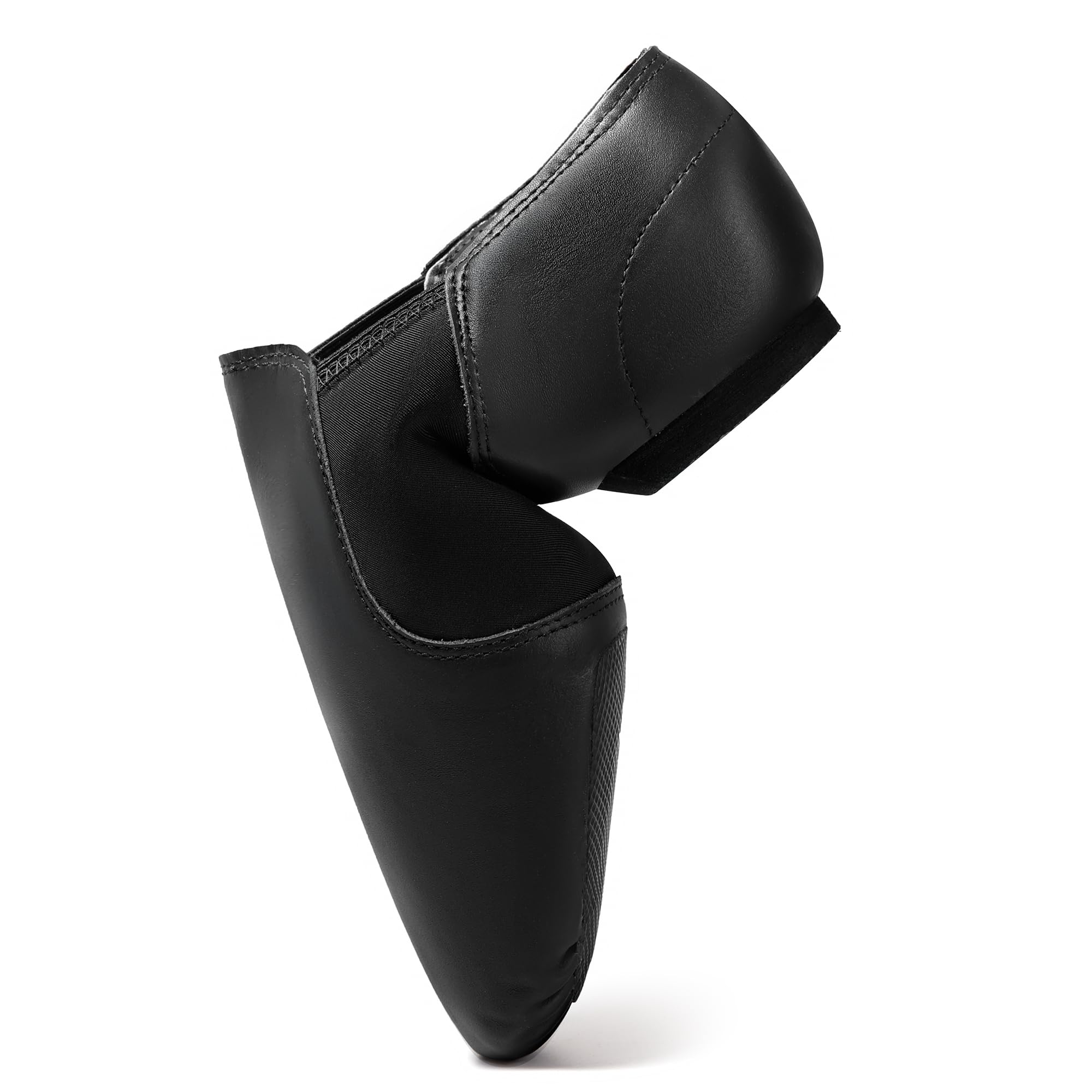
Linodes Leather Jazz Shoe

Linodes Leather Jazz Shoe

First jazz classes

Our Score 9.0/10
Check Price

Worth Noting

  • Thin sole and toe seam wear out with heavy use
Upper
Leather
Sizing
Unisex
Closure
Slip-on
Dance Style
Jazz

Sizing is the whole conversation with this one. It's a leather slip-on meant to fit like a glove — close at the toe, snug across the instep — and that leather gives more than the canvas shoes here, so a pair that feels tight in the first class relaxes into the right shape by the second or third. Order your street size, dance one class, and only then decide whether you need a half size in either direction.

For the money, this is the jazz shoe we point beginners toward. The leather is soft straight out of the bag, the sole is thin enough to feel the floor through it — which is the entire point of a jazz shoe — and they slide on and off at the side of the studio with nothing to tie. Scuffs wipe away, and a jazz shoe that looks slightly scuffed is a jazz shoe that's being used.

What you aren't buying is longevity. Thin soles dance well and wear fast, and the toe seam is the other place a hard-working pair gives out first. For a once-a-week class or a school production that math works out fine. For a competition team on the floor five days a week, put the money into the Bloch instead.

Bottom line: The jazz shoe we hand beginners: soft leather, an honest feel for the floor, and a price that makes a first season low-risk.

3

Stelle Ballet Split Sole

Stelle Ballet Split Sole

Ballet class

Our Score 9.2/10
Check Price

Worth Noting

  • Elastics and inner lining wear through with heavy use
Sole
Split sole
Upper
Stretch canvas
Dance Style
Ballet

Ballet is where most people start, and it's the class where a bad slipper shows immediately: too loose and you can't feel the floor through the arch, too stiff and your foot won't point. This one takes the soft route — stretch canvas over a split sole, with padding at the heel and the ball — and it's the pair we put on a beginner first.

The split sole does the work. Two pads instead of one leave the arch as bare canvas, so the shoe folds with your foot when you point instead of fighting it. The canvas is thick enough not to feel flimsy and breathable enough that feet don't cook halfway through a warm studio, and the elastics cross the top of the foot rather than digging into the sides.

Sizing is the catch. These come up large for some dancers and short for others, and the stretch means a pair can feel right at the barre and loose by the adagio. Measure your foot flat against a wall, match that number to the size chart rather than your street size, and go up a half if you're wide. Get that right and the shoe underneath is very good for the money.

Bottom line: A soft, forgiving ballet slipper for a first year of class, as long as you size it from a measured foot instead of your street shoe.

4

Bloch Super Jazz

Bloch Super Jazz

Long class days

Our Score 9.2/10
Check Price

Worth Noting

  • Toe and sole are the wear points
Model
S0401L
Upper
Leather
Closure
Slip-on
Dance Style
Jazz

The surprise here is under the arch. Nobody expects support from a soft leather jazz shoe, and this pair has a shaped, solid feel through the midfoot that we noticed at the end of a long class, when feet usually start complaining. If you have flat feet, or you're dancing more than a couple of days a week, that alone justifies the step up in price.

The upper is soft leather with a stretch panel across the top, and it behaves like a ballet slipper in the best way — it hugs the foot, doesn't rub the instep, and goes on without a fight. Because it's cut to fit snugly, length is the thing to get right: a jazz shoe that's too long slides at the heel no matter how tight the elastic is.

It's a quiet shoe to dance in. Nothing squeaks, the heel stays put through turns, and there's enough structure that a two-hour rehearsal doesn't leave you wanting to kick them off at the side of the room. That's why this is the pair we keep on for the whole call rather than just our own number.

The price is the thing to get comfortable with. This is the most expensive shoe here by a wide margin over the canvas options, and what you're paying for is the leather and the support. In class several times a week, that's a fair trade; dancing once a month, a budget leather or canvas pair does most of the same job for far less, and you won't miss the support inside a single class.

Bottom line: The comfort pick: real arch support and soft leather that doesn't blister, worth the premium if you're in class more than once a week.

5

RoseMoli Latin Dance Shoes

RoseMoli Latin Dance Shoes

Latin and ballroom

Our Score 8.6/10
Check Price

Worth Noting

  • No arch support for high arches
Sole
Suede
Closure
Lace-up
Dance Style
Latin and ballroom

The gold star on the side is what people comment on first, and it's a welcome change from a category full of beige canvas. These look dressier than anything else here — the satin sheen, the shaped heel, the lace-up front — and they hold up to a photograph, which is more than you can say for most practice shoes.

The hold is what makes them worth buying. Laces let you cinch the shoe to your own instep, which matters in Latin and swing where the foot changes direction on every beat, and the suede sole glides across a wooden floor without grabbing. The cushioning under the ball is the best in this group, and the heel stays stable enough that we stopped thinking about it mid-pattern — the highest compliment a dance shoe gets.

They run small and narrow. A half size up covers most feet; wide feet should go up a full size and expect a short break-in. The laces help more than an elastic strap does, because you can leave the bottom two eyelets looser over a high instep instead of hoping the shoe stretches there.

Bottom line: A cushioned, secure Latin shoe that looks pricier than it is — order up half a size and lace them to your own instep.

6

PPQ Jazz Dance Sneaker

PPQ Jazz Dance Sneaker

Gym-floor dance

Our Score 8.4/10
Check Price

Worth Noting

  • Flat arch support
  • Narrow through the forefoot
Style
Lace-up dance sneaker
Insole
Removable
Closure
Lace-up
Cushioning
Air cushion

Zumba and line dance happen on gym floors, rubber matting, and church hall lino, and those surfaces punish a suede dance sole. This is the pick that assumes that floor: a lace-up dance sneaker with an air-cushioned sole and the kind of grip that keeps you upright when the routine speeds up.

On polished wood they're too grippy — you feel the torque of a turn in your knees — but on carpet or rubber that grip is the whole point, and the cushioning takes the sting out of an hour of jumping. They're light for a sneaker, they don't feel like running shoes, and the insole lifts out so you can put your own in.

Sizing runs about half a size small, so measure rather than assume. We reach for these for a Zumba class and not for a technique class: they're built for a floor that needs grip, not one that needs glide, and no amount of cushioning turns them into a shoe for spins.

Bottom line: The right shoe for Zumba, line dance, and gym floors where a suede sole would slide — grippy, light, and cushioned.

7

Dynadans Leather Jazz Shoe

Dynadans Leather Jazz Shoe

Wide feet

Our Score 9.0/10
Check Price

Worth Noting

  • Sole can peel at the toe
  • Tan reads darker than pictured
Upper
Leather
Closure
Slip-on
Dance Style
Jazz

If your foot is wide, most of this list is a compromise. This one isn't. The leather upper is cut generously through the forefoot, the toe box doesn't squeeze, and the shoe doesn't ask you to size up until the length is wrong just to get the width right. It's the pair to hand someone who has given up on dance shoes fitting.

The leather is soft from the first wear, not soft after a week, and it takes a shine, which matters if you're on a stage rather than at a barre. The color range is wider than most here, with tans and deeper shades that suit guard work and period pieces — though the tan reads darker than the photos, closer to brown with a green undertone than to a true nude.

The wear point is where the upper meets the sole. The leather outlasts canvas by a wide margin, but the sole bond is what fails on a hard-working pair, and a shoe that peels at the toe is finished. If you're buying for a show run, look at that seam after each week.

Where it lands: a comfortable, generous, stage-ready jazz shoe that sits between the Linodes and the Bloch on price. Choose it over the Linodes if width across the forefoot is your problem, and over the Bloch if you want color choices without paying for arch support you won't use.

Bottom line: The wide-foot jazz shoe: soft leather, a generous forefoot, and colors that work on stage, with a sole bond to keep an eye on.

How We Tested the Best Women's Dance Shoes

The shortlist started with research rather than feet. I read through several dozen listings and sorted them by sole type — suede or split sole for turning, rubber for grip — along with upper material, size range, color options, and price. Anything that stopped at a women's 10, ran only in whole sizes, or offered no guidance on dance-specific sizing got cut before we ordered. Fourteen pairs survived the filter.

Each one went into a normal week: two-hour salsa classes on a hardwood studio floor, jazz and lyrical rehearsals on marley, a beginner class I teach, and the occasional social that runs from nine until midnight. I ordered my usual size first, then a half size up where a listing insisted, and noted where a toe box pressed, whether a heel slipped mid-turn, and which shoes left hot spots before the hour mark.

Arch support got judged at the end of class rather than the beginning — I stood in first position and asked whether the arch felt held or hollow. Every few weeks I checked seams, sole edges, and whether a leather upper had stretched past the point of return, then weighed that wear against the price paid. Appearance got a fair look too, including whether a metallic finish dulled or a canvas upper washed clean. The pairs that made the list were comfortable by the second class, not the second month. We'll keep wearing them and update if anything gives out early.

How to Choose Dance Shoes for Women

Start With the Class

The most useful question is what you're actually taking. A ballet slipper is built to let the foot point, a jazz slip-on is cut for heel-and-toe work with a little more protection, a half sole leaves the heel bare for lyrical and contemporary, a Latin shoe is a heeled sandal on a suede sole, and a dance sneaker exists for floors that need grip rather than glide.

One shoe doing all of it does none of it well. If you're starting with a single class, buy the shoe that class requires and add a second pair when your week changes — most dancers end up with two anyway.

Size From Your Foot, Not Your Street Shoe

Dance shoes are meant to fit closer than street shoes: snug across the instep, close at the toe, no heel slip. Leather gives over the first few classes and canvas barely moves, so the same stated size behaves differently from style to style. Measure your foot flat against a wall, then match that number to the size chart instead of ordering your usual size.

The trap is the phrase true to size. It usually means true to the reviewer's street shoe, which tells you nothing about your own foot. Between sizes, go up in canvas and stay put in leather — and don't try to dance a pinching shoe into shape, because it won't.

Match the Sole to the Floor

Almost everything about how a shoe turns happens under the ball of the foot. Suede glides on Marley and wooden studio floors and lets you spin; rubber grips, which is right on a gym floor and wrong in a turn combination. A suede sole on carpet sticks and sends the torque up into your knee, and a rubber sole on a studio floor won't let you turn at all.

Think about the room you'll be in most, not the one in the photos. If you dance in two kinds of space, that's the honest case for two pairs.

Expect to Replace Them

Dance shoes are consumables. Canvas wears through at the ball of the foot, where you spin; leather uppers usually outlast the sole and the sole bond. Replace a pair when the suede patch turns shiny and slick, when the canvas thins under the ball, or when a seam starts to lift at the toe — all three mean the shoe has stopped doing the thing you bought it for.

Beginners and growing feet should buy cheap and replace often. Dancers in the studio most days get more from spending once on a leather pair.

Frequently Asked Questions

Final Verdict

For most dancers, most weeks, the Stelle half sole is the answer: it turns cleanly, stays on the foot, and costs less than anything else here. Dancers who also take ballet should add the Stelle ballet slipper rather than asking one shoe to do both jobs.

If you're in the studio several days a week, the Bloch Super Jazz is worth the step up — the arch support is the difference you feel at hour three. And if the floor is a gym rather than a studio, skip the suede entirely and take the PPQ sneaker.