Shoes

Best Cycling Shoes for Women of 2026

Cycling shoes are the one piece of gear that has to agree with your bike as much as your feet. Pick the wrong cleat pattern and they won't clip in at all; pick the wrong fit and you'll feel it in your arch twenty minutes in. I once spent an entire winter in a pair that pinched across the top of my foot. The right pair spreads your effort across the sole instead of concentrating it under the ball of your foot, holds your heel steady, and disappears from your awareness after the first mile.

Fit and compatibility are where most people get stuck, and it isn't their fault: the same shoe may be built for three-bolt road cleats or two-bolt SPD pedals, and cleats often aren't included. My team and I have spent six months riding in a dozen pairs, from indoor-only spin shoes to lace-up flats, and the ones worth buying got the basics right first. The picks below all clear that bar.

1

TIEM Slipstream

Top Pick
TIEM Slipstream

Indoor spin classes

Our Score 9.2/10
Check Price

Worth Noting

  • Two-bolt SPD only, so no three-bolt Look Delta
Sizing
Women's-specific
Riding Type
Indoor cycling
Cleat Compatibility
SPD (2-bolt)

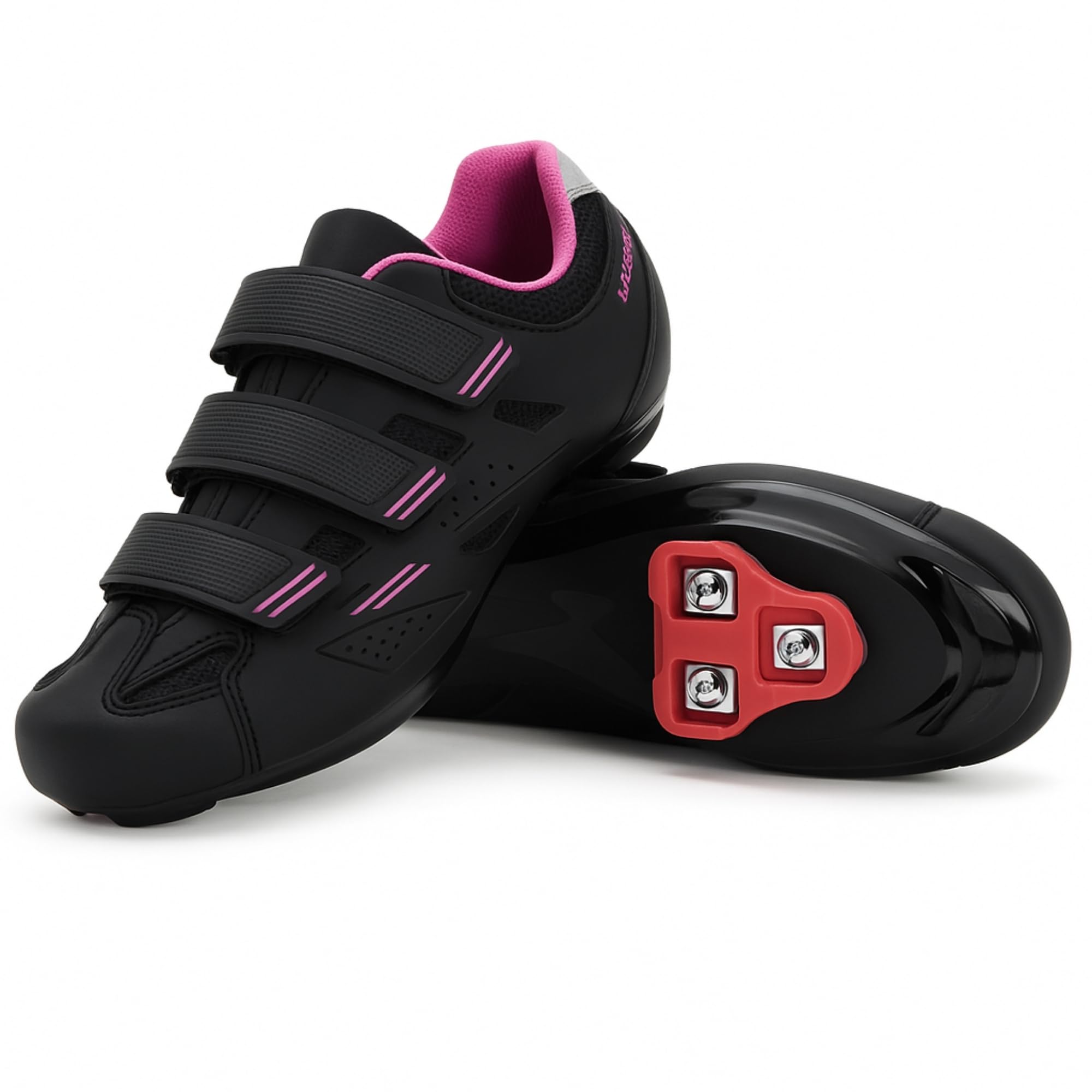
TIEM builds the Slipstream on a women's last instead of scaling a men's pattern down, and the difference lands at the heel and through the arch, where the shoe holds your foot without the upper being cranked tight. It is one of only two shoes here designed specifically for women, and of the two it is the one we hand to a rider doing three or four studio classes a week who wants a single pair to see her through.

It reads as a trainer rather than a piece of equipment, and in a category where most shoes look designed for a velodrome, that is the strongest appearance in this set. The part that matters more is underfoot: there is enough sole around the cleat that you can cross a gym floor, take the stairs, and stand around waiting for a class to start without the skittering walk of a road shoe.

The fit is close. The collar does not gape, so getting a high instep past the opening takes a deliberate tug, and the strap across the front does most of the holding once you are in. If you sit between sizes, going up costs you nothing in hold because the strap has enough range to keep the shoe locked down — and a genuinely wide forefoot is the one shape this shoe does not flatter.

What the extra outlay buys is the shape, the walkable sole, and a finish that survives being worn as a shoe: no lifted overlays at the toe, no shine rubbed off the sides after a few weeks of studio floors. We have ridden these indoors and worn them out of the building afterward, which is exactly the double duty TIEM designed them for.

Bottom line: Our default recommendation for indoor riders: a women's-specific fit, SPD pedals, and a sole that walks out of the studio instead of skittering.
2

Tommaso Pista

Tommaso Pista

Peloton first-timers

Our Score 9.0/10
Check Price

Worth Noting

  • Pre-fitted cleats wear out before the uppers do
Sizing
Women's-specific
Closure
Three Velcro straps
Riding Type
Indoor cycling
Cleat Compatibility
Look Delta (pre-installed)

The Pista arrives with Look Delta cleats already bolted on, so there is no wrench, no alignment guesswork, and no chance of fitting a cleat backwards on your first attempt. For anyone whose only bike is a Peloton, that is the difference between a shoe you can use this evening and a shoe you have to prepare.

It is also the most forgiving fit in this set for a wide forefoot. The toe box has real volume, the upper is soft rather than armored, and a woman who normally sizes up just to find width can order her usual number. That softness is the trade: with a lightly structured upper, the three Velcro straps do all the holding, so snug them properly. A loosely fastened Pista makes clipping out feel vaguer than it should, and tight straps from the first ride are the habit worth building.

There is a short break-in at the strap line, and the shoe softens into shape over a few sessions rather than pinching through them. Against the TIEM it is a touch less precise and considerably less expensive, which is the right trade for a twice-a-week rider. The pink trim is also brighter in person than the product photos suggest, in case that matters either way.

Bottom line: Buy it if you want to clip in tonight: the Delta cleats come fitted, the toe box suits wider feet, and it undercuts our top pick.

3

Shimano SH-RP101

Shimano SH-RP101

Road and indoor

Our Score 8.6/10
Check Price

Worth Noting

  • Narrow, short fit shuts out wide forefeet
  • Straps can work loose mid-ride
Sizing
Unisex
Closure
Velcro straps
Riding Type
Road and indoor
Cleat Compatibility
SPD (2-bolt)

Shimano's RP101 is the closest thing here to a proper road shoe that does not object to being used indoors. Two-bolt SPD cleats fit it, so it works on a spin bike, a gravel bike, and a commuter without changing anything but cleat position, and it is light enough on the foot that you stop noticing it a few minutes into a ride.

The fit is the catch. It is cut narrow through the middle and short in the toe, and the strap band has no stretch in it, so tightening arrives all at once — there is a narrow window between snug and pinching, and you find it by feel rather than by counting holes. Go up half a size, and if your forefoot spreads when you weight it, this is not the shoe for you. Strap adjustment will not fix a last that is the wrong shape.

Where it earns its place is the long game. The sole is stiff enough to feel efficient under power without becoming a plank at a coffee stop, the upper does not cut across the top of the foot, and the whole thing has the plain, unbothered build of a shoe meant to be ridden rather than admired. Ride outdoors more than indoors and this is where to start; a studio-only rider is better served by the TIEM, and a bike with three-bolt pedals points you at the Tommaso.

Bottom line: The best all-rounder for a woman who rides both a road bike and a studio bike, as long as her feet aren't wide.

4

Peloton Cycling Shoes

Peloton Cycling Shoes

Peloton brand loyalists

Our Score 9.0/10
Check Price

Worth Noting

  • Narrow cut with a shallow toe box
Sizing
Unisex
Closure
Ratchet buckle and straps
Riding Type
Indoor cycling
Cleat Compatibility
Look Delta

Size first, because everything else about this shoe is decided by it: order a full size above your usual, and two if your forefoot is wide or you ride in thick socks. The toe box is shallow and the midfoot is cut close, with no give in the upper to make up the difference. Order both sizes, try them on indoors with the tags still on, and send one back.

Past that there is a properly made shoe underneath. The upper is supportive without being rigid, the sole is stiff where it counts but does not fight you on the walk to refill a bottle, and the Delta interface drops into the Peloton pedals with an audible click that tells you it is seated. It feels like the shoe the bike was built around, which it is.

One habit worth adopting: test the ratchet release three or four times on the floor before you clip in. A buckle that jams mid-class holds a foot inside the shoe, and getting free means finding the release tab rather than twisting out — ten seconds of checking spares you that particular fright. Beyond that, this is a straightforwardly good indoor shoe for narrow feet and a fussy one for everybody else.

Bottom line: The shoe the Peloton bike was designed around — worth it for narrow-footed riders who want the brand's own fit and finish.

5

Crankbrothers Stamp Lace

Crankbrothers Stamp Lace

Flat-pedal trail riding

Our Score 8.8/10
Check Price

Worth Noting

  • Toe box runs short, so most women size up
Sizing
Men's
Closure
Laces with lace pocket
Pedal Type
Flat
Riding Type
Mountain bike

Not everybody wants to be bolted to the bike, and the Stamp Lace is the only flat-pedal shoe here. The outsole is a sticky rubber with a tread that settles over pedal pins, so your foot stays where you put it through roots and rocks without you thinking about it. If you ride trails on flat pedals, this is the shoe; the rest of this list assumes you clip in.

The lace stash pocket is the detail we did not expect to care about. The bow tucks into a flap on the tongue, so nothing swings at your ankle or reaches for a chainring on a descent. The sole is stiff enough to pedal through and flat enough to walk a hike-a-bike section, and the navy-and-gum finish is the best-looking shoe on this page, working as well with jeans as with pads.

Two things to settle before ordering. It is sized on a men's scale, so do not reach for your usual women's number — measure your foot and use the chart rather than converting in your head. And the toe box runs short even then, so err upward if you are between sizes. This is a mountain bike shoe first; for indoor or paved riding, a cleated pick will serve you better.

Bottom line: For a woman riding flat pedals on trails or gravel: no cleats, real grip, and a sole that copes with walking.

6

KESCOO KSC568

KESCOO KSC568

Budget Peloton setup

Our Score 8.8/10
Check Price

Worth Noting

  • Straps and buckles wear out first
  • Runs long and wide, causing heel lift
Sizing
Unisex
Closure
Strap and ratchet
Riding Type
Indoor and road
Pedal Compatibility
Peloton

This is the least expensive shoe here, and it does not look it: the upper has a clean, slightly glossy finish, the toe box is shaped rather than molded into a block, and on the bike it reads as a much pricier pair. It clips into a Peloton and holds for a forty-five minute class, which is the job most indoor riders actually need done.

The fit runs long and wide through the whole shoe, which shows up as heel lift. The strap and ratchet can only take up so much slack, and once the shoe is as tight as it goes there is still movement at the back. Thick socks and a half size down fix most of it; the narrowest feet will not be able to fix the rest.

Hardware is where the money went missing. The ratchet has a short, coarse range, so the difference between snug and crushing is one click, and the plastic strap and buckle are the parts that give out first. The sole and upper hold up better than the closures do, which is the wrong way round for a shoe you tighten twice a week.

So it is a good first pair for someone who wants to try clip-in shoes without committing, and a serviceable backup to leave in the car for class. If you ride four or five times a week, the closures are exactly what you are paying for when you spend more, and this is where that money goes.

Bottom line: A cheap way onto a Peloton pedal for a casual rider, with hardware that won't outlast a determined schedule.

7

VikoViren A28

VikoViren A28

Style-first spin

Our Score 8.8/10
Check Price

Worth Noting

  • Hard toe bumper squeezes wide forefeet
  • Stitching can lift at the strap anchor
Sizing
Unisex
Closure
Buckle and strap
Riding Type
Indoor and road
Cleat Compatibility
Peloton and SPD

The A28's buckle is what separates it from the other low-cost shoes: a lever closure that pulls the upper down evenly instead of cinching at a single point, and it is easier to set correctly once you are already sitting on the bike. The upper is clean white with no branding shouting off the side, which is rarer than it should be at this end of the market.

Fit is where it gets fussy. Length runs true, but the front of the shoe is tight and the toe bumper is a hard plastic shell with no give, so a shoe that measures right can still bite across the ball of the foot — most noticeably when you stand to climb. A wide forefoot should look at the Tommaso instead; an average-to-narrow one will be comfortable from the first ride.

For a rider who wants to look good, spend little, and clip into a Peloton, this is a genuinely good buy, and the neatest-looking of the budget options. The caveat is construction at the stress points: stitching can lift where the strap anchors, so check that seam while the return window is still open and give the buckle a few firm pulls before your first class.

Bottom line: The neatest of the budget shoes: a clean white upper, an even-pulling buckle, and a fit that favors narrower feet.

How We Chose and Tested a Dozen Pairs

We started with spec sheets, which sounds dull but settles the first question most shoppers face: which cleat system a shoe takes. Anything that couldn't be matched to two-bolt SPD-style or three-bolt road pedals was set aside, as were single-width shoes offered only in whole sizes. From there we filtered by price, closure style (laces, Velcro, dials), and whether cleats came in the box, then ordered a dozen pairs in our own sizes for six months of riding.

Testing happened where people actually ride. Each pair went onto a trainer in my living room for weekday sessions of 45 to 60 minutes, onto studio bikes for three classes a week, and outside on weekend rides of 15 to 30 miles. I clipped in and out a dozen times per indoor ride, since the fumble at the start of class is half the reason people resent new shoes.

Fit came first: I wore each pair with thin socks and thick ones, watched for heel lift during hard efforts and numb toes past the 45-minute mark, and measured each shoe against its size chart instead of trusting the label. Velcro straps were judged on whether they still held tension after a dozen sessions — a few went soft and needed tightening mid-ride — and dials on whether they could be adjusted one-handed. Durability took the worst of it, with walks across parking lots where outsoles scuff and cleat bolts loosen, plus monthly checks on strap stitching. We also noted whether each pair looked like something you'd wear without apologizing, and whether the price felt fair once cleats and insoles were factored in.

How to Choose Cycling Shoes for Women

Start With the Pedal Interface

For most riders this is the whole decision. Two-bolt SPD is the recessed, walkable system used on studio bikes, gravel bikes, and most commuters. Three-bolt Look Delta is what a standard Peloton bike takes, and the cleat sits proud of the sole, so you walk on the heel and toe. Flat pedals need no cleat at all.

The trap is assuming a bike takes what you already own. Many studio bikes are dual-sided, but a home bike is whatever pedal was fitted to it. Look at the pedal and count the bolt holes on the shoe before ordering. If you prefer an SPD shoe and your bike came with three-bolt pedals, a shop can swap the pedals in minutes.

Fit, Width, and Women's-Specific Lasts

Two shoes here are built on women's lasts. The rest are unisex or men's, which in practice means a men's pattern in European sizes, so your usual women's number is not the number to order. Measure the longer of your two feet in centimeters, match it against that brand's own chart, and expect to go up a half size in anything described as narrow.

Width is the second filter. A stiff toe bumper or a close midfoot is where wide forefeet run into trouble first, and no amount of strap adjustment rescues a shoe that is simply the wrong shape. Start with a roomy model and size up before you start looking at closures and finishes.

Stiffness, Walkability, and Where You Ride

A stiffer sole transfers power better and walks worse; that is the permanent trade. Recessed SPD cleats let the sole reach the floor, so a shoe built that way can cross a lobby or stand in a class queue without drama. An exposed Delta cleat turns polished studio flooring into a skating rink, which is why so many indoor riders carry sneakers to change into.

If your ride includes a coffee stop, a train, or a few minutes on foot, favor a recessed two-bolt shoe and accept a slightly softer sole. If every pedal stroke happens in the same room, stiffness is worth more than walkability.

Closures and Where Wear Shows First

Velcro straps are light, cheap, and lose bite as the hook pile fills with lint. Ratchets hold more firmly but add a mechanism that can jam. Laces need somewhere to go, and a tongue pocket, like the one on the Crankbrothers, is the tidy solution. Whichever you choose, set the closure sitting on the bike rather than standing, because the shape changes once you start pedaling.

Expect wear in a fixed order: cleats first, then the strap or buckle, then the outsole. Check cleat bolts monthly, and replace a cleat once its front lip rounds off, since a worn cleat releases unpredictably. Cleaning grit out of a ratchet once a season is the cheapest maintenance there is.

Frequently Asked Questions

Final Verdict

If you ride indoors and want one pair to do it all, the TIEM Slipstream is the answer: a women's-specific fit, a sole you can walk in, and a finish that holds up to being worn as a shoe. It is the pick we recommend without a caveat beyond the pedal it fits.

Two situations change the answer. If you ride outdoors as well as in, the Shimano SH-RP101 is the better all-rounder and the better value, provided your feet are not wide. And if you have never owned a cycling shoe and want to clip in tonight, the Tommaso Pista arrives with the cleats already fitted, which is the shortest path from box to bike.