Shoes

Best Climbing Shoes for Women of 2026

Climbing shoes are the one piece of gear where 'comfortable' and 'good' can feel like opposites. A shoe that hugs every toe can help you stand on a dime-sized foothold, but the same shoe can leave you wincing halfway up a route. The right pair for most women sits in the middle: snug enough for edging and smearing, soft enough to wear through a full gym session, and honest about sizing before you commit. I have made my share of too-tight mistakes, and over the past eight months my team and I put 12 women's climbing shoes through weekly gym sessions and weekend crag trips to find that middle ground.

The differences showed up where it counts: toe fit after an hour on the wall, how much grip the rubber kept on polished holds, and whether the stitching and closure held up to repeated adjustments. Beginners should put comfort and value first; experienced climbers can chase a tighter fit, but not at the cost of foot pain. The picks below are organized around those real-world tradeoffs, not lab numbers.

1

La Sportiva Tarantulace

Top Pick
La Sportiva Tarantulace

All-around first pair

Our Score 9.2/10
Check Price

Worth Noting

  • Sole wear can show early
Fit
Snug
Use
Gym and outdoor
Department
Women's

For a first pair, the Tarantulace is the one we recommend first. It is women's-specific and snug without the toe-crushing feel that turns people off climbing shoes, and it has enough grip for gym holds and easy outdoor routes. It is also the most complete all-rounder in this group: comfortable enough for a full session, simple to climb in, and easy to trust from the first wear.

The fit needs some attention. The shoe runs snug, and the heel can press into some feet; if you are between sizes or have a prominent heel, start with the larger size and check how the heel sits. That close fit is also what gives you control on small footholds, and the shoe stays comfortable for a long gym session once the size is right.

The Tarantulace is not the most aggressive shoe here, and that is the point: it gives you enough support to learn footwork without demanding a perfect performance fit. We recommend it to women who want one pair for gym sessions and easier outdoor days, and who want to climb rather than shop for a second shoe.

Bottom line: We recommend the Tarantulace as the default first pair for women who want one comfortable, grippy shoe for gym sessions and easy outdoor routes.

2

Black Diamond Momentum

Black Diamond Momentum

Budget gym starter

Our Score 8.8/10
Check Price

Worth Noting

  • Narrow fit won't suit wide feet
Fit
Narrow, runs small
Use
Gym and outdoor
Closure
Strap
Department
Women's

The strap closure is the first thing you notice, and it is why the Momentum makes sense as a budget first shoe. You pull it on, tighten one strap, and climb; there are no laces to fuss with at the gym. It is a clear step above rentals, and the quality is good enough that you are not fighting the shoe while you learn.

Fit is the catch. The Momentum runs narrow and small, and the upper feels firm at first, so wide feet should look elsewhere and most climbers should size up. The payoff is a close, secure feel on gym holds, and the strap stays put once tightened.

What we like most is the value: it is one of the less expensive women's-specific shoes here, and it does not feel like a disposable placeholder. If you have a narrow foot and want a simple gym shoe for your first season, this is a smart place to start.

Bottom line: The Momentum is our budget pick for new climbers with narrow feet who want a simple strap shoe and don't mind sizing up.

3

SCARPA Helix

SCARPA Helix

Narrow feet

Our Score 8.2/10
Check Price

Worth Noting

  • Grip trails the top pick
Fit
Narrow, runs small
Weight
6 oz
Closure
Lace
Department
Women's

Laces are what make the Helix worth a look. The shoe is built to pull close over a narrow foot, and at 6 ounces it is a light women's-specific option. It has a modest toe curl and a low-volume shape that can feel precise on small edges rather than sloppy.

That narrow shape is why we like it for narrow feet, but it is also why the sizing is a trap. The Helix runs very small and narrow, so start at least a half size up from your street shoe and be prepared to go further; if you have a wide forefoot, this is not the shoe for you. The lace-up design gives you more room to tune the fit than a strap, which is the main reason it earns a spot.

Grip is competent rather than standout. It handles gym edges, but it does not have the bite of our top pick on steep or polished holds. The trade-off is a durable toe and rand and a light feel on the wall, which suits a climber who wants control more than aggression.

Bottom line: The Helix is our narrow-foot pick when you want lace-up control, but size up and expect competent rather than class-leading grip.

4

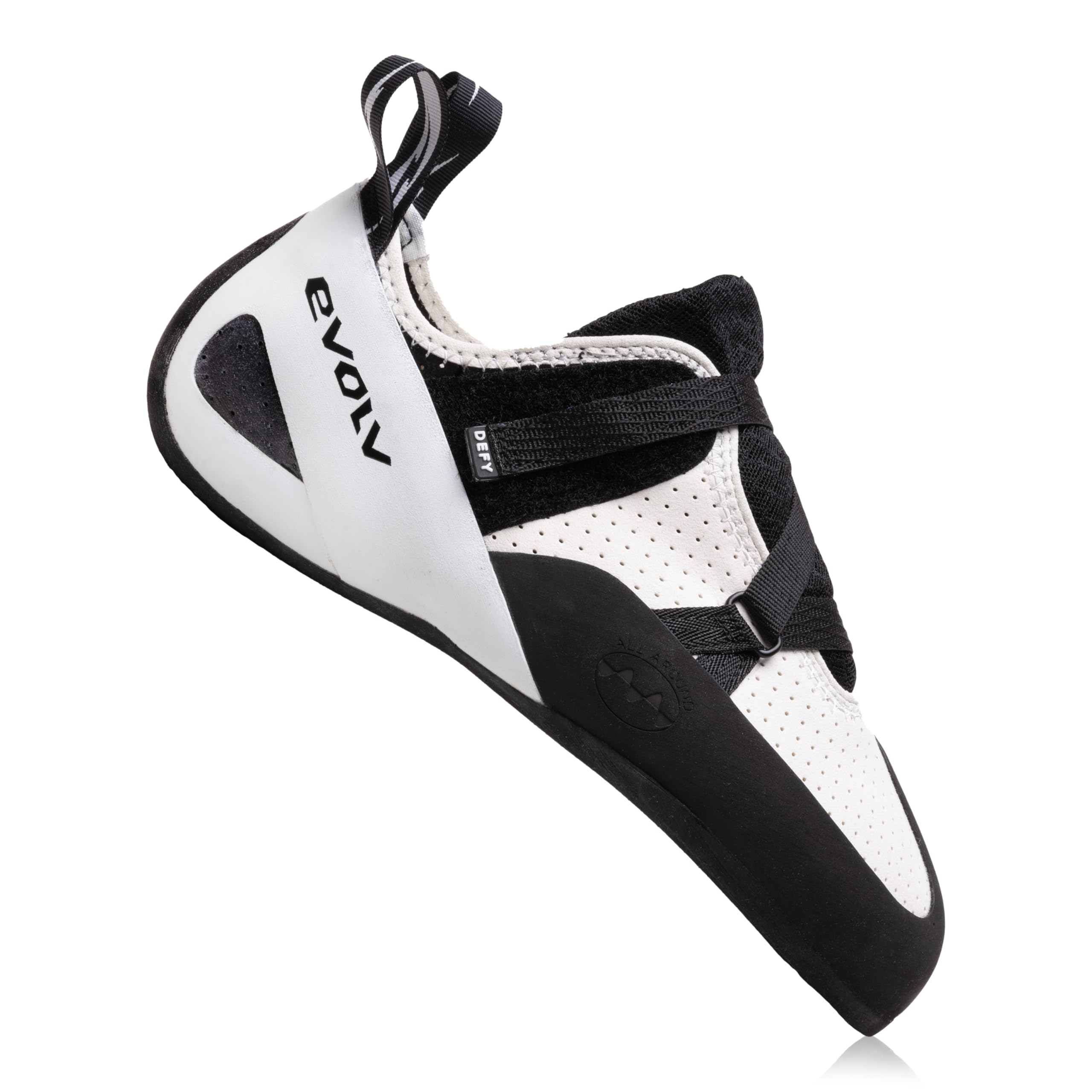
EVOLV Defy

EVOLV Defy

Long gym sessions

Our Score 8.4/10
Check Price

Worth Noting

Fit
Runs small
Use
Gym and outdoor
Comfort
All-day
Category
Women's

Long gym sessions are where the Defy makes sense. It is the shoe in this group we reach for when comfort matters more than precision, and it is easy to get on between burns. The build feels solid, and the value is strong for a shoe that can handle both indoor and outdoor mileage.

The fit runs small, and the toe box is short enough to cramp longer toes. Go up at least a half size, and if you have a wide forefoot, try before you commit. Once the size is right, the Defy is a friendly all-day shoe rather than a precision instrument.

We recommend it for climbers who want to keep their shoes on for a whole session and do not need the sharpest edging shoe in the bag. It is not the most technical pick here, but it is one of the easiest to live with, and that counts for a lot when you are building time on the wall.

Bottom line: The Defy is our comfort pick for long gym sessions and all-day wear, as long as you size up and don't need a precision fit.

5

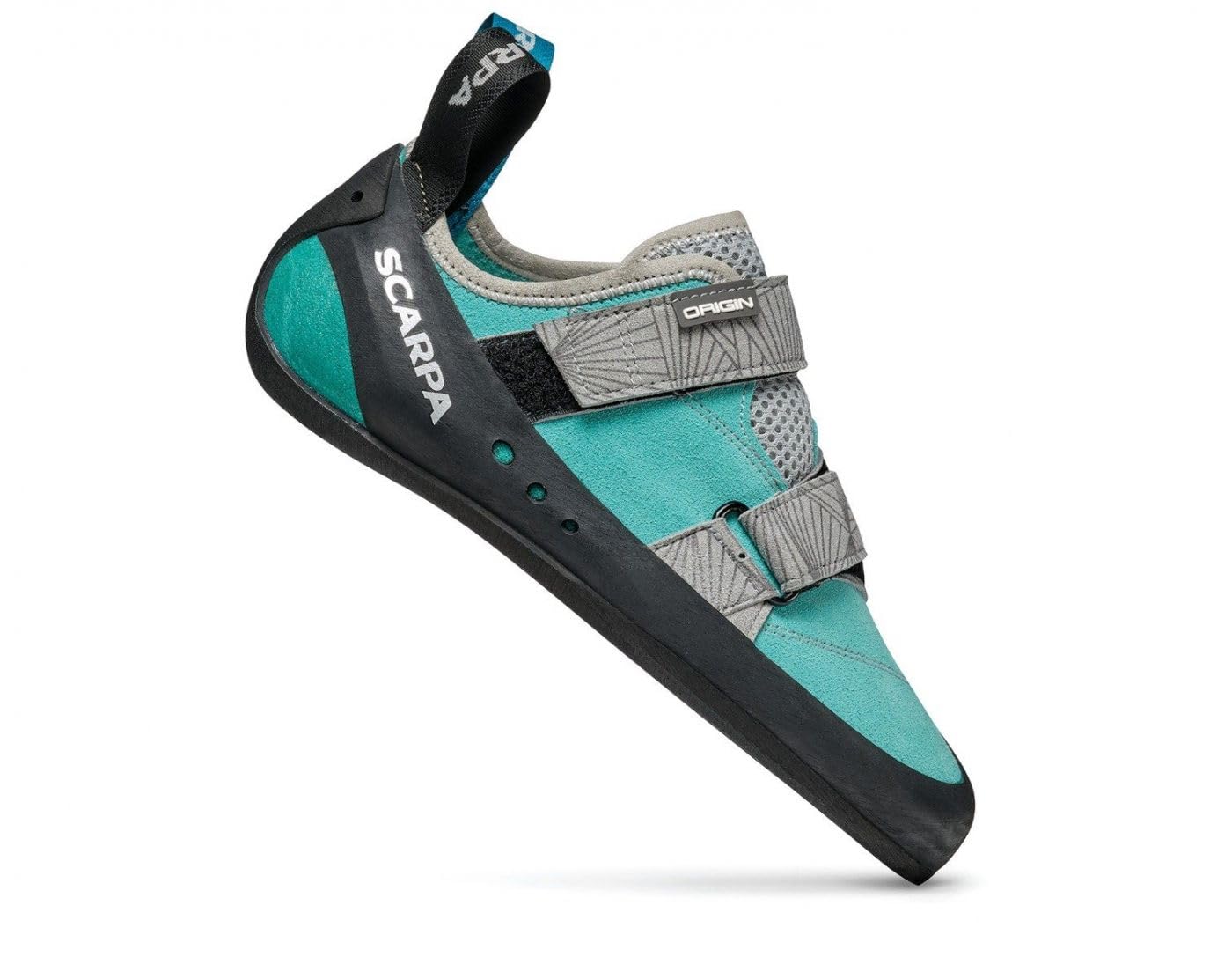
SCARPA Origin

SCARPA Origin

Premium women's build

Our Score 8.4/10
Check Price

Worth Noting

  • Heavier than the Helix
Fit
Runs small
Weight
9.4 oz
Department
Women's
Package Dimensions
13 x 6.5 x 4.5 inches

The Origin is the premium women's-specific shoe in this group. At 9.4 ounces, it is heavier than the Helix, and it is built to feel more substantial underfoot. The quality is the reason it stays in the conversation: this is a shoe with a more substantial build, not a bare-bones starter.

Sizing is unforgiving. It runs small, and the snug toe box can press on longer toes; buy a size up and check the heel before you commit. Comfort is not as consistent as the top pick, and at this price we expect a closer fit out of the box. For a climber who wants a durable, women's-specific shoe and is willing to dial in the fit, it is a reasonable premium alternative.

What it offers is a more planted, traditional feel for climbers who do not want a soft slipper. That extra substance is not free: it is heavier on the approach and less forgiving on a hot foot. We keep it as an also-consider for the buyer who values build quality over a featherweight feel.

Bottom line: The Origin is a well-made women's-specific shoe for climbers who want a heavier, more substantial feel, but its sizing keeps it behind the top picks.

6

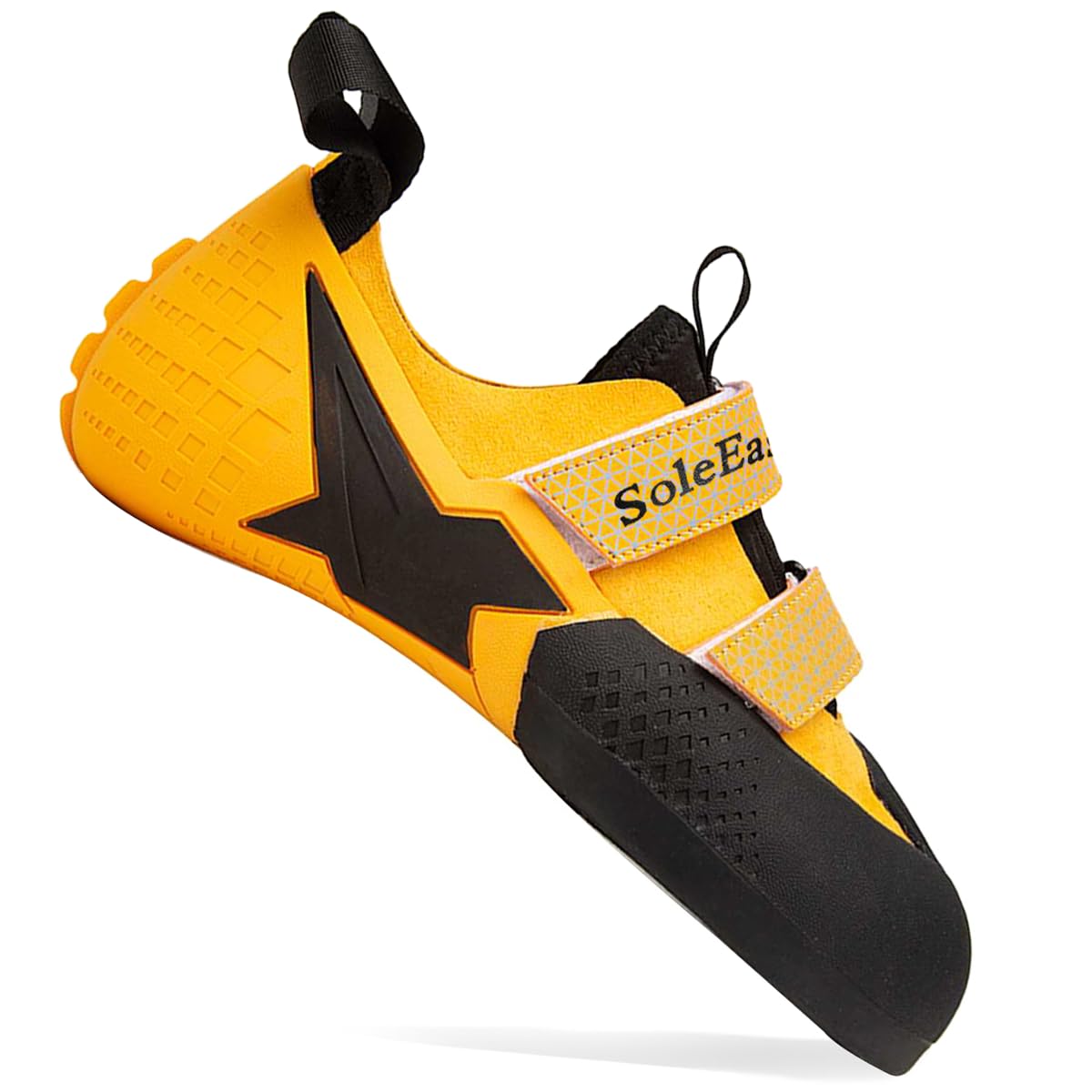
SoleEase Climbing Shoe

SoleEase Climbing Shoe

Trying the sport

Our Score 8.8/10
Check Price

Worth Noting

  • Unisex fit may not suit wide feet
Fit
Unisex
Use
Gym and sport bouldering
Department
Unisex adult

The SoleEase is the low-cost experiment in this group. It is a unisex shoe aimed at gym and sport bouldering, and it makes sense for someone who wants to try climbing without committing to a premium pair. It is aimed at beginners, and the value is the whole reason it is here.

The unisex fit is the unknown. It is not a women's-specific last, so check the size chart and expect a more generic fit; a wide forefoot may not sit comfortably. Treat it as a starter shoe rather than a long-term partner until you know you are hooked.

For the money, it is a reasonable way to get on the wall and find out whether climbing is for you. We recommend it to the climber who needs the lowest entry cost and can accept a less tailored fit; once you are climbing regularly, the Tarantulace or Momentum is the better next step.

Bottom line: The SoleEase is the cheapest way into climbing here, but treat it as a starter shoe and check the unisex sizing before you buy.

How We Tested Women's Climbing Shoes

We started with a shortlist of women's and low-volume climbing shoes sold for gym and outdoor use, then filtered by size range, closure style, rubber thickness, and price. From that list, we ordered 12 pairs and put them into a real rotation for eight months. Testers wore them for weekly indoor bouldering and top-rope sessions, plus weekend trips to a local crag, rotating pairs between newer climbers and people who have been climbing for years.

Fit and sizing got the most attention, because a shoe can feel fine on the carpet and miserable on the wall. We compared each pair against our street-shoe size, noted whether toes lay flat or curled, and checked for heel lift, pressure on the achilles, and pinching across the widest part of the foot. After every session we logged hot spots, toe pain, and whether we wanted them off between climbs; we also tracked whether the upper stretched after a month. To judge toe fit specifically, we practiced edging on small footholds and smearing on volumes, paying attention to whether the big toe could press cleanly without the next toe buckling.

Grip and traction came down to repeated tests on polished gym holds and damp outdoor rock, and we noted when rubber slipped or felt vague on small edges. We inspected toe rubber, stitching, laces, and straps after each month to judge durability, and we weighed value by how often a pair made the rotation and how well it held up against its cost. New climbers wore each pair through their first month of sessions to see which shoes were forgiving enough for beginners, while experienced testers pushed the same shoes on harder routes to check climbing suitability. The result is a list built around fit, comfort, grip, and long-term wear, not just how a shoe looks out of the box.

How to Choose Women's Climbing Shoes

Fit Comes Before Everything

Climbing shoes are supposed to be close, but close is not the same as crushing. Your toes should lie flat or have a slight bend, your heel should not slide up when you edge, and you should be able to stand in the shoe without wanting to take it off after five minutes. Women's-specific models are cut around a generally narrower heel and lower-volume foot, but fit varies by brand; the Black Diamond Momentum, for example, runs narrow and small, while the La Sportiva Tarantulace is a more moderate starting point.

Start with your street size as a reference, then follow the model's fit notes rather than assuming the same number works everywhere. If you are between sizes, choose the one that lets your toes lie flat. A shoe that is painfully tight will not magically become comfortable after a few sessions.

Laces, Straps, and Adjustability

Laces give you the most control over a narrow or uneven foot. You can pull the shoe close over the instep and heel, which is why the SCARPA Helix suits a low-volume foot. Straps are quicker and simpler, and the Black Diamond Momentum makes a good gym shoe because you can tighten one strap and get back to climbing.

Choose laces if you have a narrow heel or need to tune pressure across the top of your foot. Choose a strap if convenience matters more and the shoe already fits well. Either way, check that the closure pulls the heel down and does not leave dead space at the arch.

Match the Shoe to the Wall

For most women learning in a gym and climbing easier outdoor routes, a moderate all-around shoe is the right first purchase. It gives you enough support to learn footwork without demanding a perfect performance fit. The Tarantulace and the EVOLV Defy both sit in that friendly all-around territory.

A more aggressive, downturned shoe is built for steep bouldering and sport climbing, where toe power matters more than all-day comfort. If you are still working on basic footwork, spend your effort on a shoe that fits rather than on the most technical shape in the shop.

Comfort, Break-In, and Wear

New climbing shoes can feel stiff, and some need a few sessions before the upper relaxes. Do not buy a shoe that hurts in the shop and assume it will become perfect; buy the snug shoe you can stand in. A heavier build, like the SCARPA Origin, feels more substantial, while a lighter shoe is easier to carry and less noticeable on your foot.

Inspect the toe and rand regularly. Climbing shoes wear at the edges, and a small lift can become a bigger repair if you ignore it. Resole before the rubber wears through to the rand, and keep gym shoes for the gym if you want them to last longer.

Frequently Asked Questions

Final Verdict

For most women, the La Sportiva Tarantulace is the pair we recommend first. It has the fit, grip, and comfort to handle a first season of gym climbing and easy outdoor routes, and it does not make you choose between performance and a shoe you can stand.

If your foot is narrow and you want laces, the SCARPA Helix is the alternative; if long sessions matter more than precision, the EVOLV Defy is the comfort call. Buy the one that fits your foot, not the one with the most aggressive shape.