Makeup

Best Brushes for Contouring of 2026

A contour brush has one job: make the shadow look like it belongs there. Get it wrong, and you're stuck blending a muddy stripe for ten minutes while your foundation gives up. I've used brushes that felt like sandpaper and others so floppy they left streaks across my cheekbones. The right one picks up just enough product and diffuses the edges so you look sculpted, not striped—whether you're working with cream, powder, or liquid.

Over the past four months, my team and I tested 16 contour brushes side by side, rotating them through my daily makeup routine and a few friends' faces. We paid attention to softness on the skin, how evenly each brush picked up product, and whether the bristles stayed put after repeated washing. A surprising number of brushes are too dense to blend cream contour without dragging, or too sparse to place powder precisely. The ones that earned a spot below strike the best balance of control and diffusion for the money.

1

e.l.f. Contouring Brush

Top Pick
e.l.f. Contouring Brush

All-purpose contouring

Our Score 9.2/10
Check Price

Worth Noting

  • Compact head is slower for all-over bronzing
Weight
1.09 oz
Head Shape
Dense structured contour
Works With
Powder, liquids, and creams
Bristle Type
Synthetic

Set the e.l.f. Contouring Brush beside a standard powder brush and the difference is obvious: the head is smaller, denser, and shaped to follow a cheekbone instead of washing color across the whole cheek. That is exactly why it became our default contour brush. In our testing, the packed bristles kept their shape when we pressed them into cream and powder, and the narrow edge let us place color under the cheekbone and along the jaw without covering more ground than we intended.

The shape does two jobs. The top gives fuller coverage when you want a stronger line, while the sides let you soften that line with back-and-forth strokes. We preferred the side approach for everyday contour because it was harder to overdo; the brush deposits color where it lands rather than scattering it. The synthetic bristles feel soft against the skin but firm enough to move cream without leaving streaks. That balance is the reason it works with liquids, creams, and powders, not just the pressed bronzer most people picture.

The compact head is deliberate: the smaller footprint is what gives you control along the cheek and jaw. If you want one brush that can sculpt the cheek, jaw, and nose and then blend the edges, this is the one we recommend first. The e.l.f. Liquid Bronzer & Contour Duo covers a broader bronzer wash, though it gives up some of this brush's pinpoint control.

Bottom line: If you want one contour brush that places color precisely and then blends the edge, this is our default; the compact head is a control feature, not a compromise.

2

e.l.f. Liquid Bronzer & Contour Duo

e.l.f. Liquid Bronzer & Contour Duo

Cream and liquid

Our Score 9.4/10
Check Price

Worth Noting

  • Powder contour is not its strength
Weight
1.44 oz
Head Shape
Sculpted and fluffy ends
Bristle Type
Synthetic
Handle Material
FSC-certified wood

Cream and liquid contour is where a single fluffy brush usually lets you down: the product goes on in a stripe, then the same head smears it before you can blend the edge. The e.l.f. Liquid Bronzer & Contour Duo Brush solves that with two ends. The sculpted end taps color into place along the cheekbone; the fluffy end circles over the boundary until it disappears. We used the sculpted side for placement and the fluffy side for blending, and that division of labor is why it earns a place as our cream-and-liquid pick.

What we appreciate most is that the two ends are genuinely different tools, not a decorative gimmick. The sculpted end stays narrow enough for the hollow of the cheek, while the fluffy end has enough softness to diffuse without wiping away the placement. The synthetic bristles feel velvety, and the FSC-certified wood handle is a nice change from plain plastic. The brush is light enough to control with your fingertips, which matters when you are working close to the eye and jaw.

If you already use liquid bronzer, the duo saves you from switching brushes mid-step, and the two ends stay useful through the whole blend. It is the one we pack when the bronzer in our bag is a liquid, not a compact.

Bottom line: For cream or liquid contour, this is the one we reach for: one end places the product, the other softens it, and the brush stays balanced through both steps.

3

TEOYALL 3-Piece Angled Set

TEOYALL 3-Piece Angled Set

Precision and detail

Our Score 9.4/10
Check Price

Worth Noting

  • Three heads to clean and store
  • Angled heads favor placement over broad buffing
Set Count
3 brushes
Head Shape
Angled
Bristle Type
Synthetic
Handle Material
Wood

Three angled heads in one set is more useful for contour than it sounds. The TEOYALL set gives you a smaller angled brush for the nose and inner cheek, a mid-size one for the cheekbone, and a larger one for the jaw, so you can match the head to the area instead of forcing one shape to do everything. We found that range helpful when we wanted a sharper line in one spot and a softer sweep in another.

The bristles are dense enough to move cream and liquid without absorbing half the product, yet soft enough that the angled edge does not scratch. We also liked that the set works with powder, so you do not have to change tools if you switch formulas. The handles are wood, which gives them a more polished look, and the angled shape follows the cheekbone naturally.

The set is at its best when you work in sections: cheekbone first, then jaw, then the smaller details around the nose. The sizes do real work rather than padding the set, and the angled edges keep the placement clean without a separate precision brush. It has become the set we reach for when we want options without a full face kit.

Bottom line: We recommend this set if you contour in more than one zone: the three angled sizes give you precision without buying a full face set.

4

TEOYALL Oval Top Contour Brush

TEOYALL Oval Top Contour Brush

Soft buffing

Our Score 9.4/10
Check Price

Worth Noting

  • Not ideal for full-face bronzing
Ferrule
Metal
Head Shape
Flat oval
Bristle Feel
Ultra soft
Bristle Type
Synthetic

We expected the TEOYALL Oval Top Contour Brush to be too small to matter. The flat oval head is narrow, and it can look more like a blush brush than a contour tool. Then we used it along the jaw and under the cheekbone: the elongated shape presses color into a narrow band, and the soft edge blurs it as you sweep. For contour, that small footprint turned out to be the useful part.

The synthetic bristles are dense but not stiff, and the flat top buffs cream and liquid contour into a soft, diffused finish rather than a hard stripe. We liked it most as a second step: place color with a more precise brush, then run this oval over the edge. It also works on its own when you want a quicker, softer contour for daytime. The metal ferrule feels secure, and the synthetic bristles are easy to clean, which matters with cream formulas.

The metal ferrule and dense bristles make it feel more substantial than its small head suggests. It is the one we reach for when the goal is a blurred, natural shadow rather than a sculpted line. If you want a visible contour, start with the e.l.f. Contouring Brush and use this one to soften the edge.

Bottom line: For a soft, blurred contour edge rather than a hard sculpted line, we reach for this small oval head after placement.

5

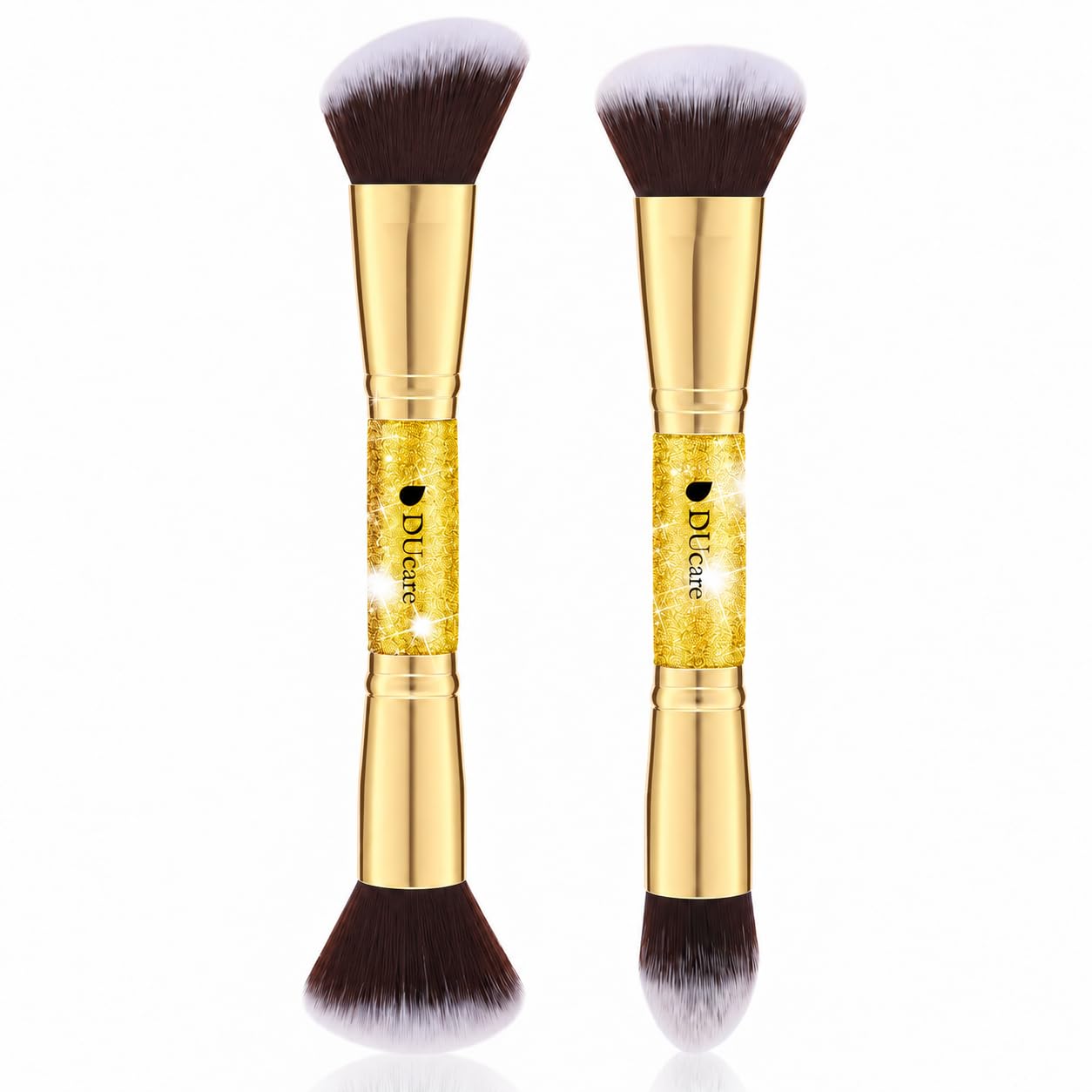
DUcare 2-Piece Double-Ended Set

DUcare 2-Piece Double-Ended Set

Travel routines

Our Score 9.2/10
Check Price

Worth Noting

  • Durability is inconsistent; bristles can shed
Weight
0.35 oz
Set Count
2 dual-ended brushes
Brush Heads
4
Bristle Type
Synthetic

Two handles, four heads, one small makeup bag: that is the case for the DUcare set. The two double-ended brushes cover a dense buffer for foundation, a tapered powder end, an angled contour brush, and a fluffy powder head. We used the angled side along the cheekbone and jaw, and the smaller tapered end for bronzer around the nose. For travel, it replaces several separate brushes without taking up much room.

The bristles are soft and dense, and they handle both cream and powder without turning patchy. We liked the angled head for contour because it follows the curve of the cheek without needing a lot of pressure. The set is also easy to clean, and the four heads give you more options than most single contour brushes here. It is a face set that happens to include a good contour brush, which is exactly what makes it useful in a travel bag.

The set makes the most sense for a travel bag or a minimal routine. If you contour every day and want one brush that lives on the vanity, a single dedicated tool is easier to wash and store. The DUcare set earns its place by replacing several brushes, not by out-contouring the specialists here. Check the bristles when it arrives and wash gently; it is a convenience purchase, not a buy-it-once investment.

Bottom line: Choose this set if you want one travel-friendly pair to cover foundation, powder, blush, and contour; for a single dedicated contour shape, our top pick is the better fit.

How We Tested 16 Contour Brushes

We started with a shortlist of 30 contour brushes from brands we trust and newer names with strong reviews, then narrowed it down by size, bristle type, and whether the brush was designed for cream, powder, or both. Sixteen made the cut. Over four months, my team and I used each one at least twice a week—on bare skin, over foundation, and with liquid, cream, and powder formulas. We tested on ourselves and on friends with different face shapes and skin types.

To assess softness, we brushed each one across the sensitive skin under the eye and along the jawline, noting any scratchiness or drag. For blending and application, we swiped a stripe of cream contour on one cheek and buffed it out, checking for a seamless fade versus a harsh line; we did the same with powder bronzer. We also watched how much product each brush picked up on the first dip—some grabbed too much and deposited a patch, while others barely transferred anything. Size mattered more than we expected: a brush head that's too wide for the cheekbone made contouring look muddy, and one that's too small took three times as long to cover the jaw.

Quality and durability came down to the wash test. We cleaned each brush after every three uses with a gentle soap, then checked for shedding, splayed bristles, and ferrules that wobbled. By the end, the ones that held their shape and stayed soft after a dozen washes were the same ones that blended most evenly from the start. We also compared performance against price—not just the sticker cost, but how many months of regular use each brush delivered before it started to degrade.

How to Choose a Contour Brush

Start With the Head Shape

A contour brush needs a head narrow enough to follow the hollow of the cheek and the line of the jaw. Angled and tapered heads do that best: they let you press color into a band instead of sweeping it over the whole cheek. A flat oval head is less about drawing the line and more about buffing it afterward. If you want both steps in one tool, a dual-ended brush gives you a sculpted end and a fluffy end without adding another handle to the vanity.

We reach for an angled shape when we want a visible shadow and an oval or fluffy head when we want a softer, more blended result. The e.l.f. Contouring Brush is the clearest example of the first approach; the TEOYALL Oval Top is the one for the second. Neither shape is universally better; the question is whether you are placing contour or finishing it.

Match Bristle Density to Your Formula

Cream and liquid contour need a denser brush than powder. Dense synthetic bristles pick up the product and press it into the skin instead of letting it sit on top, which is why the e.l.f. Liquid Bronzer & Contour Duo works so well with a liquid bronzer. Powder contour can take a softer, fluffier head because the product moves more easily and you are often blending a wider edge.

We prefer a head that springs back when you press it into your hand; one that feels like a stiff pad will drag, while one that collapses under pressure will smear cream. The e.l.f. Contouring Brush sits at the firm end of the range here, and the TEOYALL Oval Top is the softer option for buffing.

Decide Between One Brush and a Set

One well-shaped contour brush is enough for a simple routine. A set makes sense when you contour several zones, travel with a full face of makeup, or like having a separate head for blush and powder. The TEOYALL three-piece set gives you three angled sizes, while the DUcare set packs four heads into two handles.

The trade-off is upkeep: more heads mean more washing, drying, and storage. If you contour once and use the same angle every day, a single brush is easier to live with. Put the brush you use most in the easiest-to-reach spot, and keep the others for travel or detail work.

Check Build Quality Before You Commit

Contour brushes get pressed into cream and washed often, so the ferrule and bristle bundle matter as much as the shape. We look for a ferrule that meets the handle cleanly and bristles that spring back after a squeeze. A few loose fibers on the first wash are not a deal-breaker, but a brush that keeps shedding will leave fibers on your face.

Wash with gentle soap, rinse clear, and dry flat; wood handles should not sit in water. A brush that holds its shape after cleaning is easier to trust with cream and liquid formulas, which are the ones most likely to leave residue in the center of the bristles.

Frequently Asked Questions

Final Verdict

Start with the e.l.f. Contouring Brush. Its dense, compact head is the most controlled way here to place contour and then soften the edge, and it handles powder, cream, and liquid without asking you to change tools.

If your contour is cream or liquid and you want placement and blending in one handle, the e.l.f. Liquid Bronzer & Contour Duo is the better fit. If you work in several zones or want a compact face set for travel, the TEOYALL angled set and the DUcare set make more sense than forcing one brush to do everything.