Makeup

Best Bronzer Brushes of 2026

A bronzer brush is a shape doing a job. The angle sets where color lands, the density decides how hard the head presses back into your cheek, and the fiber decides whether powder goes where you aim it or everywhere at once. A big fluffy head dusts warmth across the whole face; a flat angled one draws a line under the cheekbone and stops. Use the wrong cut for the look you want and you end up with either a faint nothing or a stripe that takes five minutes to blend out.

I've made both of those mistakes, and I've had a brush drop a bristle onto my cheek mid-blend. Over the past four months, my team and I put 16 bronzer brushes through our actual morning routines, and price turned out to predict almost nothing. What separated the good ones was softer fiber than the cost suggested, a head sized to a real face rather than a swatch photo, and enough spring to blend without buffing color into a patch. Several also pulled double duty as blush and powder brushes, which matters if you'd rather own one than three — and those are the ones still sitting in my cup.

1

e.l.f. Angled Blush Brush

Top Pick
e.l.f. Angled Blush Brush

Sculpting and blending

Our Score 9.2/10
Check Price

Worth Noting

  • Handle-to-ferrule joint can work loose over time
Bristles
Soft, dense synthetic
Formulas
Cream, liquid, powder
Head Shape
Angled

An angled cut is the reason to start here. The brush is sliced on a slant, so the leading edge sits against the cheekbone and the shorter side does the work of diffusing downward, which is how bronzer ends up looking placed rather than painted on in a stripe. Soft, dense synthetic bristles pick up pressed powder without kicking up a cloud of fallout, and they hold their shape when you press them into the pan.

Versatility is the other half of the argument. Cream, liquid and powder bronzers all behave under this head, and we noticed the difference most with cream, where a floppier brush smears the edge you just placed and this one keeps it where you put it. The size also lets it double as a blush brush and, in a pinch, a highlighter brush, which is useful if you don't want a jar full of handles.

The head is smaller than the product photos suggest. For placement under the cheekbone that's an advantage, since you can be precise about where the colour starts; if you want one wide sweep across both cheeks, budget for two passes and a little patience. What keeps us coming back is the control: the flat of the brush lays colour down and the angle does the blending, so you can build a subtle bronze in thin layers instead of trying to soften one heavy one.

It also washes clean without hanging onto cream pigment, and the synthetic fibres dry overnight. For the least money in this group, that's a lot of brush.

Bottom line: We recommend it as the default bronzer brush: the angled cut places product along the cheekbone, and it handles powder, cream or liquid without complaint.

2

e.l.f. Liquid Bronzer & Contour Duo Brush

e.l.f. Liquid Bronzer & Contour Duo Brush

Cream and liquid

Our Score 9.4/10
Check Price

Worth Noting

  • Built around cream and liquid bronzers
Handle
FSC-certified wood
Bristles
Velvety synthetic
Formulas
Cream and liquid bronzer
Head Shape
Dual-ended: sculpted and fluffy

Two ends, two jobs, and the split is unusually clean. The sculpted end is cut flat and firm for tapping contour into the hollow of the cheek, and the fluffy end is open enough to diffuse that edge without dragging the pigment back off. If your bronzer comes in a tube or a pot, this is the pairing we point people toward.

We kept reaching for the fluffy end. Cream bronzer goes down in a defined shape and then needs softening, and a dense buffer can leave a visible starting line; the open, slightly tapered fibres here lift that boundary rather than pushing it across the cheek. The FSC-certified wood handle makes a small difference too, balanced enough that the tap-tap-buff rhythm doesn't feel fiddly in the morning.

Cleanup is quick because neither end is packed tight, and the two ends can be washed one at a time without soaking the whole handle. Packing is the one thing to think about: whichever end isn't in use sits exposed in a bag, so a pouch earns its place.

Bottom line: We hand it to anyone using liquid or cream bronzer: one end places the product, the other buffs the edge away, and both live on the same handle.

3

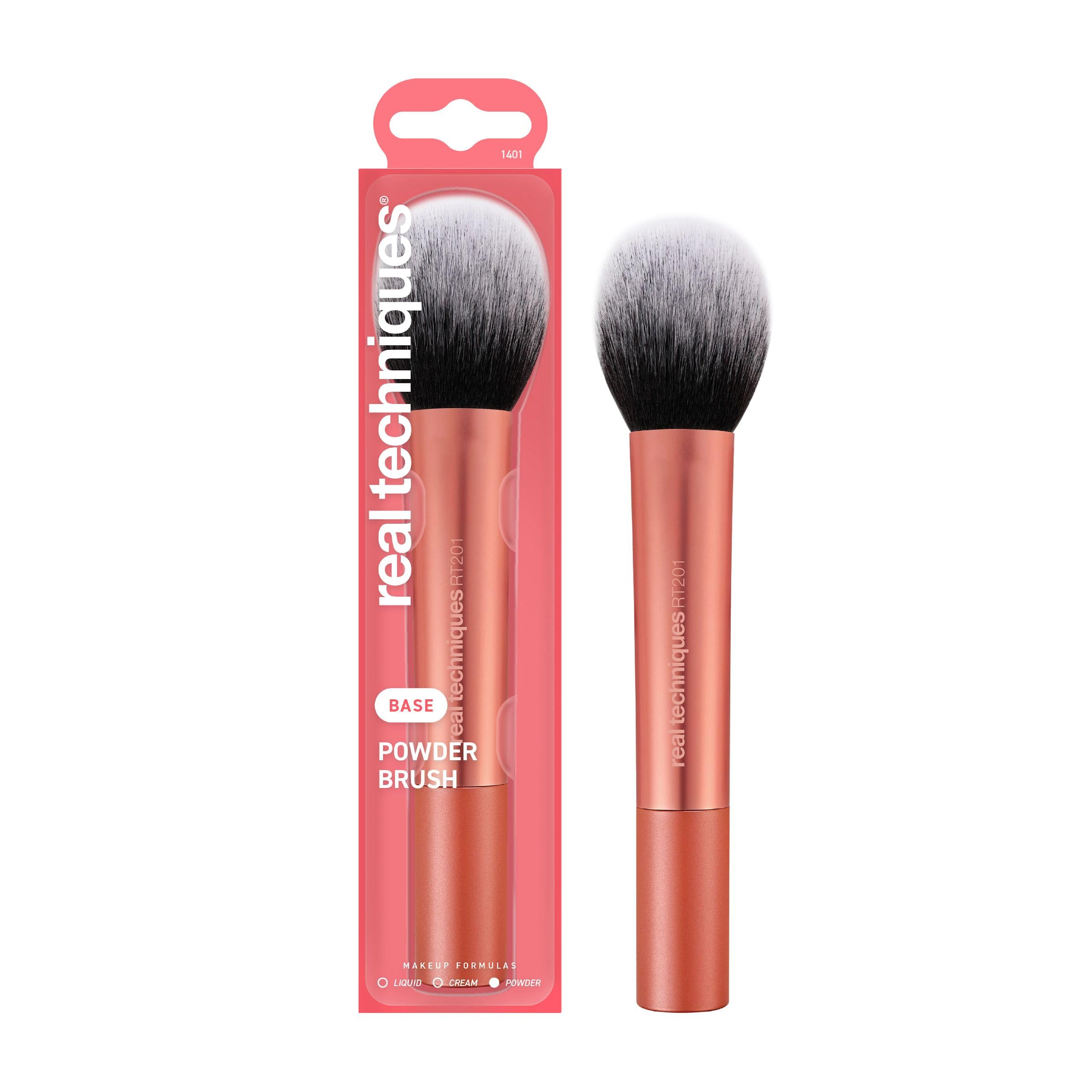
Real Techniques Powder Brush

Real Techniques Powder Brush

All-over warmth

Our Score 9.4/10
Check Price

Worth Noting

  • Too wide for precise cheekbone contouring
Bristles
UltraPlush synthetic
Formulas
Powder, bronzer, blush
Head Shape
Large dome
Listed Dimensions
8 x 1.75 x 1 inches

Out of the box, the head looks closer to a setting-powder brush than a bronzer brush: wide, domed and generously packed. That first impression is accurate, and it's also the point. A sweep of this covers most of a cheek, which is exactly what an all-over sun-kissed wash needs, and the dome means powder lands in a gradient rather than a stripe.

Softness is the standout. Of the brushes here, this head has the gentlest feel against skin and the least spring, so product distributes evenly instead of concentrating where the bristles are densest. It's also the least fussy to clean: warm water and a drop of soap rinse through it, and the dome comes back to shape as it dries.

Pressed bronzer is where it's happiest. Tap the excess off, sweep twice, and the powder fades into foundation instead of sitting on top of it. With a loose bronzer, use less than you think you need, because a head this size picks up a lot at once. It's also the brush we grab when a setting powder has over-mattified a shiny base; one pass resets the finish without disturbing what's underneath.

Bottom line: We reach for it when bronzer means a wash of warmth across the whole face, since the big soft dome covers a cheek in a single pass.

4

Real Techniques Mini Multitask Brush

Real Techniques Mini Multitask Brush

Travel and touch-ups

Our Score 9.2/10
Check Price

Worth Noting

  • Short handle shortens your stroke
Handle
Compact
Head Shape
Full-size tapered
Works With
Powder blush, bronzer, setting powder
Listed Dimensions
1.75 x 1 x 4.87 inches

Same head family as the Real Techniques powder brush above, without the length. The RT 407 head is full size, plush and tapered, wide enough to sweep a cheek, while the handle is short enough that the whole brush disappears into a small makeup bag. Nothing about the application has been shrunk to get there.

The taper is what earns it a place in a bronzer roundup rather than a powder one. You can run the tip along the cheekbone and use the wider base to soften the edge, which is more control than a dome of the same size gives you. On a cramped hotel counter with half a kit still zipped up, it's the brush we reach for, and the point means a second pass doesn't disturb the base underneath.

The handle measures just under five inches, which is the whole trick, and the extended aluminum ferrule keeps the weight low. Clean it as often as you would a full-size brush: a compact head picks up cream and pressed bronzer exactly the same way, and a brush that lives in a bag is the easiest one to forget.

Bottom line: We keep one in the travel kit: a full-size tapered head on a short handle, so a proper bronzer application still fits in a small bag.

5

TEOYALL Tapered Blush Brush

TEOYALL Tapered Blush Brush

First bronzer brush

Our Score 9.4/10
Check Price

Worth Noting

  • Head runs smaller than the large dome described
Ferrule
Metal
Bristles
Ultra-soft synthetic
Head Shape
Tapered dome

What we want from an inexpensive bronzer brush is a head that doesn't fight back: soft enough to sweep, dense enough to move powder. This one has both. The base of the head is packed tightly and the tip opens up, so product releases gradually as you move instead of dumping in one spot on the cheek.

That structure is why blending is its strength. A bronzer that fades out rather than stopping at a hard edge comes from exactly this arrangement, firm where the brush touches down and airy where it lifts away. The construction holds up too: the metal ferrule is crimped tight rather than glued, and the head doesn't rock when you press it into a pressed powder.

It's the brush we point to as a second bronzer brush, or a first one when the budget is tight. Keep it for the cheekbone and let something wider handle the rest of the face, and it makes sense, which is more than we expected from a brush this plain.

Bottom line: A soft tapered dome that we think blends powder bronzer better than its price suggests, and an easy first brush for a new kit.

6

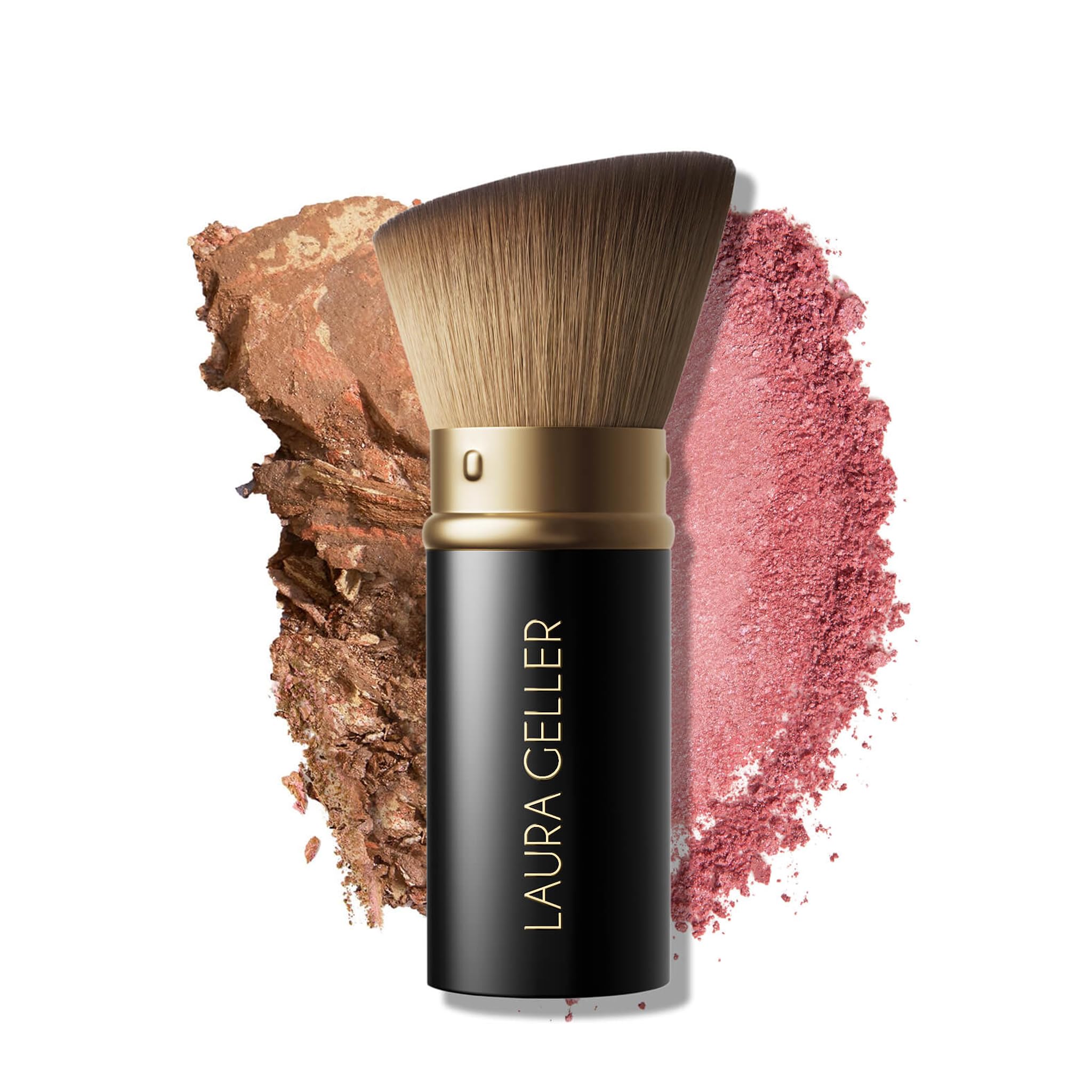
LAURA GELLER Retractable Angled Kabuki

LAURA GELLER Retractable Angled Kabuki

Travel and storage

Our Score 9.0/10
Check Price

Worth Noting

  • Bristles can shed with use
Format
Retractable kabuki
Bristles
High-count synthetic
Formulas
Liquid, cream, powder
Head Shape
Angled

Retracting is the reason to buy it, and the mechanism is also where it can annoy you. The head winds up into the sleeve so the bristles stay covered in a drawer or a bag, and the collar can slide down mid-sweep, shortening the bristles and changing how much product they pick up. Give it a firm twist before you start and it behaves, and when it stays put the angled cut is excellent for bronzing along the cheek and jaw.

The angled kabuki shape is genuinely good for bronzer, which isn't always true of brushes this dense. The cut edge lays a soft band of contour along the cheekbone, and because the bristles are packed tight the powder goes on in a controlled stripe rather than a puff. The feel on skin is closer to the Real Techniques powder brush than to a stiff traditional kabuki.

What we keep weighing is the mechanism against the money. The head is good, but for placement along the cheek it isn't better than the angled e.l.f. brush, so what you're paying for is the sleeve and the travel convenience. If the brush lives on a vanity, that's a lot of outlay to solve a storage problem; if it lives in a bag, it's the neatest option here.

Bottom line: We like it best where space is short: the angled kabuki head twists down into its own sleeve, so the bristles stay covered between uses.

How We Tested 16 Bronzer Brushes

We started with a list of roughly 60 brushes and narrowed it on specs and reviews: fiber type, head width, whether the ferrule was crimped or glued, and cost per brush. Every brush that reached testing had to be sold on its own, not only inside a set, because most people buy these one at a time. Sixteen then went into four months of real mornings, with the same pressed powder, the same loose bronzer, and the same cream stick sitting on the counter. Each brush was used with all three formulas, so any difference in placement or blending came from the brush and not the product.

After every application I noted how much color landed on the first tap, whether it diffused at the edges or sat in a hard stripe, and whether any bristles ended up on my cheek — I counted them. Softness got tested the fussy way: each brush went across the inside of my wrist a dozen times, then onto bare, freshly cleansed skin, since a scratchy fiber only announces itself without makeup underneath. Every two weeks each brush was washed with mild soap and warm water and dried flat, and I recorded how many bristles came loose, whether the head dried back into shape, and whether the ferrule stayed tight. Retractable brushes were twisted out and back 30 times and then carried loose in a makeup bag beside a powder compact for a week to see if they drifted or popped open.

Size and versatility were judged against my own face and kit — how a wide head behaved at the hairline versus a narrow one tucked under the cheekbone, and how many of the brushes could legitimately cover blush, powder, or contour. Value came down to what still looked and felt right after four months of washing, not what impressed me out of the box.

How to Choose a Bronzer Brush

Start With the Shape of the Head

An angled head is cut on a slant, so the leading edge traces the cheekbone and the shorter side blends downward. That's the shape to choose if bronzer is doing the sculpting. A dome sweeps colour across the whole cheek in one pass, which suits an all-over warmth better than a defined line. Tapered heads sit between the two: a point for placement, a wider base for softening. The trap is the big fluffy brush sold as a bronzer brush. It can warm a whole face beautifully, and it cannot carve a cheekbone. Decide which look you want before you shop, and the shape usually follows.

Match Density to Your Formula

Pressed powder wants a head with a firm base and an open tip, so product releases gradually as you sweep rather than dumping in one spot. Cream and liquid bronzers want the opposite: a densely packed, flatter head that sits on the surface instead of drinking the product. Load a fluffy brush with cream bronzer and it absorbs most of what you picked up, then streaks what's left. Dual-ended brushes solve the conflict in a single handle, which is worth considering if you use more than one formula. If you only own a powder bronzer, buy for powder and don't pay for a second head you won't use.

Size Is the Specification Buyers Get Wrong

Head width decides whether a brush places colour or sweeps it. Anything wider than roughly two fingers across is a blending tool: it covers a cheek fast and won't stay inside the hollow. Product photos are the second problem, since they tend to flatter the head, and a quoted dimension sometimes describes the whole brush rather than the bristles. Set the head against a brush you already like, or against two fingers on your own cheek, before you commit. Narrow for contour, wide for a wash, and one of each only if you bronze both ways.

What Wears Out First

Bristles are rarely the failure point; the join between head and handle is. A metal ferrule crimped onto the handle outlasts a glued joint, and loose hairs at the base of the head are the first sign that join is going. Wash with the bristles pointing down and keep water below the ferrule so it doesn't travel into the handle, then lay the brush flat with the head over the edge of a counter to dry. Retractable designs protect the head but add a collar that can slip, so check it before each use rather than mid-sweep.

Frequently Asked Questions

Final Verdict

Start with the e.l.f. Angled Blush Brush. It handles powder, cream and liquid, it places colour along the cheekbone and blends it out in the same motion, and it sits at the least expensive end of this group. That covers the ordinary case better than anything else here.

The alternatives answer narrower questions. Take the e.l.f. duo if your bronzer comes in a tube or a pot, the Real Techniques powder brush if you want warmth across the whole face rather than a sculpted line, and the mini version if the brush has to live in a bag. The retractable Laura Geller charges for a mechanism, not a better head.