Shoes

Best Boots for Women of 2026

Boots can wreck a whole day if you get them wrong—a tight calf, a heel that rubs by noon, a finish that scuffs on the first curb. The best pairs disappear on your feet: you put them on, forget about them, and still look put-together when you catch your reflection. A good pair fixes the morning scramble, the walk to the train, and the sudden drizzle on the way home.

Over the past eight months, our team has worn 14 pairs through commutes, weekend errands, and the occasional downpour. We noted which ones felt broken-in on day one and fit true to size, which accommodated wider calves without gaping at the ankle, and which finishes held up and shrugged off scuffs. We also asked whether the price matched the craftsmanship and whether the look worked with real outfits. One thing I've learned: a pull-on style lives or dies by its opening—if it fights your foot every morning, you'll stop reaching for it. The picks below are the ones that passed that morning test.

1

DREAM PAIRS Chelsea Ankle Boots

Top Pick
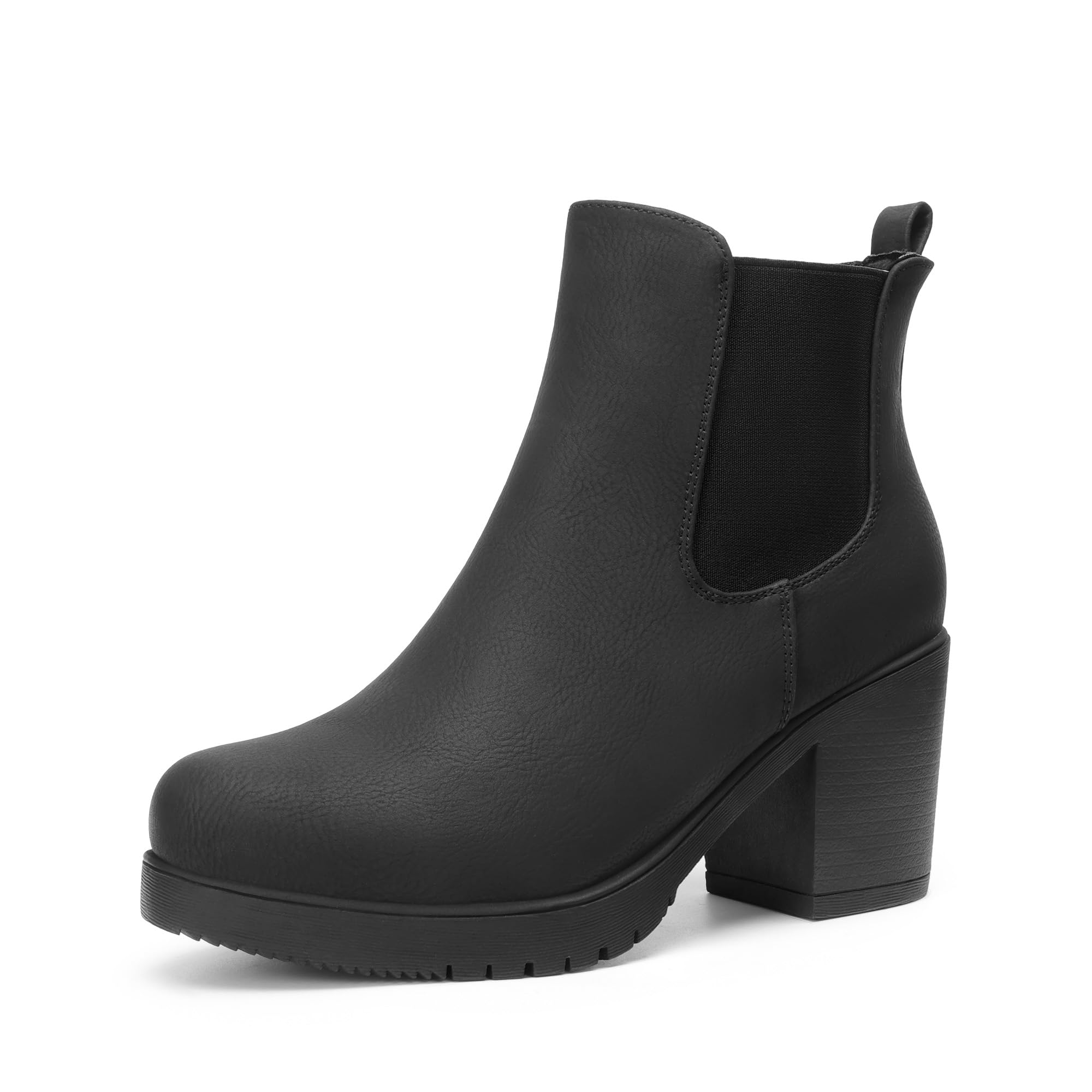
DREAM PAIRS Chelsea Ankle Boots

Everyday wear

Our Score 9.0/10
Check Price

Worth Noting

  • Lining wears through under daily wear
Shaft
Ankle
Style
Chelsea ankle boot
Sizing
True to size
Closure
Slip-on

Five outfits in, we stopped counting. These went with wide-leg jeans, a midi skirt and tights, and the black trousers we wear to the office, and no combination looked like a compromise — which is the whole argument for a plain Chelsea over anything with laces or hardware. The other half of that argument is the toe box: roomy enough for a wool sock, still shaped enough to hold the foot in place.

Underfoot is where these earn their keep. The footbed is padded through the ball and heel, and the low heel gives you some lift without the tiptoe feeling of a real heel, so a few blocks on the first afternoon never turned into a negotiation. Sizing runs true, and the fit is generous enough that wide feet and thick socks both work. The one thing to expect is the shaft: it pulls on over the instep with nothing to open, so a high arch takes a shove and a wiggle the first few times.

Before you order, know that the black lands closer to charcoal than a true black, which matters if you're matching a bag or a belt exactly. If you want the colour that carries an outfit on its own, the burgundy does more work than the black does.

Bottom line: If you want one pair to handle work, weekends, and everything between, start here: the roomy toe box and padded footbed make these the easiest boots on this list to live in.

2

Amazon Essentials Combat Boots

Amazon Essentials Combat Boots

Everyday casual

Our Score 9.0/10
Check Price

Worth Noting

  • Outsoles wear thin under daily wear
Sole
Lug sole
Shaft
Ankle
Style
Lace-up combat boot
Closure
Laces with side zipper

A lace-up combat boot usually asks you to choose between lacing tight enough to hold your ankle and getting out the door on time. The zip up the side settles it: knot the laces once at the tension you like, then use the zipper every morning after. It's the kind of detail that decides whether a boot ends up in the rotation or in the closet.

For the money, this is the most boot in the group. The lug sole has real depth rather than a decorative tread pattern, the toe box leaves your toes alone, and the shape is tidy rather than clunky — we wore them with a midi skirt and they read as a boot, not a work shoe. The army green is the colour that doesn't look like a budget boot, and the smooth finish wipes clean after a wet walk.

Sizing is the one thing to settle first: the fit splits between true to size and a half size roomy, so if you're between sizes, take the smaller one and wear a thicker sock. The insole is thin enough to feel the pavement through it, and a cheap gel insert fixes that for good.

Bottom line: Buy these if you want the combat-boot look without a lacing ritual every morning — the side zipper makes them the most practical pair here for daily wear.

3

DREAM PAIRS Chunky Knee-High Boots

DREAM PAIRS Chunky Knee-High Boots

Wide calves

Our Score 9.0/10
Check Price

Worth Noting

  • Shaft runs wide on a slim calf
Heel
Chunky heel
Style
Knee-high tall boot
Upper
Suede-like finish

Plenty of tall boots are drawn for a slim calf and then stretched over everyone else. This one is cut generously through the shaft, and that is the whole reason a fuller calf belongs here first — it zips without a fight and the top sits just under the knee. That single design choice is worth more than any finish detail on a boot at this level.

The upper is the surprise. It has a soft, suede-like hand that drapes around the leg instead of standing up stiff around the ankle, and the insole carries enough foam that an evening standing around doesn't register. The chunky heel earns its keep too: high enough to change the line of a dress, stable enough to walk in, which is not a combination every tall boot manages.

Wear them with leggings and a sweater for the weekend, or with a dress when something needs to look deliberate. Black will work hardest in a wardrobe; if you already own black boots, the navy is the more interesting second pair.

Bottom line: This is the tall boot to buy if a standard knee-high won't zip: the shaft is cut generously, and the soft upper keeps it comfortable once it's on.

4

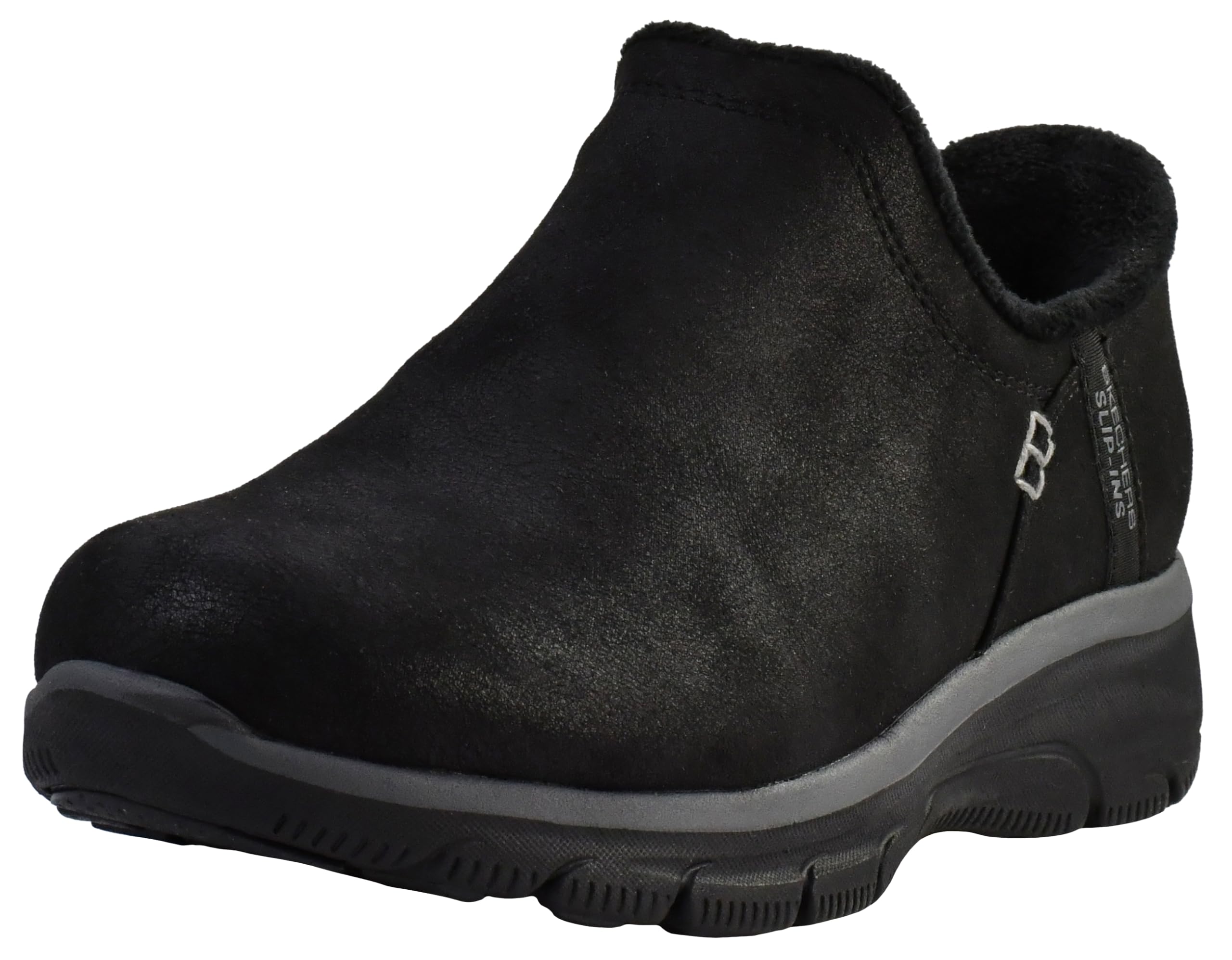
Skechers Easy Going Slip-Ins

Skechers Easy Going Slip-Ins

Cold, wet days

Our Score 9.0/10
Check Price

Worth Noting

  • Sportier profile than a leather bootie
Sole
Slip-resistant tread
Style
Slip-in ankle boot
Lining
Fleece
Closure
Hands-free slip-in

There is a morning these are built for: thirty degrees, half-melted slush on the sidewalk, and no patience for laces. You step in without using your hands, the fleece lining closes around the ankle, and the tread does the thinking on the wet stretch between the car and the door.

We rate these the most weather-ready pair in the group, and the margin is comfortable. The sole grips on ice, the upper shrugs off heavy rain, and the construction holds up through a wet winter rather than a single season of it. Warmth without sweat is the harder trick, and the lining manages it: toasty on a cold platform, not a swamp once you're sitting down.

Sizing runs roomy, so if you're a half size, take the smaller one. They're also light enough on the foot to wear for errands rather than just the commute, which is why our pair stopped being a weather-only shoe.

Bottom line: Spend the extra if winter is the point: these are warmer, grippier, and more sturdily built than anything else on this list, and you never bend down to put them on.

5

Athlefit Chelsea Ankle Boots

Athlefit Chelsea Ankle Boots

Slip-on ease

Our Score 9.0/10
Check Price

Worth Noting

Shaft
Ankle
Style
Chelsea ankle boot
Closure
Slip-on

Two Chelseas in a short list needs some explaining. The DREAM PAIRS pair has a bit of lift and a roomier toe; this Athlefit is the flat, soft one you kick off at the door and don't think about again. They serve different feet, and the difference is mostly in that shaft.

If getting boots on is the part you dread, start here. They slide on without a fight, the shaft doesn't bite at the ankle, and the toe box has enough room for a heavier sock — which is also how we'd wear them, since they run a touch roomy. The finish reads as a more expensive boot than it is, and the flat sole is comfortable for a normal day of walking around.

They do scuff. Car doors and kerbs leave marks on the brushed finish, and the pale colours show it first — but a damp cloth lifts most of it, so treat these as a boot you touch up rather than one you baby. The nude is the sleeper of the range: it works like a summer shoe with a skirt and like a fall boot with denim.

Bottom line: Take these if you want a flat Chelsea you can step into without touching a pull tab — the easiest pair to get on here, and the softest under a heavy sock.

How We Tested the Best Boots for Women

We started with a list of nearly 40 styles and narrowed it to 14 pairs based on available sizes, calf-width options, and price range. Over eight months, each pair went through the same routines: the morning commute, a full workday, weekend errands, and at least one wet-weather walk. We took notes as we went—no lab bench, just sidewalks, office carpets, and the pile of boots by the front door.

For fit, we tried each pair with thin and thick socks and walked a few blocks before deciding. Calf size got its own test: we measured the shaft opening and noted whether it gaped, pinched, or stayed put on different leg shapes. Ease of use came down to the morning test—how quickly we could pull them on, whether a zipper snagged, and if we could kick them off at the door without sitting down.

Comfort was judged at the two-hour and six-hour marks, with notes on pressure points and whether the footbed packed down. We wore the pairs in light rain and on gravel, then checked for scuffs, water stains, and loose stitching. Appearance and value were the final filters: we paired each boot with jeans, tights, and tailored pants, and asked whether the materials and construction justified the price.

How to Choose Women's Boots

Shaft height is the real decision

Ankle boots carry the least fit risk, because the shaft stops below the calf and the only things that have to fit are your foot and your ankle. Knee-highs and over-the-knees have to clear your calf at its widest point, which is where a tall boot stops fitting. If you want one pair that does the most work, start at the ankle and add height later.

Fit the foot first, then the sock

A boot doesn't stretch like a knit. The footbed stays the length it is, while a soft shaft may give slightly across the instep, so you buy for your foot at your usual size and choose the shaft for your calf separately. Try them on with the socks you actually wear — a roomy ankle boot with thin socks can turn tight once wool arrives. Between sizes, size for the longer foot.

Zippers, laces, and pull-on shafts

A side zipper is the biggest convenience upgrade on a lace-up: tie once at the right tension, then zip in and out from then on. On a tall boot, the zip is also the point of failure — it has to travel the full shaft, over the widest part of your calf, without pulling. If your calf sits near the top of a size range, size up and add an insole instead of forcing the zip. A pull-on shaft with no opening rewards a slim instep and fights a high one.

Heels, soles, and wet weather

Chunky and low block heels are the compromise most people can live in: enough lift to change the line of an outfit, stable enough for a walk to the train. Flat is fine for almost everything except a full day standing on hard floors, where cushioning matters more than heel height. For winter, look at the sole. A lugged or treaded sole grips wet pavement; a smooth fashion sole does not, and that is a fall risk rather than a style note.

Where boots wear out first

The upper is rarely what fails. The insole flattens, the heel covering scuffs through, and on cheaper pairs the outsole thins at the ball of the foot. A replaceable insole buys another season on nearly any pair here. If a boot has to survive daily wear, spend your attention on the sole and the footbed rather than the finish.

Frequently Asked Questions

Final Verdict

We start with the DREAM PAIRS Chelsea. It covers the most mornings of anything here: roomy through the toe, cushioned enough for a commute, and plain enough to wear with jeans, a work skirt, or a slip dress without a second thought. If your winter involves ice, slush, or eight hours on your feet, the Skechers slip-ins do more for you — fleece-lined, properly grippy on ice, and built for a second winter.