Wellness

Best Ashwagandha Supplements of 2026

Ashwagandha gets sold as a fix for almost everything — stress, sleep, mood, focus — which is exactly why it's hard to take the hype seriously. It's an adaptogen, meaning it's supposed to help your body handle stress rather than flatten you, and most bottles give you no way to tell whether it's doing anything at all. What people actually want is simpler: to stop replaying the day at 2 a.m., or to get through a Tuesday afternoon without a second coffee. A good formula doesn't sedate you or wire you — it takes the edge off quietly enough that you notice when you skip a week.

The tricky part is that two bottles with the same milligram count can be different things entirely — root powder versus standardized extract, withanolide percentages all over the map, some cut with black pepper for absorption, some not. Over six months, my team and I worked through 15 formulas in capsules, caplets, gummies, and powders, tracking how each sat in the stomach and whether the label's math matched the actual serving. A few earned a permanent spot in the kitchen cabinet; a couple were done by week two.

1

NutriRise Organic Ashwagandha Root

Top Pick
NutriRise Organic Ashwagandha Root

Most people

Our Score 9.0/10
Check Price

Worth Noting

  • Capsule only, with no gummy or chewable option
Form
Capsule (120 count)
Extract
Organic root powder
Added Ingredient
Organic black pepper
Root Per Serving
1,300 mg

Read down the label and the number that separates NutriRise from the rest of this group is 1,300 mg, followed closely by the fact that all of it comes from root. Leaf is the cheap filler in a lot of budget ashwagandha, and it isn't the part of the plant the traditional preparations use. A full dose of organic root powder plus black pepper, in a plain capsule, is exactly the shape we want a default pick to take, which is why this is the bottle we point most people toward.

The black pepper isn't decoration. Piperine is added on the sound theory that it helps your body take up more of what's in the capsule, and it's the one additive here we think earns its place. What settled it for us was consistency: over weeks of daily use, the effect this bottle produces is calm without fog, meaning better sleep, a longer fuse, and no grogginess at seven in the morning. That's the whole job of an adaptogen, and it happens here more reliably than with anything else we tested.

Two things are worth knowing before you order. Ashwagandha doesn't suit every stomach, and 1,300 mg is a real dose, so take it with breakfast rather than on an empty stomach and the queasiness that catches some people usually doesn't arrive. And it's cumulative, so judge it after a month rather than after three days. Youtheory's KSM-66 capsule is the nearer second on dose if you prefer a branded extract, though you get a much shorter bottle for similar money.

Bottom line: We point most people to NutriRise: 1,300 mg of organic root per serving, black pepper for absorption, and the steadiest stress-and-sleep results we saw in this group.

2

Goli Ashwagandha Gummies

Goli Ashwagandha Gummies

Pill-averse buyers

Our Score 9.0/10
Check Price

Worth Noting

  • Results are the least consistent in this group
Form
Gummy (60 count)
Dietary
Vegan, non-GMO, gluten-free
Extract
KSM-66 root extract
Added Ingredient
Vitamin D

Goli is the one we hand to someone with a cabinet full of half-finished capsule bottles. These are mixed-berry gummies built on KSM-66, a full-spectrum root extract, with vitamin D added, a combination no capsule in this guide offers. When the real choice is between a stronger pill you skip and a gummy you take every morning, the gummy wins and it isn't close.

We expected to be dismissive of a candy-adjacent supplement and came away understanding the appeal. The gummies are soft rather than rubbery, the berry flavor is genuinely good, and the format removes every obstacle: no water, no aftertaste, no horse-pill moment at the kitchen counter. For anyone who has gagged on a caplet, that's worth more than a few hundred extra milligrams.

The trade-off is consistency. This is the pick in our group where the I-didn't-notice-anything experience comes up most often, and the bottle has a habit of arriving with the gummies fused into one lump that needs a knife to break apart. Both are livable, since storing the bottle somewhere cool keeps them separated and a full month is long enough to know, but they're part of why this sits below the capsules rather than beside them. Compare Goli on its extract rather than its milligrams: it leads with KSM-66 and never quotes a number on the front.

Bottom line: Buy Goli if capsules end up in a drawer: a soft KSM-66 gummy with vitamin D that gets taken daily, even though the results are the least predictable here.

3

Youtheory Ashwagandha

Youtheory Ashwagandha

KSM-66 at full dose

Our Score 9.4/10
Check Price

Worth Noting

  • 45-day bottle makes it pricey per day
Form
Vegetarian capsule (90 count)
Supply
45 days
Extract
Organic KSM-66
Blend Per Serving
1,000 mg

Ninety capsules and 45 days: Youtheory's bottle is built for two capsules a day, which makes it the shortest real-dose commitment in this guide. That's the first thing we weigh if you're still deciding whether ashwagandha is worth taking at all.

Inside is organic KSM-66, a branded root extract, at 1,000 mg per serving. KSM-66 is one of the most studied ashwagandha extracts and it's standardized, so each batch carries a predictable load of withanolides instead of whatever the root happened to contain that season. Youtheory also tests every batch and manufactures in its own GMP-certified facility, the kind of unglamorous diligence we like to see on a premium bottle.

Our verdict is that this is the KSM-66 bottle to buy if you want the extract at full strength without parking a year's supply in the cupboard. The serving is double what Pure Encapsulations delivers for less money, and splitting it across breakfast and dinner is easy to keep up with. What you're paying for is the shorter runway, since 45 days puts the daily cost among the highest here, so treat it as a trial bottle rather than a staple.

Bottom line: Choose Youtheory if you want KSM-66 at full strength: 1,000 mg per serving in a 45-day bottle that suits a trial rather than a year on the shelf.

4

Nutricost Ashwagandha

Nutricost Ashwagandha

Low-cost trial

Our Score 9.2/10
Check Price

Worth Noting

  • 600 mg is a mid-range dose
Form
Capsule (120 count)
Testing
Third-party, ISO-accredited labs
Servings
120
Extract Per Serving
600 mg

One capsule, 600 mg, 120 capsules, 120 servings. Nutricost's arithmetic is the entire pitch, and it's a good one: this is the least expensive way in this guide to find out whether ashwagandha does anything for you, and one bottle covers four months at a capsule a day.

The unglamorous parts are handled better than the price suggests. Every batch is tested by independent, ISO-accredited laboratories and made in an NSF-certified, GMP-compliant facility, and the capsules are small, tasteless, and easy to get down. If oversized caplets are the reason your last bottle went unfinished, this is the opposite experience.

Our one caution is the dose. At 600 mg it sits in the middle of this group, roughly half of what NutriRise and Youtheory put in a serving, so it's a fair place to start rather than a strong one, and anyone who needs more ends up taking two. Take it with food, because ashwagandha can turn on a sensitive stomach at any dose, then give it a month. If the answer is nothing, you've spent very little learning it.

Bottom line: Nutricost is the bottle we suggest when you just want to find out: 120 single-capsule servings, third-party tested, at the lowest cost per day here.

5

Futurebiotics Ashwagandha Extra Strength

Futurebiotics Ashwagandha Extra Strength

Long-term supply

Our Score 9.2/10
Check Price

Worth Noting

  • Label claims extra strength without a milligram figure
Form
Capsule (360 count)
Formula
Ashwagandha extract
Manufacturing
cGMP facility in New York

360 capsules is the entire argument. That's more ashwagandha than any other bottle in this guide, enough that reordering turns into an annual errand instead of a monthly one. If you already know the herb works for you, this is the least fussy way to keep it in the house.

What we didn't expect was the capsule size. They're smaller than almost everything else here, closer to a small antibiotic capsule than the fat caplets at the other end of the list, and they go down without drama and without an aftertaste. For anyone who dreads pill time, that matters more than the milligram count.

Our take is that this is a volume buy rather than a precision one. You're trusting Futurebiotics' own extract instead of matching doses on paper, and the company makes it in a cGMP facility in New York, which is the reassurance we want from a bottle this size. Buy it for a long, cheap-to-own supply; look at NutriRise or Youtheory if you need a number to compare. The trade is precision for convenience, and for a repeat buyer it's a fair one.

Bottom line: Buy this one if you already know ashwagandha works for you and want 360 small, easy-to-swallow capsules that end the reordering cycle.

6

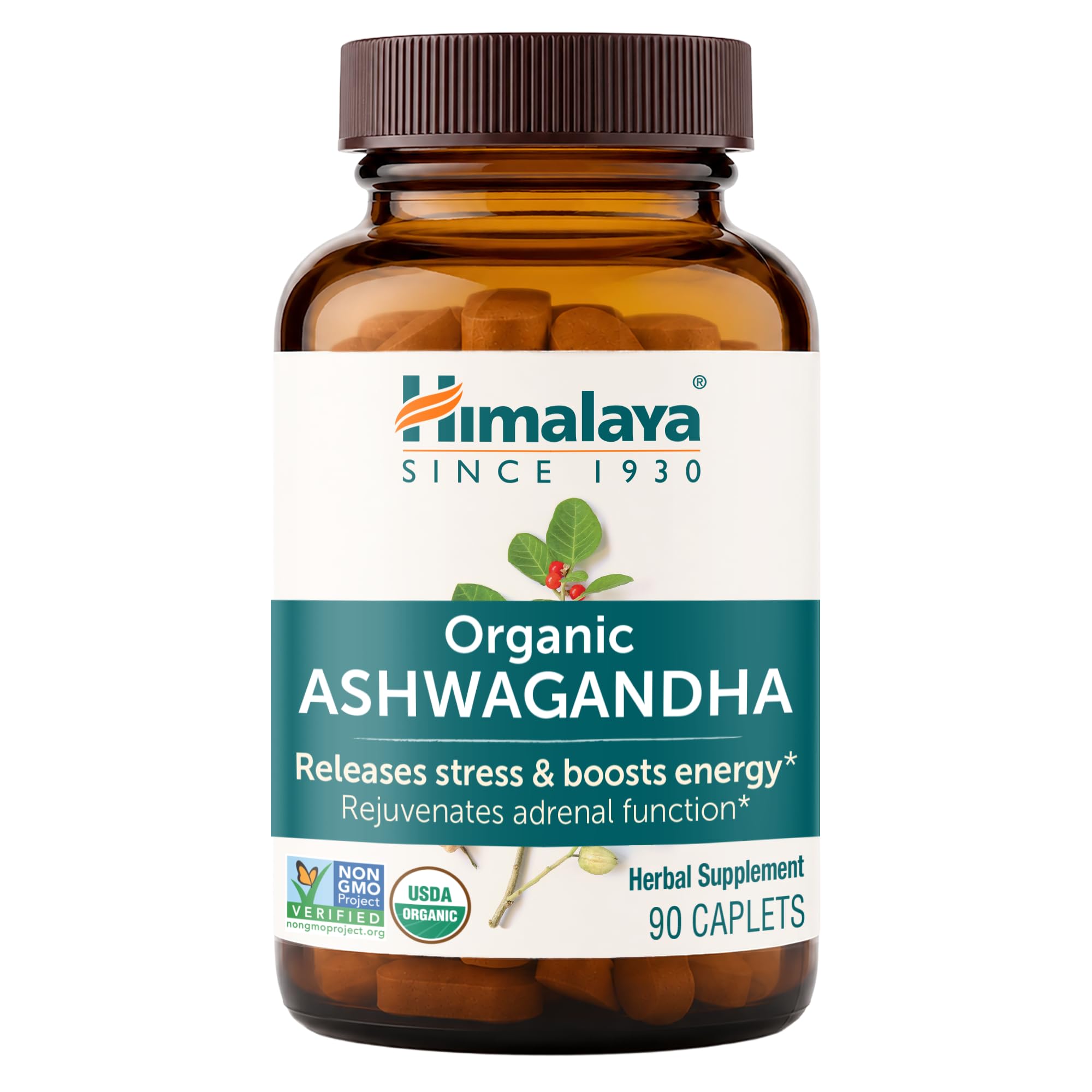
Himalaya Organic Ashwagandha

Himalaya Organic Ashwagandha

Organic caplet routine

Our Score 9.2/10
Check Price

Worth Noting

  • 670 mg per caplet is modest next to stronger picks
Form
Caplet (90 count)
Supply
90 days
Certification
USDA Organic, non-GMO, vegan
Root Per Caplet
670 mg

Himalaya is the only bottle here whose own formula has been through randomized, double-blind, placebo-controlled trials, four of them, with the most recent looking at stress in healthy adults. That isn't proof it will work for you. It is evidence that the company knows precisely what's in the caplet, which is more than most supplement labels can show.

The rigor runs deeper than the trials. Every lot passes more than 25 tests, including DNA-based plant identification, and the extract is made with water and CO2 instead of harsh solvents. One caplet a day delivers 670 mg of root powder and root extract, it's USDA organic, vegan, and gluten-free, and 90 caplets is a clean three-month run. Transparency plus a once-a-day habit is why this is the organic pick in this guide.

The catch is the caplet itself. It's the largest thing to swallow here, and it carries an earthy herbal flavor that lingers well after the water is gone. If pill size or taste is a dealbreaker, the smaller Nutricost capsules are the easier swallow, though you give up the organic certification to get them.

Bottom line: Himalaya is our organic pick: one 670 mg caplet a day, four clinical trials behind the formula, and DNA-verified plant testing on every lot.

7

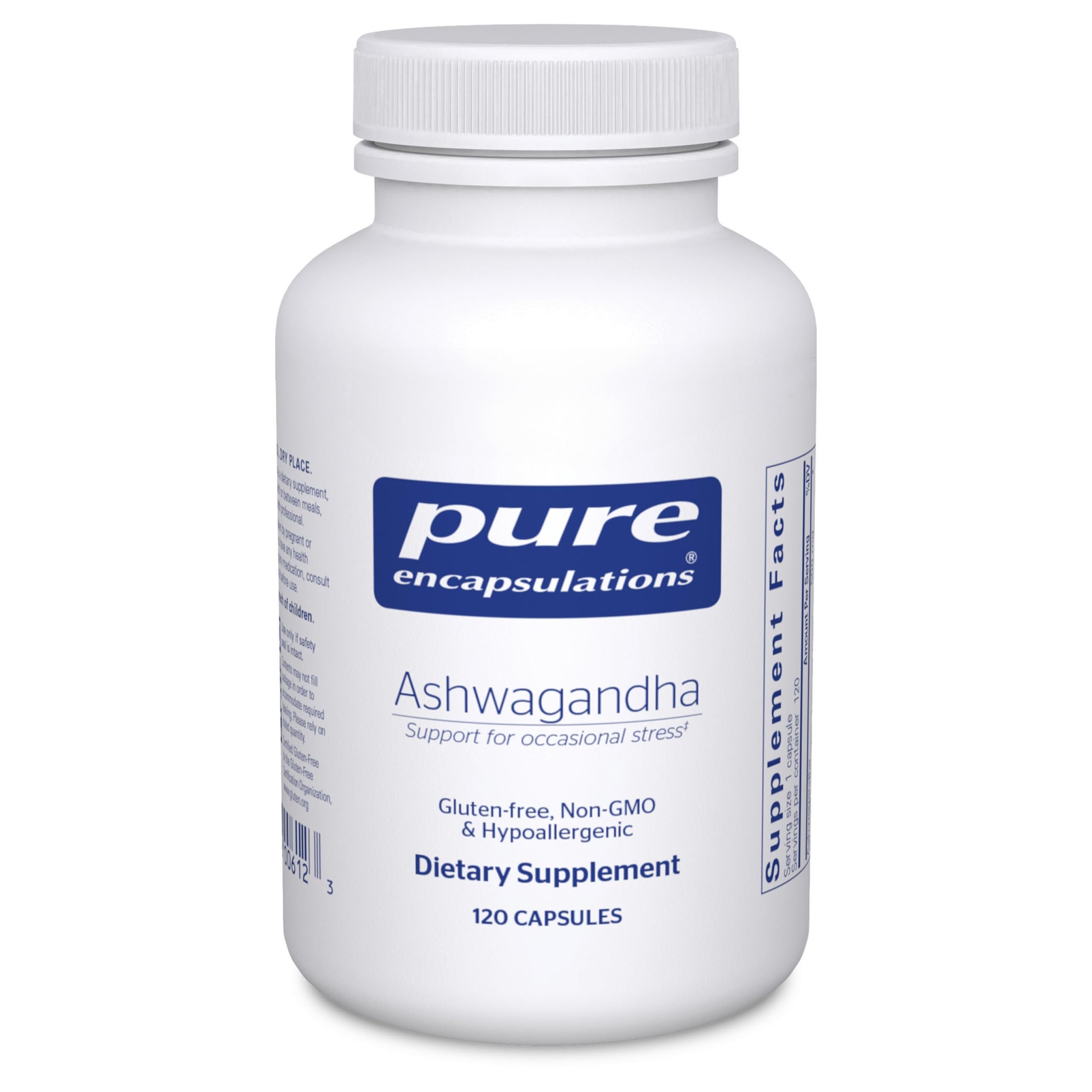
Pure Encapsulations Ashwagandha

Pure Encapsulations Ashwagandha

Clean-label shoppers

Our Score 9.4/10
Check Price

Worth Noting

  • Premium price for a mid-strength 500 mg dose
Form
Capsule (120 count)
Testing
Third-party potency verified
Free From
Common allergens, GMOs
Extract Per Capsule
500 mg KSM-66

Pure Encapsulations is the priciest capsule in this guide, and what the money buys is subtraction: 500 mg of KSM-66 root extract per capsule, free from common allergens, artificial ingredients, and GMOs. No proprietary blend to decode, no unnecessary extras.

The brand's whole identity is what it leaves out, and for something you swallow daily for months, that's a reasonable thing to pay for. The capsules are small and tasteless, the kind you stop noticing by the second week, and potency is verified batch by batch rather than assumed.

On dose, you're getting half of what Youtheory puts in a serving and paying more for it. That's the trade in plain terms: fewer ingredients and a long testing record in exchange for milligrams per dollar. If neither of those premium qualities is what you're after, the math doesn't work.

Where we land is that this is the bottle for the person who reacts to everything and wants the shortest ingredient list they can find, and it's what we suggest when someone has already returned two other brands. As a first ashwagandha purchase, the premium is hard to justify.

Bottom line: Buy Pure Encapsulations for the short ingredient list rather than the dose: 500 mg of KSM-66 per capsule at the highest price here.

8

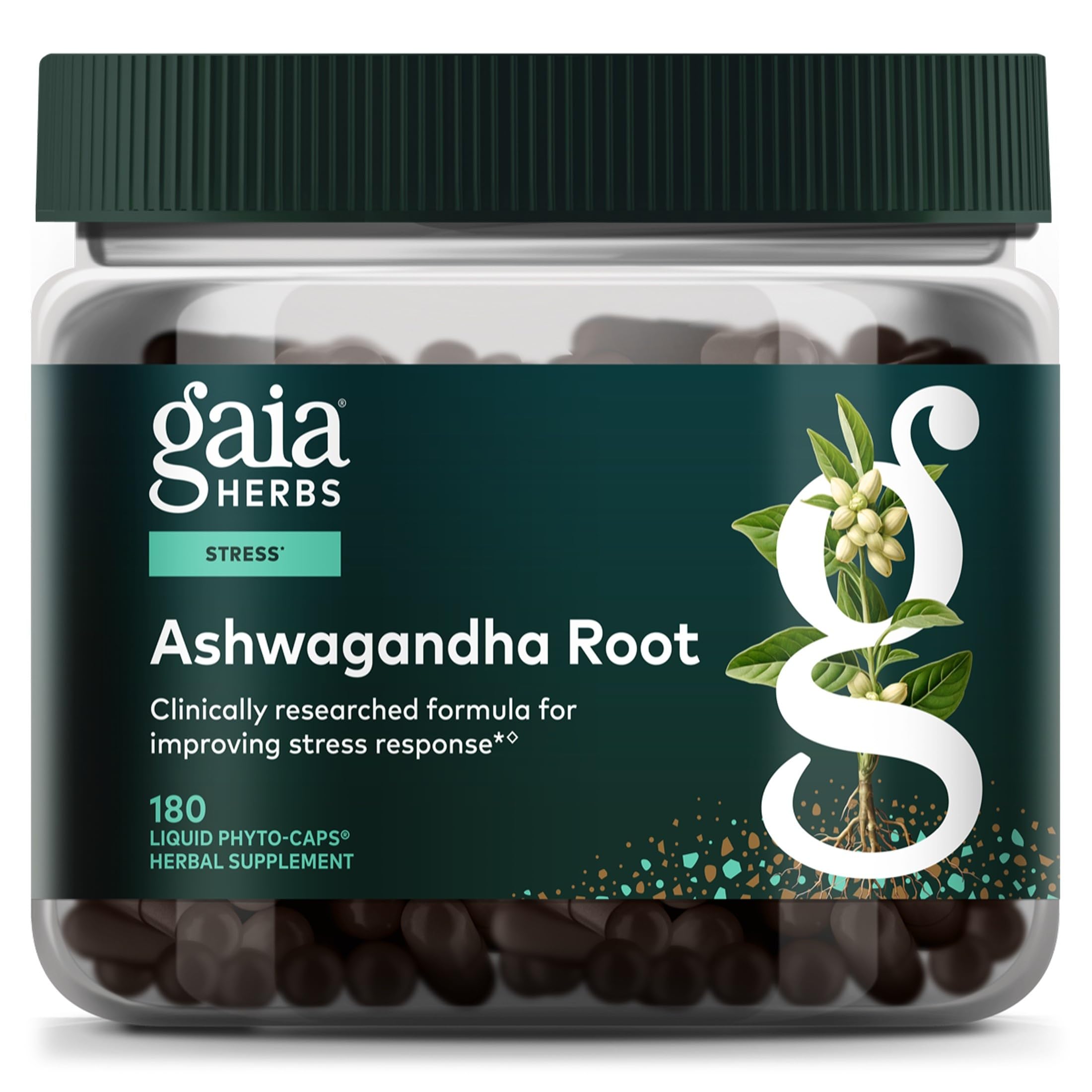
Gaia Herbs Ashwagandha Root

Gaia Herbs Ashwagandha Root

Split daily dosing

Our Score 9.2/10
Check Price

Worth Noting

  • Priciest per serving in this group
Dose
1 capsule twice daily
Form
Vegan capsule (180 count)
Supply
90 servings
Root Per Capsule
350 mg

One capsule, twice a day, 350 mg each time. Gaia's dosing is the most deliberate schedule in this guide and the least convenient: 180 capsules is 90 servings, or a full quarter of the year if you keep to it.

The capsules are liquid-filled rather than dry powder, which is a different feel on the tongue and, for some, an easier swallow. The root comes through Gaia's seed-to-supplement program, there are no artificial sweeteners, colors, or flavors, and each batch is independently tested for identity and potency.

The formula has clinical backing for stress balance and restorative sleep in healthy adults, and sleep is where it earned its place in our own testing: taken an hour before bed, the evening capsule is the one we noticed.

Whether it's worth the money comes down to the rhythm. Two smaller doses spread across the day suit anyone who finds a single large one fading by mid-afternoon, and the 350 mg capsules let you build up slowly. It's also the most expensive bottle here per serving, which is a real cost for an herb you may take indefinitely. The schedule is the whole decision; everything else in this guide is cheaper per milligram.

Bottom line: Pick Gaia if you want a small dose twice a day rather than one big one, and don't mind paying the highest per-serving price in this group.

How We Chose and Tested the Best Ashwagandha Supplements

We started with labels, not reviews. Anything that didn't say whether it was root or extract, list a withanolide percentage, or spell out a per-serving dose got dropped before testing, and so did formulas whose cost per serving had drifted well past what the ingredient justifies. That left 15 options across capsules, coated caplets, gummies, and loose powder.

Each got at least four weeks of daily use, back to back, over roughly six months. I took mine at night; two colleagues took theirs in the morning, to see whether timing changed how drowsy or alert anyone felt. We swallowed doses with food and, once per formula, on an empty stomach — because that's how people actually take them — and logged every bout of nausea, heartburn, loose stool, or next-day fog in a shared document.

The tactile stuff mattered more than I expected. Gummies were checked for clumping in the bottle and graininess on the tongue, powders for whether they dissolved in warm water or went chalky, capsules for size and how easily they went down. Every morning we wrote two lines: how many times we'd woken in the night, and how we'd rate the previous day's mood and afternoon energy against a baseline week each of us had recorded before starting. At the end we counted servings bottle by bottle to check the label's math and worked out cost per 300 mg and per 600 mg — the two doses most of the research settles on.

How to Choose an Ashwagandha Supplement

Root, Extract, and What Else Is in the Capsule

Ashwagandha is sold three ways: plain root powder, standardized root extract, and a branded extract such as KSM-66. Root powder is the traditional form and gives you the whole root, but its withanolide content shifts from batch to batch. A standardized extract is measured so each capsule delivers a predictable amount. Neither is automatically better. The root-only bottles here, NutriRise and Himalaya, suit someone who wants the traditional preparation, while the KSM-66 capsules such as Youtheory and Pure Encapsulations suit someone who wants a consistent extract.

Then read the rest of the formula. Black pepper is the one additive worth having, since piperine is included to help absorption. Vitamin D, probiotics, and extra herbs turn a single-herb supplement into a blend, and if you're trying ashwagandha for the first time, a plain capsule lets you judge the herb on its own.

Work Out the Cost Per Day, Not Per Bottle

Bottle counts are not days. Youtheory's 1,000 mg is a two-capsule serving, which is why 90 capsules is a 45-day bottle; Nutricost's 600 mg is one capsule, so 120 capsules is 120 days. Divide the count by the serving size before you compare anything, then ask what a day costs. A big per-serving number is the most common way a bottle looks stronger than it is, so read how many capsules it takes to get there.

Match the Format to the Routine You Keep

Format decides whether the bottle gets finished. Small capsules, like Nutricost's and Futurebiotics', are the easiest daily habit. The caplets here are the largest thing to swallow and carry a flavor. Gummies like Goli's are what people stick with when pills go unfinished, at the cost of a softer, less predictable dose. If you know you'll take one thing a day, a twice-daily bottle like Gaia's is the wrong purchase no matter how good the herb is.

Which Quality Claims Are Worth Paying For

USDA Organic means the root was grown and handled to that standard, and it's worth a premium on something you take daily for months. Third-party testing by an outside lab is a stronger signal than a brand's own assurance, and it's why we're comfortable with a plain, inexpensive bottle like Nutricost's. A named extract such as KSM-66 tells you the raw material is standardized. The rest of the front label is marketing.

What the First Month Should Look Like

Ashwagandha is not a switch. Effects build over three or four weeks, so a three-day trial tells you nothing. Start with one capsule alongside breakfast rather than on an empty stomach, since nausea is the most common problem and food heads most of it off. If a bottle still upsets your stomach when you take it with a meal, stop; there's no prize for pushing through, and a different formula may sit better.

Frequently Asked Questions

Final Verdict

For most people, the NutriRise bottle is the answer: 1,300 mg of organic root, black pepper for absorption, a plain capsule, and the most consistent calm-and-sleep results in this group. It's a strong dose at a fair price, and it doesn't ask you to learn a new routine.

Change the requirement and the pick changes. If you won't take a capsule, Goli's gummy is the one that gets finished. If you want to spend as little as possible finding out whether ashwagandha works for you, Nutricost's 120 servings are the cheapest test here. And if a short ingredient list matters more than milligrams, Pure Encapsulations is the bottle we hand over.