Wellness

Best Fiber Supplements for Women of 2026

Fiber is one of those things you don't think about until something stops working — a week of travel, a stretch of skipped lunches, and suddenly you're searching. The supplement aisle answers back with a lot of promises and a few predictable disappointments: powder that clumps into a gritty paste at the bottom of the glass, gummies that are basically candy with a gram of fiber, capsules you'd have to swallow by the handful to reach a useful dose. What you actually want is unglamorous and specific: something that mixes or chews easily, delivers a real dose without a pile of sugar, tastes fine enough to repeat tomorrow, and settles into your routine without bloating you off it.

I've kept psyllium in my cabinet for years, so I came into this with opinions, and testing humbled a few of them. We spent four months with 16 supplements — powders, capsules, and gummies, flavored and unflavored — and the differences that mattered most were rarely the ones printed on the front of the label. Here's what nobody tells a first-time buyer: a serving that looks generous can be mostly flavoring and sweetener, and the type of fiber determines whether you feel fine or feel every ounce of it. The picks below are the ones I'd hand to a friend.

1

Metamucil 4-in-1 Psyllium Husk Powder

Top Pick
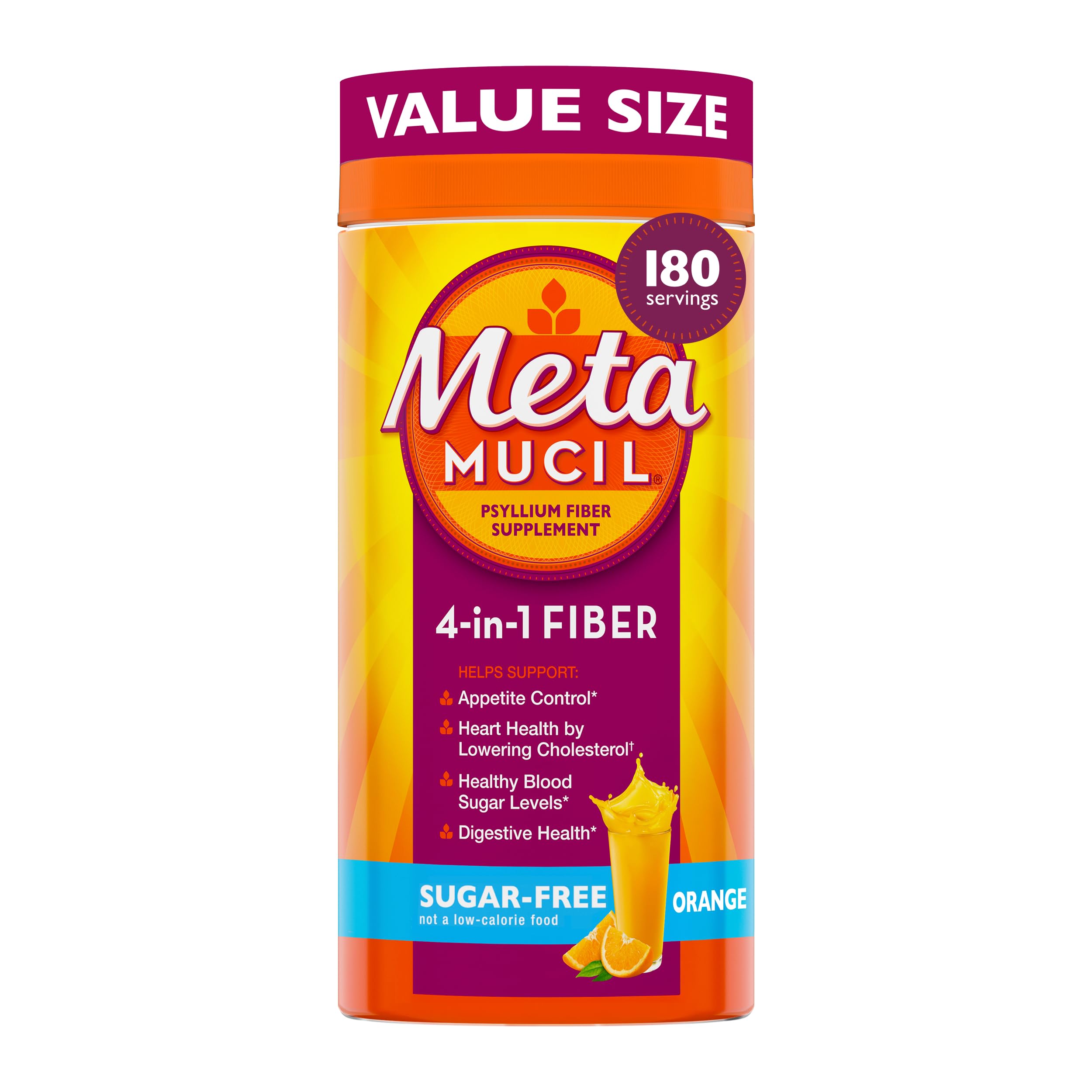
Metamucil 4-in-1 Psyllium Husk Powder

Daily flavored powder

Our Score 9.4/10
Check Price

Worth Noting

  • Sugar-free but artificially sweetened
Form
Powder
Flavor
Sugar-free orange
Servings
180 teaspoons
Fiber Source
Psyllium husk

Psyllium tells you what it is the moment you stop stirring. Within a minute the glass goes from cloudy water to something with body, and left any longer it turns to gel. We learned to keep the glass in hand and drink it down in a few swallows, and doing that makes this the most pleasant flavored fiber powder in the group — the orange is bright and faintly tart, closer to a diluted juice drink than to medicine, with no chalky film left behind.

What earns it the top spot is the pairing: a genuinely drinkable glass with psyllium husk, the bulk-forming fiber most of the picks here are built on. Psyllium absorbs water and adds soft volume rather than fermenting in the gut, which is why a daily glass tends to behave more predictably than a gummy. We noticed the change in consistency rather than speed — nothing dramatic, just less guesswork after a week of mornings.

The canister is where the value sits. You get 180 teaspoons, which is months of daily glasses, and per drink it costs a fraction of what the gummies here do. That arithmetic is why this is the one we keep on the counter rather than in a cupboard: a tub you see is a habit you keep.

Four benefits are printed on the label — regularity, cholesterol, blood sugar, appetite — and the first is the one we buy it for. As a daily regularity habit it's the easiest thing in this guide to keep up with, and with fiber that is most of the battle.

Bottom line: We recommend it to anyone who wants a flavored fiber powder they'll actually finish the glass of: psyllium husk, a bright orange taste, and 180 teaspoons per canister.
2

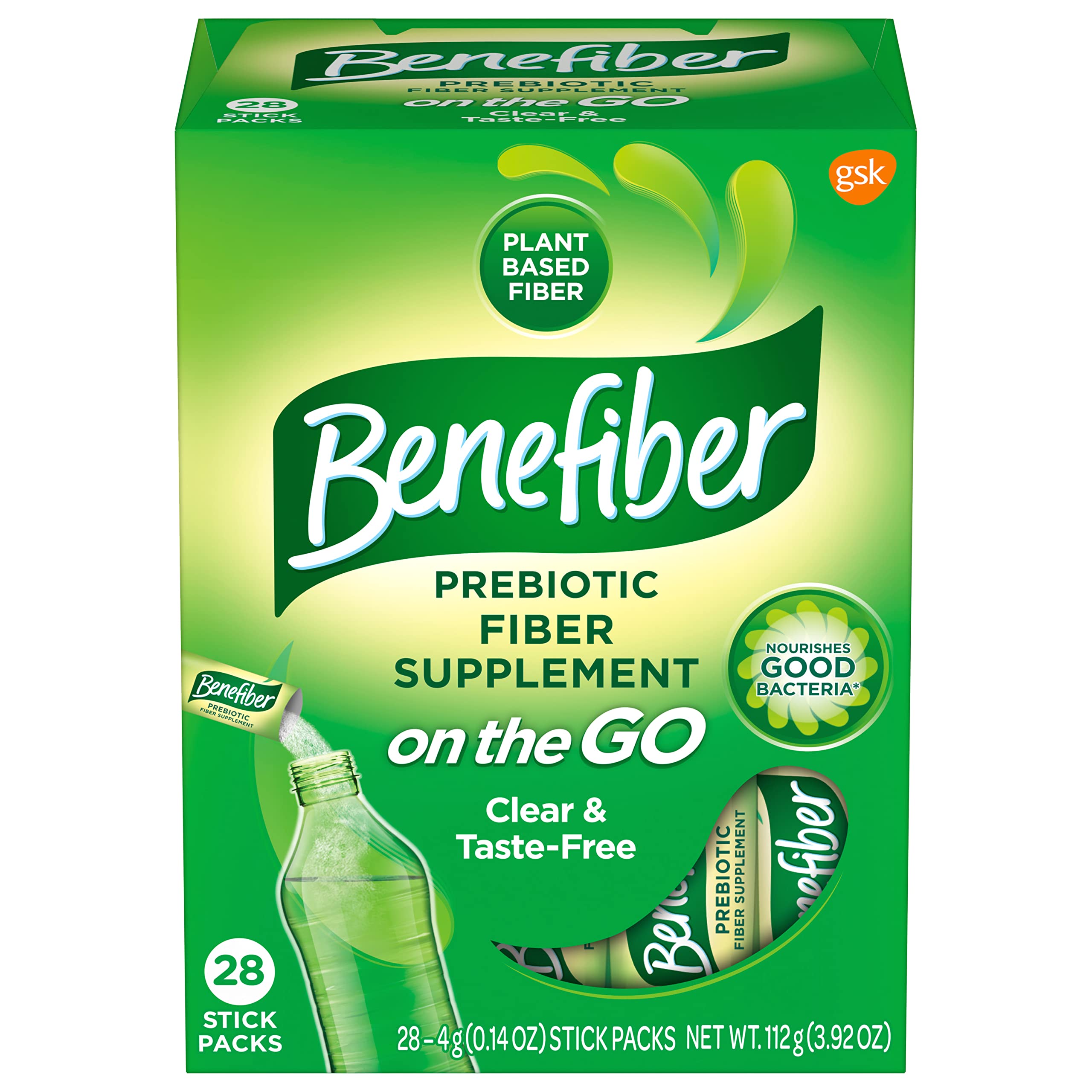
Benefiber On the Go Stick Packs

Benefiber On the Go Stick Packs

Unflavored travel packs

Our Score 9.4/10
Check Price

Worth Noting

  • Costs more per serving than tub powder
Form
Stick packs
Count
28 packs
Flavor
Unflavored
Fiber Source
Wheat dextrin

The strangest thing about these packets is how completely they vanish. We stirred one into hot coffee, another into cold water, and a third into a cup of yogurt, and each time there was no taste, no grit, and nothing settling at the bottom. For anyone who has gagged down a gritty husk drink, that's the entire argument in one sentence.

Benefiber's fiber is wheat dextrin, a prebiotic that feeds the bacteria already living in your gut rather than bulking like psyllium. That makes it a different tool rather than a different package: it's the one we choose for a gentle, texture-free addition to something you already drink, and the one to look at closely if you avoid wheat for any reason, since that's the source.

Twenty-eight packs is about a month at one a day, and each one is pre-measured, which is the part that makes the habit stick. No scoop, no canister, no decision about how much. That's also why the box lives in a tote bag in our house rather than a cupboard — it's the only fiber here that travels without a second thought.

Bottom line: For fiber you can't taste, see, or think about, these stick packs disappear into coffee or water — and they're the ones we take on trips.

3

Metamucil Psyllium Husk Capsules

Metamucil Psyllium Husk Capsules

No-mix capsule routine

Our Score 0.0/10
Check Price

Worth Noting

  • Several capsules per serving, so the bottle empties fast
Form
Capsules
Count
300 capsules
Fiber Source
Psyllium husk

No spoon, no glass, no sixty seconds of stirring before the powder sets. These capsules are the version of our top pick for mornings that don't include a ritual: you take them with water you were already drinking and get on with the day. There's no flavor and no aftertaste, which sounds like faint praise until a psyllium drink has gone thick on you.

The fiber is the same psyllium husk, so the effect is the familiar one — bulk-forming, water-absorbing, steady once you're consistent. Nothing needs disguising either: no orange flavor to get past, no texture, no sweetener to have an opinion about. If the drink was the part you disliked rather than the fiber itself, this solves exactly that.

Where these earn their place is anywhere without a kitchen. A bottle of 300 lives in a desk drawer, and taking them needs nothing more than the water bottle beside it. For someone who knows they'll never stand at a counter with a spoon, this is the one we point to.

Bottom line: The version of our top pick for anyone who won't mix a drink: same psyllium, no glass, no grit, no orange aftertaste.

4

NOW Whole Psyllium Husks

NOW Whole Psyllium Husks

Bulk budget powder

Our Score 9.2/10
Check Price

Worth Noting

  • Gritty in plain water; better blended into food
Form
Powder
Size
16 oz
Fiber Source
Psyllium husk
Soluble Fiber
6 g per serving

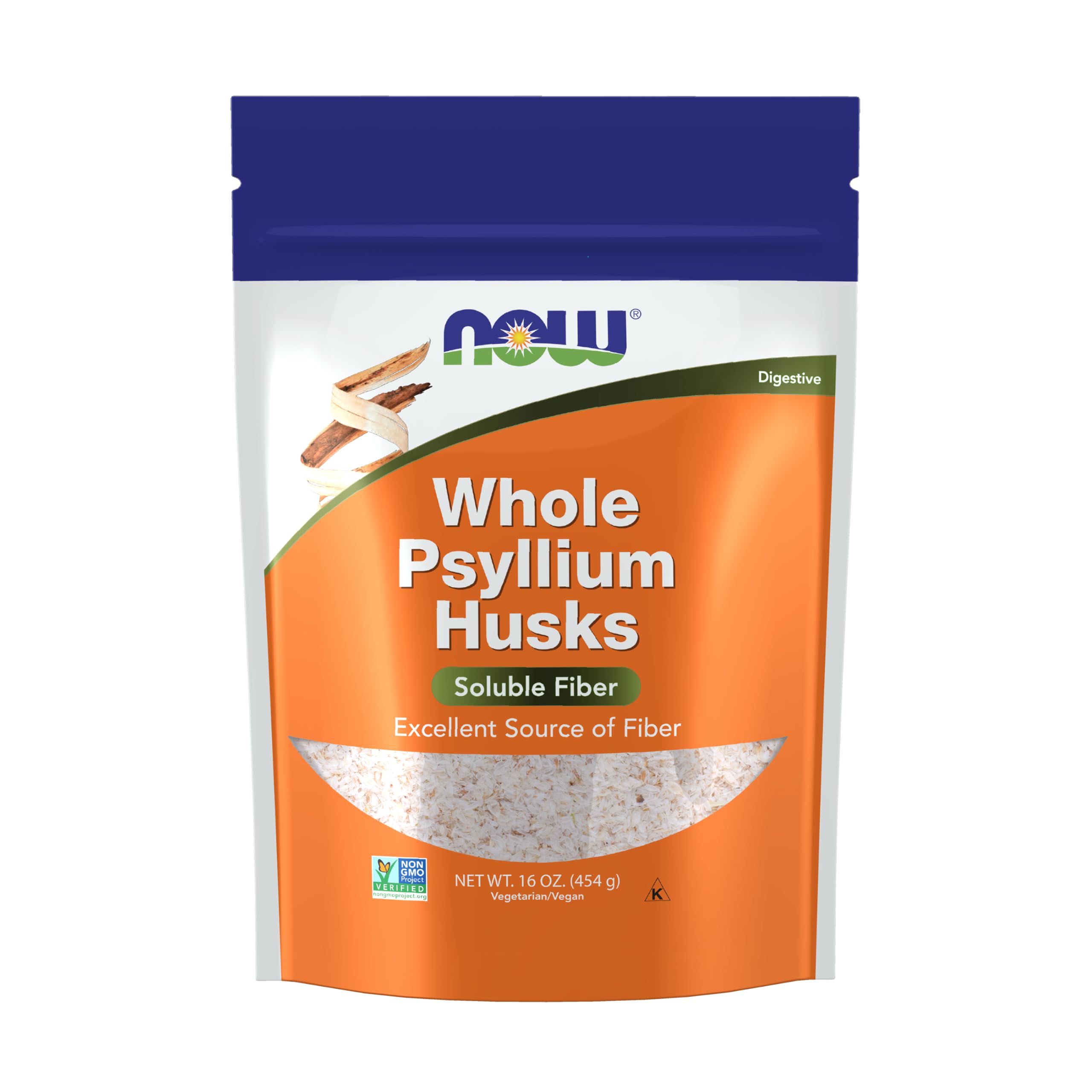
Six grams of soluble fiber per serving, from a 16-ounce bag that costs less than almost anything else here — that's the pitch, and it holds up. This is plain psyllium husk with nothing added: no flavor, no sweetener, no color. What you taste is what psyllium tastes like, which is nearly nothing, plus a faint graininess.

We keep coming back to it for smoothies and for baking, where an unflavored fiber disappears into something that already has texture. In water alone it's a harder sell, and the label knows it: mix a tablespoon into at least 12 ounces of liquid and drink it immediately. Follow that and it behaves; dawdle and you're eating it with a spoon.

By weight, nothing else in this guide comes close on cost, which makes it the bag to buy once you've decided fiber is part of your day. It's also the most flexible thing here — oatmeal, a smoothie, a glass of water with lemon — and the bag reseals, so it stores better than a folded-over pouch.

Bottom line: Plain psyllium at the lowest cost per gram here, and the bag we reach for when we want fiber with nothing added.

5

Benefiber Prebiotic Fiber Gummies

Benefiber Prebiotic Fiber Gummies

Gummy daily habit

Our Score 9.2/10
Check Price

Worth Noting

  • Gas and bloating while you adjust
  • Among the priciest per gram of fiber here
Count
126 gummies
Flavor
Citrus Berry Splash
Fiber Source
Inulin
Fiber Per Serving
0.18 oz

Most fiber gummies ask you to chew something that fights back. These don't: they're soft, they give way in a couple of bites, and the citrus-berry flavor is close enough to candy that we had to check the label for the serving size. That sounds like a small thing. It's the whole reason this is the gummy we recommend.

Inulin is a plant-based prebiotic that feeds gut bacteria rather than bulking like psyllium — a slower, different kind of support rather than a different delivery system for the same thing. If psyllium has always felt like too much work or too much volume, this is a genuine alternative rather than a compromise.

The bottle is small enough to keep on a desk, and taking them after a meal is the entire routine: no glass, no scoop, no waiting. That's the thing that sinks most fiber habits, and it's why we hand these to anyone who has bought a powder before and watched it go stale at the back of a cupboard.

Bottom line: The gummy we hand to people who hate powders and pills: soft, genuinely fruity, and 5 grams of plant-based fiber per serving.

6

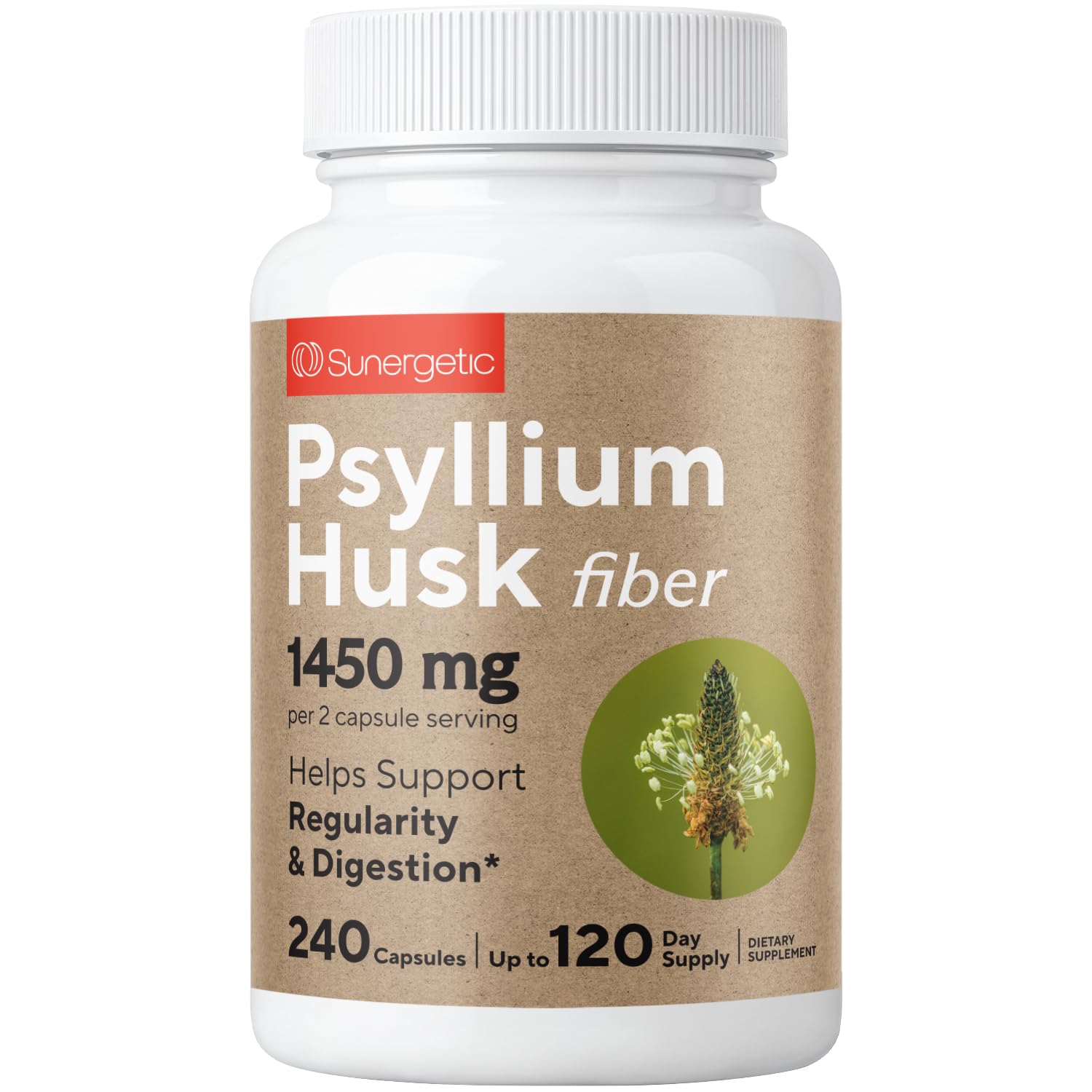
Sunergetic Psyllium Husk Capsules

Sunergetic Psyllium Husk Capsules

Fewer capsules daily

Our Score 9.0/10
Check Price

Worth Noting

  • Capsules run large
  • Labeled for occasional use rather than daily
Form
Capsules
Count
240 capsules
Fiber Source
Psyllium husk
Psyllium Per Serving
1,450 mg

Two capsules, 1,450 mg of psyllium. That ratio is the reason to look at this bottle: a typical 500 mg psyllium capsule turns a serving into a small handful, and this one gets you there with a pair. If swallowing pills is the part you dislike, that difference matters more than the name on the label.

The supply is the other half of the story. 240 capsules works out to 120 servings, so a bottle runs for months at the label's lower end rather than disappearing in a few weeks. That's what you want once you've decided capsules are your format.

The label asks for at least 8 ounces of water with each dose, which is the rule for every psyllium product here and the one that matters most. Capsules make fiber feel effortless; the full glass is what makes it safe.

This is the bottle we point to for anyone who has settled on capsules and wants fewer of them: the dose is concentrated, the supply is long, and there's nothing to mix. It rewards a set routine more than the powders do — miss days and you won't get the same steadiness — but for a capsule person that's a fair trade.

Bottom line: Two capsules carry 1,450 mg of psyllium, so this is the bottle for anyone who doesn't want to swallow a handful at a time.

7

Kirkland Signature Fiber Capsules

Kirkland Signature Fiber Capsules

Bulk capsule supply

Our Score 9.4/10
Check Price

Worth Noting

  • Label gives no grams of fiber per capsule
Form
Capsules
Count
360 capsules
Fiber Source
Psyllium

Three hundred and sixty capsules for less than most of the 300-count bottles here — this is the value play among the capsules, and it doesn't pretend otherwise. Kirkland positions it against Metamucil capsules, which tells you what the fiber is: psyllium, the same bulk-forming husk as our top pick.

What the money buys is volume. 360 capsules is months of a capsule habit, and the capsule itself behaves like any good one: standard size, no taste, no ceremony. There's nothing clever here, and after a few weeks that's the appeal — a fiber supplement you don't think about is one you keep taking.

It suits the person who has used psyllium capsules for years and resents the price, not a first-timer who wants the label to explain itself. If you need the fiber spelled out in grams, the Sunergetic bottle gives you 1,450 mg per two capsules; if you just need the bottle to keep going, this is the cheaper way to do it.

Bottom line: The cheapest way to keep a psyllium capsule habit going, as long as you don't need the label to spell out the fiber.

8

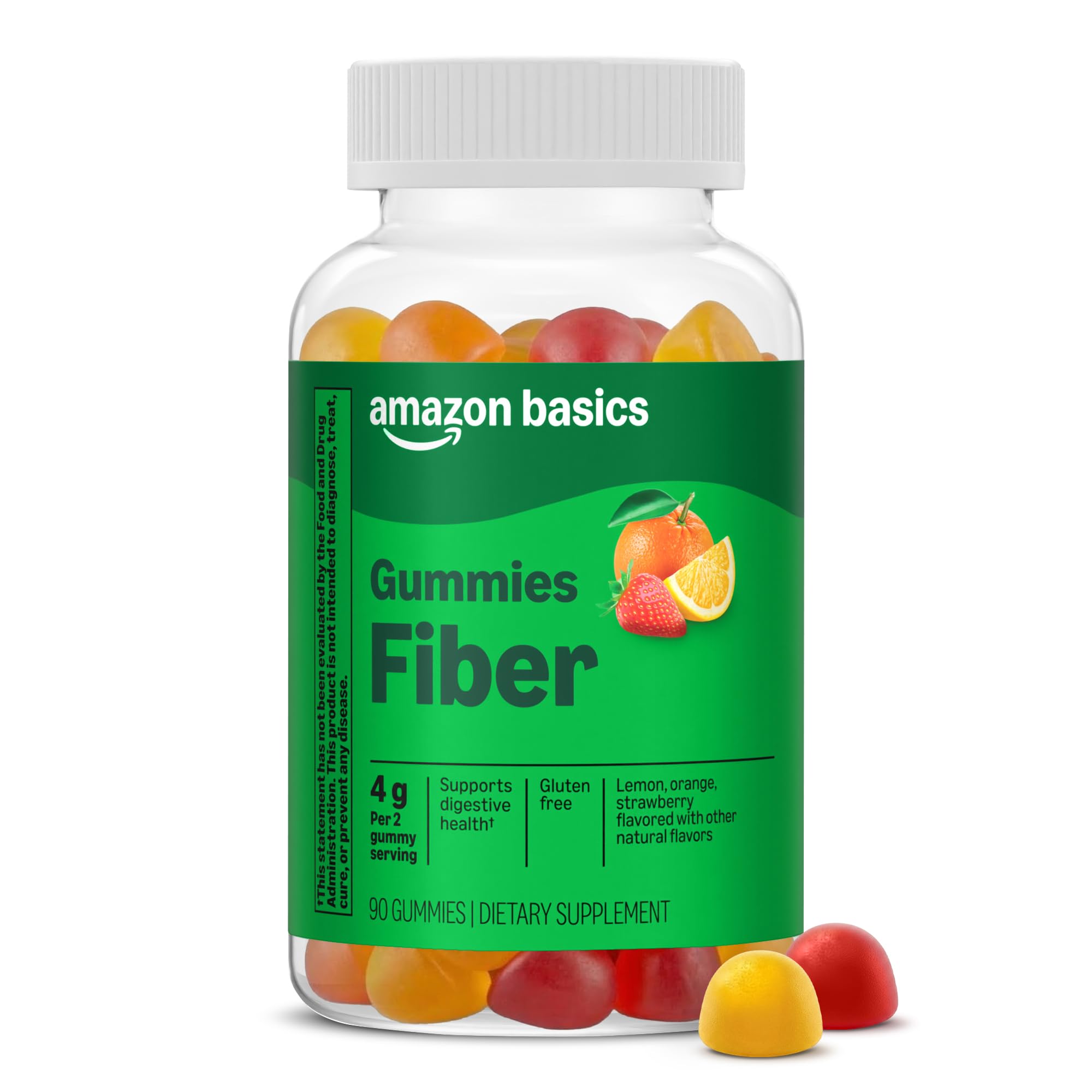
Amazon Basics Fiber Gummies

Amazon Basics Fiber Gummies

Budget gummy starter

Our Score 9.0/10
Check Price

Worth Noting

  • 4 g per serving, a gram below the pricier gummies
  • Gummies clump in humid weather
Form
Gummies
Count
90 gummies
Fiber Source
Chicory root inulin
Fiber Per Serving
0.14 oz

A budget bottle that doesn't taste like one. The orange, lemon, and strawberry gummies are soft, sweet without being cloying, and colored with turmeric, black carrot, and annatto instead of synthetic dyes — the kind of detail that usually shows up on a more expensive label. For a house brand, that's a genuine surprise.

Chicory root inulin supplies 4 grams per serving, and it does what a gummy should: adds fiber without asking you to change anything else about your day. What we noticed is how easy they are to keep up with — soft enough to chew quickly and sweet enough that nobody needs reminding.

The place to go slowly is the ramp-up. Inulin ferments in the gut, so starting at a full serving can leave you gassy and cramping for a few days; one gummy for the first week, then the full serving, is the gentler path.

These are the bottle for a first gummy, a backup jar, or a household where the good gummies disappear too fast to justify the price. They're not the strongest dose here, but they're the easiest to keep on a shelf and the cheapest to replace.

Bottom line: A cheap, genuinely tasty gummy with 4 grams of fiber — the one to try if you're not sure you'll stick with a powder.

How We Tested Fiber Supplements

We started by gathering every fiber supplement we could find across four formats: psyllium powder, prebiotic powder, capsules, and gummies. From there we filtered by what the labels actually said — grams of fiber per serving, added sugar, type of fiber, fillers and artificial colors, and cost per serving — and set aside anything that would require more than three servings a day to be useful. That left 16 products, which we bought ourselves and used for four months.

Most of the testing happened where fiber actually gets taken: at the kitchen counter before coffee, at my desk around three in the afternoon, and in hotel rooms with nothing but a stick pack and a water bottle. For powders, we stirred each into eight ounces of water, noted how long it took to stop clumping, watched how fast it thickened, and checked the bottom of the glass ten minutes later for grit. We tasted each one plain before trying to mask it, and recorded whether the texture read silky, chalky, or sandy — and whether a second glass of water was genuinely required.

Gummies and capsules were logged the same way, with a couple of extra steps. Gummies got a hard look at sugar per serving, since a two-piece serving can carry as much as a small cookie, and we counted how many capsules it took to match a single powder serving. Through the first week we tracked digestive effects — bloating, gas, cramping — and whether any of it eased by day five, then noted whether regularity had actually changed after two weeks of daily use. We also did the math on cost per gram of fiber, because a cheap tub stops being cheap if you need two scoops to get there.

How to Choose a Fiber Supplement for Women

Start with the format, not the fiber count

Powders ask for a glass, a stir, and about a minute. Capsules ask for water. Gummies ask for nothing at all. We rank effort above grams for the simple reason that a slightly smaller dose you take every day beats a stronger one that stays in the cupboard.

If you already pour a glass of water or a coffee each morning, a powder costs you almost nothing extra and the Metamucil canister or the Benefiber stick packs slot straight in. If your mornings happen in a car, a gummy or a capsule is the honest choice.

Know which fiber you're buying

Psyllium husk is bulk-forming: it absorbs water and adds soft volume, which is why it sits behind most of the powders and capsules here. Wheat dextrin and inulin are prebiotic instead, feeding the bacteria already in your gut.

The practical difference is speed and gas. Bulk-forming fiber tends to act predictably within days; prebiotic fibers ferment, which is what makes them more gas-prone in the first week. If psyllium has always felt like too much volume or too much ritual, an inulin gummy is a real alternative, not just a different package.

Do the per-serving math

Bottle size is the most misleading number on the shelf. A 300-capsule bottle sounds enormous until a serving turns out to be several capsules, and a 90-gummy bottle can be a month's supply or three weeks depending on the dose.

Compare grams of fiber per serving and servings per container, then work out what a day costs. Gummies are the priciest way to buy fiber in this guide and bulk psyllium is the cheapest — the gap is several times over, which matters once this becomes permanent.

Flavored, sugar-free, or nothing added

Flavored, sugar-free powders are sweetened, usually artificially, and that's the part some drinkers push back on in an otherwise effective product. If you want fiber and nothing else, plain psyllium or the unflavored stick packs let you add it to something you already like.

There's a practical bonus too: unflavored fiber goes into coffee, soup, and smoothies, which is often easier to remember than a separate glass of orange drink. Flavored powders win on taste, so pick the one you'll look forward to.

Ramp up slowly and drink more water

Every fiber here works better with water and worse when you add it all at once. Psyllium especially needs a full glass — the NOW powder label asks for at least 12 ounces — and taking it dry is a choking risk, not a shortcut.

Start below the label dose for the first week, split it across two meals if you can, and increase only when your gut has settled. Most of the gas and cramping that put people off fiber is a ramp-up problem rather than a product problem.

Frequently Asked Questions

Final Verdict

Our pick for most women is the Metamucil psyllium powder: drinkable, bulk-forming, and cheap enough per glass that the habit survives past the first tub. Reach for the Benefiber stick packs when you want fiber you can't taste and can carry, or a gummy if a glass of anything in the morning is one step too many.

In this category the format you'll keep using beats the one with the best numbers on the label.