Wellness

Best Menstrual Cups of 2026

I switched to a menstrual cup on a backpacking trip so I wouldn't have to pack out used tampons. What kept me using one was simpler: I stopped thinking about my period for whole workdays. The right cup seals, sits comfortably, and buys you hours between changes; the wrong one—too firm, too long, or too soft to open—can leak, press on your bladder, or turn removal into a project. Over the past six months, I've put 14 cups through real cycles and compared notes with my team on which ones stayed sealed, comfortable, and easy to live with.

Two things I wish I'd known: size charts are a starting point, not a verdict—cervix height and flow matter as much as whether you've given birth—and a cup that looks sleek can have a rim that won't pop open. Since a reusable cup lasts for years, value isn't the lowest price; it's the one you'll keep reaching for. I'd rather pay more for a reliable seal than replace a bargain every few months. The picks below reflect that.

1

DIVA Cup Model 2

Top Pick
DIVA Cup Model 2

Heavy flow, 35+

Our Score 9.0/10
Check Price

Worth Noting

  • Long body can sit low and feel noticeable
Sizing
Model 2 for wide canals, postpartum, 35+
Capacity
6 regular tampons
Material
100% medical-grade silicone
Wear Time
Up to 12 hours

There are two faint lines molded inside the DIVA Cup, and they are the detail most shoppers never notice. They measure volume, so instead of guessing whether your second day counts as heavy, you can look and know. Everything else about this cup is deliberately plain: 100% medical-grade silicone, no dyes, no texture, and a wear window of up to 12 hours.

Plain is why we recommend it first. The rim is firm enough to open on a single fold, the air holes let a seal form, and the capacity — six regular tampons — is the largest stated here. What stayed with us was how little thought it asked for on a heavy day: no clock-watching, no backup liner, no surprises between morning and evening.

The catch is in the name. Model 2 is sized for wide vaginal canals, for people who have given birth, and for anyone 35 or older; DIVA sizes by anatomy and age rather than by flow, which is not how most of us shop. Younger users who have not given birth should start smaller. Match the size and this is the least fussy cup in the set; ignore it and even a good cup will sit wrong.

Bottom line: The cup we recommend first to anyone whose body matches its sizing: the largest capacity here, twelve hours of wear, and flow lines that tell you something useful.

2

Saalt Soft Cup

Saalt Soft Cup

Cramping, sensitive bladders

Our Score 8.8/10
Check Price

Worth Noting

  • Takes longer to open than a firm cup
Sizes
Small and Regular
Capacity
Small holds 2–3 tampons
Material
Medical-grade silicone, made in USA
Wear Time
Up to 12 hours

Most cups are built to open and stay open. Saalt Soft is built to give, and that is the whole argument for it: it is aimed at people who feel a firmer cup pressing where they shouldn't, or whose cramps sharpen with something rigid inside. It is made in the USA from 100% medical-grade silicone, BPA- and latex-free, hypoallergenic, rated for up to 12 hours, and it arrives with a carry bag.

Softness cuts both ways. A cup this pliable takes longer to open than a firm one, so run a finger around the rim to confirm it has inflated rather than assuming it has. Removal is where we slowed down: the body is soft enough that a grip takes intent, and breaking the seal deliberately — pinch the base, never pull the stem — matters more here than with a stiffer cup.

Sizing follows flow: small for light to normal days at two to three tampons, regular for heavier ones. Where it earns its place is as a second cup. If your first was firm and you quietly stopped reaching for it, this is the one that explains why other people love cups.

Bottom line: If a firmer cup has ever pressed on your bladder or sharpened your cramps, this softer silicone is the entire reason to buy it.

3

Flex Cup Starter Kit

Flex Cup Starter Kit

Easy removal

Our Score 8.6/10
Check Price

Worth Noting

  • Smallest stated capacity in this set
Removal
Patented pull-tab
Capacity
2 super tampons
Wear Time
Up to 12 hours
Kit Contents
Cup and 2 disposable discs

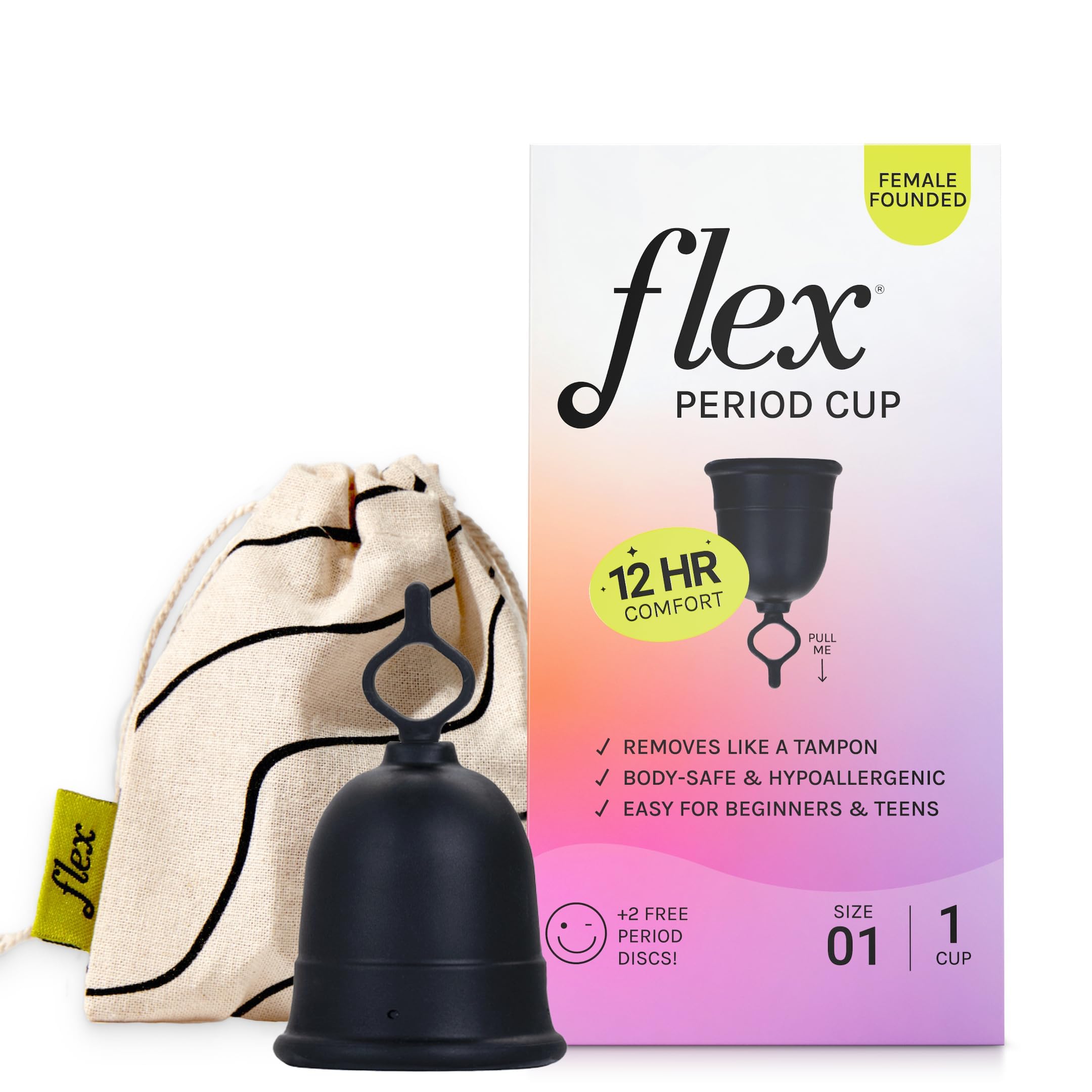
Ask anyone who abandoned cups where it went wrong and the answer lands on the same moment: getting it out. Flex's answer is a stem that works like a tab — pull it and the rim folds inward, releasing the suction — and it produced the least intimidating removal of anything here. Nothing else in this set tackles that moment by design.

The trade is capacity. Size 01 holds about two super tampons' worth, the smallest stated figure here, so it suits lighter days and people who would rather empty more often than wrestle. The rest is standard-issue good: made in the USA, medical-grade material, 12 hours of wear, and two disposable Flex Discs in the box if you want to try a different shape.

A tab is a moving part, and every other cup here is a single molded piece of silicone. Treated roughly, the tab is the first thing that can give; you can still pinch the base to remove, but you lose the feature you bought. We see it as a first cup for someone nervous about removal more than a buy-it-once cup.

Bottom line: The pull-tab is worth the trade: it breaks the seal the way a tampon string does, and that is the part of cup use most people are actually afraid of.

4

Pixie Cup Starter Kit

Pixie Cup Starter Kit

First-time users

Our Score 9.2/10
Check Price

Worth Noting

  • Firmer silicone than soft-cup users expect
Capacity
3–4 tampons' worth
Material
Medical-grade silicone
Wear Time
Up to 12 hours
Cups Included
Small and large

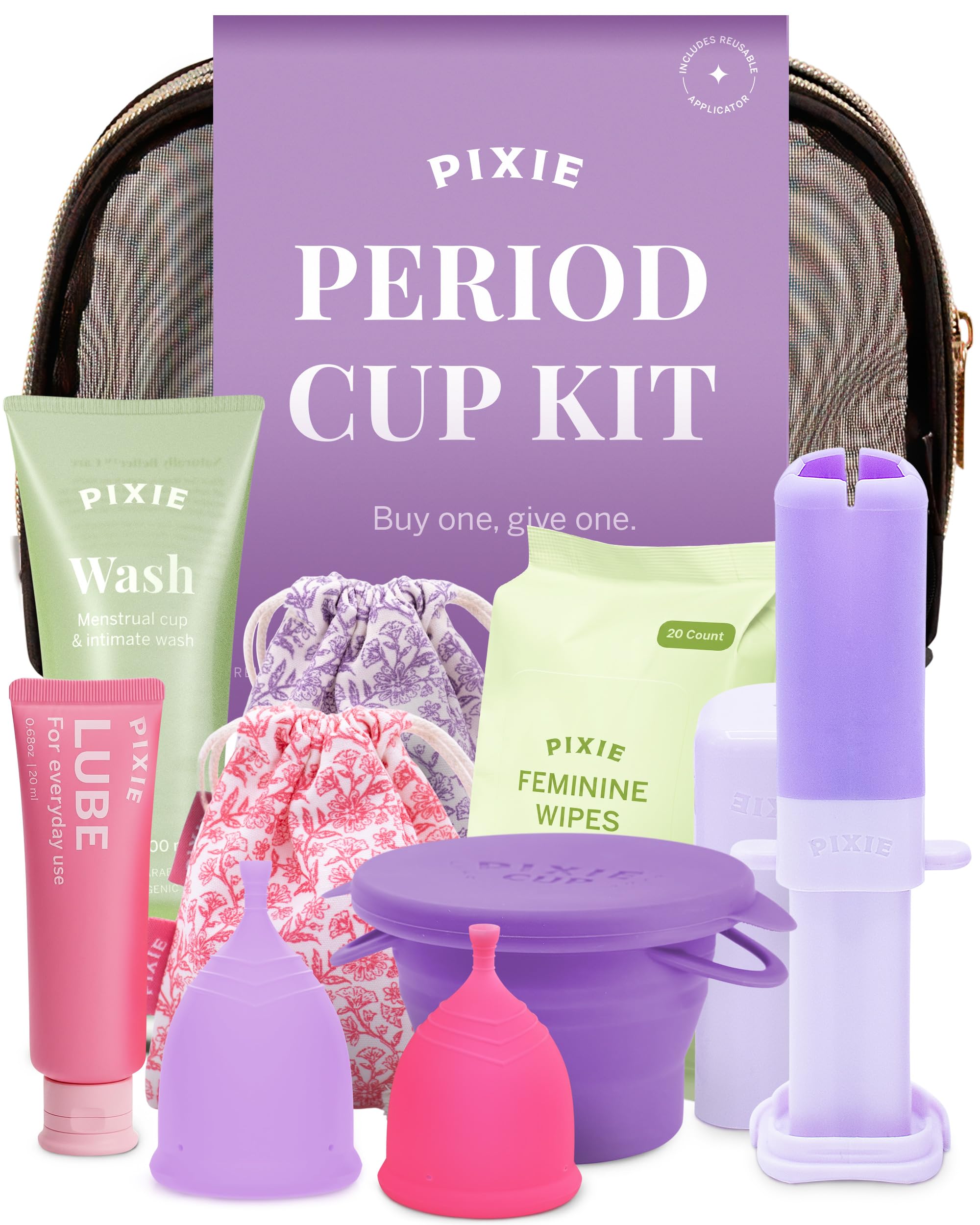
Open the Pixie box and you get both cup sizes, an applicator, a tube of lubricant, a wash, a sterilizing cup, and wipes. It reads like a lot, and for a first cycle it is exactly right. Most people buy a cup, discover they also need lube and a way to sterilize the thing, and end up ordering twice.

The lubricant is the piece we value most. A cup that will not go in on the first attempt is the most common reason people stop trying, and a little slick changes that. Two sizes means you are not guessing before you know your own body — start small and move up on your heaviest days.

The cups are ordinary in the right way: medical-grade silicone, three to four tampons' worth of capacity, up to 12 hours, and firm enough that a fold stays put while you position it. The applicator is the odd piece out, since cups are placed by hand; treat it as training wheels. The sterilizing cup, by contrast, keeps earning its place — it spares you a saucepan.

Bottom line: Buy it if you want the whole first cycle sorted in one box: two cup sizes, lube, wash, and a sterilizing cup, without hunting each piece down separately.

5

YTYOMUR Cup + Sterilizer Set

YTYOMUR Cup + Sterilizer Set

Keeping cups clean

Our Score 9.2/10
Check Price

Worth Noting

  • Steamer takes up counter space
Voltage
100-250V, 50-60Hz
Material
Medical-grade silicone
Sterilizer
Steam, 0-20 minute timer, auto off
Cups Included
Two

Boiling a cup in the kitchen saucepan is the chore that quietly pushes people back to disposables. This set bundles a countertop steamer with two cups: add 10 to 15 ml of water, load the cup, set the timer, and steam does the rest in about five minutes.

The steamer is the better half. It runs a 0-20 minute timer with auto shutoff, holds more than one cup at a time, and is rated 100-250V, 50-60Hz, so it travels with a plug adapter rather than a converter. It stayed on our bathroom counter between cycles, which is the point — a cleaner you have to dig out of a cupboard does not get used.

The cups are competent rather than memorable: medical-grade silicone, two sizes, a softness most people find comfortable, and a stem shape that is easy to grab. Steam is convenience rather than a deep clean, though, so we still boil both cups at the end of a cycle, as we do with any cup.

That is the case for buying it: it makes the twice-daily routine easy enough to keep, and it is the pick if your cup use has ever lapsed because cleaning felt like a project. The cups are the bonus, not the reason.

Bottom line: Buy it for the steamer: it turns cup cleaning into a five-minute button press and throws in two cups while it is at it.

6

SHORDY Menstrual Cup Set

SHORDY Menstrual Cup Set

Budget two-cup start

Our Score 8.8/10
Check Price

Worth Noting

  • Large size can be too much on a low cervix
Lifespan
Up to 10 years
Material
Silicone
Carrying Case
Included
Cups Included
Small and large

This is the cheapest pick in the set, and what it buys is a sensible first purchase: two cups, small and large, plus a hard carrying case. The case matters more than it sounds — it turns a cup into something you can keep in a gym bag without a zip-top baggie, and two sizes means the fit question gets answered by wearing rather than by reading.

The cups are silicone, rated for up to 10 years with care, and cut with a stem that is easy to find when you reach for it. Firmness lands in the middle: not so soft that a fold stays folded, not so stiff that insertion becomes a fight.

Where it gives ground is consistency. The large is genuinely large, and on a low cervix that can feel like too much cup; leaks, when they happen, tend to follow fit rather than a fault. As a cheap way to work out what size you are, it does the job. As the last cup you buy, we are less convinced.

Bottom line: The cheapest way to try two cup sizes in one order, which is the fastest way to learn what your body wants before spending more.

7

AllMatters Cup Size B

AllMatters Cup Size B

Postpartum sizing

Our Score 8.8/10
Check Price

Worth Noting

  • Runs large for some wearers
Size
B, for those who gave birth vaginally
Capacity
3 tampons' worth
Wear Time
Up to 12 hours
Certification
Allergy certified

Size B exists for one reason: it is cut for people who have given birth vaginally. That single line does more work than any feature list, because most cup disappointment is a sizing problem wearing a disguise.

The silicone is soft and flexible, the cup holds about three tampons' worth, and it is rated for up to 12 hours. It arrives in an unbleached organic cotton pouch, which is a nicer object than the plastic clamshell most cups ship in.

AllMatters has the cup examined by a toxicologist and labels it allergy certified, with no known allergens — the only pick here making that claim, and the reason we point sensitive-skin shoppers toward it. Soft cups take more coaxing to open, so run a finger around the rim before you trust it.

Where it lands for us: a strong choice for the postpartum body it was designed around, and a poor one for anybody else, because there is a single size in the box. If you are between sizes, this is not the cup to gamble on.

Bottom line: A soft, allergy-screened cup that is correctly sized for anyone who has given birth vaginally — and the wrong buy if you have not.

8

Lena Cup Small

Lena Cup Small

A compact everyday cup

Our Score 8.8/10
Check Price

Worth Noting

  • Firm feel can read as pressure or cramping
Size
Small
Design
Patented shape
Material
Medical-grade silicone, made in USA
Wear Time
Up to 12 hours

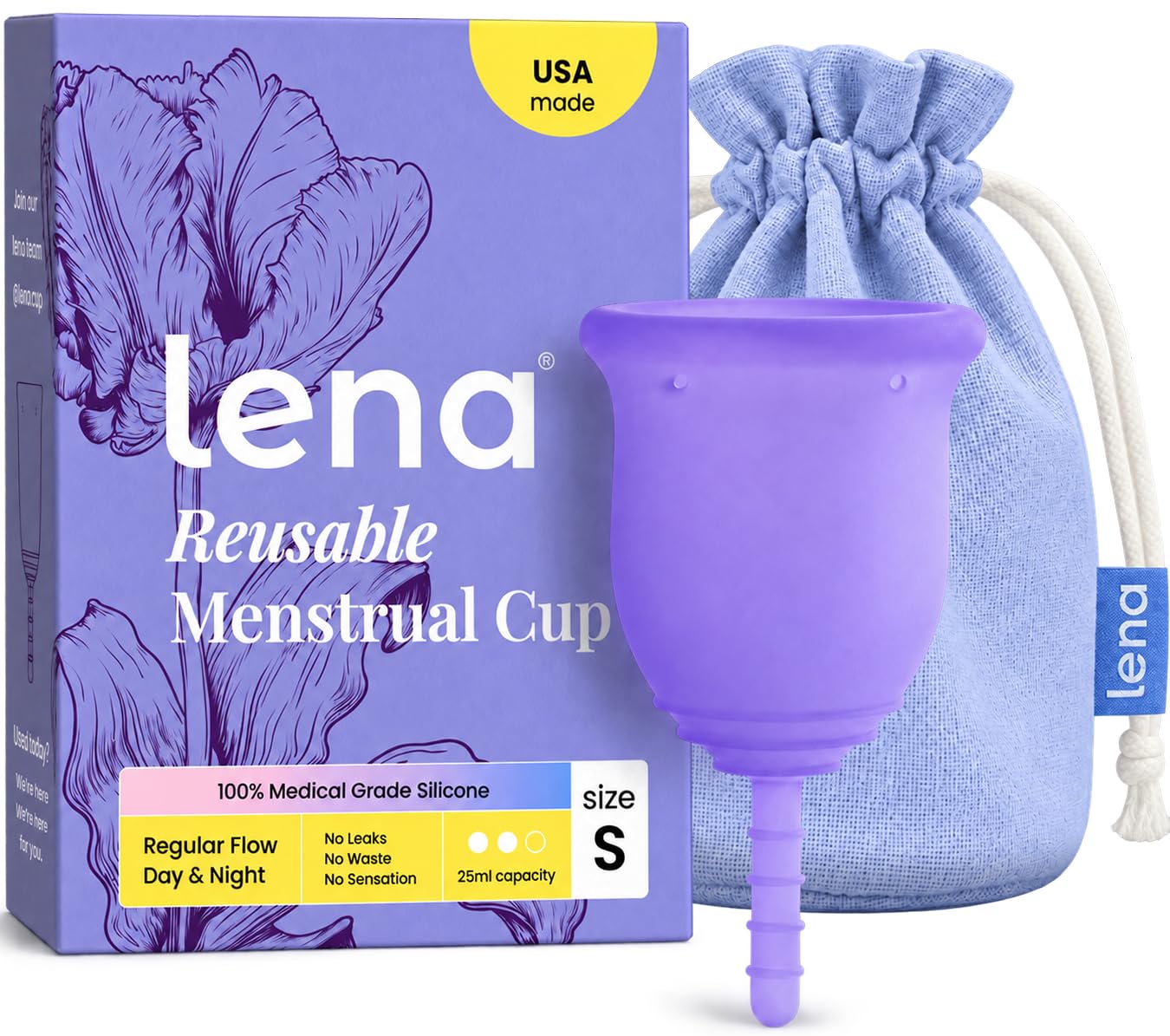
Lena calls this soft, and the first surprise is that it isn't floppy. The cup holds its shape through a fold, opens on the first try, and does not need much coaxing to seal — reliability worth more than the label suggests.

The shape is patented, the silicone is medical grade, it is made in the USA, and it is rated for up to 12 hours. The small is genuinely small, which makes it the version to consider if a standard cup has felt like too much bulk.

Our reservation is the same trait. What makes it open so predictably is what some wearers feel as pressure or cramping by the end of a long day, so if a firm cup has done that to you before, this one will not be the exception. If your problem has been cups that will not pop open, it is the fix.

Bottom line: A small, US-made cup that opens more reliably than its soft label suggests — and that same firmness is what some wearers feel as pressure.

How We Tested Menstrual Cups Through Six Months of Real Cycles

We built the shortlist from more than 40 cups, then narrowed by size range, firmness, capacity, stem style, and price so the final 14 covered light-to-heavy flows, low and high cervixes, and first-time users alongside people who'd been wearing a cup for years. We left out anything that only came in one size or required a subscription, and we noted which kits included a carry bag or sterilizing case—small extras that affect value. Over six months, each cup was assigned to at least two testers for a full cycle, and we rotated them across testers for a second cycle to separate a bad fit from a bad cup.

Testing happened where cups get used: the bathroom before work, a spin class, an overnight, and a ten-hour travel day with no convenient sink. We timed first insertions and fifth-cycle insertions, noted whether the cup opened with one fold or needed coaxing, and recorded every leak—not just bad ones. Comfort got checked while sitting, squatting, and coughing, since a stem that disappears standing up can announce itself at a desk. For removability, we practiced in a public restroom stall with only toilet paper and hand sanitizer, because that's the scenario that makes people quit.

After each cycle, we washed the cups per manufacturer instructions, sterilized them in boiling water or included case, and inspected for tackiness, discoloration, or rim damage—the durability check that separates a cup you'll keep for years from one that starts looking tired by month three. We also compared capacity against the absorbency claims and factored cost per year of use rather than sticker price. Appearance mattered less than a smooth rim and clear measurement lines, though a cup that looked less clinical made the first few tries feel less like a science experiment.

How to Choose a Menstrual Cup

Size Comes Before Brand

The most common reason a cup ends up in a drawer is size, not brand. Flow tells you how much capacity you need; anatomy tells you what will actually sit comfortably. A cup sized only by flow can be too long for a low cervix or too short to reach with a high one, and neither problem shows up on the box.

If you are between sizes, start smaller, and consider a two-cup set like the SHORDY pair so one purchase answers the question. Note what the sizing is based on, too: AllMatters Size B and DIVA Model 2 are both cut for bodies that have given birth, and buying either without that context is a gamble.

Soft or Firm Changes How It Opens

Firmness is the trade nobody explains at checkout. A firm cup opens on the first fold and seals predictably, but it can press on a sensitive bladder or sharpen cramps. A soft cup disappears once it is in place, yet it takes coaxing to inflate — and a cup that never opens leaks no matter how carefully you inserted it.

Read your own history. If cups have refused to pop open for you, go firmer, as with the Lena. If your problem has been pressure or cramping, go soft, as with the Saalt Soft. Either way, run a finger around the rim after insertion to confirm the cup has opened before you trust it.

Think About Removal Before You Buy

Insertion gets all the attention, but removal is where people panic. A longer stem is easier to reach and can be trimmed only once, so leave it alone for the first few cycles rather than cutting it on day one. A pull-tab, as on the Flex, releases suction without hunting around the rim, at the cost of a moving part that can wear.

Whichever cup you choose, break the seal by pinching the base before you pull. Pulling on the stem alone is what makes removal hurt.

Capacity, Wear Time, and Heavy Days

Twelve hours is the ceiling most cups here quote, not a schedule. Real wear time depends on capacity: two super tampons' worth is a lighter-day cup, six is a heavy-flow one, and the gap matters most on your second day and overnight.

If you bleed heavily, choose capacity over softness and empty before bed instead of trusting the clock. On light days a smaller cup is easier to place and easier to get out, which is why the two-size sets make a sensible first buy.

Cleaning, and What Comes in the Box

A cup needs rinsing between changes and sterilizing between cycles, and how you do that decides whether you keep using it. Boiling works and costs nothing but a saucepan and ten minutes; a steamer like the one in the YTYOMUR set reduces it to a button press.

Starter kits bundle lube, wash, and a sterilizing cup. That is worth paying for once if you are new, because buying those pieces separately is how a first cycle turns into three orders.

Frequently Asked Questions

Final Verdict

DIVA's Model 2 is the cup we recommend first, provided the sizing fits: nothing else here combines that capacity, that wear window, and that much settled feedback. If your body does not match Model 2, apply the same logic to a smaller cup — fit beats features every time.

Two requirements change the answer. If removal is what stopped you before, the Flex's pull-tab is the one design that addresses that moment head-on. If a firm cup has ever made you cramp, the Saalt Soft is the reason to try again.