Fashion

Best Spring Jackets for Women of 2026

A spring jacket has an impossible job. It has to be warm enough for a 45-degree morning and light enough that you aren't miserable by 2 p.m., when the sun comes out and the temperature jumps twenty degrees. Most jackets pick a side — cozy but bulky, or crisp and useless the moment the wind picks up. The right one quietly solves the hardest part of getting dressed in March and April: you stop checking the forecast before you walk out the door.

Fit and fabric are where most of these jackets live or die. A cut that fits across the shoulders can swallow your hips, and a fabric that feels lovely on the hanger can pill, wrinkle, or go shiny after three washes. I've also learned to hold a color up to actual daylight, because a lot of what reads as sage online is gray in person. We wore 12 spring jackets for six months, through drizzle, school runs, and one brutally windy soccer tournament, and the ones that stuck got the fit, the fabric, and the warmth right. They're below, sorted by what each does best.

1

33,000ft Softshell Jacket

Top Pick
33,000ft Softshell Jacket

Wet spring days

Our Score 9.0/10
Check Price

Worth Noting

  • Sizing can run small through the shoulders
Hood
Hooded
Lining
Fleece
Water Resistance
Waterproof

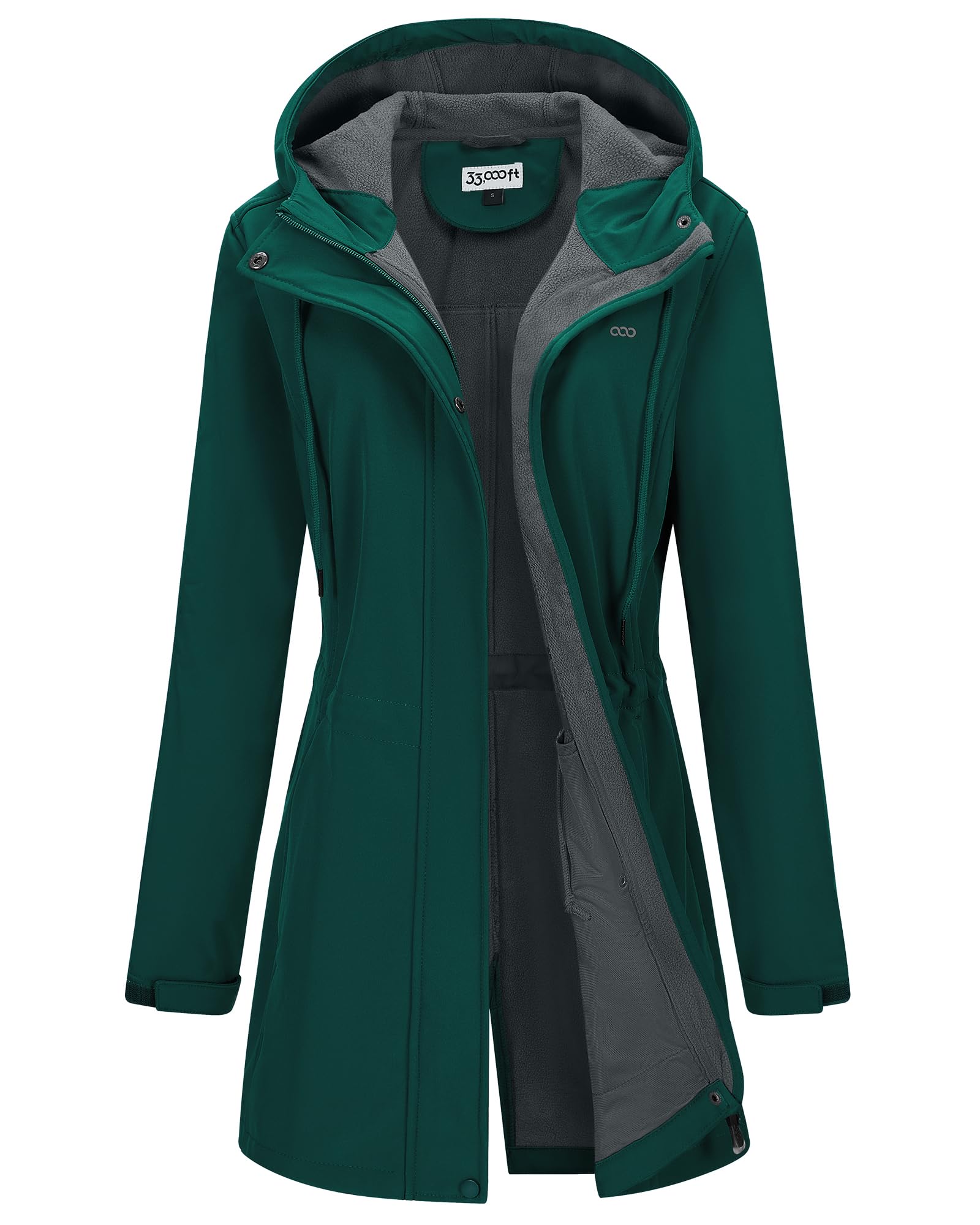
Spring weather is rarely one thing, and this softshell is built for the days when it changes its mind. We chose it as our top pick because it covers the widest range of transitional conditions here: a waterproof shell for rain, a fleece lining for a cool morning, and a hood for the weather that arrives with both. It is the jacket that makes the least fuss about a forecast that cannot commit.

The balance is what sells it. The softshell has enough structure to look polished over a work outfit, but it does not feel stiff or bulky when you move. The fleece lining adds warmth without turning it into a winter coat, and the longer sleeves and generous hood give you coverage where spring weather usually finds a way in. We also appreciate the placket over the zipper: it makes the jacket look more considered than a basic rain shell.

For a wet commute, a school run, or a weekend walk, this is the layer we reach for first. It has room for a sweater underneath without looking oversized, and the shape remains flattering when zipped. The hood is generous, and the longer sleeves keep the chill off your wrists. It is the jacket we leave by the door when the sky looks uncertain.

It costs more than the fleece and packable picks in this group, and that is the trade-off for real weather protection. If your spring is mostly dry and mild, you can spend less. If you want one jacket that handles the wet, cool, in-between days, this is the one we recommend.

Bottom line: For wet, cool spring days, this softshell is the one we trust: it sheds rain, adds light warmth, and still looks polished over everyday clothes.

2

Columbia Benton Springs Fleece

Columbia Benton Springs Fleece

Dry-day layering

Our Score 9.2/10
Check Price

Worth Noting

  • Runs large for a closer fit
Fabric
Fleece
Closure
Full zip
Department
Women's

A fleece this soft can easily become the jacket you leave by the door, and that is exactly how we used it: for cool mornings, air-conditioned offices, and the hour after the sun goes down. The Benton Springs is not trying to be a technical shell. It is a full-zip layer with a warm, brushed hand and enough structure to wear over a tee without looking like loungewear.

What we appreciate most is the weight. It is warm enough for a genuinely chilly start, but light enough that you can keep it on indoors without overheating. The fit is generally flattering and easy to layer under a raincoat, and the full zip makes it simple to vent when you warm up. The elastic cuffs sit close without digging in, and the jacket packs down easily into a tote.

The caveat is that it is a fleece, not a rain shell; on a wet day you will still want the 33,000ft or LOMON over it. That is fine by us, because the Benton Springs is the layer we want for dry, cool starts and long days indoors. It has the kind of softness that makes a basic fleece feel worth reaching for.

Bottom line: If you want a soft, warm layer for dry spring days, this fleece is the easy choice; it works over a tee or under a shell.

3

LOMON Long Raincoat

LOMON Long Raincoat

Rainy commutes

Our Score 9.0/10
Check Price

Worth Noting

  • Sizing runs small for some builds
Hood
Hooded
Length
Long
Lining
Lined
Water Resistance
Waterproof

A rain jacket that stops at the hip is fine until the rain starts bouncing off the pavement. The LOMON trench takes the opposite approach: a long, hooded cut that covers more of you, with a drawstring waist so it does not turn into a shapeless tent. That longer line is the reason it stands out in this group, and it is the one we choose when the forecast looks genuinely wet.

The shell is lightweight, so you can wear it over a sweater without feeling strapped in, and the hood gives you proper head coverage when the weather turns. It has the polished look of a trench rather than the crinkle of a packable poncho, which makes it easy to wear to work or dinner. The water-resistant finish handles steady spring rain, and the longer hem keeps splashes off your hips and upper legs.

What we like most is how little it asks of you. It is not a heavy coat, it does not need a special layering system, and it looks intentional with jeans or a dress. On a raw, cold day you will want a sweater underneath, but for a rainy spring commute it is the right weight. It also folds down small enough for a weekend bag, which is more than we expected from a long trench.

Bottom line: For rainy commutes and travel, this long hooded trench gives you proper coverage without the stiffness of a heavy raincoat.

4

Wrangler Stretch Denim Jacket

Wrangler Stretch Denim Jacket

Everyday denim

Our Score 9.2/10
Check Price

Worth Noting

  • Runs small through the chest and arms
Style
Denim jacket
Fabric
Stretch denim
Department
Women's

Denim jackets have a reputation for looking great and fighting you through the shoulders. The Wrangler Authentics version takes that problem seriously: the denim has stretch, so the jacket moves with your arms instead of locking up when you reach forward or drive. It is still recognizably a denim jacket, with a classic collar and a clean, fitted line, but it feels less rigid than a traditional trucker.

The stretch is not a gimmick. It makes the jacket comfortable over a dress or a tee, and it lets you push the sleeves up without feeling like you are wrestling the fabric. The denim is lighter than a heavy, old-school jacket, which is exactly what makes it useful for spring. It has enough body to hold its shape but not so much that it feels stiff on a mild day.

The lighter weight is the point: this is a spring layer, not a winter jacket, and it slides under a coat when the morning is colder than expected. It also has enough structure to look sharp with tailored trousers, which is not always true of stretch denim. The fit is cut close, so it works best as a top layer rather than over a bulky hoodie.

We still reach for it constantly because it is the easiest denim jacket here to wear all day. It looks polished with a dress, works with high-waisted jeans, and never feels like a costume. If you want one denim layer that earns its place in a spring rotation, this is the one.

Bottom line: This is the denim jacket we choose for everyday wear: the stretch makes it comfortable through the arms, and the classic cut layers easily over dresses and tees.

5

Amazon Essentials Packable Puffer

Amazon Essentials Packable Puffer

Travel warmth

Our Score 9.0/10
Check Price

Worth Noting

  • Runs small through the waist and hips
Insulation
Lightweight puffer
Size Range
Plus sizes available
Packability
Packable
Water Resistance
Water-resistant

The first thing we did with this puffer was stuff it into its own little bag, and that is still the best argument for owning it. It collapses small enough to live in a tote or a carry-on, then shakes out into a warm layer when the temperature drops. For travel, it is the jacket that earns its space because it takes up so little.

It is warmer than its weight suggests, especially over a sweater, and the water-resistant shell gives you a little protection in drizzle. This is not a raincoat, though; on a wet day, the 33,000ft or LOMON is the better call. The cut is neat enough for errands and roomy enough for a light layer, and the inside pockets are a useful detail we did not expect.

The puffy line is part of the warmth, and it layers best under a loose coat rather than a tailored one. It is a practical extra layer for a bag, a car, or a cold office, not a replacement for a proper rain shell. The attached stuff sack keeps the jacket contained instead of loose in a bag, which is the kind of small detail that makes it easy to keep with you.

Bottom line: For a jacket that disappears into a tote until the temperature drops, this packable puffer is the practical pick.

6

AUTOMET Plaid Shacket

AUTOMET Plaid Shacket

Casual layering

Our Score 8.8/10
Check Price

Worth Noting

  • Fabric can feel rough against bare arms
Style
Shacket
Fabric
Plaid flannel
Closure
Button-down

The plaid is the hook, but the reason this shacket stays in rotation is the weight. It has more heft than a flannel shirt, so it works as a light jacket on a cool day, yet it still feels soft and casual rather than structured. The oversized cut is part of the look: it layers over a tee or a thin knit without pulling across the shoulders.

We were pleasantly surprised by how often we reached for it on dry, cool afternoons. It is warm without feeling heavy, and the plaid makes a plain jeans-and-tee outfit look intentional. It is not a rain shell, though, and it will not replace a proper outer layer when the weather turns. Think of it as a shirt you can wear as a jacket, not a jacket that happens to be plaid.

The fit is deliberately roomy, so size down if you want a closer line. The oversized shape is flattering over leggings and denim, but it can swamp a petite frame. It also works better as a layer than as a standalone top, which is exactly what we want from a shacket.

For the price, it is an easy way to add a trend without committing to a heavy coat. We like it best over a long-sleeve tee with the sleeves pushed up, or tied around the waist when the afternoon warms. It is not the most polished layer here, but it is one of the most fun to wear.

Bottom line: This is the plaid layer we choose when a flannel shirt needs more warmth, with an easy oversized look that works over tees and knits.

7

Tankaneo Cropped Anorak

Tankaneo Cropped Anorak

Cropped streetwear

Our Score 9.2/10
Check Price

Worth Noting

  • Sleeves run short for long arms
Fit
Oversized
Style
Utility anorak
Length
Cropped
Closure
Zip up

The cropped cut is the reason this jacket stands out in a group of hip-length shells. It stops at the waist, which gives it a different proportion from the packable puffer and the long raincoats here, and the utility details—big pockets, a zip front, a roomy hood—make it feel more designed than a basic windbreaker.

The fabric is light enough for mild spring days, and the oversized shape is easy to throw over a dress or high-waisted jeans. It has a slightly polished finish that dresses up better than a gym windbreaker, which is why it gets compliments with almost everything. The big pockets are genuinely useful for a phone, keys, and a cardholder.

What we like most is the shape: it defines the waist without feeling tight, and the cropped length keeps it from looking like a boxy rain shell. The trade-off is coverage and warmth. On a cold or wet day you will want the LOMON or 33,000ft instead. For a dry, mild afternoon when you want to look put together, it is the fun choice.

Bottom line: For a spring layer that looks as good with a dress as with jeans, this cropped utility jacket is our style-first pick.

8

Diamond Candy Rain Jacket

Diamond Candy Rain Jacket

Budget rain

Our Score 9.0/10
Check Price

Worth Noting

  • Water resistance can falter in sustained rain
  • Fit runs small through the hips
Hood
Hooded
Weight
Lightweight
Water Resistance
Waterproof

A budget rain jacket has one job: keep you dry without making you feel like you are wearing a tarp. The Diamond Candy shell gets the first part right for light rain, and it does it while staying light enough to roll into a bag. It is one of the least expensive rain layers in this group, and it still has a hood, big zippered pockets, and a clean, sporty shape.

The longer line gives you some coverage below the waist without the bulk of a trench. The fabric has a soft, slightly crinkly hand that makes it easy to move in, and the hood is removable, which is a useful detail on a mild day. The shell is light enough to stuff into a seat pocket or a daypack, and it does not feel clammy when you are moving.

The sporty line looks more at home on a walk than in a formal office, but the roomy pockets and removable hood make it practical for errands. It is easy to live with, and the zippered pockets are big enough for a phone and keys, which matters when you are traveling light. It is not the most polished rain shell here, but it is one of the easiest to keep with you.

For travel, a commute, or a walk when the sky looks uncertain, this is the budget rain shell we reach for. It is light, easy to pack, and far more polished than a basic poncho. If you want a just-in-case layer that does not weigh down your bag, it earns its place.

Bottom line: When you need a lightweight rain shell for travel or a commute, this is the budget pick that still feels considered.

How We Tested the Best Spring Jackets

We started by gathering every jacket that kept surfacing in customer reviews and in our own carts, then narrowed the field by reading fabric breakdowns, size charts, and care instructions. We filtered out anything with no real size range, anything whose water-resistant claim came with zero detail about coating or seam treatment, and anything that only worked as a single look. That left 12 jackets spanning lightweight shells, quilted puffers, denim, fleece, and anoraks.

Each one was worn for six months, beginning in late February, by me and a handful of testers ranging from XS to XXL. They went on commutes, on school pickup, on rainy dog walks, and on muddy weekend hikes, and a few got folded into totes for flights to see how much room they ate. We measured every jacket flat and compared the numbers to the brand's own chart, noting which ones ran small through the shoulders or long in the sleeve.

We watched how each one layered — whether a chunky sweater went underneath without the shoulders pulling, and whether cuffs stayed put when we reached for a steering wheel. Shells got a full minute under a garden hose, followed by a check of the hood and shoulder seams for dampness. Every jacket went through at least three washes so we could see whether the color held, the lining pilled, or the zipper started catching. Pockets got a phone-and-keys test, hoods got a walk across a windy bridge, and each jacket was held up to a window in daylight to see how far the real color drifted from the product photo.

How to Choose a Spring Jacket for Women

Match the shell to your spring

If rain is the main character in your spring, start with a hooded shell that has a water-resistant or waterproof finish. The 33,000ft softshell is the most versatile version here because it adds fleece lining and weather protection, while the LOMON trench gives longer coverage for commutes. If your spring is mostly dry and cool, a fleece like the Columbia Benton Springs or a denim jacket will get more wear. Do not buy a rain shell for a dry climate and expect it to feel as soft as fleece; the fabrics trade comfort for weather protection.

Decide how much warmth you need

A spring jacket should feel warm on a cool morning and bearable by afternoon. Fleece and flannel are the easiest layers to vent because they are breathable and not fully weatherproof; the AUTOMET shacket is warmer than a shirt but still casual. A packable puffer like the Amazon Essentials adds more warmth for its weight and is the best travel option, but it is not a raincoat. If you run cold, choose a softshell with a lining; if you overheat easily, choose a lighter unlined shell or a denim jacket.

Get the fit right for layering

Sizing is where spring jackets go wrong most often. A jacket that fits over a tee may not fit over a sweater, and a roomy cut can look sloppy if you wanted a closer line. Our group splits both ways: the Columbia fleece and AUTOMET shacket tend to run large, while the 33,000ft softshell and Amazon Essentials puffer can run small. Check the size chart against the layer you plan to wear underneath, and remember that a rain shell should have enough room in the shoulders to reach forward without pulling.

Choose a length that suits your days

A cropped jacket like the Tankaneo anorak is the most fashion-forward option and works well with high-waisted bottoms, but it gives you less rain coverage and can leave your lower back exposed on a windy day. A hip-length denim or fleece jacket is the easiest everyday choice. A long raincoat like the LOMON is the best pick for commuting or travel because it covers more of your legs and keeps splashes off your clothes. If you carry a bag on one shoulder, check how the hem sits when you walk; a longer coat should not feel like it is dragging.

Frequently Asked Questions

Final Verdict

The 33,000ft softshell is the spring jacket we recommend first because it handles the widest range of transitional weather: rain, cool mornings, and a forecast that cannot decide, without the bulk of a winter coat. If your spring is mostly dry, the Columbia fleece is the softer, simpler layer, and it costs less. If rain is the main event, the LOMON trench gives you more coverage and a longer line. Start with the weather you actually get, then choose the layer that fits the way you dress.