Shoes

Best Volleyball Shoes for Women of 2026

Running shoes are built to move you forward, which is the wrong job for a sport played in three steps sideways. A volleyball shoe stiffens the outer edges, keeps the midsole low and firm so you feel the floor, and grips a gym surface slicker than pavement. Get that wrong and you spend the second game of the night thinking about your feet instead of the ball. My colleagues and I have spent the past five months in 13 pairs, through league nights, open gyms, and a three-day tournament.

Here's what nobody tells a first-time buyer: volleyball shoes barely break in. The arch, the width across the toe box, the way the collar sits against your ankle in the first ten minutes — that's what you'll feel in week eight, so fit deserves more thought than any spec on the box. Sizing also drifts from brand to brand, so the right pair may be a half size off what you normally wear. Below are the ones that held up; some suit narrow feet and high arches, others favor cushioning over court feel.

1

ASICS Gel-Rocket 11

Top Pick
ASICS Gel-Rocket 11

Indoor club play

Our Score 9.2/10
Check Price

Worth Noting

  • Cushioning flattens after about a season
Court
Indoor volleyball
Style Number
1072A093.020
Listed Weight
1.44 lb

One of the least expensive shoes here is also the one we recommend most often. The Gel-Rocket 11 is a low-cut indoor court shoe, and what earns it the top spot is how little it asks of you: it fits close without pinching across the toes, there is enough foam under the forefoot for a long practice, and the sizing is the most predictable of the value-priced models in this guide. For a first serious volleyball shoe, that is the whole argument.

Grip is what we watch hardest, because a shoe that slides costs you a step on every dig. This outsole holds on a swept gym floor without feeling stuck to it, and the low profile keeps the court under you rather than propping you up on a platform. There is also a detail we did not expect at this price: the heel counter and collar hold a bulky aftermarket orthotic steady, which is more than most budget court shoes manage.

Width is the thing to settle before you order. The shoe is cut close through the midfoot and the toe box, so a half size up is the standard fix if you are between sizes or play in thick socks. If you already know ASICS run narrow on you, the Upcourt 6 below gives a little more room up front for similar money.

Upkeep is easy, which matters more than it sounds in a gym shoe. The synthetic upper wipes down with a damp cloth, and the white colorway holds its brightness far longer than the price suggests — useful when the shoe is going to a match every week.

Bottom line: The pair we point most women to first: a close, reliable fit, real grip on a gym floor, and a price that leaves room for the rest of your kit.

2

Mizuno Wave Dimension

Mizuno Wave Dimension

Power and landings

Our Score 9.4/10
Check Price

Worth Noting

  • Light colorways stain and resist cleaning
  • Toe area shows wear first
Court
Indoor volleyball
Style Number
430314
Listed Sizing
Unisex adult

Side-to-side is where a volleyball shoe earns its keep, and this is the pair in the guide we trust most on it. The Wave Dimension is the highest-rated shoe here, and it earns that on the movements that decide points: the push-off to close a block, the scramble to the antenna, and the landing afterwards.

What we like is how much stability you feel without the shoe turning clunky. The midfoot wraps, the shoe stays underneath you on a hard lateral step, and the cushioning absorbs a landing instead of bouncing you straight back up. For a player who jumps on every rotation, that is worth more than a few saved ounces.

The costs are cosmetic and real. Light colorways pick up court scuffing and stains that do not lift, and the toe is where wear shows first if you drag your foot through your approach. Neither changes how it plays. It is also the most expensive shoe in this guide, so it earns its place for players on court several times a week, not for someone still deciding whether they like the sport.

Bottom line: Worth the step up if you play at pace and want a shoe that feels planted: it is the highest-rated model in this guide and the one we trust most on lateral movement.

3

Nike Zoom HyperAce 2

Nike Zoom HyperAce 2

Low-cut ankle hold

Our Score 9.2/10
Check Price

Worth Noting

  • Upper is the first part to give out
Court
Volleyball
Style Number
AA0286-001
Listed Sizing
Women's

This is the shoe we hand to a player who wants ankle hold but will not play in a mid. The HyperAce 2 is not a high-top, and the support comes from how the upper wraps the heel and midfoot instead — you feel held when you come down off one foot, without the locked-up feeling a collar gives you on a quick turn. It is the best low-cut ankle hold in this group.

Comfort is close behind. Nothing pinches across the toes, nothing rubs at the heel, and the laces stay where you tied them through a full match. Traction is the quiet strength: it bites hard enough that you can stop and restart without a slide, which is exactly what a quick approach asks for.

Two things to sort out first. The cut is close, so go up a half size if you are between sizes or play in thick socks. And give them a practice before a tournament, because the toe area feels firm for the first session and then softens. Get those two right and there is very little to think about afterwards.

Bottom line: The low-cut answer for a player who wants ankle hold without a collar, and comfortable enough that you forget about your feet mid-match.

4

ASICS Upcourt 6

ASICS Upcourt 6

Volleyball and pickleball

Our Score 9.0/10
Check Price

Worth Noting

  • Runs short; order a half size up
Court
Indoor volleyball
Style Number
1072A107.020
Listed Weight
1.44 lb

If the Gel-Rocket 11 is the safe default, this is the shoe we suggest when a player wants more room up front. The Upcourt 6 runs with a slightly wider toe box than ASICS' other value court shoe, which makes it the one to try if the brand's usual cut leaves your toes pressed against the side.

It is also the model that turns up in the wrong sport in the best way. Volleyball players buy it and so do pickleball and badminton players, because the outsole and the cushioning work on any indoor surface. If you play two court sports in the same week, one pair covers both.

We still rank it below the Gel-Rocket 11 for pure volleyball, and the reason is the break-in. Out of the box the upper is stiff enough that the first session feels like work, and it takes two or three outings before the shoe starts moving with you. Buy it a couple of weeks before tryouts rather than the night before, and the stiff midfoot overlays — the part that makes it stable on a cut — stop being something you notice.

What the money buys is stability rather than refinement. The overlay across the midfoot stops your foot sliding across the footbed on a hard push, and the foam takes the sting out of repeated landings. For a high-school player doing a season of volleyball and a season of something else, that is a sensible pair of shoes to own.

Bottom line: Our pick if you have a wider forefoot or play two court sports: more room up front than the top pick, once you get past a stiff first week.

5

adidas Crazyflight 6 Mid

adidas Crazyflight 6 Mid

Ankle coverage

Our Score 9.0/10
Check Price

Worth Noting

  • Runs about half a size short
Court
Indoor court
Collar
Mid-top
Listed Weight
2.43 lb

A collar is the one feature you cannot add later, and this is the least expensive way to get one. The Crazyflight 6 Mid wraps above the ankle without turning into a boot — you can still flex to chase a shanked pass — and it does it for less than every low-cut in this guide.

We like it for a player who simply feels more confident with something around the ankle, and the support is the part that holds up: the collar stays put, the heel does not lift, and the shoe feels settled when you land. Comfort is good too. Nothing rubs through a two-hour session, and the cushioning under the forefoot is better than the price suggests.

Longevity is the open question. A mid-cut at this price means the money went into the collar and the outsole rather than the upper, and on shoes built to this price the toe area is where wear shows first. If you are on court four nights a week, spend more. For a school season or a weekly recreational game, it is a fair bet.

Bottom line: The cheapest way to get a collar around your ankle, and a sensible buy for a recreational player who wants coverage without a premium price.

6

Mizuno Cyclone Speed 5

Mizuno Cyclone Speed 5

Recreational play

Our Score 9.0/10
Check Price

Worth Noting

  • Sizing splits between true and small
Court
Indoor volleyball
Style Number
430342
Listed Sizing
Women's

The gap between Mizuno's premium court shoe and this one is smaller than the price gap suggests, at least in comfort. The Cyclone Speed 5 is the least expensive way into the brand here, and what struck us first is how little it asks of your feet — no hot spots, no long break-in, just a shoe that feels ready for a recreational practice.

What you are not paying for is the extra structure and the plusher landings of the Wave Dimension above. This is a simpler shoe, and on a clean gym floor it grips well enough for twice-a-week play; what it will not do is hold a hard lateral push the way the premium pair does.

We put it in as an also-consider rather than a runner-up because the long-run picture is thin. It is a newer model than the ASICS pair, so how it holds up over two seasons is unproven, and it does not offer the structure of the premium Mizuno. For twice-a-week recreational play, though, it is a comfortable and inexpensive way to get on court.

Bottom line: A comfortable, low-cost way into a Mizuno court shoe, as long as you order the right size and accept that the long-run picture is unproven.

7

New Balance FuelCell VB-01

New Balance FuelCell VB-01

Wider forefeet

Our Score 9.0/10
Check Price

Worth Noting

  • Mesh upper holds dirt and is hard to clean
Court
Indoor volleyball
Style Number
WCHVOLPI
Listed Sizing
Women's

The question with any mid-priced court shoe is how long it lasts, and it is the honest sticking point here. The FuelCell VB-01 is comfortable, fits well, and looks the part on court — and then there is the upper.

Fit is the reason to look at it. It runs true to size for most feet and accommodates a wider forefoot without feeling loose, which is more than several shoes here manage. The mesh gives where a synthetic cage would not, and it breathes well enough for a gym with no air conditioning.

That mesh is also the weak point. It is where these tend to fail — the upper separating at the flex point rather than the outsole wearing through, which is a frustrating place to lose a shoe. Rotate two pairs through a week and you will get more time out of them.

So we rank it behind the ASICS pair rather than alongside them. It is a comfortable, well-fitting shoe with a lifespan question, and the Gel-Rocket 11 is the safer bet at similar money. If your forefoot is wider than ASICS allows, the trade is worth making — just do not count on two seasons.

Bottom line: A well-fitting, breathable shoe for wider feet, ranked lower because the upper is where these tend to give out first.

8

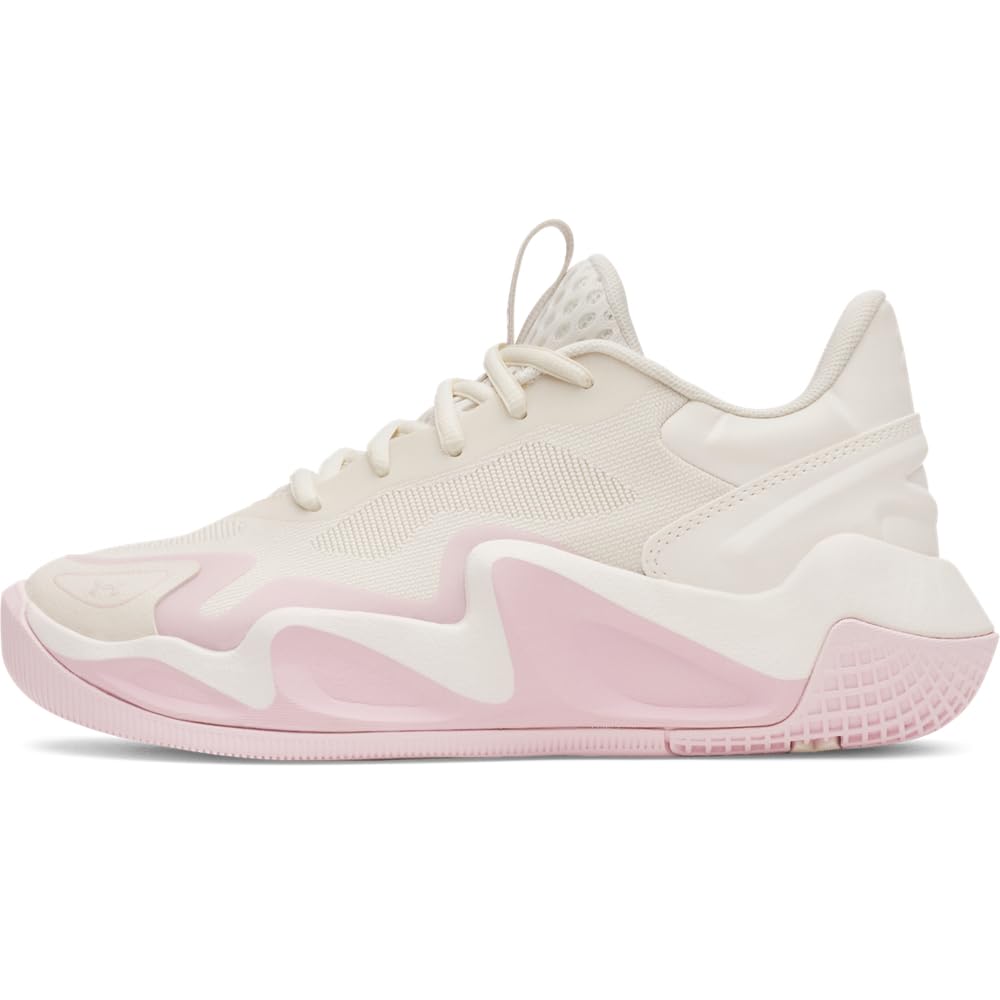
Under Armour Ace Low 2

Under Armour Ace Low 2

Out-of-box comfort

Our Score 8.8/10
Check Price

Worth Noting

  • Second-most-expensive shoe here
Court
Indoor volleyball
Collar
Low-top
Listed Weight
2.4 lb

Some court shoes need a week before they feel like yours. This one does not. The Ace Low 2 is comfortable from the first practice — soft around the collar, no break-in at the toe, and a footbed you will not be tempted to replace on day one.

Grip is the other strength. The outsole holds on a dusty floor and keeps holding after a spill, which is the kind of thing you only appreciate late in a session when the floor has picked up moisture and everyone else starts sliding.

Then there is the look of it. The colorways are the part people notice, and they hold up better than most light-colored court shoes, so it is a pair you will not mind wearing to the car after practice.

The price is the sticking point. It is the second-most-expensive shoe in the guide, and it does not do anything the HyperAce 2 does not do for noticeably less. Buy it if the low cut and the color are exactly what you want and the budget is already set; otherwise the Nike is the smarter spend.

Bottom line: Buy it for the colorway and the out-of-box comfort; the price is hard to justify against the HyperAce 2, which does the same job for less.

How We Tested the Best Volleyball Shoes for Women

We started with spec sheets for every women's volleyball shoe in the mid-range price band that was actually sold in women's sizes, including half sizes. We narrowed the field by outsole rubber, midsole stack height, listed weight, and whether the shoe came in a wide or a narrow option, then dropped anything pitched as a casual lifestyle sneaker rather than a court shoe. That left 13 pairs, which we ordered in two sizes wherever we could and handed to testers with flat feet, high arches, and genuinely wide forefeet.

Testing ran five months, built around the way people actually play: a two-hour league night once a week on a rubberized gym floor, twice-weekly drills, one three-day tournament, and all the unglamorous time around it — the walk in from the parking lot, the hour standing around between matches, the errand run afterward in the same shoes.

On court, we pushed off hard to the outside on every lateral cut and watched whether the foot rolled over the footbed edge, and we checked for heel slip during the first few shuffles of each session. We pressed a thumb into each insole to see how much give it had under the arch, then asked testers where pressure landed after a full match. After two hours we did sock checks for hot spots and blisters, and after ten sessions we logged tread wear at the pivot points — the inner forefoot and outer heel — plus toe-cap scuffing on players who drag a foot on the serve approach. Off court, we judged how the styling held up with jeans, and we weighed what each pair cost us per session across the five months.

How to Choose Volleyball Shoes for Women

Start With the Surface, Not the Brand

Indoor volleyball shoes use a soft gum-rubber outsole built to grip a swept wooden or synthetic floor. That rubber is why a court shoe stops when you do, and it is also why the same pair should not be your outdoor shoe: asphalt and concrete scour the tread smooth in a handful of sessions and you lose the grip you paid for. If you play sand or grass in the summer, keep a second pair for it.

This is the single most common mismatch we see — a good volleyball shoe worn to the car park and back until it stops holding on the court it was made for.

What a Collar Actually Buys You

A mid-cut collar wraps above the ankle and adds coverage on landings, which is why players who want to feel held often prefer one. What it does not do is replace a brace or make an awkward landing safe. Low-cuts are lighter and freer for quick lateral pushes, and the best of them hold the ankle through the upper alone: the Nike Zoom HyperAce 2 is the clearest example here. The adidas Crazyflight 6 Mid shows how little a collar has to cost.

Fit: Length, Width, and the Half Size

Court shoes are cut close because a loose shoe lets your foot slide across the footbed on a hard stop. That is the right idea until it is not, and the difference between a good season and a sore one is often half a size. Measure late in the day, leave about a thumb's width at the toe, and expect to size up in the ASICS Upcourt 6. A wide forefoot does better in a mesh upper than in a stiff synthetic cage.

Cushioning, Weight, and What You Pay For

More cushioning means softer landings across a long tournament; less means a lighter shoe for quick defensive work. Neither is better in the abstract — a middle blocker and a libero want different things from the same court. What we look at is whether the money went into the midsole and the outsole rather than the badge, and both the Gel-Rocket 11 and the Crazyflight 6 Mid put it where your feet feel it.

Frequently Asked Questions

Final Verdict

Buy the ASICS Gel-Rocket 11 unless something specific about your foot or your game says otherwise. It has the most predictable fit of the value-priced shoes here, it grips a clean gym floor, and it leaves money for the rest of your kit.

If you jump and land hard and want a shoe that feels planted underneath you, the Mizuno Wave Dimension is the upgrade worth paying for. If you want something around the ankle, the adidas Crazyflight 6 Mid gets you a collar for less than any low-cut in this guide.