Shoes

Best Shoes for Back Pain for Women

Your shoes can't fix your back. What they can do is change how much load your spine, hips, and knees absorb with every step — and if you've been living in flimsy flats or a worn-out pair of sneakers, that difference is bigger than it sounds. The right pair makes a long day on your feet feel shorter. The wrong one has you hunting for the heating pad by 4 p.m. I learned that after a year of walking to work in shoes that looked sharp and felt like standing on a plank.

Cushioning is only half of it, and that's the part most shoppers don't learn until the return window closes. A shoe can feel like a marshmallow underfoot and still leave you sore by lunchtime if the arch support is vague or the fit shoves your foot forward. Over the past six months we've put 14 pairs through commutes, grocery runs, and eight-hour days on hard floors, and the ones that helped all shared one thing: a stable base under a soft top.

1

Brooks Adrenaline GTS 25

Top Pick
Brooks Adrenaline GTS 25

All-day support

Our Score 8.8/10
Check Price

Worth Noting

  • Premium price compared with most of this set
Type
Road running shoe
Model Number
120443
Package Weight
1.5 lb

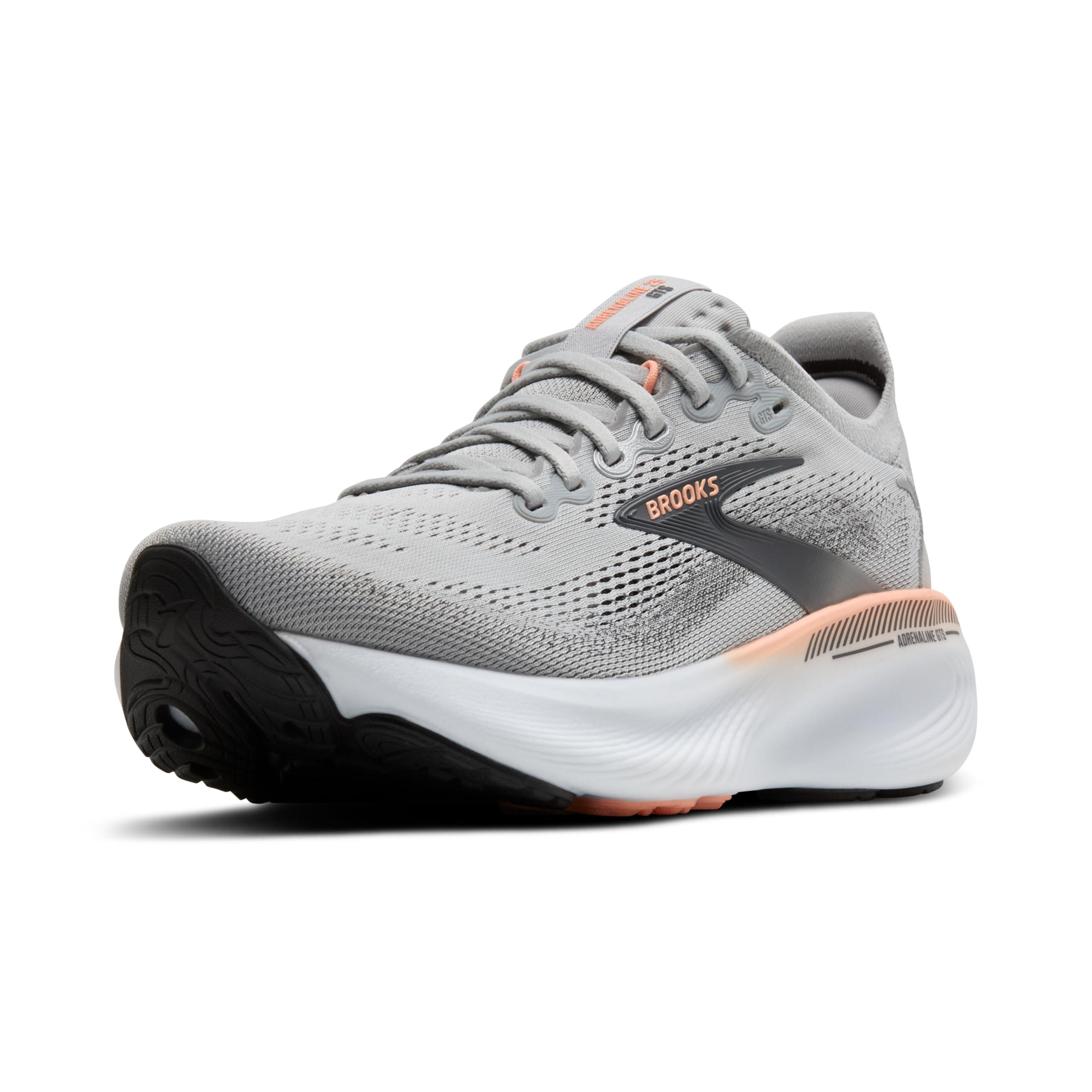
The Adrenaline GTS 25 is the pair we recommend first. Arch support sits near the top of this set, the cushioning runs soft across the whole footpad instead of pooling at the heel, and the toe box is wide enough that a forefoot squeezed all week gets some room back. For a sore back, that combination matters more than any single number: you want a shoe that takes the sting out of each step and still feels like it's holding you at the end of the day.

It's sold as a road-running shoe, and most people will end up wearing it for everything except running — the commute, the grocery run, a full shift on a hard floor. That's a strength rather than a compromise. The support is built for repeated impact, so pavement and tile are exactly what it was designed for, and it looks tidy enough that nobody reads it as a medical shoe. The generous cushioning at the heel also helps if your feet swell as the day goes on.

Where it gives ground is softness. Cushioning here reads as supportive rather than plush, and if you want the sinking-into-the-midsole feeling, the Hoka Bondi 9 is the pair to try instead. What we like most is that the ride stays predictable from the first block to the last, which is usually the more useful quality when your back is the thing complaining.

Bottom line: This is the pair we point to first for back pain: near-top arch support, a wide toe box, and cushioning that lasts a full day.

2

Hoka Bondi 9

Hoka Bondi 9

Maximum cushioning

Our Score 9.0/10
Check Price

Worth Noting

  • Most expensive shoe in this set
Type
Road running shoe
Package Weight
1.87 lb
Package Dimensions
12.36 x 9.84 x 5.28 inches

The Bondi 9 is the softest, highest-riding shoe in this group. You sit up on the midsole rather than down inside it, and the foam doesn't bottom out under the heel the way cheaper cushioning does. On pavement, on concrete floors, on the long walk from the far end of the parking lot, it takes more of the impact out of each step than anything else here.

What keeps it from being a marshmallow is the base. Arch support is strong, the platform under your foot is wide, and it runs true to size — including in a wide — so the softness doesn't turn into wobble. We were surprised by how stable it feels for something this thick, and the toe box has real room without looking like a boat, which is a harder balance to strike than it sounds.

The catch is how long it lasts. The midsole can start to separate or go spongy after a few months of daily use, so plan on replacing them sooner than you'd expect from a shoe at this level. If you rotate between pairs, that's less of a problem. If one pair is your everything, know that you're buying the softest miles rather than the most of them.

Bottom line: Our softest recommendation: if impact is what sets your back off, this is the shoe that absorbs the most of it.

3

Skechers Max Cushioning Endeavour

Skechers Max Cushioning Endeavour

Wide feet

Our Score 9.0/10
Check Price

Worth Noting

  • Outsole wears through before the upper
  • Very soft sole with little firmness
Type
Road running shoe
Cushioning
Max Cushioning
Model Number
129470

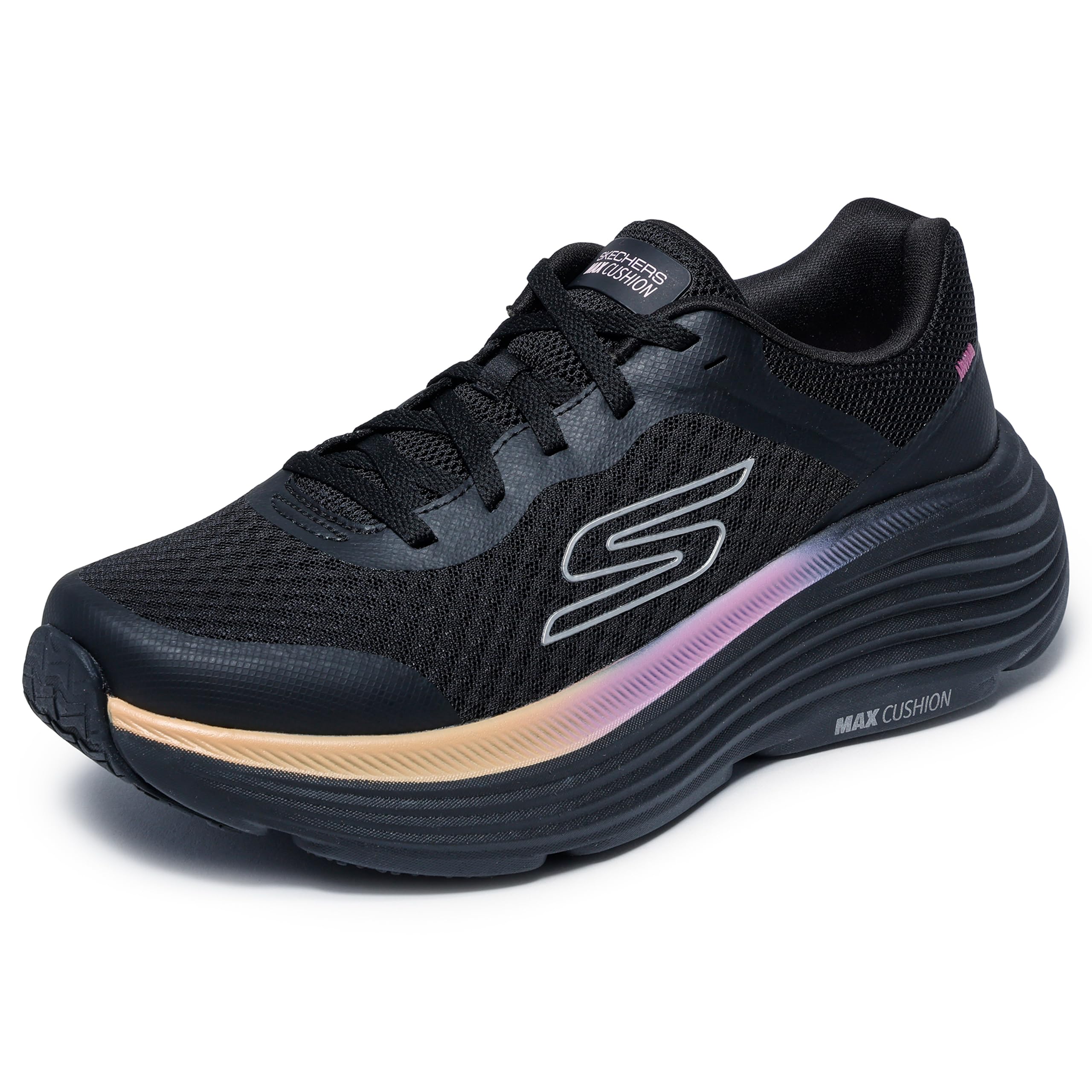
Width is the reason to start here. The Endeavour is cut generously — roomy through the toe area, wider than most of the shoes on this page — and the upper is soft, so it doesn't press on a bunion or a tender spot. If you've been sizing up just to get room across the front of your foot, this is the pair that doesn't ask you to do the workaround.

Cushioning is the second reason. The sole is thick and soft, the upper flexes with your foot, and the whole thing is light enough to forget you're wearing it — the closest thing here to the Bondi's plushness without the Bondi's price. It's the pair you can wear for a long shift and then walk the dog in, and the upper breathes well enough that a summer commute doesn't leave your feet clammy.

Two honest notes. It's a soft, flexible shoe rather than a firm one, so if you want a platform that doesn't move under your foot, the New Balance 608 is the opposite end of this list. And the outsole is the part that gives up first; the bottom wears through before the uppers show much at all, which matters if most of your miles are on pavement.

Bottom line: We suggest it first for a wide forefoot: generous room, thick soft cushioning, and a price that undercuts the premium pairs.

4

New Balance 608 V5

New Balance 608 V5

Firm support

Our Score 8.8/10
Check Price

Worth Noting

  • Outsole can peel away with heavy use
Type
Casual sneaker
Model Number
WX608UB5-225
Package Weight
2.4 lb

The 608 is the old-school one: a leather upper, a firm sole, and a shape that holds itself instead of molding around your foot. We think that firmness is the whole point — a base that doesn't squish away under the arch — and it's also why this shoe isn't for everyone. If you want a pillow, it isn't one. If you want something that feels like it's holding you up, few shoes here do it better.

Width and support are where it earns its place. The toe box is genuinely wide, the arch support is real rather than nominal, and the shoe feels stable rather than squishy underfoot — the thing that makes a long standing shift feel twice as long when a shoe gets it wrong. It's also one of the more affordable supportive shoes in this group, which counts for a lot if you replace shoes often.

Plan a break-in. The leather starts stiff and the sole doesn't flex much out of the box, so wear them indoors for a few days before committing to a long shift. After that, most of the stiffness works out. Treat the first week as a warm-up and the shoe rewards you with a steady, planted ride.

Bottom line: Our pick when you want structure rather than softness: a firm, wide, steady shoe that costs less than the premium pairs.

5

Under Armour Charged Assert 9

Under Armour Charged Assert 9

Budget running

Our Score 9.0/10
Check Price

Worth Noting

  • Seams can come apart with heavy use
Type
Road running shoe
Model Number
3023866
Package Weight
1.48 lb

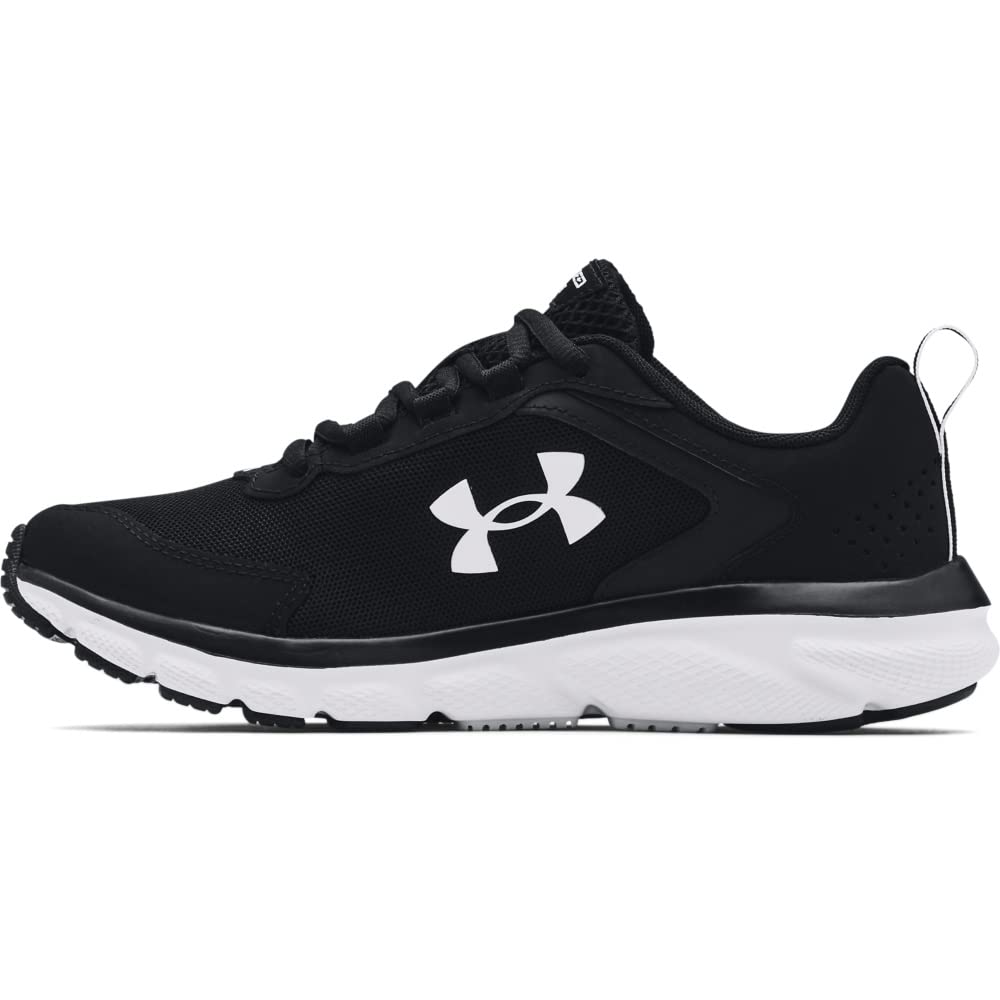
The Assert 9 is the least expensive running shoe here, and it doesn't feel like a step down. The toe box is roomy, the arch support is more than a token bump, and it handles walking, jogging, and a full shift on your feet without complaining. For a first pair of genuinely supportive shoes, that makes it a low-risk way to find out whether better cushioning changes how your back feels.

Sizing is the one thing to get right. It runs small, so go up half a size unless you're already between sizes, and the heel collar sits higher than on a low-cut sneaker — wear a sock that covers your ankle or it will rub. Get both of those right and it's comfortable from the first walk, with no break-in to speak of.

We keep coming back to the price-to-support ratio. It gives you most of what the Brooks does for a fraction of the cost, which makes it the pair we suggest for shorter days, second pairs, and anyone who isn't ready to spend premium money on a shoe they're still unsure about. It's also the one you'll be least annoyed to replace.

Bottom line: For the money, we haven't found a better first supportive shoe: roomy, genuinely supportive, and cheap enough to try without regret.

6

Skechers Go Walk Joy

Skechers Go Walk Joy

Short errands

Our Score 9.0/10
Check Price

Worth Noting

  • Minimal arch support
  • Runs about a half size large
Type
Walking shoe
Model Number
15600WNVW
Package Weight
3 lb

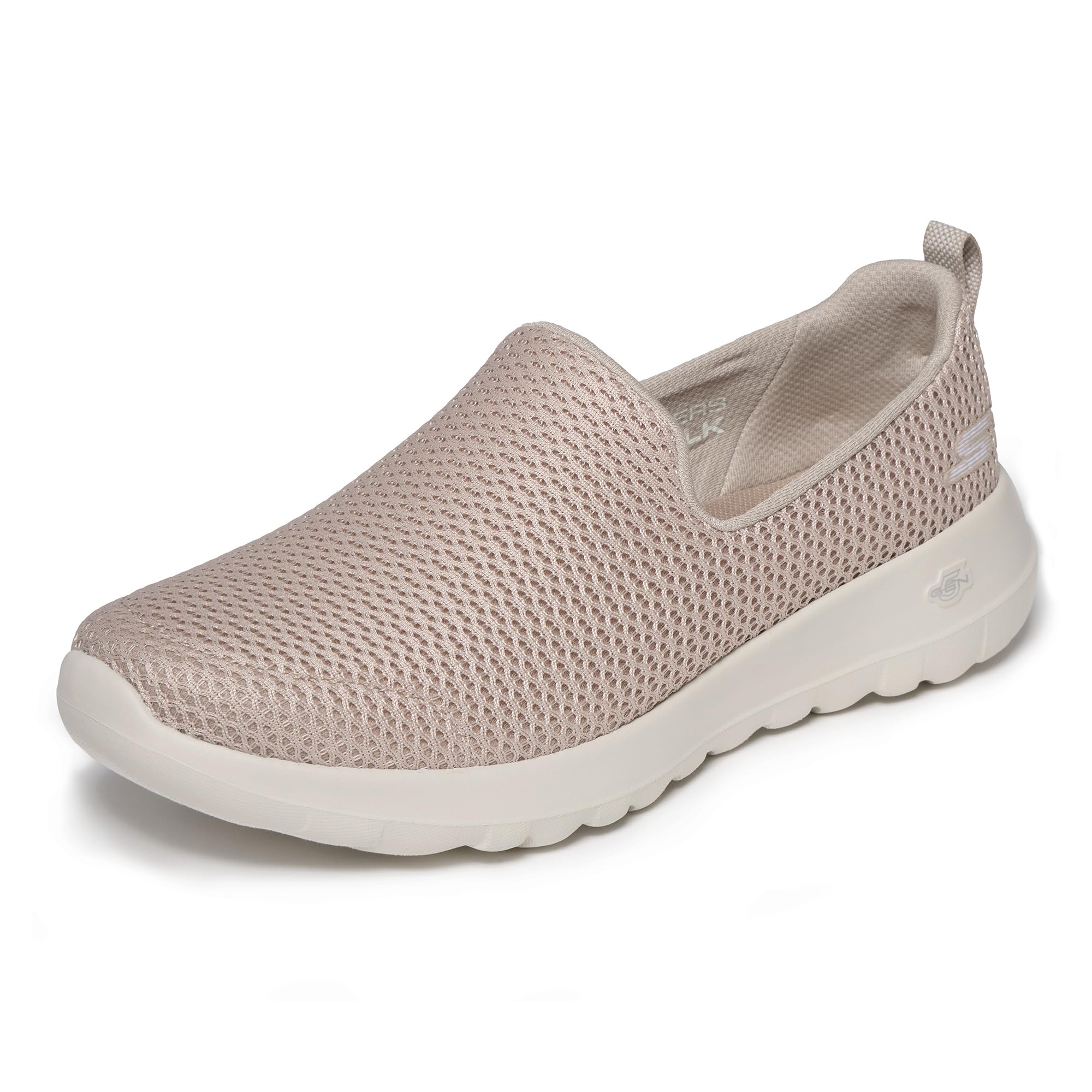
The Go Walk Joy weighs almost nothing and slips on without a fight. If bending to tie laces is part of what hurts, this is the pair here that solves that problem for the least money: no laces, no break-in, and a sole soft enough to feel like a pillow underfoot.

Support is the trade. There's some arch under the foot but not much — it's a flat, flexible shoe built for comfort rather than correction, and if your back trouble comes with plantar fasciitis or a fallen arch, the Brooks or the New Balance will serve you better. For errands, the mailbox, and around the house, it's ideal.

Sizing takes a minute to get right: it runs large, so size down half a size unless you're between sizes, and the middle of the shoe is on the narrow side even then. Get that right and it becomes the pair that lives by the door rather than in the closet — light enough to grab on the way out, easy enough to kick off at the mat.

Bottom line: We keep it by the door for sore mornings: no laces, barely any weight, and the lowest price here — just don't expect arch support.

What Six Months in 14 Pairs Taught Us

For the shortlist we started with about 40 pairs from brands we've worn for years, then cut anything we couldn't return after a real walk, anything without a removable insole (a dealbreaker if you wear orthotics), and anything priced well past what most people want to spend on a shoe they might end up hating. That left 14 pairs, ranging from max-stack cushioned trainers to firmer walking sneakers.

For six months we rotated all 14 through the same routines: full workdays on hardwood and concrete, the 20-minute walk to the train, standing at the counter through dinner prep, weekend errands, and a few long treadmill sessions. Testers jotted a note at the end of each day about where they felt it — arches, heels, low back — and whether anything rubbed.

Fit and sizing came first: we ordered our usual size in every pair and noted which ran short, which ran narrow, and where the toe box pressed. Stiffness we judged twice, out of the box and again after 10 miles, since a shoe that starts rigid and softens into support is a different animal from one that's floppy on day one. We checked arch support by standing on one foot and feeling where pressure landed through the midfoot, and durability by watching heel wear and whether the midsole packed out and flattened by month four. Ease of use turned out to matter more than expected — a couple of pairs slipped on without hands and became the ones we grabbed at 6 a.m. Appearance got the last word: we wore each pair with jeans, work trousers, and leggings to see which ones we'd actually leave the house in.

How to Choose Shoes for Back Pain

Cushioning, and How Much of It You Actually Want

Every step sends a small shock up through the leg, and a thicker, softer midsole absorbs more of it. That's why maximal shoes like the Hoka Bondi 9 and the Skechers Max Cushioning Endeavour turn up on so many shortlists. But cushioning is a trade: the more foam under you, the less you feel the ground, and a very soft shoe can be tiring to balance in.

If you stand more than you walk, a firmer, more structured shoe like the New Balance 608 often feels better by the end of a shift than a pillow does. Match the softness to the surface you're on and the hours you're putting in, not to a marketing word.

Fit: Toe Box, Width, and the Heel

A roomy toe box matters more than most shoppers expect. A squeezed forefoot changes how you land, and that changes what your back has to absorb. Look for a shoe that lets you spread and wiggle your toes while still holding your heel without slipping up and down as you walk.

Width is the other half of fit. Wide sizes are available in several of these, and the Skechers Max Cushioning Endeavour is cut generously even in a standard width. If your feet swell by afternoon, fit to your larger foot and shop later in the day.

Match the Shoe to the Day You're Having

A running shoe is built for repeated impact on pavement, a walking shoe is lighter and more flexible, and a firm casual sneaker holds its shape for standing. None of those is universally better for a bad back — the question is what your week actually looks like.

If you're on concrete for a full shift, prioritize structure and a wide base. If your day is errands and a short walk, a light slip-on will get worn more often, and the shoe you actually put on is the one that helps.

What You Spend, and When to Replace Them

Prices here run from budget slip-ons to premium running shoes, and the expensive pairs earn it mostly through better foam and more consistent support. You don't need the most expensive shoe to get relief — the Under Armour Assert 9 covers short days for a fraction of the Brooks.

What you do need to watch is wear. Midsoles flatten and outsoles thin long before an upper looks worn out, so judge by feel rather than appearance. When a pair stops feeling cushioned under the heel, it has stopped doing its job.

Frequently Asked Questions

Final Verdict

Start with the Brooks Adrenaline GTS 25. It has the most complete support here — arch support near the top of the set, a toe box that genuinely fits a wide forefoot, and cushioning that stays predictable through a long day — and it's the pair we hand to anyone who stands or walks for a living.

If softness is what your back responds to, the Hoka Bondi 9 is the plushest shoe here and worth the premium, provided you accept that the midsole won't last as long as the price suggests. If width is the problem, the Skechers Max Cushioning Endeavour solves it for far less. And if you aren't ready to spend much at all, the Under Armour Assert 9 will tell you within a week whether supportive shoes make a difference.