Shoes

Best Sneakers for Women with High Arches of 2026

A high arch doesn't flatten much under load, so your foot skips the shock absorption most sneakers assume it will do for you. Your weight lands hard on the heel and the ball instead, and the middle of the shoe does nothing. That's why so many pairs feel fine on the carpet and punishing by mile two. What you need is cushioning where you actually land and something under the midfoot so the arch isn't hanging in the air.

We've spent the past six months in 14 pairs — school pickups, standing shifts, airport sprints, long weekend walks — and the pattern showed up fast. The ones that helped had a real curve under the midfoot, laces that didn't bite across the instep, and cushioning that hadn't packed out by week three; a few of them also look good with jeans, which I won't pretend doesn't matter. One check first-time buyers skip: pull the insole out. If the footbed underneath is flat and hard, no lacing trick will save you. The picks below passed that test and kept earning a spot by the door.

1

Brooks Adrenaline GTS 25

Top Pick
Brooks Adrenaline GTS 25

Running and walking

Our Score 8.8/10
Check Price

Worth Noting

  • Premium price is the main barrier
Category
Road running
Model Number
120443
Boxed Size And Weight
14 x 8.25 x 5.12 inches; 1.5 pounds

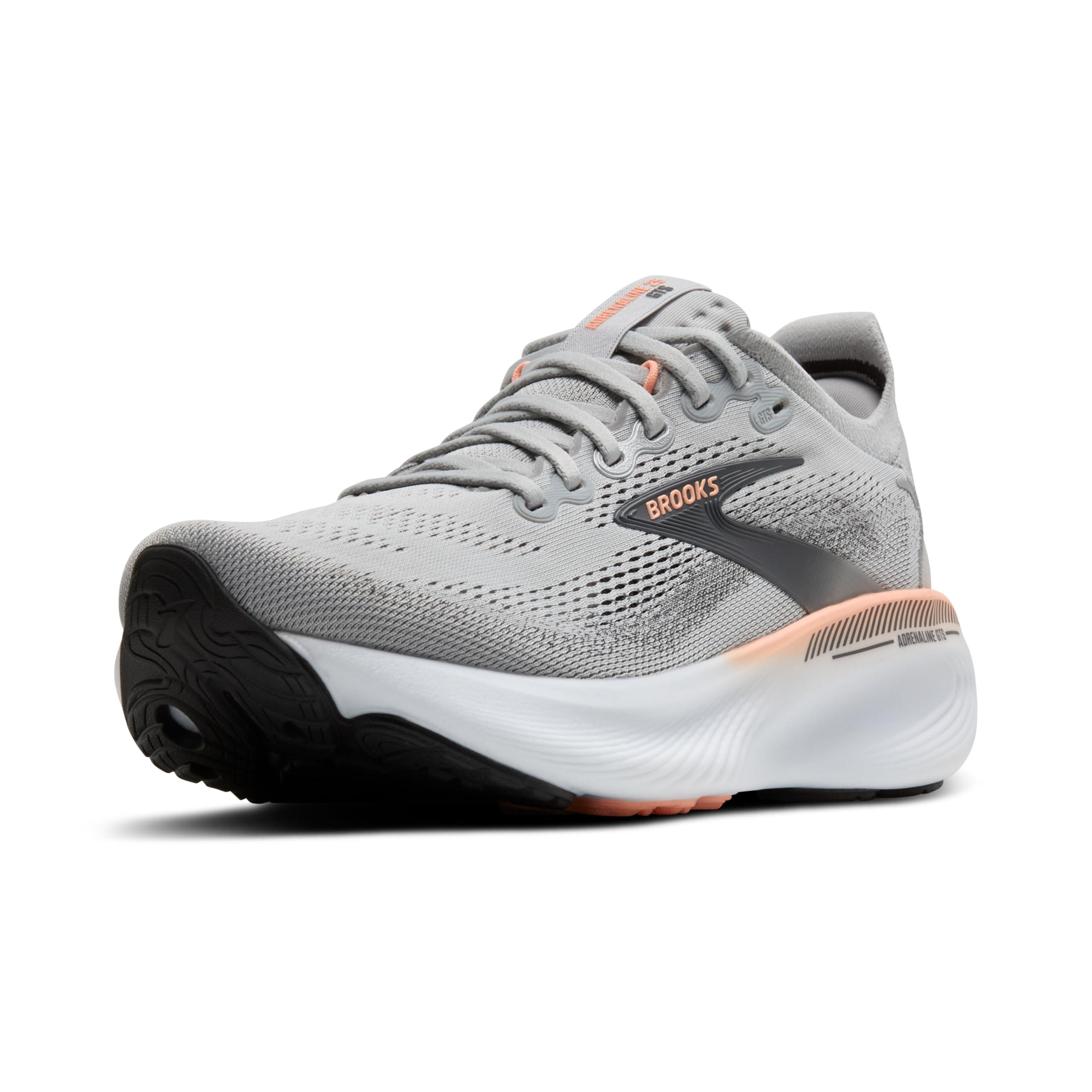
Most sneakers sold as good for high arches are neutral shoes with a bit of extra foam shaped into an arch. The Adrenaline is built the other way around: it's a stability running shoe, so the platform is designed to hold the foot instead of letting it roll inward, with the cushioning layered on top of that structure rather than standing in for it. For a rigid, high arch that wants something solid underneath, that's the right order of operations, and it's why this is our top pick.

Arch support is where it's strongest, and it's the best of these picks on that measure. The footbed is soft without being shapeless, and it doesn't flatten out halfway through a long day the way a pure cushioning shoe can. We were also struck by how well it covers ground: as comfortable on a two-mile walk to the store as on a run, which is more than most running shoes manage.

The toe box deserves its own mention. A high instep pushes the foot forward in the shoe, and toes that touch the end turn good support into a bad afternoon. The Adrenaline has genuine room across the toes and runs true to length, so order your normal size and take the larger one if you sit between two.

The ride is the other thing to know about. It's supportive first and soft second, so anyone chasing the pillow-underfoot feeling of a max-cushion shoe will find this feels like more shoe than they want. For the reader who has been making do with a squishy sneaker that gives out by mid-afternoon, that firmness is exactly the point.

Bottom line: If your arches need holding up through real mileage, this is the pair we recommend: structured, cushioned under the whole foot, and roomy across the toes.

2

New Balance 608 V5

New Balance 608 V5

Wide feet

Our Score 8.8/10
Check Price

Worth Noting

  • Sole bond can fail before the leather does
Category
Cross-training
Model Number
WX608UB5-225
Boxed Size And Weight
12.3 x 9.5 x 5 inches; 2.4 pounds

The 608 feels like a shoe from another era, which is either exactly what you want or immediately wrong. The leather upper is thick, the sole is firm, and the whole thing is stiffer out of the box than anything else here. Give it a week of short wears and it softens into the shape of your foot, but that week is real — don't plan to take them out of the box and walk five miles.

Once it does soften, there's a lot underneath. This is the pick with the deepest record on foot support of anything in this guide, and the shape explains it: a wide toe box, generous width options, and a platform that doesn't give way under the arch. If your high arch comes with a wide forefoot, which is a common pairing, this is the easiest shoe here to get comfortable in, and one of the few you can order in a wide without guessing.

It's also the sturdiest thing in the group. Cross-training is the stated job, and it handles gym floors, errands, and long shifts on hard floors without complaint. What it isn't is plush: the sole stays firm to the point that some feet never fully settle into it. If you want soft underfoot, the Brooks is the better answer, and you'll know the difference in the first ten minutes.

The weak point is where the sole meets the upper. The leather outlasts the bond, and the sole can start peeling at the toe with hard daily wear well before the upper shows its age. Worn in rotation rather than every single day, it holds up far better.

Bottom line: We point wide-footed, high-arched shoppers here for the firm platform and generous toe box, with the caveat that the leather needs a real break-in.

3

Skechers Go Walk 5 True

Skechers Go Walk 5 True

Budget walking

Our Score 9.2/10
Check Price

Worth Noting

  • Lining and outsole wear through with pavement use
Category
Walking
Department
Women's
Model Number
15905-GYLB

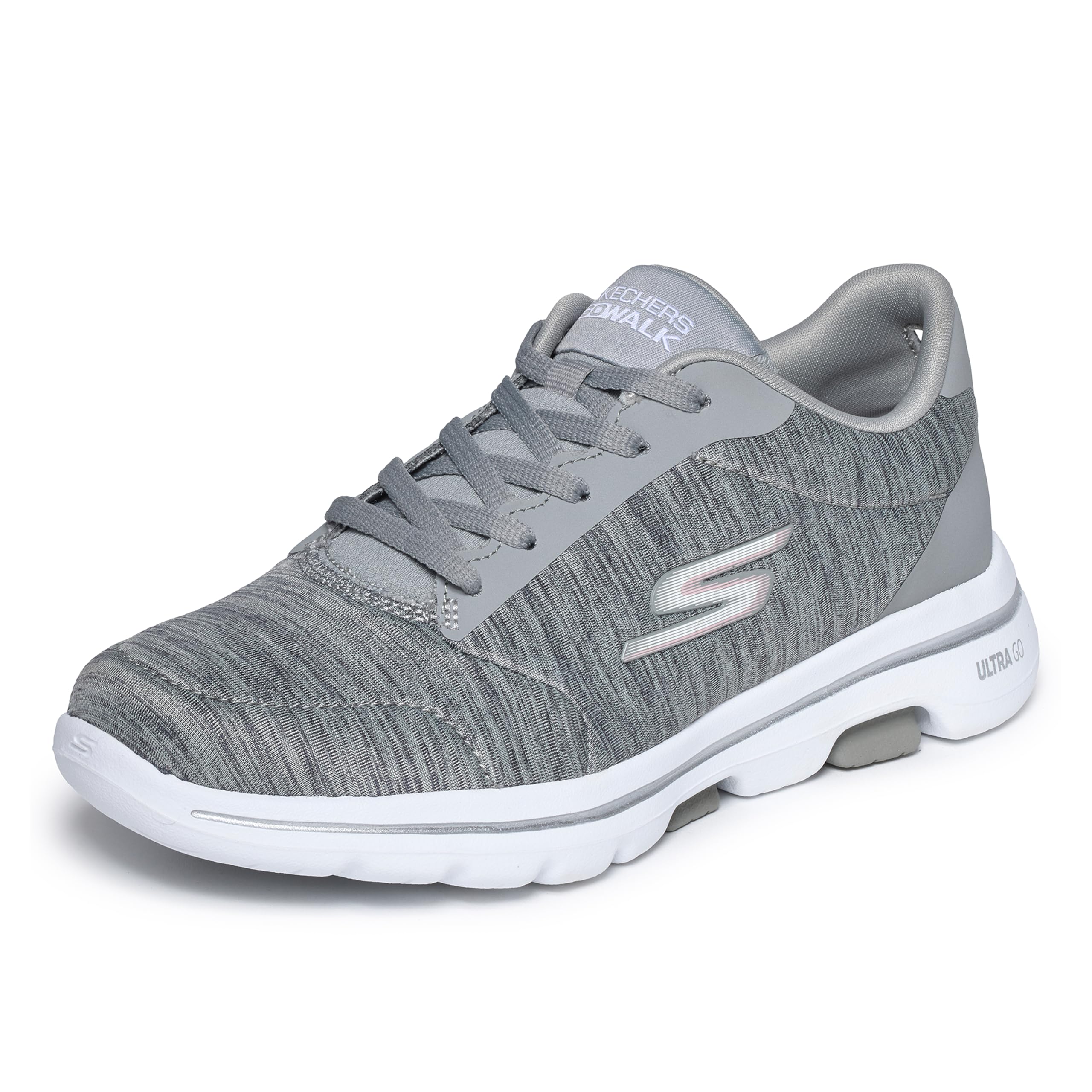
There's a version of this purchase that doesn't need a running shoe at all: you want something light to walk the dog in, stand through a shift in, and stop thinking about. The Go Walk 5 is that shoe, and it's one of the least expensive picks here — which matters if you go through walking pairs quickly and don't want to spend much each time.

What it does well is softness and weight. It's among the lightest here, the sole is genuinely cushioned, and there's essentially no break-in: you put them on and go. For concrete floors and long standing shifts, that combination is more useful than a lot of structure. The arch support is real but gentle, cushioned under the arch rather than firmly holding it, so if your arch needs a platform this isn't the one, and if it needs comfort it delivers.

Fit splits down the middle. The toe box runs roomy and the upper has some give, which suits a wide forefoot, but a pair that comes up snug doesn't loosen much with wear. Order for your longer foot and size up if you're between sizes.

Expect to replace them sooner than the running shoes here. The lining and outsole are what go first, especially if they're your only pair and they live on pavement. Set against what they cost, a comfortable walking shoe you buy again next year is a fair trade rather than a compromise.

Bottom line: Our budget walking pick: light enough to forget you're wearing them, softly cushioned for long shifts, and honest about not being a running shoe.

4

New Balance 574 Core

New Balance 574 Core

Everyday casual

Our Score 9.0/10
Check Price

Worth Noting

  • Sole and upper can separate at the flex point
Category
Road running
Department
Women's
Model Number
WL574EVB-B

Nearly everything else here is an athletic shoe. The 574 is a casual sneaker that happens to sit on a supportive midsole, which makes it the pair we reach for with jeans, a casual dress, or scrubs. The midsole is the reason it belongs in this guide at all: instead of a slab of soft foam, it's built to hold its shape under the arch, so a high arch gets something to rest on without the shoe announcing itself as orthopedic.

It's comfortable for errands, museum days, and the walk to the train, and it looks better with real clothes than any of the running shoes here. It isn't a runner and doesn't pretend to be — a five-mile run is the wrong assignment for it, and there are three other picks here for that.

Sizing is the thing to get right. The 574 is cut close over the instep and runs short for some feet, so if your instep is high or you sit between two sizes, order up half a size. Get that right and this is the most useful everyday shoe in the set: one that works with your wardrobe and still gives the arch somewhere to sit.

Wear is the other caveat. The sole and the upper can start separating at the flex point with heavy daily use, so rotate these with another pair rather than living in them seven days a week.

Bottom line: We keep coming back to these for everyday wear: a supportive midsole and good looks earn the spot, provided you size for the snug instep.

5

Skechers D'Lites Fresh Start

Skechers D'Lites Fresh Start

Chunky style

Our Score 9.2/10
Check Price

Worth Noting

  • Upper runs warm in hot weather
  • Heel area can split with heavy wear
Category
Fashion
Department
Women's
Model Number
11931

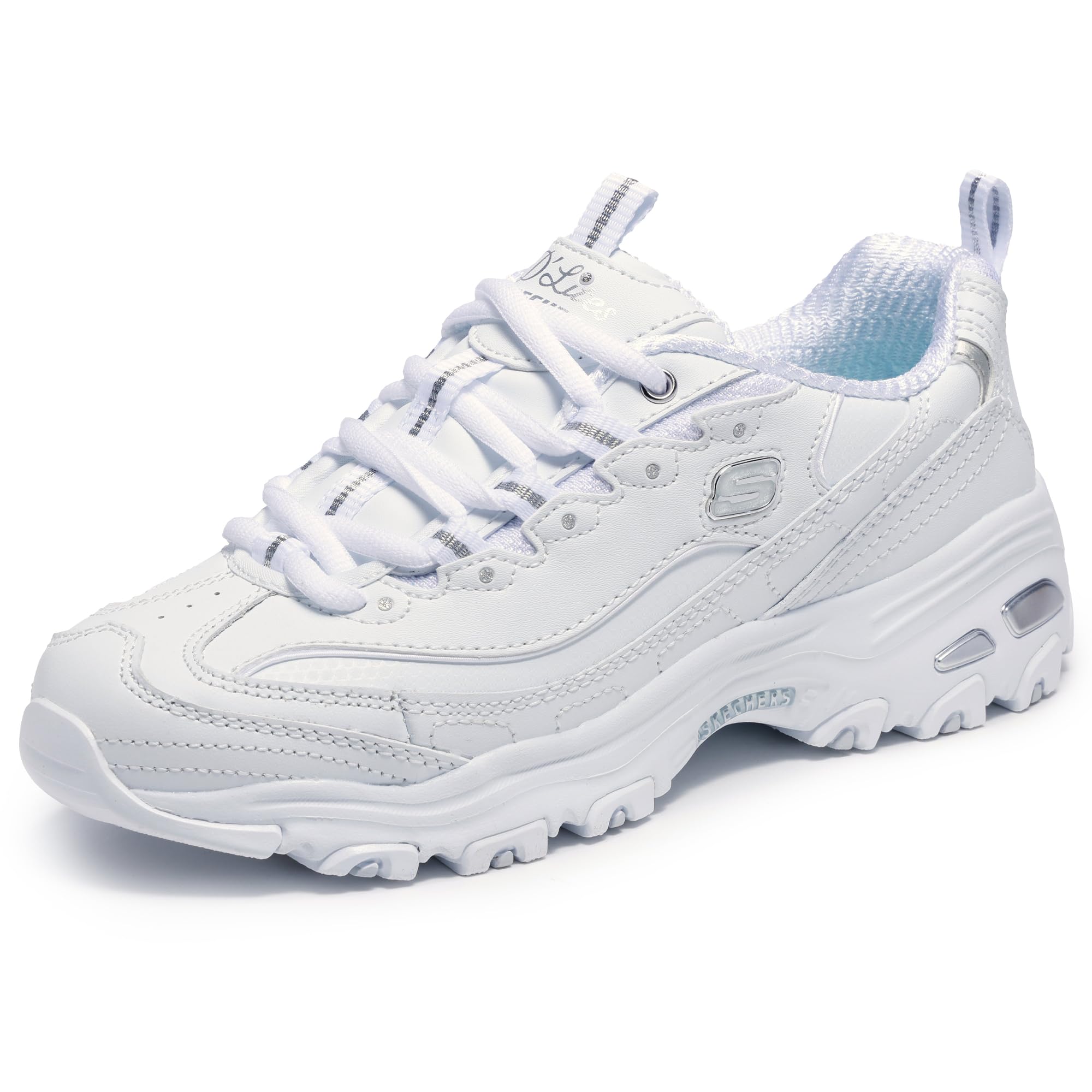
The D'Lites are the pair you choose with your eyes: thick sole, 90s proportions, and a look that reads as deliberate rather than corrective. That matters more than it should. A lot of supportive shoes look like supportive shoes, and a chunky sneaker you actually want to put on gets worn far more often than a worthy one you don't.

The surprise is underneath. The thick sole gives a stable platform that doesn't flex away under the arch, and the memory foam insole is soft on top of it, a combination that suits a high arch better than a thin, bendy shoe. Of the Skechers in this set, this is the one that holds up best on concrete through a full standing shift.

Sizing is the catch. These run small, so order up: half a size if your usual fit is roomy, a full size if shoes are normally tight across the top of your foot. Get that right and they're comfortable across a wide forefoot from the first wear, with the wide width covering the rest.

The chunky build has a summer cost. The upper doesn't breathe much, and the heel is where the construction gives out first if you wear them hard every day. Neither is a dealbreaker in a sneaker you're buying partly for the look — but if you want one pair to do everything, the Go Walk 5 is the lighter, cooler choice.

Bottom line: We recommend these to anyone who wants a chunky sneaker that still holds an arch — size up, and don't expect a cool foot in July.

6

adidas X_PLR Path

adidas X_PLR Path

Budget everyday

Our Score 9.0/10
Check Price

Worth Noting

  • Thin upper can tear above the lace loops
Department
Women's
Model Number
34DC094-OFW
Boxed Size And Weight
12.8 x 9.29 x 4.88 inches; 2.13 pounds

The X_PLR Path is the least expensive shoe here, and it shows in one specific place: the upper is thin. That's the whole trade. For a high arch, thin isn't automatically bad — a light, flexible shoe is comfortable for errands and short days — but it doesn't hold the foot the way the structured picks on this list do.

What it gets right is shape and weight. There's real room through the toe box, the foam underfoot has enough shape to keep a mild high arch comfortable through a day of walking, and they're light enough to pack without thinking about it. This is the pair in the set we take on trips, where one shoe has to do a bit of everything and not weigh down a bag.

Sizing needs attention: these run about a half size large, so order down, and don't count on the upper taking up slack because there's little structure there to do it. Fitted properly, they're a light, roomy, inexpensive choice for casual days and short gym sessions — just not the only pair in your closet.

Bottom line: We like these as a light, roomy, inexpensive pair for casual days, though the thin upper means they won't take daily punishment.

How We Chose and Tested These High-Arch Sneakers

We started with a shortlist of roughly 40 women's sneakers from brands with a track record for support, then narrowed it using the specs that actually matter for a high instep: removable insoles, a curved last, a wide size run, and enough stack height to mean something. Price factored in too — we wanted to know whether a budget pair could hold its own against one costing three times as much. Fourteen pairs made the cut, and each went into a six-month rotation with three testers who all have high arches.

Testing looked like real life. Each tester wore her pair to the grocery store, on the treadmill, through an eight-hour standing shift, and on a weekend walk of at least three miles, then reported back on hot spots, whether the laces gaped over the instep, and whether she could feel the shoe under her arch at all. We checked breathability on warm days by seeing if socks were dry or damp by evening, and noted how much breaking in each pair needed before the stiffness eased.

Size and fit got their own pass: we ordered true to size first, then a half size up wherever the toe box pinched, and logged how the shoe changed after 20 miles. Durability came down to details — outsole tread at the heel, creasing across the toe, insole compression, and whether the upper held its shape. Appearance and value were the last calls: which pairs we'd wear somewhere other than the gym, and whether the price still felt earned six months in.

How to Choose Sneakers for High Arches

Support First, Then Cushioning

A rigid, high arch doesn't spread load the way a flatter foot does, so the shoe has to spread it for you. Soft foam alone doesn't: it compresses under the arch and leaves you resting on the outsole. What you want is a midsole that resists folding at the waist. Take the shoe in both hands and try to bend it in half — if it folds easily under the arch, it won't hold you, however soft it feels in the store. Cushioning should sit on top of that structure, not replace it.

That's the real dividing line between our picks. The Brooks Adrenaline is built support-first and feels it; the Skechers Go Walk 5 is built soft-first, and it's the better shoe for a walking day precisely because it isn't pretending to be structural.

Get the Fit Right Over the Instep

High arches usually come with a high instep, and that's where good shoes fail: the tongue and laces press across the top of the foot before the shoe feels too small anywhere else. Look for a padded tongue, a roomy toe box, and enough length that your toes clear the end when you stand up, since feet spread under load.

Lacing does more than sizing here. Skip the pair of eyelets sitting directly over the pressure point and run the lace straight up the sides instead — it takes the downward squeeze off the top of the foot without loosening the heel. If you're between sizes, go up. A shoe that's snug over the instep won't stretch where you need it to.

Match the Shoe to How You'll Actually Use It

Running shoes, walking shoes, and casual sneakers are built differently, and buying for the wrong one is the most common way to end up disappointed. If most of your miles are runs, prioritize a structured platform and a roomy toe box — that's the Brooks. If you're on concrete all day, weight and softness matter more, which is where the Go Walk 5 earns its place. If the shoe is mostly for jeans and errands, a supportive casual midsole like the New Balance 574 does the job and looks better doing it.

Buy for the 80% case. One pair that's decent at everything is usually less comfortable than a pair that's excellent at the thing you do most.

Break-In, Wear, and When to Replace

Leather and firm synthetics take a week or two to soften; mesh and knit are wearable from day one but give up structure sooner. Neither is better, so plan the first week accordingly and wear anything new in short stretches before a long day.

Sneakers die at the midsole before the upper looks worn. Press a thumbnail into the side of the sole; if it doesn't spring back, the cushioning is spent even when the tread looks fine. Rotating two pairs slows that down more than buying one expensive pair and wearing it every day.

Frequently Asked Questions

Final Verdict

The Brooks Adrenaline GTS 25 is the pair we point a woman with high arches to first, because it puts structure under the arch and cushioning on top of it rather than the other way around. If you want a firm, wide platform and don't mind a break-in, the New Balance 608 is close on support and easier on the budget, with more width options.

And if your sneakers mostly walk the dog and stand at a register, the Skechers Go Walk 5 does that job comfortably and cheaply. The right answer depends on the miles you're putting in, not on buying the most shoe.