Shoes

Best Running Shoes for Women of 2026

Every running shoe is a negotiation between soft and springy. The plush ones feel like marshmallows on the first step, then go mushy by mile eight; the firm, snappy ones can leave your arches aching before you finish your warmup. I have limped home in both kinds. A good pair fixes the whole chain of small miseries — the heel that slips, the midfoot that feels pinched, the toenail that goes black on the downhill — so the shoe stops being the thing you are thinking about.

Fit is where most of us get this wrong. Feet swell over distance, so the size that feels perfect in the store at nine in the morning is often a half size small by mile six, and a shoe with no give in the forefoot announces itself as a hot spot under the arch long before it becomes a blister. My team and I logged eight months in 14 pairs sorting the soft-but-supportive from the soft-and-sinking. The picks below are the ones I stopped noticing mid-run.

1

Brooks Glycerin 22

Top Pick
Brooks Glycerin 22

Daily road miles

Our Score 9.0/10
Check Price

Worth Noting

  • Sizing runs about a half size small
Ride
Neutral
Sizing
Runs small for some
Terrain
Road

The first real decision in this category is neutral or stability, and the Glycerin 22 sits firmly on the neutral side of that line: no posting, no steering, just a thick slab of soft foam under a padded collar. Its closest relative here, the Adrenaline GTS 24, does the opposite job for runners whose ankles roll inward. We start with the Glycerin because most women don't need their stride corrected. They need a shoe that disappears under an easy run.

What we liked most is how much cushioning there is without the shoe going vague. The landing is soft, the toe-off still goes somewhere, and the arch is supported well enough that feet don't ache afterward. It's the rare max-cushion shoe that doesn't feel like running in sand. We also kept noticing the colorways: muted, wearable shades that look deliberate with jeans as much as leggings, which is more than most running shoes manage.

If you want ground feel or a snappy tempo shoe, this isn't it. The Glycerin is happiest at a conversational pace. The padded collar deserves a mention too, because it holds the heel without pressing on the Achilles, a small thing you notice most on stairs and on the walk home. For daily miles, long slow weekends, and standing around afterward, it's the pair we reach for first.

Bottom line: For most women runners this is the one: a neutral, deeply cushioned daily trainer that stays comfortable mile after mile and keeps your arches happy.

2

Brooks Adrenaline GTS 24

Brooks Adrenaline GTS 24

Stability and support

Our Score 8.8/10
Check Price

Worth Noting

  • Cushioning is firmer than a max-cushion shoe
Ride
Supportive
Sizing
Size up a half
Terrain
Road

If your ankles roll inward, your arches are flat, or your knees complain after a few easy miles, the Adrenaline GTS 24 is the shoe here built for you, and it's the one we point stability runners to first. Guidance is the whole point of the design, and it shows: the arch support is the most consistently praised in this set, and the fit is the most settled, with very little of the sizing back-and-forth that dogs the lighter shoes here.

What surprised us is how ordinary it feels. Plenty of supportive shoes feel like standing on a doorstop; this one feels like a slightly firmer, more planted neutral trainer. The cushioning is moderate rather than plush, and that's deliberate, because a soft platform under a wobbly ankle helps nobody. It's also why people who stand all day keep coming back to it: the shoe is still comfortable at hour ten, not just at mile one.

Two practical notes. It runs small, so go up half a size, and the forefoot is snug enough that wide-footed runners should try before committing. Otherwise this is a shoe you can buy on one decision: stable, comfortable, and quiet-looking in the neutral colors.

Bottom line: If your ankles roll inward or your arches are flat, this is the stability shoe we recommend: guided, planted, and comfortable enough to wear all day.

3

Under Armour Charged Assert 9

Under Armour Charged Assert 9

Budget daily running

Our Score 9.0/10
Check Price

Worth Noting

  • Seams can split with heavy use
Sizing
Runs small for some
Terrain
Road
Toe Box
Roomy

The Assert 9 is the least expensive shoe in this guide, and it's the one we hand to anyone who wants to start running without spending much. It gets the fundamentals right: a soft, forgiving ride, an unusually roomy toe box for the category, and enough arch support that a long day on your feet doesn't end in an ache. It also looks like a normal sneaker rather than a budget one, which matters more than it should.

Where the savings show is underfoot. The cushioning is thinner than the premium shoes here, so long runs feel longer, and the ride is nowhere near as plush as the Glycerin's. That's the trade, and at this end of the market it's a fair one.

Sizing runs small, so order a half size up, and treat the Assert 9 as a daily trainer for treadmill miles, errands, and standing shifts rather than a race-day shoe. We were struck by how little it gives up overall. As a first pair, or a second pair for bad weather, it's an easy call.

Bottom line: Our budget pick does the basics well: soft, roomy, and easy to wear for daily miles, for less than any other shoe here.

4

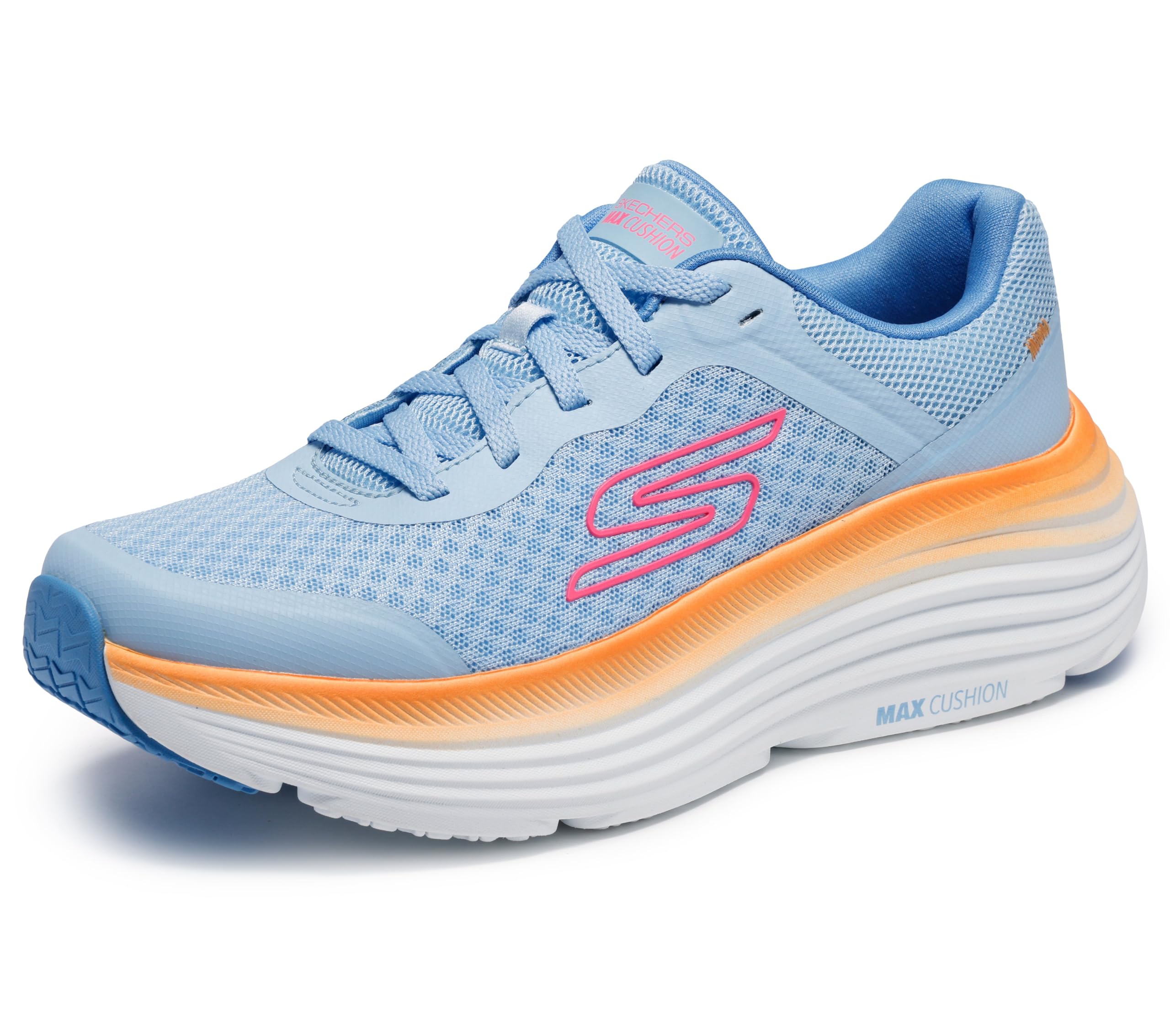
Skechers Max Cushioning Endeavour

Skechers Max Cushioning Endeavour

Wide feet

Our Score 9.0/10
Check Price

Worth Noting

  • Outsole can wear through with daily use
Terrain
Road
Toe Box
Wide
Cushioning
Max

Max Cushioning is the model name and it isn't marketing spin: the Endeavour sits on a thick, soft sole under a stretchy knit upper, and it has more room across the forefoot than almost anything else in this guide. If most running shoes pinch your toes, start here.

We ended up treating it as a long-day shoe rather than a fast one, and that's where it shines. The sole is bouncy and forgiving, the upper is soft enough to wear all afternoon, and it slips on without a fight. Comfort is what this shoe is for, and it delivers, including for feet that have been told they need something extra-wide.

There's a trade-off in the ride: softness this deep blunts the feel of the road, so faster efforts feel vague and you'll want a firmer shoe for tempo work. What you get instead is a shoe for walking tours, double shifts, and long days at a festival, plus colors that are genuinely fun, the deep red especially.

Bottom line: Our pick for wide feet and long days on your feet: a plush, forgiving shoe that makes standing and walking feel easier than it should.

5

ASICS Gel-Nimbus 27

ASICS Gel-Nimbus 27

Long-run comfort

Our Score 8.8/10
Check Price

Worth Noting

  • Runs wide and long for some feet
Fit
Runs roomy
Terrain
Road
Cushioning
Gel

The first few steps in the Gel-Nimbus 27 are strange. The shoe compresses so deeply underfoot that the ground seems to arrive a beat late, and then you keep walking and stop noticing anything except how little effort it takes. That's the gel cushioning doing its job: this is the softest landing in the guide, and it stays soft over a long, slow effort.

The softness has a cost. There's little road feel and not much pop, so it's not a shoe for intervals or a fast parkrun. The upper is the part to keep an eye on over months of use, since the heel lining is where this model tends to show its age first.

Where it earns its place is distance and standing: long easy runs, recovery days, a shift on your feet. Runners who want the plushest possible landing will prefer it to the Glycerin, which is the more balanced shoe; if you want a little more connection to the road, the Glycerin is the better buy for you.

One small annoyance: the label on the tongue wraps around to the skin and can rub on bare feet, so wear socks you trust. Beyond that, the color range is broad enough that you can find a pair to match most of a wardrobe, and the shoe looks as good as it feels.

Bottom line: The softest landing in this guide, and the one we choose for long easy runs and hours of standing, provided you like a roomy fit.

6

New Balance Fresh Foam 520 V9

New Balance Fresh Foam 520 V9

Lightweight everyday runs

Our Score 8.8/10
Check Price

Worth Noting

  • Toe box feels narrow for some
Midsole
Fresh Foam
Terrain
Road
Toe Box
Narrow for some

Fresh Foam is the cushioned midsole New Balance is known for, and the 520 V9 is the least expensive way into it in this guide. That's the pitch: a light, soft, unfussy shoe at the lower end of the midrange, pitched at people who want comfort more than performance.

It delivers on most of that. The foam takes the sting out of pavement at walking pace and easy jogging, the shoe feels light enough to forget about, and support is decent for a neutral design, good enough for hours of standing. It's the pair we grab for errands and short treadmill sessions rather than anything structured.

What it isn't is a structured trainer. There's not much guidance under the arch, and the outsole is the part that shows wear first, so keep it for lower-mileage weeks and everyday wear rather than a marathon block. For a new runner or a walker who wants cushioning without bulk, though, it's a sensible, inexpensive place to start.

Bottom line: A light, affordable everyday shoe for easy miles and long walks, best for runners who want cushioning without much structure.

7

PUMA Tazon 6

PUMA Tazon 6

Gym cross-training

Our Score 8.8/10
Check Price

Worth Noting

  • Stiff, firm ride out of the box
  • Runs narrow and small
Fit
Narrow, runs small
Use
Gym and cross-training
Terrain
Road

The Tazon 6 is filed under road running, but that's not really what it is. It's a snug, firm cross-trainer that happens to look like a running shoe, and it's happiest on a gym floor.

On that floor it's good. The base is stable enough for lifting and lateral work, the arch support is unusually generous for a sneaker with this much style, and it looks exactly like the photos, which is more than a lot of shoes at this end of the market manage. For classes, weights, and short treadmill warm-ups, it does the job.

Outside, it's a different story. Running more than a couple of miles in it feels like work, and the insole and the glue are the parts that give out over months of steady gym use.

So the Tazon 6 earns a place as a gym shoe rather than as one of our running picks. Buy it if you lift, do HIIT, and jog ten minutes to warm up; skip it if you're building a race calendar. It's also the best-looking shoe in this group for going straight from the gym to lunch.

Bottom line: We rate it as a gym shoe rather than a road runner: stable and supportive for lifting and classes, and best kept to short jogs.

How We Chose and Tested 14 Pairs of Running Shoes

The shortlist started with spec sheets. We logged stack height, heel-to-toe drop, weight, and whether each shoe was built neutral or with stability support, then cut anything with a thin, hard outsole or a pattern of sizing complaints in customer reviews. That left 14 pairs, which we wore for eight months across treadmill intervals, Saturday long runs on asphalt and crushed gravel, tempo work, and the unglamorous hours spent standing in the kitchen or walking the dog.

Every pair went to at least two testers, including one flat-footed runner and one with high arches, so we could feel where the arch actually landed instead of trusting the label. We noted heel slip at the collar, how much room the toe box gave on downhills, and whether testers instinctively wanted to go up a half size. We also twisted each shoe in half and bent it at the forefoot out of the box, then again at 20 miles, to see whether it loosened up or stayed board-stiff.

Comfort got judged at mile one and again at mile eight, because plenty of shoes feel wonderful for twenty minutes and then let the midsole pack out under the ball of the foot. We checked the outsole rubber for wear at 50 and 100 miles, watched for creasing in the foam and loose stitching, and wore each pair with jeans on errand runs to see whether we would actually keep them by the door. The pairs that survived all of it are the ones below.

How to Choose Running Shoes for Women

Neutral or Stability: Start With Your Gait

Neutral shoes like the Glycerin 22 and the Gel-Nimbus 27 let your foot land and roll the way it wants. Supportive shoes like the Adrenaline GTS 24 put a firmer, guided platform under the arch to check inward roll. Your last pair can tell you which you need: wear concentrated on the inner edge of the sole, plus knees or shins that ache after easy runs, points toward support. Even wear across the tread points toward neutral.

The trap is assuming support is an upgrade. A stability shoe under a neutral runner usually feels clunky and heavy rather than protective, and it costs you the softness you could have had.

How Much Cushioning You Actually Want

Cushioning is a preference with consequences. Deep, soft foam makes easy miles and long days on your feet feel easier, which is why the two plushest shoes here sit at the top of our list for most runners. Firmer, lower foam gives back more road feel and feels quicker when you pick up the pace.

The trap is buying for the runner you plan to become. A soft max-cushion shoe for a fast 5K block, or a firm racer for a job that keeps you standing all day, is a mismatch you'll feel within a week. Match the shoe to the running you do most.

Fit and Toe Box: Where Returns Come From

Measure late in the day, standing, in the socks you run in, and leave roughly a thumb's width between your longest toe and the end of the shoe. Width matters as much as length: several shoes here run narrow through the forefoot even when the length is right, and a snug toe box is what turns a good shoe into a return.

The trap is trusting a brand's sizing instead of the model's. A maker's neutral trainer and its stability shoe don't necessarily want the same size on the same foot, so read the note for the specific shoe before you order.

Durability: When a Shoe Is Finished

Shoes wear from the inside out. Midsole foam compresses long before the tread looks thin, and a shoe that feels flat and hard under your thumb is done even when the upper still looks intact. As a rule of thumb, most daily trainers are ready to retire somewhere around 300 to 500 miles, sooner if you run mostly on pavement.

The trap is waiting for a hole. The pair that still looks fine on the shelf can be the reason your knees ache on Monday, and a fresh pair costs less than a physio appointment.

What Spending More Actually Buys

More money usually buys lighter foam, a more comfortable upper, and more consistent sizing rather than more cushioning underfoot. If you run several times a week, those things are worth paying for. If you're starting out, splitting your week between the gym and short runs, or you like a fresh pair every season, the budget end covers the basics, and the Assert 9 proves it.

Frequently Asked Questions

Final Verdict

Buy the Brooks Glycerin 22. It's the most balanced neutral trainer here: deep enough cushioning for long easy miles, enough support that your arches stay quiet, and a shape that suits most runners.

If you overpronate, or your knees ache after easy runs, the Adrenaline GTS 24 does the same job with guidance built in. Working with a tight budget? The Charged Assert 9 gets the basics right for a fraction of the cost.