Wellness

Best Probiotics for Women with IBS of 2026

An IBS flare makes you suspicious of everything you put in your mouth, and a new supplement is the most suspicious thing of all. Probiotics promise calmer digestion, but the shelf is a wall of billion-count numbers and strain names that mean nothing when your gut is already unpredictable. What a good one actually fixes is narrower than the label suggests: a consistent daily dose of bacteria you can actually identify, in a capsule you'll keep taking, at a price that doesn't sting every month. The first week doesn't always feel better, either — sometimes it feels worse before it settles.

I've kept one bottle or another on the kitchen counter for years, and the thing nobody tells a first-time buyer is that a CFU number is a snapshot from the manufacturing line, not a promise for the day you swallow the capsule. Over the past five months, my testers — most of them living with IBS — worked through 14 formulas, a full bottle at a time, and logged what actually changed. The bottles below are the ones we'd hand to a friend mid-flare.

1

Physician's Choice Women's 50B

Top Pick
Physician's Choice Women's 50B

Women with IBS

Our Score 9.2/10
Check Price

Worth Noting

  • Six strains is a shorter list than some picks
Count
84 capsules
Strains
6 strains
CFU Count
50 billion CFU
Key Extras
Organic prebiotics, cranberry, D-mannose

The first thing we noticed about Physician's Choice Probiotics for Women is the bottle size: 84 capsules, which works out to a 12-week supply at one a day. That matters for a supplement you're supposed to take consistently. The formula is built around 50 billion CFU from six strains, with organic prebiotics, D-mannose, and Pro-Cran, so it's aimed at digestive and feminine health rather than a generic gut blend.

It earns our top spot because it hits the practical middle: a meaningful CFU count, a women-specific ingredient list, and a shelf-stable, acid-resistant capsule that doesn't need refrigeration. If you want the most researched single strain for bloating, Align is more targeted. But for a woman who wants one daily capsule that covers gut and feminine support without a complicated routine, this is the one we keep coming back to.

We also appreciate the 84-count format for travel and refills: it's one bottle for three months, not a monthly rebuy. The caveat is tolerance. A new probiotic can bring gas or nausea at the start, and this formula is no exception; we suggest taking it with food if your stomach is sensitive and giving it a few weeks before judging. The 50 billion CFU dose is substantial, so there's no need to stack a second product on top.

Bottom line: This is the women's probiotic we treat as the default: 50 billion CFU, six strains, organic prebiotics, and cranberry with D-mannose in one daily capsule.

2

Doctor's Recipes Women's 50B

Doctor's Recipes Women's 50B

Budget women's formula

Our Score 9.2/10
Check Price

Worth Noting

  • 60-count bottle runs out sooner than the 84-count top pick
Count
60 capsules
Strains
16 strains
Delivery
Delayed release, shelf stable
CFU Count
50 billion CFU

Doctor's Recipes Women's Probiotic is the value play we reach for when the top pick feels like more than you want to spend. It packs 50 billion CFU and 16 strains into a 60-capsule bottle, adds organic cranberry and prebiotics, and uses delayed-release capsules that are shelf stable. That's a lot of formula for the money, and the strain count is the widest among the women-specific picks here.

The capsule runs larger than some, which is worth knowing if you dislike big pills. Otherwise, the design is sensible. The delayed release is meant to get the strains past stomach acid, and the bottle doesn't need refrigeration, so it can live in a cabinet or a travel bag.

We were also struck by how well the formula balances breadth and price. The 16-strain list gives it more reach than the six-strain top pick, and the added cranberry makes it a stronger women's-health option than a plain unisex blend. If you want a women's probiotic with cranberry, a broad strain list, and a low entry price, this is the one we point to.

Bottom line: Doctor's Recipes is the value pick we reach for when we want more strains and a lower price, and its 16-strain, 50 billion CFU formula earns that place.

3

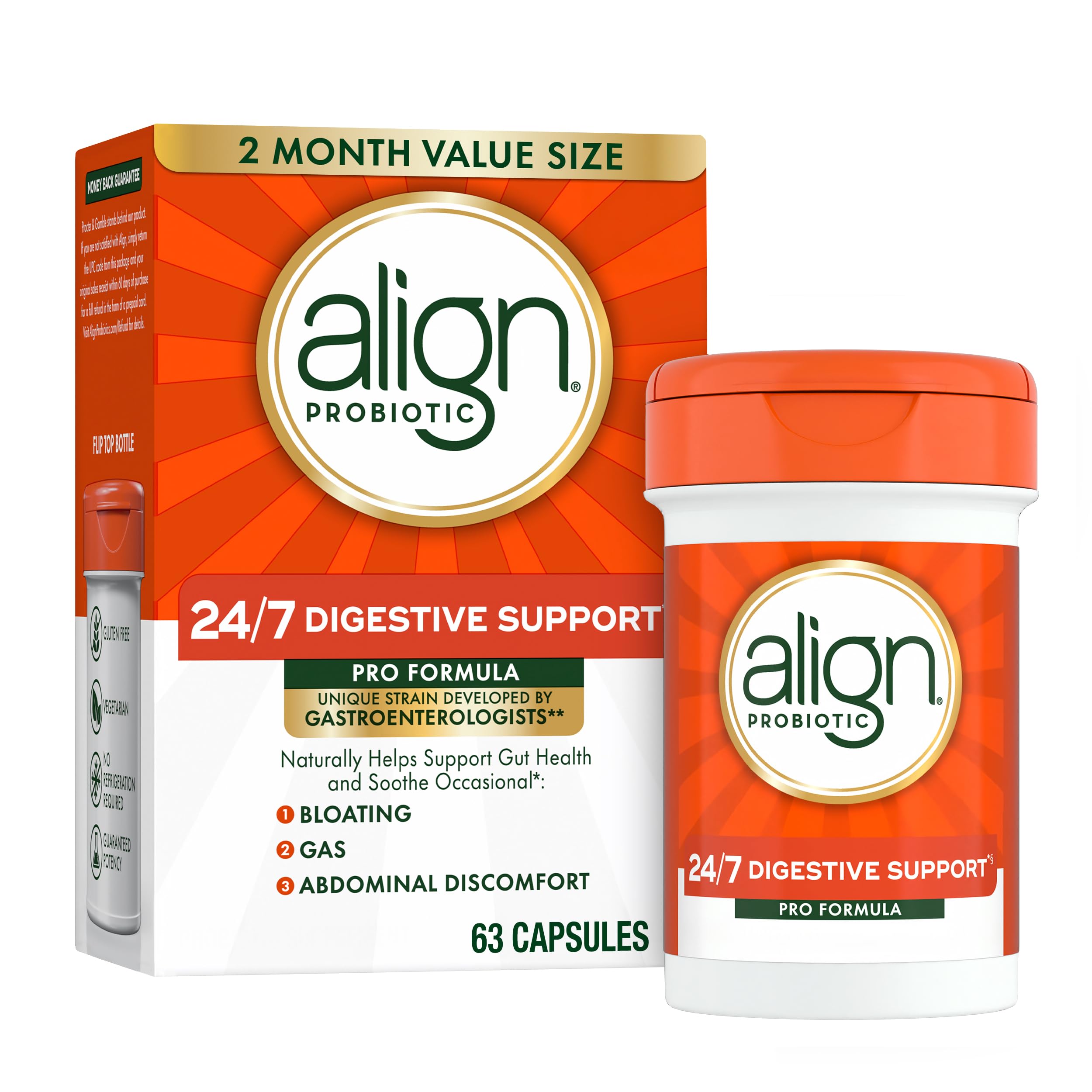
Align Pro Formula

Align Pro Formula

Bloating and gas

Our Score 9.4/10
Check Price

Worth Noting

  • Premium price for a single-strain formula
  • Side effects can include stomach upset
Count
63 capsules
Strain
Bifidobacterium 35624
Supply
2-month supply
Storage
No refrigeration

Align Pro Formula takes a different route from the multi-strain blends here: one strain, Bifidobacterium 35624, backed by more than 20 years of research. The 63-capsule bottle is a two-month supply at one a day, and the desiccant bottle is designed to keep the probiotic potent without refrigeration. That narrow focus is the point. If bloating and gas are the symptoms you notice most, a single researched strain is easier to evaluate than a 20-strain cocktail.

The formula is also easy to live with. The capsule is small enough to take with a morning glass of water, and the bottle doesn't need fridge space. We appreciate that Align puts the strain name on the front and keeps the packaging simple; it's the kind of product you can keep in a desk drawer or a travel kit without thinking about it.

We point to Align for the bloating-first shopper, with a clear caveat: you're paying for the research and the single-strain story rather than breadth. If you want a broad women's formula with cranberry and D-mannose, the top pick is the better fit. If you've already tried multi-strain blends and want to isolate one variable, Align is the one we choose.

Bottom line: If bloating and gas are the symptoms you notice most, Align's single researched strain is the one we point to first, provided you're willing to pay the premium.

4

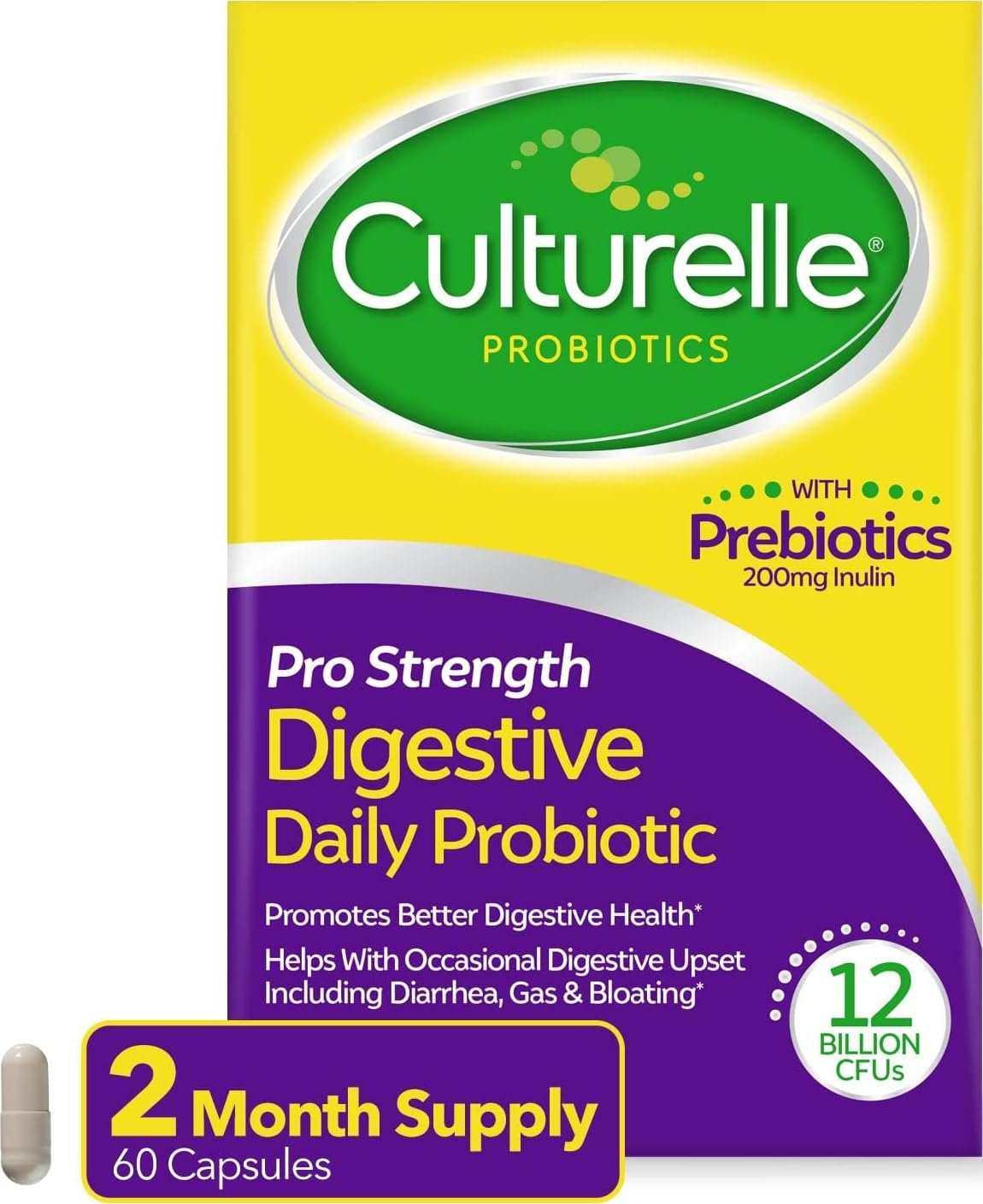
Culturelle Pro Strength

Culturelle Pro Strength

Gentle daily use

Our Score 9.4/10
Check Price

Worth Noting

  • Unisex formula lacks women-specific extras
Count
60 capsules
Strain
Lactobacillus rhamnosus GG
Storage
No refrigeration
CFU Count
12 billion CFU

Culturelle Pro Strength is the low-dose, single-strain option in this group: 12 billion CFU of Lactobacillus rhamnosus GG in a 60-capsule bottle. That's a fraction of the CFU count in the 50-billion picks, but the point here is the strain. LGG is backed by more than 1,000 scientific studies, and Culturelle builds the whole product around it rather than spreading the dose across a long list.

It earns a place for anyone who wants a gentle daily routine and doesn't need a women-specific formula. The capsule is easy to swallow, the bottle doesn't need refrigeration, and the 60-count supply is straightforward. We also like that the label keeps the strain front and center; it's easier to compare with a clinician's recommendation than a proprietary blend. The trade-off is breadth: 12 billion CFU and one strain won't cover the same ground as a 16-strain women's formula.

Where it earns its place is simplicity. If you've had a rough start with high-CFU blends, a lower dose with a well-known strain is a sensible first step. We suggest taking it with food if your stomach is sensitive and giving it a few weeks. It's also a good travel bottle because there's no refrigeration requirement.

Bottom line: Culturelle Pro Strength is our pick for a gentle, no-fuss single-strain routine, especially if you want a lower CFU dose and no refrigeration.

5

NewRhythm 50B

NewRhythm 50B

Budget multi-strain

Our Score 9.2/10
Check Price

Worth Noting

  • Side effects can include stomach cramps
Count
60 capsules
Strains
20 strains
Delivery
Targeted release, acid resistant
CFU Count
50 billion CFU

NewRhythm's 50 Billion CFU formula is the broadest strain list in this group: 20 strains in a 60-capsule bottle, with targeted-release capsules and no refrigeration requirement. It's a unisex product, not a women's formula, but the price puts it in budget territory and the strain count is higher than most of the women-specific picks. We choose it for the shopper who wants maximum strain diversity without paying a premium.

The targeted-release design is the detail we appreciate most. It's meant to help the capsule survive stomach acid and deliver the strains further down the digestive tract, which is the difference between a probiotic that sounds good on paper and one that has a chance to matter. The bottle is also compact and shelf stable, so it's easy to keep at work or in a travel bag.

The trade-offs are real. This is a unisex formula, so there's no cranberry, D-mannose, or women-specific strain story. But if you want a 20-strain, 50-billion-CFU option at a low price and you're comfortable with a unisex label, NewRhythm is the value pick we point to.

Bottom line: NewRhythm is the broadest budget formula here, and we choose it when 20 strains and 50 billion CFU matter more than a women-specific label.

6

Florastor Daily Probiotic

Florastor Daily Probiotic

Antibiotic recovery

Our Score 9.2/10
Check Price

Worth Noting

  • Premium price
Count
100 capsules
Strain
Saccharomyces boulardii CNCM I-745
Strength
250 mg
Shelf Life
3 years

Florastor is the odd one out here because it isn't a bacterial probiotic at all. It uses Saccharomyces boulardii CNCM I-745, a yeast strain, at 250 mg per capsule. That distinction matters if antibiotics are part of your life: antibiotics target bacteria, not yeast, so this is the probiotic people often keep separate from a bacterial blend. The bottle holds 100 capsules, and the shelf life is three years.

The dosing is more involved than a single daily capsule: the label calls for two capsules one to two times daily. That means a 100-count bottle lasts 25 to 50 days, not 100. We appreciate the flexibility, but it's a routine to plan around, especially if you're used to one pill a day.

The yeast strain is also the reason we don't treat Florastor as a direct swap for a women's multi-strain probiotic. It's focused on digestive balance and antibiotic recovery, not cranberry or vaginal pH support. If your main issue is irregularity after a course of antibiotics, that focus is useful. If you're looking for broad daily gut and feminine support, the top pick is the more complete formula.

Florastor is the one we keep for the antibiotic-recovery shopper who wants a yeast-based option with a long shelf life. It's a specific tool rather than a daily default, and the dosing is the thing to plan around. But when antibiotics are in the picture, that specificity is exactly what we want.

Bottom line: Florastor is the yeast-based option we keep for antibiotic recovery, and its 3-year shelf life makes it easy to store.

7

Garden of Life Women's 50B

Garden of Life Women's 50B

Multi-strain women's

Our Score 9.2/10
Check Price

Worth Noting

  • Digestive upset can occur when starting
Count
30 capsules
Strains
16 strains
CFU Count
50 billion CFU
Key Strains
L. reuteri, L. fermentum

Garden of Life's Once Daily Women's Probiotic packs 50 billion CFU and 16 strains into a 30-capsule bottle. The formula includes L. reuteri and L. fermentum, two strains chosen for vaginal pH support, plus a whole-food prebiotic blend. It's shelf stable, and the capsule can be opened and mixed into water or a beverage if you don't want to swallow it.

The strain list is the most interesting part. Sixteen strains is broad for a women's formula, and the L. reuteri and L. fermentum pairing gives it a clear feminine-health angle beyond general digestion. We also like that the bottle doesn't need refrigeration; it's easy to keep in a bathroom cabinet or a suitcase.

The 30-count bottle is the practical catch. At one capsule a day, it's a one-month supply, so you'll rebuy more often than with the 84-count top pick. That's the main trade-off. Otherwise, the formula is straightforward, and the option to open the capsule is genuinely useful if you dislike pills.

Garden of Life earns a place for the woman who wants a multi-strain women's formula with vaginal pH support. If you want the same 50 billion CFU with a more digestive-focused history, the top pick is the easier default. If you prefer a capsule you can open and mix, this one has a real advantage.

Bottom line: Garden of Life's 16-strain women's formula is worth a look if vaginal pH support matters to you; start with one bottle because digestive tolerance varies.

8

Nature's Bounty Probiotic 10

Nature's Bounty Probiotic 10

Simple daily budget

Our Score 9.4/10
Check Price

Worth Noting

  • 30-day supply only
  • Capsules can have a strong smell
Use
Once daily
Count
30 capsules
Strains
10 strains
CFU Count
20 billion CFU

Nature's Bounty Probiotic 10 is the simplest bottle here: 20 billion CFU, 10 strains, 30 capsules, one a day. There's no cranberry, no D-mannose, and no women-specific marketing. It's a straightforward daily probiotic at a low price, and that's the role it plays in this group.

The 10-strain list is a sensible middle ground. It's not as broad as the 16- or 20-strain formulas, but it's not a single-strain product either. The 20 billion CFU dose is modest, which can be a reasonable starting point if high-CFU blends have felt like too much. The capsule is small and easy to swallow, and the bottle doesn't need refrigeration. For someone who wants a basic daily routine without a lot of decisions, that's enough.

Nature's Bounty makes sense for the shopper who wants a low-cost, once-daily probiotic and doesn't need feminine-health extras. It's a simple formula that's easy to keep in a pill organizer. If you want a women-specific formula, the top pick is the better fit.

Bottom line: Nature's Bounty Probiotic 10 is a straightforward 30-day bottle for someone who wants a low-cost, once-daily routine and doesn't need women-specific extras.

How We Tested Probiotics for IBS

We started with roughly 50 formulas sold at mainstream retailers and cut anything that didn't print strain designations on the label — genus and species alone tells you almost nothing about what you're getting — or that only guaranteed its CFU count at time of manufacture rather than through expiration. From there we kept a mix of single-strain and multi-strain bottles, shelf-stable and refrigerated, and landed on 14 to test.

Each formula got a full bottle cycle, about six weeks, swallowed at the same time every morning before coffee, across five months of testing. Testers kept a shared log and scored the first ten days separately from the rest, because the honest question with a probiotic is whether gas, cramping, and bloating quiet down or get worse before they improve. We also noted whether any effect held through a stressful work week or a weekend away, and whether the bottle survived a tote bag without refrigeration.

Ease of use came down to size and smell. We opened every bottle and took a sniff the moment the seal came off — some capsules hit you with a sharply sour, yeasty odor — then emptied one capsule into a glass of water to see how it tasted and whether it clumped. We measured capsules against a pea for anyone who struggles with pills, worked out a cost-per-day figure so the cheaper bottles weren't flattered by a short trial, and flagged anything that caused worse cramping in week one rather than quietly dropping it from the results.

How to Choose a Probiotic for Women with Ibs

Look Past the CFU Number

A bigger number on the front of the bottle is not automatically a better probiotic. Colony-forming units tell you how much is in the capsule, not which strains are there or whether they survive the trip. We look for a named strain list first, then a CFU count that fits the job. A 50 billion CFU formula with 16 strains, like Doctor's Recipes, gives you breadth; a six-strain women's formula like our top pick gives you a shorter, more targeted list. Neither is wrong. The mistake is buying a high number attached to a vague blend.

Match the Formula to Your Main Symptom

If bloating and gas dominate, a single researched strain is a cleaner experiment than a 20-strain blend. Align's Bifidobacterium 35624 is the most targeted option here for that job. If you're recovering from antibiotics, Florastor's yeast-based strain is a different tool entirely. For general irregularity and daily gut support, a multi-strain women's formula is the broader starting point. Think about the symptom you want to change first, then choose the simplest formula that addresses it.

Plan for a Trial Period

Probiotics are not instant. We prefer to start one product at a time and give it two to four weeks before deciding, keeping a simple note of bloating, bowel movements, and anything that feels off. A new probiotic can cause temporary gas or loose stools, especially at higher CFU counts. If that happens, take it with food and give it a few days; if it's severe or doesn't settle, stop and ask a clinician. Stacking a second product too soon makes it impossible to know what helped.

Choose Convenience You'll Actually Keep Up

The best probiotic is the one you will take consistently, so look at the bottle as a routine. An 84-count bottle lasts 12 weeks; a 30-count bottle lasts a month. Shelf-stable capsules are easier to travel with, and delayed-release or acid-resistant designs are worth having if you're choosing between otherwise similar formulas. Women-specific extras like cranberry and D-mannose are optional for IBS; choose them if urinary or vaginal support is also on your list, not because they change digestive symptoms.

Frequently Asked Questions

Final Verdict

For most women with IBS-type bloating, gas, and irregularity, we recommend starting with Physician's Choice Probiotics for Women. Its 50 billion CFU, six-strain formula includes organic prebiotics, cranberry, and D-mannose, and the 84-count bottle makes a daily habit easy to keep.

If you want more strains for a lower price, Doctor's Recipes is the value pick; if bloating is the main issue, Align's single researched strain is the more targeted choice.