Wellness

Best Probiotics for Women of 2026

A probiotic is a delivery job. Live bacteria have to survive the shelf, the stomach, and the hour between your alarm and breakfast, and the number printed on the front of the bottle tells you almost nothing about that trip. What you're actually buying is a strain mix matched to the job you want done — regularity, less bloating, fewer urinary and yeast flare-ups — and enough live culture to still be alive when you swallow it.

I came to these after a course of antibiotics scrambled my digestion for a solid month, and the biggest number on the shelf turned out not to be the best one. Over the past six months, my team and I have worked through 12 women's probiotic formulas, taking each one daily for weeks and logging everything from first-week bloat to whether a capsule was small enough to get down without a full glass of water. A few earned a permanent spot in the morning lineup; a couple were expensive powder in a pretty bottle. The ones below are the ones we kept reaching for.

1

Physician's Choice Women's Probiotic

Top Pick
Physician's Choice Women's Probiotic

Daily women's support

Our Score 9.2/10
Check Price

Worth Noting

  • Premium price for a daily supplement
Strains
6
Key Extras
Cranberry, D-mannose, prebiotics
Capsule Count
84
CFU Per Serving
50 billion

Eighty-four capsules is a long run for a daily supplement, and that is the first clue this bottle is built for routine rather than a short experiment. Physician's Choice packs 50 billion CFU from six strains into that once-daily capsule, then adds organic prebiotics, cranberry, and D-mannose. We recommend it first because it covers the three jobs women usually shop for—vaginal balance, urinary support, and digestion—without asking you to stack three products.

The strain list is shorter than some here, and we prefer that when the formula is this focused. Six strains with a clear women's-health brief make more sense to us than a kitchen-sink label, especially with the cranberry and D-mannose doing urinary-specific work alongside the probiotics. The capsules are shelf-stable and acid-resistant, which is the practical detail that keeps a daily probiotic from becoming a fridge-only habit.

What we kept coming back to is the supply. An 84-count bottle means fewer reorders, and the once-daily dose is easy to fold into a morning routine. For us, the deciding detail is the combination of cranberry and D-mannose alongside the probiotics—it makes the bottle feel built for the whole urinary-and-vaginal brief, not just gut health.

Bottom line: For most women, this is the women's probiotic we recommend first: one daily capsule covers vaginal, urinary, and digestive support, with a strain list and extras that justify the premium.


2

Doctor's Recipes Women's Probiotic

Doctor's Recipes Women's Probiotic

Budget daily support

Our Score 9.2/10
Check Price

Worth Noting

  • No D-mannose for urinary support
Strains
16
Key Extras
Cranberry, prebiotics
Capsule Count
60
CFU Per Serving
50 billion

The budget price is the hook, but the label is why Doctor's Recipes stays on our list. It delivers 50 billion CFU from 16 strains, adds organic cranberry and prebiotics, and uses a delayed-release capsule designed to get the cultures past stomach acid. That is a lot of probiotic for the money, and the 60-capsule bottle gives you a two-month daily run.

We think it is the best value in this group. The CFU count matches our top pick, the strain list is actually longer, and the delayed-release detail makes a budget probiotic feel considered rather than cut-rate. For a first probiotic, a second bottle for the cabinet, or anyone who wants broad coverage without a premium spend, this is the one we reach for.

The 60-count is a comfortable two-month supply at one capsule a day, and the delayed-release capsule is the detail we notice because it is usually the first thing cut at this price. For us, that is the value story: the core job done well, without paying for every extra.

Bottom line: This is the value pick we point to first: 50 billion CFU, 16 strains, cranberry, and delayed-release capsules for a budget price.

3

Garden of Life Women's Probiotic

Garden of Life Women's Probiotic

Multi-strain daily

Our Score 9.2/10
Check Price

Worth Noting

  • Can cause early stomach upset
Strains
16
Key Strains
L. reuteri, L. fermentum
Capsule Count
30
CFU Per Serving
50 billion

Sixteen strains is the headline, but the detail we keep coming back to is that the capsule can be opened and mixed into water or a smoothie. That is a small thing until you are tired of swallowing pills or want to share the routine with someone who is. Garden of Life pairs those 16 strains with 50 billion CFU, including L. reuteri and L. fermentum, plus a whole-food prebiotic fiber blend.

The formula is built for women's health first, with the strain list doing the vaginal and digestive work and the prebiotic fiber feeding it. We like that it is shelf-stable and does not need refrigeration, because a probiotic you have to keep cold is a probiotic you sometimes forget to take. The 30-capsule bottle is the practical catch: at one capsule a day, it is a one-month supply, so it is less of a stock-up bottle than the 60- and 84-count picks.

Where it wins for us is breadth. If you want to cover more strain variety without moving to a two-capsule formula, this is the most direct route in this group. The openable capsule also makes it the easiest one here to work into a drink when a pill is the obstacle.

Bottom line: If you want the widest strain list here, this is our pick: 16 strains, 50 billion CFU, and a capsule you can open into a drink.

4

O Positiv URO Vaginal Probiotic

O Positiv URO Vaginal Probiotic

Odor and pH

Our Score 9.2/10
Check Price

Worth Noting

  • Can upset sensitive stomachs
Serving Size
2 capsules
Capsule Count
60
Key Prebiotic
XOS
CFU Per Serving
5 billion

The daily routine is two capsules, not one, and that is the first thing to plan for. URO is built around a 5-billion-CFU V-Positiv blend and XOS prebiotics, with a brief that names odor, pH, yeast balance, and vaginal flora rather than trying to be a general gut probiotic. We recommend it when odor or pH is the main complaint and you want a formula that speaks to that job directly.

What we like is the focus. The bottle is unflavored, the capsules are easy to swallow, and the formula is vegan and third-party tested. It is not the highest-CFU option here, but the 5-billion dose is paired with ingredients chosen for vaginal balance, and that matters more to us than a bigger number on the front of the bottle.

The trade-off is the serving size. Sixty capsules sounds generous until you remember the dose is two a day, which makes it a one-month bottle. If you want a once-daily vaginal probiotic, RepHresh Pro-B is the simpler routine; if odor and pH are the whole reason you are shopping, the two-capsule commitment is easier to justify.

Bottom line: For odor and pH, this is the targeted bottle we reach for: a two-capsule daily dose built around vaginal balance, with a one-month supply.

5

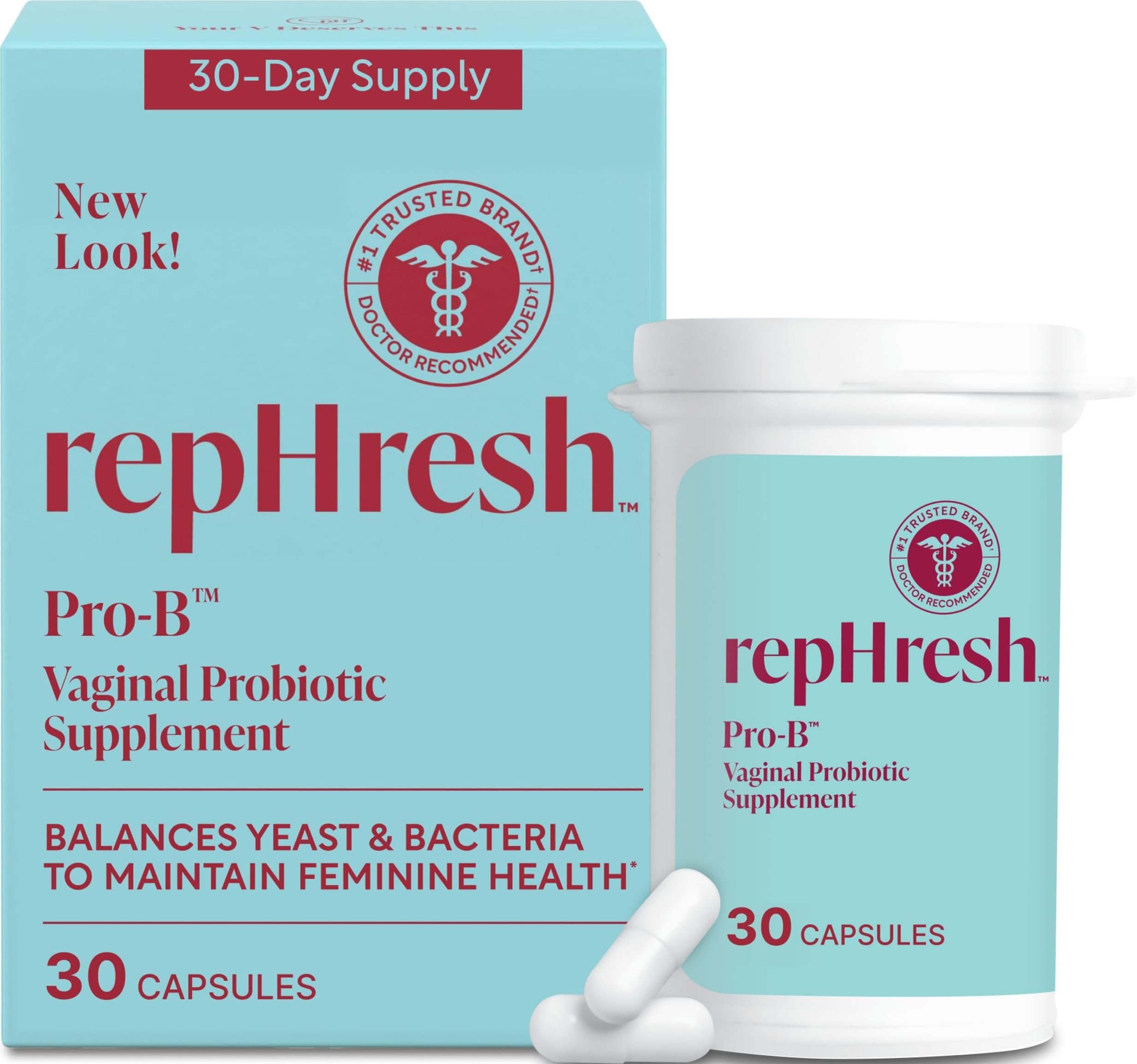
RepHresh Pro-B Vaginal Probiotic

RepHresh Pro-B Vaginal Probiotic

Yeast infection prevention

Our Score 9.2/10
Check Price

Worth Noting

  • Premium per-day cost
Focus
Yeast and bacteria balance
Serving Size
1 capsule
Capsule Count
30
CFU Per Serving
5 billion

One tiny capsule a day is the whole routine. RepHresh Pro-B uses 5 billion CFU of clinically tested Lactobacillus strains, with a brief that names yeast and bacteria balance rather than digestion or urinary support. The brand says it starts working in as little as seven days, and the small capsule is easy to swallow, which matters if you have ever abandoned a probiotic because the pill was unpleasant.

We like it for maintenance. It is not the highest-CFU bottle here, and it does not try to be. The narrow focus is the point: if you get recurrent yeast or BV and want a daily vaginal probiotic that does not ask you to take two capsules or keep a bottle in the fridge, this is the one we prefer. The 30-count is a month, so it is a repeat purchase rather than a stock-up.

What sold us is the narrowness. It does not try to be a digestive, urinary, and vaginal formula at once, and that focus is why it stays in the routine. For a woman who wants a simple vaginal maintenance capsule, that is a cleaner decision than chasing a bigger CFU count.

Bottom line: If yeast and BV are the recurring problem, this is the simple one-capsule pick we trust: 5 billion CFU of clinically tested Lactobacilli, no refrigeration.

6

AZO Dual Protection Probiotic

AZO Dual Protection Probiotic

Urinary and vaginal

Our Score 9.4/10
Check Price

Worth Noting

  • Premium price for a 30-day supply
Focus
Urinary + vaginal
Key Blend
Intelliflora + PreforPro
Serving Size
1 capsule
Capsule Count
30

AZO's dual bottle is one of the few here that names urinary and vaginal support in the same breath. It pairs the Intelliflora probiotic blend with PreforPro, a prebiotic, in a single daily capsule. The formula is non-GMO and gluten-free, and the 30-count bottle is built as a one-month supply. For anyone who notices urinary urgency or recurring UTIs alongside vaginal symptoms, that combination is the reason to look here.

What we like is the specificity. Plenty of probiotics say they support women's health; this one splits the job into urinary and vaginal support and uses a prebiotic designed to help the probiotic strains establish. We keep it on the list for the woman who wants one bottle to cover both concerns, not for someone who is only chasing odor or digestion.

What earns it a place for us is the combination: urinary and vaginal support in one capsule, without asking you to buy two products. If your main concern is urinary urgency around your period, this is the bottle we point to first in this group. For a single-job shopper, the narrower picks make more sense.

Bottom line: For urinary and vaginal support in one bottle, this is our pick: a once-daily Intelliflora and PreforPro formula for UTI-prone routines.

7

Culturelle Women's 4-in-1 Probiotic

Culturelle Women's 4-in-1 Probiotic

Clinically studied strains

Our Score 9.4/10
Check Price

Worth Noting

  • Premium price
  • Can cause gas at first
Storage
No refrigeration
Strains
4
Key Strain
L. rhamnosus GG
Capsule Count
50

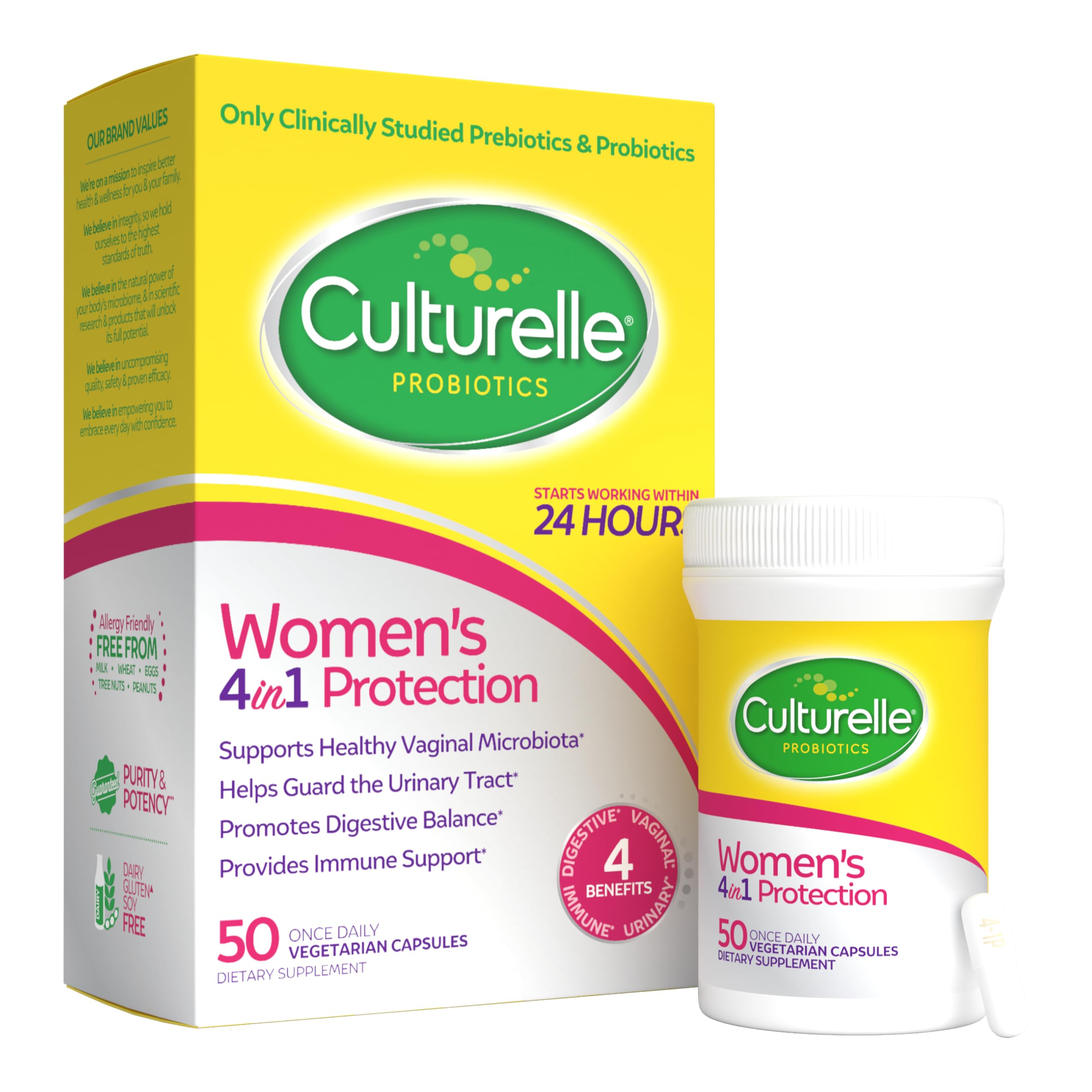
Culturelle's women's formula leads with the strain name we see most often in the research: L. rhamnosus GG. It pairs that with four clinically studied Lactobacilli strains and a feminine prebiotic blend, all in a bottle that does not need refrigeration. The 50-count bottle is a reasonable trial size, and the capsule is easy to swallow.

What we like is the restraint. This is not a kitchen-sink formula with 20 strains and a giant CFU number; it is a focused women's probiotic with a strain list that has been studied. For a reader who wants to know exactly what is in the capsule and why, that is a more satisfying story than a bigger number on the label.

The formula is simpler than the kitchen-sink options, and that is the point. If you want the most studied strain at the center of the formula, this is the one to choose. It is also the easiest one here to pack for a trip because it does not need refrigeration.

Our preference for it comes down to trust in the strain list. Culturelle puts L. rhamnosus GG at the center of a women's formula, and the label ties that strain to decades of research. That is why it stays on the page for a reader who wants studied strains over a bigger CFU number.

Bottom line: This is the pick for the label reader: four clinically studied strains, including L. rhamnosus GG, in a no-refrigeration bottle.

8

vH Essentials Women's Probiotic

vH Essentials Women's Probiotic

Bulk value

Our Score 9.2/10
Check Price

Worth Noting

  • Faint capsule odor
  • Can cause nausea for some
Focus
Feminine and urinary
Key Extras
Prebiotics, cranberry
Capsule Count
120

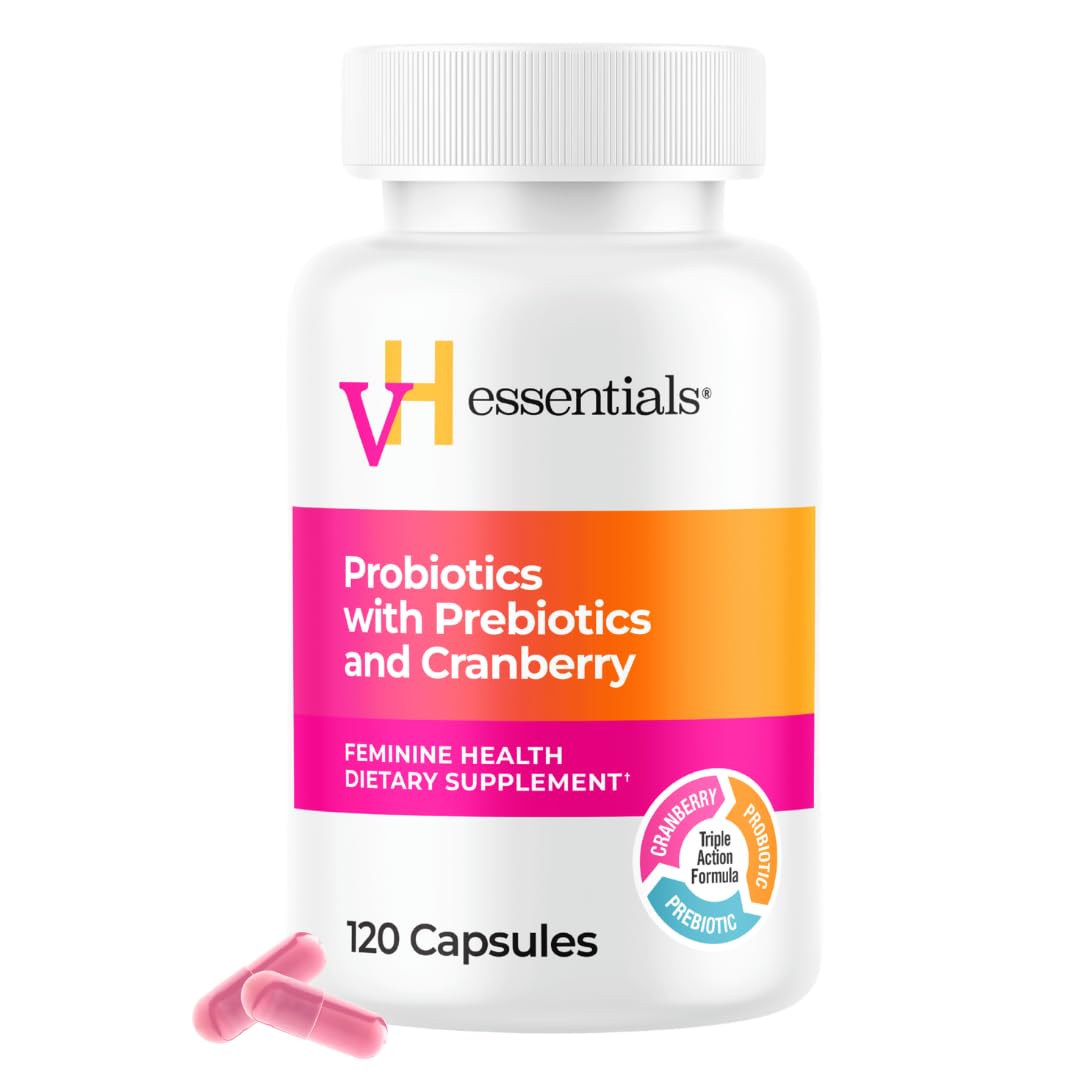
A 120-capsule bottle is the reason this one gets a second look. vH Essentials pairs probiotics with prebiotics and cranberry powder, with a brief that covers feminine and urinary tract health. It is not the most polished label in the group, but it is one of the most practical if you want a long-running bottle without a premium spend.

What we like is the value. The capsules are easy to swallow, the bottle lasts, and the cranberry gives it a urinary-specific angle that a plain probiotic does not have. For a first bottle, a backup for the cabinet, or a budget-minded daily routine, it does the basic job without asking you to reorder every month.

The formula is simpler than the targeted vaginal picks, so it is not the bottle we choose when odor or pH is the whole job. It is the one we keep for the everyday, long-haul routine: a big bottle, a low cost per capsule, and a cranberry-prebiotic blend that covers more than a plain probiotic.

Our preference for it is about the math. A 120-count bottle is a long run, and the cranberry makes it feel more complete than a bare-bones probiotic. If you want a more targeted vaginal formula, spend more on RepHresh or O Positiv; if you want a bottle that covers the basics without constant reordering, this is the value pick.

Bottom line: For a bulk bottle that covers feminine and urinary basics, this is the value buy: 120 capsules with prebiotics and cranberry.

How We Tested 12 Women's Probiotics

We started with more than 40 formulas marketed to women and cut the list based on what each label would actually commit to: strains named down to the species, a CFU count guaranteed through the expiration date rather than only at manufacture, a stated third-party testing or GMP claim, and no proprietary blend hiding the amounts. Anything that leaned on one strain to cover digestion, pH, and urinary health simultaneously got a much closer read. From there we weighed cost per day and whether the bottle had to live in the fridge — a probiotic forgotten on the counter is money in the trash. That narrowed it to 12, which we bought at retail rather than accepting from brands.

We tested those 12 over six months, with each formula taken daily for at least four weeks so there was room for something to actually happen. Testers took them at the same time each morning, some with food and some without, and rated how easy each was to keep up with: capsule size, whether a normal sip of water was enough, whether the bottle traveled well in a weekend bag. Every day we logged gas, cramping, bowel changes, and anything else that felt off, and flagged side effects that stretched past the first ten days.

We tracked timing too, since that's what most shoppers want to know. The shifts we could genuinely point to — less bloating after meals, more predictable mornings — usually showed up between week two and week four, while a few formulas never produced anything we could name. Cost per serving got calculated at the end instead of read off the shelf tag, and anything promising overnight results was marked down hard.

How to Choose a Probiotic for Women

Match the Formula to Your Main Concern

A women's probiotic can lean vaginal, urinary, digestive, or all three. If odor and pH are the main complaint, a targeted formula such as O Positiv URO or RepHresh Pro-B makes more sense than a broad gut probiotic. If urinary urgency is the issue, AZO Dual Protection is the most direct match here. For a single bottle that covers vaginal, urinary, and digestive support, Physician's Choice is the most complete of the picks here. Start with the concern you want to change, then look at the strain list.

Read CFU and Strains Together

CFU tells you how many live cultures are in a serving; strains tell you what those cultures are. A 5-billion-CFU vaginal formula can be more targeted than a 50-billion-CFU gut formula, so do not assume bigger is better. Look for names such as L. reuteri, L. fermentum, and L. rhamnosus GG, and choose a label that lists them clearly. Garden of Life gives you 16 strains; Culturelle puts L. rhamnosus GG at the center. We prefer a documented strain list over a giant number with no explanation.

Plan for Tolerance and Routine

Probiotics can cause gas, cramping, or nausea in the first days, especially high-CFU or multi-strain formulas. Start with food and give your stomach a few days to adjust; stop if severe symptoms continue. The routine matters too: a two-capsule formula such as O Positiv URO is a different habit from a one-capsule pick like RepHresh Pro-B. If you travel, choose a shelf-stable bottle such as Garden of Life or Culturelle so refrigeration is not the reason you skip a day.

Compare Servings, Not Just Bottle Size

A bottle's capsule count only tells part of the story. Divide the count by the daily dose to see how long it lasts: 84 capsules at one a day is a long run, while 60 capsules at two a day is a one-month supply. That is why O Positiv URO can look like a bigger bottle than it is. Physician's Choice and Doctor's Recipes are one-capsule formulas; vH Essentials gives you 120 capsules for a bulk routine. Compare the cost per serving, not the sticker on the bottle.

Check Testing and Storage

A probiotic is only useful if the cultures survive the trip and the label is honest about what is inside. Look for third-party testing, a shelf-stable bottle, and a capsule designed to survive stomach acid. Physician's Choice states third-party testing; Doctor's Recipes uses delayed-release capsules; Garden of Life is shelf-stable. Those details matter more than a bigger CFU number when you are choosing a daily bottle.

Frequently Asked Questions

Final Verdict

For most women, Physician's Choice is the bottle we recommend first. It covers vaginal, urinary, and digestive support in one daily capsule, and the cranberry, D-mannose, and prebiotic blend make it feel more complete than a single-job probiotic.

If budget is the deciding factor, Doctor's Recipes gives you the 50-billion-CFU, 16-strain brief for less. If odor and pH are the whole reason you are shopping, start with O Positiv URO instead; it is the more targeted route.