Wellness

Best Magnesium for Women of 2026

Magnesium is the supplement people start for one reason and keep taking for another: you buy it because your calf seized up at 2 a.m., and a few weeks later you notice you're falling asleep faster. What catches first-time buyers off guard is that the form on the label matters more than the number on the front: oxide is cheap and laxative, citrate absorbs well but can upset a sensitive stomach, and glycinate is the gentler standby. A good bottle should ease cramps and steady your sleep without sending you to the bathroom, in a pill you don't dread swallowing.

I've had magnesium on my nightstand for years, and the gap between a good formula and a cheap one shows up within a week. Over the past four months, four of us on the team have worked through 16 formulas — glycinate, citrate, chelated, and one oxide for comparison. Worth knowing before you read any label: 500 mg of magnesium glycinate is not 500 mg of magnesium, and plenty of bottles lean on that. These are the ones that earned a spot by the bed.

1

NatureBell Magnesium Glycinate

Top Pick
NatureBell Magnesium Glycinate

Everyday glycinate

Our Score 9.4/10
Check Price

Worth Noting

  • Higher doses require multiple capsules
  • Digestive upset still possible
Form
Magnesium glycinate
Supply
Up to 8 months at 1 a day
Capsule Count
240
Elemental Dose
90 mg per capsule

The number that matters on NatureBell's label is not the 500 mg in the product name. It is the 90 mg of elemental magnesium in parentheses. That distinction is why we put this one first: each capsule is a modest, adjustable dose of magnesium glycinate, and you can take one, two, or three depending on what your clinician recommends instead of being locked into a fixed 400 mg tablet. For a supplement many women take daily for sleep, stress, or muscle tension, that flexibility matters more than a bigger headline.

The bottle holds 240 vegetarian capsules, which the label describes as up to an eight-month supply at one a day. We like that the capsule is not a horse pill; ease of use is one of the strongest reasons this one earns the top spot. The trade-off is the low elemental dose. If you are aiming for 200 mg or more, you will take multiple capsules, and the eight-month supply shrinks accordingly.

We choose glycinate first for sleep and muscle relaxation because it is generally the gentler form on the stomach, and this is a straightforward example. Start with one capsule and give it a week or two before judging the dose. What we appreciate most is the honesty of the label: it tells you exactly how much elemental magnesium you are getting, which is more than many competing glycinate bottles do.

Bottom line: We recommend NatureBell as the default because it pairs a gentle glycinate with a flexible 90 mg capsule, so you can adjust the dose without switching bottles.

2

BioEmblem Magnesium Complex

BioEmblem Magnesium Complex

Sleep and cramps

Our Score 9.2/10
Check Price

Worth Noting

  • Shorter supply than bulk bottles
Form
Glycinate, malate, citrate
Testing
Third-party tested
Capsule Count
90
Magnesium Per Serving
300 mg

BioEmblem's pitch is a three-part magnesium blend: glycinate, malate, and citrate. That is a more interesting formula than a plain oxide or a single glycinate because the forms have different personalities. Glycinate is the gentle, relaxation-oriented one, citrate draws more water into the bowel, and malate is often included in blends aimed at muscle energy. The label states 300 mg of magnesium per serving, a practical daily dose rather than a token amount.

What we like is the convenience of a complex that does not make you choose between sleep support and muscle support. The bottle holds 90 capsules, so it is a shorter supply than the big glycinate bottles, especially at the full 300 mg serving. That is the main reason this sits behind our top pick on value. The capsules are easy to swallow, which helps if you already take a handful of supplements.

Digestion is where we temper expectations. Some people take this complex without issue, while others experience nausea, heartburn, or stomach cramps. If you already know citrate runs through you quickly, a pure glycinate is the safer first step. For everyone else, this is a strong choice for a woman who wants one bottle to do more than one job.

Bottom line: We recommend BioEmblem when you want a single 300 mg complex for sleep, muscle cramps, and daily magnesium, and you are willing to pay more for the blend.

3

Pure Encapsulations Glycinate

Pure Encapsulations Glycinate

Clean-label glycinate

Our Score 9.4/10
Check Price

Worth Noting

  • Premium price per capsule
Form
Magnesium glycinate
Free From
Common allergens and GMOs
Capsule Count
360

Pure Encapsulations is the bottle we reach for when the ingredient list matters as much as the magnesium. It is a glycinate, the form many women choose for relaxation and sleep, and the formula is free from common allergens, artificial ingredients, and GMOs. The bottle holds 360 capsules, so it is built for a long daily habit rather than a trial. The capsules are easy to swallow, and the large count means you are not reordering every month.

The price is the hurdle. This is one of the most expensive options here, and the cost per capsule is not close to the budget glycinate picks. We think it earns some of that premium through the clean-label positioning and the simple, allergen-free formula, but we do not pretend it is the value choice. The other caveat is digestion: even a glycinate can cause stomach aches for some people. If you want the cleanest formula you can find and you are willing to pay for it, this is the premium pick. Start with one capsule and see how your stomach responds.

Bottom line: We recommend Pure Encapsulations for the shopper who wants a clean-label glycinate and will pay premium for a large, long-lasting bottle.

4

Life Extension Neuro-Mag

Life Extension Neuro-Mag

Cognitive support

Our Score 9.2/10
Check Price

Worth Noting

  • Premium price per capsule
Form
Magnesium L-threonate
Capsule Count
90 vegetarian
Quality Document
Certificate of analysis

Neuro-Mag is built around magnesium L-threonate, a form marketed for brain health rather than the usual sleep-and-cramps pitch. The label ties it to executive function and short-term memory, and the bottle holds 90 vegetarian capsules. If you are shopping for a general magnesium to help with sleep or regularity, this is not the most direct way to spend your money.

The pattern here is a calmer evening and sharper focus for some, and little noticeable change for others. That is not unusual for a supplement aimed at cognition, where effects are subtle and hard to pin down. What we appreciate is the quality documentation: Life Extension says a certificate of analysis is available for every product, which is reassuring in a category where labeling can be vague.

Where this one earns its place is as a targeted pick. If you already take a well-tolerated magnesium for sleep or muscle support and want to add a threonate product for brain health, Neuro-Mag is a credible option with a long track record. Just do not stack it with another magnesium without checking the total, because the tolerable upper intake for supplemental magnesium is 350 mg a day.

Bottom line: We recommend Neuro-Mag for women who specifically want magnesium L-threonate for cognitive support, not as the cheapest all-purpose magnesium.

5

Nature Made Magnesium Citrate

Nature Made Magnesium Citrate

Regularity support

Our Score 9.4/10
Check Price

Worth Noting

  • Can cause loose stools at higher doses
Form
Magnesium citrate
Softgel Count
120
Magnesium Per Serving
250 mg

Citrate is the magnesium form we reach for when constipation is the main complaint. It pulls water into the intestines, which is why it can help things move. Nature Made's version delivers 250 mg per serving in a softgel, a format that is easier to swallow than a large tablet and a reasonable choice for a once-daily routine.

This is a straightforward, budget-friendly pick from a brand with broad recognition, and the 120-count bottle is a generous supply at one a day. The catch is that citrate is not the gentlest form for every stomach, so we treat it as a form-led choice. If you know citrate agrees with you, it is a sensible way to buy it; if you have never tried it, start with one softgel and stay close to home.

We keep this one in the guide because citrate has a clear job. It is not the form we choose for a sensitive stomach or for a calm evening, and it is not the one to take before a long commute. But if regularity is the missing piece, the softgel format and the simple 250 mg serving make it easy to try.

Bottom line: We recommend Nature Made Magnesium Citrate when regularity is the goal and you prefer a softgel over a tablet.

6

Nature Made Magnesium Oxide

Nature Made Magnesium Oxide

Budget oxide

Our Score 9.4/10
Check Price

Worth Noting

  • Less absorbable than chelated forms
  • Tablet can be hard to swallow
Form
Magnesium oxide
Supply
100 days
Tablet Count
100
Magnesium Per Tablet
250 mg

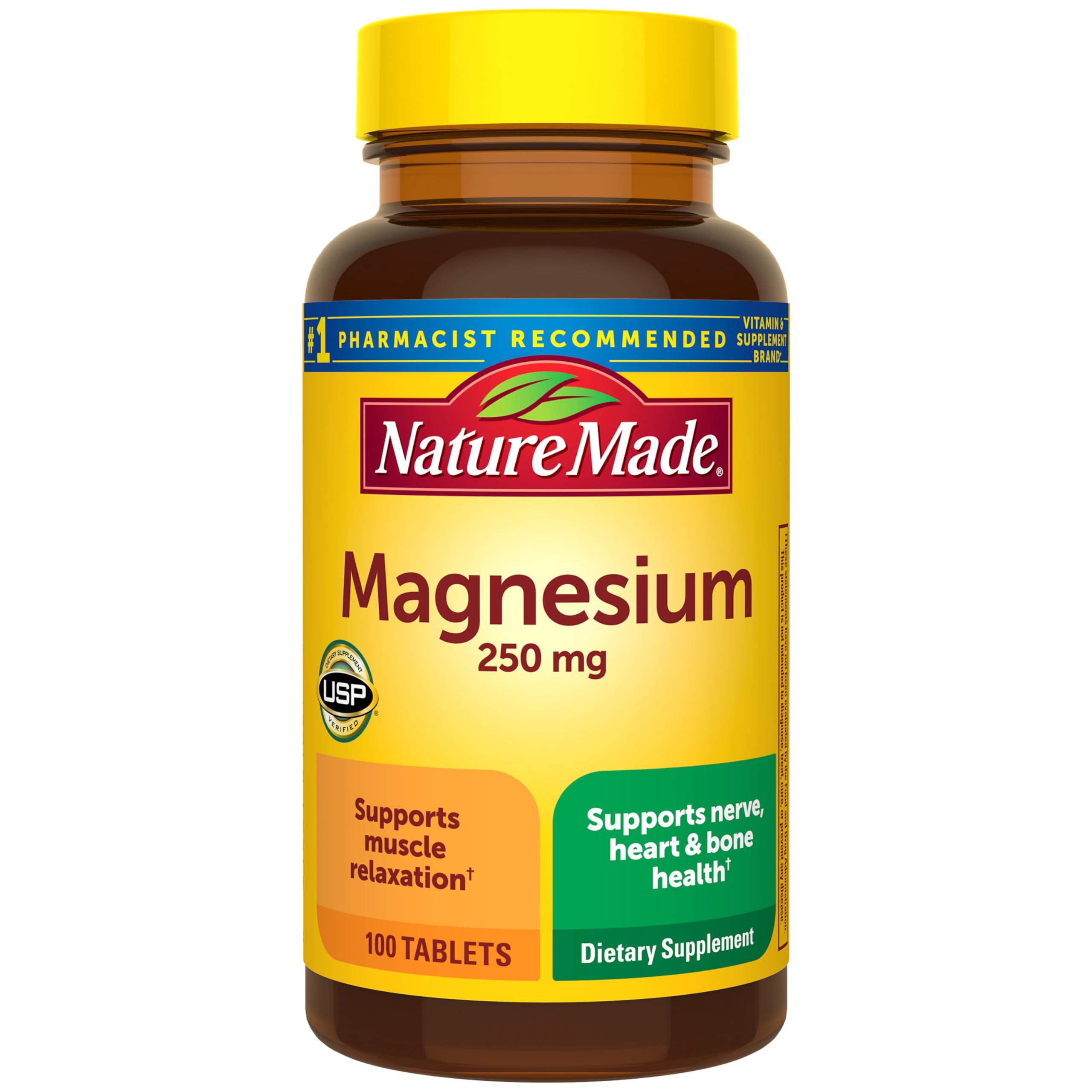
Magnesium oxide is the old-school, inexpensive form, and Nature Made's 250 mg tablet is about as simple as it gets: one tablet daily, 100 in the bottle, and a price that makes it easy to keep on hand. If you have taken magnesium before and just want a low-cost maintenance option, this is the one we point to first.

The trade-off is absorption. Oxide is not the form we choose if your main goal is sleep, muscle relaxation, or a sensitive stomach. It is more likely to loosen things up, and the 250 mg dose is high enough that you want to take it with food and water as the label directs. We also do not stack it with another magnesium without checking the total.

Where it wins is simplicity and cost. It is a single tablet rather than a two-capsule serving, and the 100-day supply means you are not constantly reordering. We choose it for budget-minded shoppers who already tolerate oxide, not for someone who is shopping for the gentlest possible form. Take it with a meal, as the label says, and give it a week before deciding whether the form suits you.

Bottom line: We recommend Nature Made Magnesium Oxide as the budget pick for a simple one-tablet routine, as long as you are not set on the gentlest form.

7

Doctor's Best Magnesium Glycinate

Doctor's Best Magnesium Glycinate

Cramp relief

Our Score 9.2/10
Check Price

Worth Noting

  • Large, hard-to-swallow tablets
  • Can cause stomach pain for some
Form
Glycinate lysinate
Count
240
Chelation
100% chelated
Magnesium Per Serving
200 mg

The first thing to know about Doctor's Best is the tablet. It is large and uncoated, and it is hard to swallow, which is a real problem for a supplement you are supposed to take every day. If you have any trouble with pills, this is not the bottle to start with.

That is a shame, because the formula is otherwise compelling. It is a fully chelated magnesium glycinate lysinate, 200 mg per serving, and the 240-count bottle is one of the better values in the chelated category. The form is gentle on the digestive tract for many people, and the label is free of fillers and additives.

Cramp relief is the strongest reason to choose it. The chelated form is a sensible choice if you want magnesium without the laxative pull of citrate or oxide, and the 200 mg serving is easy to split across the day. Sleep support is a secondary benefit, not the main event.

We still put it behind the easier-to-swallow picks for most women. The tablet size is the kind of detail that determines whether you actually finish the bottle, and no formula advantage makes up for a supplement you avoid taking. If you can handle the tablet and you want a chelated magnesium at a midrange price, it is a solid buy. The 240-count bottle lasts four months at the full serving, which is part of the value.

Bottom line: We recommend Doctor's Best for cramp relief and chelated magnesium value, but only if you can comfortably swallow a large tablet.

8

Double Wood Magnesium Glycinate

Double Wood Magnesium Glycinate

Bulk glycinate

Our Score 9.4/10
Check Price

Worth Noting

Form
Magnesium bisglycinate
Supply
6 months
Capsule Count
180
Compound Dose
400 mg per capsule

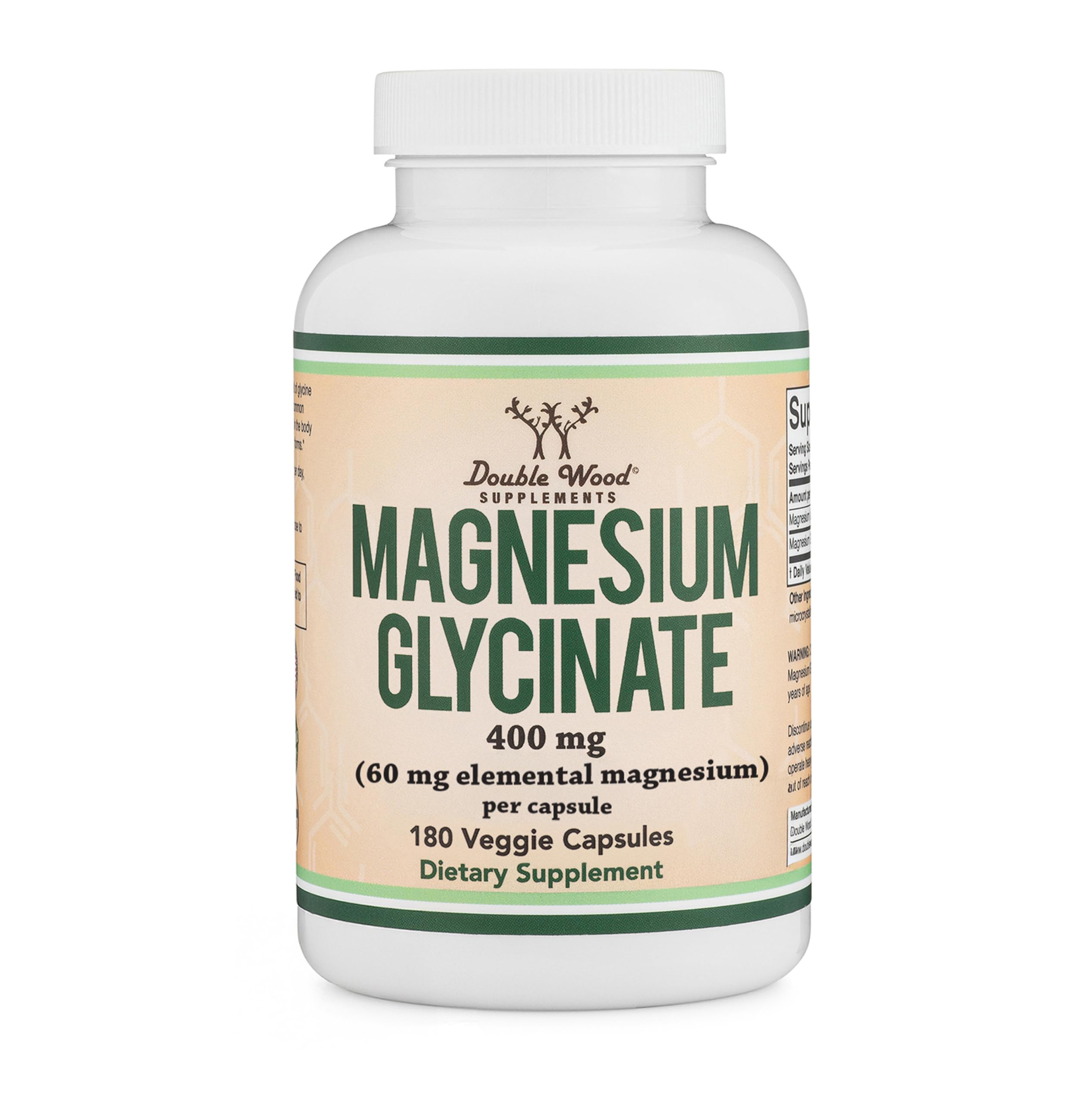
Double Wood's six-month supply is the hook: 180 capsules of magnesium bisglycinate for a budget price, which works out to a low cost per capsule. That is appealing if you have already decided glycinate is your form and you want to buy it in bulk.

The label needs a careful read. The 400 mg on the front refers to magnesium bisglycinate, the compound, not 400 mg of elemental magnesium. The actual elemental magnesium per capsule is much lower, which is why some shoppers feel shortchanged when they compare it with a 400 mg oxide tablet. That is not a scam; it is chemistry. But it does mean you may need more capsules to reach the dose you are aiming for.

The formula itself is a straightforward glycinate, and the capsule is easy for most people to take. We like that the bottle is manufactured and tested in the USA, according to the brand, and that the veggie capsule avoids gelatin. Start with one capsule rather than the full serving to see how your stomach responds.

Where this one fits is the bulk shopper. If you want the cheapest possible glycinate and you are willing to take two or three capsules to get a meaningful dose, it is a reasonable buy. If you want a simple one-capsule routine, pay more for a product that states its elemental magnesium clearly. The 180-count bottle is the real value here.

Bottom line: We recommend Double Wood for bulk shoppers who want a budget glycinate and do not mind taking more than one capsule.

How We Tested Magnesium Supplements for Women

We built the shortlist around the forms that make sense for a nightly routine — glycinate, citrate, and a couple of chelated blends — and set aside oxide-heavy formulas unless there was a reason to include one. From there we filtered by elemental magnesium per serving rather than compound weight, third-party testing claims, capsule count, and cost per serving. That narrowed a very crowded shelf down to 16 bottles.

Four of us took one formula at a time for two weeks each over four months, always at the same point in the evening. Each tester logged what time she dosed, roughly how long it took to fall asleep, and how many times she woke in the night. Two of us are distance runners, so we also kept track of the 3 a.m. calf cramps that tend to follow a long weekend run, and whether they showed up less often on one formula than another.

The morning after told us as much as the night before. We noted stomach gurgling, bloating, or a sudden need for the bathroom within a few hours of a dose, plus any foggy, heavy feeling on waking. We lined the capsules up side by side to compare length and width against a pill we'd each call easy, counted what was actually in every bottle, and did the math on cost per serving rather than cost per bottle. A formula that needed three or four pills to reach a useful dose got marked down even when the magnesium itself was solid.

How to Choose Magnesium for Women

Read the Form Before the Milligrams

Magnesium labels mix two numbers: the weight of the compound and the elemental magnesium your body actually gets. A 500 mg magnesium glycinate capsule may supply only about 90 mg of elemental magnesium, while a 400 mg oxide tablet supplies much more. Neither number is automatically better; they answer different questions. Glycinate is the form we choose first for sleep and muscle relaxation because it is generally gentle on the stomach. Citrate is the one to consider when regularity is the goal, and oxide is the cheap, simple option that is less absorbable. Threonate is a targeted cognitive pick, not an all-purpose one. Look for the elemental amount on the Supplement Facts panel, then compare that with the serving size.

Match the Dose to the Job

Most women do not need a megadose. The tolerable upper intake level for supplemental magnesium is 350 mg a day for adults, and food magnesium is separate. If you want 200 mg, a 90 mg capsule means two or three capsules; a 300 mg complex may mean one serving of two capsules. Decide your target daily dose first, then divide by the elemental magnesium per capsule. A bottle with 240 capsules is not a better value if each serving is four capsules.

Pill Size Is a Real Buying Criterion

Swallowability is not a minor detail. Large uncoated tablets are the most common obstacle in this category, and a supplement you dread taking is a supplement you stop taking. Capsules and softgels are usually easier, though not always smaller. If you have trouble with pills, prioritize a capsule or softgel and check the serving size so you are not taking several large tablets at once. A smaller dose per capsule can be an advantage when you need to adjust slowly.

Expect Different Digestion From Different Forms

Citrate and oxide pull water into the bowel, which is useful for constipation and less useful when you are not constipated. Glycinate is generally the gentler choice, but it is not universally trouble-free. Start with one capsule or tablet, take it with food if the label allows, and give it a week before increasing. If you get loose stools, step back to a lower dose or a gentler form. The form matters more than the brand name when your stomach is the deciding factor.

Check Testing and Safety

Look for a brand that states third-party testing or provides a certificate of analysis. That is not a guarantee of results, but it is a useful signal that the label is being checked. Safety matters too: check with a clinician if you are pregnant, breastfeeding, taking medication, or have kidney disease. Magnesium can interact with some antibiotics and acid reducers, and the 350 mg supplemental upper limit is worth respecting. Add up every magnesium supplement you take, not just the new bottle.

Frequently Asked Questions

Final Verdict

NatureBell is the one we recommend first. Its 90 mg elemental capsule lets you adjust the dose without switching products, and the 240-count bottle makes glycinate affordable enough to take consistently. If you want a single 300 mg complex for sleep and cramps, BioEmblem is the better fit. If budget is the deciding factor and you already tolerate oxide, Nature Made's 250 mg tablet is the simplest way to keep costs down. The one thing we avoid is chasing the biggest number on the front without checking the elemental dose.