Shoes

Best Hiking Sandals for Women of 2026

A hiking sandal has one job that pulls in two directions at once: hold your foot still on a gravelly descent without sawing a blister into your heel by mile three. Every strap that makes a sandal feel secure is also a place where grit collects and skin rubs, which is why so many pairs feel great in the store and miserable at the bottom of a switchback. What you actually want is a sandal that stays put when the trail tilts, gives your arch something to push against on the flats, and adjusts enough that you can shut down a hot spot before it becomes tape-and-limped-home.

I've hiked in everything from foam slides to overbuilt closed-toe hybrids, and the gap between good and bad rarely shows up in the first mile. Over the past six months my team and I put 12 pairs through rocky creek crossings, dusty canyon trails, and one very long airport concourse, tracking comfort, fit, arch support, strap adjustability, and how each pair held up after repeated soak-and-dry cycles. Looks and color mattered more than I expected — a sandal you don't want to be seen in tends to stay in the closet. The pairs below are the ones we kept reaching for.

1

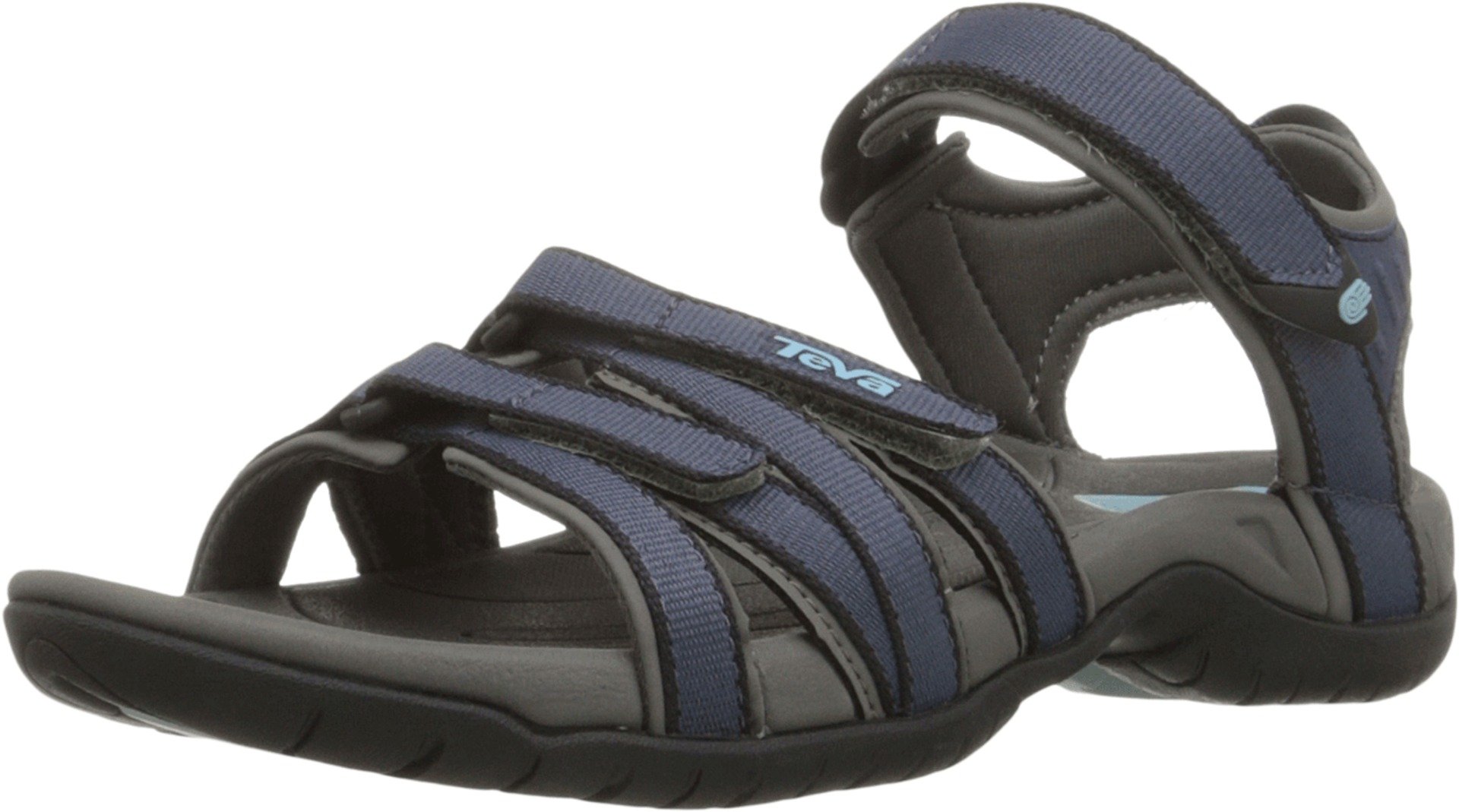
Teva Tirra

Top Pick
Teva Tirra

Mixed trail hiking

Our Score 9.0/10
Check Price

Worth Noting

  • Narrow fit leaves wide feet out
Fit
Narrow to standard
Traction
Wet and dry grip
Arch Support
Supportive footbed
Strap System
Three-point adjustable

Three straps, three places to fine-tune the fit, and a footbed that feels planted rather than pillowy: the Tirra is the pair we recommend first for women who want a hiking sandal that stays put. The heel, instep, and toe straps adjust independently, so we could snug the back without pinching the front. That matters on a descent, when a loose sandal wants to slide forward and jam your toes into the front edge. The Tirra keeps the foot centered, and the arch support is substantial enough to feel supportive on long days without turning into a rigid plank.

We wore these on packed dirt, loose gravel, and wet rock, and the tread gave us steady footing in all three. The sandal is not the plushest option in this guide; it feels firmer underfoot than the ECCO or Viakix. We prefer that for rocky ground because the foot stays connected to the sole instead of rocking around on a soft cushion. The three-point strap system also makes it easier to fine-tune the fit after your feet swell.

The straps can rub before they soften. We broke ours in on short walks and adjusted the rear strap first, which made the biggest difference. Once the webbing relaxed, the fit felt secure without pressure points. The Tirra rewards a close fit, and it is the pair we recommend first for rocky trails and long town days. After a long descent, our feet felt tired in the ordinary way, not beaten up by the sandal.

Bottom line: The Tirra is our first recommendation for most women hiking in sandals: three-point adjustability, a supportive arch, and steady mixed-trail grip.

2

KEEN Whisper

KEEN Whisper

Wet hikes

Our Score 9.0/10
Check Price

Worth Noting

  • Toe opening can let the little toe slip
Fit
Runs small for some
Traction
Wet-surface grip
Water Use
Washable and water-friendly
Arch Support
Supportive

The Whisper is the pair we reach for when the route involves water. The upper is washable and stays comfortable when wet, which makes it a natural choice for creek crossings, lake shorelines, and rainy-day walks. We liked that the sandal kept its shape after a soaking instead of turning into a soggy weight on the foot. The tread also held on wet rock and muddy banks, and the arch support is more substantial than the open, strappy look suggests.

The fit is the part to watch. The Whisper runs small for some feet, and the rear strap needs a firm pull to keep the heel from lifting. We sized up and tightened the back strap, which solved both issues for us. If you are between sizes, go with the larger one and spend a minute dialing in the straps before you start walking.

For wet hikes and beach days, that trade-off is easy to accept. The Whisper is not as precise on technical terrain as the Tirra, and it does not have the same cushioned feel as the Viakix. What it does have is a washable, water-friendly build that stays secure when the ground turns soft. We kept reaching for it on wet days.

Bottom line: For wet hikes and creek days, we pick the Whisper for its washable build and secure footing, even if the fit runs small.

3

ECCO Yucatan

ECCO Yucatan

All-day walking

Our Score 9.2/10
Check Price

Worth Noting

  • Premium price is a real barrier
  • Short break-in period
Closure
Three adjustment points
Water Use
Handles wet and dry conditions
Durability
Long-wearing build
Arch Support
Supportive footbed

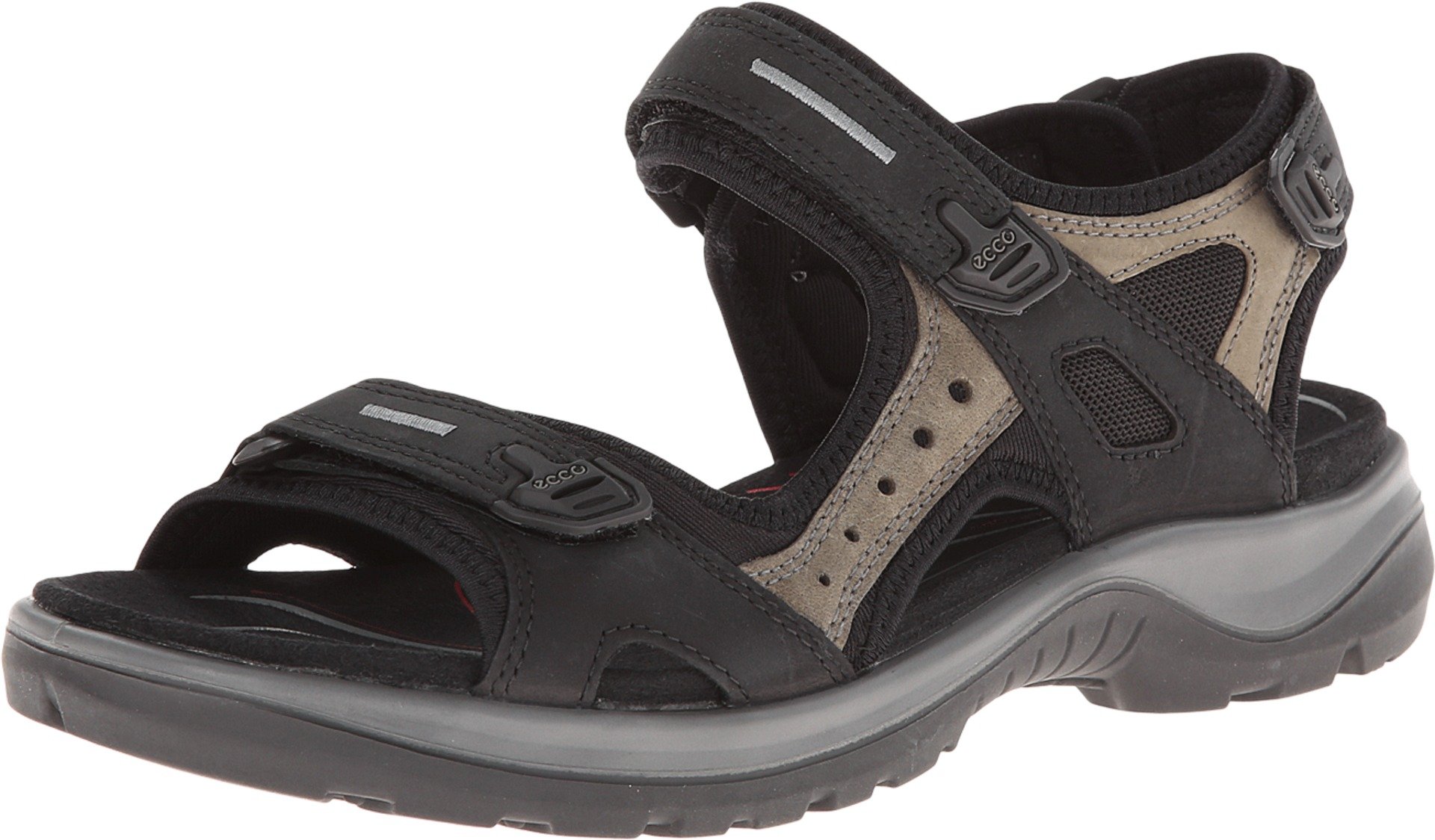
The Yucatan is the pair that feels most like a walking shoe with the top cut away. The footbed is supportive and cushioned in a way that made us forget we were wearing a sandal on a long day of errands and paved paths. The straps sit softly against the foot, and the overall finish looks more polished than the webbing on the Teva or KEEN. We noticed the extra structure in the arch and heel, especially on long stretches of pavement.

On trail, the Yucatan is confident rather than aggressive. The sole is stable on packed dirt and gravel, and the arch support is the most substantial in this set. It handles hard surfaces better than soft forest floor, where the extra cushioning matters less. The sandal feels planted without being rigid.

For daily wear and travel, the Yucatan is the pair we recommend when support matters more than saving money. It is not the sandal for a quick dip or a technical scramble, but it is the one we choose for a full day on our feet. The extra structure is the reason we reach for it on days that mix pavement, errands, and a little trail.

Bottom line: We recommend the Yucatan to women who spend long days on their feet and want a supportive, durable sandal that looks polished enough for travel.

4

Dannto Closed-Toe

Dannto Closed-Toe

Toe protection

Our Score 9.0/10
Check Price

Worth Noting

  • Closed toe traps more heat than open sandals
Closure
Heel Velcro and bungee laces
Toe Box
Wide
Toe Style
Closed toe
Water Use
Water-friendly

If you want your toes covered without wearing a shoe, the Dannto is the obvious place to start. The closed toe and wide toe box give your feet room to spread out, and the heel Velcro strap lets you lock the back down without compressing the front. We liked the bungee laces for quick adjustments, especially when we were getting in and out of water. The sandal feels more like a water shoe than a strappy hiker, but that is the point.

On easy trails and wet paths, the closed toe adds confidence. We did not have to think about stubbing a toe on roots or rocks, and the sole stayed stable on packed dirt. The fit runs wide, which is great for broad feet and less ideal for narrow ones. We tightened the heel strap and the laces to take up the extra room. The sandal is also water-friendly, so it handles creek crossings and beach walks without turning into a soggy mess.

The trade-off is style. A closed toe keeps debris out, but it looks more practical than pretty. For dry, hot hikes, we still reach for the Teva Tirra. For wet, rocky paths where toe protection matters, the Dannto is the pair we want. It is the sandal we hand to anyone who wants sandal breathability with a little more armor.

Bottom line: Choose the Dannto when toe protection and a wide toe box matter; we like it on wet, rocky paths where open sandals leave toes exposed.

5

UBFEN Hiking Sandal

UBFEN Hiking Sandal

Budget trails

Our Score 9.0/10
Check Price

Worth Noting

  • Wide fit may feel loose on narrow feet
Fit
Wide-foot friendly
Closure
Adjustable straps
Cushioning
Soft and flexible
Arch Support
Built-in

The UBFEN pair is the budget pick that doesn't feel like a punishment. The sole is soft and flexible, the footbed has a noticeable arch, and the straps open wide enough for a broad foot. We liked the cushioned feel on pavement and easy dirt paths, where a firmer sandal can start to feel like a chore. For the money, it is the most comfortable wide-fit option in this guide.

The trade-off is longevity. The straps and sole do not feel as substantial as the Teva or ECCO, and hard use can show up early. We keep these for day hikes, travel, and errands rather than a multi-season thru-hike. The upside is that the lower cost makes them easy to replace, and the comfort is good enough that we still reach for them on easy days.

The fit is generous, which is the main reason to choose them. For wide feet and bunions, the extra room is a relief. We also appreciated that the arch support is built into the footbed rather than added as a separate insert. The arch is the detail that surprised us most at this end of the range.

Bottom line: Our budget pick suits wide feet and easy trails, though we do not expect premium durability from it.

6

Viakix Acadia

Viakix Acadia

Cushioned walking

Our Score 9.0/10
Check Price

Worth Noting

  • Velcro can lose grip in dust and grit
  • Some strap stitching may loosen
Closure
Velcro straps
Toe Box
Roomy
Cushioning
Soft footbed
Arch Support
All-day support

The Acadia is the cushioned, roomy-toe option we put on when the day is more sidewalk than scree. The footbed is soft without feeling mushy, and the toe box gives your toes room to spread out. We liked the arch support on long walks, especially on pavement and packed dirt. It is not a technical trail sandal, but it is a comfortable one.

The adjustable straps are the best part of the fit. Every strap is Velcro, so you can fine-tune the width across the toes, the instep, and the heel. We found the sandal easy to put on and take off, and the straps stayed where we put them on dry walks. The roomy toe box also helps if you have a bunion or just hate the feeling of your toes being squeezed.

The Acadia is not a technical trail sandal. The soft footbed that feels great on pavement can feel less stable on uneven ground, and the roomy toe box is not the same as a secure heel. We kept them for easy paths, travel, and long walks rather than rocky scrambles. That is a fair trade for the comfort.

For casual walks, travel, and easy trails, the Acadia is a strong value. It is not the sandal we choose for a rocky scramble or a wet river crossing; the Tirra and KEEN are better there. We keep the Acadia for the days when the walk is the point, not the scramble.

Bottom line: We like the Acadia for cushioned all-day walking and roomy toe comfort, though its Velcro straps need care in dusty conditions.

7

Teva Hurricane 4

Teva Hurricane 4

Wide feet

Our Score 9.2/10
Check Price

Worth Noting

  • Wider fit may overwhelm narrow feet
Fit
Wide-foot friendly
Traction
Wet and dry grip
Water Use
Handles wet conditions
Cushioning
Cushioned footbed

The Hurricane 4 is the Teva we point wide-footed hikers toward. It has a more generous fit than the Tirra, with a cushioned footbed and a softer step. We liked the extra room across the toes and the way the straps wrap the foot without pinching. On wet ground, the tread felt sure, and the sandal stayed comfortable after a soaking.

Compared with the Tirra, the Hurricane 4 gives up some precision. The Tirra's three straps create a closer, more locked-in fit, which we prefer on rocky descents. The Hurricane 4 is more forgiving and more comfortable for wide feet, and it is the better choice for easy trails, water, and long walks where a little cushion matters more than a precise hold.

It overlaps enough with the Tirra that most hikers only need one of the two. If you want a softer ride and more room, this is the Teva to choose. If you want the most secure strap fit in this guide, stay with the Tirra. We also like that the straps are easy to reach and adjust when you are already on the move.

Bottom line: Wide-footed hikers should start with the Hurricane 4; we prefer its roomier fit, cushioned ride, and reliable wet grip on easier trails.

How We Tested the Best Hiking Sandals for Women

We started by gathering every women's hiking sandal we could find with a genuinely adjustable forefoot and heel, then filtered by arch support, weight, outsole tread, and price, and cut anything that was really a pool shoe with a lug pattern stamped into it. That left 12 pairs, ranging from closed-toe hybrids to open webbing classics.

Testing ran six months and wasn't confined to trails. Each pair went on at least three day hikes with real elevation change, got walked through a creek and then worn wet for the next hour to see where seams bit in, and did a week of errands, dog walks, and airport concourse laps. Every test included a long descent, since that's where a loose heel slides forward and a tight one rubs.

We sweated the small stuff. Straps got adjusted one-handed mid-walk, the way you'd actually do it when a hot spot starts, and pairs with buckles you couldn't work without sitting down got marked down. We noted where grit collected under the webbing and whether it rinsed out at a water stop, and we judged fit on swollen late-afternoon feet rather than fresh morning ones, wearing each pair both barefoot and with a thin sock.

After each wet-dry cycle we checked stitching, webbing fray, and whether the footbed had compressed or started holding odor. At the six-month mark we compared tread wear along the outer heel edge and looked at whether colors had faded or uppers had stretched out of shape — a few pairs that felt great in month one had gone sloppy by month four.

How to Choose Hiking Sandals for Women

Fit and strap control come first

Look for at least two adjustment points, and preferably three: heel, instep, and forefoot. A roomy toe box is useful, but it is not a substitute for a secure heel. If your heel lifts when you walk, tighten the rear strap or size down; if your toes jam the front on descents, the sandal is too short or the front strap is too loose. The Teva Tirra is the best example here of a close, three-point fit, while the Teva Hurricane 4 gives wide feet more room.

Match the footbed to your mileage

Arch support matters more than the softness of the foam. A supportive footbed keeps the foot from rolling inward on uneven ground, while a very soft sandal can feel great in the store and less stable after a few miles. If you plan long days on pavement or easy trails, the ECCO Yucatan and Viakix Acadia are the cushioned picks. For rocky, mixed terrain, we prefer the firmer feel of the Tirra because it keeps the foot connected to the sole.

Choose toe coverage for the terrain

Open sandals breathe better and drain faster, but they leave toes exposed to roots, rocks, and trail debris. A closed-toe design like the Dannto is the better choice for rough, wet paths where you want protection without a full shoe. The trade-off is heat: a closed toe traps more warmth, so it is less pleasant on a hot, dry hike. If you mostly walk in warm weather and want maximum airflow, stay open.

Check traction and sole construction

Traction is not just about lug depth; it is also about how the sole behaves on wet rock and loose dirt. A sticky rubber compound and a tread pattern that clears mud matter more than a deep lug alone. We also look at the bond between the sole and the upper, because a peeling sole ends a hike quickly. Budget sandals can be fine for easy trails, but if you hike often, spend more on a pair with a sturdier sole and straps.

Frequently Asked Questions

Final Verdict

The Teva Tirra is the hiking sandal we recommend first for most women: three independent straps, a supportive footbed, and reliable grip on mixed trails. If your feet are wide, the Teva Hurricane 4 is the better fit; if you want a closed toe, choose the Dannto. The ECCO Yucatan is worth the premium for daily wear, and the UBFEN is the budget choice for easy trails. Start with the Tirra unless one of those specific needs points you elsewhere.