Hair Care

Best Hair Brushes of 2026

A brush soft enough to coax through wet, knotted hair usually can't grip well enough to smooth it once it's dry, and the stiff one that polishes a blowout can feel like a scalp scratch. That tradeoff is the whole game with hair brushes. The right one cuts down on yanking, snapped strands, and frizz, and it holds up long enough that the bristles don't splay after a couple of months. Over the past four months, my team and I put 16 brushes through wet detangling, dry styling, and everything in between.

I was skeptical that bristle stiffness mattered as much as people say, until I compared a soft-bristled detangler with a stiff boar paddle on the same head of day-three hair. The soft one slid through the knots but left the surface fuzzy; the boar one smoothed everything but pulled at the roots when it hit a snarl. My advice for a first good brush: match the bristle to the job before you fall for the handle. The picks below cover both ends of that range and everything between.

1

Wet Brush Original Detangler

Top Pick
Wet Brush Original Detangler

Everyday detangling

Our Score 9.4/10
Check Price

Worth Noting

  • Back and handle can crack after a drop
Weight
1.76 oz
Head Size
8 x 3.5 in
Bristle Type
Flexible IntelliFlex nylon

The brush decision usually happens half-awake, with wet hair and a knot at the nape of your neck. That is the moment the Wet Brush Original is built for, and it is why we recommend it to almost everyone: the bristles bend out of the way instead of dragging, so a knot opens rather than tightening. At 1.76 ounces with a small head, it is easy to use before you are properly awake, and we think it is the safest first brush for most hair.

What makes it work is the lack of resistance. Each bristle is thin and flexible with a rounded tip, so you can press down to the scalp without flinching, and a tangle spreads across several bristles rather than catching on one. We brush from the ends upward in sections, which matters more than the brush itself, and on straight, wavy, and loosely curled hair the pull we braced for never really came. Between washes it handles dry hair just as well.

Dense, tight coils are where it runs out of road. The bristles are short, so on very thick hair they skim the surface and you end up working in smaller sections than a longer-toothed brush demands; the Tangle Teezer reaches further in. On everything else the short bristles are an advantage, because they steer easily around a hairline, a nape, and a child's head.

The rest is convenience. It rinses clean under a tap, takes up almost nothing in a gym bag, and costs little enough that keeping one in the shower and one in a drawer is a reasonable thing to do. If you want a single brush that covers the most ground with the least fuss, this is the one.

Bottom line: The brush we hand to anyone who dreads the wet-hair knot: it gives instead of pulling, and it costs little enough to keep one in every bathroom.
2

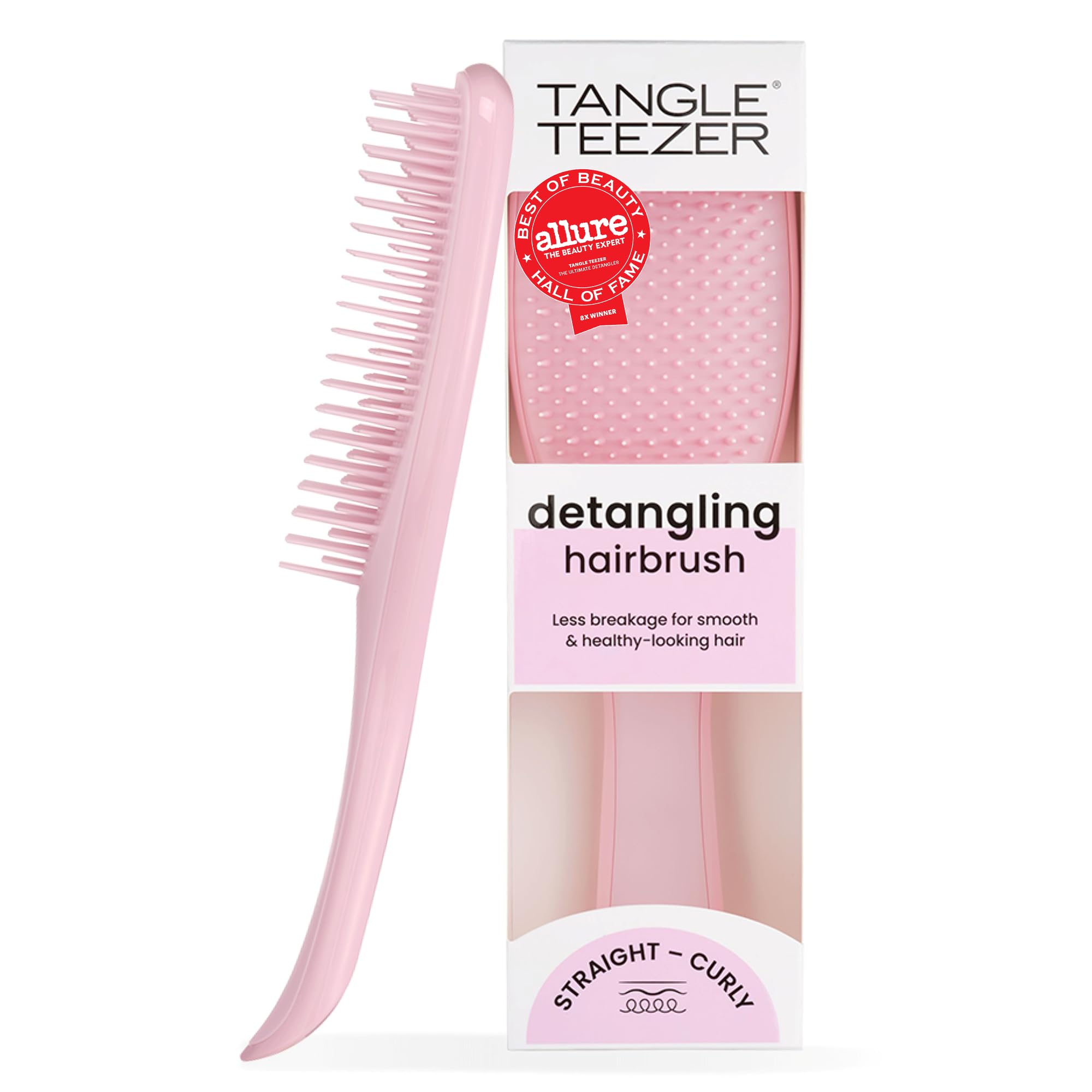
Tangle Teezer Ultimate Detangler

Tangle Teezer Ultimate Detangler

Thick, curly hair

Our Score 9.2/10
Check Price

Worth Noting

  • Costs more than the other detanglers here
Teeth
Patented two-tier
Length
8.66 in
Weight
1.41 oz
Hair Type
Straight to wavy

If the Wet Brush is the brush most people should own, the Tangle Teezer Ultimate Detangler is the one to buy when that brush leaves you working in sections. The difference is in the teeth: two tiers of them, long flexible ones that separate a knot and shorter ones behind that smooth what is left. It weighs 1.41 ounces and has a proper handle, which matters more than it sounds when your hands are wet and slippery.

Conditioner is where a two-tier brush earns its keep. The long teeth carried product through and the short ones left the surface smooth, so the same section needed fewer passes than it does with a single-bristle brush. On dry hair it is quick and quiet, with none of the ripping sound a pin brush makes going into a tangle. Of everything here, this is the one we trust most on wet, heavy hair.

Price is the thing to weigh. It sits well above the budget detanglers in this guide, and if your hair is fine and rarely knots, the second tier of teeth will not buy you much. On thick, coarse, or tangle-prone hair it will, and the construction holds up better than the cheapest brushes here.

Bottom line: Buy this one if the budget detangler leaves you working in sections: the two-tier teeth reach deeper and the build feels sturdier, at a higher price.

3

Denman D3 Curl Definer

Denman D3 Curl Definer

Curl definition

Our Score 9.2/10
Check Price

Worth Noting

  • Firm pins can feel scratchy on a sensitive scalp
Pad
Half-round anti-static rubber
Weight
2.47 oz
Pin Rows
7

The Denman D3 is not the brush you drag through a morning tangle, and treating it like one is why people give up on it. Seven rows of round-ended pins sit in a half-round anti-static rubber pad, the curve follows the shape of a head, and the whole thing weighs 2.47 ounces. It is a styling tool first and a detangler second.

For curls, the grip is the point. Worked through wet, conditioned hair in sections, the pins pull each coil into a smooth ribbon and the pad's curve holds the tension, which is the difference between a defined curl and a soft cloud. It smooths the top layer without flattening it, which is harder to manage with a soft-bristled brush.

On straight hair it does a different job well: it holds a section taut against the pull of a dryer, so the finish comes out sleeker than a vent brush leaves it. That versatility is why it survives in bathrooms where the only other tool is a detangler.

Two things to know before you buy. The pins are firm, and on a sensitive scalp that firmness reads as scratch rather than massage, so start with a light hand. And it sits at the top of the price range in this guide, which we think is fair for a tool this specific but hard to justify if all you want is knots out of wet hair.

Bottom line: A styling brush rather than a detangler, and the one we reach for when curls need definition and hold rather than a quick pass through wet hair.

4

BESTOOL Boar Bristle Brush

BESTOOL Boar Bristle Brush

Smoothing and shine

Our Score 9.2/10
Check Price

Worth Noting

  • Bristles work loose and shed over time
Handle
Bamboo
Bristles
70% boar, 30% nylon
Head Size
9.8 x 2 in
In The Box
Cleaning rake and cover bag

Seventy percent boar bristle, thirty percent nylon: that ratio is the whole argument for the BESTOOL paddle. The boar carries the scalp's own oil down the length of each strand, which is where a brushed head gets its shine, while the stiffer nylon pins push through hair that boar alone would skate over. Both sit in a rubber cushion on a bamboo oval measuring 9.8 by 2 inches.

We used it as a finishing brush, after the knots were already out, and the result is the closest thing here to a salon blow-dry finish: a smoother surface, less frizz at the crown, and a little more lift at the roots. It is gentle enough to press into the scalp, and the cushion makes a decent head massage on its own.

We did not expect much from the extras, and the small rake turned out to be the useful one, pulling hair out of the cushion in a couple of passes. The cover bag keeps the bristles out of the dust, which matters more than it sounds, because a boar brush collects lint the way a sweater does.

Save it for dry hair. A boar paddle dragged through a wet tangle does neither job well and the cushion holds moisture, so the flexible-bristle brushes above are the ones for the shower. Used dry, after detangling, this is the pick here when the goal is polish.

Bottom line: The finishing brush we pick when hair is already detangled and the goal is shine, softness, and a little scalp massage rather than speed.

5

Osensia Medium Round Brush

Osensia Medium Round Brush

Blowout volume

Our Score 9.0/10
Check Price

Worth Noting

  • Only pays off if you blow-dry regularly
Length
11.6 in
Weight
3.84 oz
Bristles
Ionic, antistatic
Barrel Size
1.7 in (43 mm)

A 1.7-inch barrel, or 43 millimeters, is the size most people settle on for shoulder-length hair: wide enough to lift the roots and bend the ends, narrow enough to keep a grip on the section. The Osensia medium round brush pairs that barrel with ionic, antistatic bristles on a body that weighs 3.84 ounces and runs 11.6 inches from tip to handle.

We were surprised by how much of the drying speed comes from the barrel itself. It is porous rather than solid, so hot air moves through it instead of bouncing back off the surface, and hair came out smooth in fewer passes than we expected. The bristle tension is the other thing we liked: enough grip to hold a section without the tips scraping the scalp.

It is a styling tool, not a detangler, and it needs a dryer and two hands to do anything useful, so if you air-dry this is money spent on a job you are not doing. The barrel also gets hot during a long blowout; hold the handle and the cool tip rather than the metal.

Bottom line: The round brush we hand to anyone who already blow-dries: the porous 43 mm barrel dries hair faster and grips a section without scraping.

6

Conair Grip & Lift Vent Set

Conair Grip & Lift Vent Set

Blow-drying

Our Score 9.4/10
Check Price

Worth Noting

  • Not a detangler; it is for drying and smoothing
Sizes
Full-size and mid-size
Design
Vented for airflow
Weight
0.8 oz
Bristles
Ball-tipped nylon

The least expensive pick in this guide gets you two brushes rather than one: a full-size vent brush and a mid-size version that fits in a toiletry bag. Vented bodies let dryer air pass through the brush to the hair instead of deflecting it, which is why they dry faster than a solid paddle, and at 0.8 ounces these feel like nothing in the hand. For blow-drying on a budget, nothing here covers it as completely.

They are built for airflow, not knots. The ball-tipped bristles exist to hold hair against the heat, and the mid-size is the one we kept in a bag while the full-size stayed by the dryer. On a sensitive scalp the stiffness can read as scratch, so use them after detangling rather than instead of it. The grooved handle is a small thing that turns out to matter when your hands are wet.

Bottom line: The best value here for anyone who blow-dries: two vented sizes that move air fast, one for the dryer and one for a bag.

7

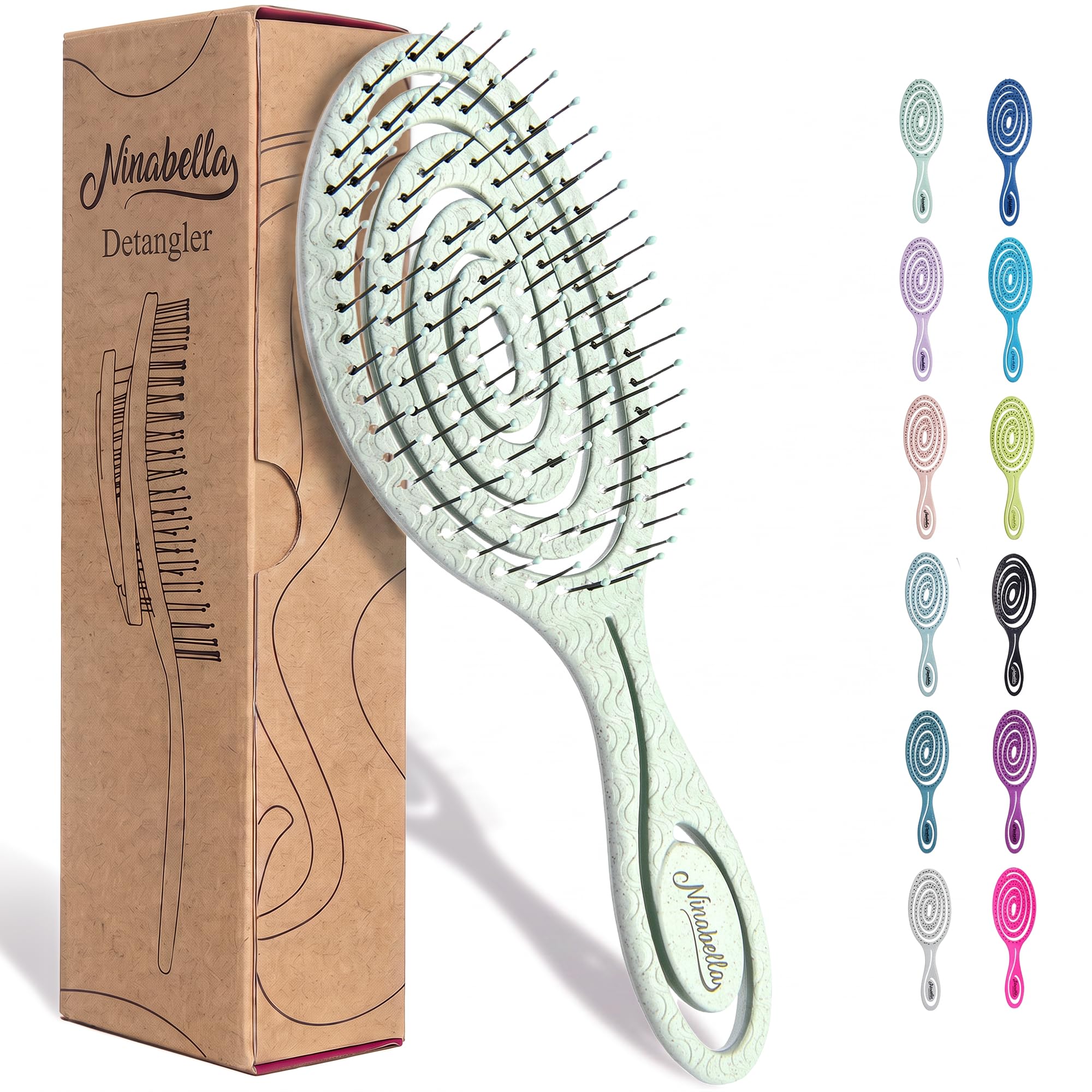
Ninabella Detangler Brush

Ninabella Detangler Brush

Travel and gym bags

Our Score 9.2/10
Check Price

Worth Noting

  • Flexes a lot, so heavy tangles need a slower hand
Body
Recycled post-consumer plastic
Length
8.66 in
Weight
2.12 oz
Bristles
Flexible nylon

The body is recycled post-consumer plastic and the packaging is cardboard, which is unusual enough in this category that we noticed it before we used it. The brush itself is 8.66 inches long, 2.76 wide, and 2.12 ounces, with flexible nylon bristles and rounded tips.

On wet hair it behaves much like the Wet Brush: the bristles give, the knot opens, and there is very little pull. The difference is the back. There is no hollow pocket behind the cushion, so water does not collect there and it survives a shower. It is slim enough for a purse, light enough to forget you packed it, and it rinses clean in seconds.

What you trade for that light, slim build is stiffness. The whole brush flexes in the hand, and on a heavy tangle that flex costs control, so this is a brush for patient passes rather than vigorous ones. On fine to medium hair, or for a child who complains about tugging, that softness is the whole point, and it is why this one stays in our bag.

Bottom line: A slim, low-waste detangler we like for bags and for children, as long as you are brushing gently rather than forcing through a tangle.

8

HIPPIH Boar Bristle Set

HIPPIH Boar Bristle Set

Households and gifting

Our Score 9.4/10
Check Price

Worth Noting

  • Sold only as a pair
Set
Two brushes
Grip
Textured handle
Design
Vented
Bristles
Boar and nylon

Two brushes in one box solves something a single brush cannot: the one that lives in a bag and the one that stays by the mirror, or yours and your daughter's. The HIPPIH pair mixes boar bristle with nylon pins in a vented body, so each brush detangles and smooths in the same pass, and the textured handle keeps its grip when wet.

The nylon pins do the detangling and the boar follows behind to spread oil and settle the frizz that shows up at the crown after a wash. They are gentlest on fine to medium hair and on kids; on dense curls the short pins skim rather than reach through, so treat these as everyday brushes rather than curl tools.

You cannot buy just one, which is the honest catch. But the pair costs about what a single budget brush does here, and if there is a second person in the house, a guest room to stock, or a gym bag missing a brush, that arithmetic works out in your favor. We did not baby ours, and they came through it.

Bottom line: A sensible pair for a shared bathroom or a guest room: gentle on fine hair, quick to blow-dry with, and cheap enough that two brushes cost little.

How We Tested Hair Brushes Wet, Dry, and on Second-Day Hair

We started with a few dozen brushes pulled from bestseller lists and salon recommendations, then narrowed by bristle type, hair type, and price so the final group covered soft flexible nylon, stiff boar, ceramic round, and vented styling brushes. Sixteen of them landed on my desk, and we've lived with them for four months, in the shower, at the vanity, and loose in a gym bag.

Most of the real testing happened on Sunday nights, on wet, conditioner-slick hair. We counted how many passes it took to clear a knot at the nape of the neck, whether the brush glided or snagged, and whether we felt a tug at the scalp. Then we did it again on dry second-day hair, where gentle brushes usually fall apart: the ones that felt lovely in the shower grabbed and skipped once the hair was dry. After each pass we checked the bristles for strands that had been ripped out rather than shed.

For smoothing, we blow-dried section by section with each round and paddle brush and judged whether the finish looked polished or merely brushed. We pressed the bristles into the palm of a hand to gauge stiffness, since some bent on contact and never reached the hair, and ran each brush along the hairline to check for scratchiness. Boar and boar-blend brushes got an extra look at whether they spread oil from root to tip or just flattened the top layer.

Durability took the longest: every brush was washed weekly, air-dried, dropped on tile, and carried around loose in a bag. We watched for bristles that bent permanently, cushion pads that came unstuck, and handles that cracked at the seam. At the end we set what each one cost against how it still looked and performed.

How to Choose a Hair Brush

Start With the Bristles, Not the Brand

Bristles decide what a brush does before anything else about it matters. Thin, flexible nylon or plastic teeth give way under a knot, which is what you want on wet hair. Boar bristle is stiffer and carries the scalp's oil down the shaft, which is what you want for shine on dry hair. A mix of the two, like the BESTOOL paddle, does a bit of both. Round brushes sit in their own category: the bristles are there to grip a section against hot air, not to detangle anything.

Buy for the job you do most often. If you detangle wet hair every morning, a flexible-bristle brush is the one to own. If your hair is already knot-free and you want polish, a boar brush earns its place. Most people end up keeping two.

Wet Hair and Dry Hair Want Different Brushes

Wet hair stretches, and stretched hair breaks, which is why the brushes that work best on it are the ones that give. A firm boar or pin brush dragged through a wet tangle pulls against the strand instead of spreading the knot apart, and the damage shows up later as frizz and split ends. The trap is buying a handsome wooden boar brush for the shower. Keep it dry and finish with it instead.

Whichever brush you use, work from the ends upward in sections and let conditioner do part of the job. On hair that is matted rather than merely tangled, a wide-tooth comb first saves both the brush and your patience.

Match the Head to the Hair

Head size changes how much work each pass does. A small head like the Wet Brush's takes more strokes on long hair but steers easily around a hairline and a nape, while a wide paddle covers more ground in one pull. Barrel size works the same way: 43 mm, the Osensia's size, is a versatile middle for shoulder-length hair.

Watch the trap with barrels: a large one on a short bob gives you less volume, not more, because the hair cannot wrap around it. Short hair wants a smaller barrel; long, thick hair wants a bigger one and more tension.

The Handle Is Usually What Fails First

Across the brushes here, the handle and the plastic body are what go first: a drop onto tile, a joint that separates, a cushion that tears. Bristles are the other slow loss, especially on boar brushes, which shed as they age. None of that is an argument for spending more; it is an argument for buying for where the brush will live.

A brush that stays on a vanity lasts. One that rattles around a bag with keys does not. Put the inexpensive one in the gym bag, keep the good one by the mirror, and check the joint where the head meets the handle before you commit.

Frequently Asked Questions

Final Verdict

If you are buying one brush, buy the Wet Brush Original Detangler. It works on wet and dry hair, it is gentle enough to use on a child, and it sits at the low end of the prices here, which makes it the easiest recommendation in this guide.

The exception is hair that defeats it. Thick, coarse, or tangle-prone hair does better with the longer two-tier teeth of the Tangle Teezer, curls get their definition from the Denman's firm pins, and anyone who blow-dries weekly will get more from the Conair vent set than from any detangler.