Nails

Best Cuticle Creams of 2026

A dry cuticle doesn't announce itself — it just quietly snags on a sweater sleeve, then on the edge of a page, until you're picking at a hangnail you can't leave alone. Cuticle cream is meant to break that cycle: a layer of oil, wax, or butter that holds moisture in the thin skin around the nail so it stays soft enough to bend instead of split. The catch is that most of them fail at one end or the other, landing either so greasy you can't touch anything for twenty minutes or so thin it's gone before you've capped the tube.

I keep one on my desk and one in my coat pocket, and after four months with 14 different creams I can tell you the base matters far more than the tin. Scent is the thing I'd flag for a first-time buyer: a bright lemon or lavender smells lovely until it meets a cuticle that has actually split, and then it's the last thing you want near your finger. The picks below run the full range, from thin and fast-absorbing for the middle of a workday to thick and slow for overnight, and each one earned its place for a different reason.

1

Burt's Bees Lemon Butter Cuticle Cream

Top Pick
Burt's Bees Lemon Butter Cuticle Cream

Everyday cuticle care

Our Score 9.4/10
Check Price

Worth Noting

  • Finger-dipping a tin is awkward with long nails
Size
3 tins, 0.6 oz each
Scent
Lemon
Format
Metal tin
Key Ingredients
Sweet almond oil, cocoa seed butter, vitamin E

Three tins is the argument. One lives by the sink, one in a bag, one wherever you sit in the evening, and the balm is there before the thought to use it has passed, which with cuticle care is most of the work. Each tin holds 0.6 ounces of a firm, waxy balm rather than a lotion, so you warm a smear between your fingers and work it into the skin around the nail.

We keep coming back to it because it handles the unglamorous job better than anything else here: hard, ragged skin around the nail softens with regular use, and hangnails stop catching on sleeves and hair. The formula leans on cocoa seed butter, sweet almond oil and vitamin E, and it is a 100 percent natural-origin product, which matters if you are trying to keep synthetic fragrance out of your nail kit.

The texture is worth setting expectations about. This is a balm that sits on the skin for a few minutes before it settles in, so it is a bedtime or reading-on-the-sofa application rather than something to do on your way out of the door. That same waxy layer is what keeps the moisture in through a hand wash, so we treat the wait as part of the job.

A tin goes a long way, too, because you need a smear rather than a scoop. And the three-pack is the reason this is the one we hand to people who tell us cuticle cream never worked for them; usually they were using a lotion that left with the next hand wash.

Bottom line: We recommend Burt's Bees to anyone who wants one dependable cuticle balm they can leave in three places at once; it softens rough edges fast and the waxy finish earns its keep.

2

ONSEN Nail & Cuticle Cream

ONSEN Nail & Cuticle Cream

Daytime application

Our Score 8.8/10
Check Price

Worth Noting

  • Priciest per ounce in this group
Size
30 ml
Scent
Lavender
Format
Tube
Key Ingredients
Tsubaki, jojoba, rice bran oils, shea butter, cocoa butter

The reason we reach for this one during the day is simple: it vanishes. A small amount worked around the nail absorbs almost immediately, leaving no film on the fingertips, so you can go straight back to a keyboard, a phone or a steering wheel. Of everything here it behaves least like a cream and most like a serum.

The 30 ml tube carries cold-pressed tsubaki, jojoba and rice bran oils with shea and cocoa butter, and the scent is a soft lavender rather than a sharp citrus. Japanese white pagoda flower enzymes get top billing on the box; what we noticed was the finish, which is smooth and light rather than slippery.

Cracked, snagged skin around the nail settled down over a stretch of daily use, and the nail area looked tidier for it. This is a cream for maintenance as much as repair, and that is the role it plays in our routine.

Where it stumbles is cost. Per ounce it is the most expensive cream in this group by some distance, and the tube is small enough that four-times-a-day use makes a dent. That is the trade: you are paying for a formula you will never skip because it is inconvenient. We still keep a richer balm for the coldest weeks of winter.

Bottom line: Buy this if you want a cuticle cream you will actually use in the middle of the day; it disappears into skin, though you pay for the elegance.

3

Gena Healthy Hoof Cream

Gena Healthy Hoof Cream

Hands and nails

Our Score 8.8/10
Check Price

Worth Noting

  • Thick formula stays sticky on the fingers
  • Scent divides people
Size
4 oz
Format
Jar
Key Ingredients
Castor oil, lanolin, aloe vera
Nail Ingredient
Soybean protein

Four ounces is the number that changes how this one gets used. The tub is large enough that you scoop without thinking about it, and per ounce it is the cheapest cream here by a wide margin, the opposite of the tiny tins where every application feels like a withdrawal.

What is in it is a dense, old-fashioned cream built on castor oil, lanolin and aloe vera, with soybean protein folded in for nails that split and peel. It was developed for hands that work, and the formula has that unbothered, utilitarian feel.

It earns its place on results. Cuticles that had gone hard and split down the sides came back smoother with nightly use, and nails that had been peeling stopped snagging on fabric. If the problem you are shopping for is peeling and splitting rather than dry skin, start here; it is the most nail-focused cream in the group.

The jar is about the size of a small coffee mug, so this is a nightstand or bathroom-cabinet product rather than something that travels. A four-ounce supply also outlasts most resolutions, which is a good problem to have at this price per ounce.

Bottom line: Our pick when splitting, peeling nails are the bigger problem than dry skin; the big tub is the best value here, provided you apply it at night.

4

Badger Organic Cuticle Cream

Badger Organic Cuticle Cream

Cracked cuticles

Our Score 9.2/10
Check Price

Worth Noting

  • Strong herbal scent lingers on fingers
Size
2 tins, 0.75 oz each
Format
Recycled metal tin
Formula
100% organic, cruelty-free
Key Ingredients
Shea butter, plant oils

Open a tin and the oil is obvious. This is a soft, almost melty balm that leaves a sheen on your fingers for a while, and it is also the cream we reach for once cuticles have gone past dry into tearing, because nothing else here cushions skin that raw.

You get two 0.75-ounce tins in recycled metal, and the formula is 100 percent organic and cruelty-free, built on shea butter and plant oils with no synthetic fragrance. It is a short ingredient list, which suits anyone trying to keep a nail kit simple.

On genuinely cracked cuticles it does the most work on this page. The balm melts on contact, softens rough edges quickly, and stays put through a hand wash or two. A little is all you need, so one tin covers a lot of evenings, and if you have been layering hand lotion over splitting cuticles and getting nowhere, this is the step up.

Anyone whose cuticles are merely dry rather than damaged can start with something lighter; this is a cream for repair rather than maintenance, and it belongs by the bed rather than in a handbag.

Bottom line: Our choice for cuticles that have moved past dry into cracking; the thick organic balm and two-tin pack make it the most repair-focused cream here.

5

Sally Hansen Cuticle Massage Cream

Sally Hansen Cuticle Massage Cream

Trying one cheaply

Our Score 9.0/10
Check Price

Worth Noting

  • Cream can harden in the tin if stored open
Size
0.32 oz
Format
Tin
Absorption
Fast-absorbing
Key Ingredient
Apricot oil

It is the least expensive tin in this group, which makes it the low-risk way to find out whether a cuticle cream suits you at all. The formula is a light cream built around apricot oil, and it absorbs faster than any of the balms here.

We have recommended it to people who hate the feeling of anything on their hands. It sinks in quickly, leaves no sticky residue, and the skin around the nail looks neater after a few days of daily use. Of the small tins it behaves most like a lotion, closer to a hand cream than to the balms above.

The tin is 0.32 ounces, so a daily habit goes through it fast. Treat it as the one in your bag or desk drawer while a larger tub handles the heavy lifting at home, and expect to rebuy. Buy it for the drawer, not for the routine.

Bottom line: The one to try first if you are unsure cuticle cream is for you; it is light, fast-absorbing and inexpensive, though the tin is small.

6

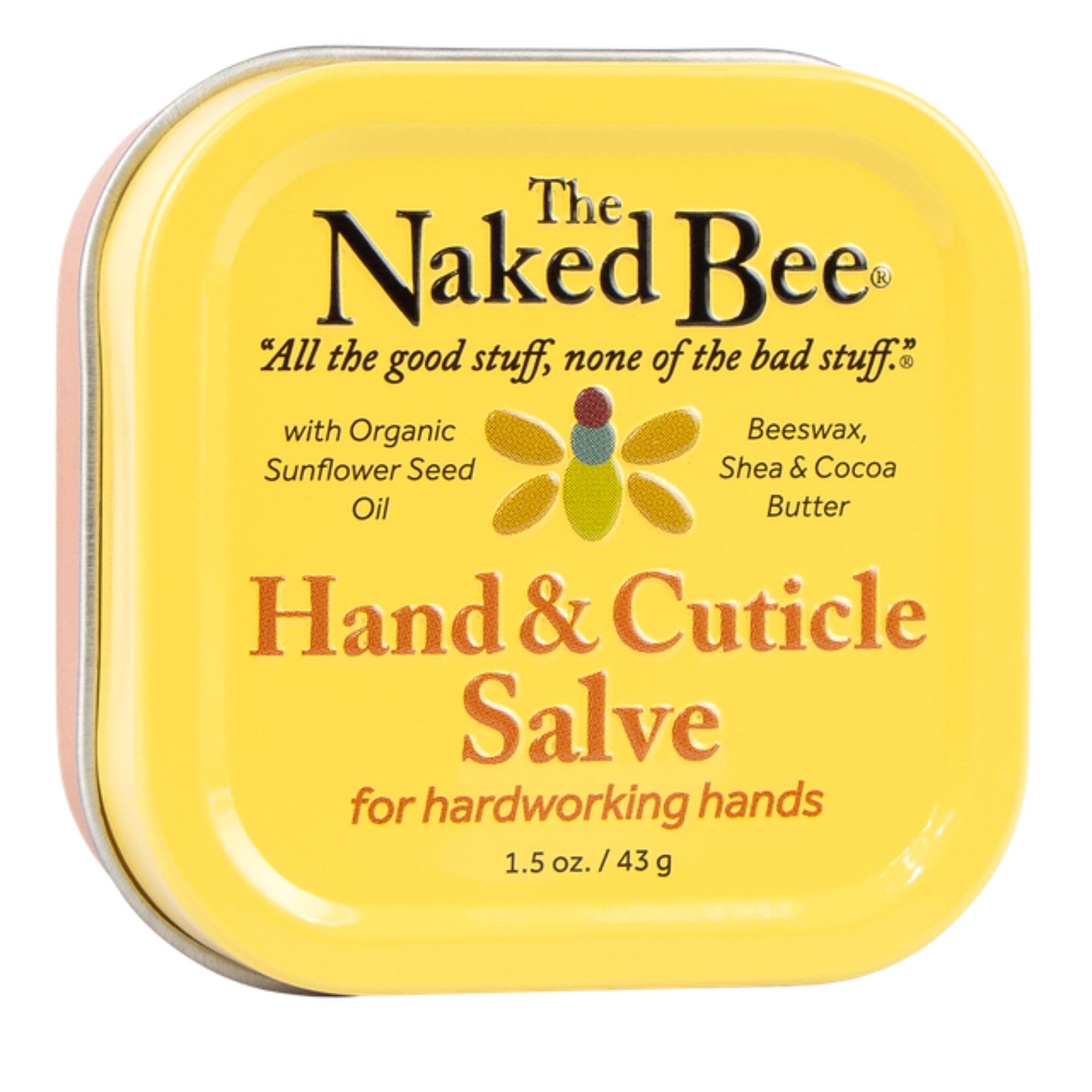
The Naked Bee Hand & Cuticle Salve

The Naked Bee Hand & Cuticle Salve

Whole-hand care

Our Score 9.4/10
Check Price

Worth Noting

  • Greasy film for a few minutes after applying
Size
1.5 oz
Format
Tin
Free From
Parabens, sulfates, dyes
Key Ingredients
Sunflower seed oil, beeswax, shea butter

This is a hand salve that happens to be very good on cuticles, which is a different thing from the dedicated creams above. The tin holds 1.5 ounces, well over twice a cuticle tin, and it is built to go over the whole hand rather than a few millimetres of skin.

Sunflower seed oil, beeswax, shea butter and cocoa butter make a soft, spreadable salve with a honeyed scent, and there are no parabens, mineral oil or dyes in the mix. On winter-dry hands it is the most pleasant thing here to use, which is not nothing when the whole point is to keep using it.

Where it earns its place is coverage. Because you can afford to use it on the whole hand, the skin around the nails gets conditioned as a side effect rather than a separate step, and cracked knuckles and ragged cuticles improve together. We reach for it after the dishes, when everything is dry at once and a targeted cream would take three passes.

The honest limit is precision. Dabbing a single torn cuticle is not what this is for, and you will want a tube or a small tin for the middle of the day.

Bottom line: Buy it if dry hands and dry cuticles are the same problem for you; it is a whole-hand salve that fixes nails in passing, not a precision treatment.

How We Tested 14 Cuticle Creams

We started with a list of roughly 40 cuticle creams, balms, and salves drawn from bestseller lists, salon recommendations, and the small Japanese and Korean formulas that circulate in nail-care forums. From those we cut anything that was essentially a scented hand lotion in a smaller tube, anything that leaned on alcohol near the top of the ingredient list, and anything priced so high per ounce that one tin would feel like a splurge. That left 14, which we bought at full price ourselves.

Each one lived the same four months we did: on a desk during the workday, on a nightstand, in a coat pocket through a cold snap, and beside the sink after dishes and after gel polish came off. We timed how long it took before we could comfortably type or pick up a phone, and noted whether the cream sank in or sat on top of the skin. We watched how it spread — whether a balm dragged and tugged at a rough cuticle or glided — and paid attention to scent strength, how long it lingered, and whether it stung on a split. To check staying power, we washed our hands with dish soap and noted when the softness disappeared.

Once a week we photographed the same three nails under the same lamp to see whether splitting and peeling at the edges had genuinely calmed down or just looked better for an hour. We also tracked how much product a single application took, since a dense cream you have to dig out by the fingertip runs out far faster than one that spreads thin, which changes what you're actually paying per use.

How to Choose a Cuticle Cream

Texture decides whether you will use it

Cuticle creams sit somewhere between lotion and ointment, and where a particular one lands is the biggest factor in whether it becomes a habit. Thin, fast-absorbing creams suit daytime: you can apply one at a desk and pick up a phone moments later, which is what makes the ONSEN tube easy to keep using. Rich balms built on beeswax, shea or lanolin stay on the surface, which is exactly what you want overnight or on skin that has already cracked.

Buy for the time of day you will actually remember to use it. If you only reach for a balm at night, keep a lighter cream for the morning or the dryness wins by mid-afternoon.

Tin, tube, or tub

Format matters more than it sounds. A tin is the classic package and usually the most economical, but you have to dip a finger into it, which is awkward with long nails and unhelpful when your hands are already slick. A tube is the format you can use standing up or in a car and it keeps air away from the product. A big tub is a nightstand fixture.

Match the container to the location. A 0.32-ounce tin belongs in a bag as a top-up, not on a dresser as your only supply, and treating a trial size as a supply is how people end up buying three a month.

What a cuticle cream can and cannot do

Every cream here moisturizes; some go further. Occlusives such as beeswax, shea butter, lanolin and castor oil slow water loss from the skin around the nail, which is what stops the cracking and hangnails in the first place. A few add protein or nail-focused ingredients, and those are the ones worth trying if your complaint is peeling or splitting nails rather than dry skin.

What no cream does is repair a damaged nail plate. If the nail itself is lifting, thickening or changing color, that is a dermatologist question rather than a shopping one.

Scent is a daily decision

You will have this within a foot of your face several times a day, so a fragrance you merely tolerate becomes an excuse to stop using the product. The range here runs from lemon to lavender to a strong herbal balm, and even the most popular scents have their dissenters.

If you know you are sensitive, patch test on the back of your hand for a couple of days before committing to a large tub.

Compare cost per ounce, not the sticker

Cuticle cream is used in smears, so a small tin can last longer than the size suggests. But the spread between the cheapest and priciest product per ounce here is wide enough to change the decision: the largest tub works out at a fraction of the per-ounce cost of the smallest tin.

Buy the small one while you are testing whether you will keep up the habit, and buy the big one once you know you will.

Frequently Asked Questions

Final Verdict

The default is Burt's Bees. Three tins of a firm lemon balm that softens ragged cuticles and quiets hangnails is the most useful thing here for the most people, and having one within reach in three rooms is what turns cuticle care into something you actually do. The waxy finish makes it an evening habit more than a midday one, and that is fine.

If you want a cream you can apply at your desk, take the ONSEN tube instead: it disappears in seconds and leaves nothing behind, at the highest per-ounce price in this group. And if splitting, peeling nails are the reason you are shopping, Gena's four-ounce tub does more for the nail itself and costs the least per ounce while it does it.